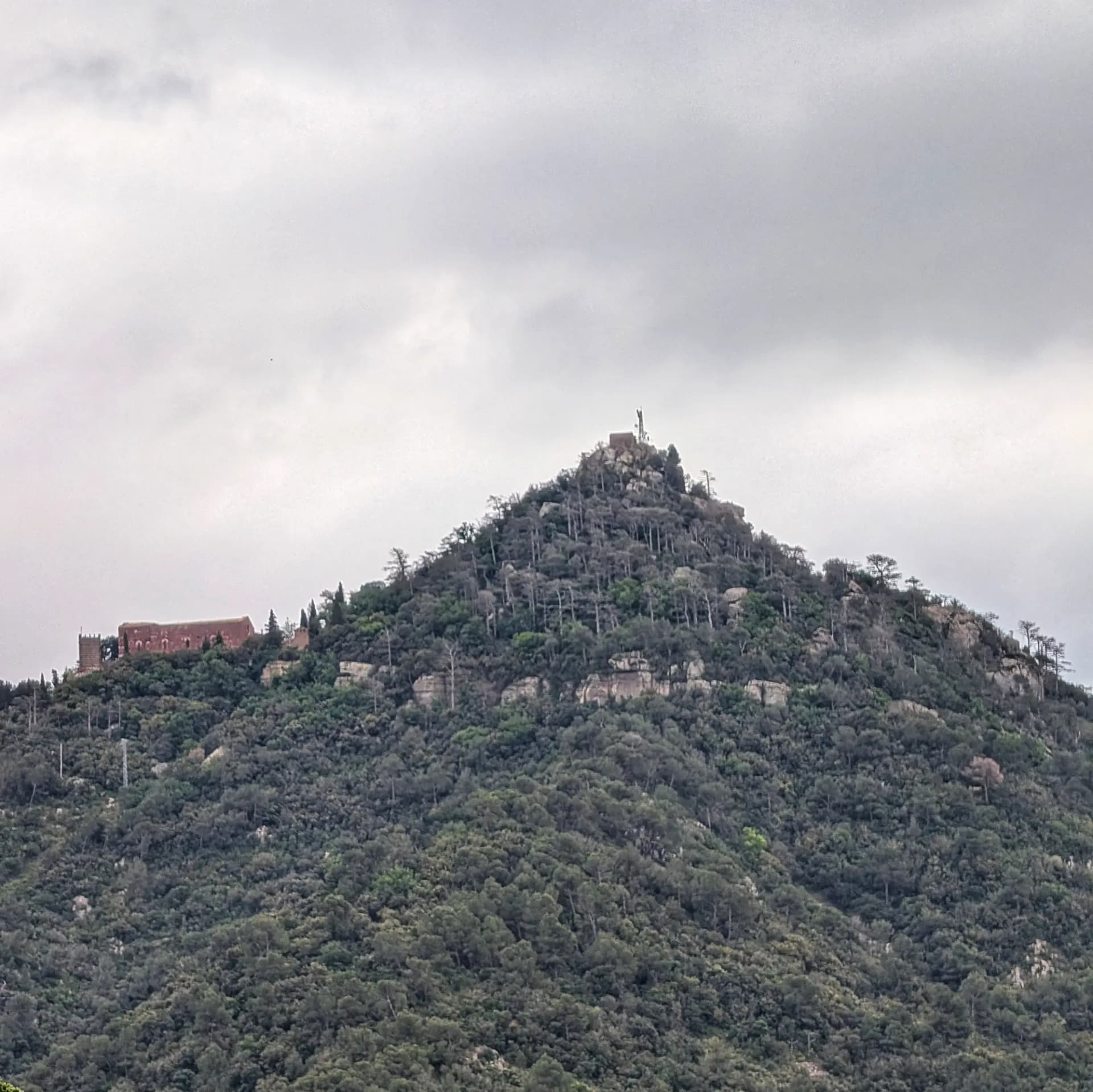
Castell d'Escornalbou
Description
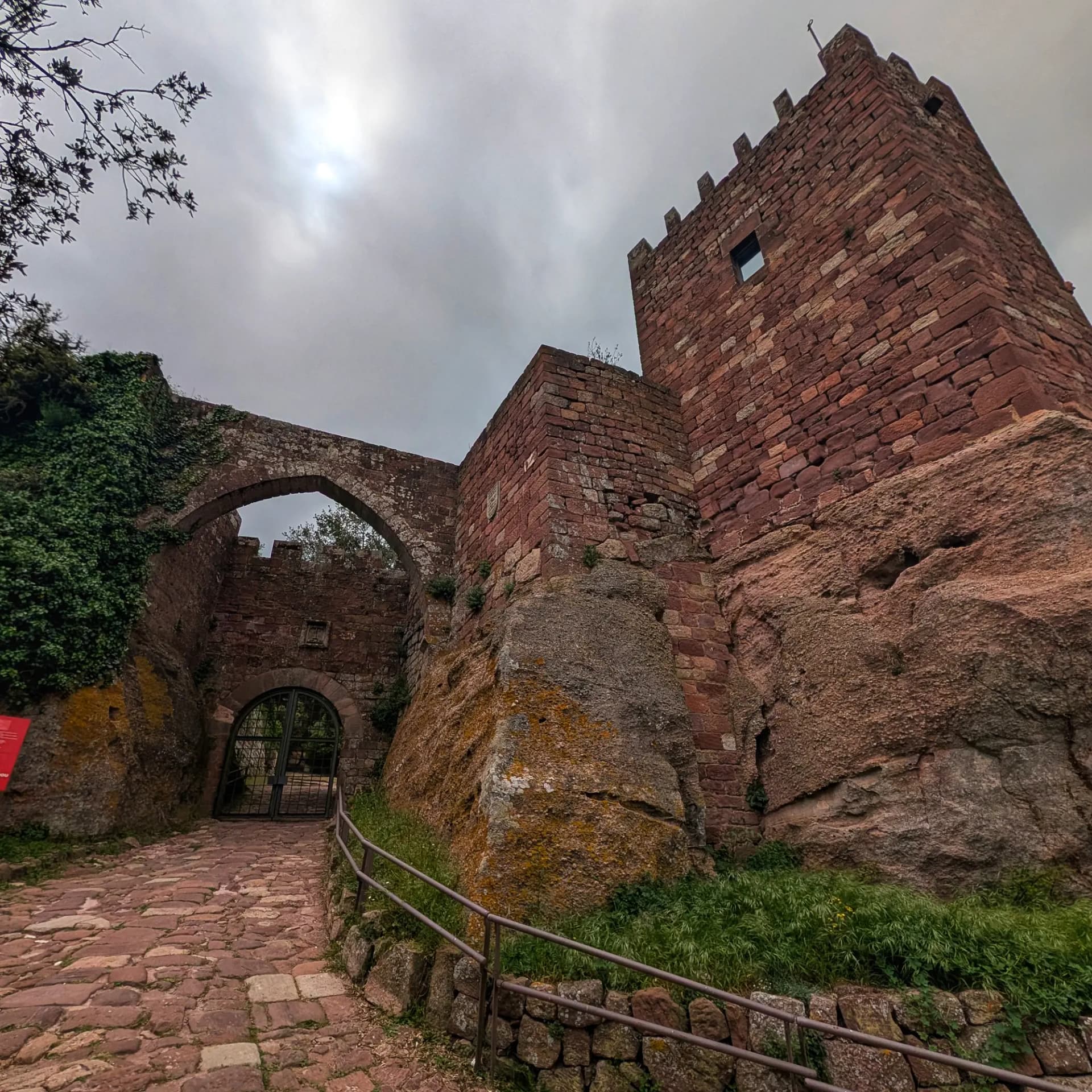
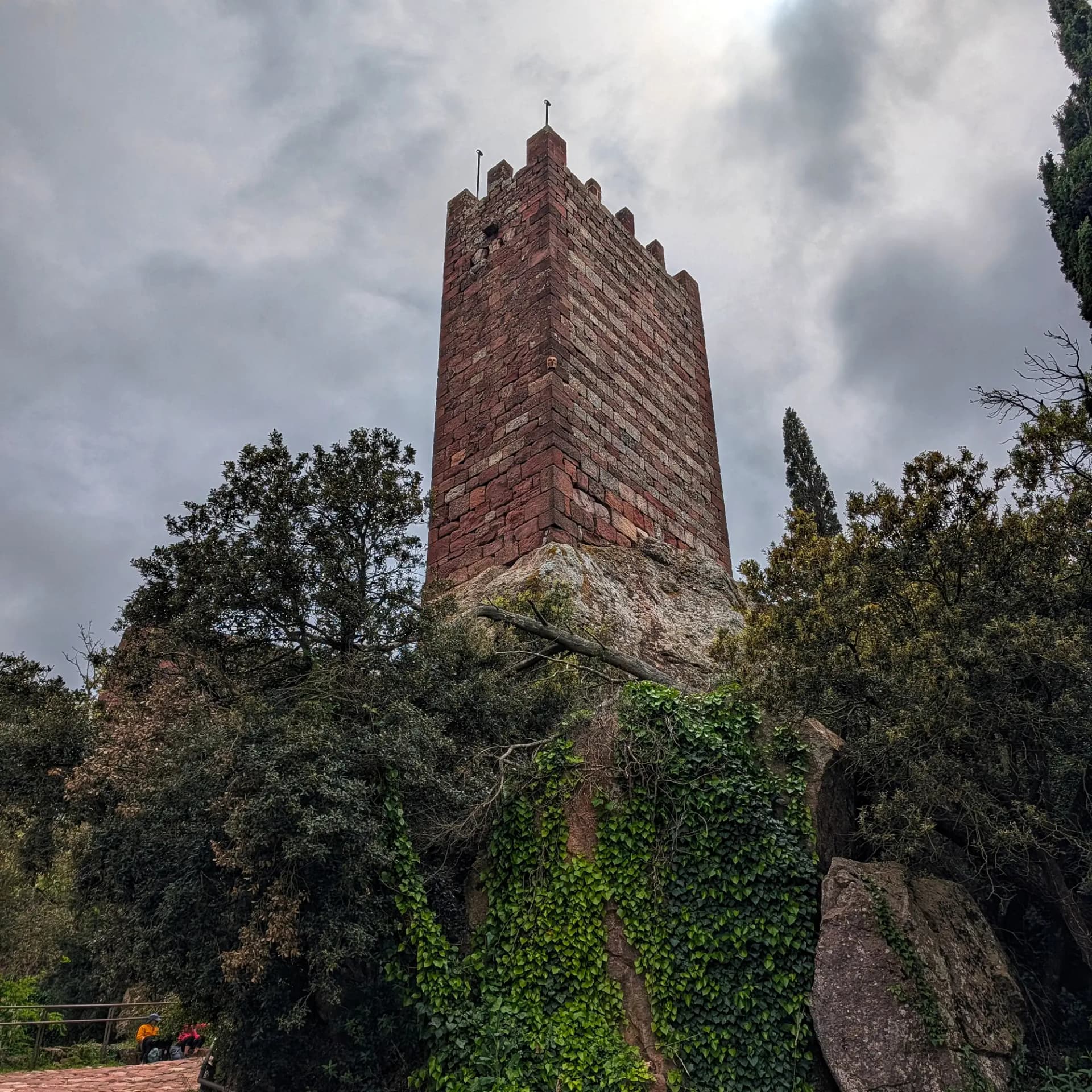
The Castell d'Escornalbou, also known as the Castle Monastery of Sant Miquel d'Escornalbou, stands majestically on the Santa Bàrbara hill, at an altitude of 649 meters above sea level. Located in the municipality of Riudecanyes, in the Baix Camp region of Tarragona province, this unique monumental complex merges the remains of an ancient monastery and a medieval castle, transformed in the early 20th century into an eclectic and romantic stately mansion.
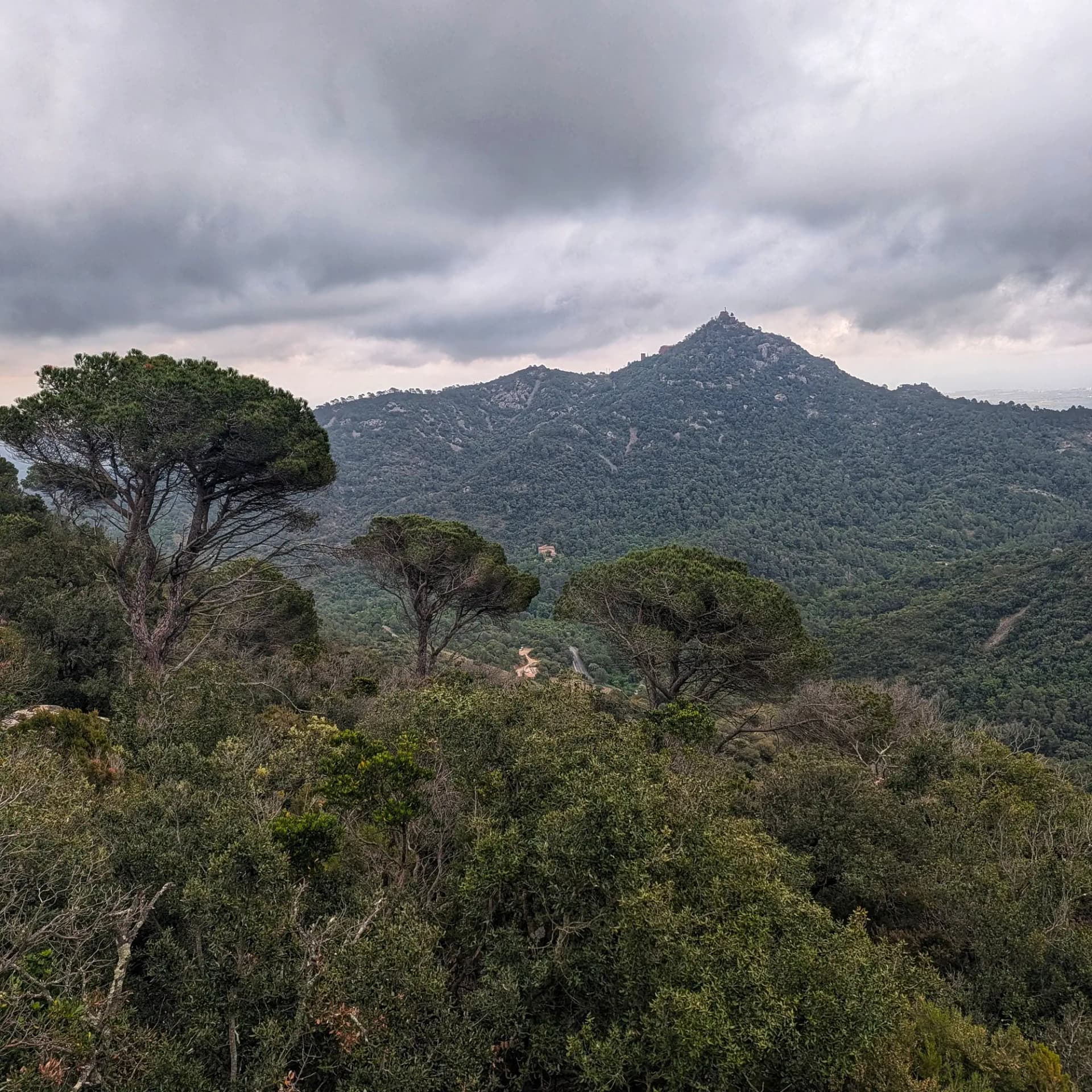
The surrounding natural environment is of great beauty, featuring a vast expanse of Mediterranean forests. The dominant vegetation is the black pine forest (Pinus nigra), particularly resistant to the strong local winds, accompanied by oaks and strawberry trees. Notably, there is a small and unique cork oak grove, a botanical rarity in the pre-coastal strip due to the soil's acidic composition.
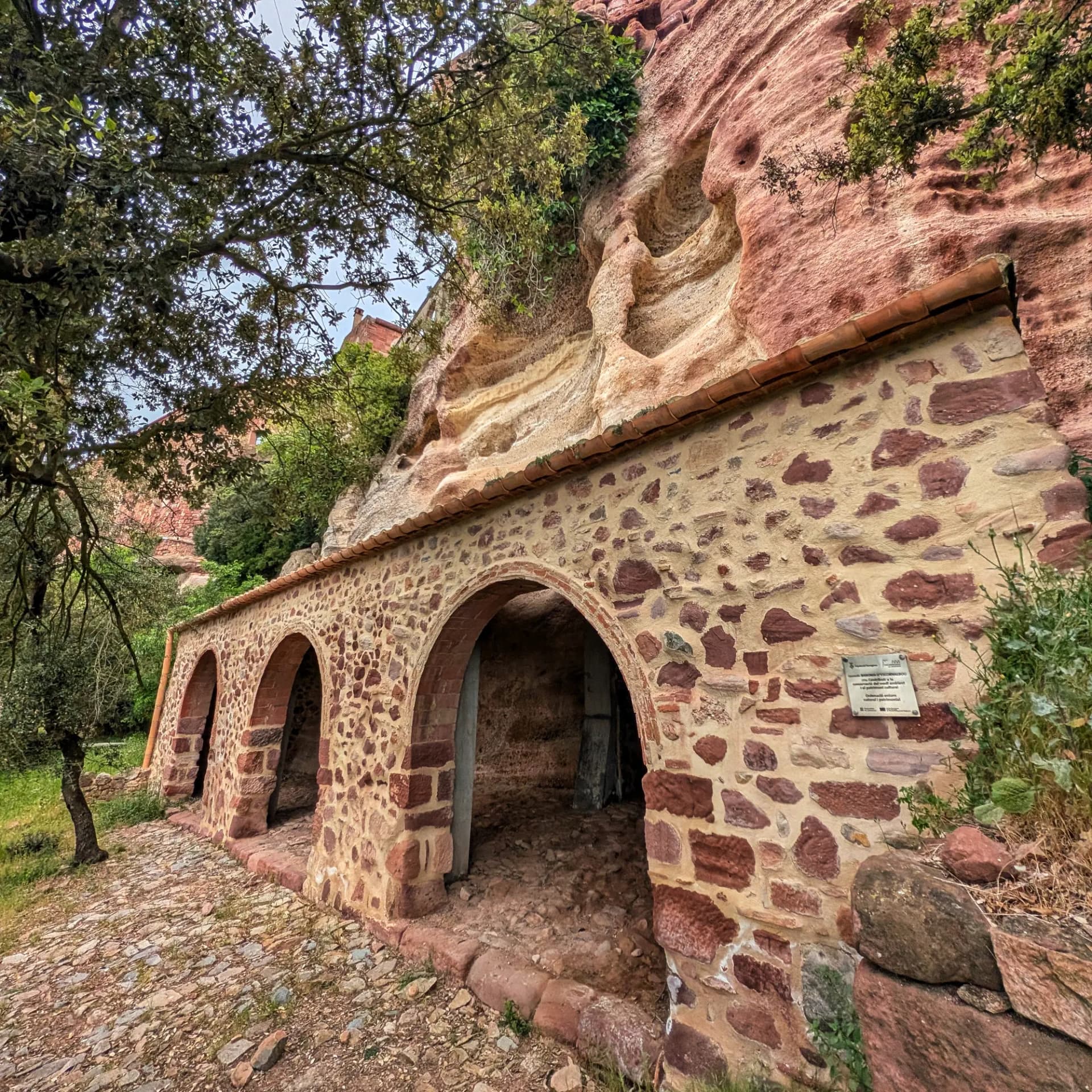
Geologically, the Escornalbou hill is of Triassic origin, characterized by distinctive red sandstone, a material used in the construction of much of the complex. Historically, the mountain was also a source of mineral resources, with mines exploited for barite and galena (lead ore). In fact, the name "Escornalbou" might derive from the suitability of its sandstone rocks for sharpening tools and "escornar" (removing horns) from oxen.
Its strategic position, in the eastern foothills of the Serra de l'Argentera, made it an excellent lookout point, offering one of the best panoramic views of the Tarragona regions. From the Santa Bàrbara hermitage or the old cloister-viewpoint, one can see to the east and south the Camp de Tarragona, the coastline from Garraf to the Ebro Delta and the Gulf of Sant Jordi, even discerning the Serra de Tramuntana of Mallorca on clear days. To the west and north, the imposing reliefs of the Muntanyes de Prades and the Serra del Montsant are visible.
The current building is the result of a reconstruction initiated in 1911 by the illustrious Reus native Eduard Toda, who restored the ruins after the disentailment. Authentic parts are preserved, such as the 12th-century Romanesque church, remains of the chapter house, and part of the cloister, transformed into a splendid garden-viewpoint. Toda amassed a rich library and art collections there, making this space an important hub for intellectuals of the Catalan Renaixença movement.
Map
Related trails
Browse the trails where I reached this summit.