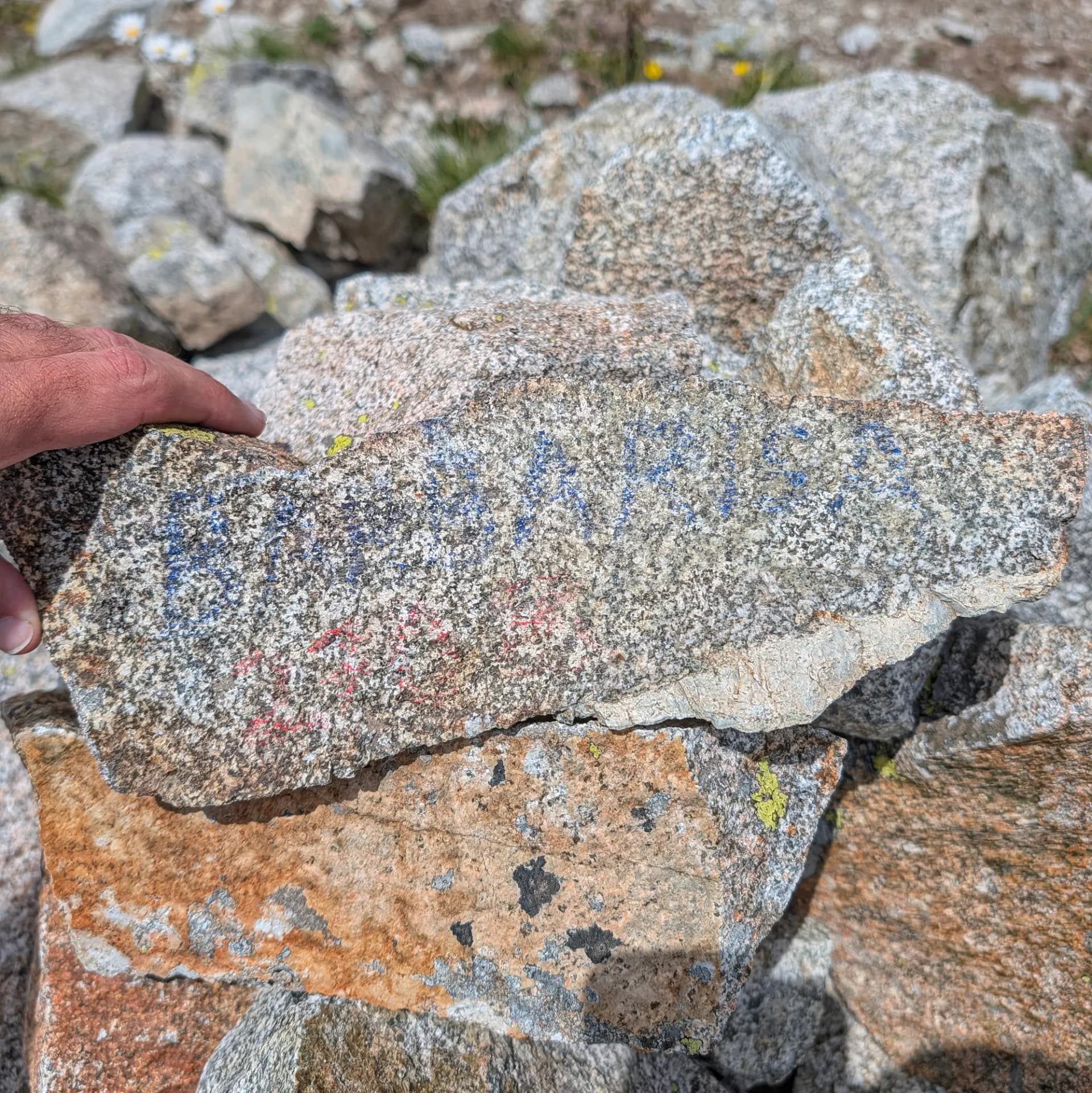
Pico de Barbarisa
Description
The Pico de Barbarisa, also known as Tuca de Barbarisa or Pico Barbarizia, is a prominent peak in the Pyrenees, with an altitude of 2,708 meters. It is located in the province of Huesca, within the Axial Pyrenees zone and the Posets-Eriste Massif, marking the watershed between the Chistau Valley and the Benasque Valley, extending towards Collado de Sahún.
The surroundings are characterized by a rugged high-mountain environment, featuring the Ibones de Barbarisa (Ibón Chico and Ibón Grande) at its base, situated at about 2,276 meters. Lower down, high alpine meadows and spectacular waterfalls like the Cascada d'es Prats can be found. Wild alpine fauna is common, with frequent sightings of marmots and chamois. Geologically, the terrain shows significant glacial and periglacial sculpting, influenced by its lithology of granodiorite, Paleozoic slates, and limestones, with visible ancient moraines from the Little Ice Age and Younger Dryas periods, as well as fossil rock glaciers.
Regarded as a fantastic viewpoint due to its privileged position, Pico de Barbarisa offers exceptional panoramic views of the entire Chistau Valley and the Chía and El Solano area towards Ribagorza. On clear days, the horizon extends to include the major nearby massifs of Cotiella, Monte Perdido, and Las Maladetas.
Among the nearby peaks are La Montañeta (2,729 m) to the north, and three-thousanders dominating the glacial cirque such as Eriste Sur (3,041 m) and Gran Eriste (3,056 m). Common access towns include Sahún, Chía, and Castejón de Sos on the eastern side, and Plan, San Juan de Plan, and Gistaín on the western side.
Map
Interact with the map to see the detailed route. You can zoom, change layers, and move around the map.
Related trails
Browse the trails where I reached this summit.