Volcà de Santa Margarida
Description
The Volcà de Santa Margarida, with an altitude of 766 m, is one of the most emblematic and visited features of the Garrotxa Volcanic Zone Natural Park. This mixed volcano is renowned for its impressive crater, which today hosts a unique hermitage at its base.
Its formation, approximately 11,500 years ago during the Holocene epoch, resulted from explosive phreatomagmatic activity, caused by the interaction between magma and groundwater. This eruption opened a wide circular crater with a diameter of 2,000 meters at its mouth. Notably, it formed during the same eruptive episode as the Volcà del Croscat, sharing the same eruptive fissure.
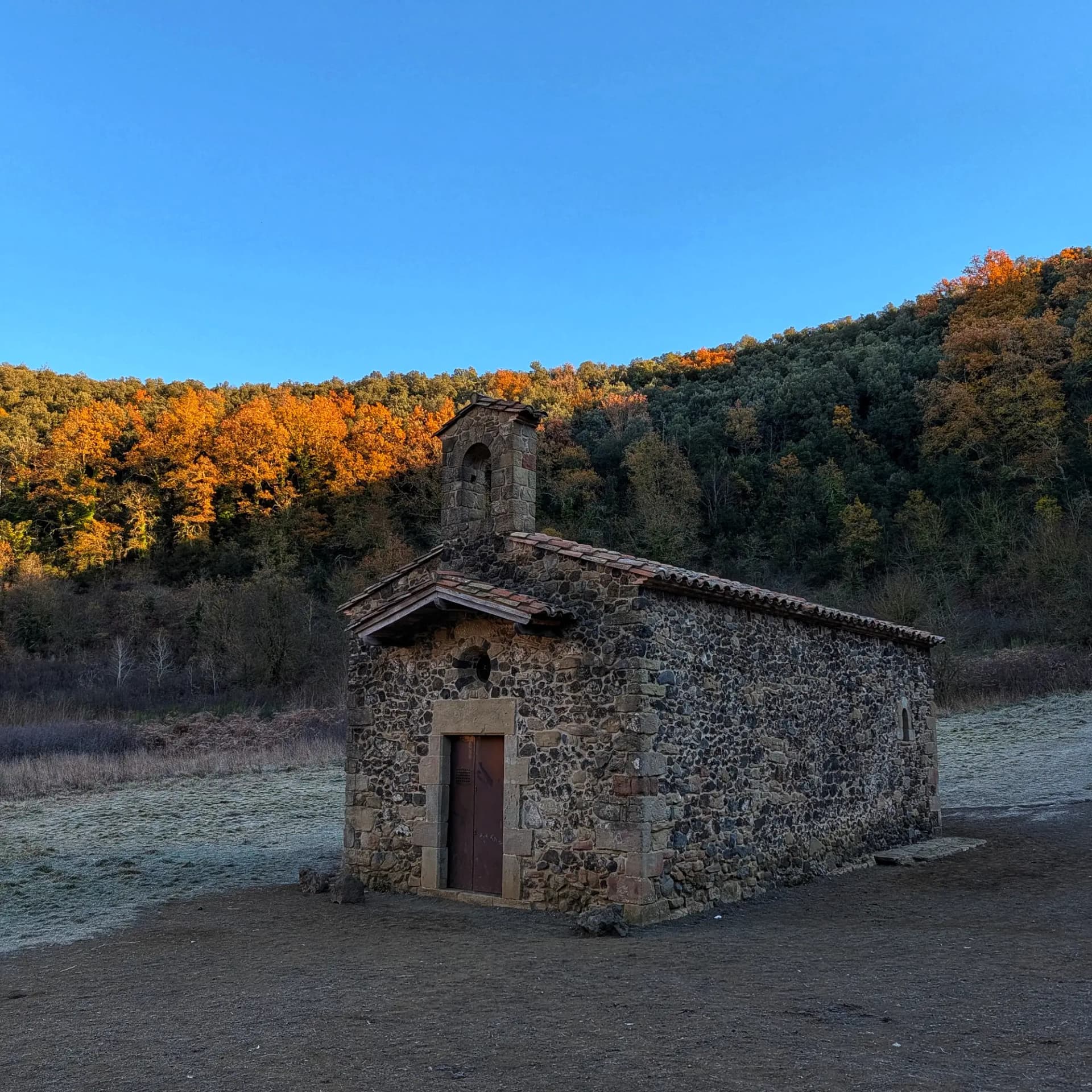
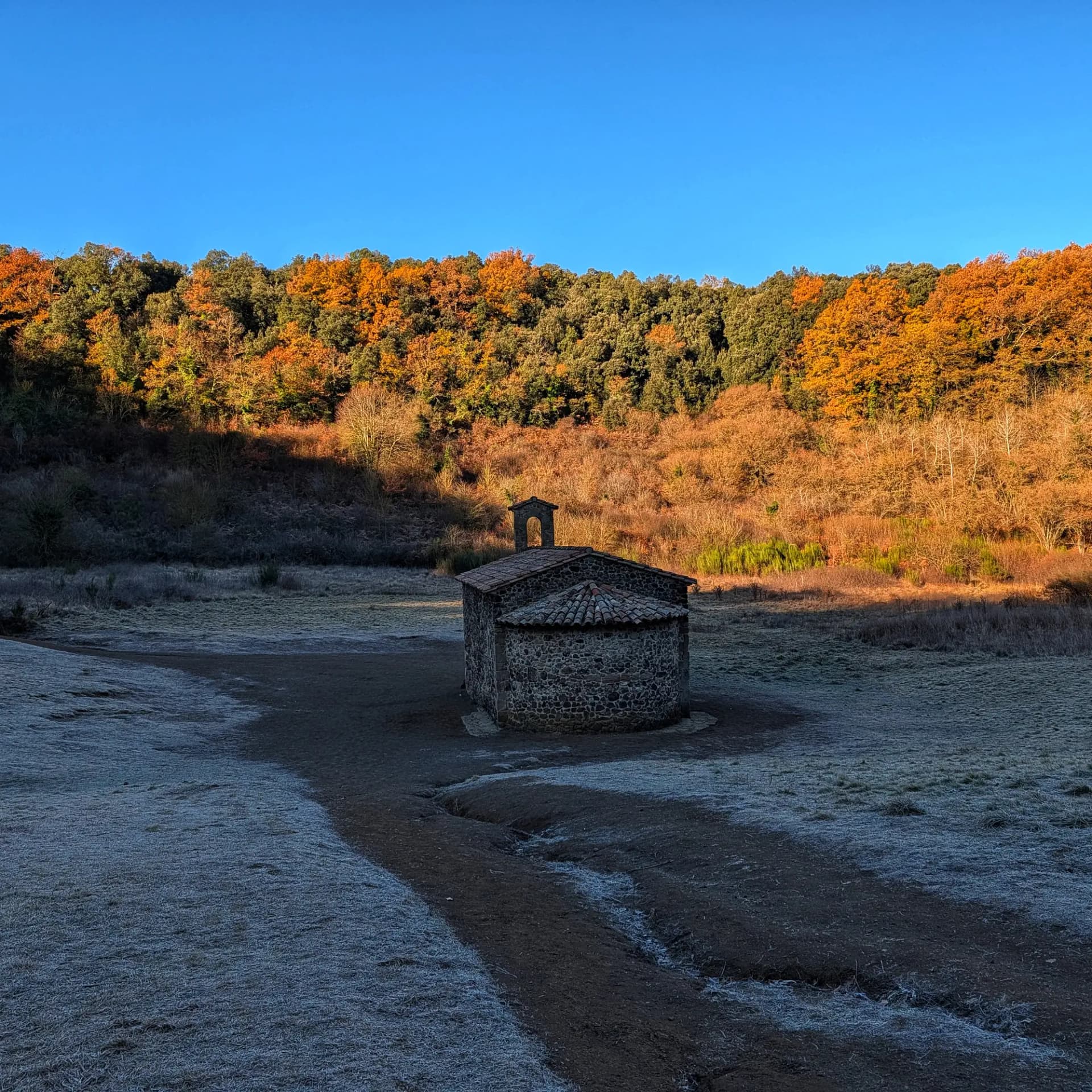
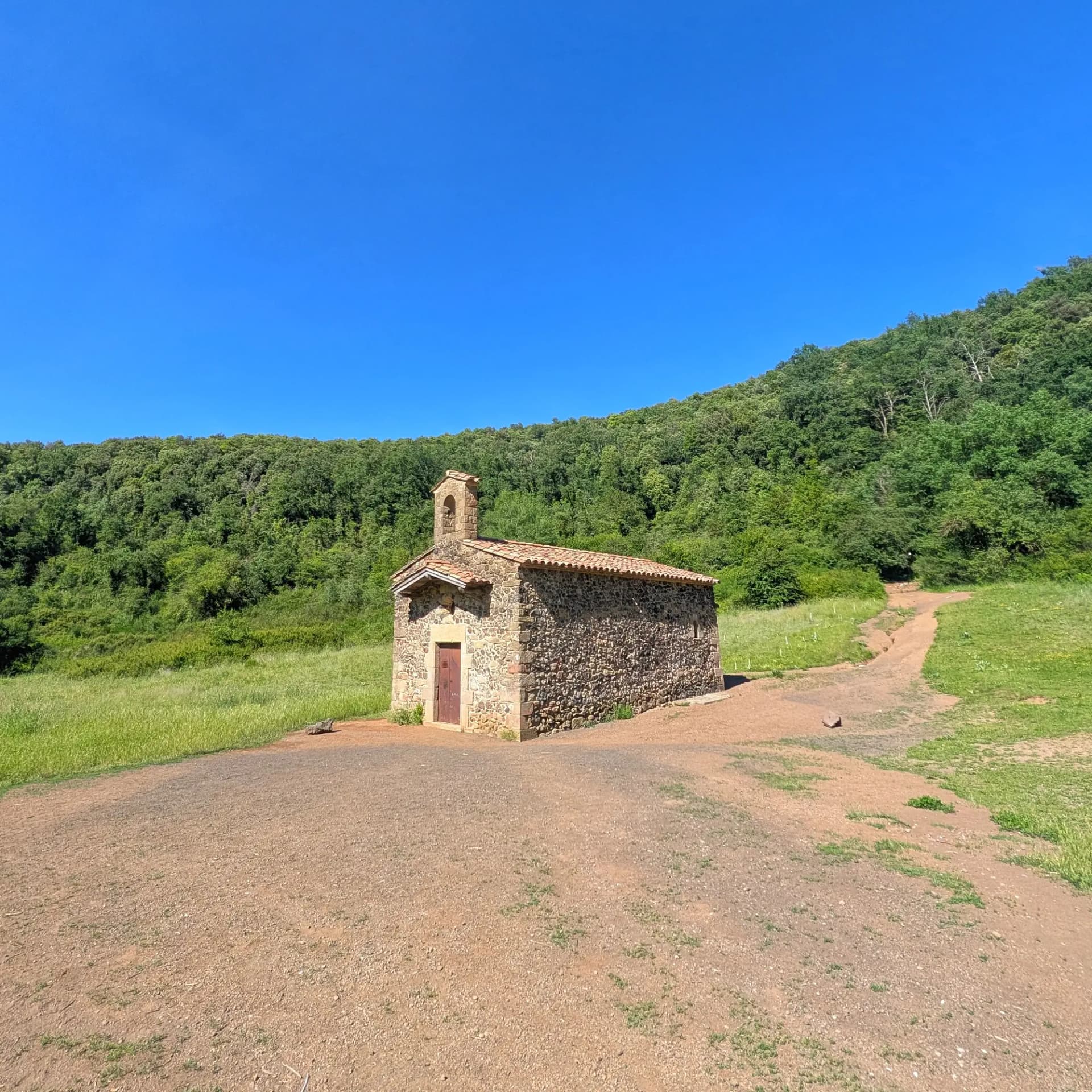
Today, the landscape offers a singular beauty: the crater floor is an lush green meadow, while the rest of the volcanic cone is covered by forests of holm oaks on the sunnier slopes and mixed deciduous trees on the shadier ones. Right in the center of the meadow, within the crater, stands the Ermita de Santa Margarida de Sacot. This chapel of Romanesque origin (12th century), despite sustaining severe damage from the 1427-1428 earthquakes, was restored in 1436. It features a simple rectangular nave with a semicircular apse. One can envision the volcano as an immense natural amphitheater, with the hermitage as the solitary protagonist at the center of the stage.
Map
Related trails
Browse the trails where I reached this summit.