Anacamptis coriophora
About the Orchid
The Anacamptis coriophora, commonly known as the Bug Orchid, is a perennial flowering plant species belonging to the orchid family (Orchidaceae) and the subfamily Orchidoideae. Previously classified within the genus Orchis, it was more recently transferred to the genus Anacamptis. Its generic name derives from the Greek word anakamptein, meaning "to bend backwards" or "to curve," referring to the shape of its spur. The epithet coriophora comes from classical Greek and means "bug-bearing," alluding to the unpleasant odor emitted by its flowers. It should be noted that some subspecies, such as Anacamptis coriophora subsp. fragrans, give off a much sweeter and more fragrant scent.
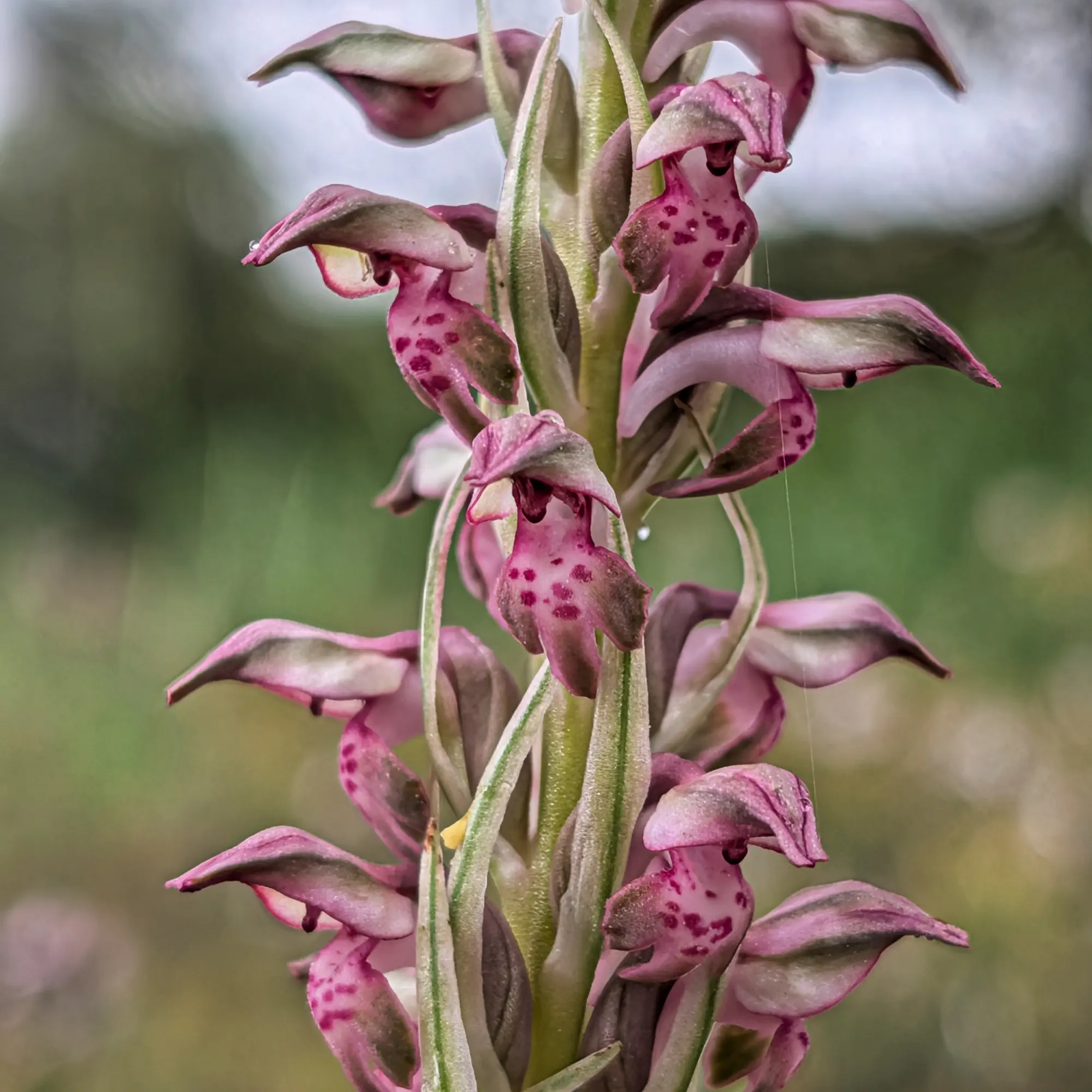
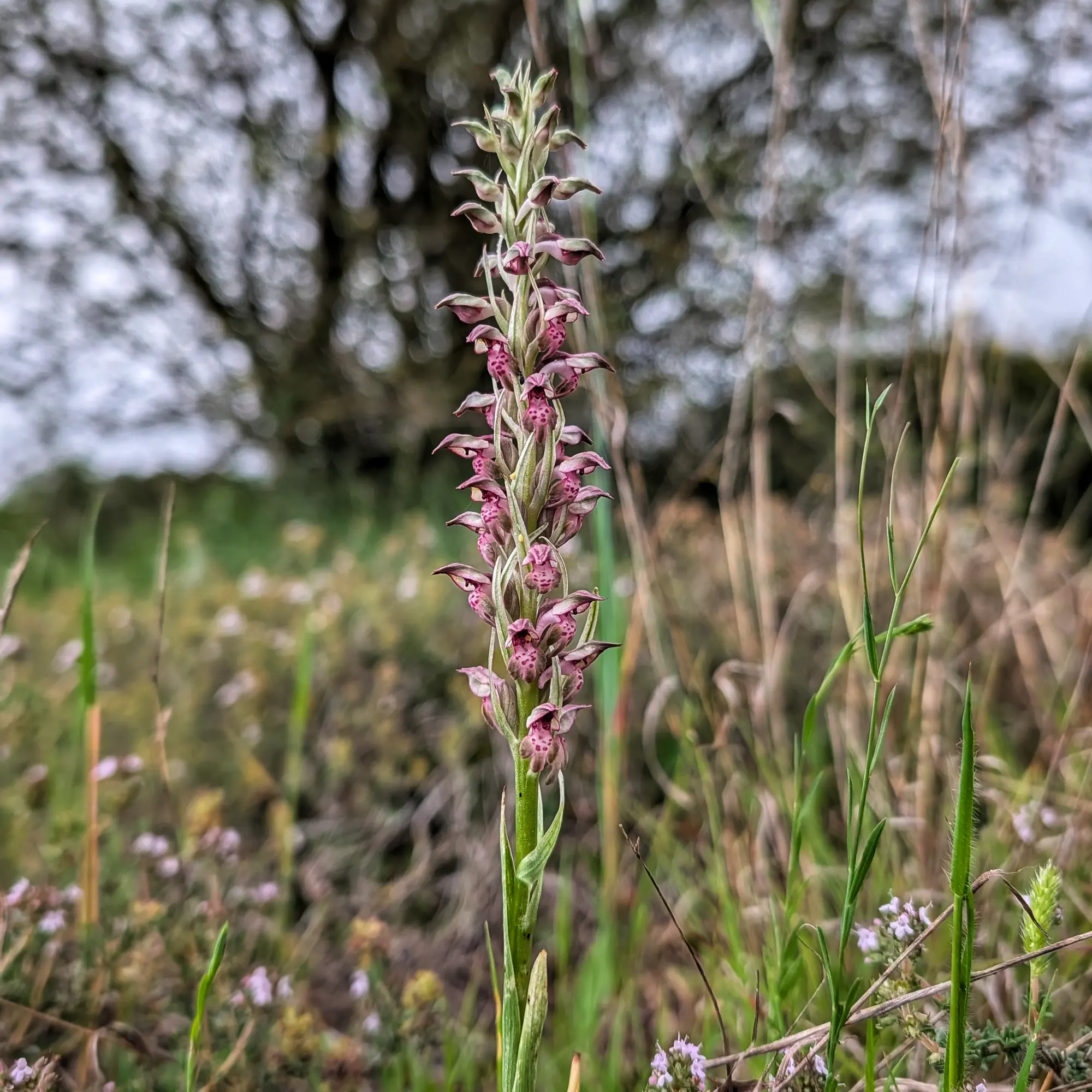
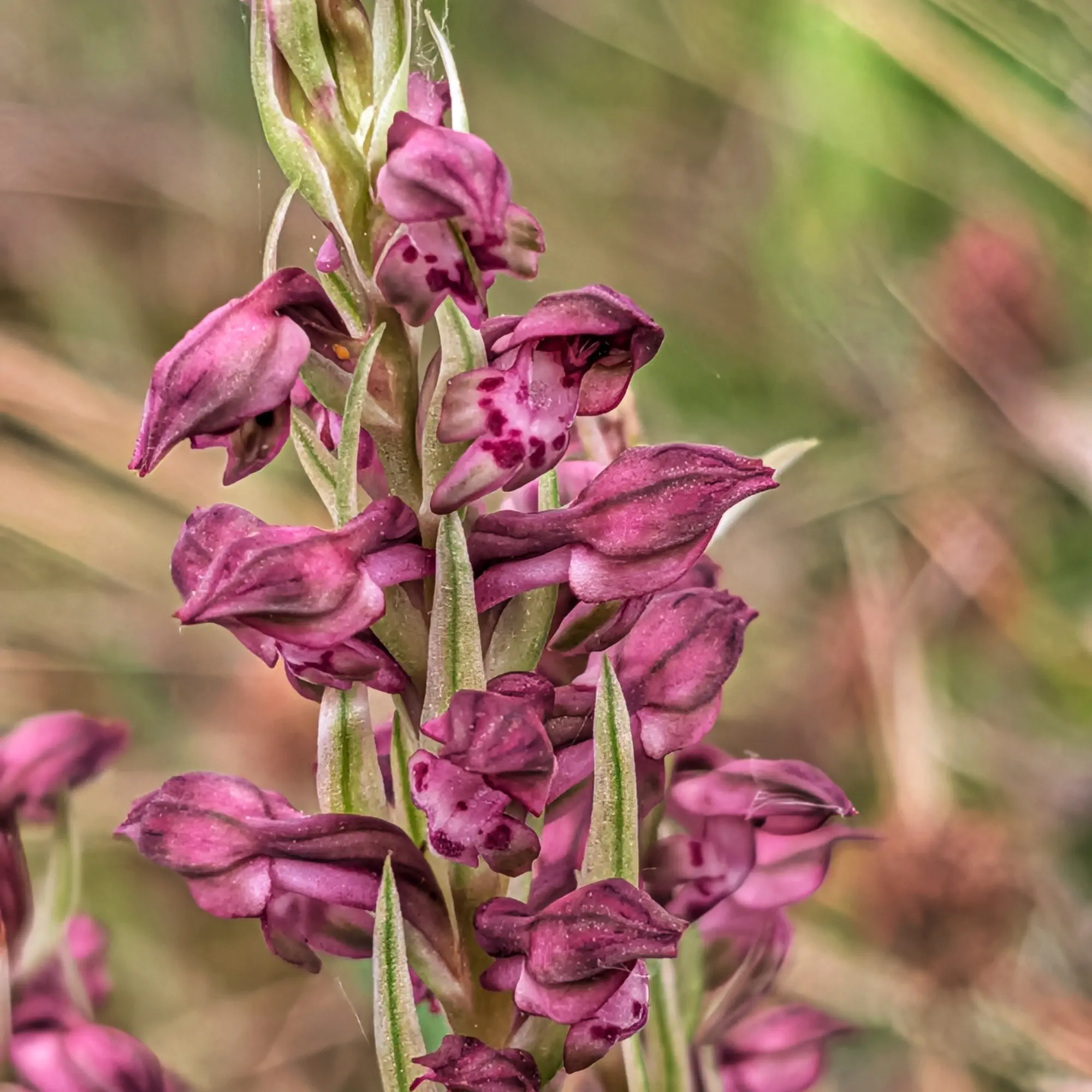
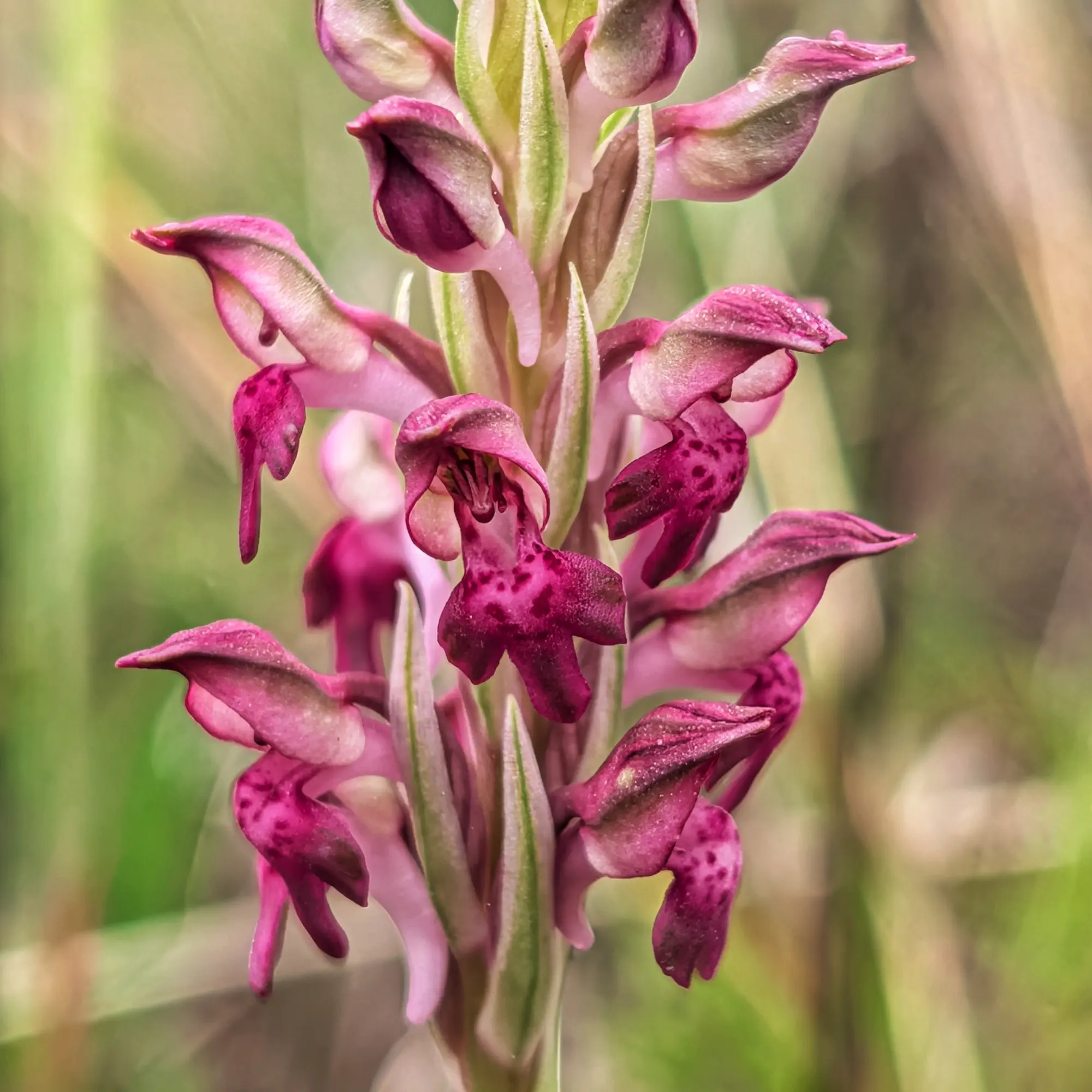
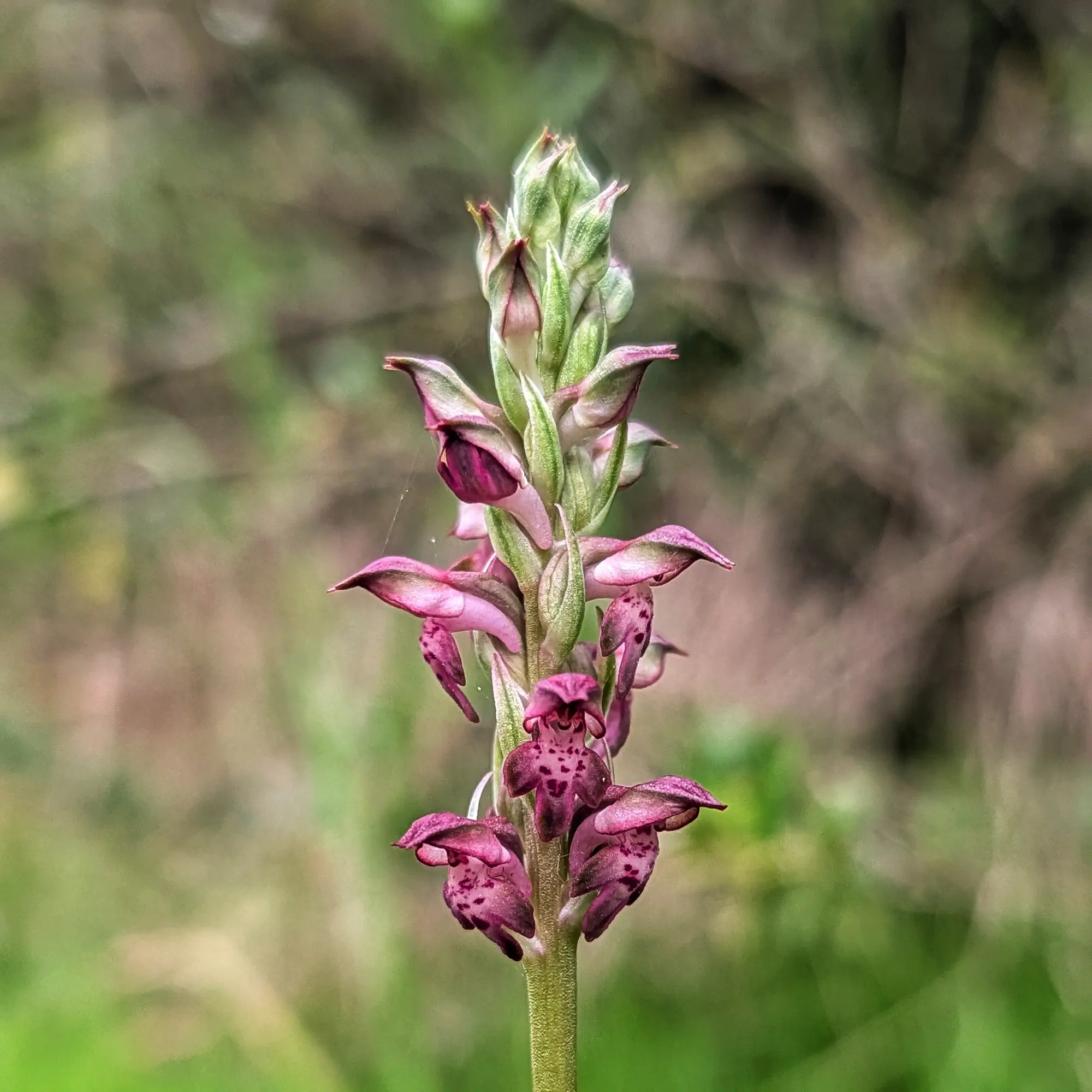
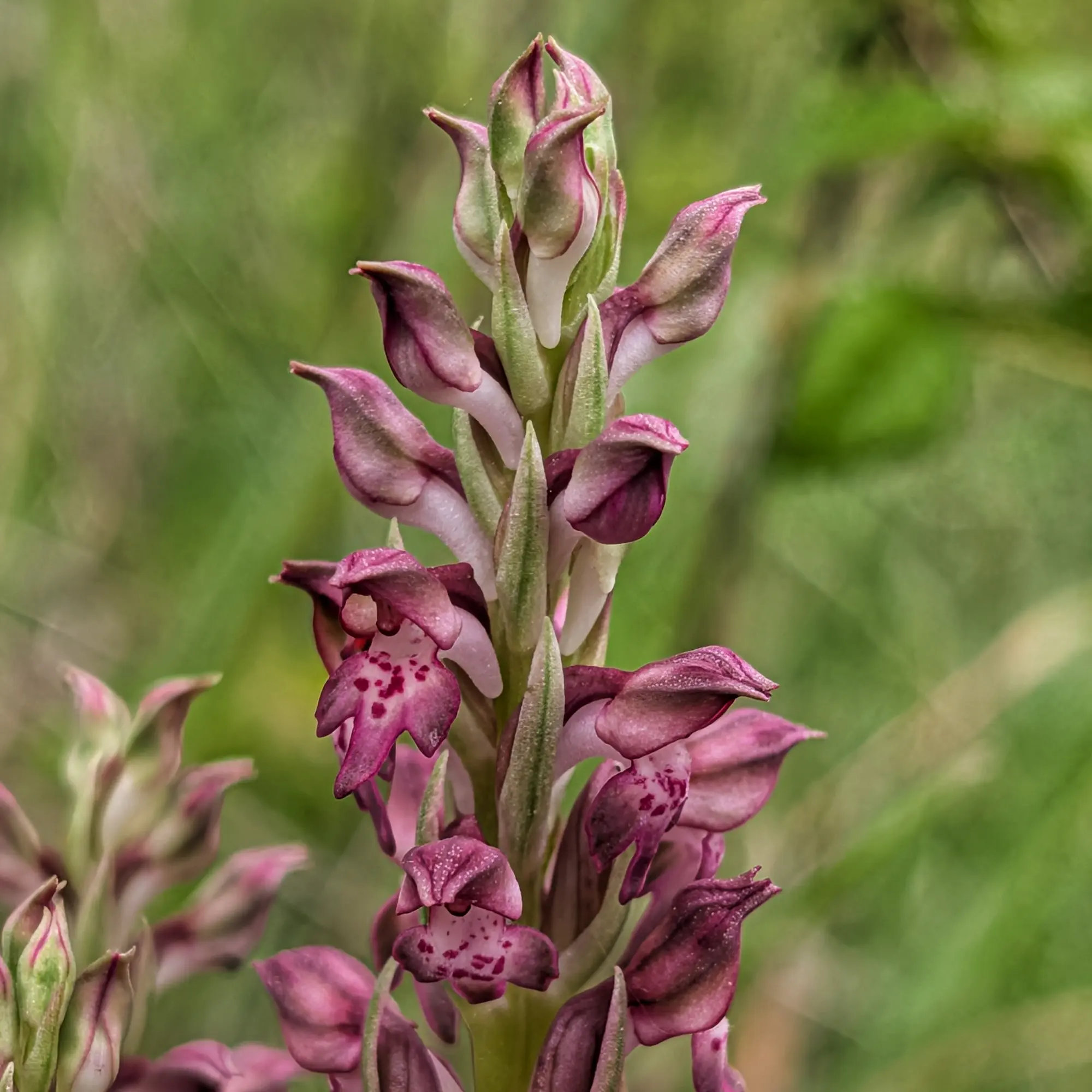
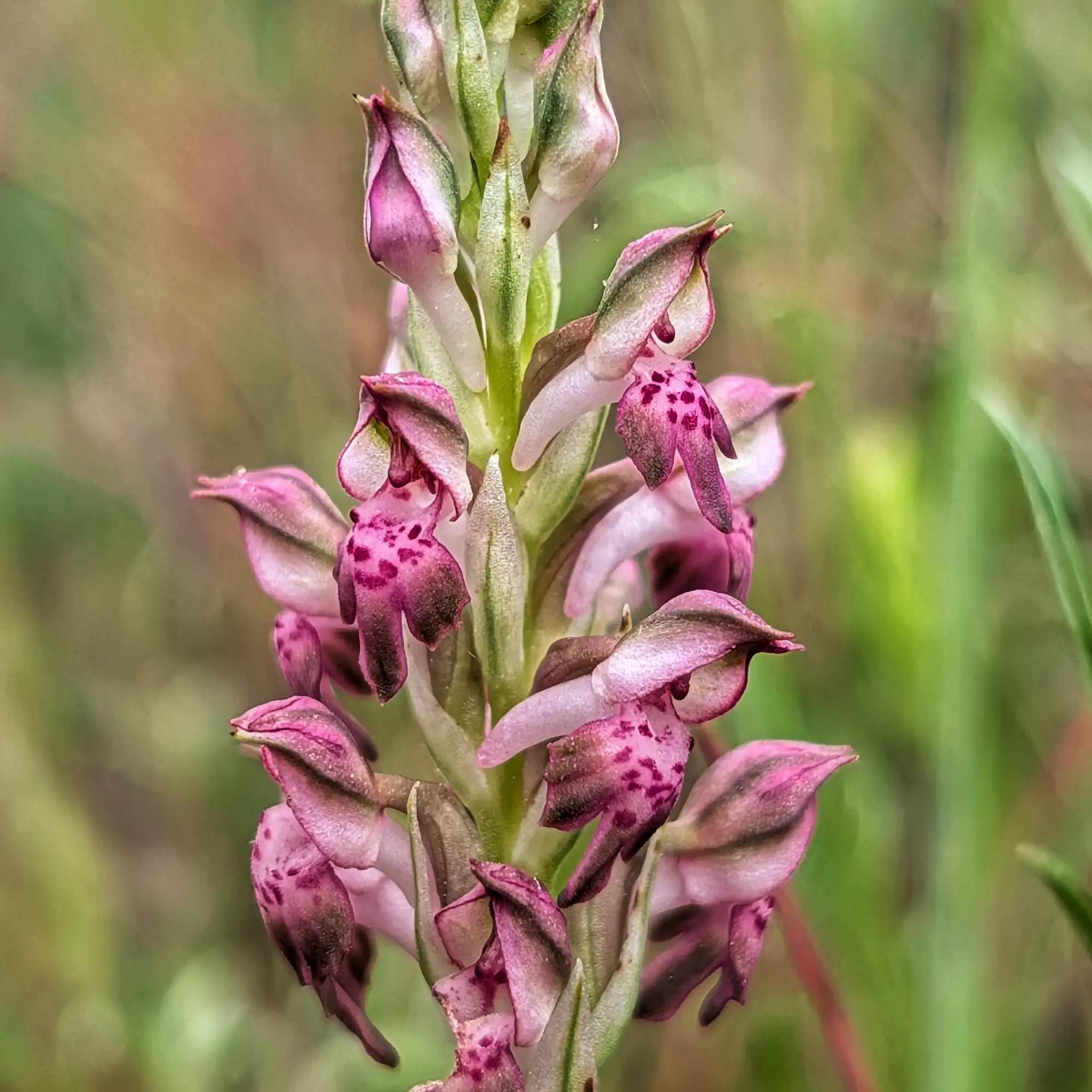
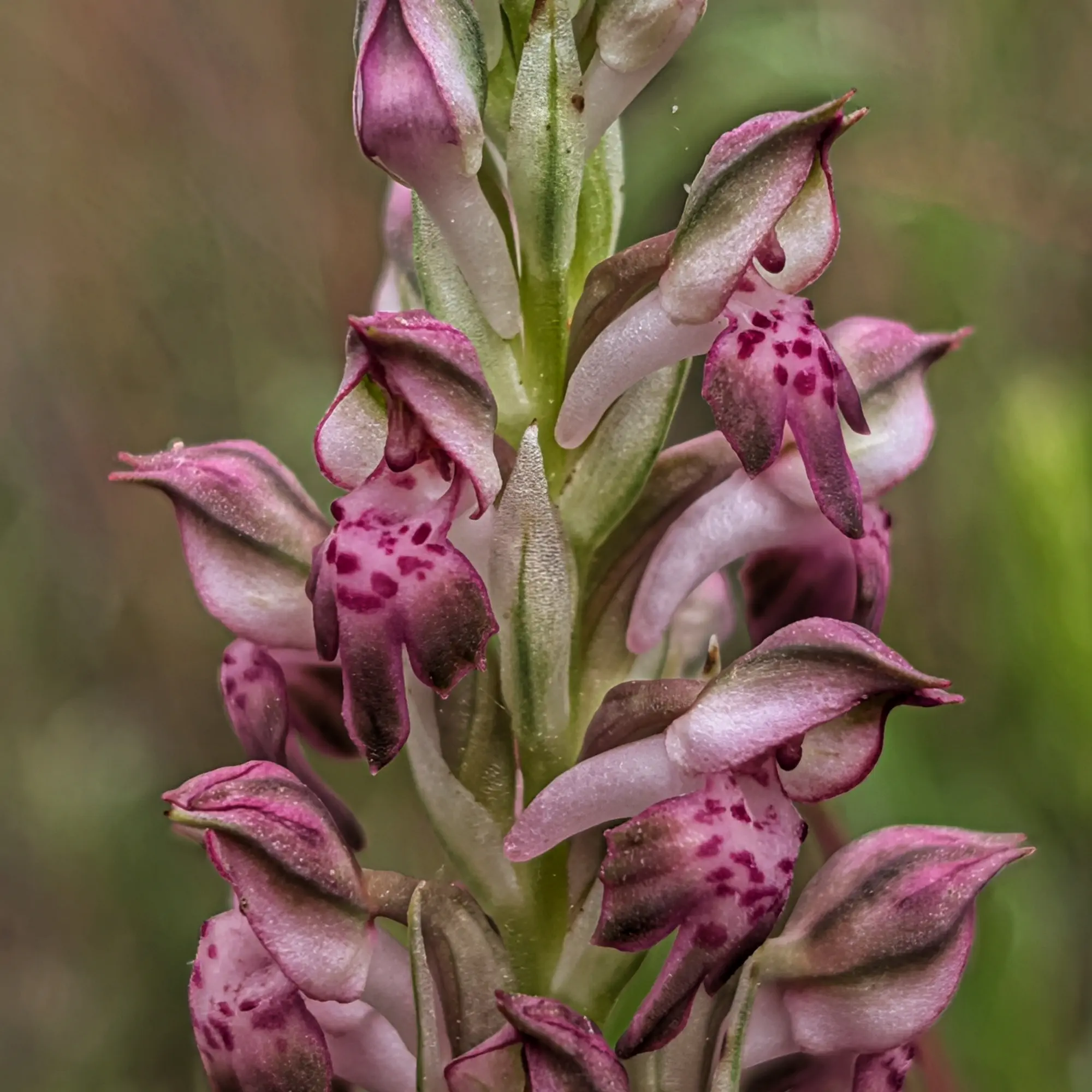
Morphological description and life cycle: It is a terrestrial plant equipped with subterranean tubers, capable of growing up to 60 cm in height (some variants between 15 and 30 cm). It features 4 to 7 lower leaves that form a poorly defined, unspotted rosette, as well as upper leaves that surround the stem almost up to the inflorescence. This is a very dense spike, oblong-cylindrical in shape and 3 to 7 cm long. The flowers have five perianth segments sharply converging, forming a hood. They are a dark wine red or reddish purple color, with a labellum (lower petal) 5 to 8 mm long, divided into three lobes; this labellum presents red spots on a paler center and greenish edges. Finally, the flower has a conical spur that points downwards. Its flowering period spans throughout spring until early summer (from April or early May to early July).
Pollination and ecology: It attracts its pollinators through physical and chemical cues (scents) and provides them with a reward. The most effective reproductive mechanism is allogamy (cross-fertilization), during which its flowers predominantly act in a male capacity. Pollen transport is ensured by various insects, including the wasp Megascolia bidens, the bumblebee Bombus terrestris lusitanicus, Cantharis rustica, Lygaeus saxatilis, flies Stratiomys sp., and butterflies Zygaena filipendulae.
Habitat and distribution: Anacamptis coriophora primarily inhabits places in full sun, such as humid meadows and other environments characterized by very moist or soggy soil. Exceptionally, some subspecies (like fragrans) prefer drier places such as open scrub, pastures, and clear forests located between sea level and 900 meters in altitude. Geographically, it is frequently found throughout Central and Southern Europe, the Balkans, the Mediterranean basin, and regions of the Near East extending to the Caucasus and Iran. Notable inhabited areas include Catalonia, Mallorca (Balearic Islands), Andalusia, Portugal, France, Germany, Italy, Slovenia, Greece, and Bulgaria.
Conservation status: This species is quite rare and highly localized due to a severe global decline caused by the destruction and fragmentation of its habitats. In France, it was included in the category of a Vulnerable (VU) species according to IUCN Red List criteria, and it enjoys national protection status. The main threats to its survival are changes in land use and especially drainage leading to the destruction of the wetlands where it optimally grows.
Gallery
Related observations
Discover the observations I've made of this species.