Anacamptis laxiflora
About the Orchid
The Loose-flowered Orchid (Anacamptis laxiflora) is a terrestrial orchid species belonging to the Orchidaceae family. Formerly known as Orchis laxiflora, it is currently classified within the genus Anacamptis. The genus name derives from the Greek verb anakamptein, meaning «to bend back» or «to turn back,» while the specific epithet refers to the spaced-out arrangement of its flowers. It is a geophyte plant with ovoid tubers.
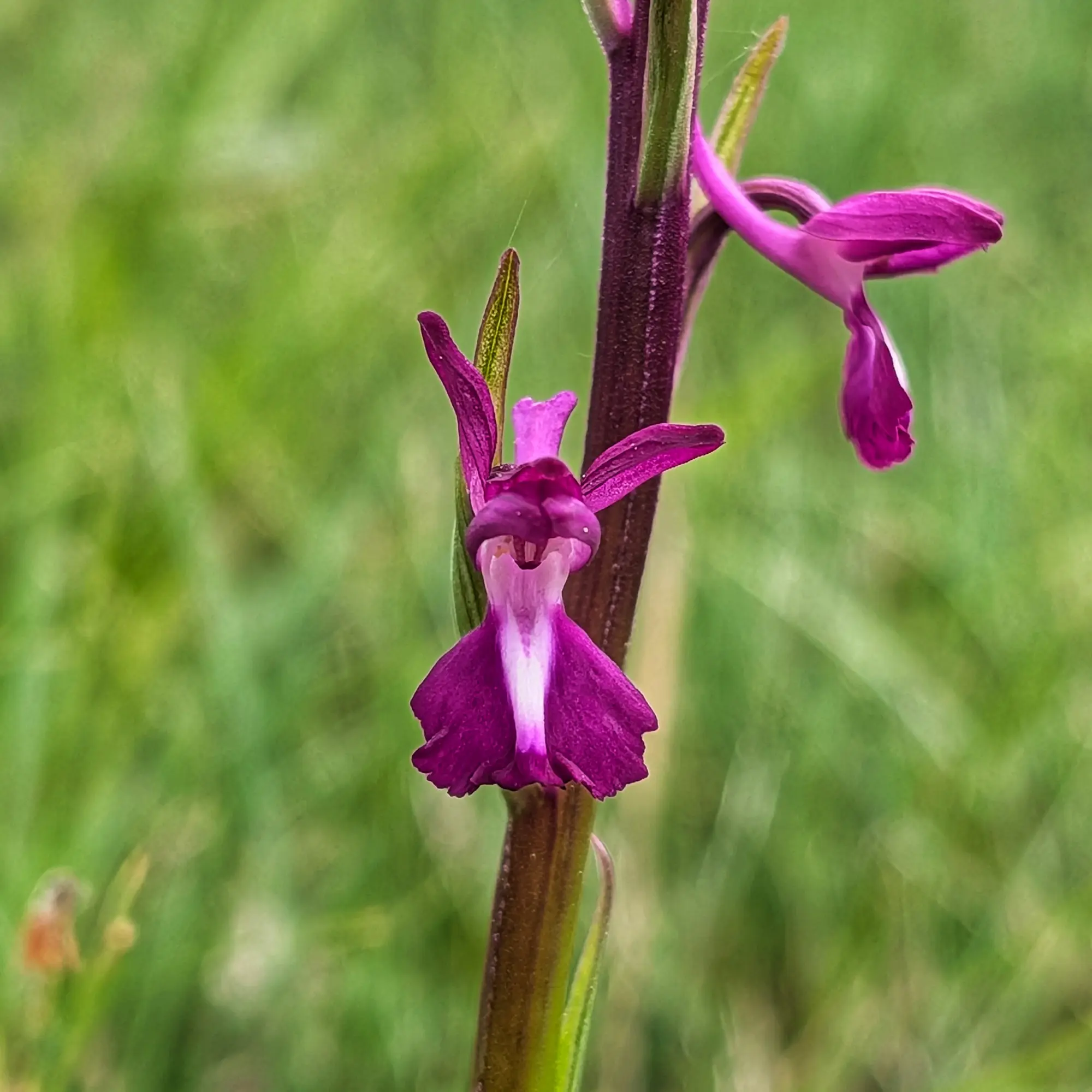
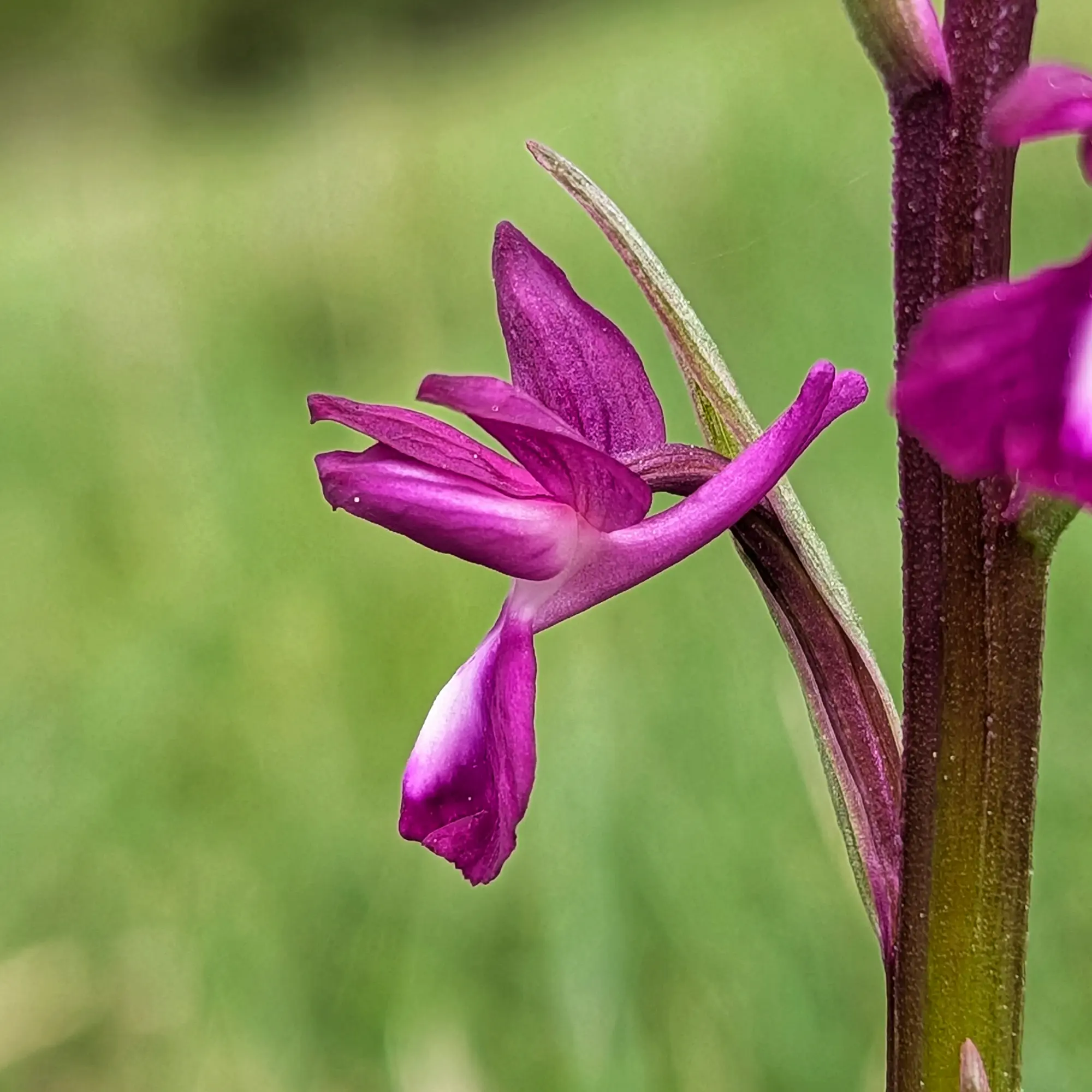
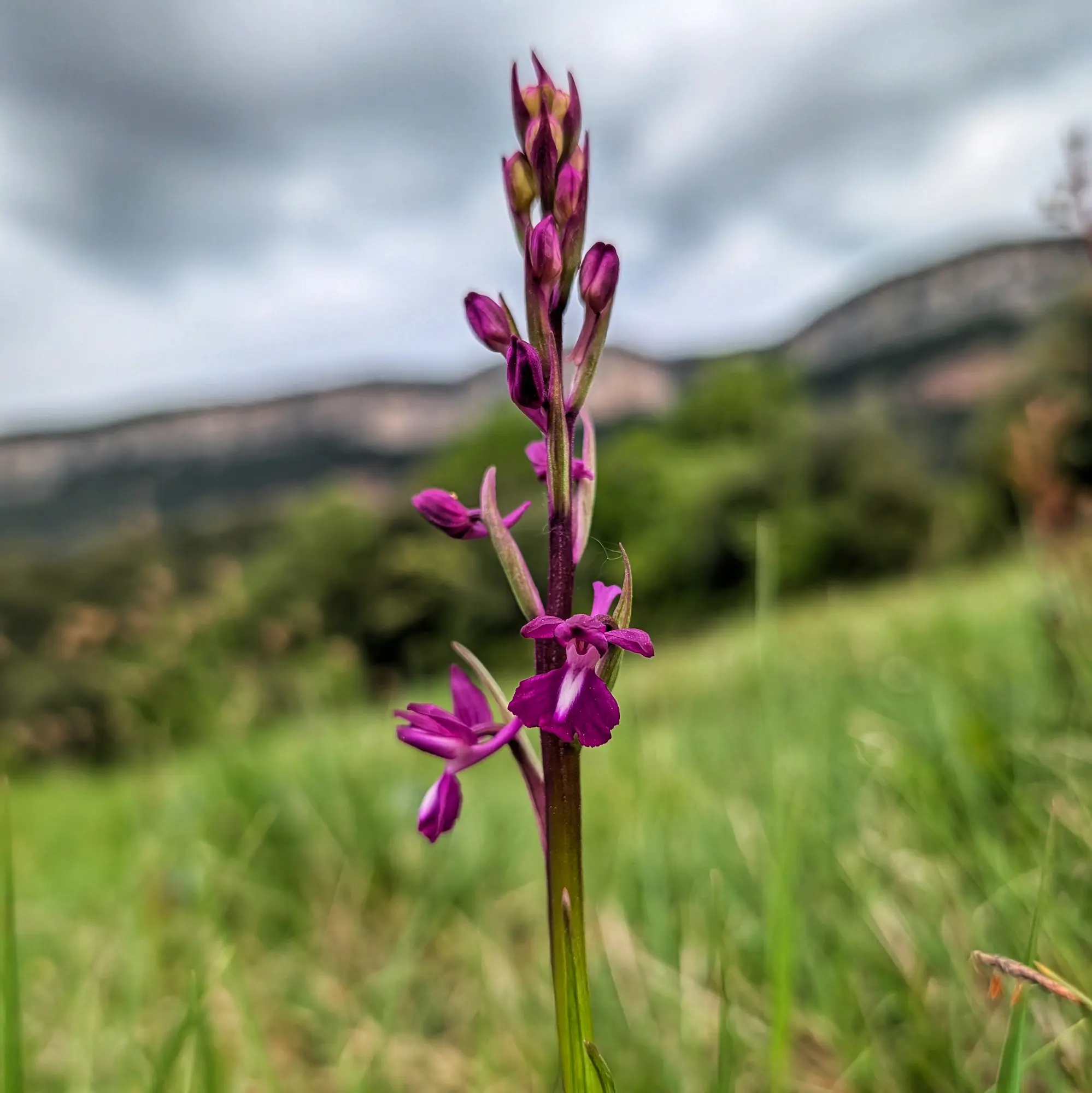
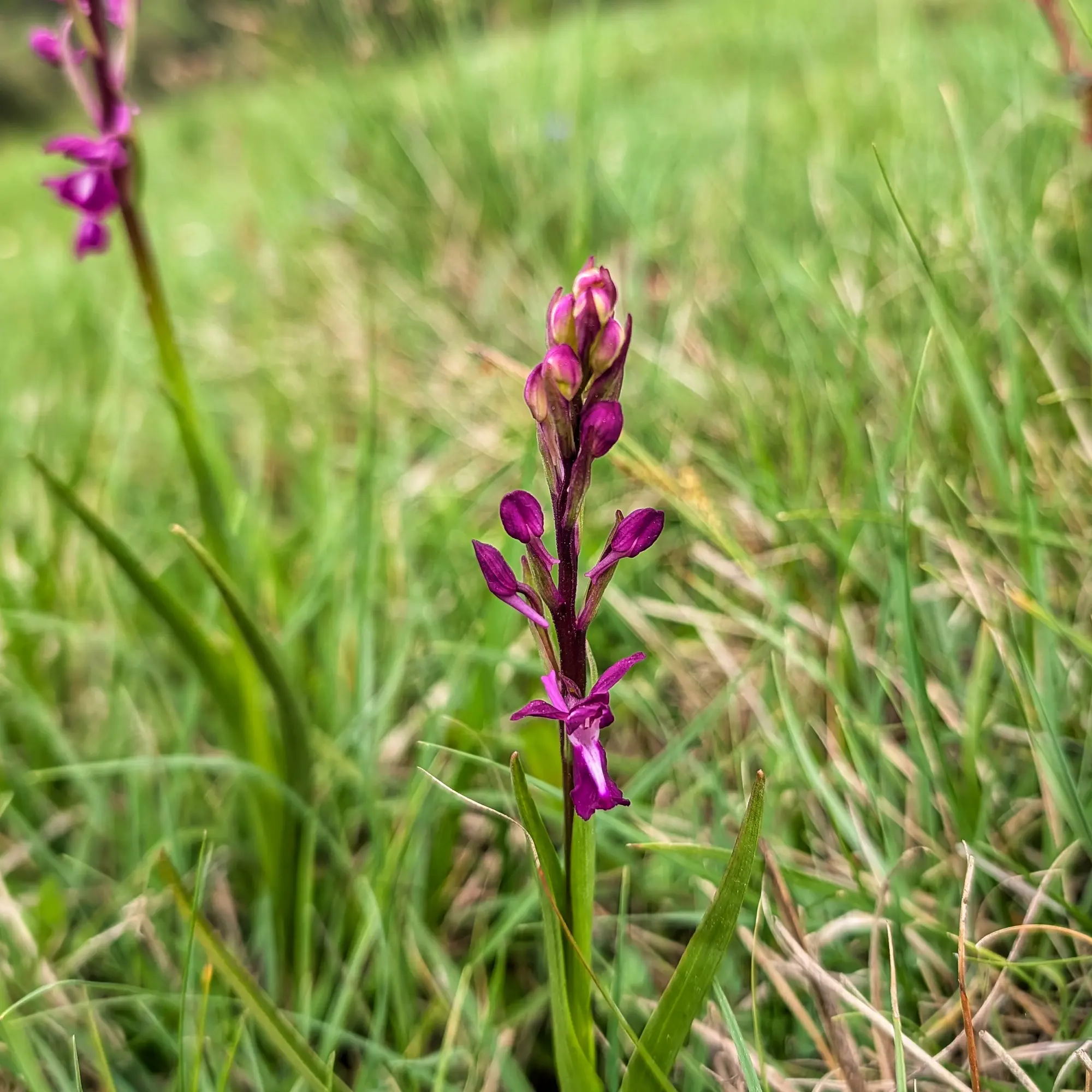
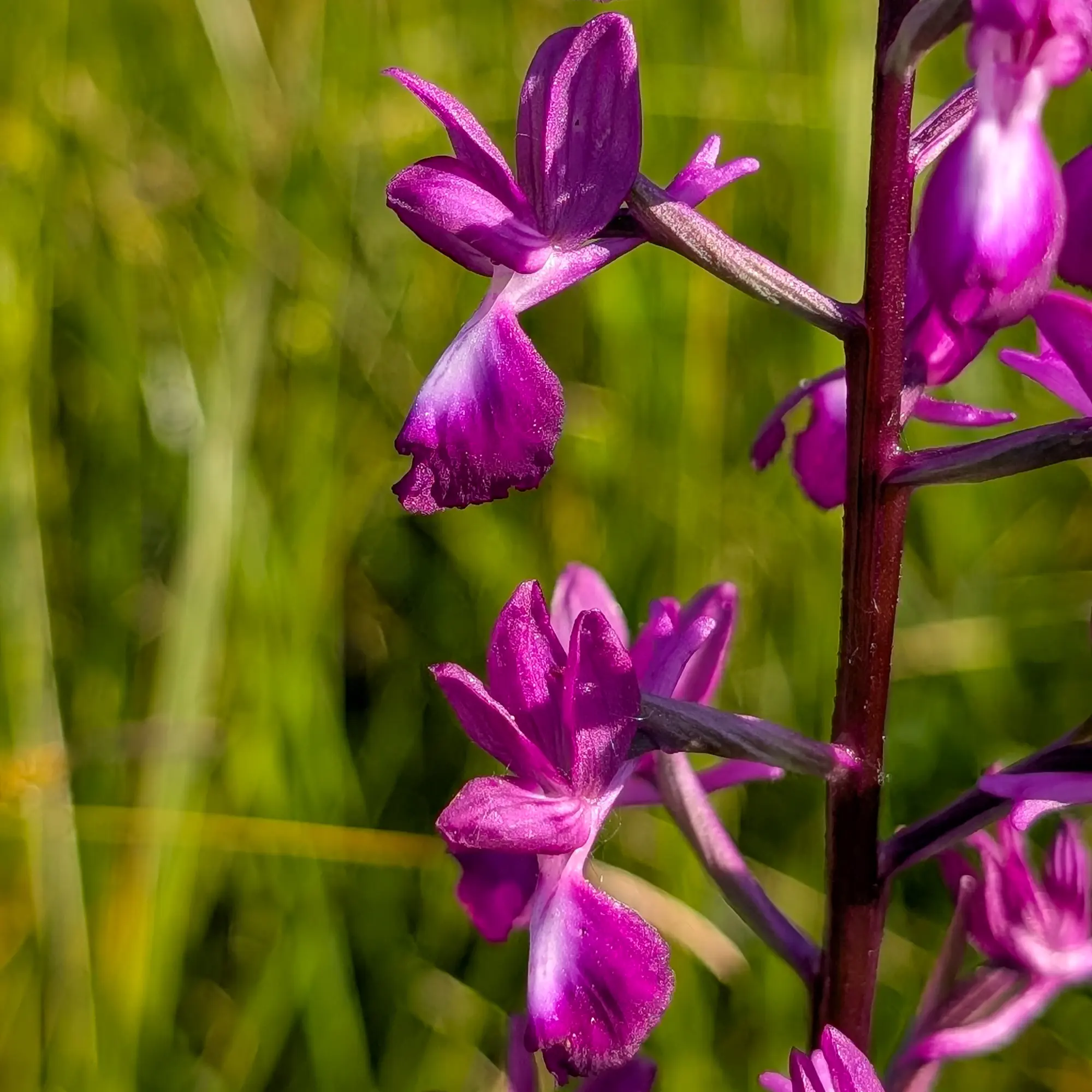
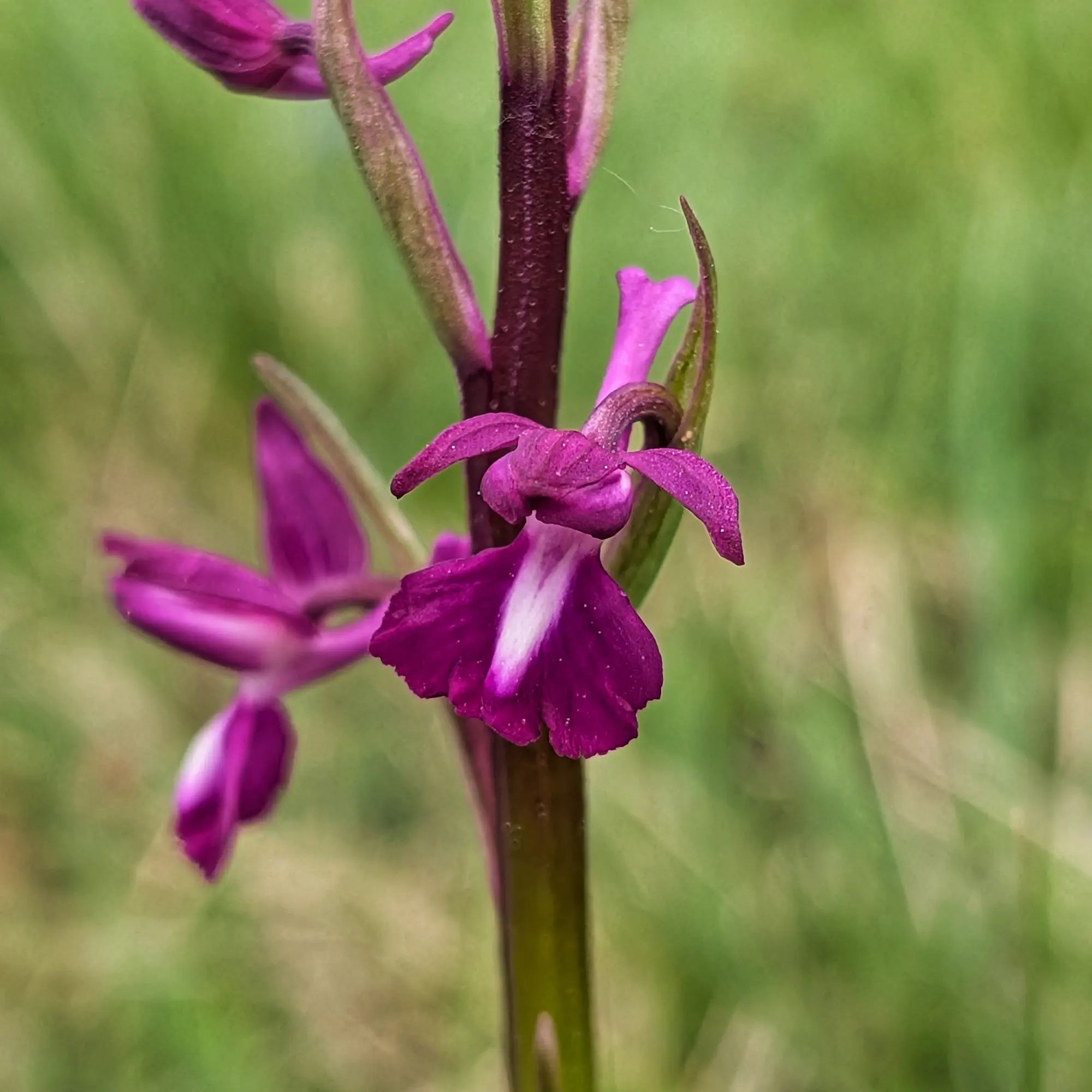
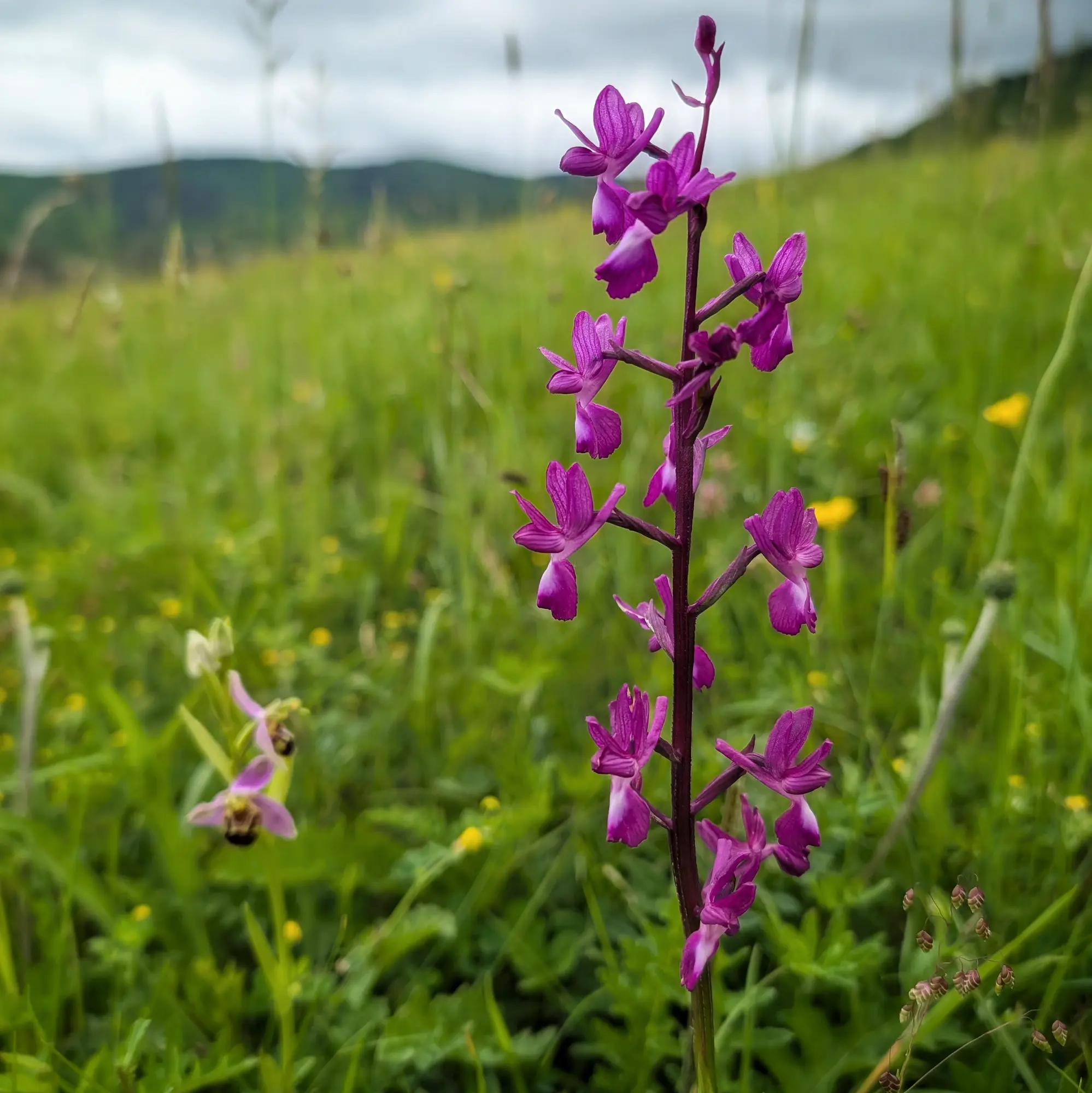
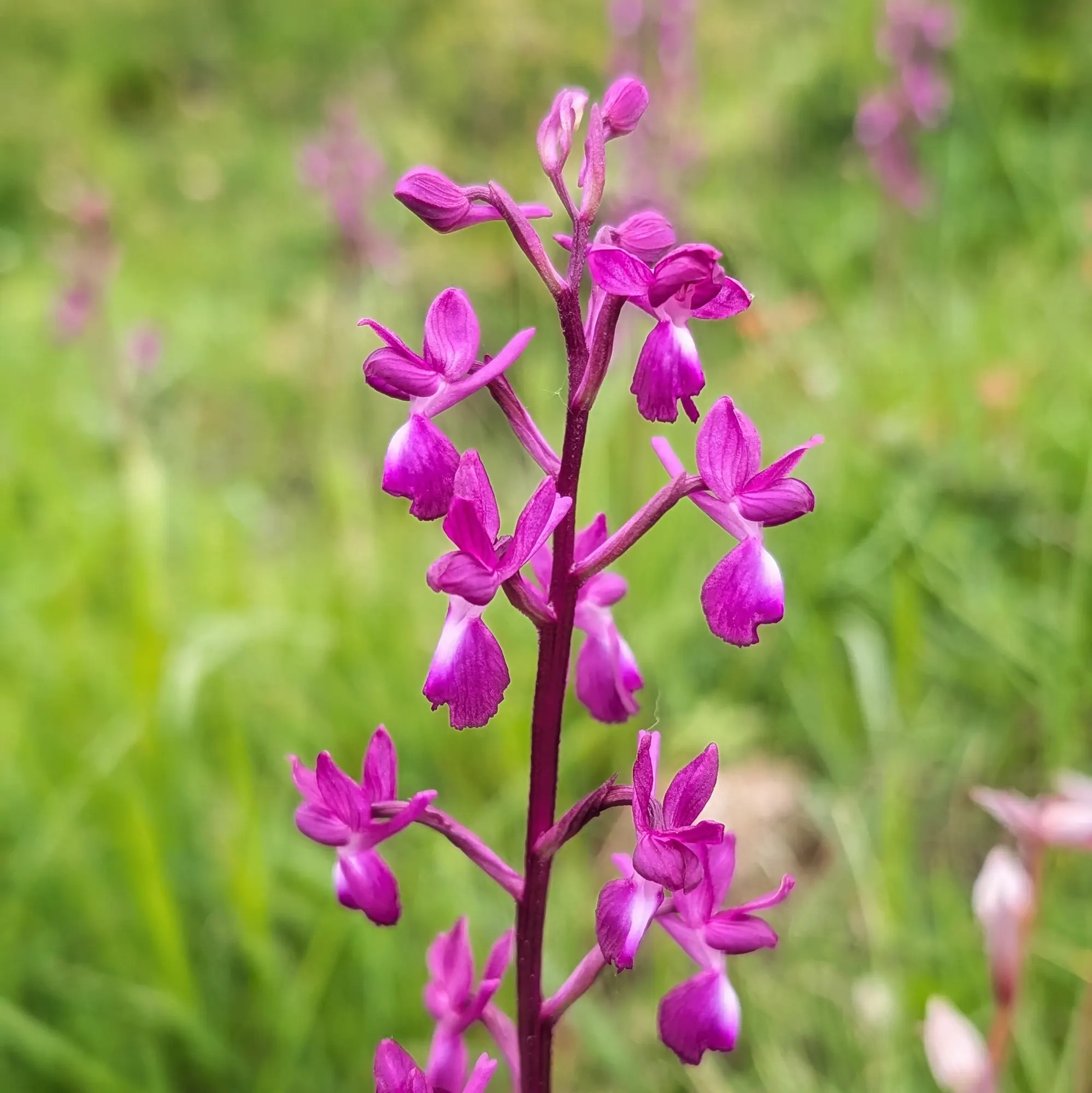
Morphological description: It is a perennial herbaceous plant that can grow up to 60 cm tall. Its leaves are uniformly green (unspotted) and mostly cauline (distributed along the stem), unlike other species in the genus which have them grouped in basal rosettes. The inflorescence is a very lax spike, meaning the flowers are quite separated. The flowers are zygomorphic and quite large, displaying a dark purple color that is lighter inside. The labellum is a distinctive feature for identification: its lateral lobes are folded downwards and backwards, and the median lobe is distinctly shorter than the lateral ones, sometimes almost non-existent. This morphology helps distinguish it from Anacamptis palustris. Its seeds have a thin and permeable testa, which facilitates rapid germination.
Habitat and distribution: It grows exclusively in wet meadows, marshy areas, and humid depressions, often on alkaline or calcareous soils, and is considered an indicator plant of wetlands. Its known pollinators include bumblebees such as Bombus pascuorum and Bombus terrestris. It has a wide distribution spanning from Europe to Central Asia, being common in France and Italy. In Catalonia, its presence is particularly notable in the Girona regions (Alt Empordà, la Selva, and Gironès), as well as around Montseny-Guilleries; it has also been cited in Osona.
Conservation status: Its wet meadow habitats are affected by human activity, such as the transformation of meadows and the diversion of irrigation water, which endangers existing populations. Although considered a common species in some regions (like Italy), populations in Catalonia are becoming increasingly scarce outside the plains of Alt Empordà and La Selva. Conservation initiatives, such as electric fences to protect small populations, are in place to mitigate threats.
Gallery
Related observations
Discover the observations I've made of this species.