Anacamptis morio
About the Orchid
The Anacamptis morio, commonly known as the Green-winged Orchid or Green-veined Orchid (and with the synonym Orchis morio), is a herbaceous terrestrial orchid species, equipped with two rounded or oval subterranean tubers. It is one of the most widespread orchids in the Euro-Mediterranean region and is characterized by its striking and colorful appearance. The specific epithet morio comes from Latin and means "jester" or "clown", referring to the showiness of its striped and spotted flowers.
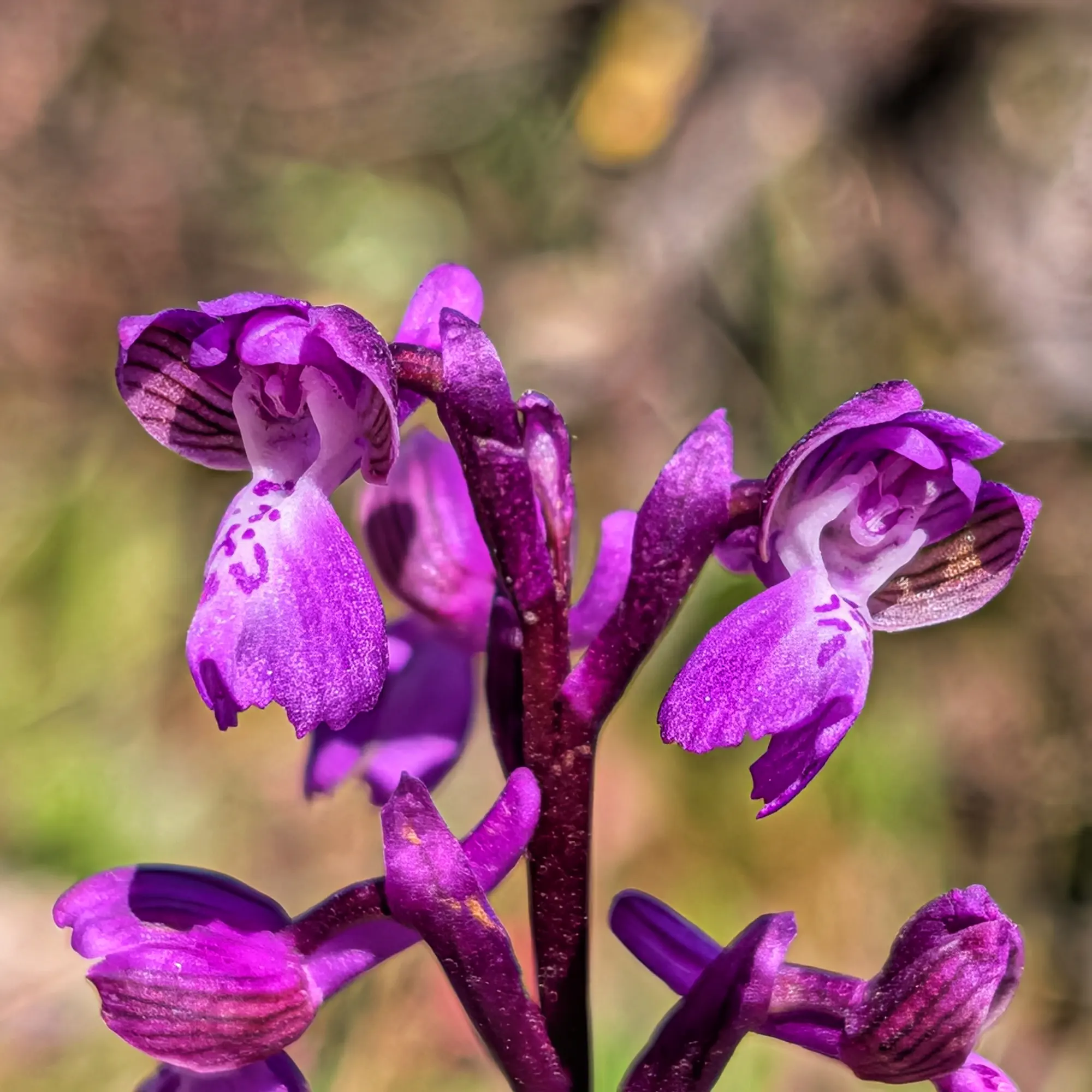
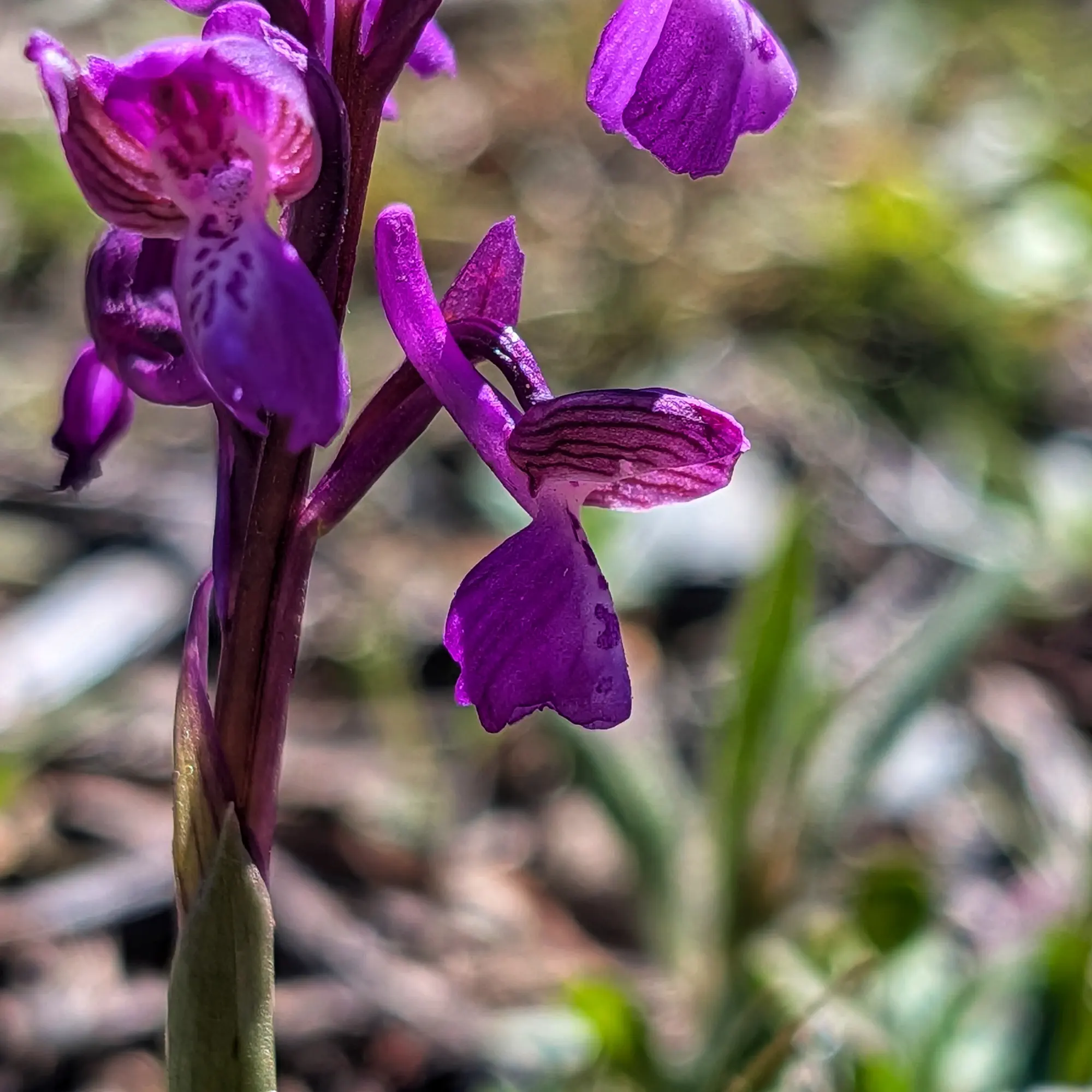
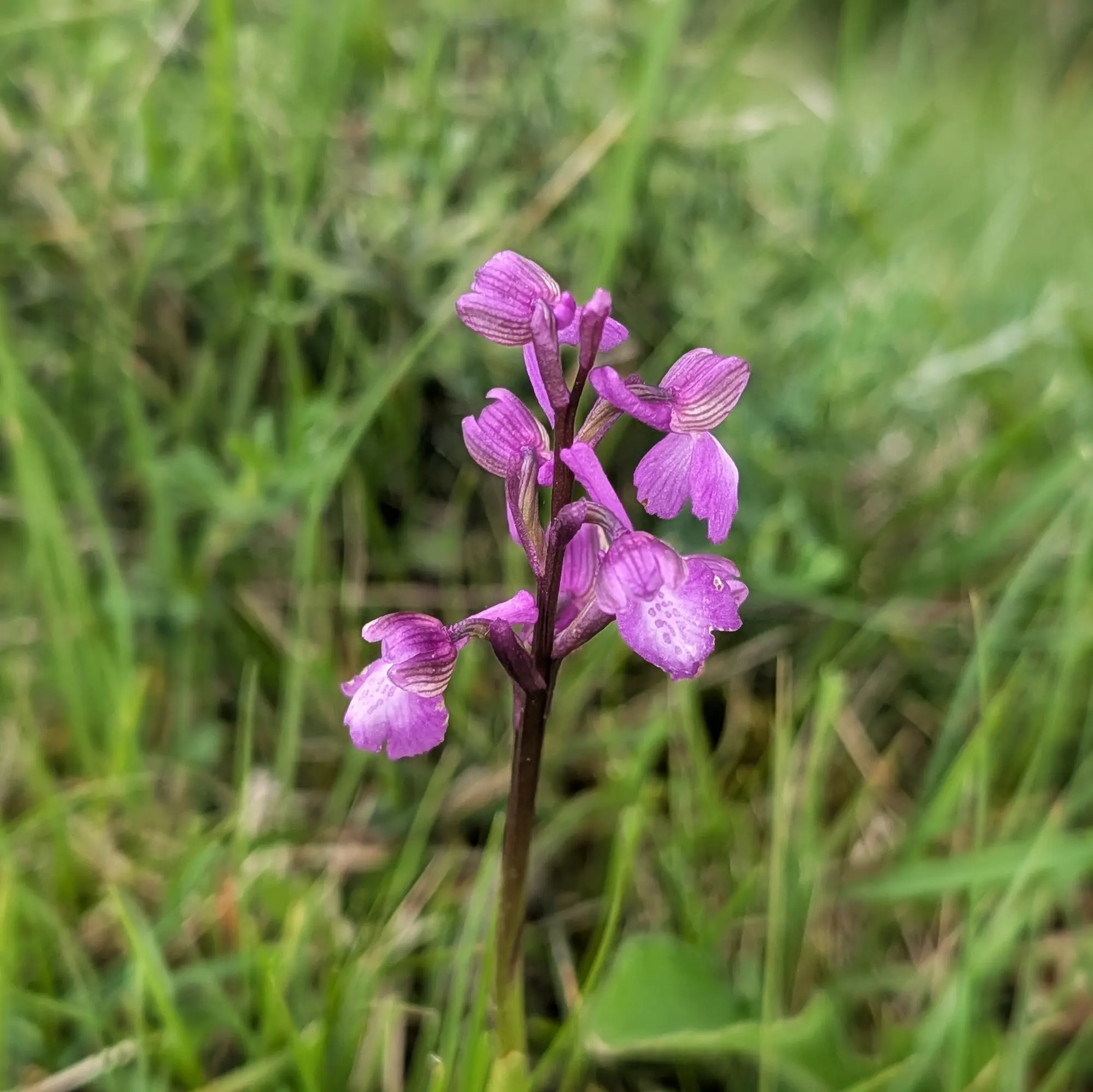
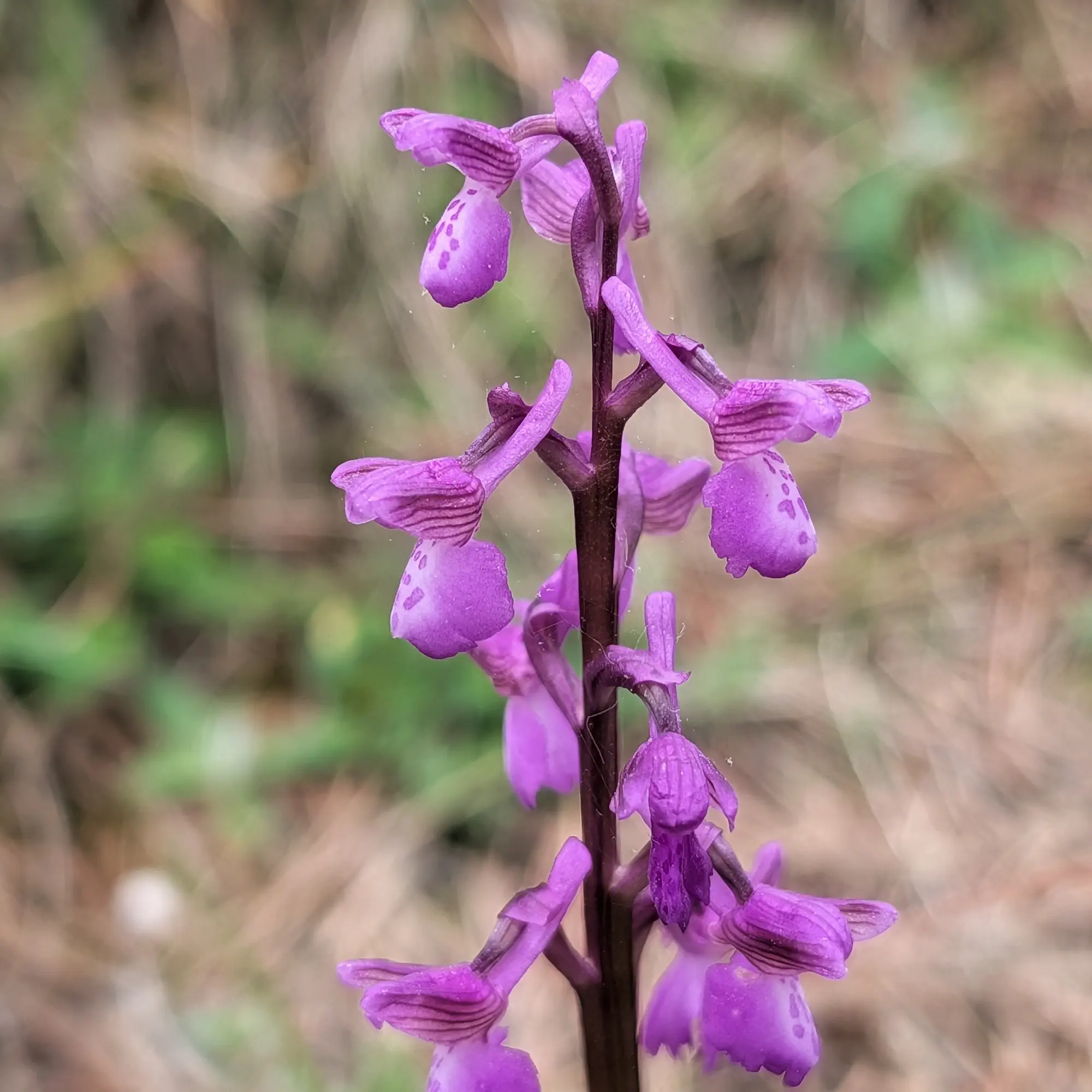
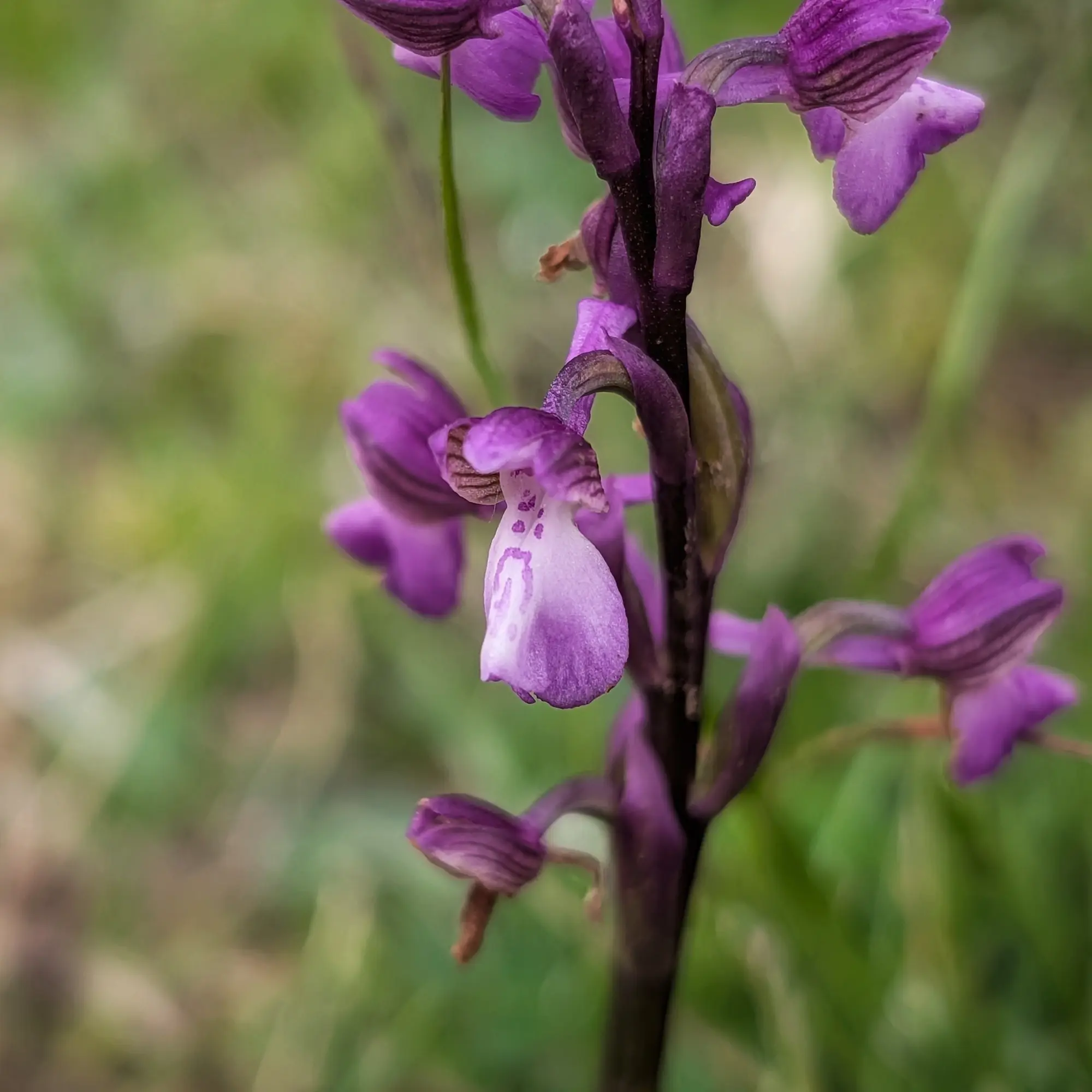
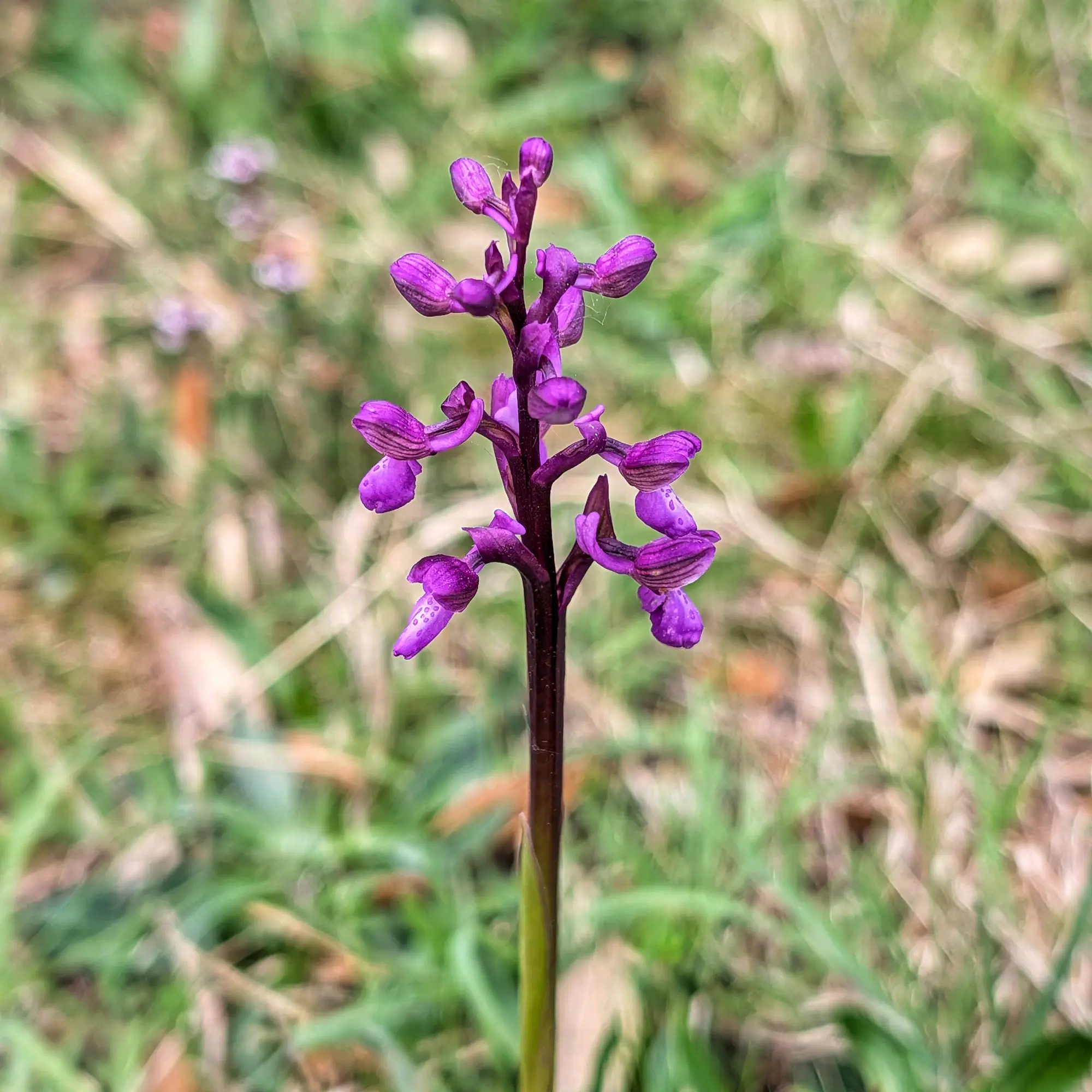
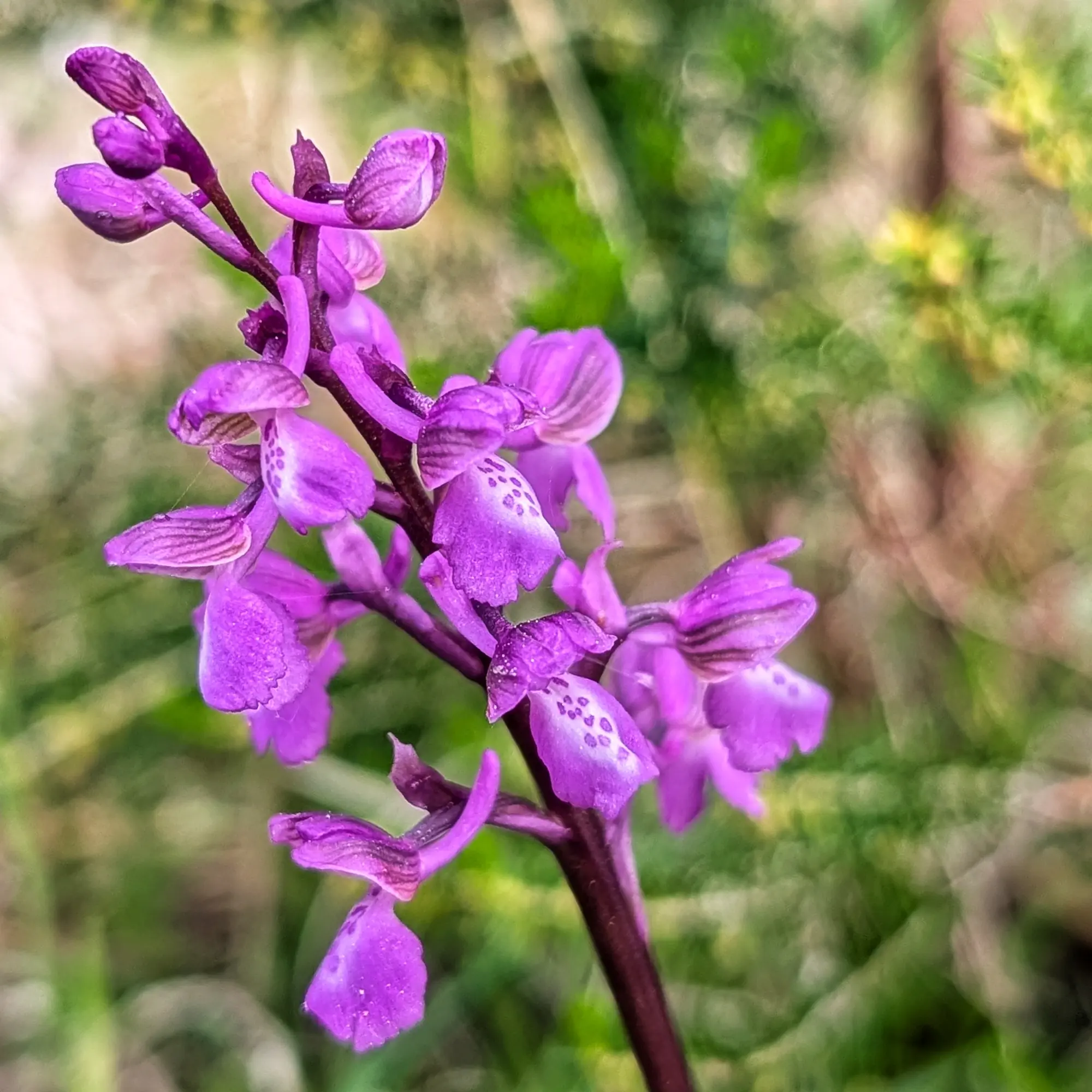
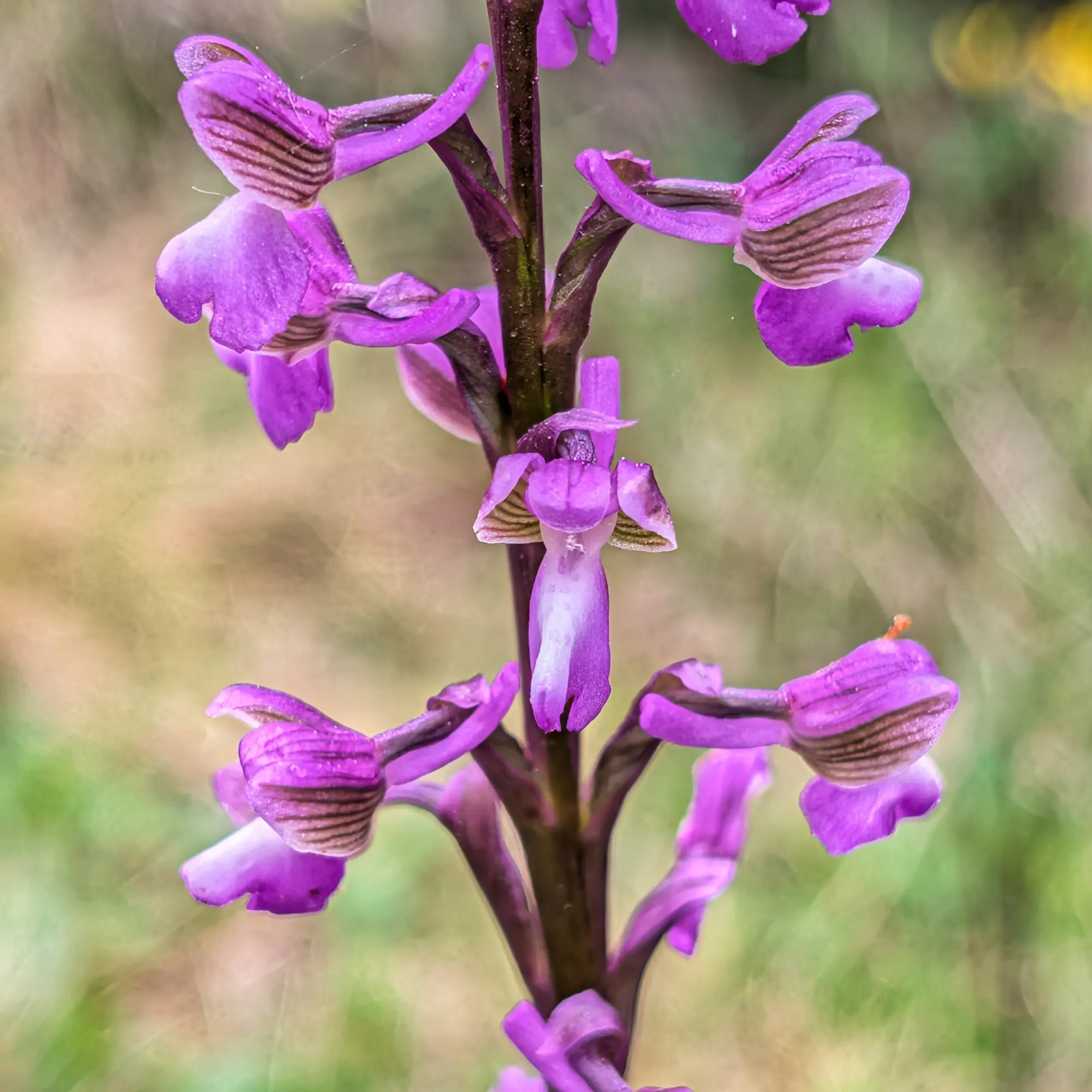
Morphological description: This is a robust but small to medium-sized plant, reaching between 10 and 40 cm in height. It has a cylindrical green stem that generally turns purplish at the top. The basal leaves are green, unspotted, lanceolate or oval in shape, and are grouped to form a basal rosette. The cauline leaves (stem leaves) are narrower and embrace the stem almost up to the height of the flowers. The inflorescence is a linear or oblong spike, lax or dense, grouping between 5 and 28 flowers. The color is extremely variable, ranging from dark violet or purple to pale pink, or even presenting albino (white) individuals. The most distinctive morphological feature are the two lateral sepals, which curve to form a "helmet" or "hood" and feature very evident green (occasionally purple) marks or veins, which give it its common name in English. The labellum (lower petal) is wide, slightly trilobed, folded upon itself, with a pale center decorated with intense dark red spots. It possesses a cylindrical, linear, or slightly curved spur, approximately the same length as the ovary. It does not produce nectar.
Pollination and life cycle: Since its flowers do not produce nectar to reward insects, this orchid relies on food deception for pollination. It attracts insects by mimicking the appearance of other species that do have nectar. Although it is a self-compatible species, it necessarily requires an animal vector for reproduction. Its main pollinators are Hymenoptera (bees and bumblebees), notably several species of the genus Bombus. The flowering season occurs in spring, usually from February or March until May and June, depending on altitude and climate. Individuals can live and flower for up to 17 years. Furthermore, its small seeds depend exclusively on a symbiotic relationship with mycorrhizal fungi in the soil to germinate and obtain nutrients during the early stages of their development.
Habitat and distribution: This orchid demonstrates extreme ecological tolerance and can live in various environments. It grows in dry meadows, mountain pastures, scrubland, and forest clearings. It adapts to all types of soils, although it thrives especially well in limestone-rich soils (basic soils). It prefers locations with good sun exposure (full sunlight) and is often found in meadows where the grass is cut only once a year after flowering has finished. Altitudinally, it can be found from sea level areas (100 m) up to a maximum altitude of 1,500 or 2,000 meters. It is a Euro-Mediterranean distributed species. It extends across Europe (from southern Scandinavia or England), northwestern Africa (from Morocco to Tunisia), and eastward to Iran. In regions like Catalonia, it is present in much of the territory, although its frequency of appearance can be considered rare depending on the locality.
Conservation status: According to the International Union for Conservation of Nature (IUCN) Red List, Anacamptis morio is classified globally and European-wide as Near Threatened (NT). Its populations are subject to threats stemming from changes in land use, such as intensive agricultural practices, overgrazing, and the destruction or urbanization of dry meadows, as well as the loss of suitable habitat due to abnormal drought periods.
Gallery
Related observations
Discover the observations I've made of this species.