Anacamptis pyramidalis
About the Orchid
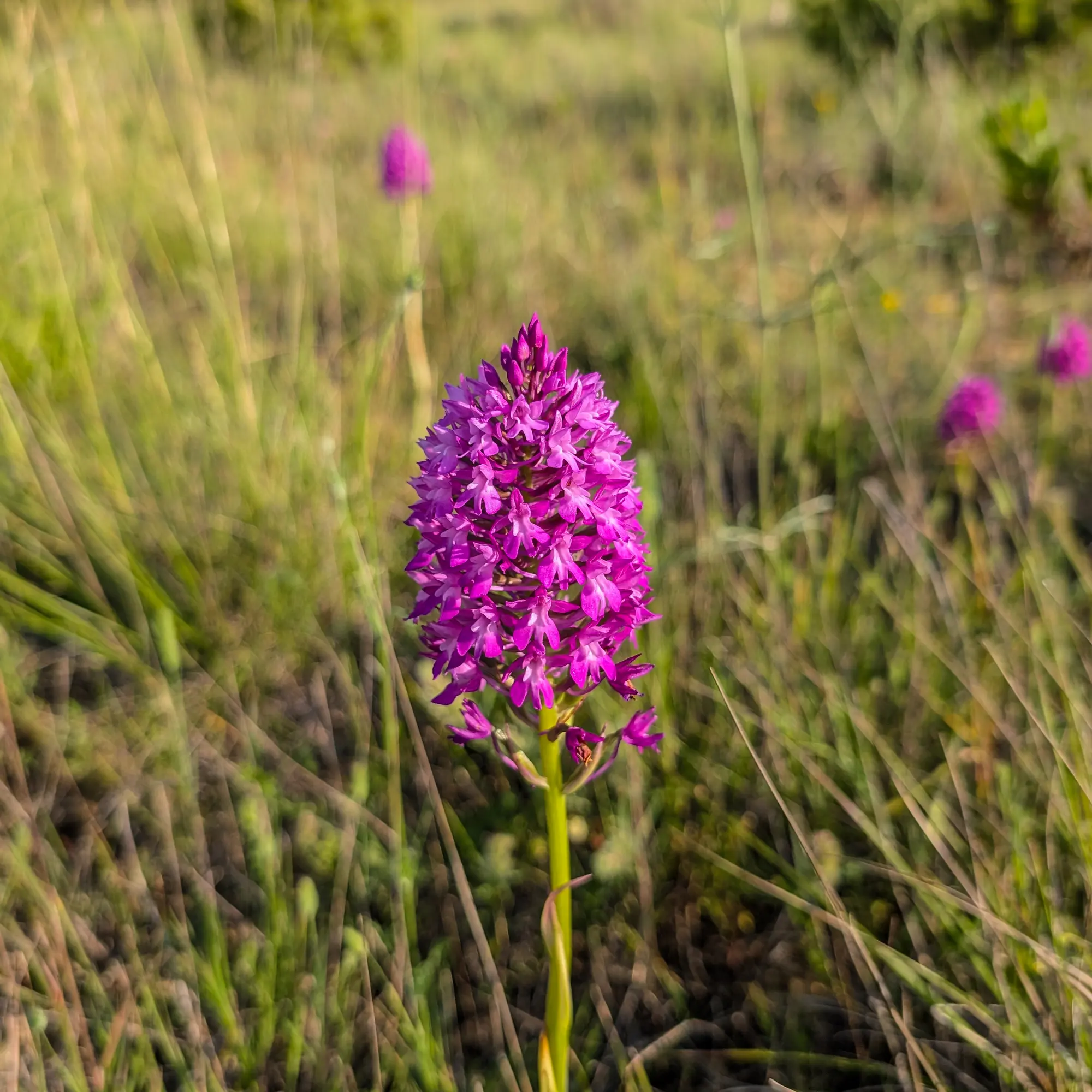
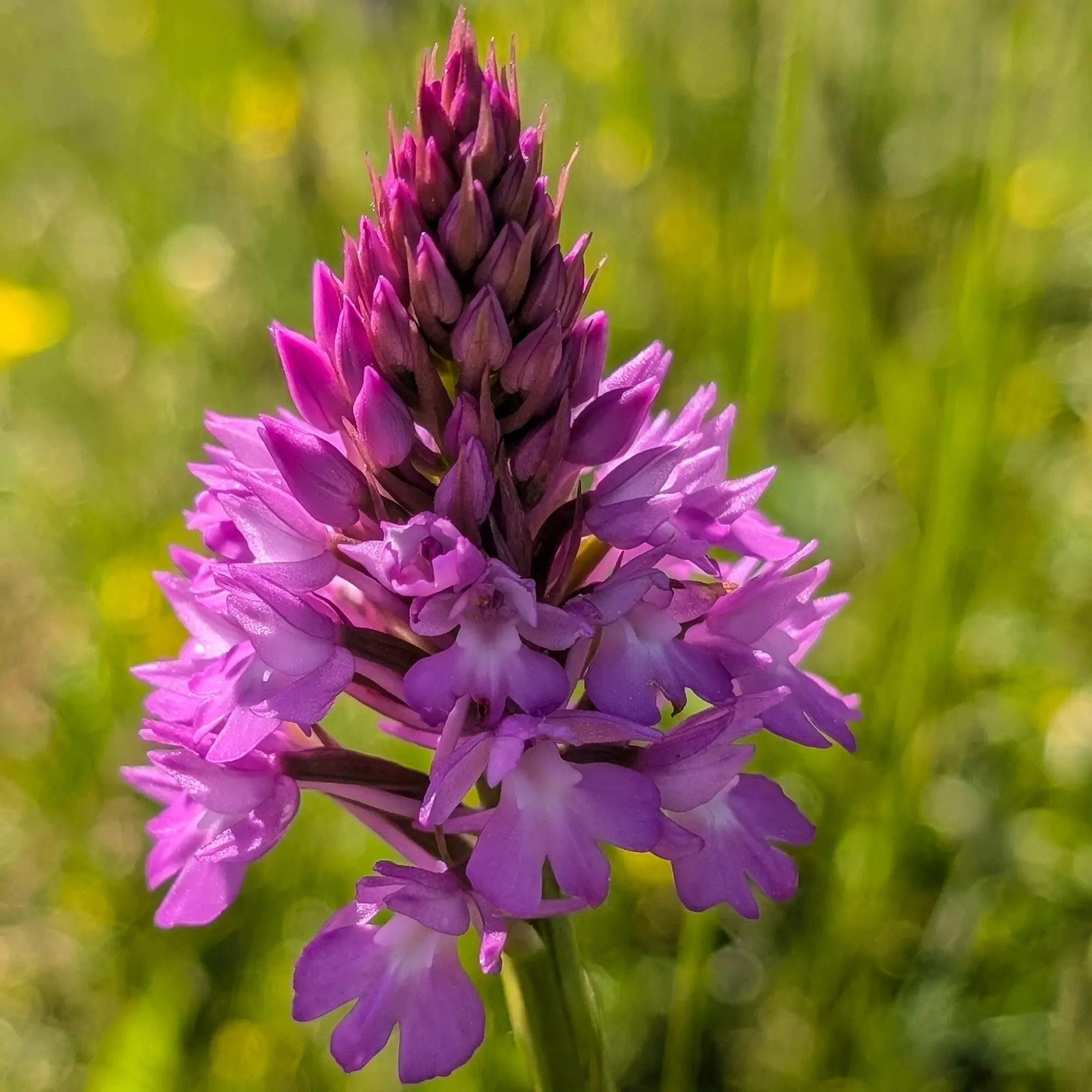
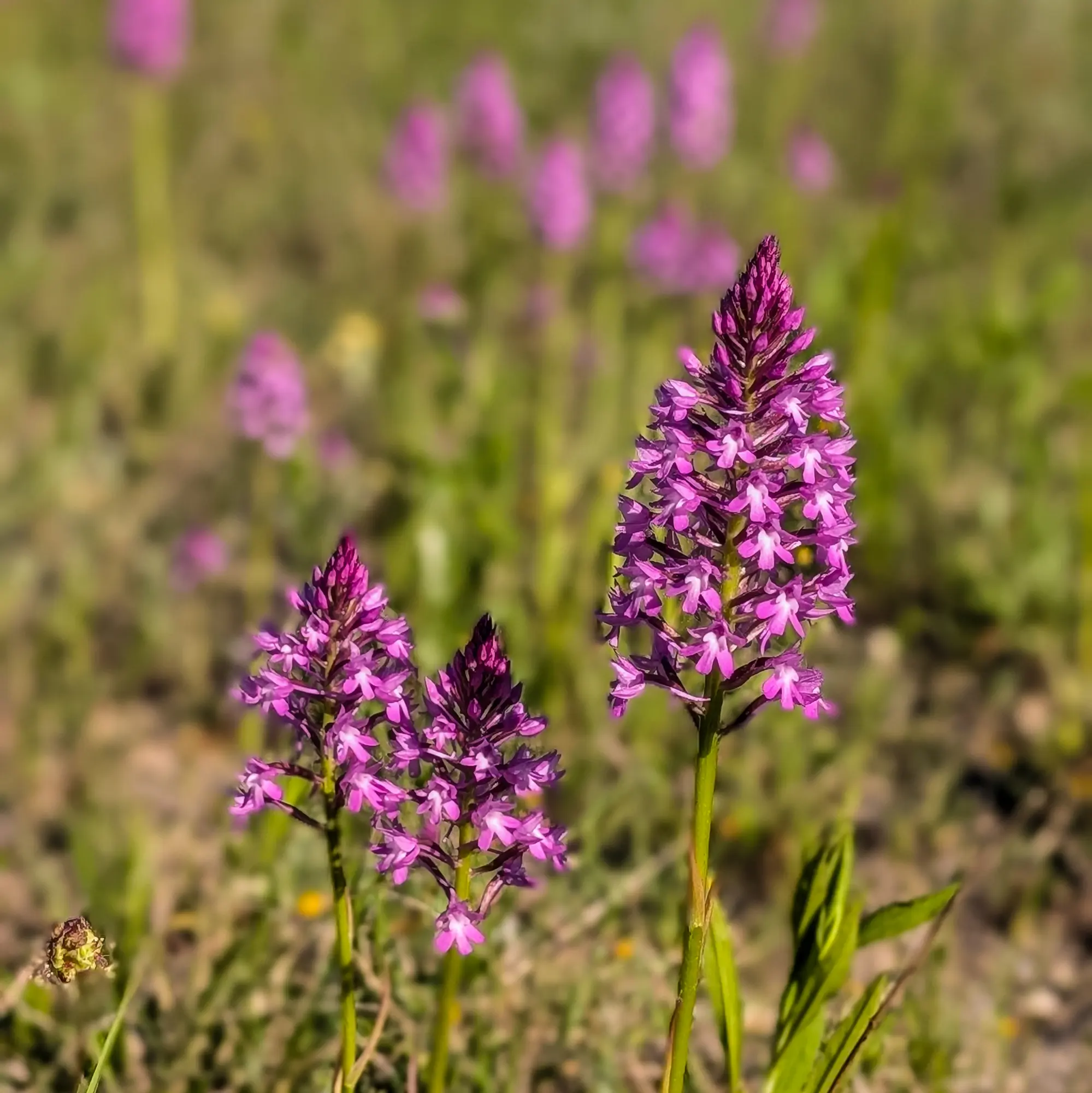
The Anacamptis pyramidalis, commonly known as the Pyramidal Orchid, is a perennial autotrophic plant named scientifically because its inflorescence has a conical or pyramidal shape at the start of flowering (pyramidalis). It is a species adapted to entomophilous pollination, carried out mainly by butterflies (lepidopterans).
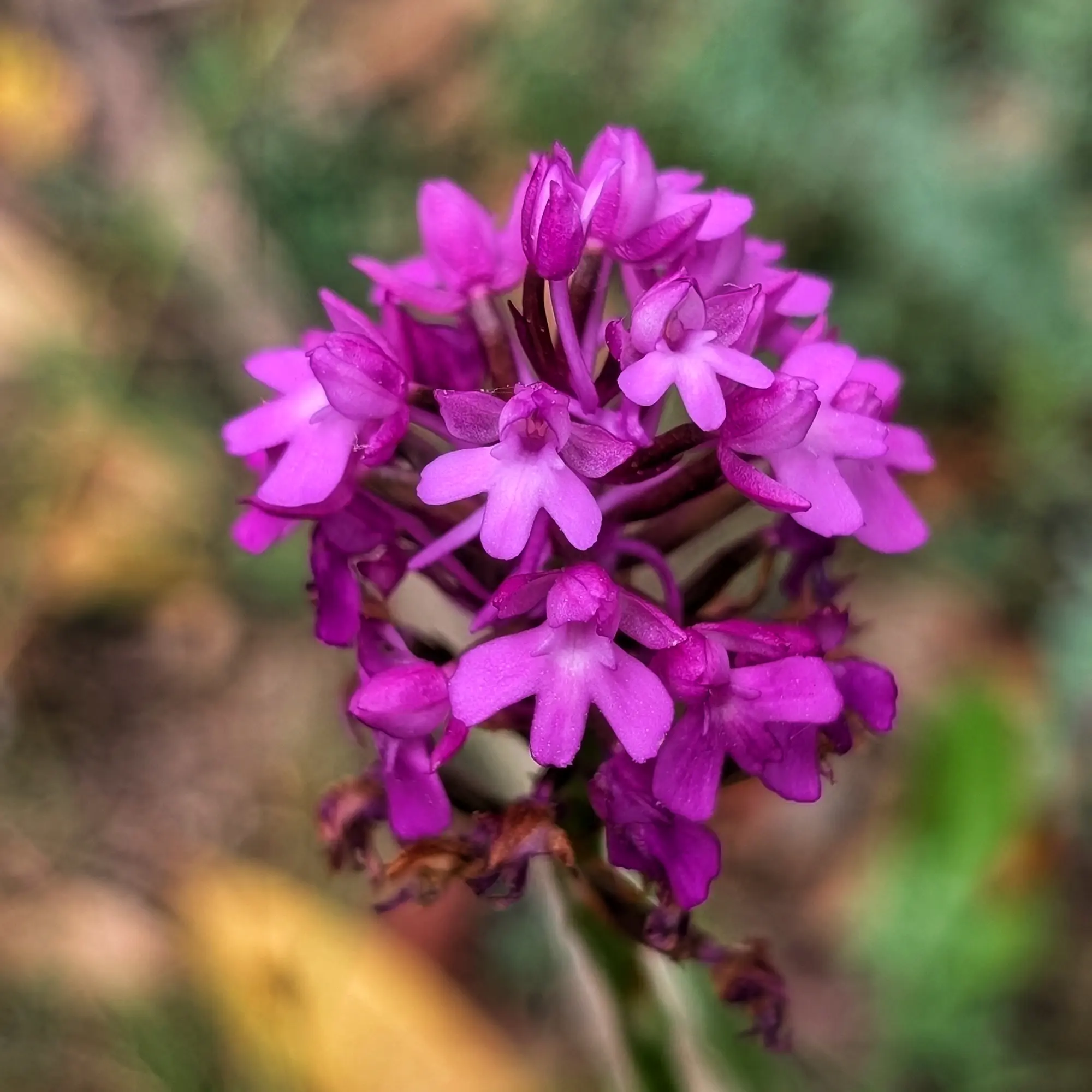
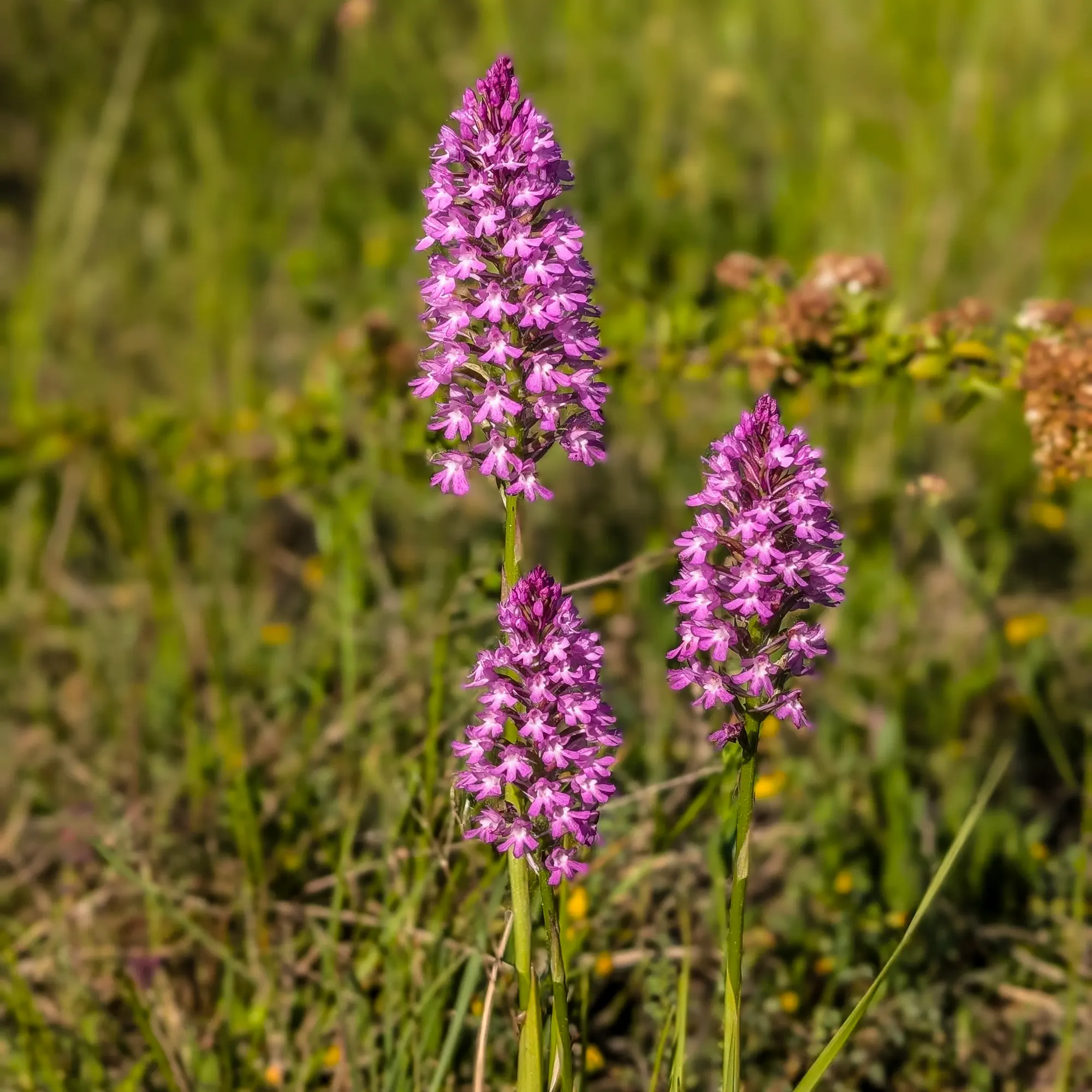
Morphological description: The plant measures between 20 and 60 cm in height, with an erect, hairless (glabrous) stem. It has two ovoid or subglobose tubers. The leaves are numerous, lanceolate, and green, without spots. The inflorescence is a dense, multi-flowered terminal spike. The flowers are small, ranging from pale pink to intense purple. The labellum (lip) is trilobed with two ridges guiding pollinators, and it has a long, thread-like spur (up to 20 mm).
Habitat and distribution: It is native to open and sunny areas such as meadows, scrubland, and road margins. It has a clear preference for calcareous or basic soils. It thrives from sea level up to 1,400-2,000 meters in altitude. Its distribution covers almost all of Europe, Western Asia, and North Africa. In the Iberian Peninsula, it is found in Catalonia, the Valencian Community, and the Balearic Islands (Mallorca, Menorca, etc.).
Conservation status: Generally, it is classified as least concern. However, its status varies locally; for instance, it is abundant in the Foix Park but extremely rare in the Llobregat Delta. The plant generally flowers between May and July.
Gallery


Related observations
Discover the observations I've made of this species.