Cephalanthera longifolia
About the Orchid
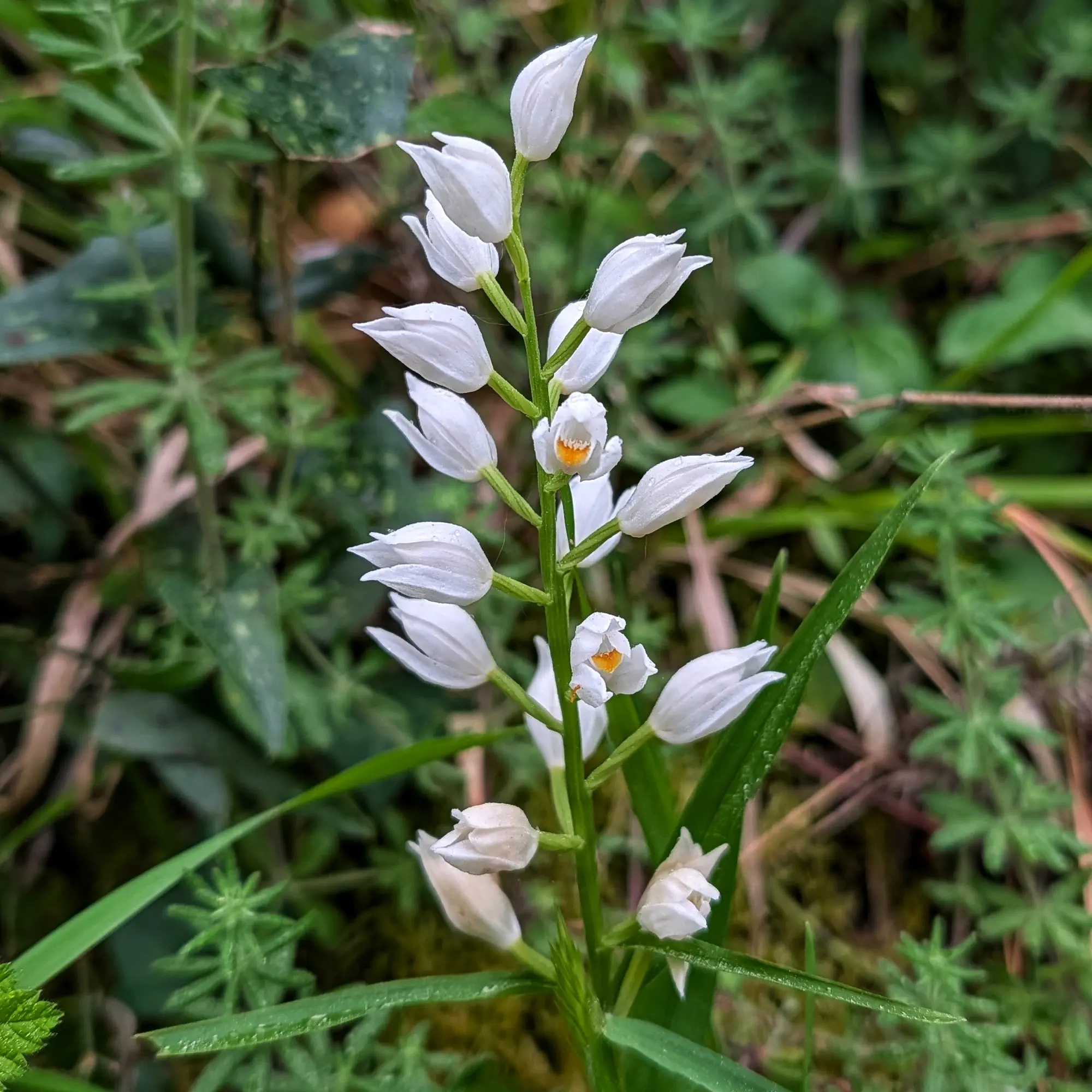
The Cephalanthera longifolia, commonly known as the Narrow-leaved helleborine, is a perennial terrestrial orchid of Eurasian distribution, valued for the pure colour of its flowers. Its scientific name, longifolia, refers to its most distinctive identification feature: its long, narrow leaves.
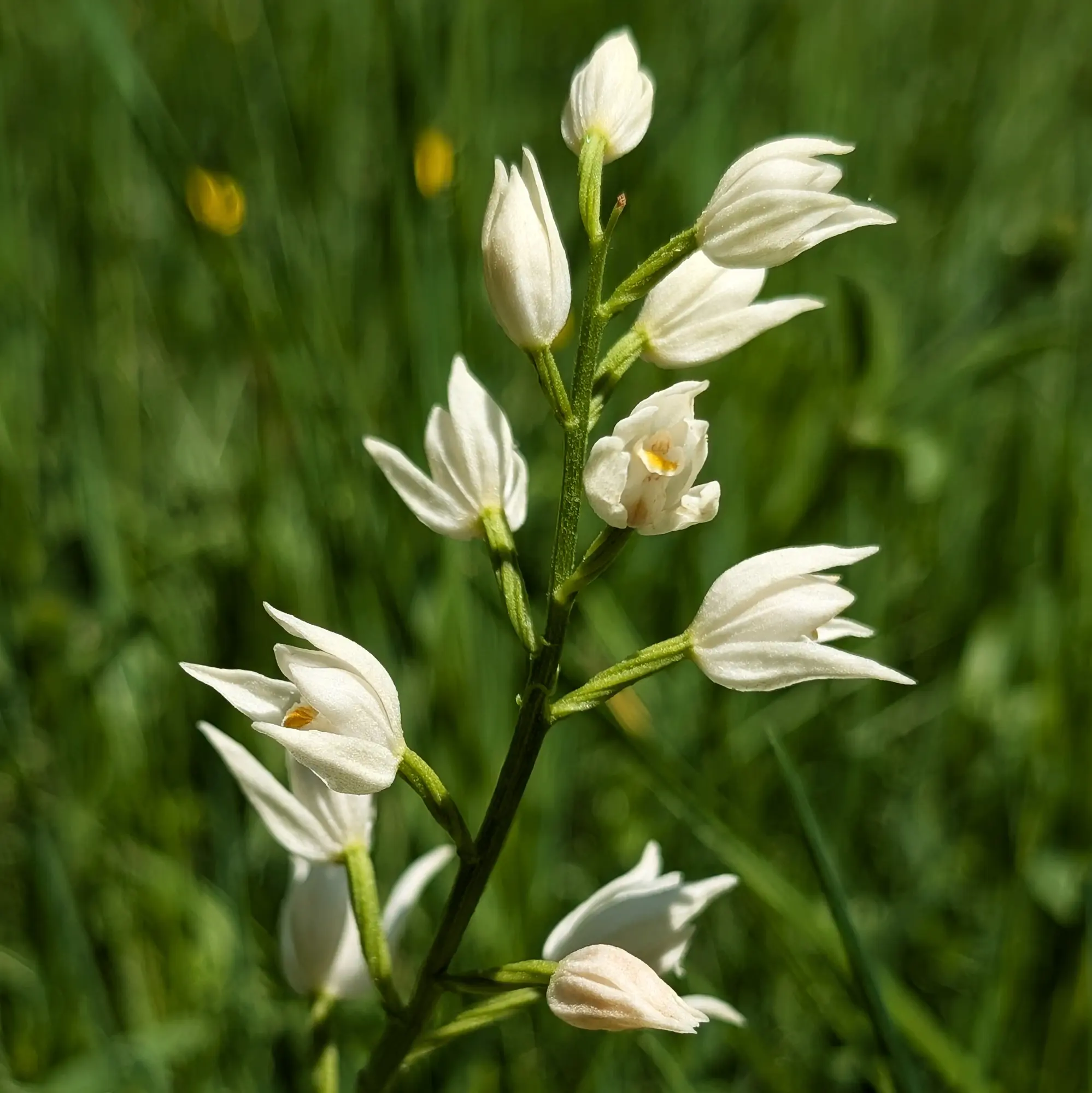
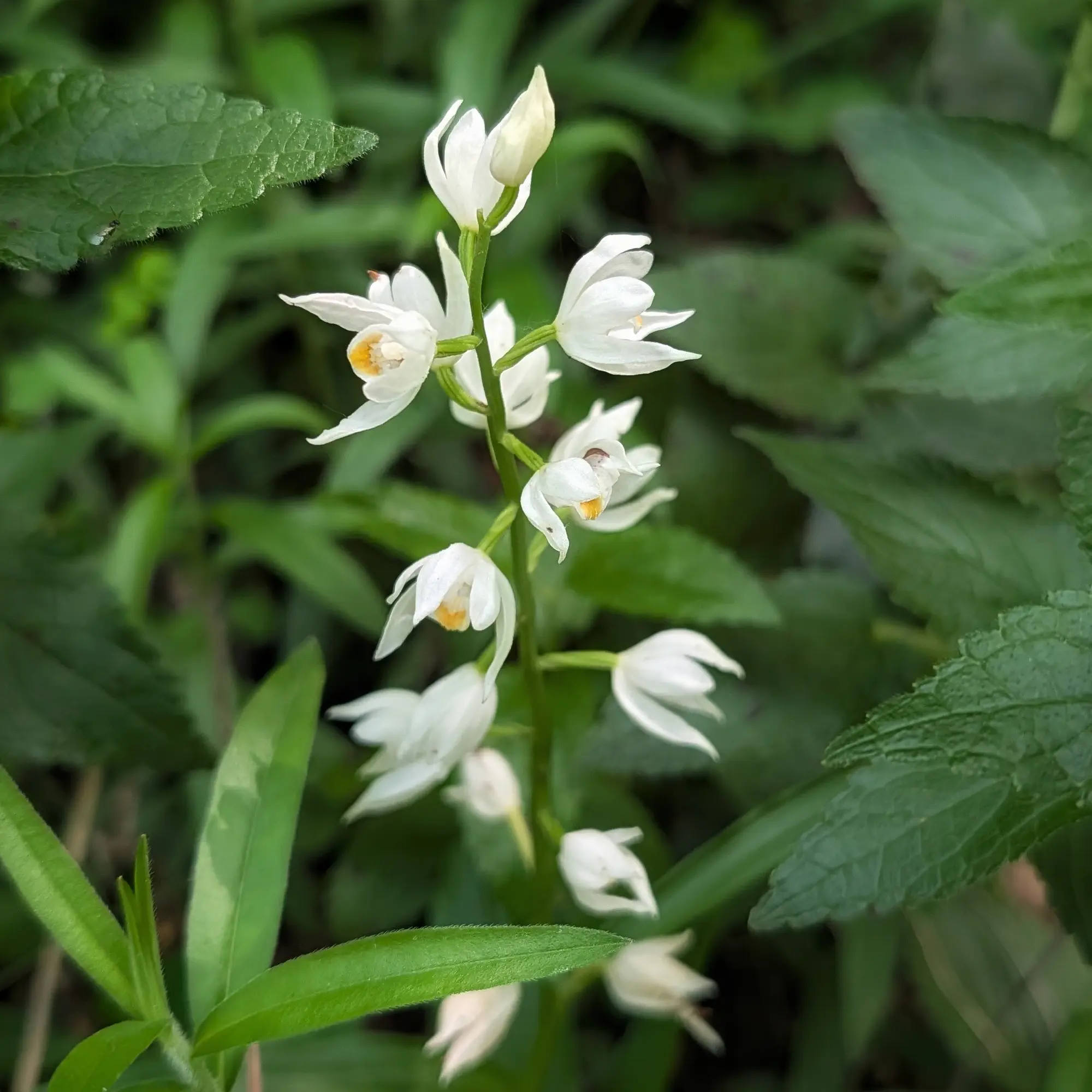
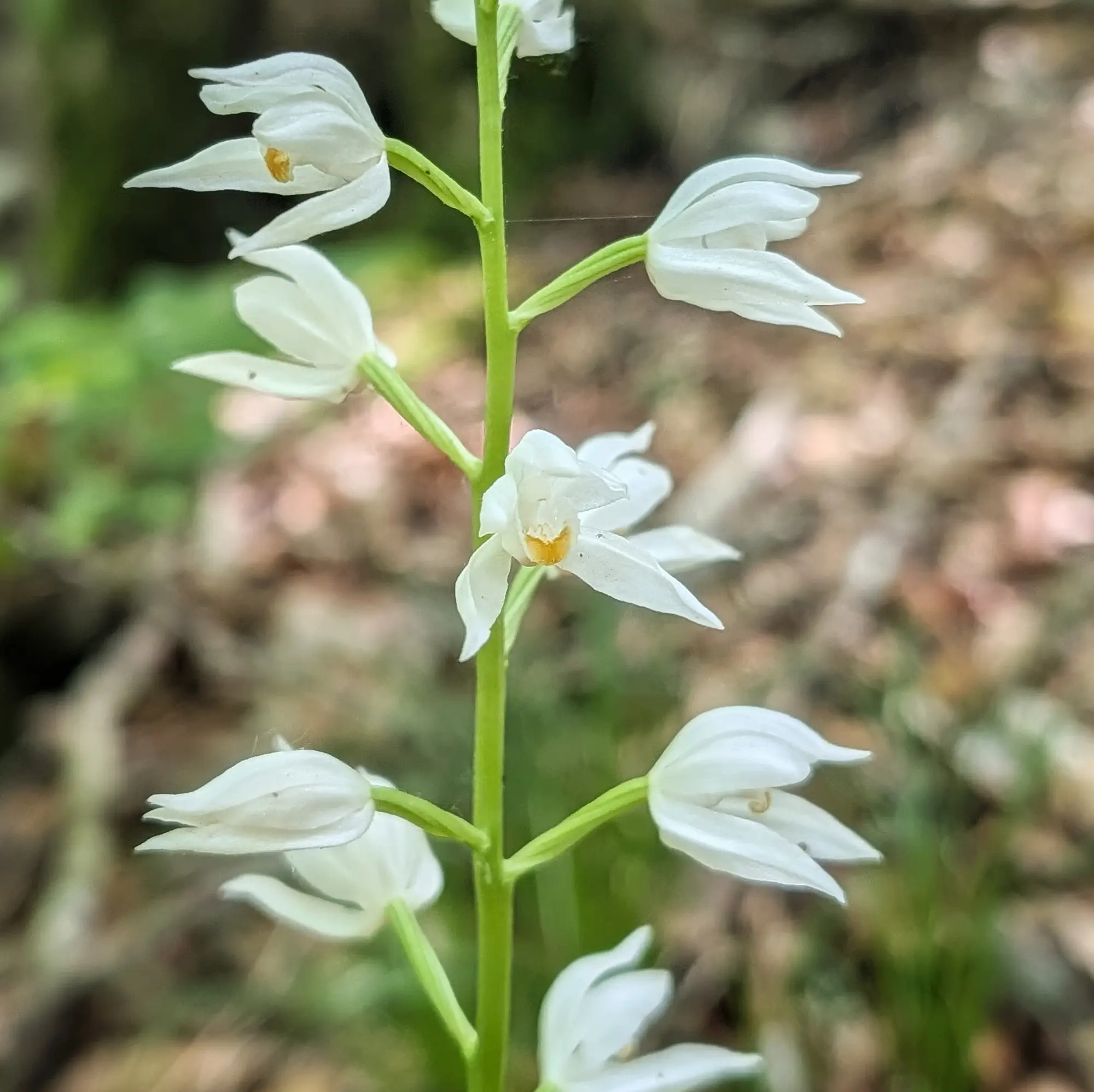
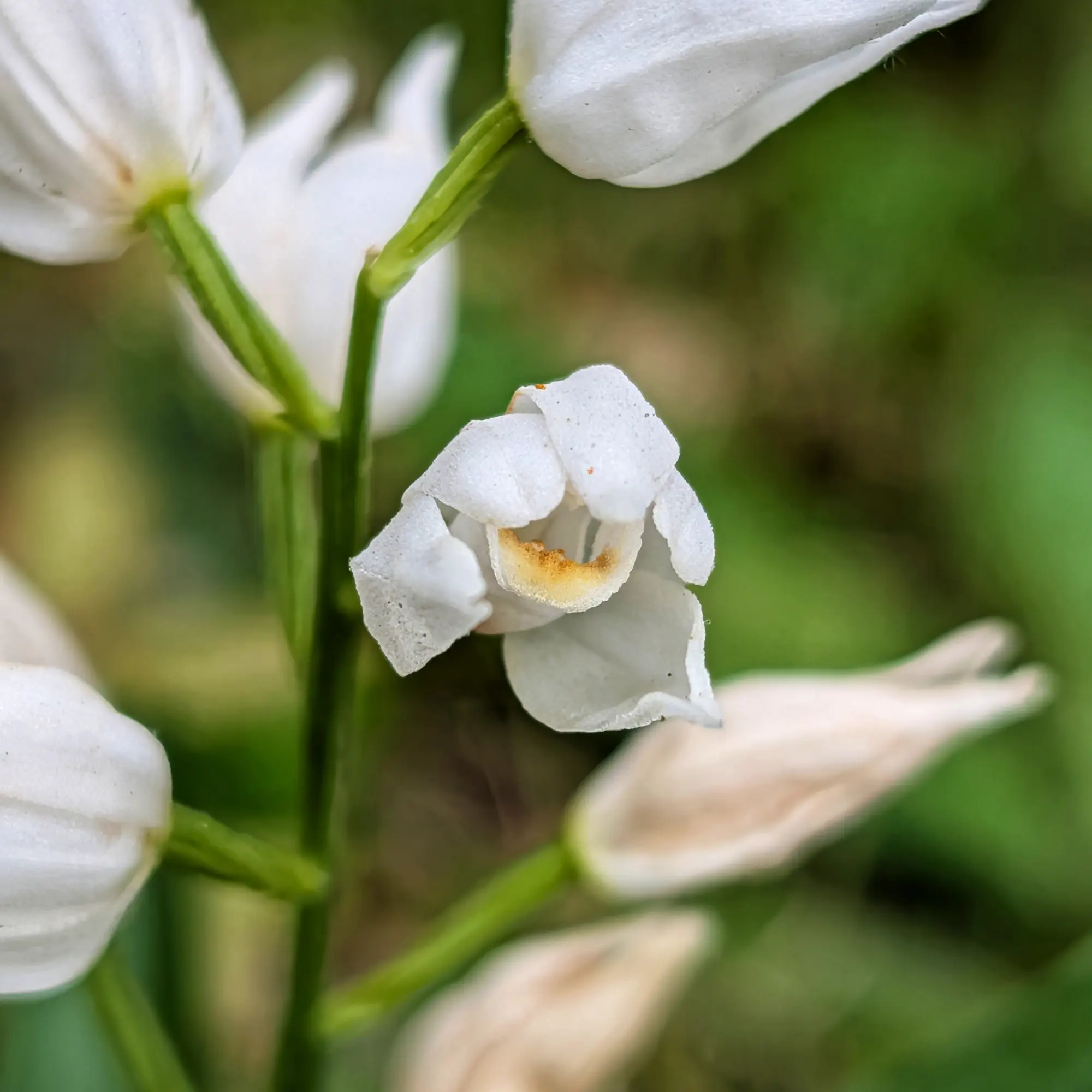
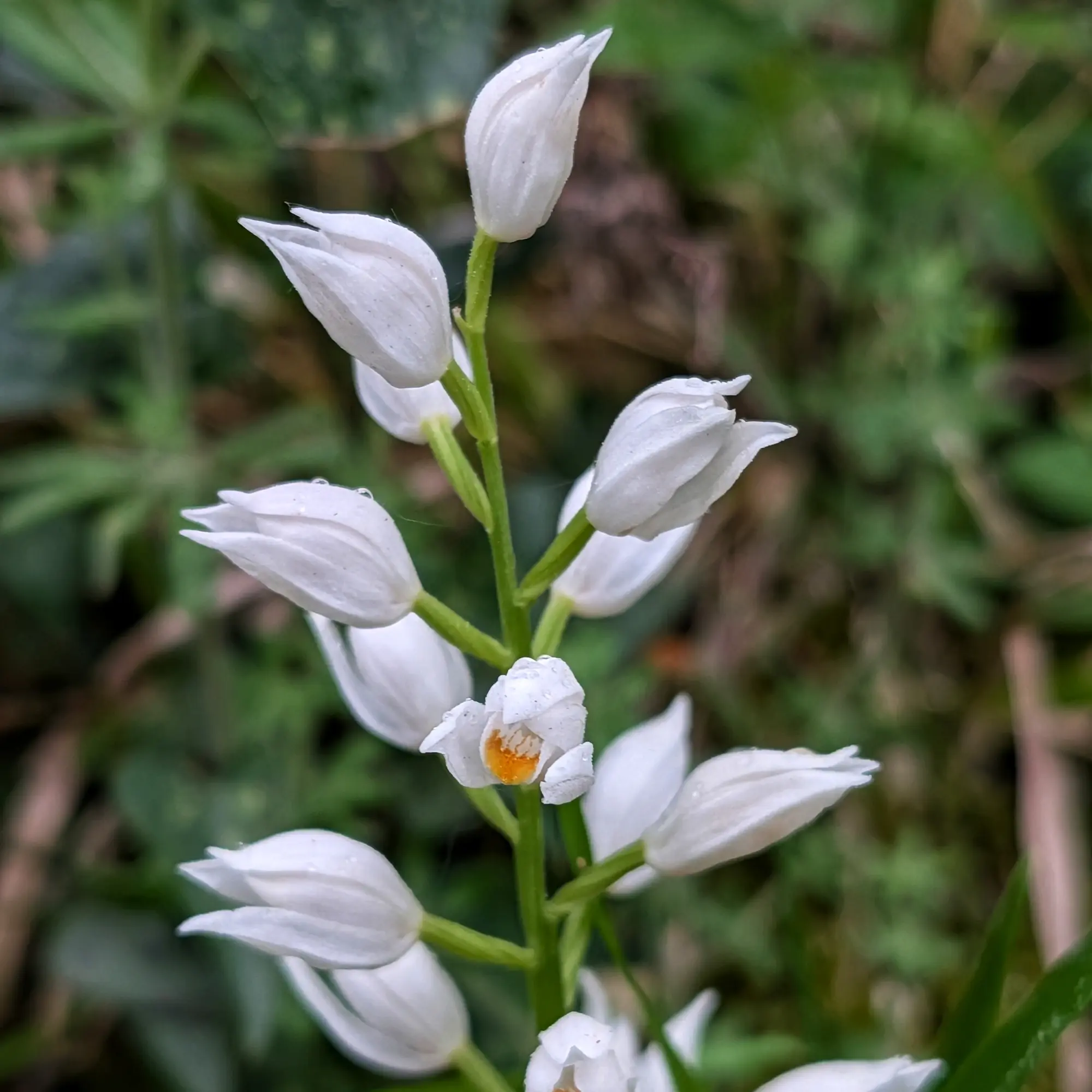
Morphological Description: This plant can grow between 15 and 60 cm. Its distinguishing feature is its leaves, which are arranged in two opposing rows (distichous) and are very long, narrow, and pointed (sword or ribbon-like leaves). The inflorescence is a loose spike of large flowers of a pure white colour with acute sepals. A key element for its identification is the upper bracts, which are tiny and much shorter than the ovary. The flowers do not produce nectar but are notable for a small labellum that contains a visual call in the form of a yellow spot and orange ridges.
Habitat and Ecology: C. longifolia is indifferent to the type of soil, although it is often found on calcareous ground, preferring shady and humid locations. It can be found from sea level up to mountains of 1,700 m, growing in holm oak forests, pine forests, and forest edges.
Phenology: Its flowering period occurs in spring, mainly between the months of April and June.
Confusion: To differentiate it from the similar C. damasonium, focus on the shape of the leaves (narrow and long in C. longifolia) and its upper bracts, which are always shorter than the ovary.
Gallery


Related observations
Discover the observations I've made of this species.