Corallorhiza trifida
About the Orchid
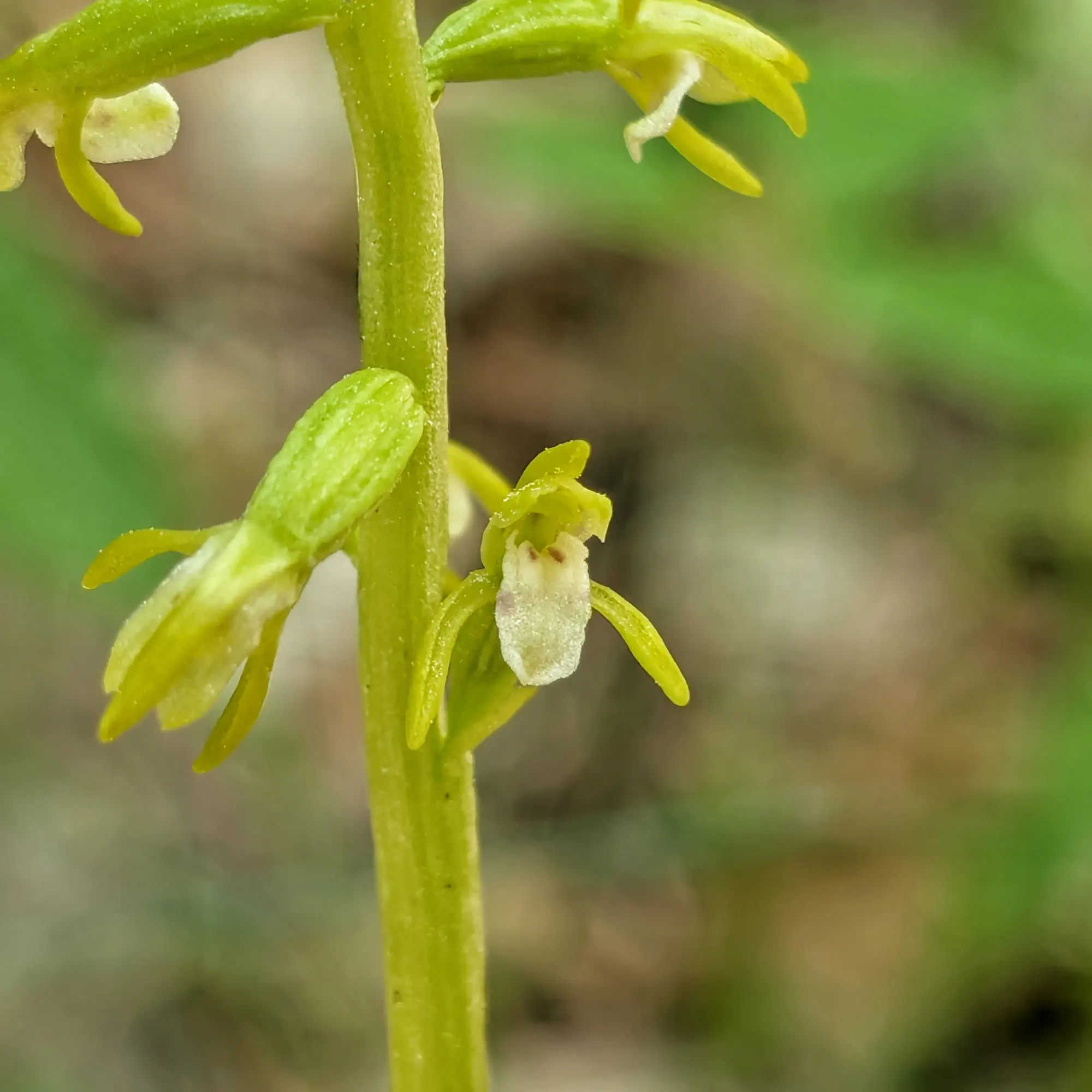
The Corallorhiza trifida, commonly known as the Early coralroot, is a small, inconspicuous orchid named (Corallorhiza) for the shape of its underground rhizome, which resembles coral. This species is of great biological interest as it is a partially mycoheterotrophic plant, meaning it obtains a large portion of its nutrients in symbiosis with fungi (Tomentella) present in humus-rich soils, such as the leaf litter layer of beech forests.
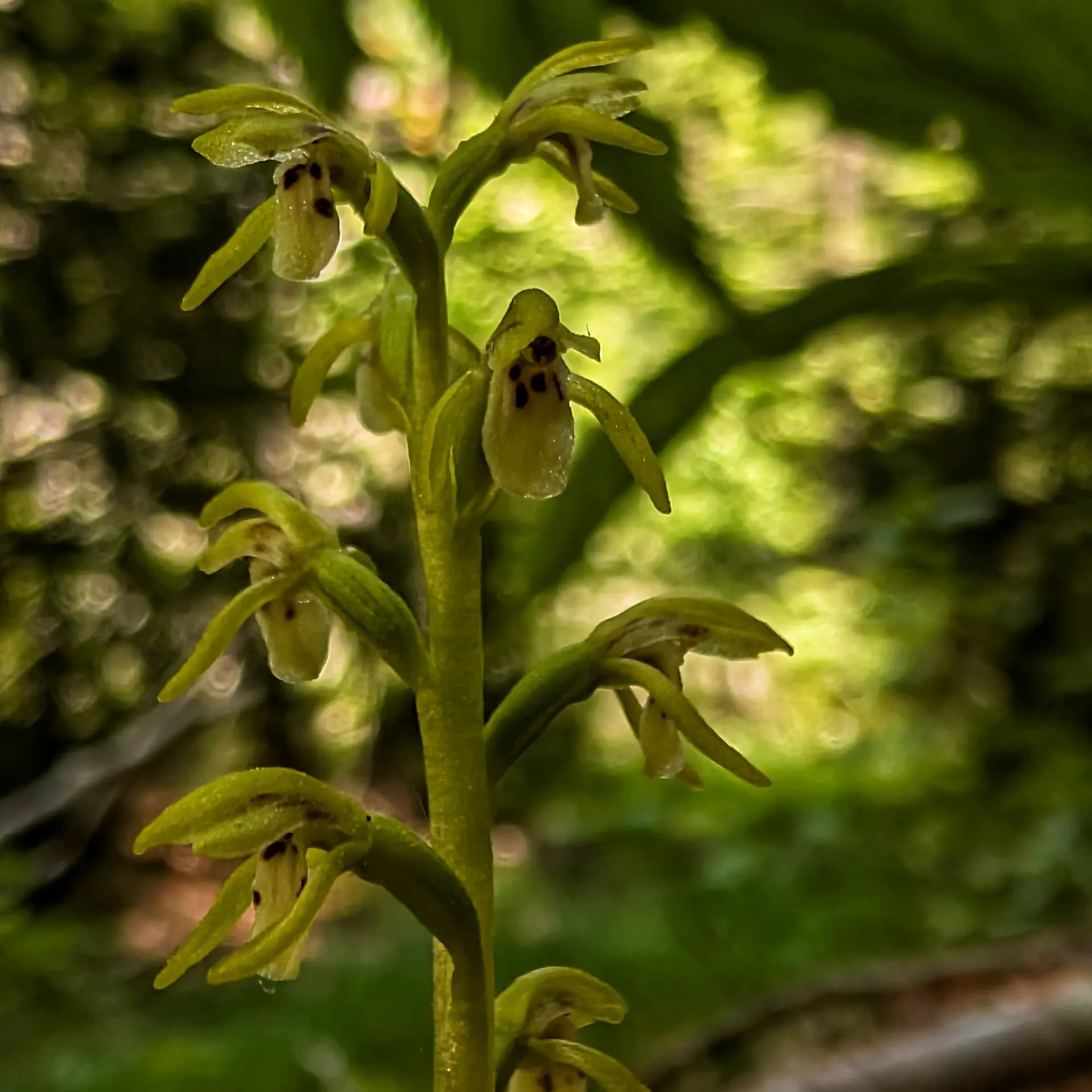
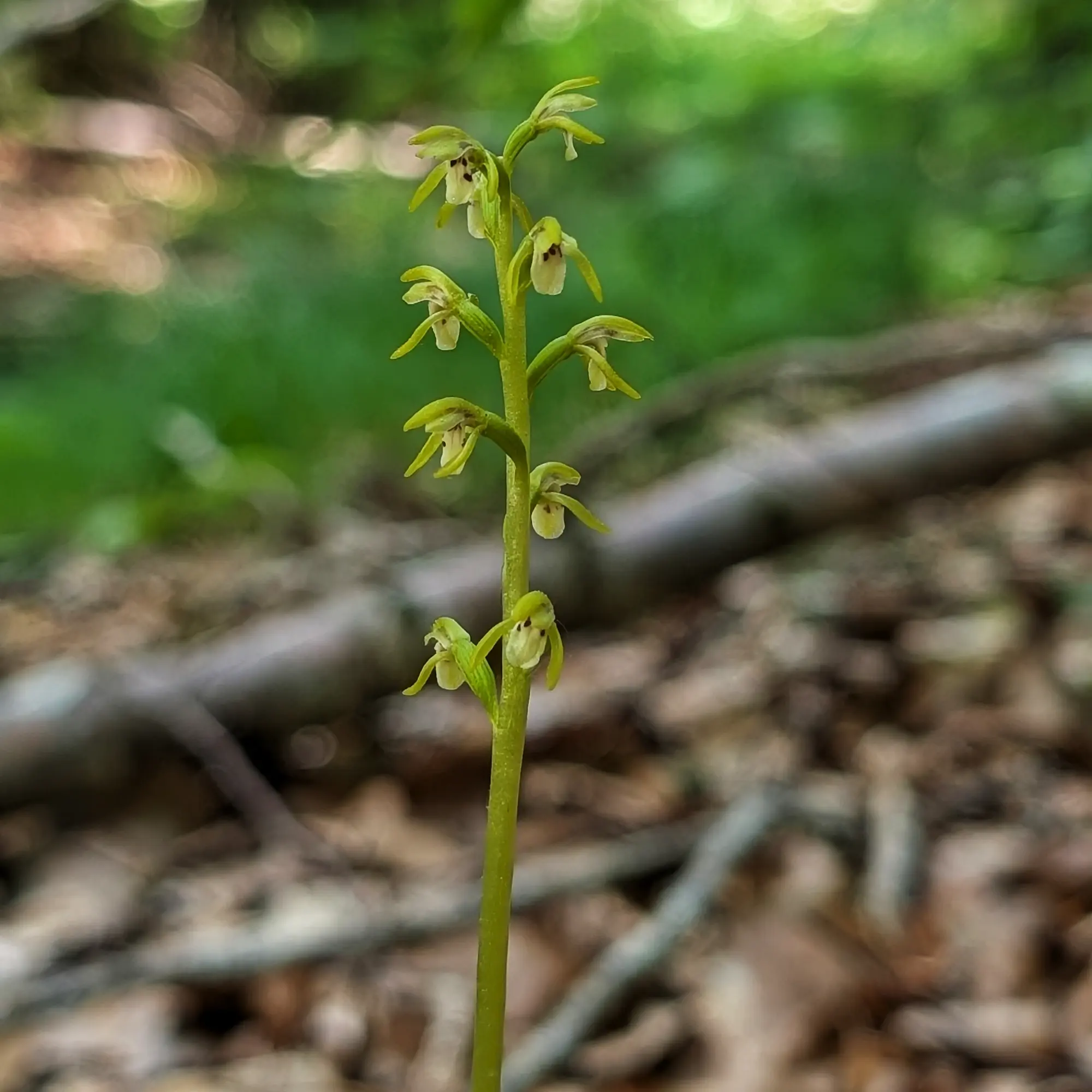
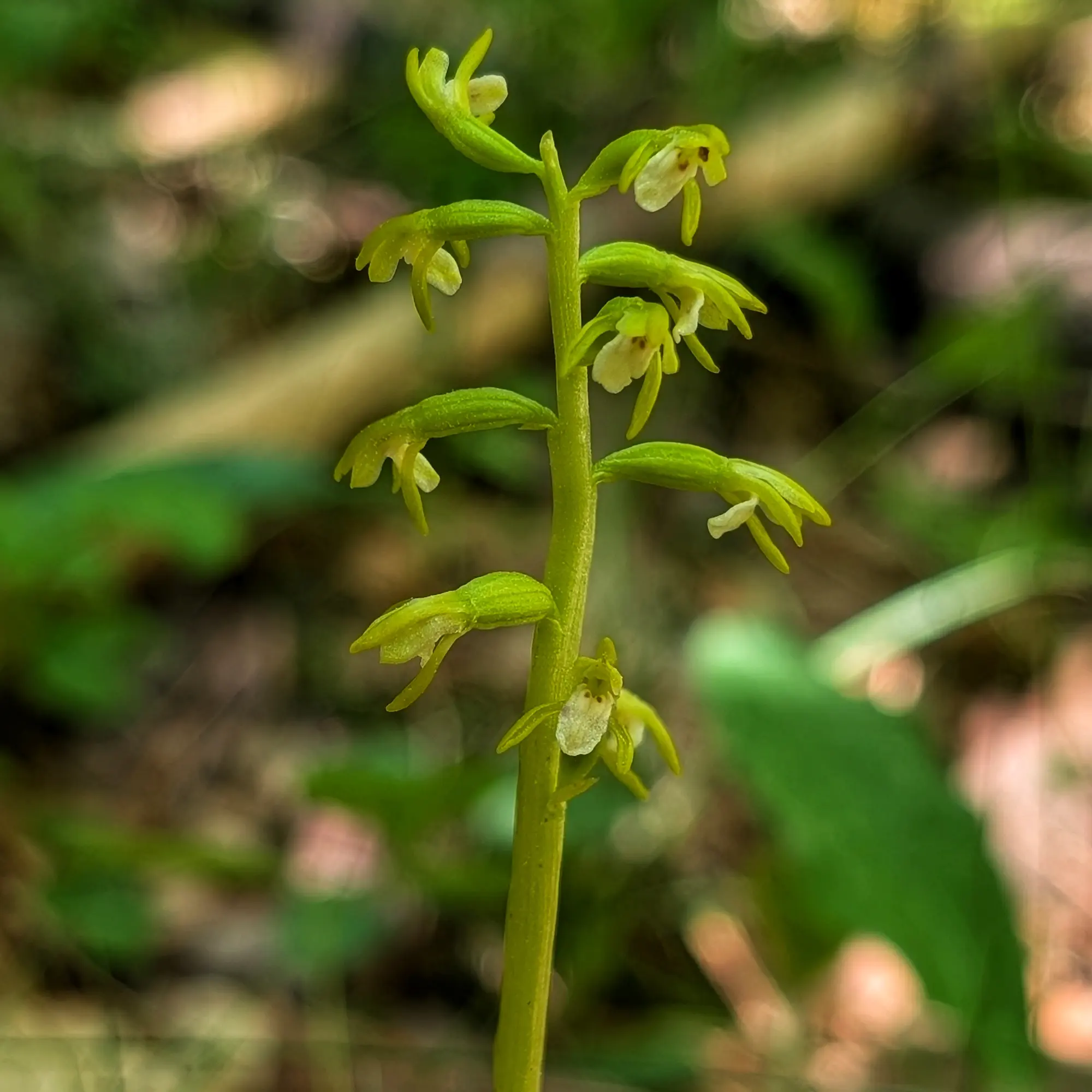
Morphological description: The plant measures between 10 and 25 cm and stands out for its slender, hollow stem (fistulous). A distinguishing feature is the lack of true green leaves; it only presents sheaths on the stem, as it does not rely exclusively on photosynthesis. The flowers are small and arranged in a loose cluster (2 to 12 flowers). The labellum (lip) is white and has the characteristic trifid (three-lobed) shape, often with reddish spots.
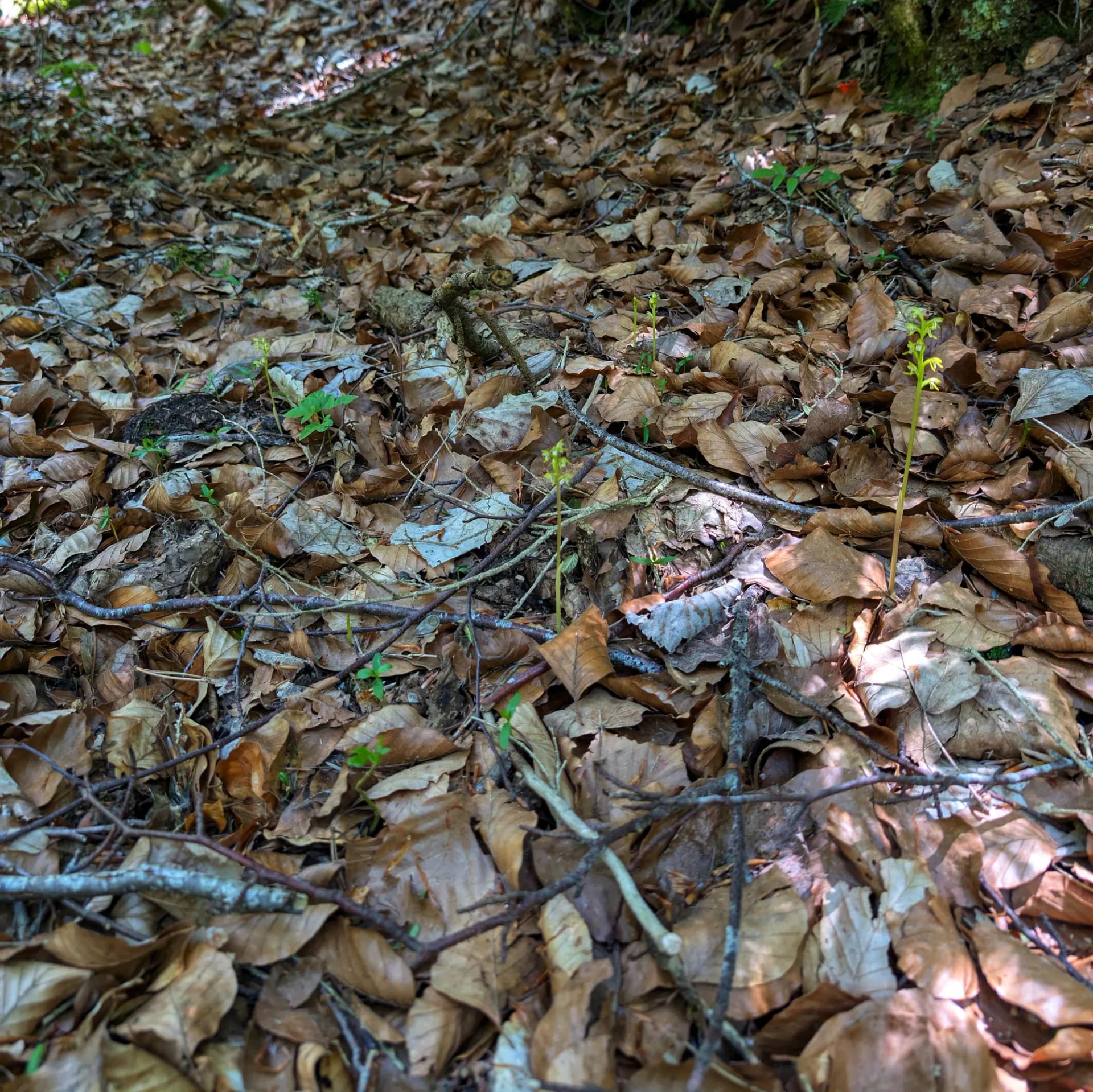
Habitat and distribution: It is a circumboreal species that, in the Iberian Peninsula, is found almost exclusively in the Pyrenees, mainly between 1,000 and 2,000 m in altitude, in the montane and subalpine zones. It grows in damp and shady forests, especially fir forests, pine forests, and beech forests with a thick layer of organic matter.
Conservation status: C. trifida is considered a very rare and threatened species, classified as "endangered" in Catalonia and in "critically endangered" in the Spanish Red Book of flora, due to its small populations and the habitat''s sensitivity to disturbance.
Gallery


Related observations
Discover the observations I've made of this species.