Dactylorhiza fuchsii
Note about the genus Dactylorhiza
Orchids of the genus Dactylorhiza are easily confused with each other. Therefore, observations of this genus may not be entirely accurate regarding the identified species.
About the Orchid
The Dactylorhiza fuchsii, commonly known as the Common Spotted-orchid, gets its generic name (Dactylorhiza, from the Greek "fingers" and "root") from the shape of its underground tubers, which resemble a palm. The specific epithet fuchsii is in honor of the German botanist Leonhart Fuchs. It is often considered a subspecies of the Dactylorhiza maculata.
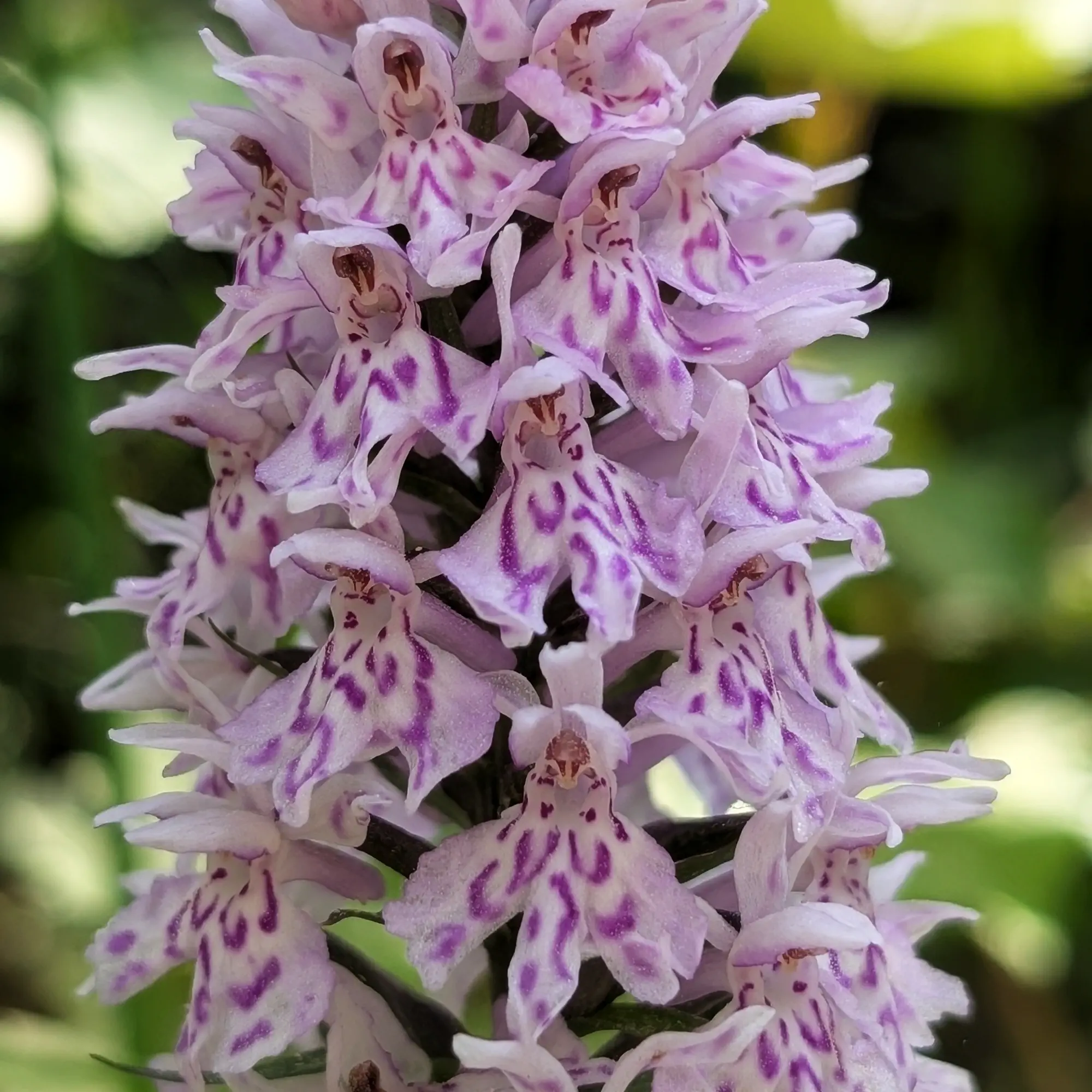
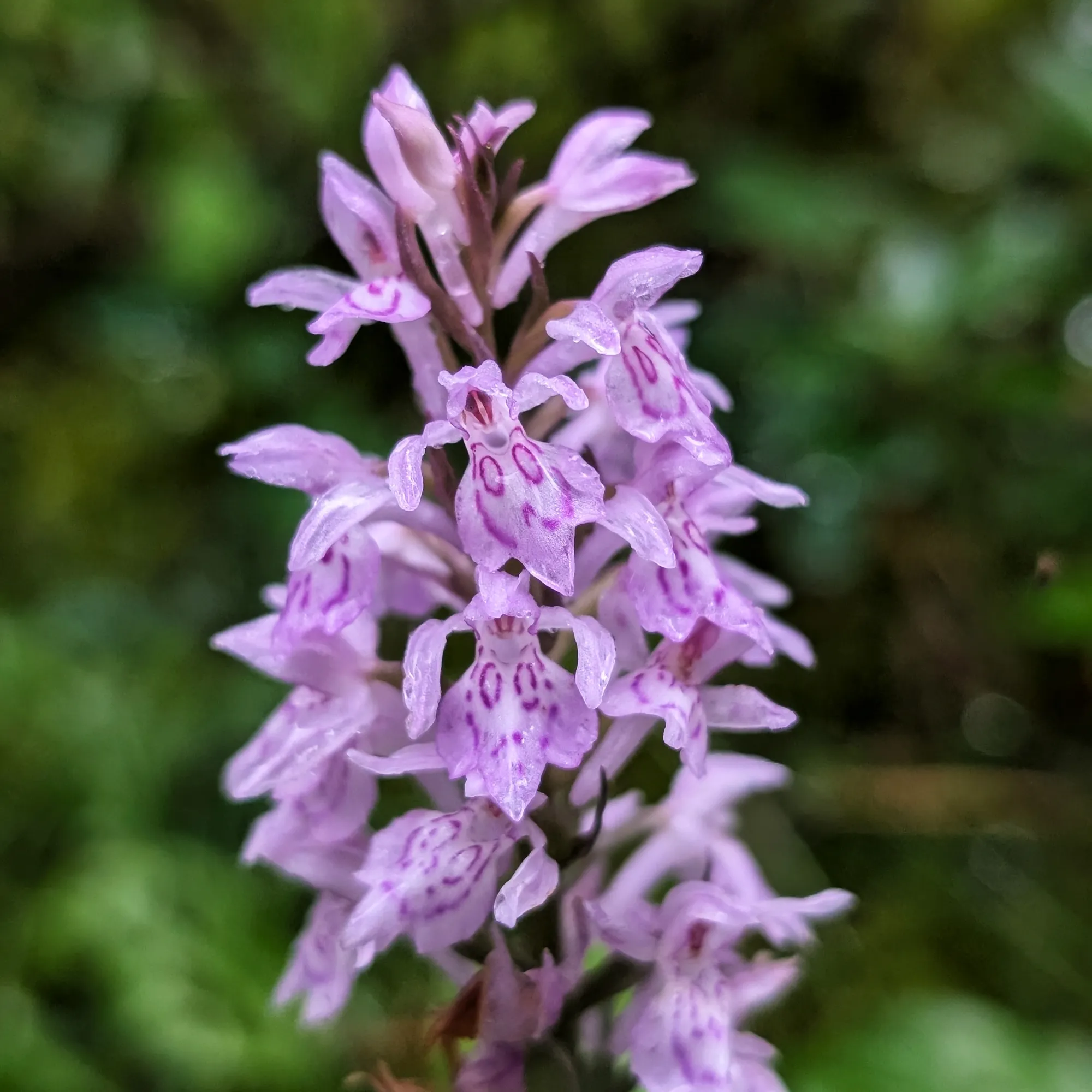
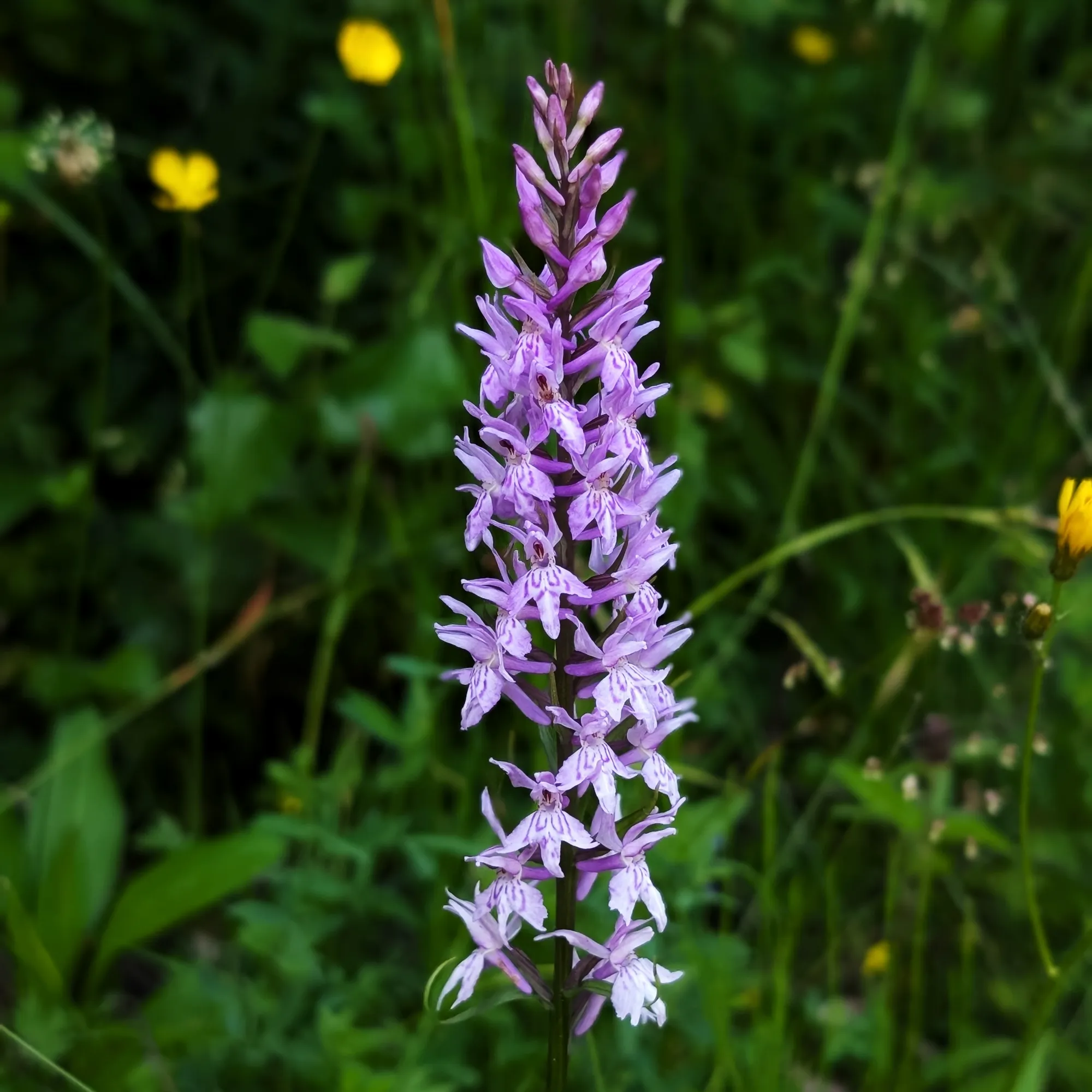
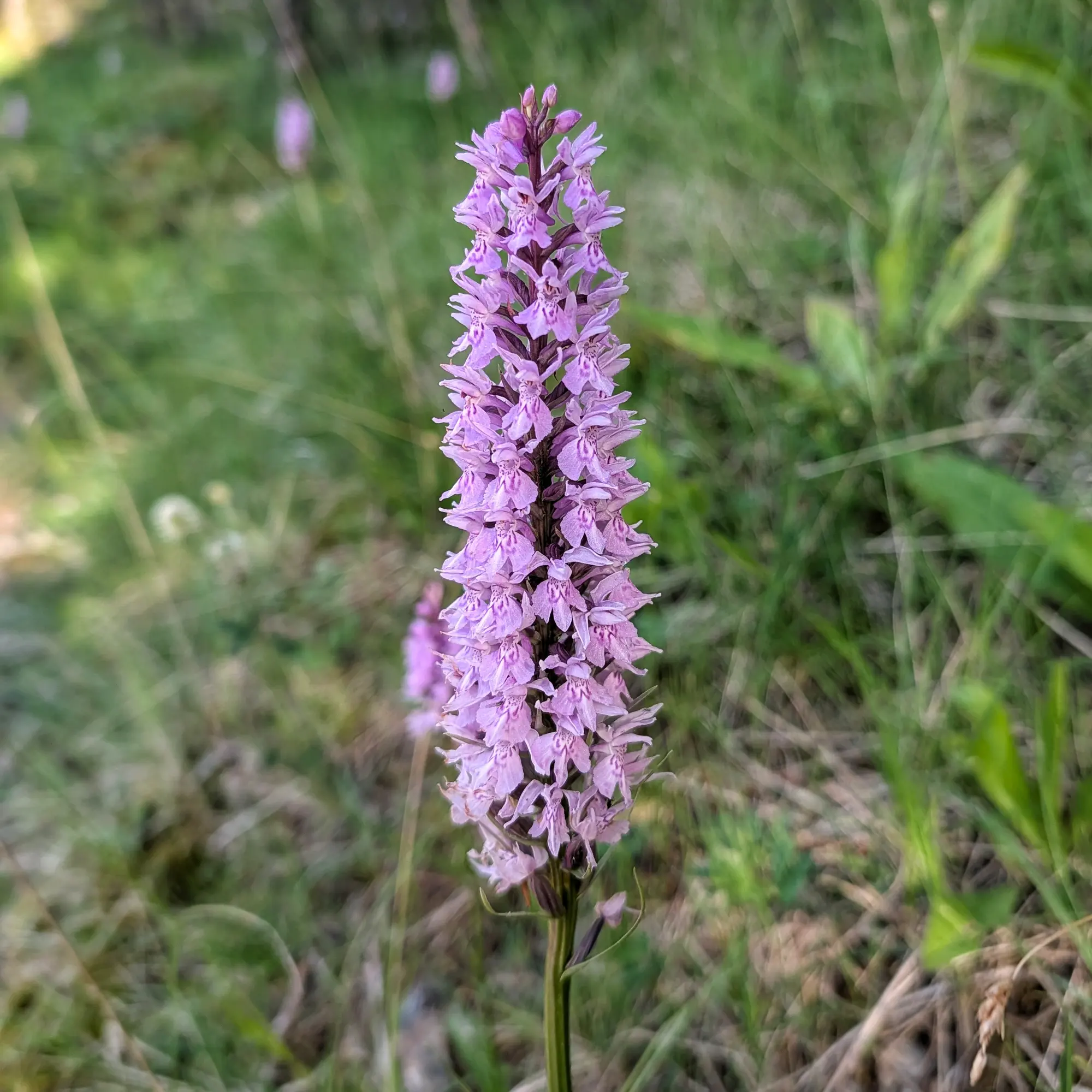
Morphological description: It is a robust plant that can reach from 25 up to 60 cm. It has a solid stem (full, not hollow) and broad basal leaves with characteristic elongated dark spots across the surface. The inflorescence is a dense, conical to cylindrical spike with flowers ranging from pale pink to purple, giving off a vanilla scent. The labellum (lip) is deeply trilobed, with the central lobe pointed, narrow, and clearly protruding (unlike D. maculata), and is decorated with purple lines and loops.
Habitat and distribution: This orchid prefers calcareous or basic soils (unlike D. maculata which prefers acidic ones). It grows in humid areas like fresh mountain meadows, bogs, forest edges, and stream banks. In Catalonia, it is found in mid to high mountains (typically 1000-1500 m), such as the Pyrenees, Pre-Pyrenees, and the Prelittoral Range.
Biology and distinctive features: Flowering occurs from May to July. It reproduces mainly through deceptive pollination. It frequently hybridizes with other orchids of the genus. Its main distinguishing feature from D. maculata is its labellum with a narrow and prominent central lobe and its preference for calcareous substrates.
Gallery


Related observations
Discover the observations I've made of this species.