Dactylorhiza incarnata
Note about the genus Dactylorhiza
Orchids of the genus Dactylorhiza are easily confused with each other. Therefore, observations of this genus may not be entirely accurate regarding the identified species.
About the Orchid
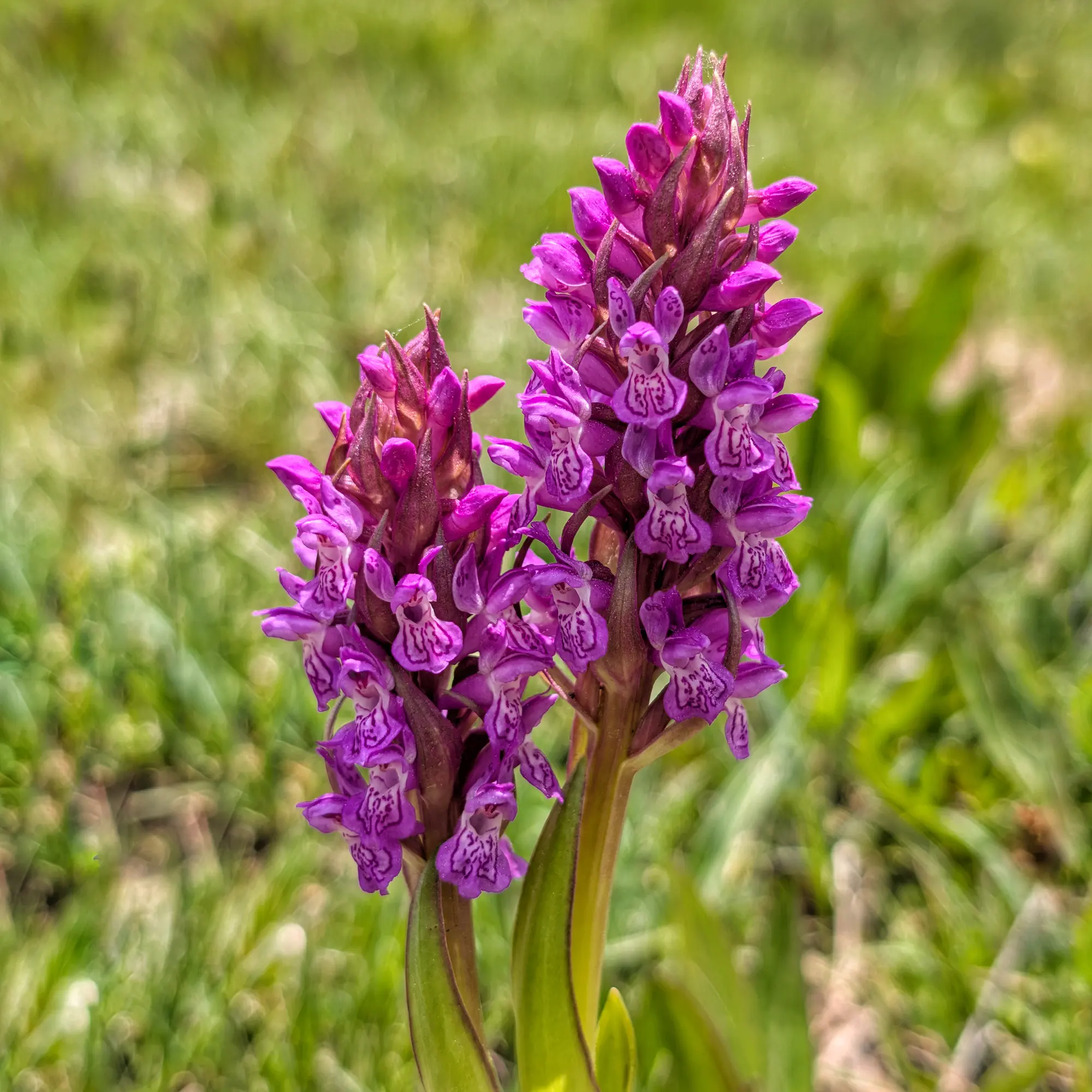
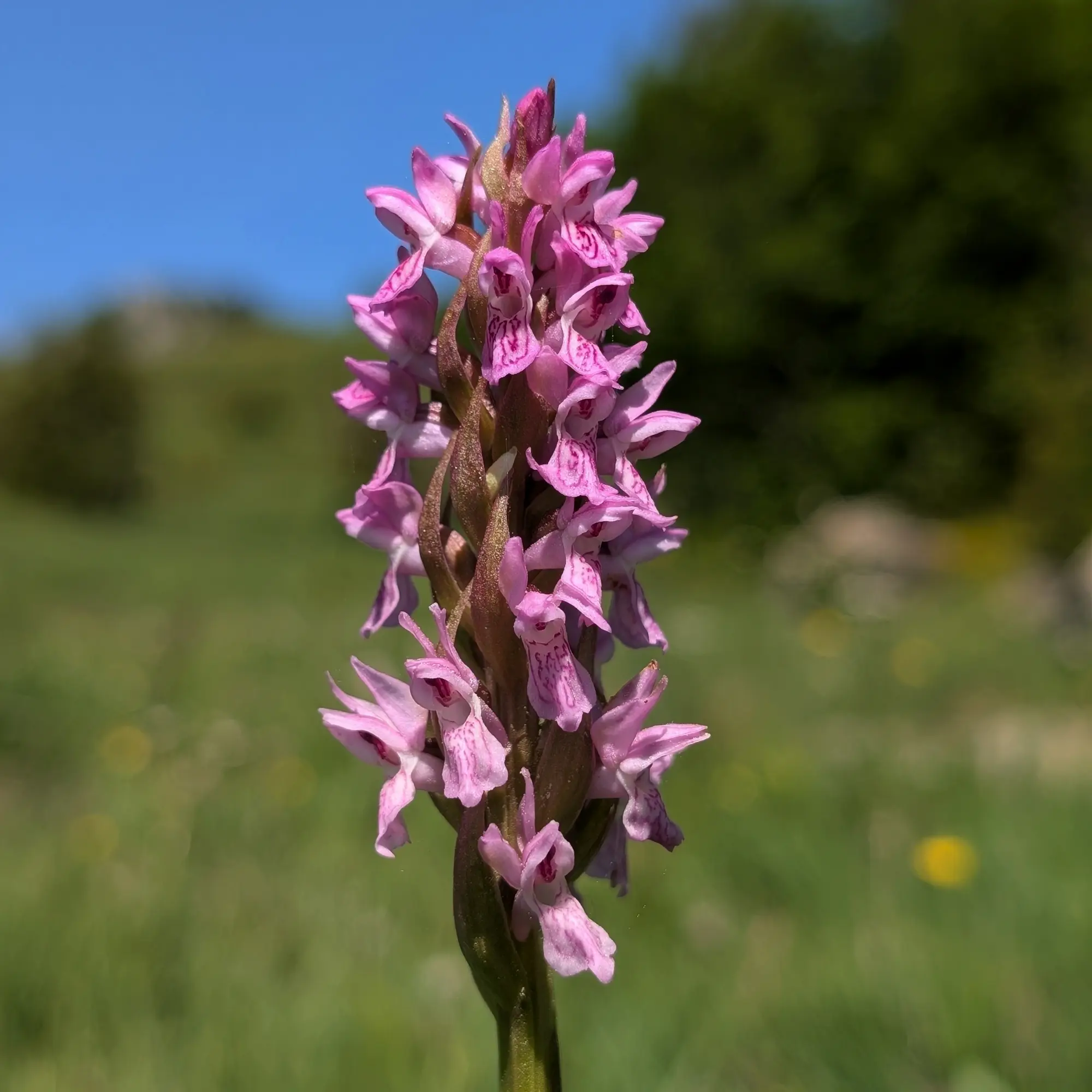
The Dactylorhiza incarnata, commonly known as the Early marsh-orchid, is a robust terrestrial orchid, known for the Latin epithet meaning "flesh-coloured" or "incarnate," alluding to the soft and variable hue of its flowers. Along with its genus, Dactylorhiza (from the Greek daktylos 'finger' and rhiza 'root'), it refers to the shape of its flattened, lobed tubers.
Morphological description: This is a medium-sized plant (23 to 55 cm). Its most important identification feature is the stem, which is fistulous or hollow inside, green, although sometimes it may be stained purplish at the top. The leaves (generally 5-6) are light green (yellowish) and, unlike other congeners, are mostly unspotted (non-maculate). Furthermore, they have a cucullate apex (hood-shaped tip) and usually remain erect, pressed against the stem. The inflorescence is a dense cylindrical spike of 18 to 26 pink, purplish, or flesh-coloured flowers. Its labellum features a characteristic pattern of lines forming one or two closed loops in the centre.
Habitat and ecology: D. incarnata is strongly linked to constant moisture, growing in environments like damp meadows, boggy areas (molleres), and peatlands. It generally prefers calcareous or basic substrates and is a plant that requires full light. In the Iberian Peninsula, it flowers between May and July, found up to 2000 m in altitude, mainly in the Pyrenees.
Quick identification tip: To quickly distinguish it from other spotted orchids, remember: the hollow stem, the unspotted leaves, and the hooded apex.
Gallery
Related observations
Discover the observations I've made of this species.