Dactylorhiza maculata
Note about the genus Dactylorhiza
Orchids of the genus Dactylorhiza are easily confused with each other. Therefore, observations of this genus may not be entirely accurate regarding the identified species.
About the Orchid
The Dactylorhiza maculata, commonly known as the Heath Spotted-orchid, is a robust plant that gets its generic name (Dactylorhiza, from the Greek "fingers" and "root") from the shape of its underground tubers, which resemble a palm or fingers. The specific epithet maculata refers to the characteristic dark spots found on its leaves. This species has a great capacity for hybridizing with other orchids of the same genus, such as D. fuchsii or D. majalis.
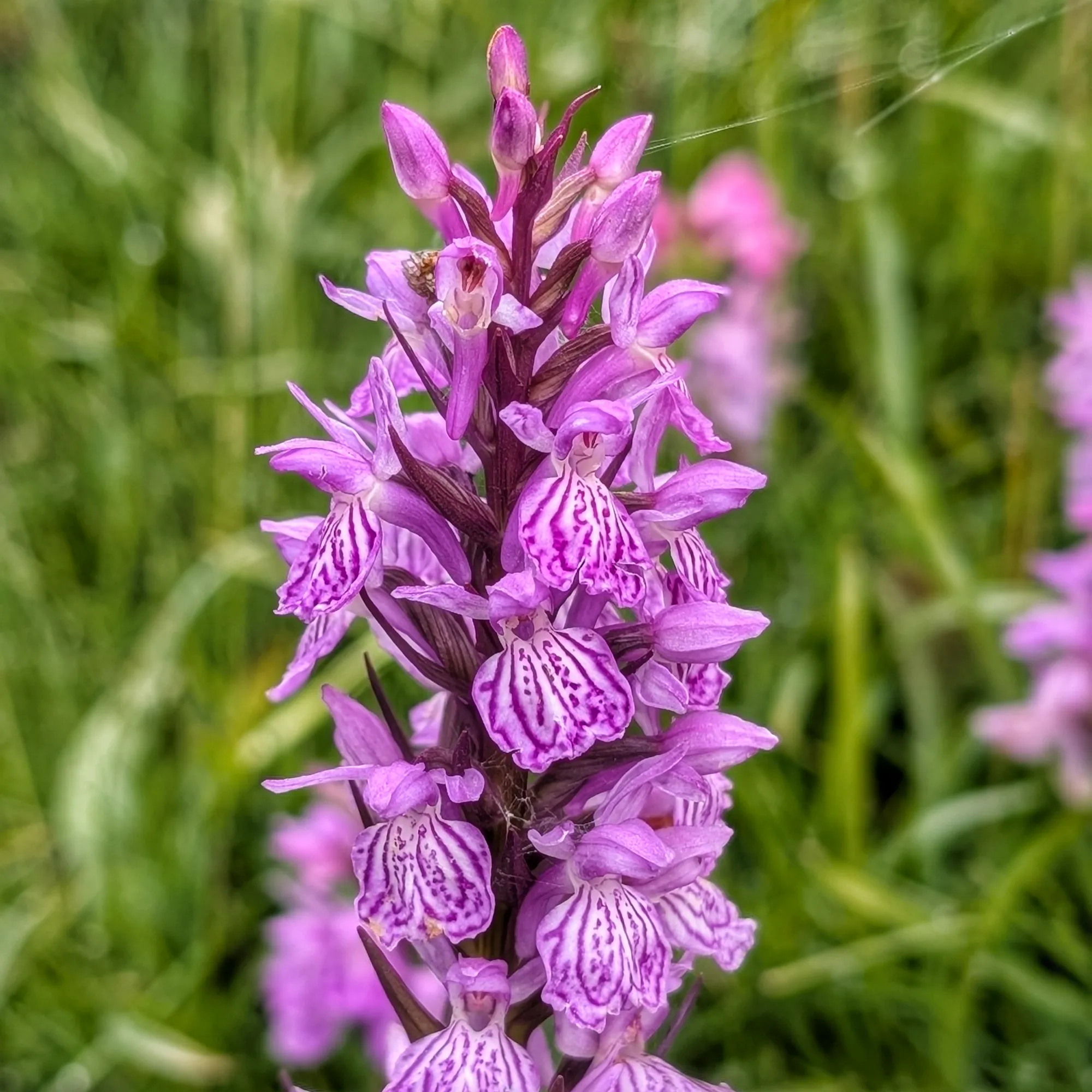
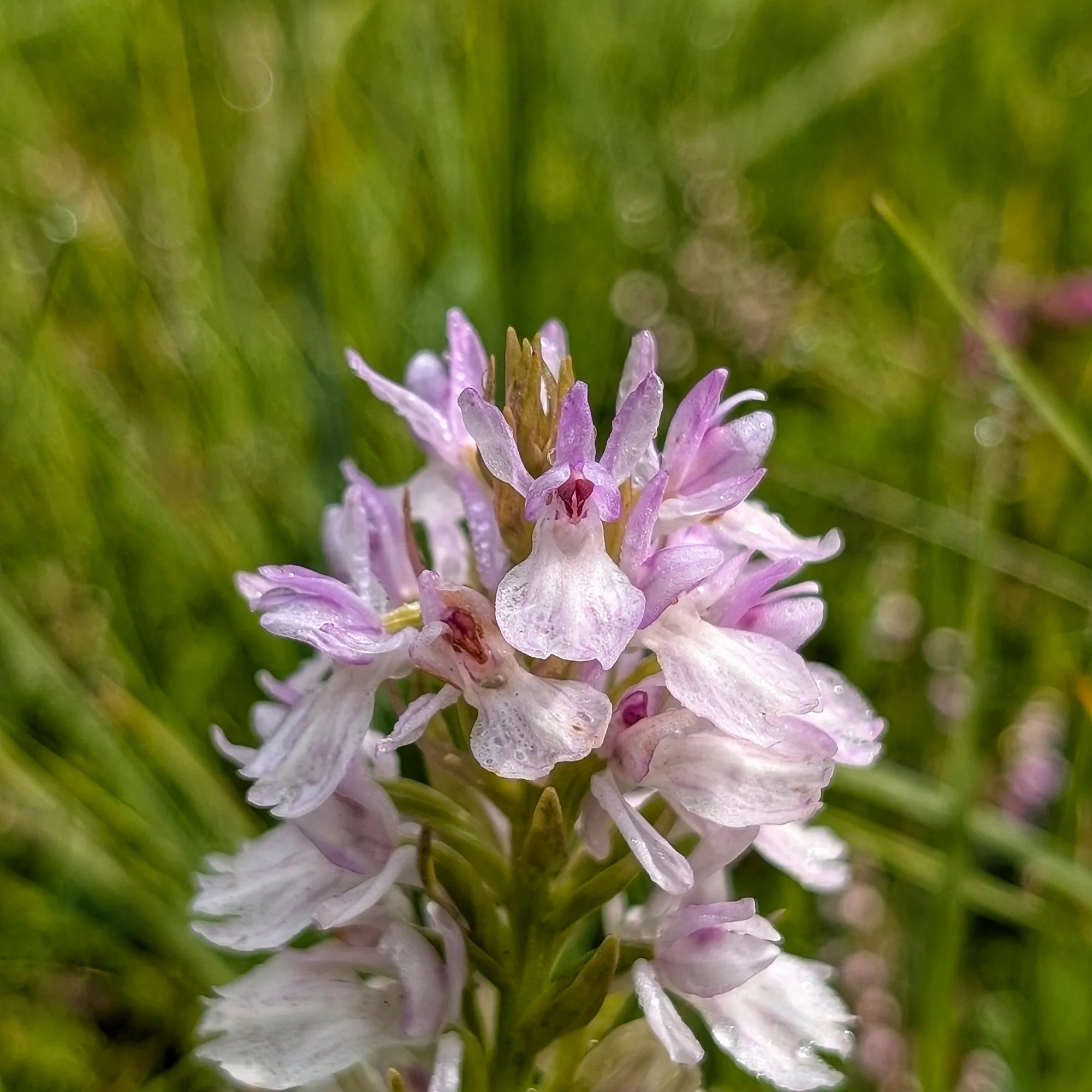
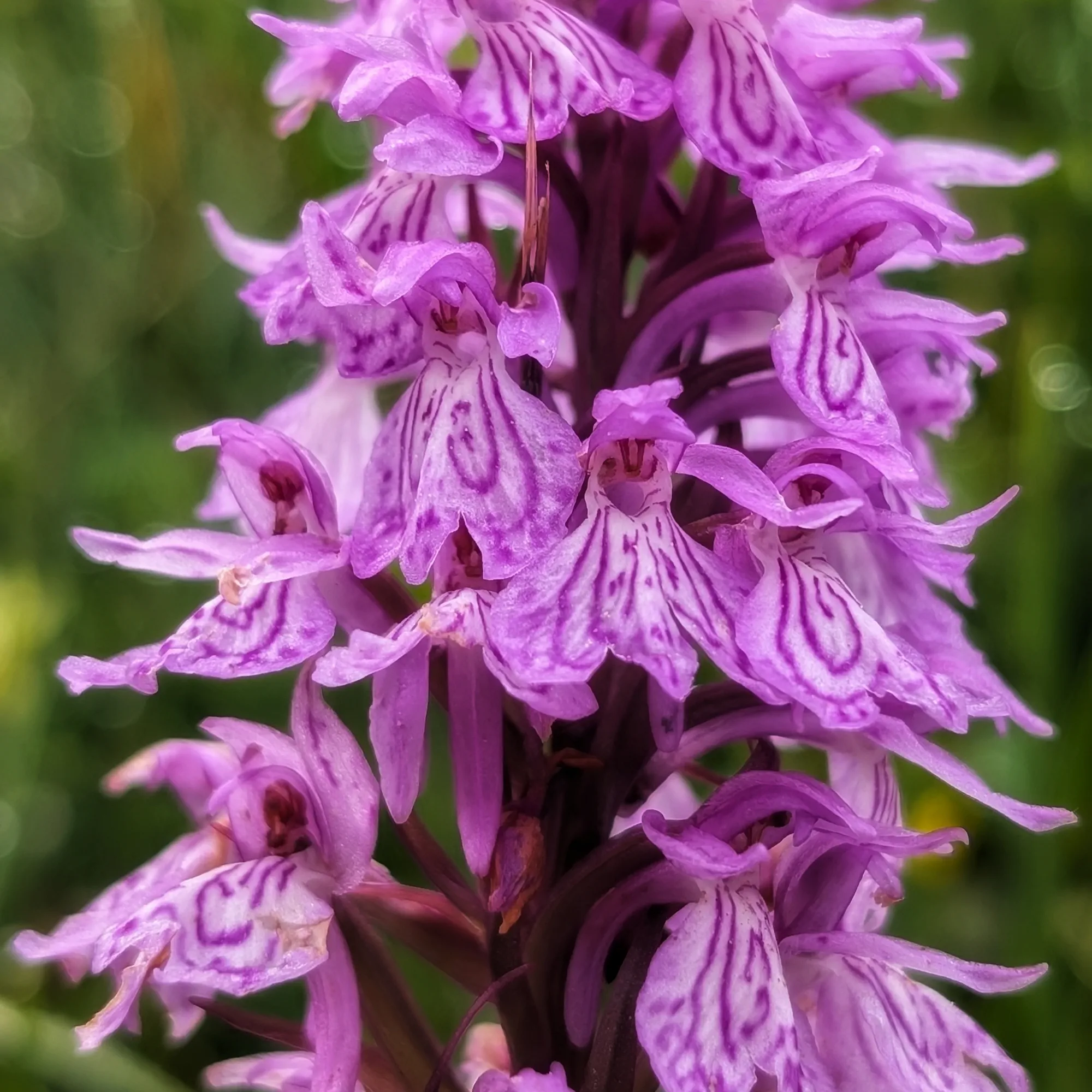
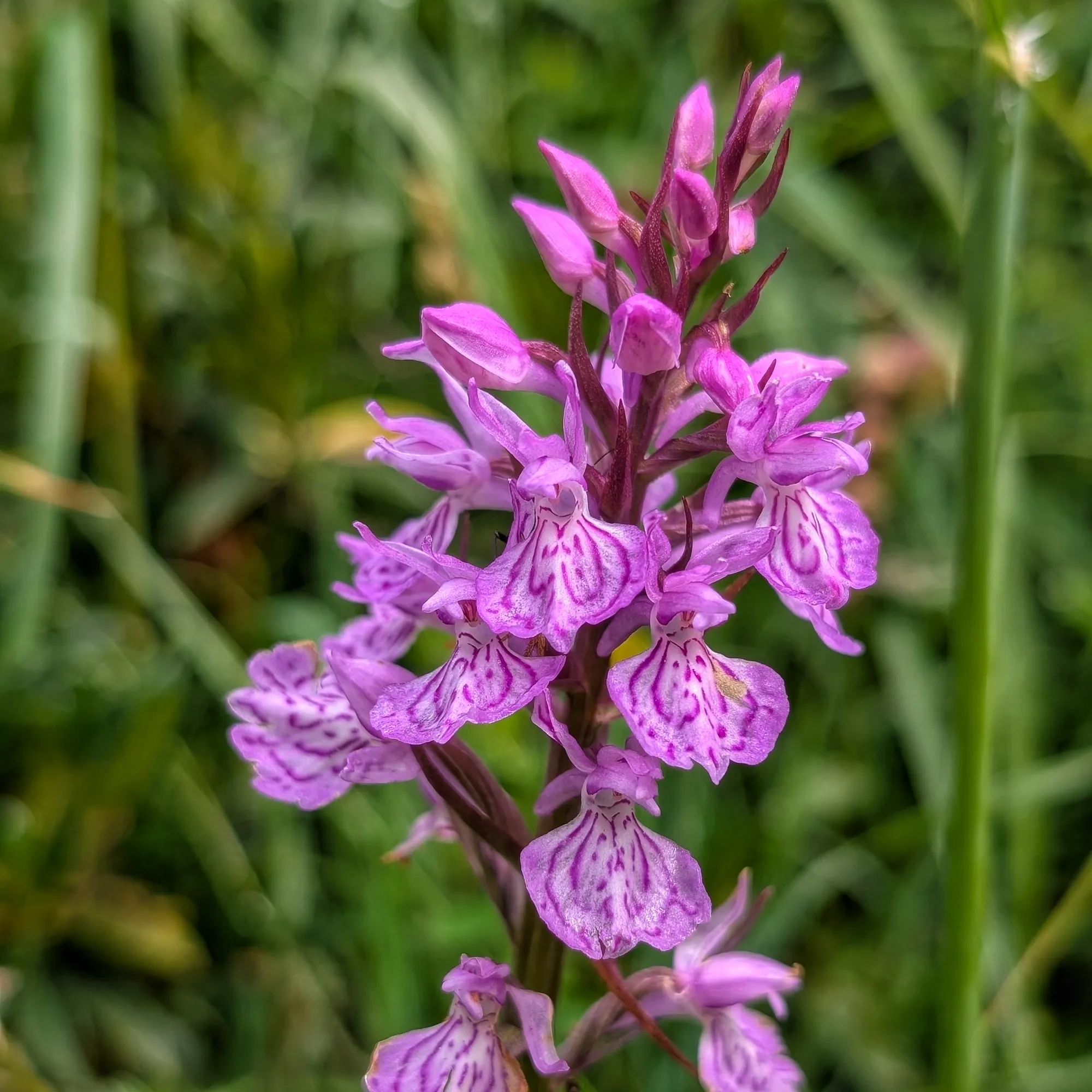
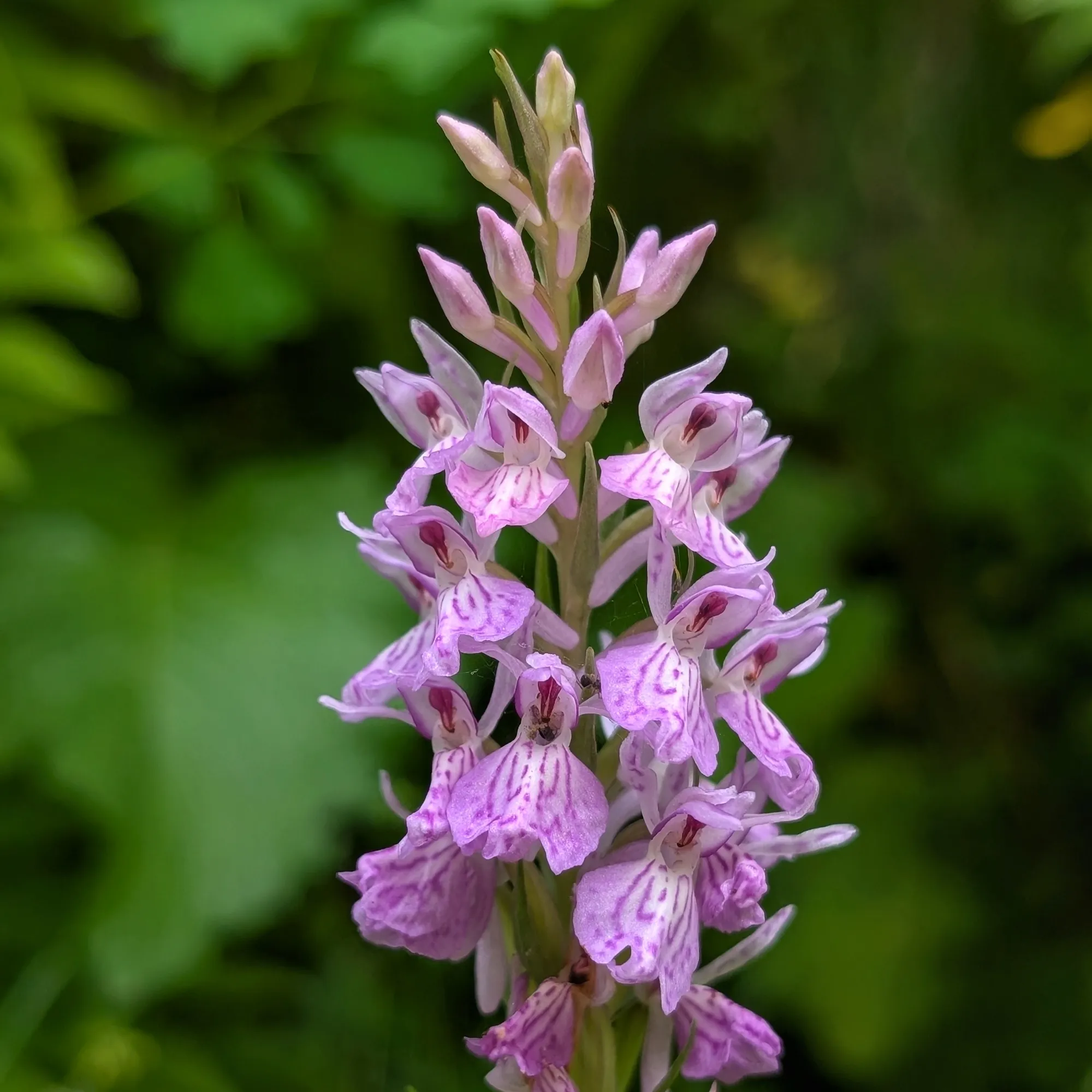
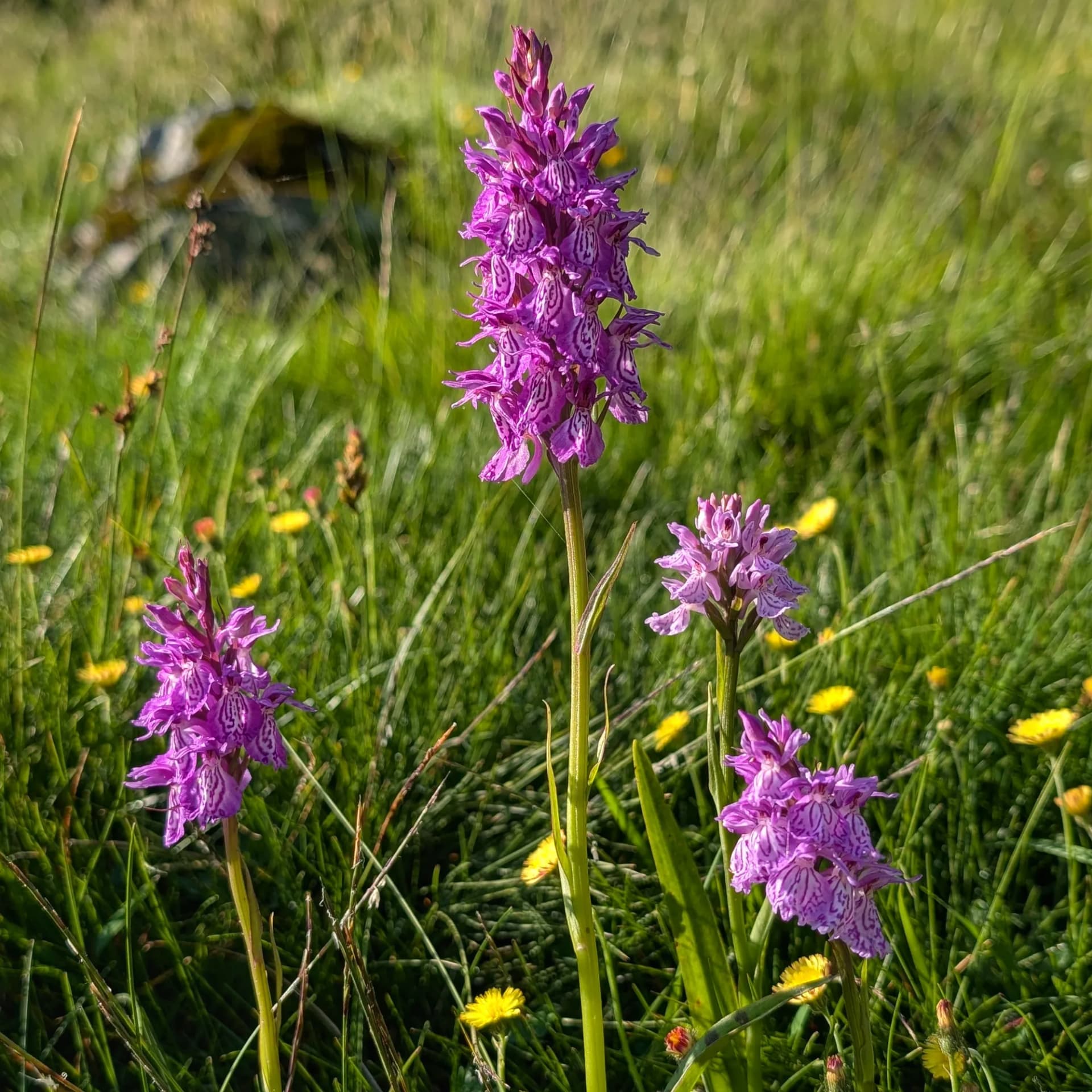
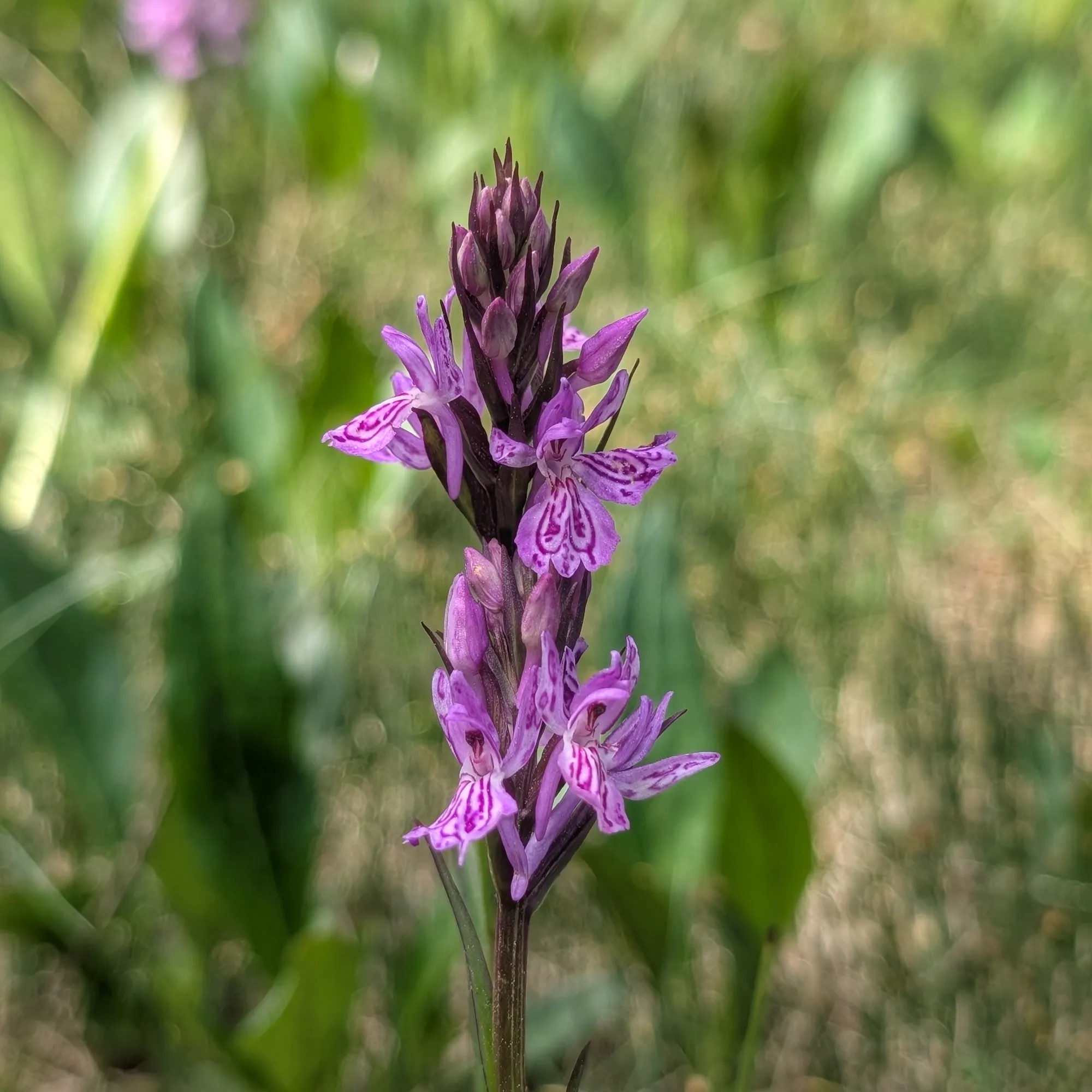
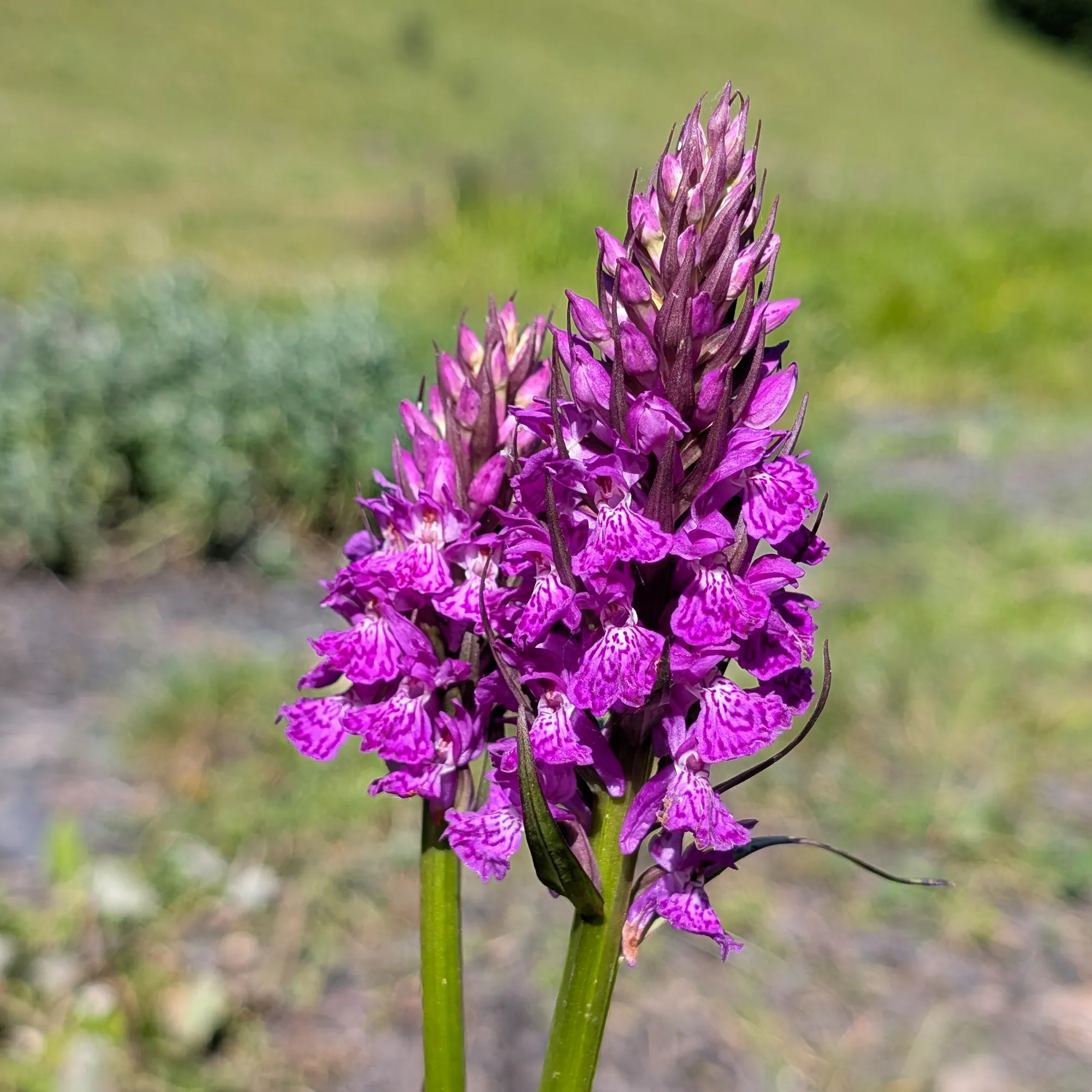
Morphological description: It is a plant that can reach up to 60 cm in height. Unlike marsh orchids (majalis group), it has a solid stem (full) and not hollow. The leaves, between 6 and 9, are wide, lanceolate, and feature clearly visible dark spots. The inflorescence is spike-like, compact, and can contain up to 40 flowers that give off a vanilla scent. The flowers range from pink to purple; the labellum (lip) is usually trilobed, with the central lobe shorter and narrower than the lateral ones (unlike D. fuchsii where the central one protrudes more) and is decorated with concentric lines and dots.
Habitat and distribution: This orchid is typical of acidic soils (non-calcareous). It preferably grows in places with humid soils, such as bogs, wet meadows, stream banks, and clearings of damp forests. in the Pyrenees, such as in the municipality of Setcases, it is commonly found between 1,420 and 2,200 meters of altitude, occupying the montane and subalpine belts.
Conservation status: In Catalonia, and specifically in the Ripollès area, it is considered a common species in its suitable habitat. However, like many terrestrial orchids, it can be affected by the alteration of its habitat, such as the drainage of wet areas, which has caused its decline in other parts of Europe.
Gallery
Related observations
Discover the observations I've made of this species.