Dactylorhiza majalis
Note about the genus Dactylorhiza
Orchids of the genus Dactylorhiza are easily confused with each other. Therefore, observations of this genus may not be entirely accurate regarding the identified species.
About the Orchid
The Dactylorhiza majalis, commonly known as the Broad-leaved Marsh Orchid, is a robust and fascinating terrestrial orchid, typical of the aquatic and humid ecosystems of mid- and high-altitude mountains. The name's Etymology perfectly reflects its subterranean morphology: Dactylorhiza comes from the Greek daktylos (finger) and rhiza (root), alluding to the hand-like, finger-shaped form of its two tubers. The epithet majalis refers both to its preference for "marshes" and its flowering period, typically the month of May.
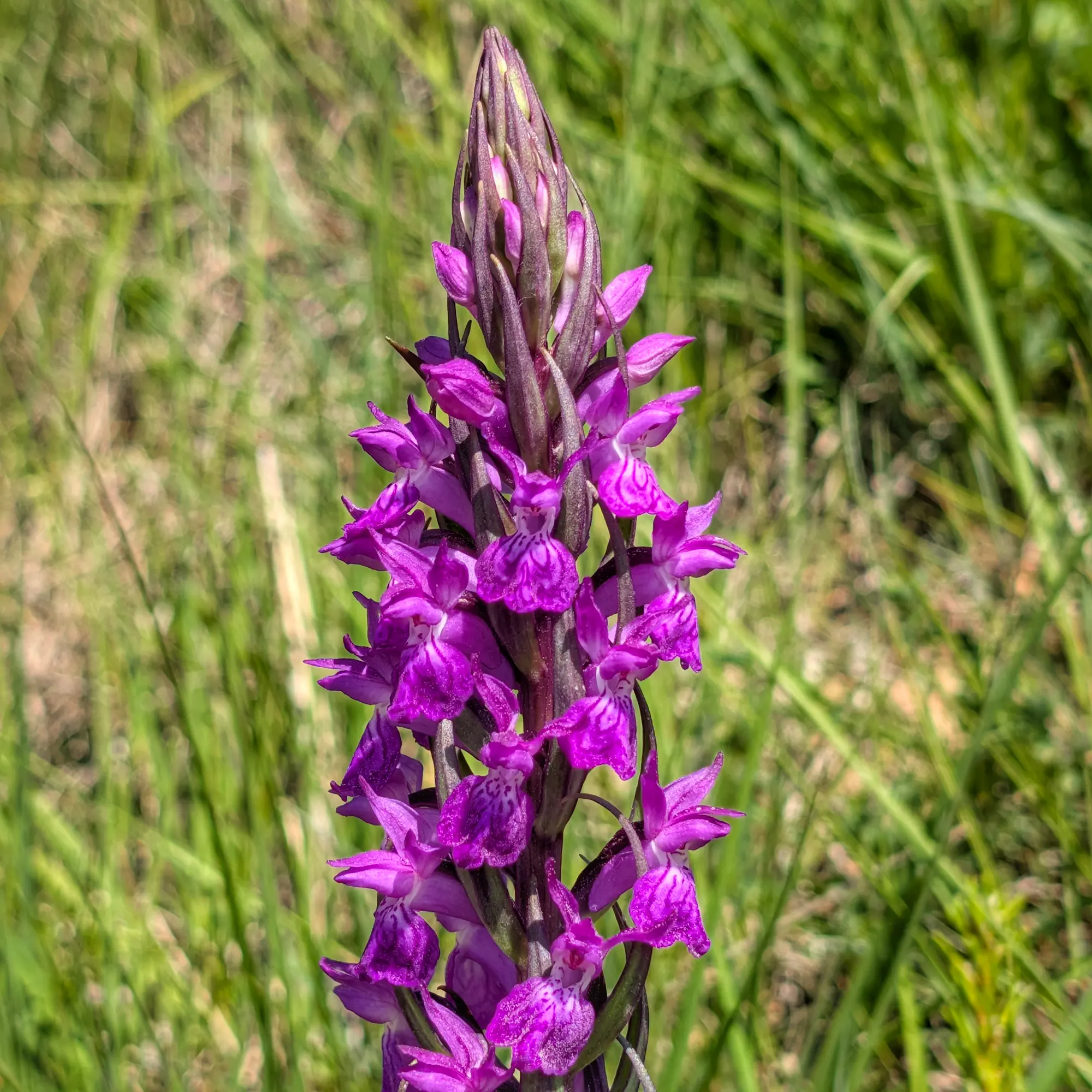
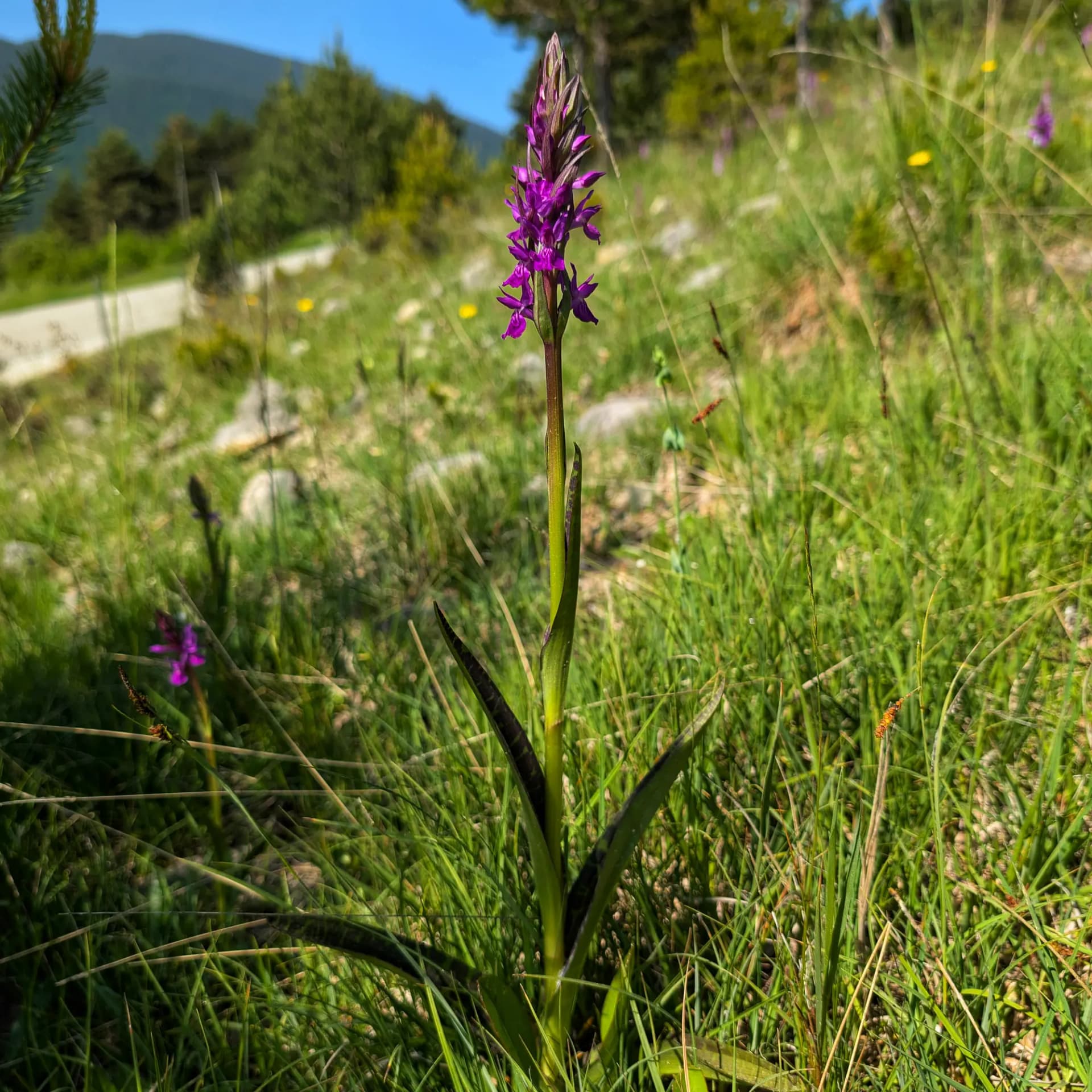
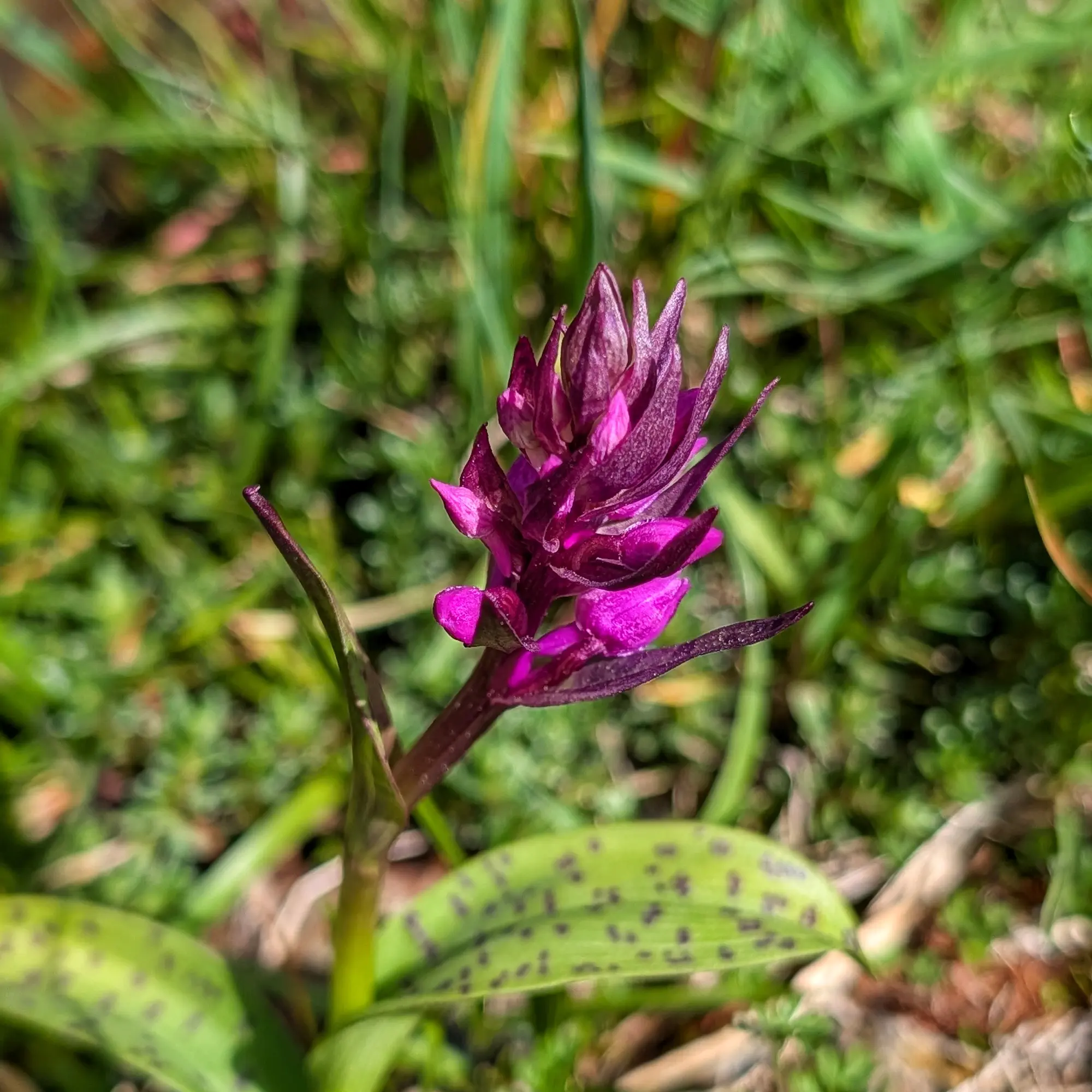
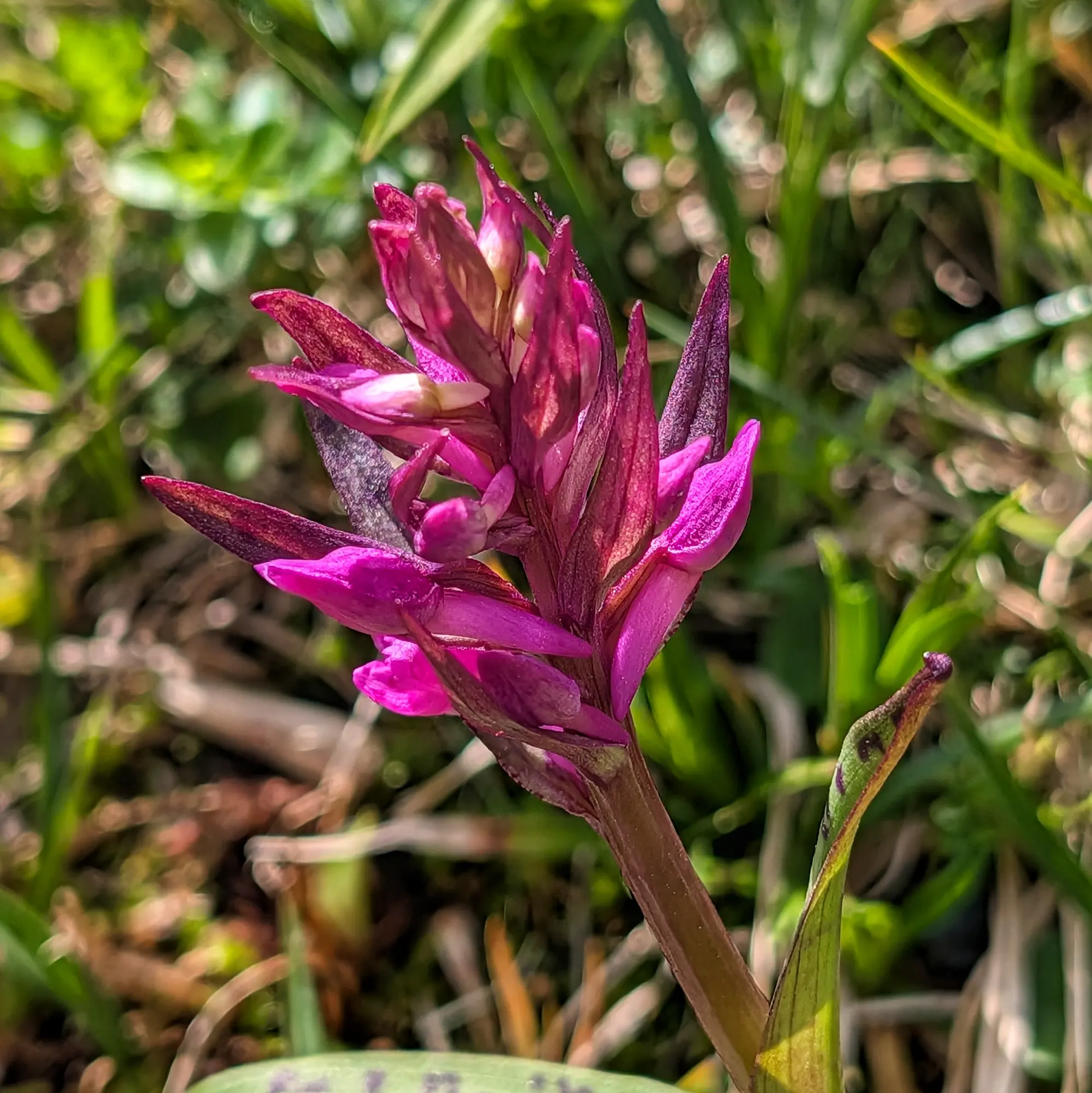
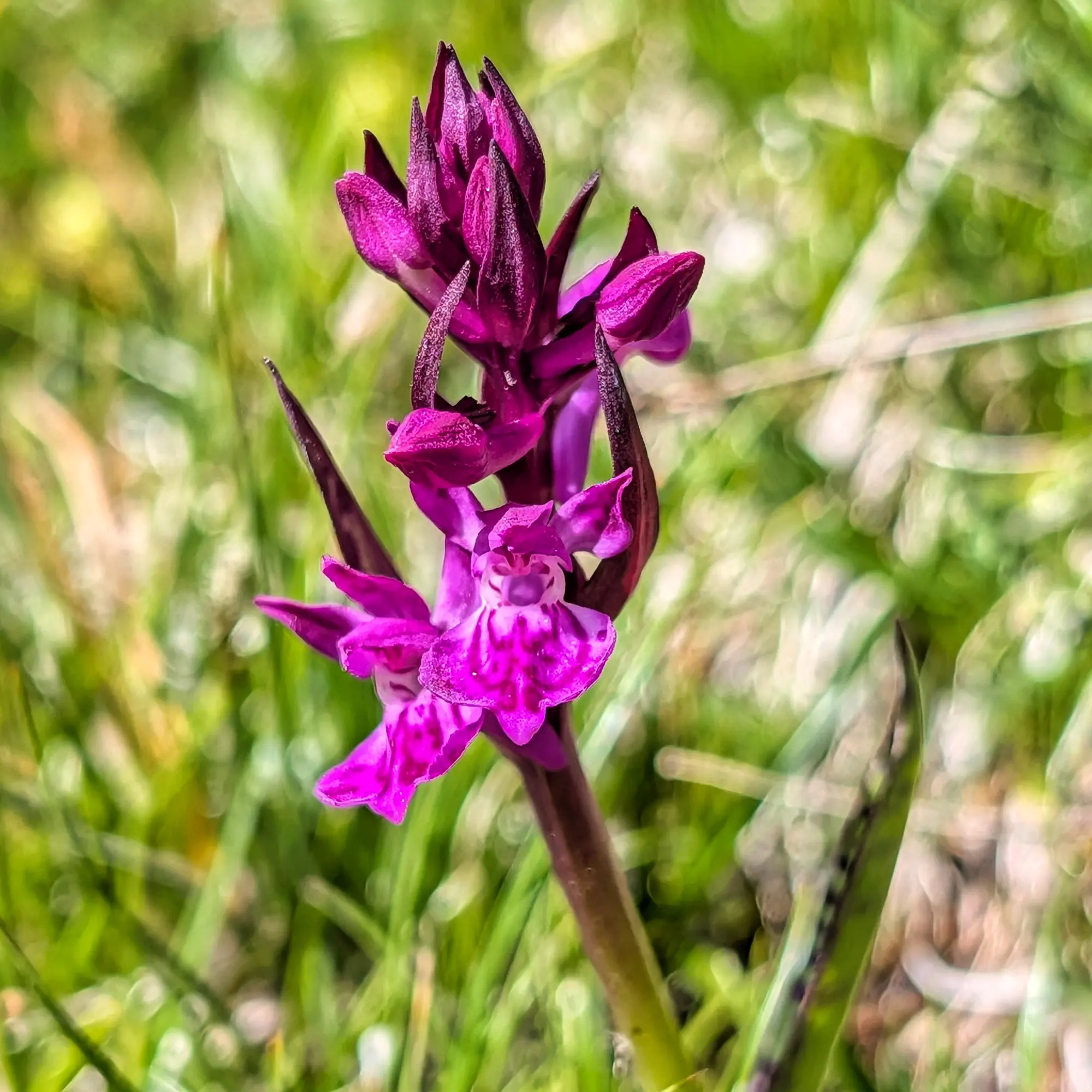
Morphological description: This plant stands out due to its height, which can range from 15 to 60 cm, and for having a hollow stem (fistulous), a key characteristic for its identification. Its 3 to 7 leaves are broad and very characteristically feature well-marked, dark purple spots (maculate). The inflorescence is a dense, cylindrical spike of purple or dark red flowers. Its labellum (lower lip) is trilobed and displays darker line drawings, with the throat's center being a lighter color, often white.
Habitat and ecology: D. majalis thrives in wet meadows, stream banks, and peat bogs with basic and almost permanently moist soils. In the Iberian Peninsula, it is generally found between 1,000 and 1,970 meters in altitude, being very present in the Pyrenees. Its flowering primarily spans from May to July.
Similar species: To differentiate it from other congeners like Dactylorhiza maculata or D. fuchsii, it is crucial to remember that D. majalis is the only one of those mentioned that has a hollow stem.
Gallery


Related observations
Discover the observations I've made of this species.