Dactylorhiza sambucina
Note about the genus Dactylorhiza
Orchids of the genus Dactylorhiza are easily confused with each other. Therefore, observations of this genus may not be entirely accurate regarding the identified species.
About the Orchid
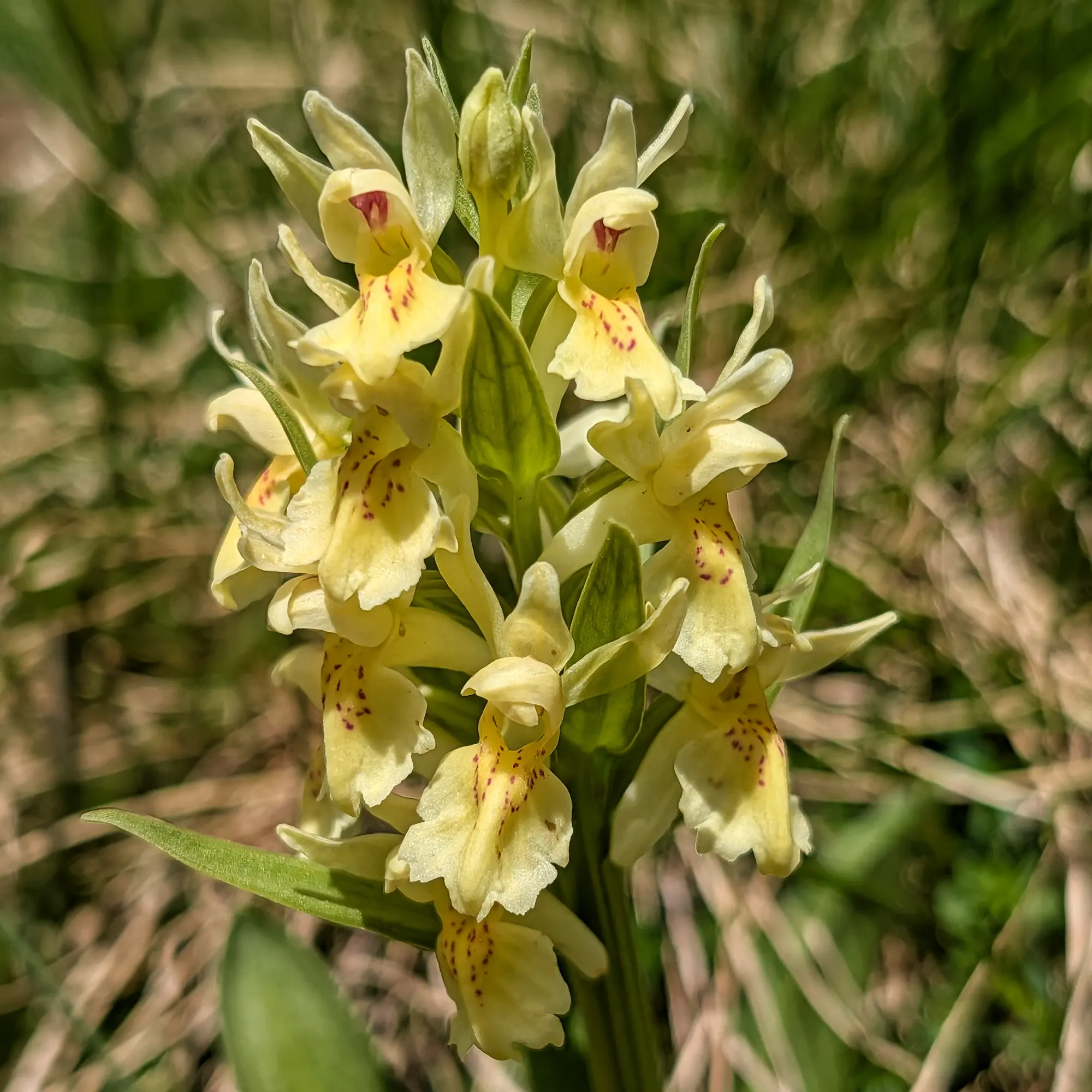
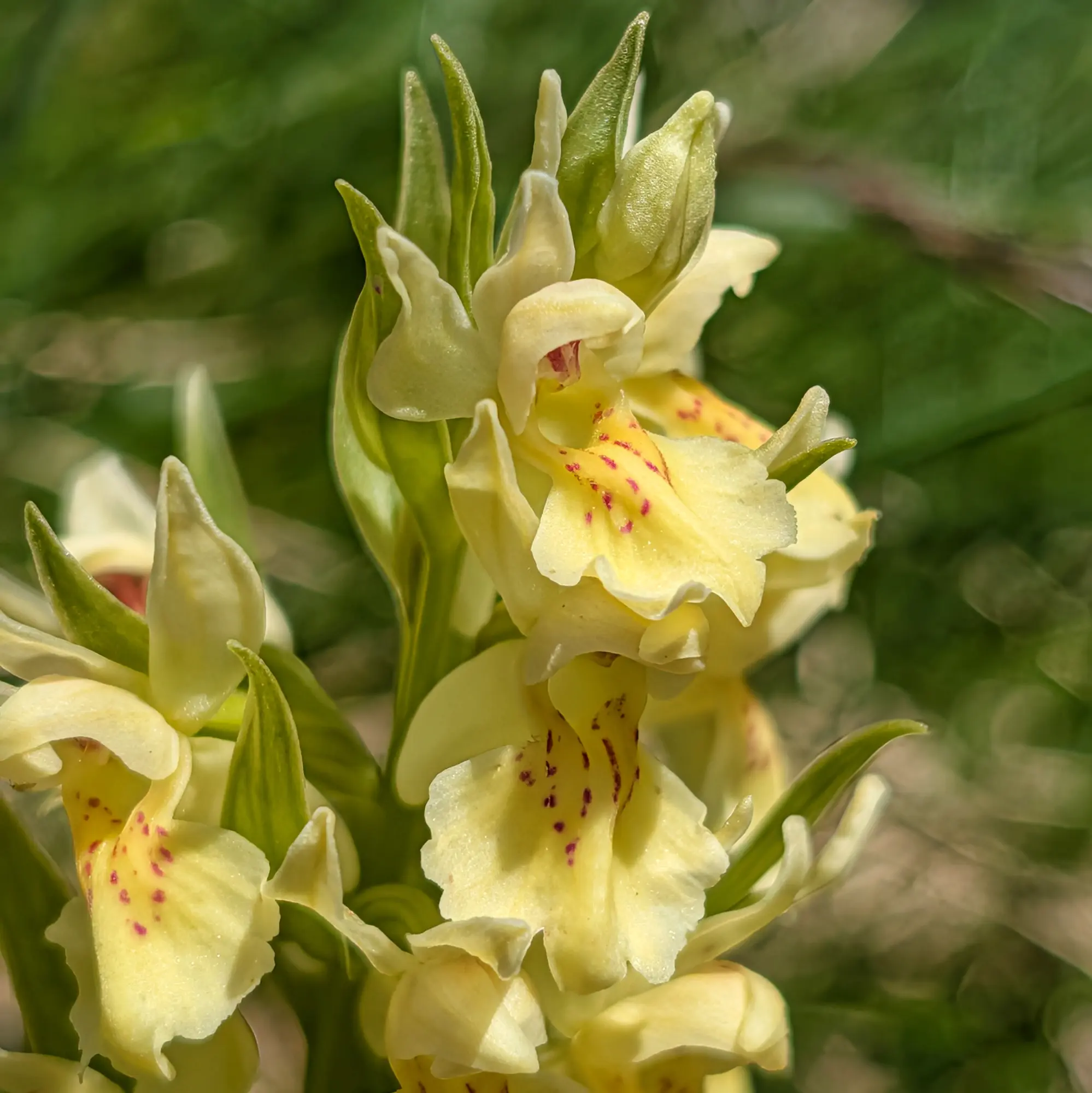
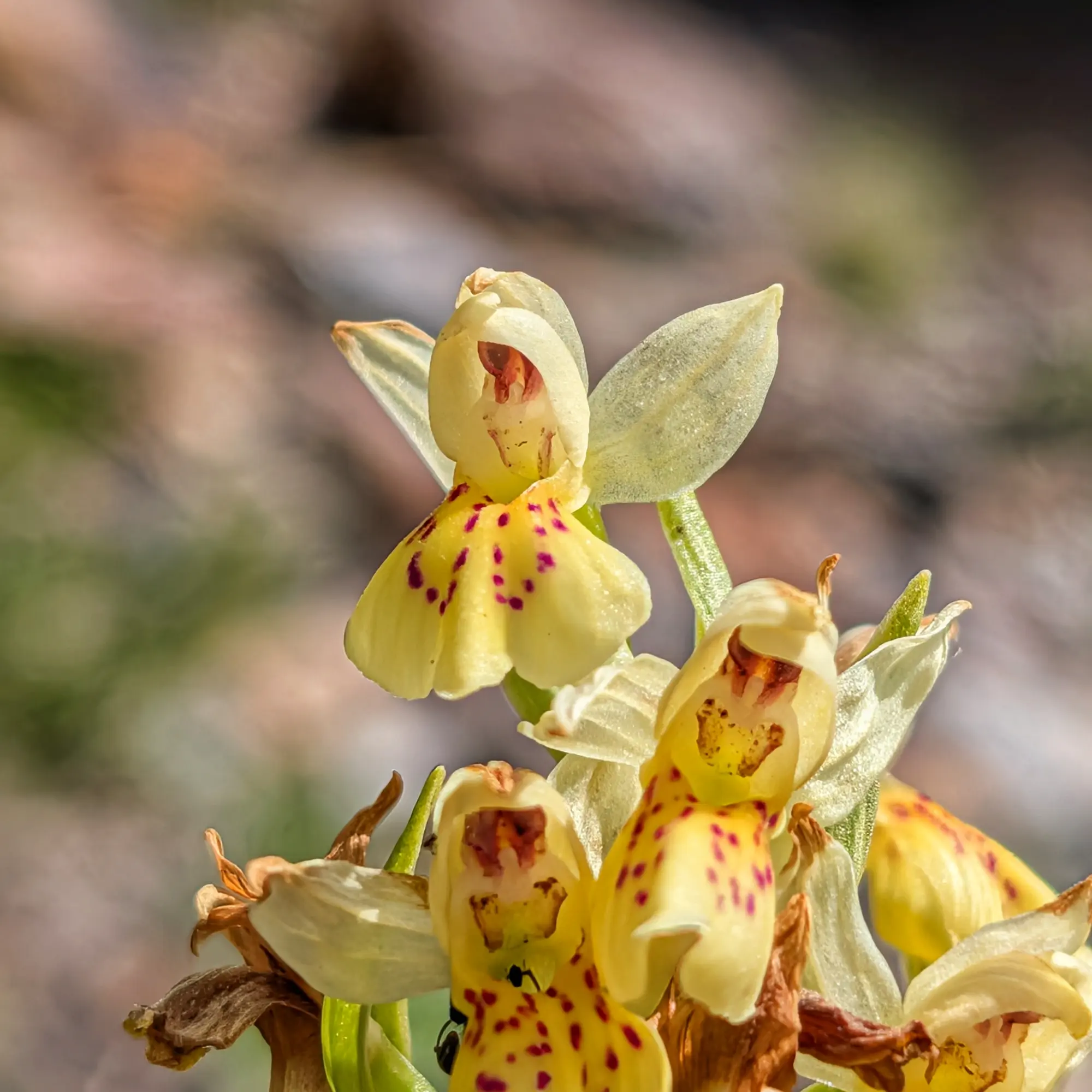
The Dactylorhiza sambucina, commonly known as the Elder-flowered orchid, is a wild terrestrial and perennial orchid belonging to the Orchidaceae family. Its specific name, "sambucina", refers to the delicate elder-like scent of its flowers, reminiscent of Sambucus nigra. This species is remarkable for its striking floral polymorphism, with yellow and purple or reddish-flowered individuals frequently found within the same population, and rarely salmon pink intermediate forms.
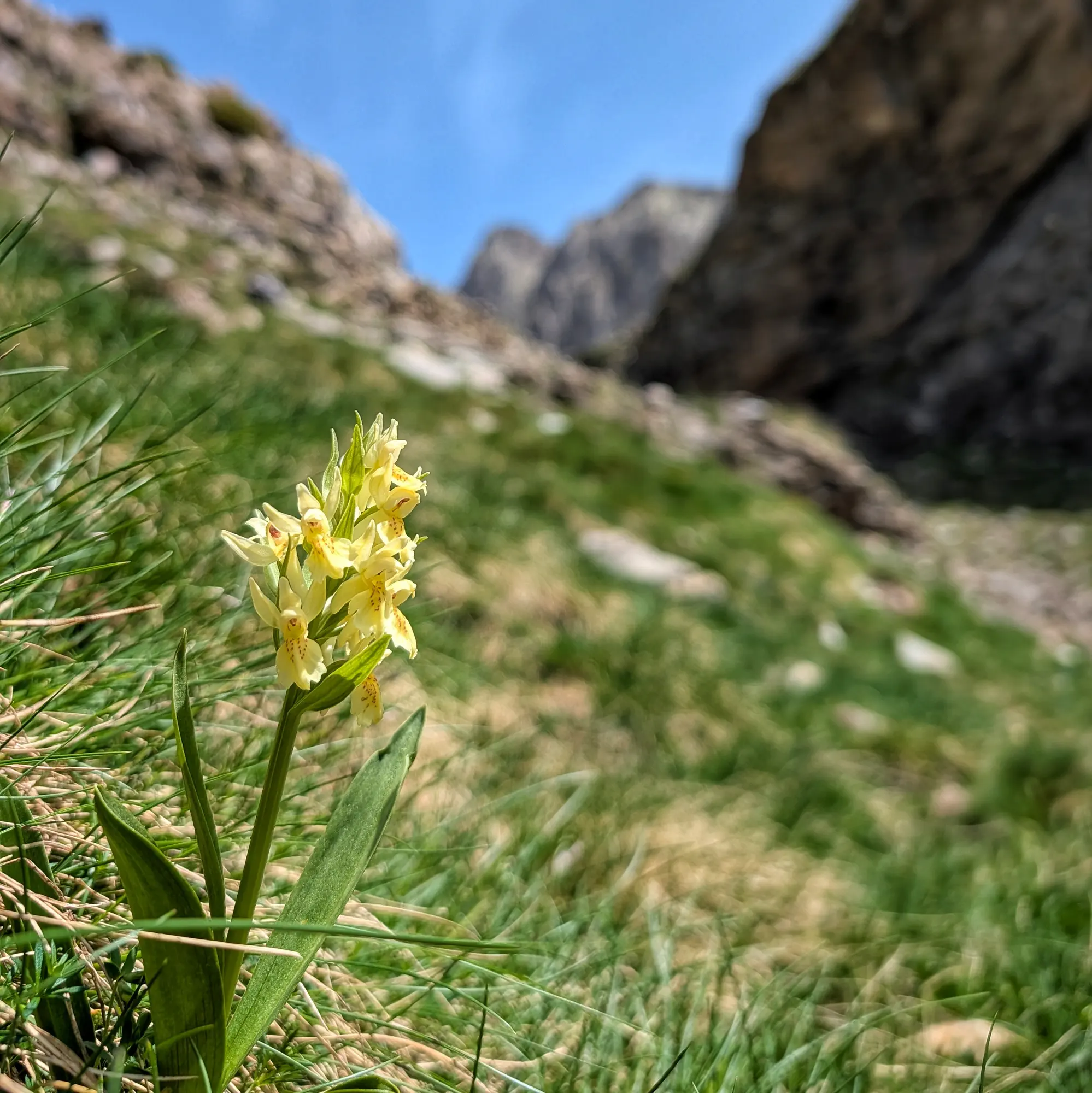
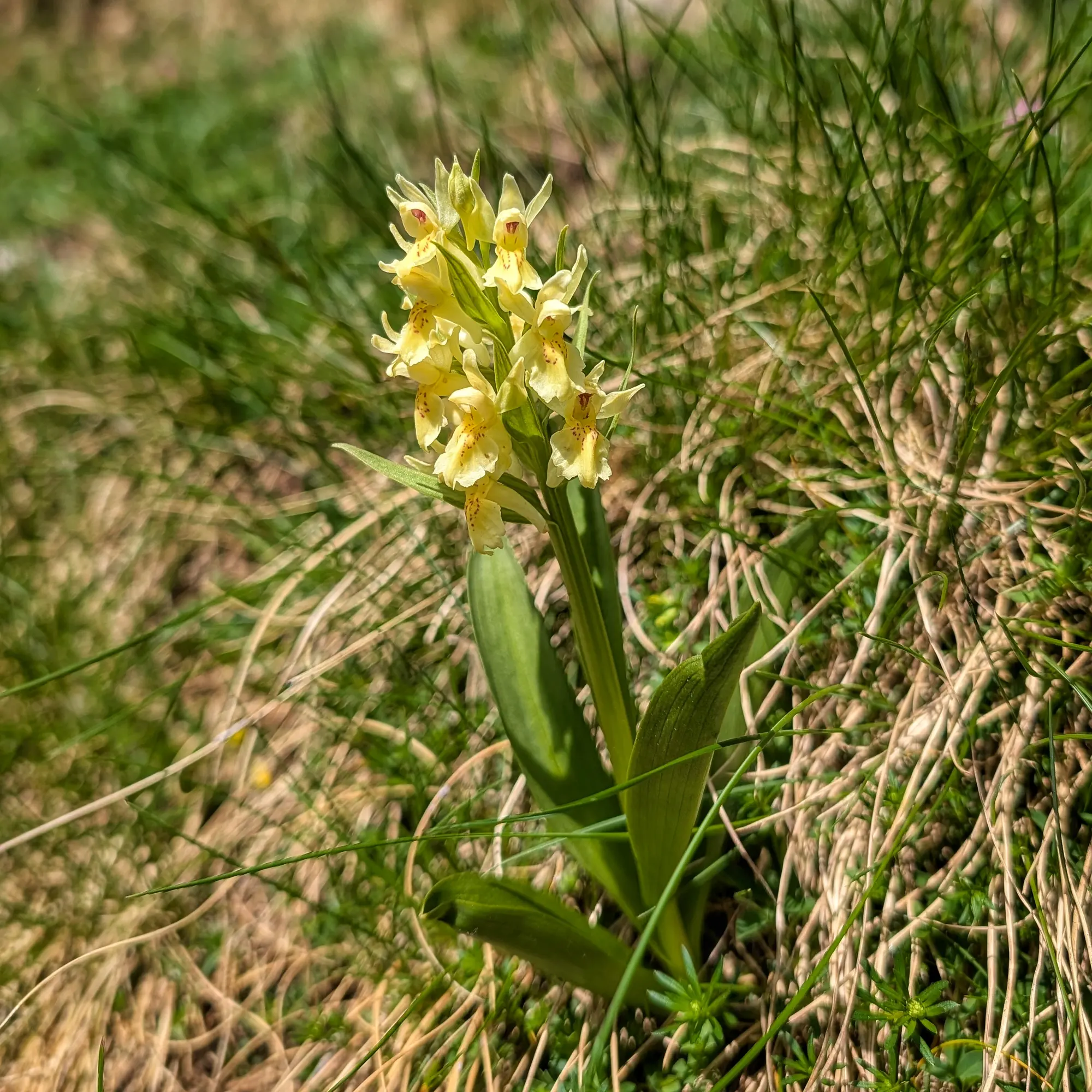
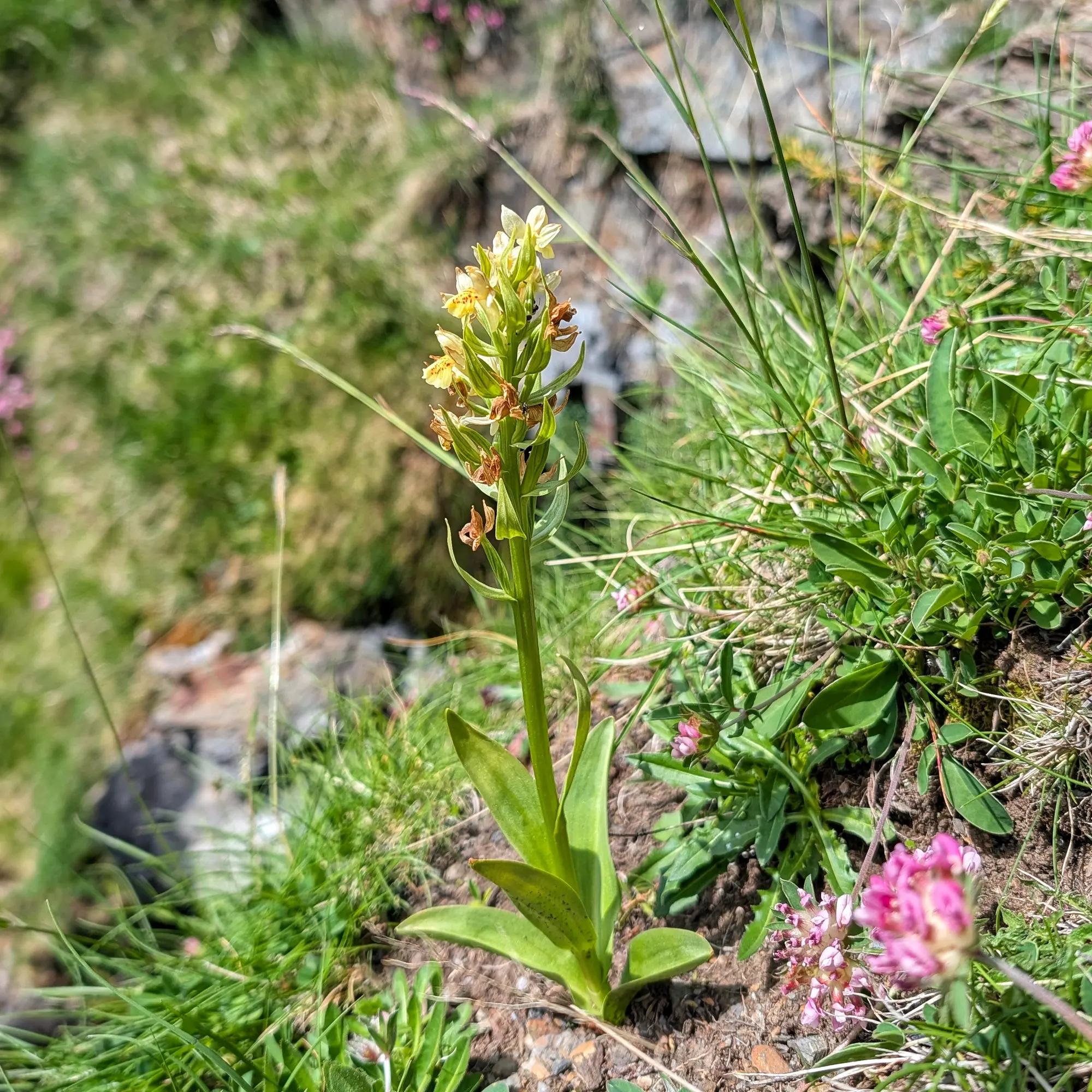
Morphological description: It is a robust and stocky plant, typically 10 to 40 cm tall, with an erect stem that is hollow internally in its early growth stages. As a geophyte, it possesses two subterranean tubers rich in reserve substances, deeply divided into lobes resembling human fingers, which is the origin of the genus name Dactylorhiza (Greek for "finger-shaped root"). It has 4 to 7 unspotted basal leaves with parallel veins, clasping the stem (amplexicaul). Lower leaves are oblong-obovate with a rounded tip, while upper ones are narrower, lanceolate, and erect. The inflorescence is a dense, oval spike (5-10 cm long) featuring large, conspicuous bracts. The flowers are resupinate and lack nectar, displaying a labellum (lower petal) approximately 15 mm wide by 10 mm long, slightly trilobed and speckled with central spots, and a solid spur curving downwards.
Life cycle and pollination: D. sambucina flowers from April to early July, depending on altitude. Its tiny seeds require a symbiotic relationship with specific mycorrhizal fungi in the soil to germinate successfully. It is a deceptive plant, attracting insects with its smell and appearance but offering no nectar or pollen reward. Pollination is entomophilous, primarily carried out by bumblebees (Bombus sp.) and other bees. This strategy, combined with "negative frequency-dependent selection" where pollinators learn to avoid the more common flower color, favors the stable coexistence of its two main color forms.
Habitat and distribution: It thrives in dry or fresh sparse meadows, subalpine and alpine pastures, clearings, scrub, and open forest edges. It adapts to both calcareous and siliceous (slightly acidic) soils with low nutrient content. It is typically found at altitudes between 300 and 2,600 meters above sea level, though locally it can occur at sea level, as in Uppland, Sweden. It has a Euro-Caucasian distribution, being common throughout much of Europe, from the Iberian Peninsula to the Scandinavian Peninsula, reaching Finland and Ukraine in the east, and also present in Italy and Sicily. It is found in Catalonia and the rest of Spain, but is absent from the British Isles, the Netherlands, Sardinia, and the Dinaric Alps.
Conservation status: Globally, the IUCN classifies Dactylorhiza sambucina as "Least Concern" due to its wide distribution, but warns of a declining population trend. Major threats include habitat loss caused by anthropogenic alterations and the abandonment of traditional pastures, over-grazing and trampling (by cows and wild boars), and the illegal collection of its tubers for "salep" production (Greece, Turkey), a practice that directly kills the plant. The species is protected by legislation in several countries (Finland, Greece) and by European conservation regulations.
Gallery
Related observations
Discover the observations I've made of this species.