Himantoglossum robertianum
About the Orchid
The Himantoglossum robertianum (formerly known as Barlia robertiana) is a robust, perennial, bulbous plant, standing out as the most robust orchid found in many of its habitats. It is known for its large size and early flowering. There is current consensus to place it within the genus Himantoglossum based on biochemical and morphological analyses.
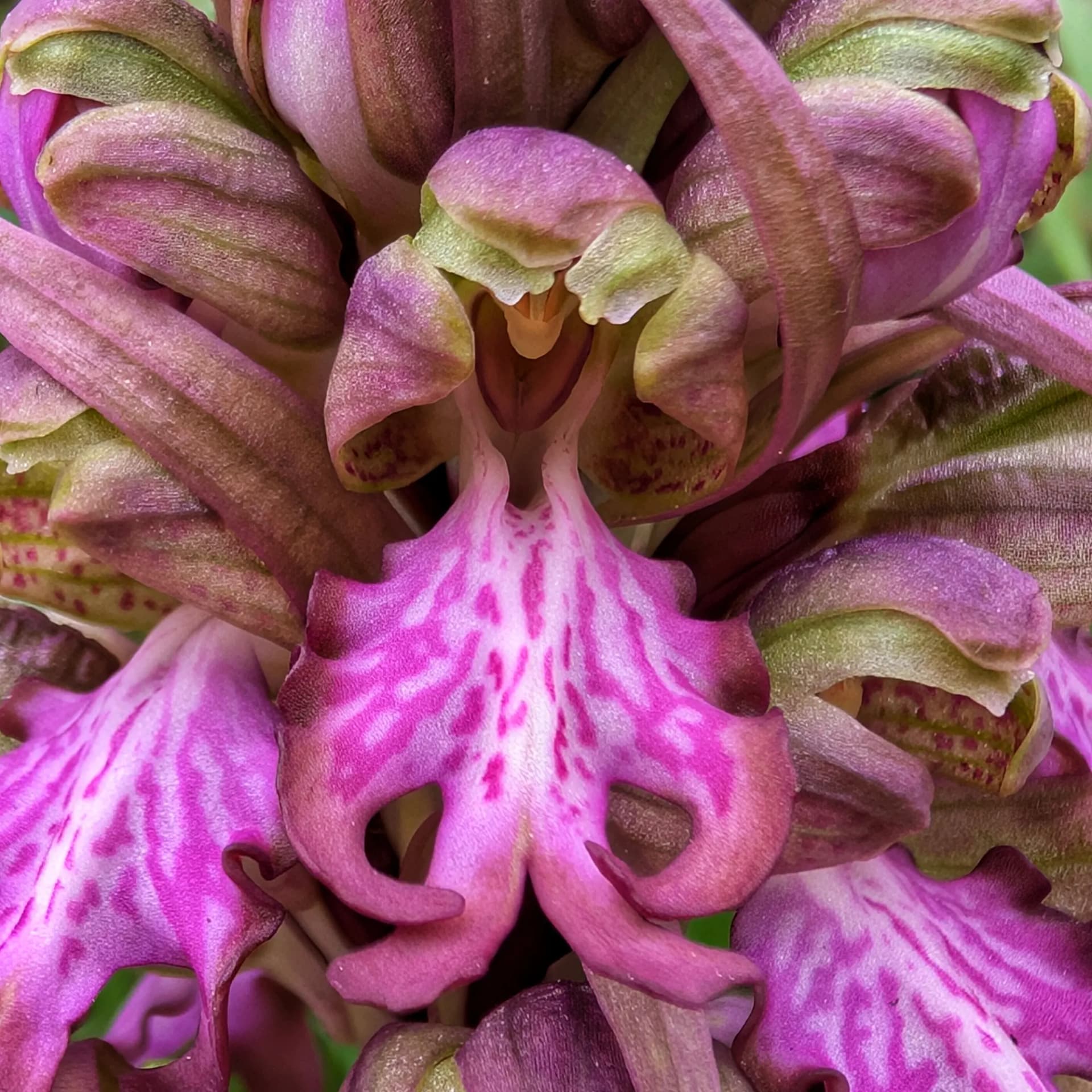
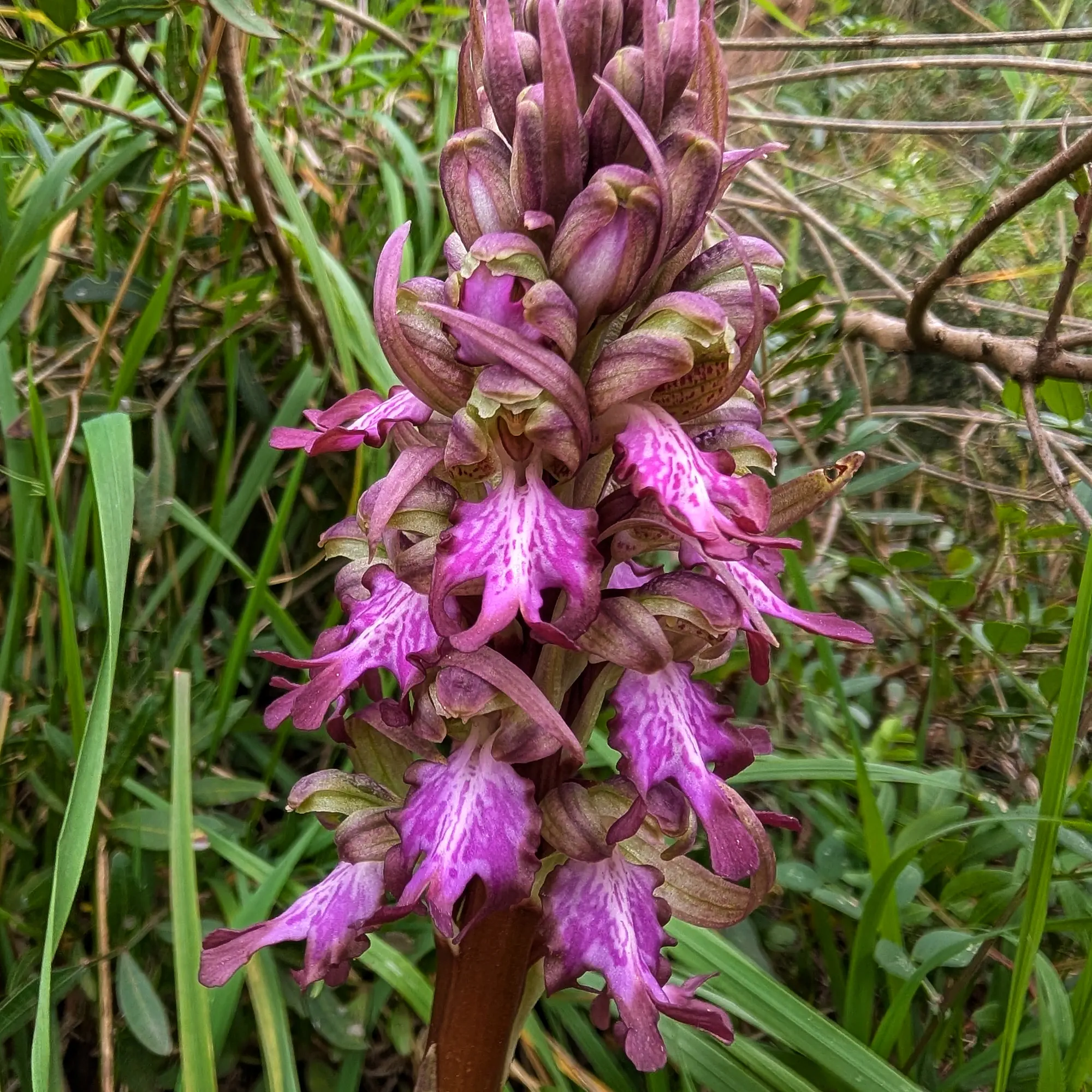
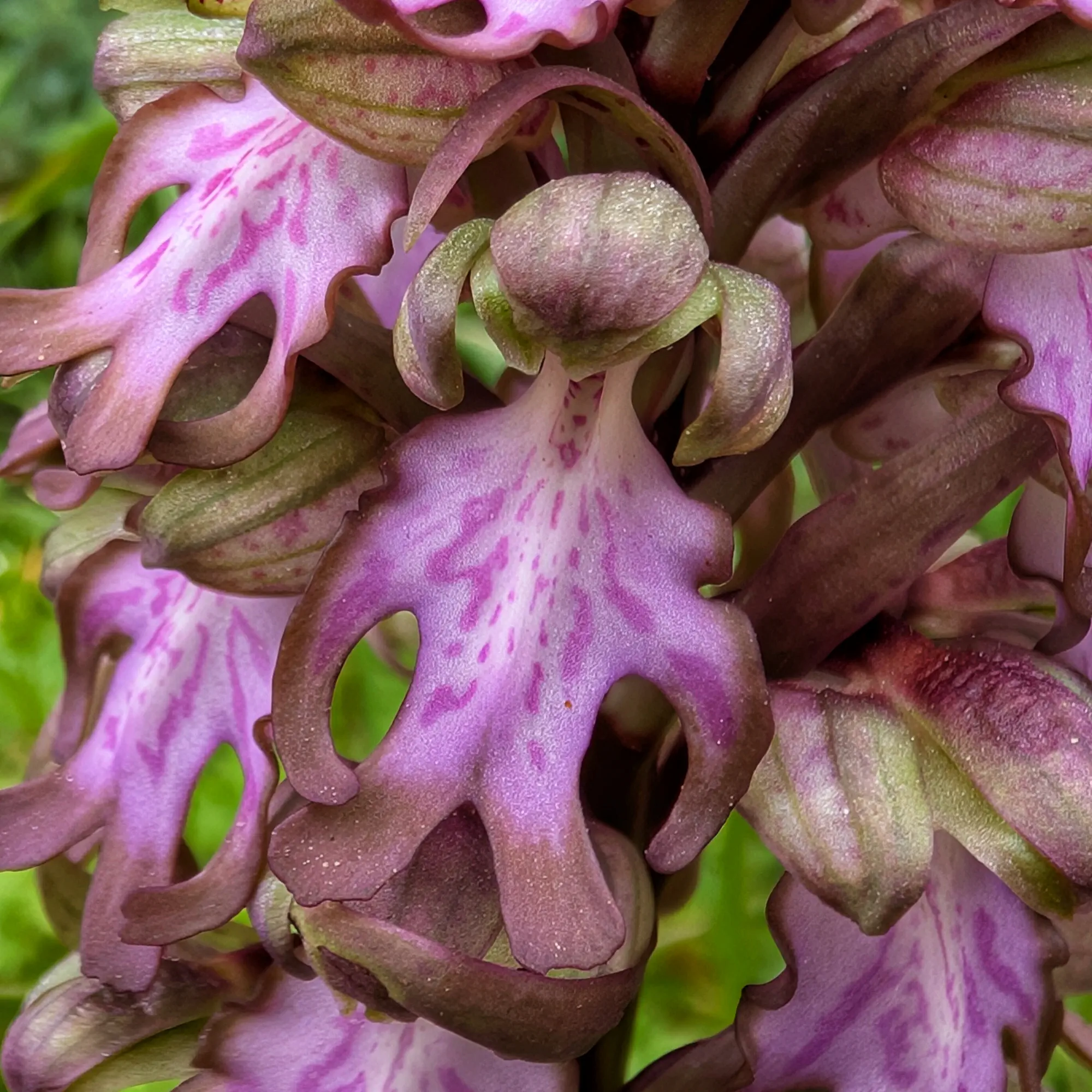
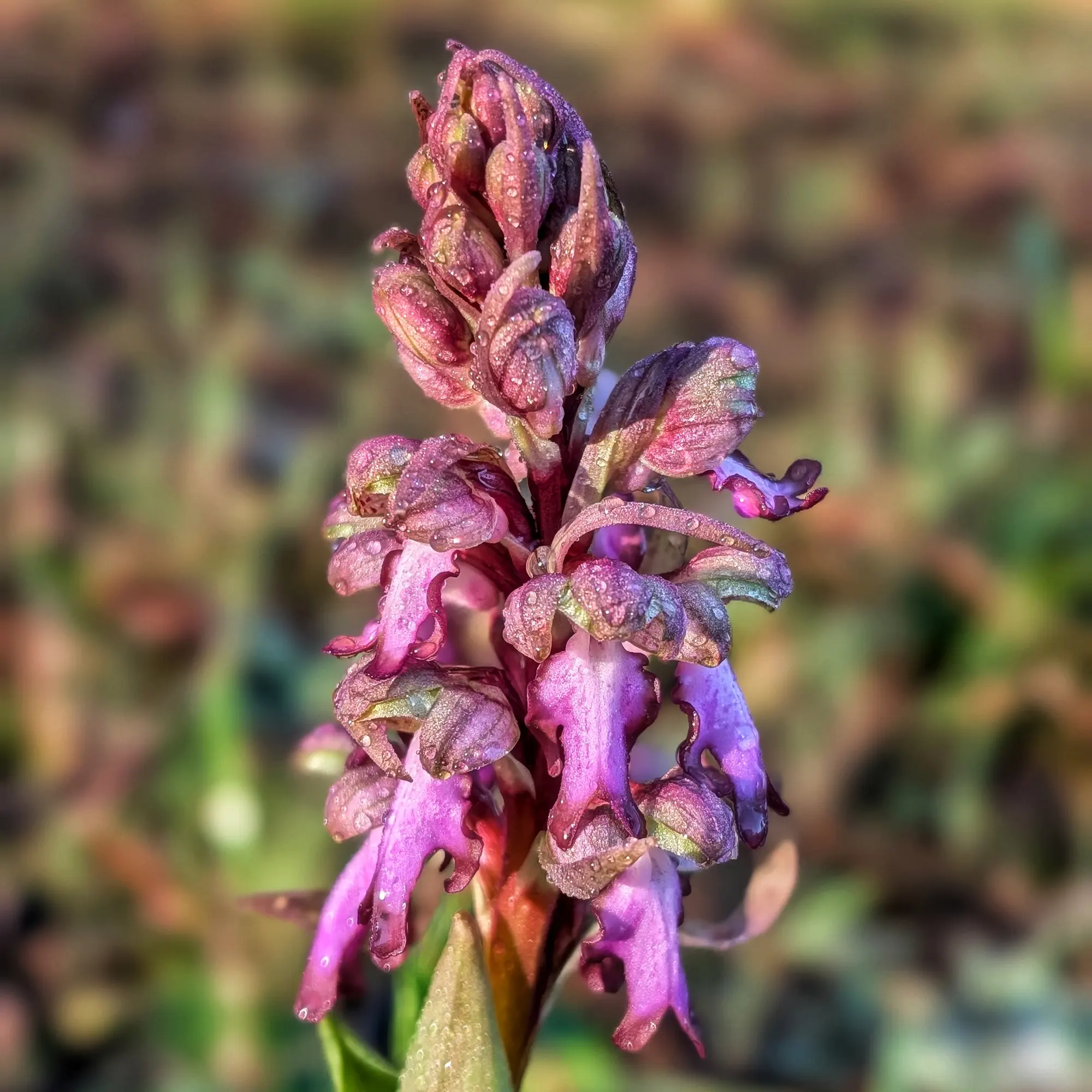
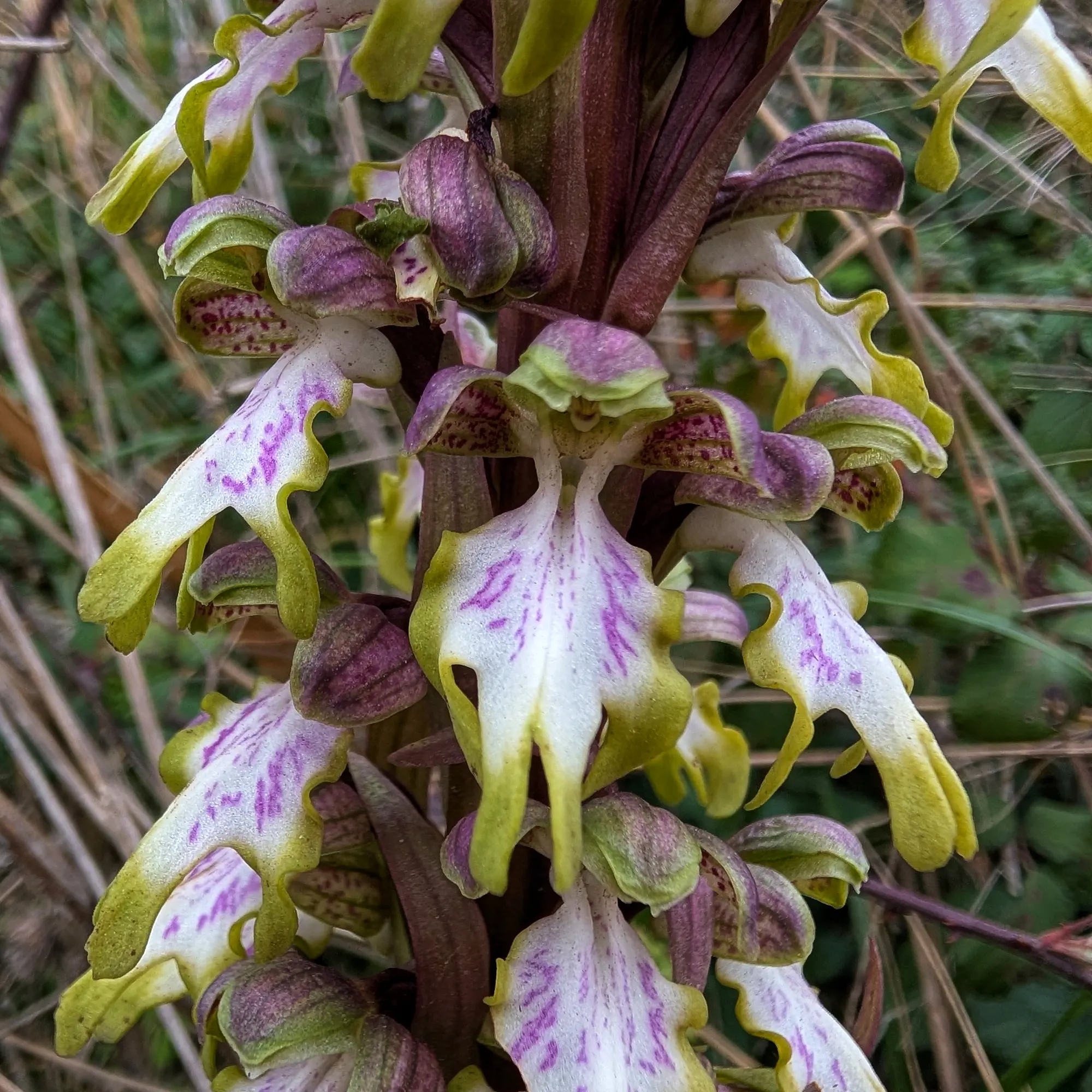
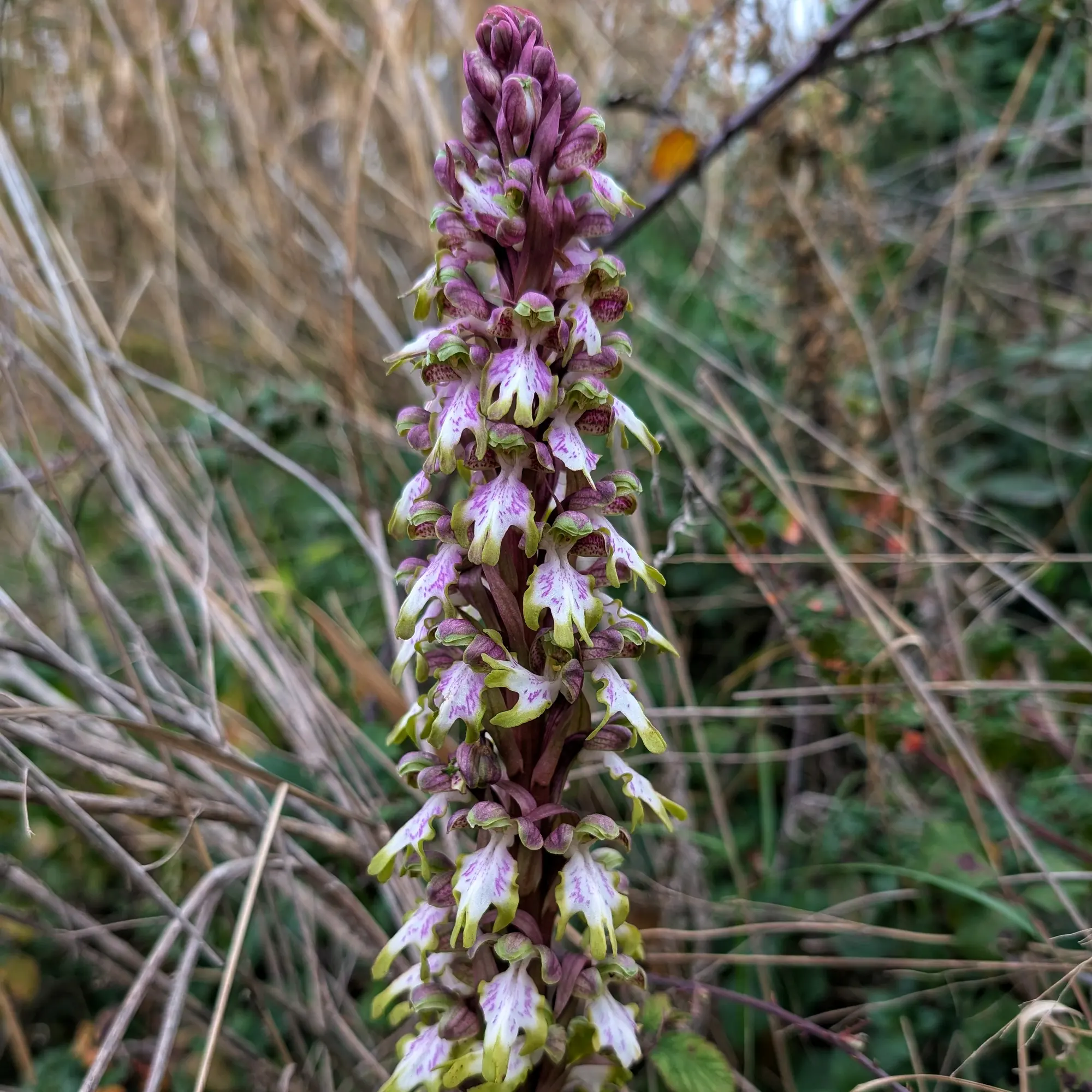
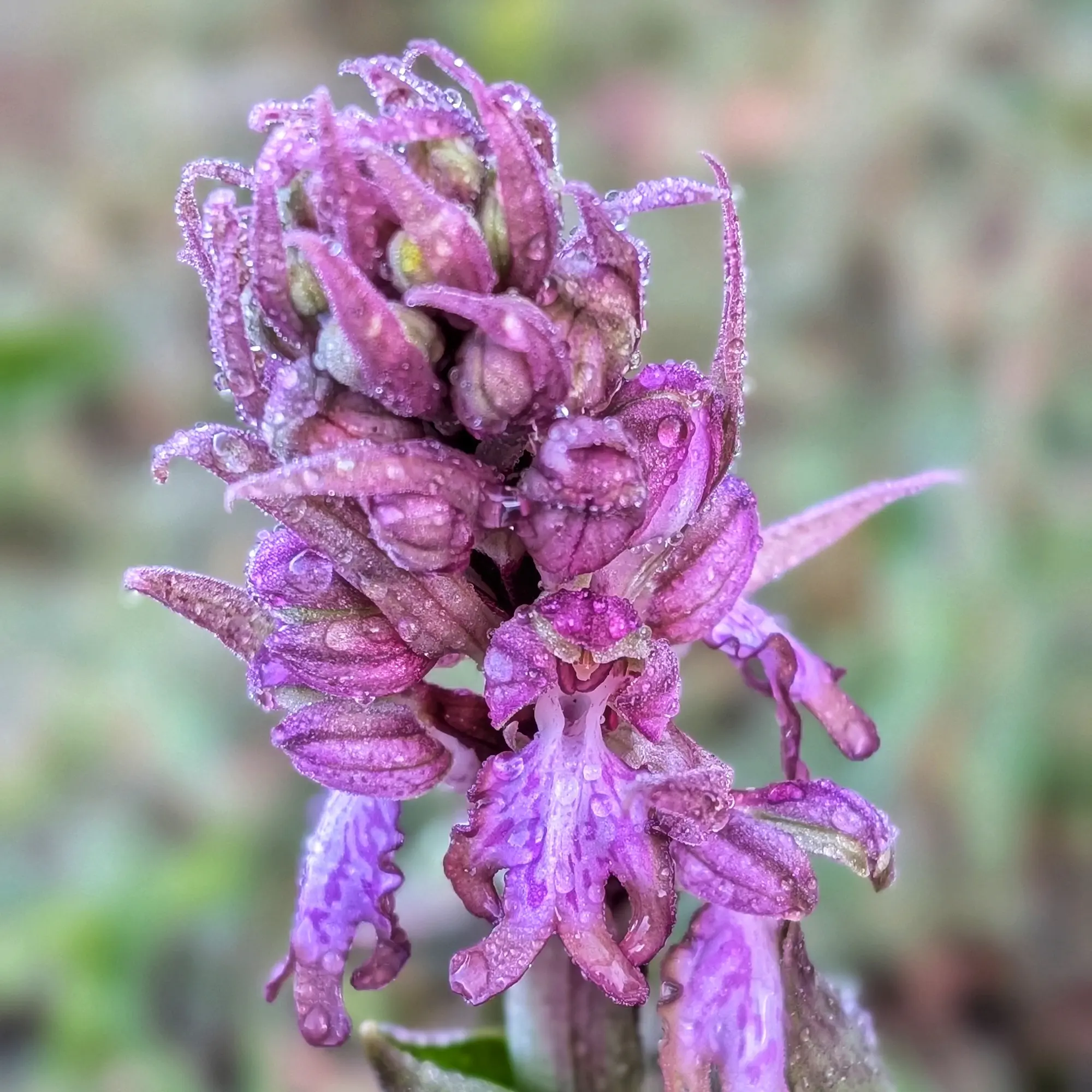
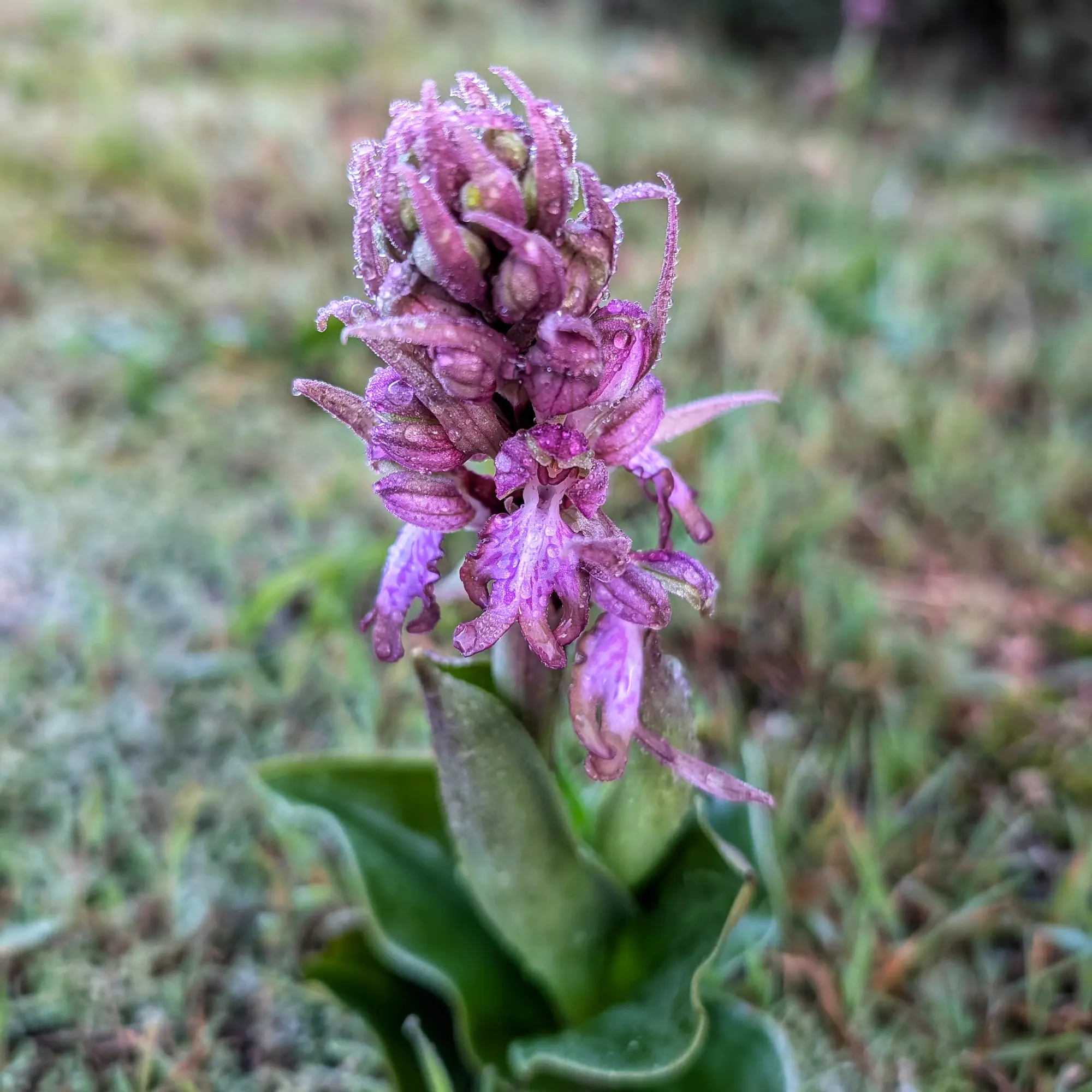
Morphological description: This orchid presents an imposing appearance and distinctive characteristics. It is a robust plant that can easily reach 50 cm in height, and in some cases grow up to 80 cm or even one meter, with a thick stem. It has large, intense green basal leaves, usually forming a basal rosette of 5 to 10 leaves. The inflorescence consists of a dense spike (6 to 23 cm tall) with a large number of flowers (up to 60) that touch each other. The flowers are large and fragrant. The outer and inner tepals group together to form a forward-facing "hood" in greenish and pinkish tones, with intense pink spots inside. The labellum (lip) is its most characteristic part; it is large (up to 2 cm), pink to purple, and is divided into four lobes that give it a shape resembling a doll or a person. The center is whitish with intense pink spots, and the sides are always wavy.
Habitat and distribution: It prefers calcareous and alkaline soils. It is found in places receiving sufficient sunlight or partial shade, such as meadows, garrigues, scrublands, forest clearings, and edges of cultivated fields or roads. It shows great ecological plasticity and can even appear in degraded urban plots. It can be found from sea level up to 1,700 meters in altitude. It is native to the Mediterranean Basin (Portugal, Spain, France, Italy, North Africa, etc.). In the Iberian Peninsula, it was traditionally considered more abundant in the southern and coastal regions, but it is expanding inland and northwards (such as Aragon or the United Kingdom), possibly due to climate change.
Flowering: It is one of the earliest orchids to flower, generally blooming from January to April. In Alta Garrotxa, flowering is concentrated between mid-March and early April, while in warmer areas or the center of the Iberian Peninsula, it can start in February or even December. It is a perennial plant (a geophyte) that survives unfavorable seasons as an underground bulb. Its pollination strategy involves food-deception, attracting insects through its emitted aroma.
Gallery
Related observations
Discover the observations I've made of this species.