Neotinea conica
About the Orchid
Neotinea conica (formerly classified within the genus Orchis as Orchis conica), commonly known as the Conical orchid, is a terrestrial herbaceous orchid native to the Mediterranean region. Its specific epithet, "conica," refers to the characteristic conical shape of its inflorescence, while the genus Neotinea honors the Sicilian botanist Vincenzo Tineo. Taxonomically and genetically, it is very closely related to Neotinea lactea and Neotinea tridentata, to the point that some authors consider it a subspecies of these.
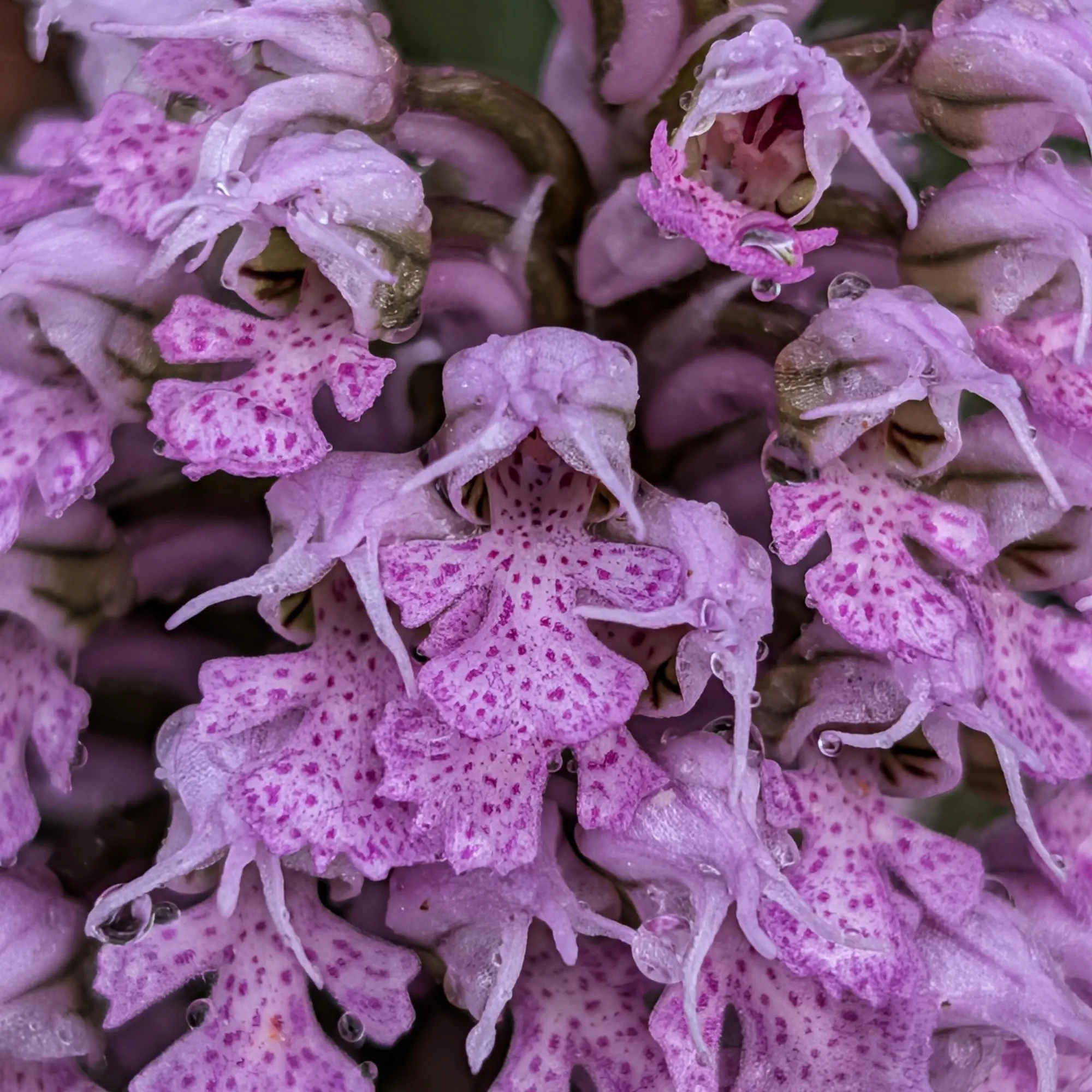
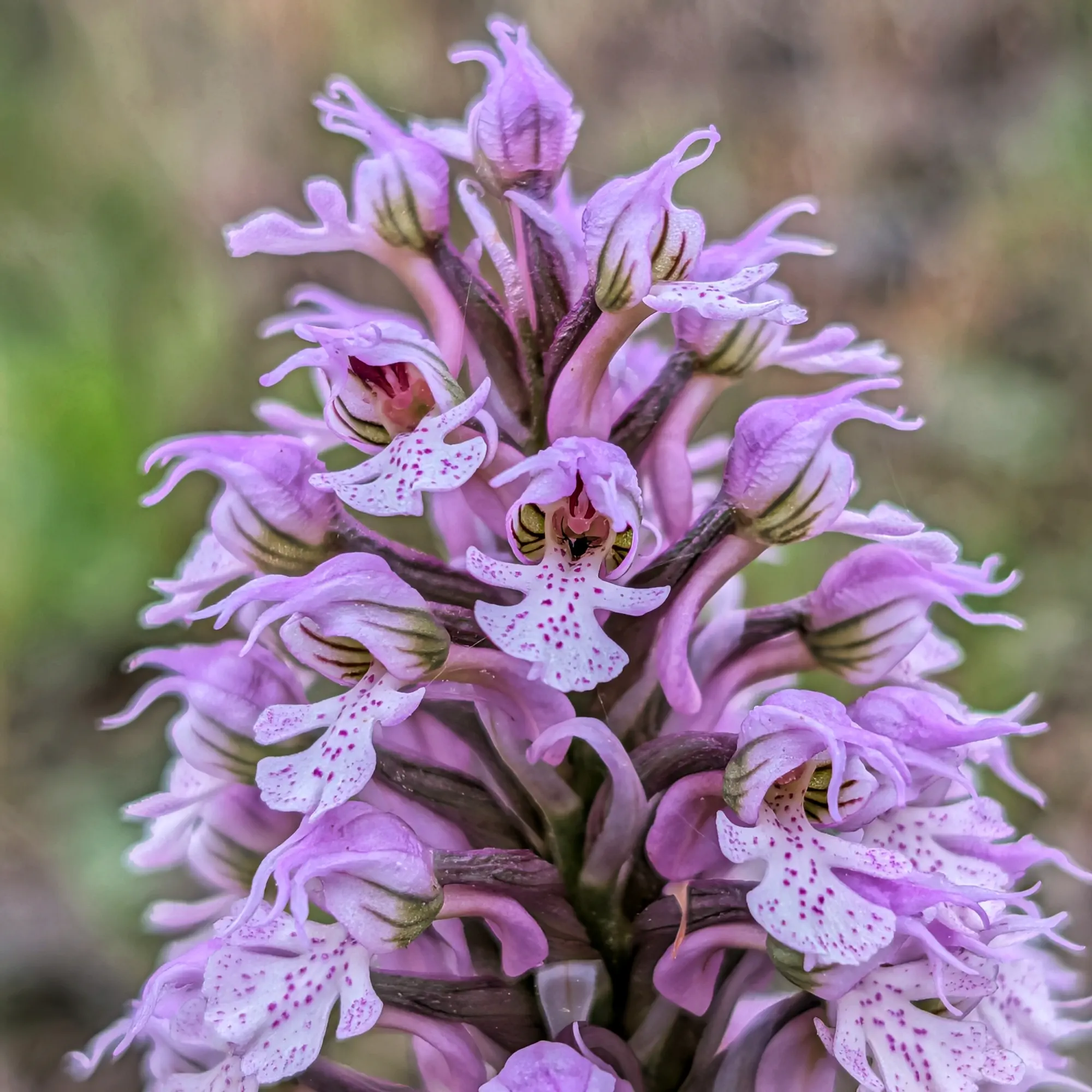
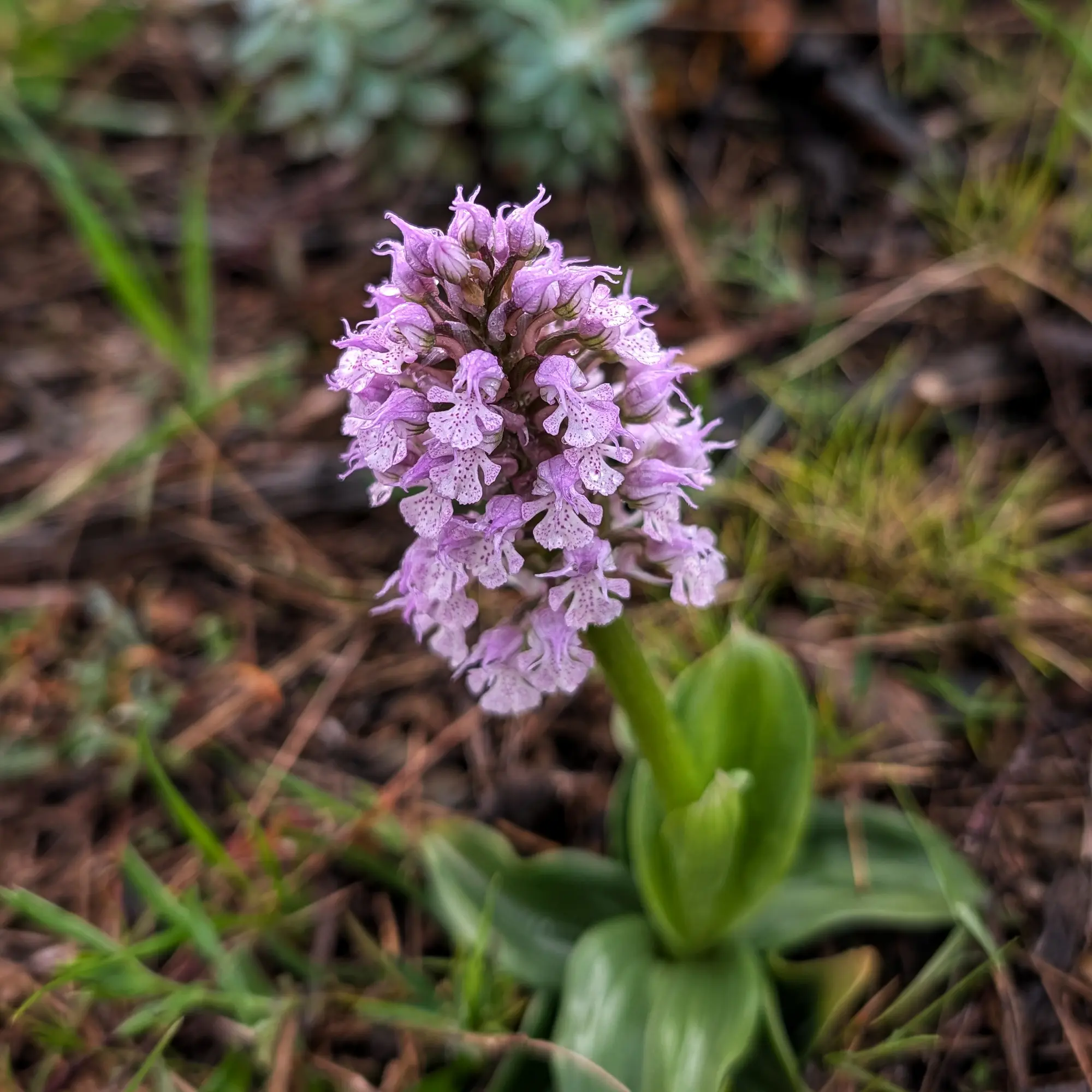
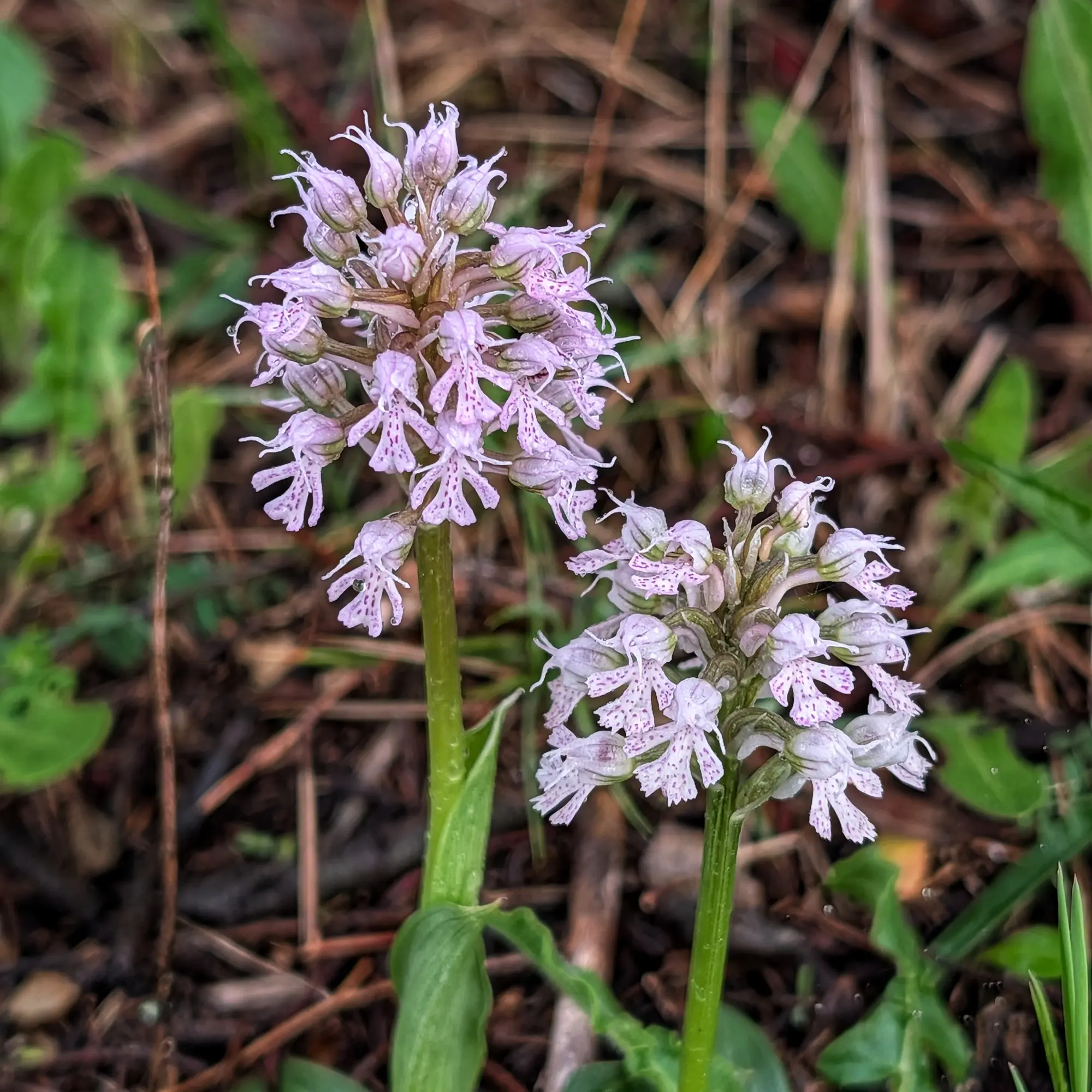
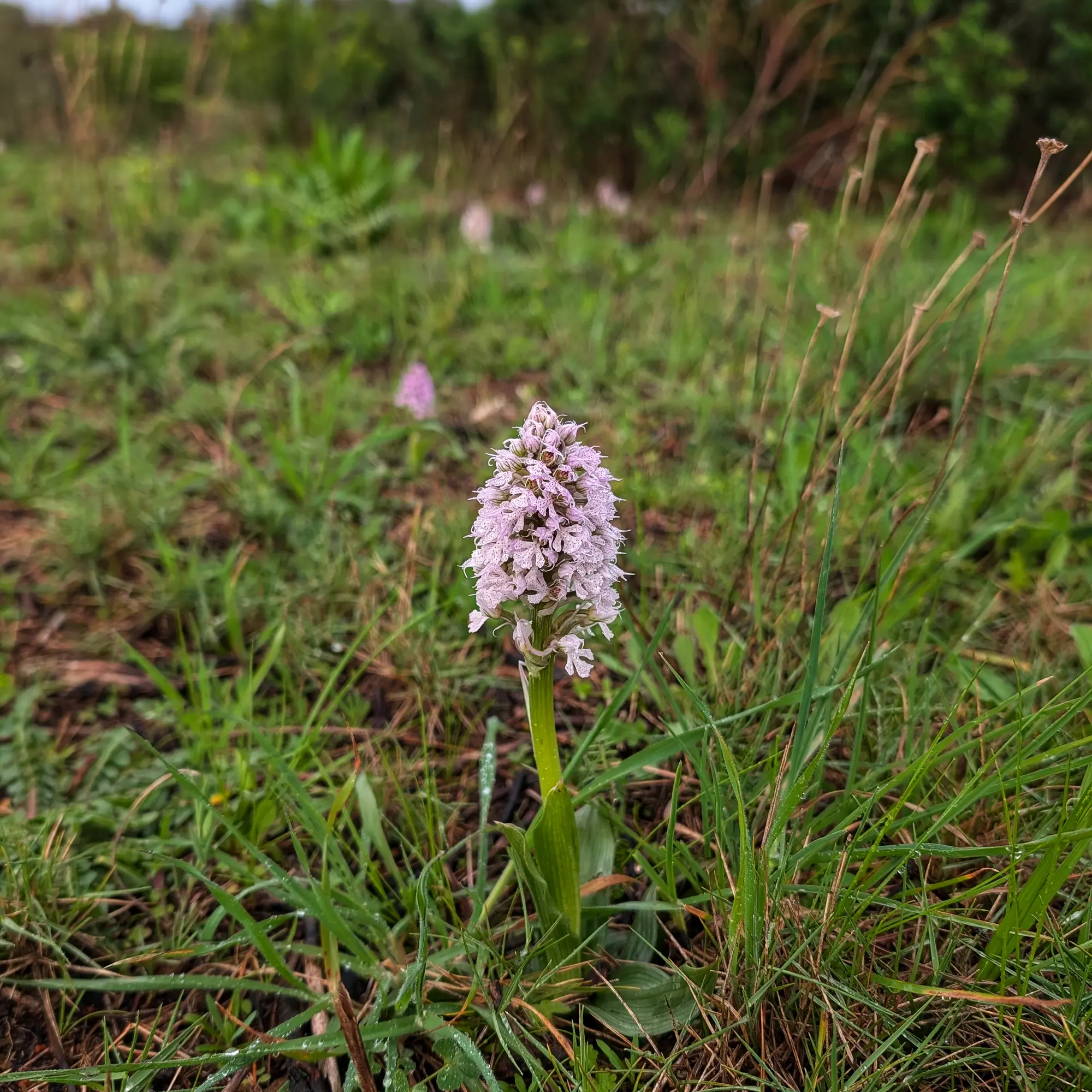
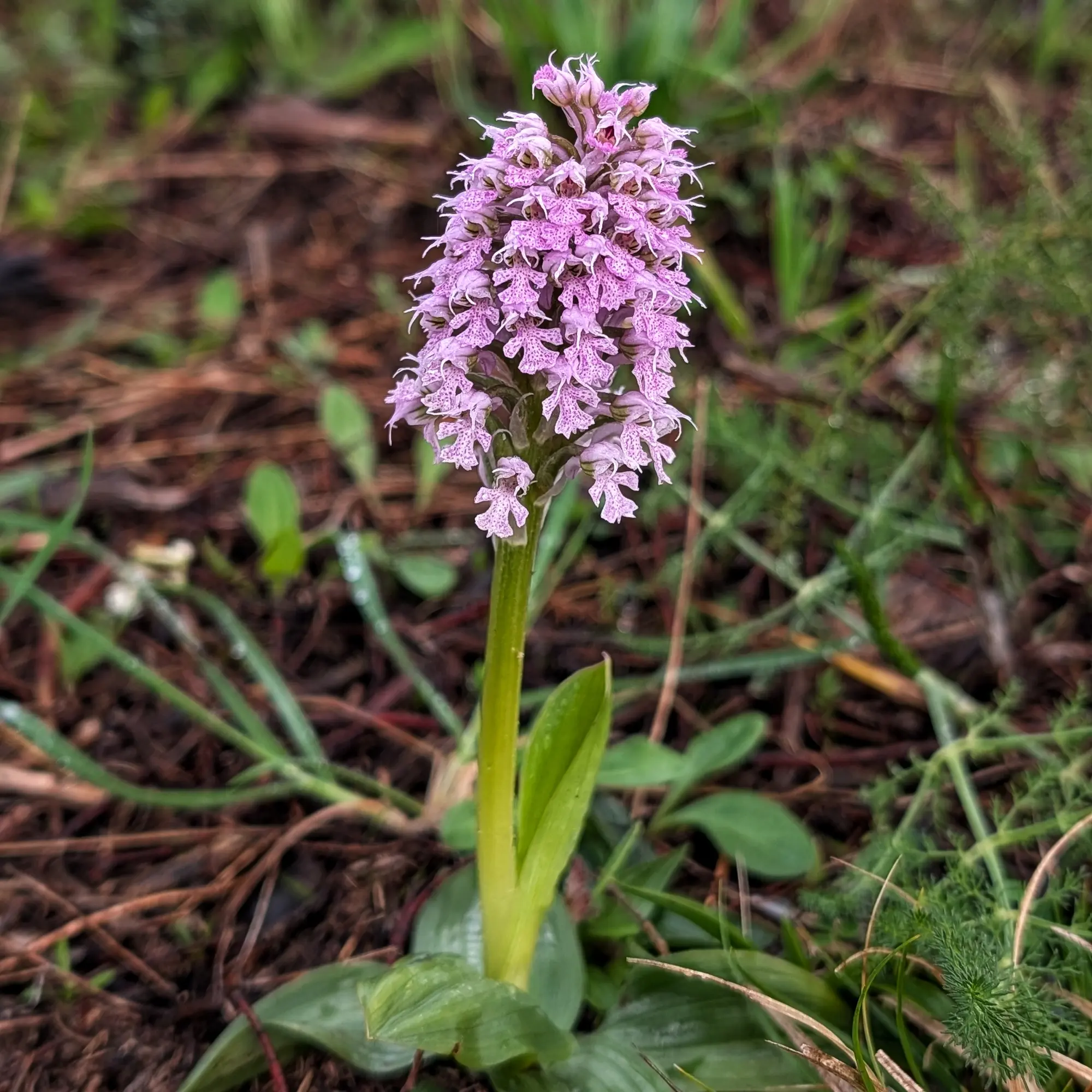
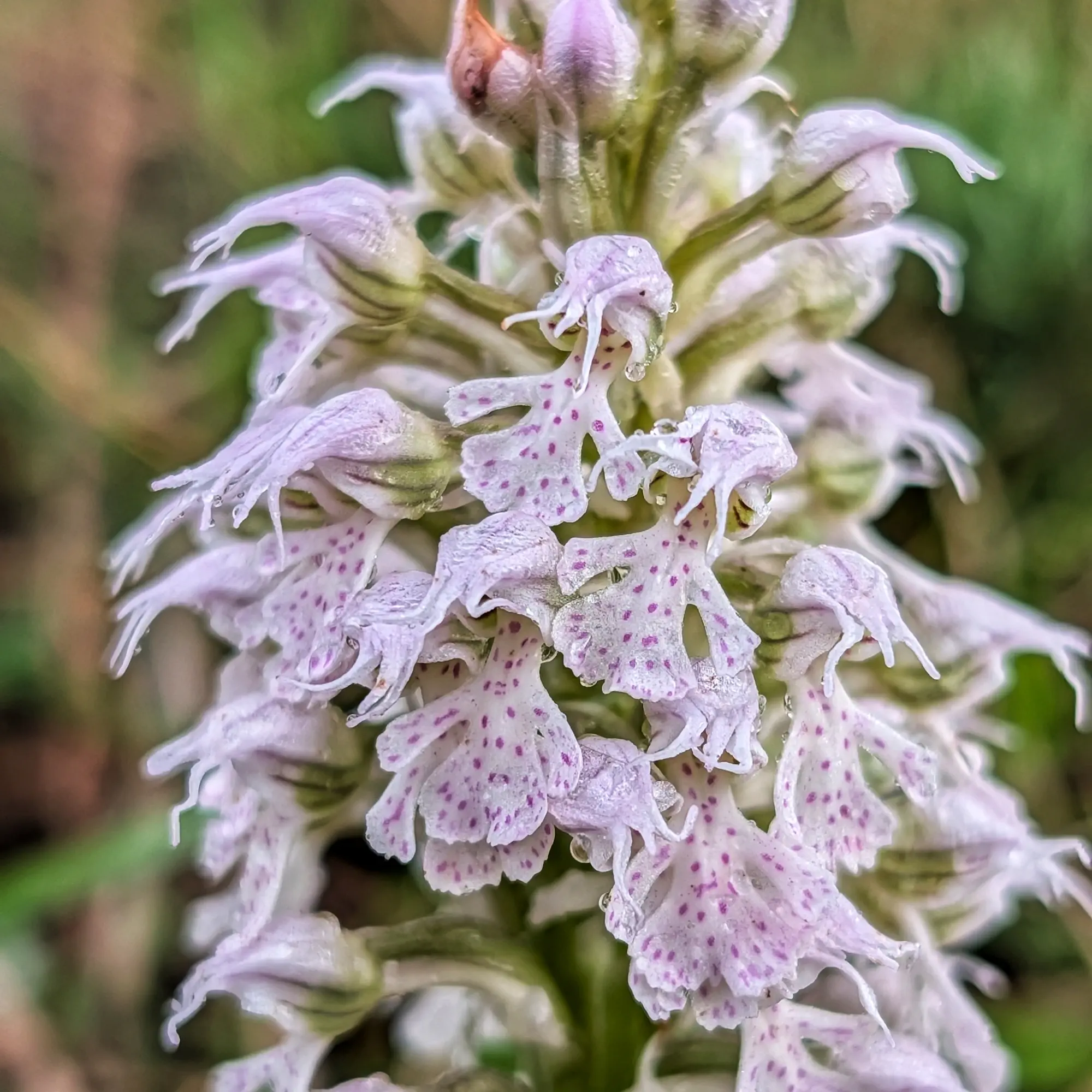
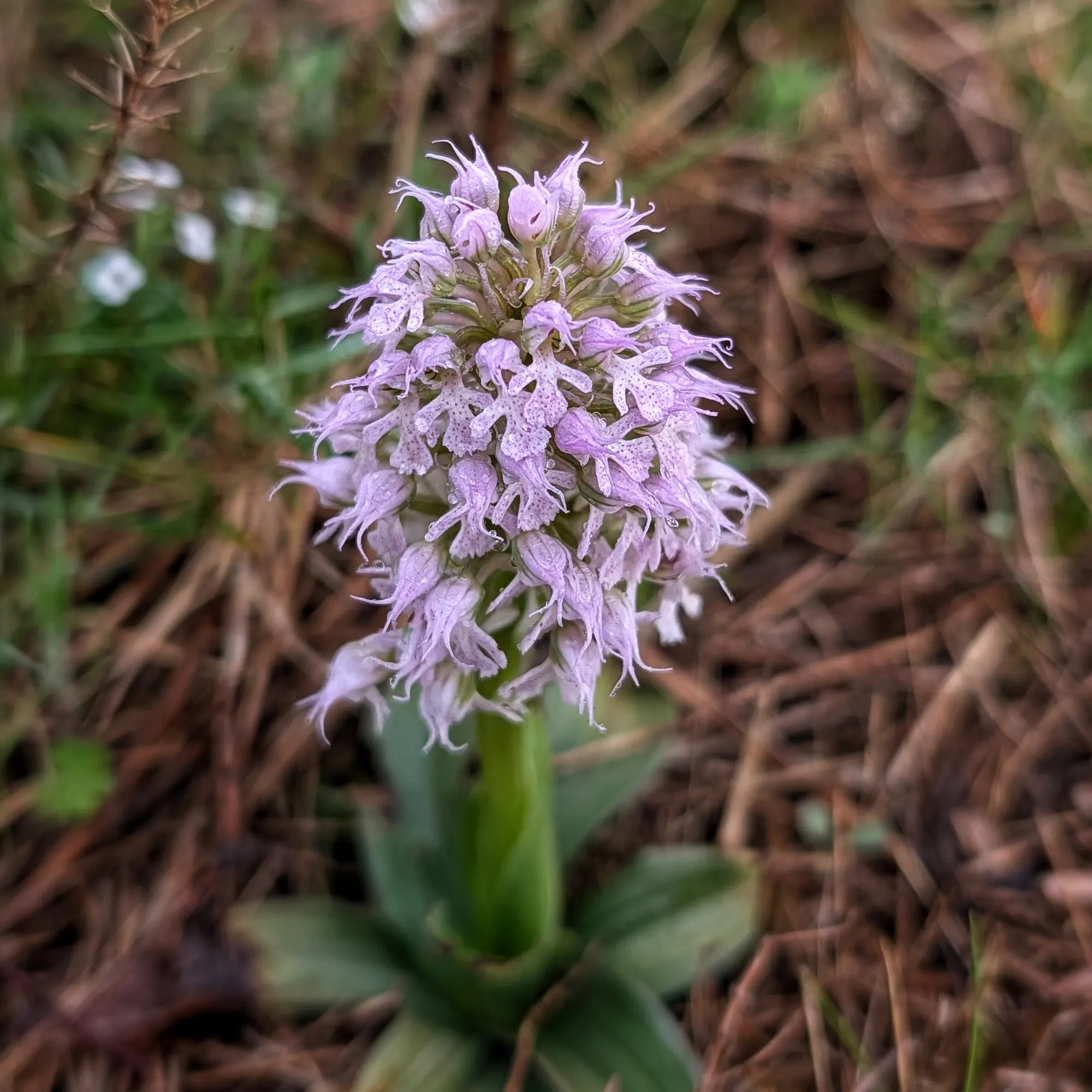
Morphological description: This is a perennial herbaceous plant that can measure between 15 and 40 cm in height. It possesses a pair of ovoid or rounded subterranean tubers that can grow up to 6 cm. It presents between 3 and 8 basal leaves forming a rosette, oblong or ovate-lanceolate (about 5 cm long), and cauline leaves that encircle the erect stem. The inflorescence is a dense, conical spike that can group between 10 and 50 small flowers. The flowers are hermaphroditic, zygomorphic, and range in color from whitish to pale pink. The petals and sepals converge to form a kind of hood (galea) over the column, with very marked green or purplish-brown veins. A distinctive feature is the lateral outer sepals, which are elongated, acuminate, and stretch forward, reminiscent of "squid tentacles." The labellum (the lower petal) protrudes, has pink spots, and is deeply divided into three lobes: a wider central one (spatula-shaped) and two subrectangular, almost horizontal lateral ones. The overall flower shape can resemble a human silhouette. It also has a cylindrical and curved spur between 5 and 8 mm long.
Habitat and ecology: Its flowering primarily occurs between February and May (potentially extending until early June, depending on altitude and region). Pollination is carried out by Hymenopteran insects, such as solitary bees. This orchid prefers sheltered locations, in full sun or partial shade, and tolerates dry conditions very well. It mainly grows in basic (alkaline) to slightly acidic soils. It is commonly found in shrubland clearings, pasture meadows, roadside verges, and thinned forests (pine or oak), often associated with rockroses (Cistus). It is widely distributed throughout the Western Mediterranean region and North Africa, including the Iberian Peninsula (parts of Extremadura, the Portuguese Algarve, Andalusia, or Catalonia), the Balearic Islands (abundant in Menorca and Mallorca), France, Italy (including Sicily and Sardinia), Malta, and North African countries like Algeria. Interestingly, once dried after flowering, its tubers have been used to make salep, a very nutritious flour rich in mucilage, used to soothe gastrointestinal irritations.
Conservation status: Although it has a wide global distribution and is even "very abundant" in certain locations such as Menorca, the conservation status of its populations varies enormously, and it faces a high risk of local extinction due to human pressure.
Gallery
Related observations
Discover the observations I've made of this species.