Neotinea maculata
About the Orchid
The Neotinea maculata, commonly known as the Dense-flowered Orchid, is a terrestrial orchid equipped with tubers, native to Asia Minor, much of Europe, and North Africa. It is often a slender, small, and discreet plant with pale coloration, which can easily go unnoticed. Its specific epithet, maculata, means "spotted," referring to the characteristic purplish spots that adorn its leaves. It is the only native species of its genus in the Catalan Countries.
Morphology: It features a fragile, greenish stem, between 10 and 40 cm tall (though often no more than 15 cm), which frequently presents reddish-brown spots or small streaks. It possesses two underground tubers. The 3 to 6 basal leaves are grouped in a rosette, broadly lanceolate or oblong (up to 13.5 cm), and splashed with characteristic purplish or violet-brown spots. Along the stem, there are two or three smaller clasping leaves.
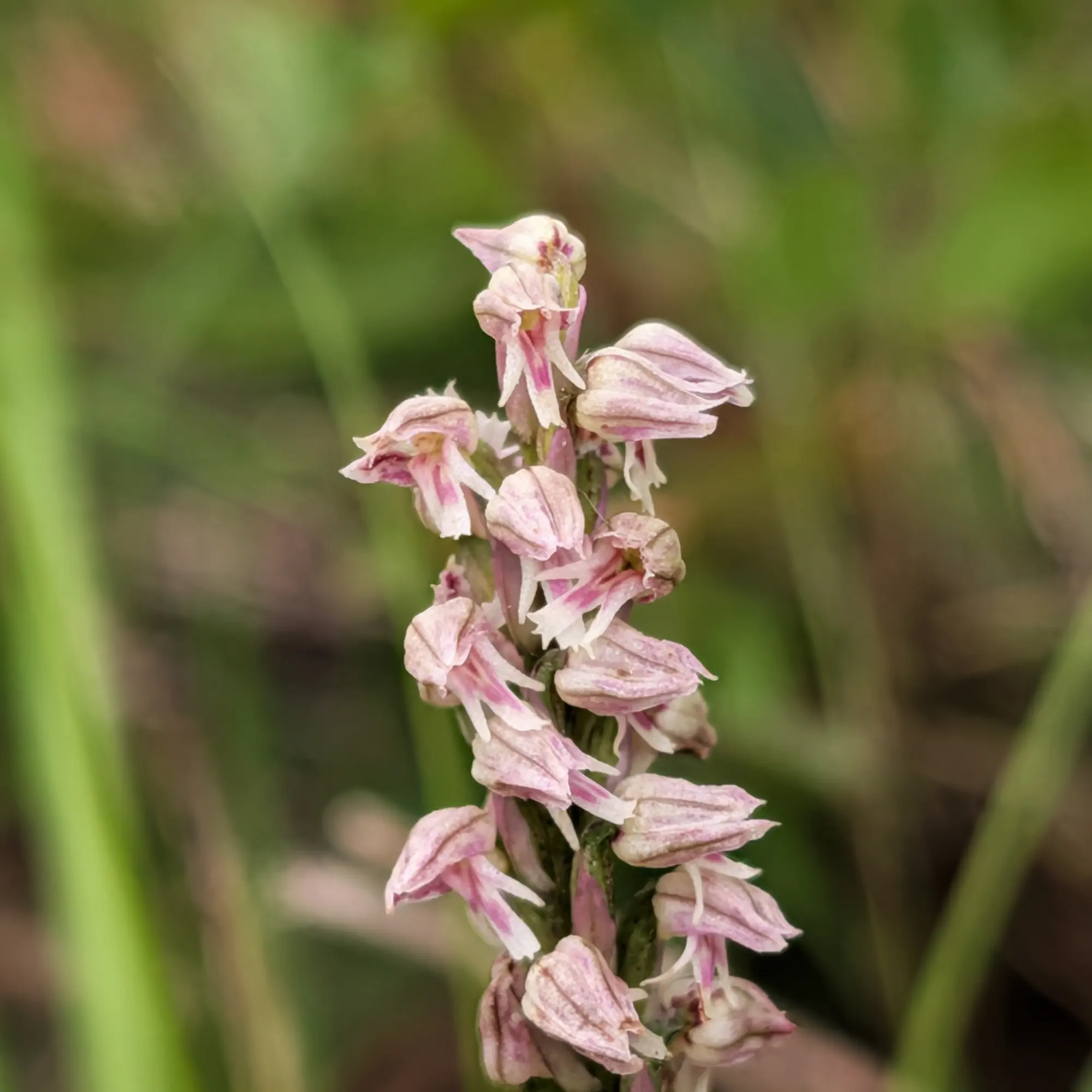
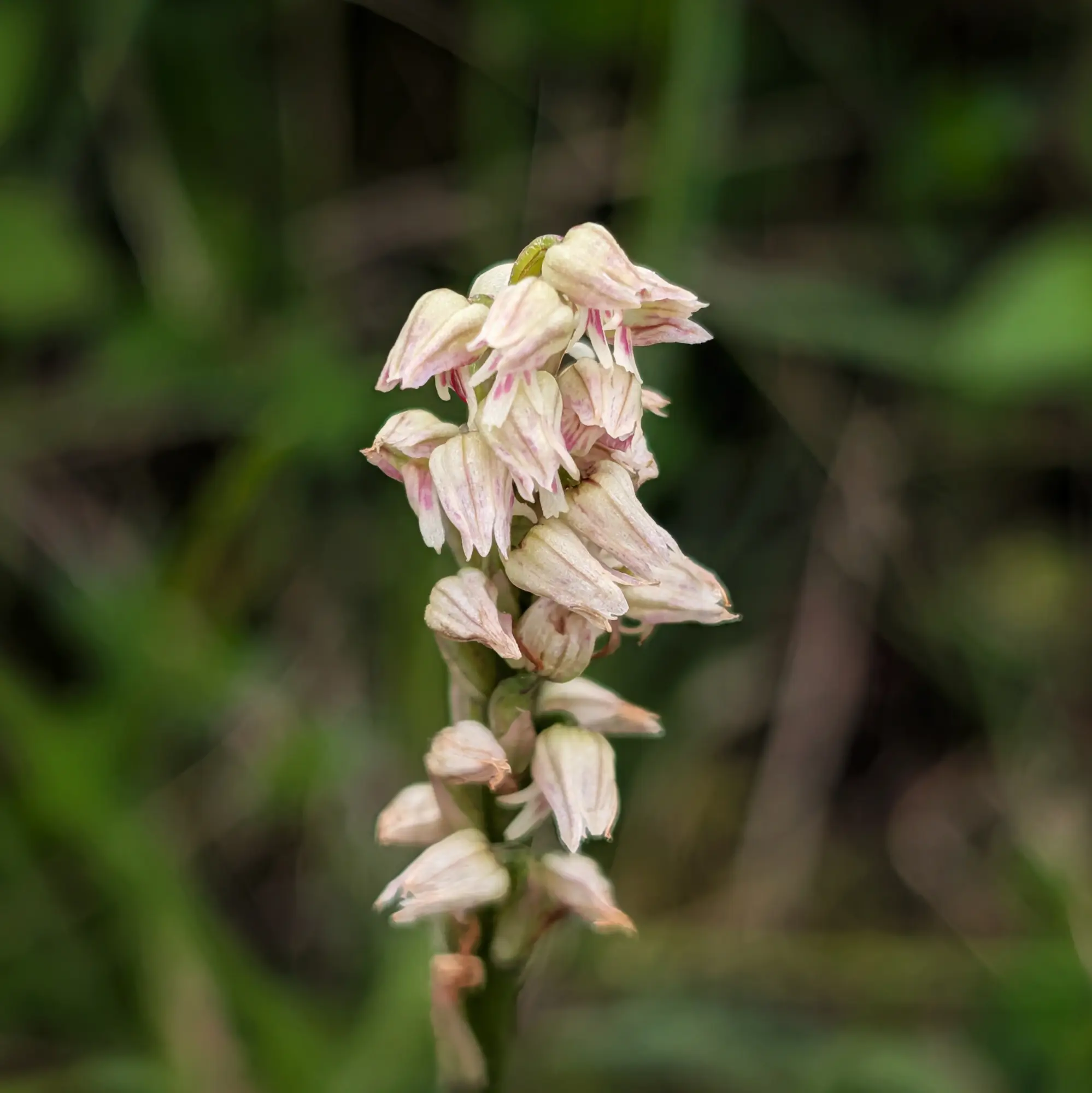
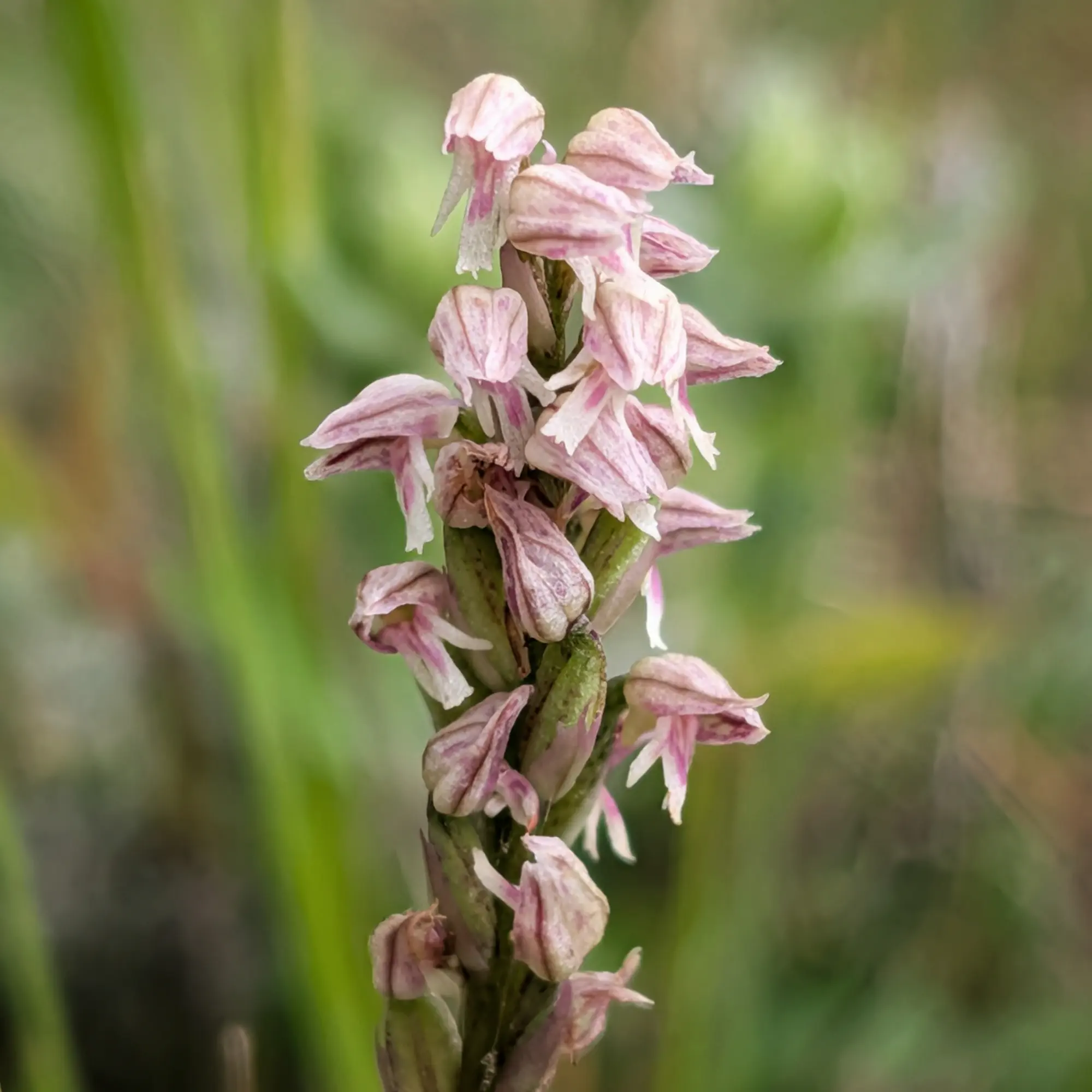
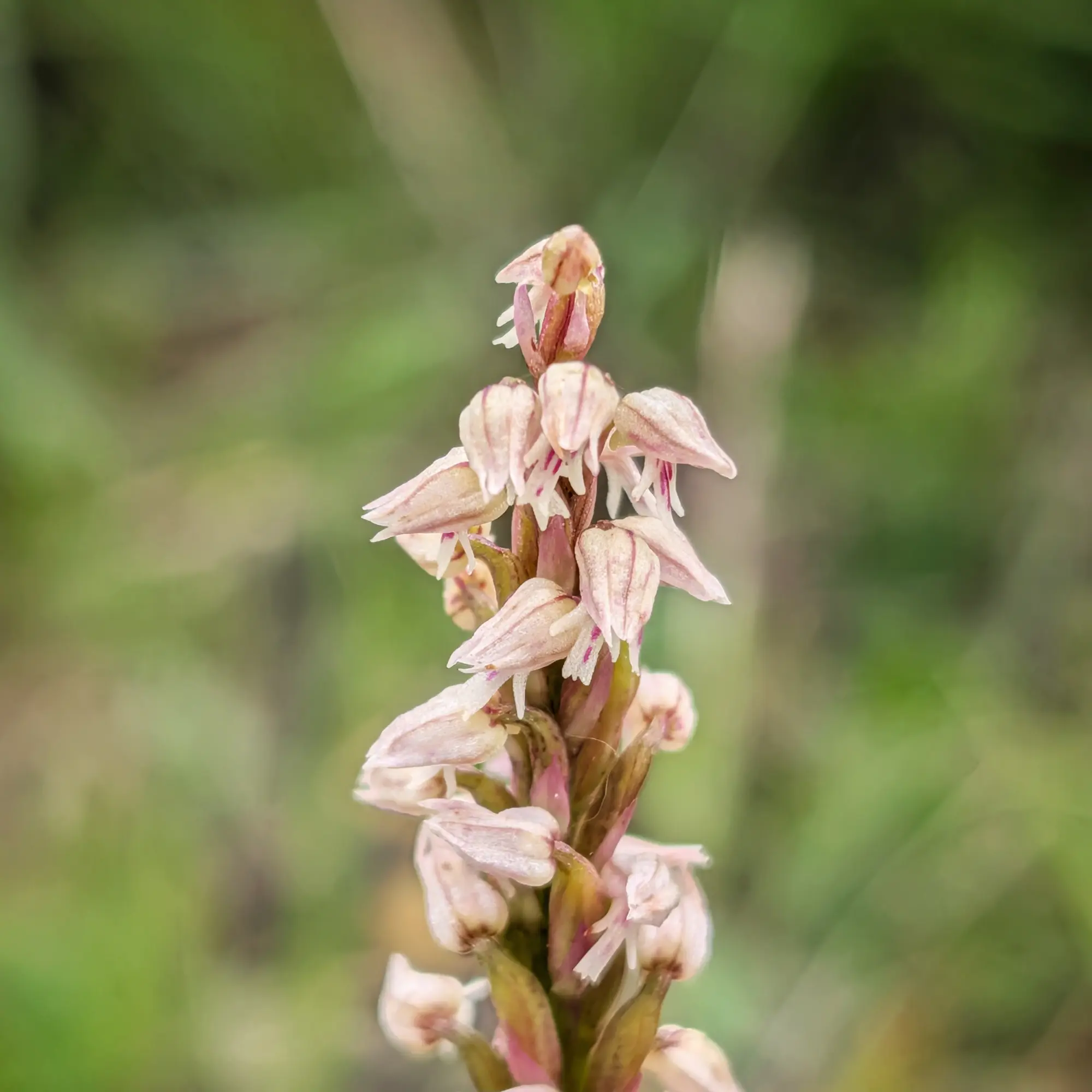
Inflorescence and flowers: Flowering occurs in an erect, very dense and narrow spike, which concentrates numerous tiny flowers, possessing a soft vanilla scent and generally oriented towards the same side. The three sepals are similar in size and unite to form a protective helmet above the floral column. The flower color ranges from white and yellowish to a pinkish-white, with small purplish spots. The labellum (3 to 5 mm), usually pink, has three elongated lobes and protrudes below the "helmet," accompanied by a short spur (0.8-2 mm) at the back.
Life cycle and pollination: It flowers in the spring months, generally from March and April until June. It achieves high reproductive success, producing fruits (7.5-9 mm) in over 90% of the flowers. Unlike other species in its genus, it is primarily autogamous (self-pollinating), thanks to the fact that the pollinia can fall from the anther by themselves directly onto the stigma, and can even be cleistogamous. Nevertheless, occasional insect pollination has been recorded by small beetles (*Spermophagus sericeus*) and, pioneeringly, by worker ants from the *Temnothorax exilis* group, which enter the flowers attracted by sugars or their fragrance.
Habitat and distribution: It is an adaptable orchid that thrives in both full sunlight and semi-shade, tolerating alkaline soils as well as slightly acidic ones. It can be found in forest clearings of pine, holm oak, cork oak, oak, or juniper, as well as in scrub formations, consolidated dunes, and pasture areas. Its altitudinal range is broad, inhabiting from sea level up to the subalpine stage (0-1,700 m). It has a vast global distribution area, spreading throughout the Mediterranean region (from southern France and northwest Africa to western Anatolia and Palestine) and expanding through Macaronesia (Canary Islands, Madeira, and Azores). It is sparsely present in the Iberian Peninsula and the Balearic Islands.
Conservation status: Reference documents do not cite its global status according to IUCN listings. However, it suffers pressures from herbivory by animals such as hares and roe deer. There have been local genetic variations; for example, the variety *N. maculata* var. *luteola* (with yellowish flowers) is considered probably extinct in Ireland.
Gallery
Related observations
Discover the observations I've made of this species.