Neottia nidus-avis
About the Orchid
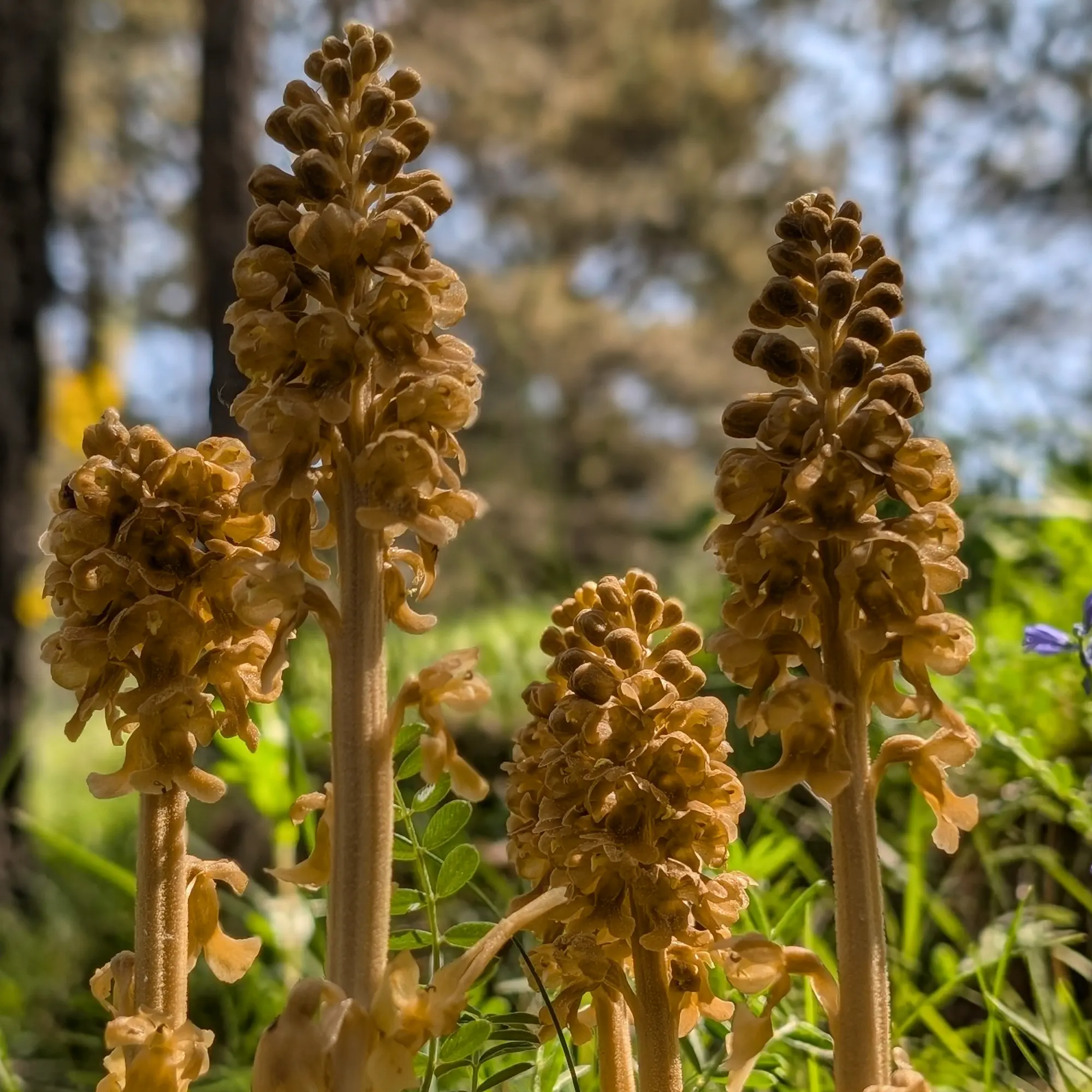
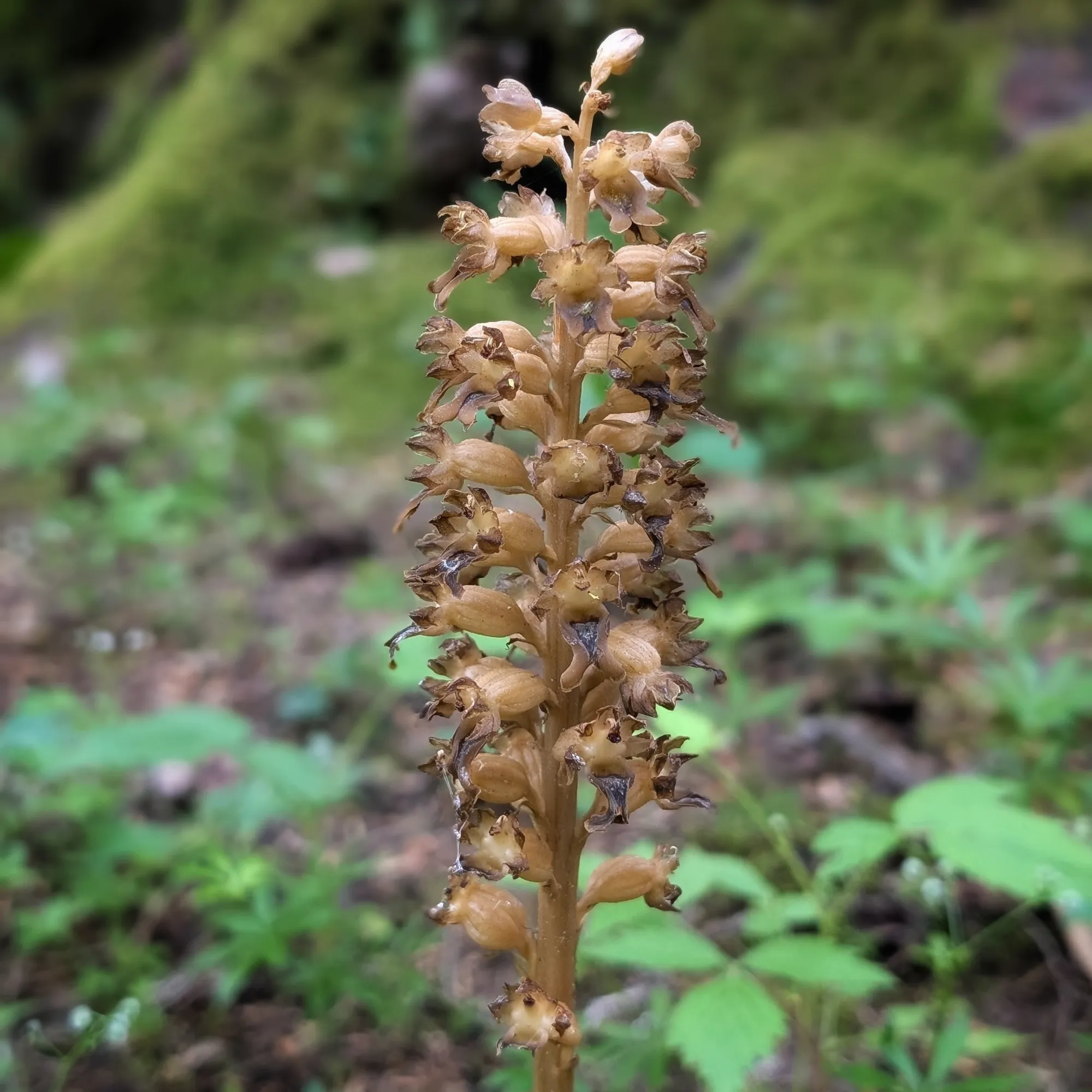
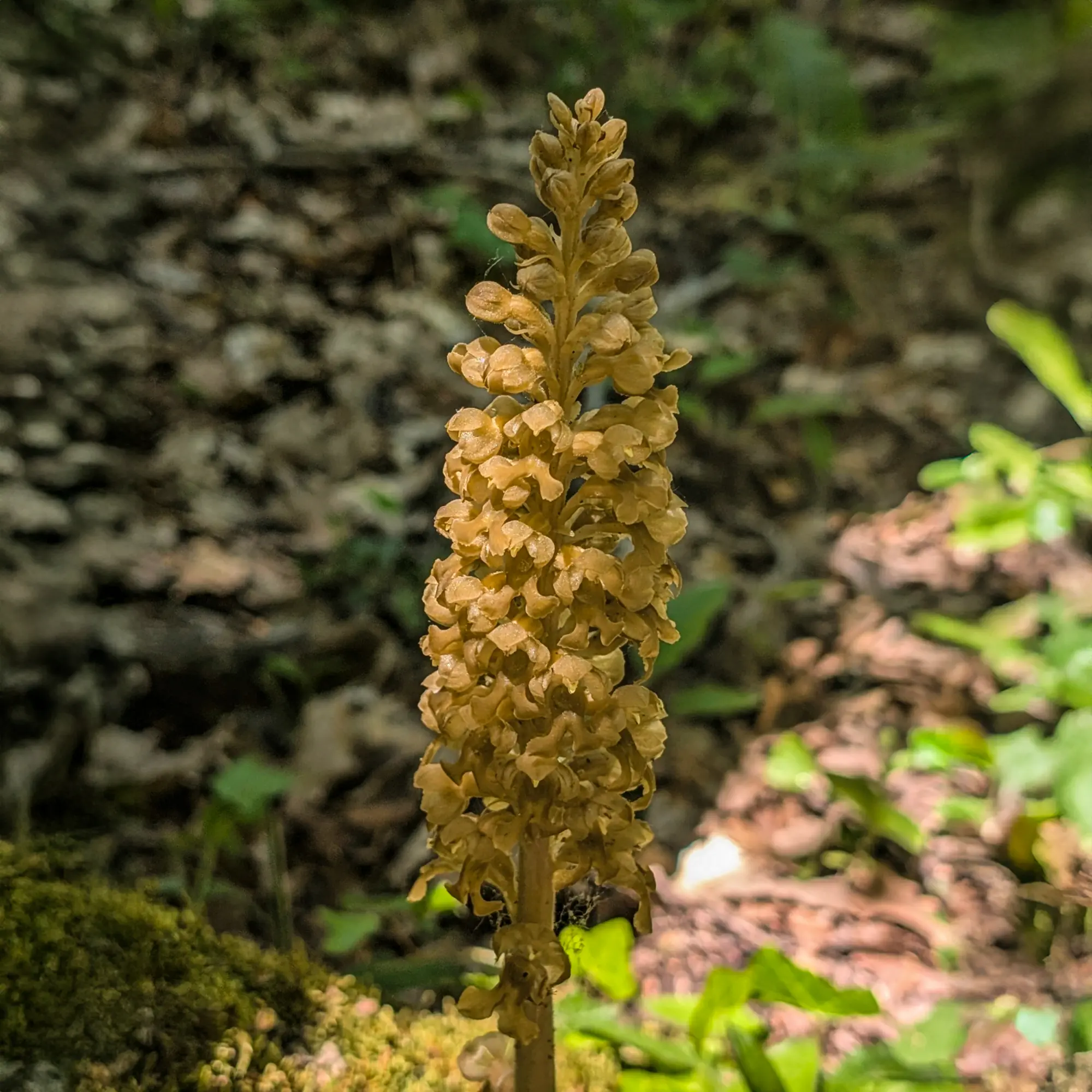
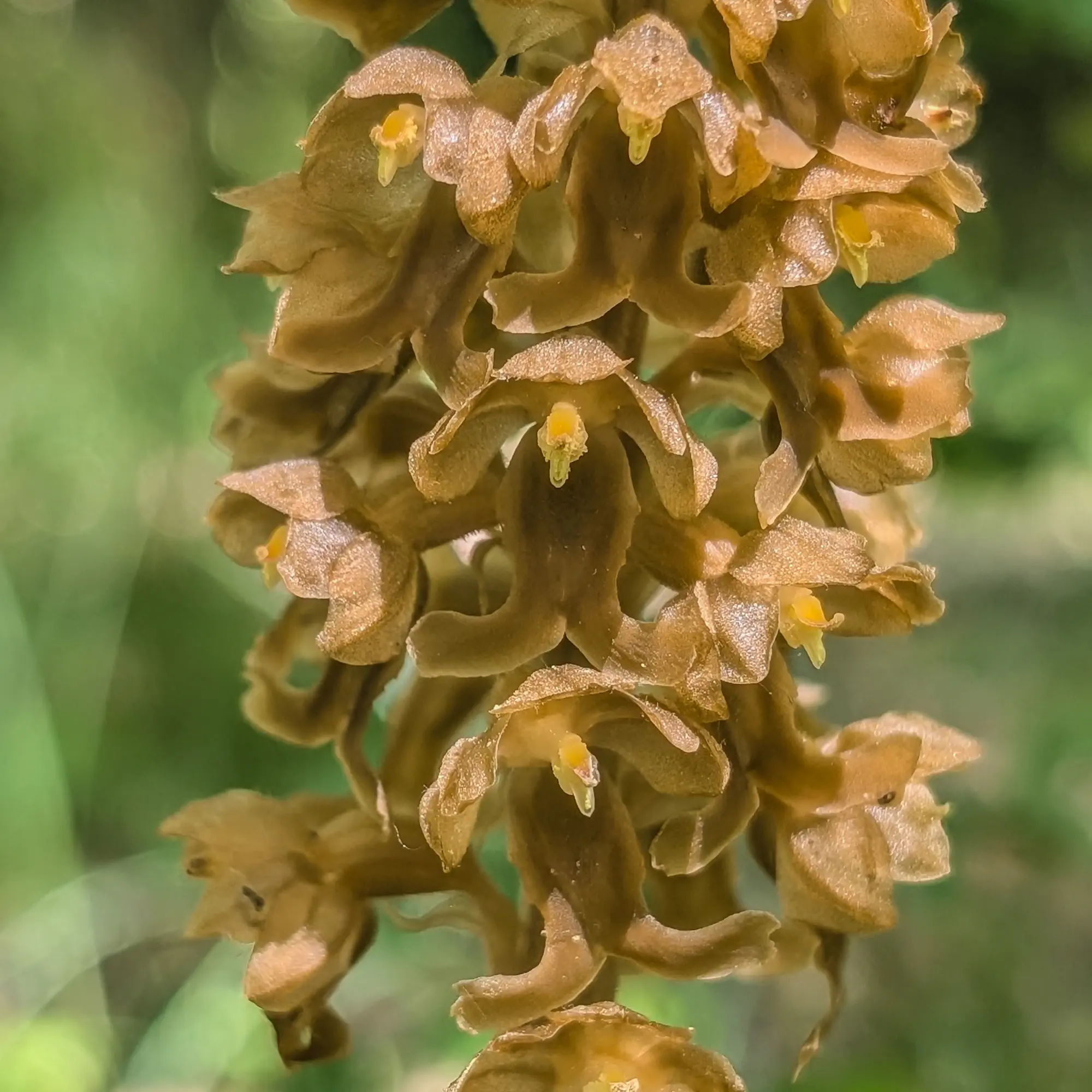
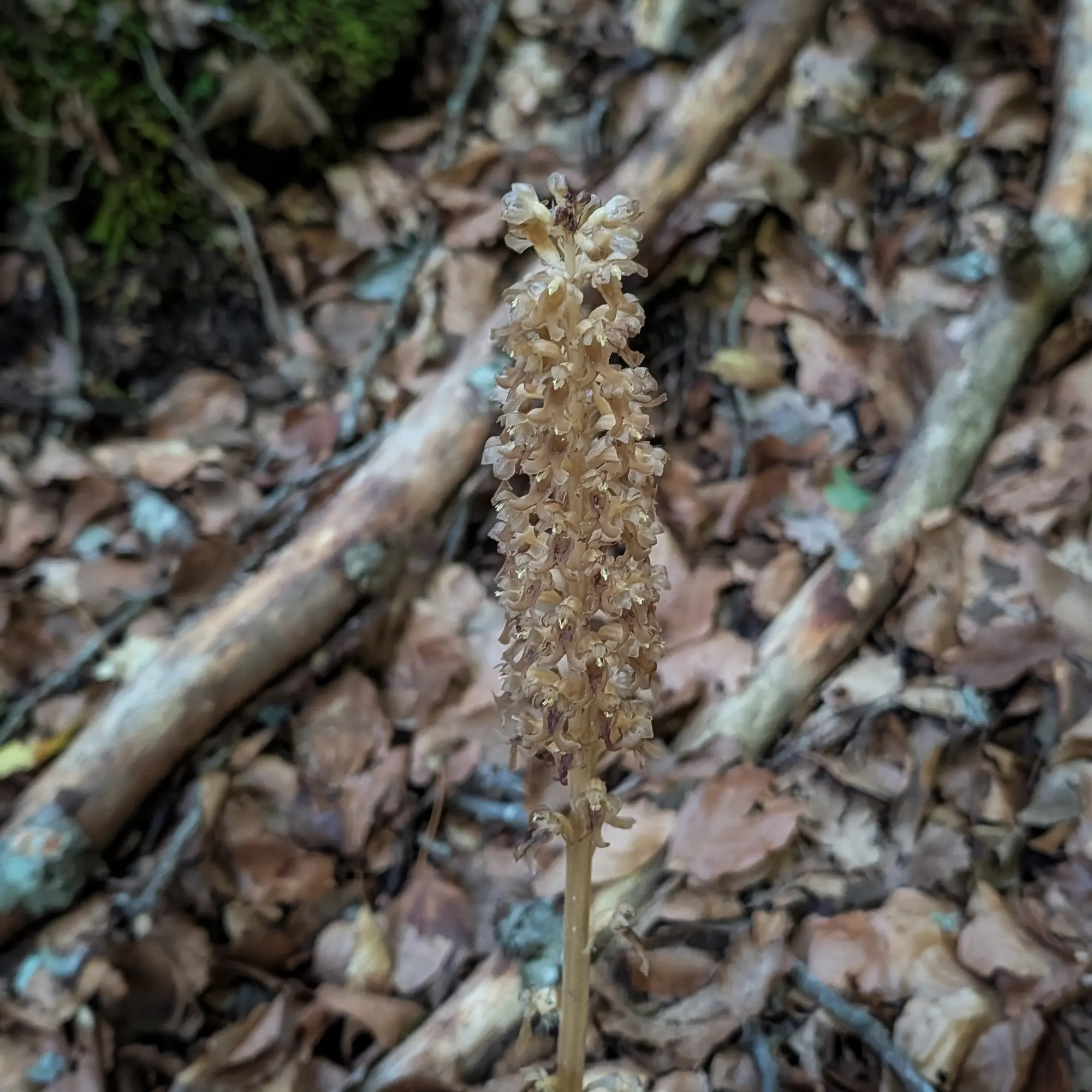
The Neottia nidus-avis, commonly known as the Bird's-nest orchid, gets its scientific name (neossia = nest, nidus-avis = bird's nest) from the shape of its thick, intertwined roots. This plant is unique because it completely lacks chlorophyll and is a uniform yellowish-brown or honey color.
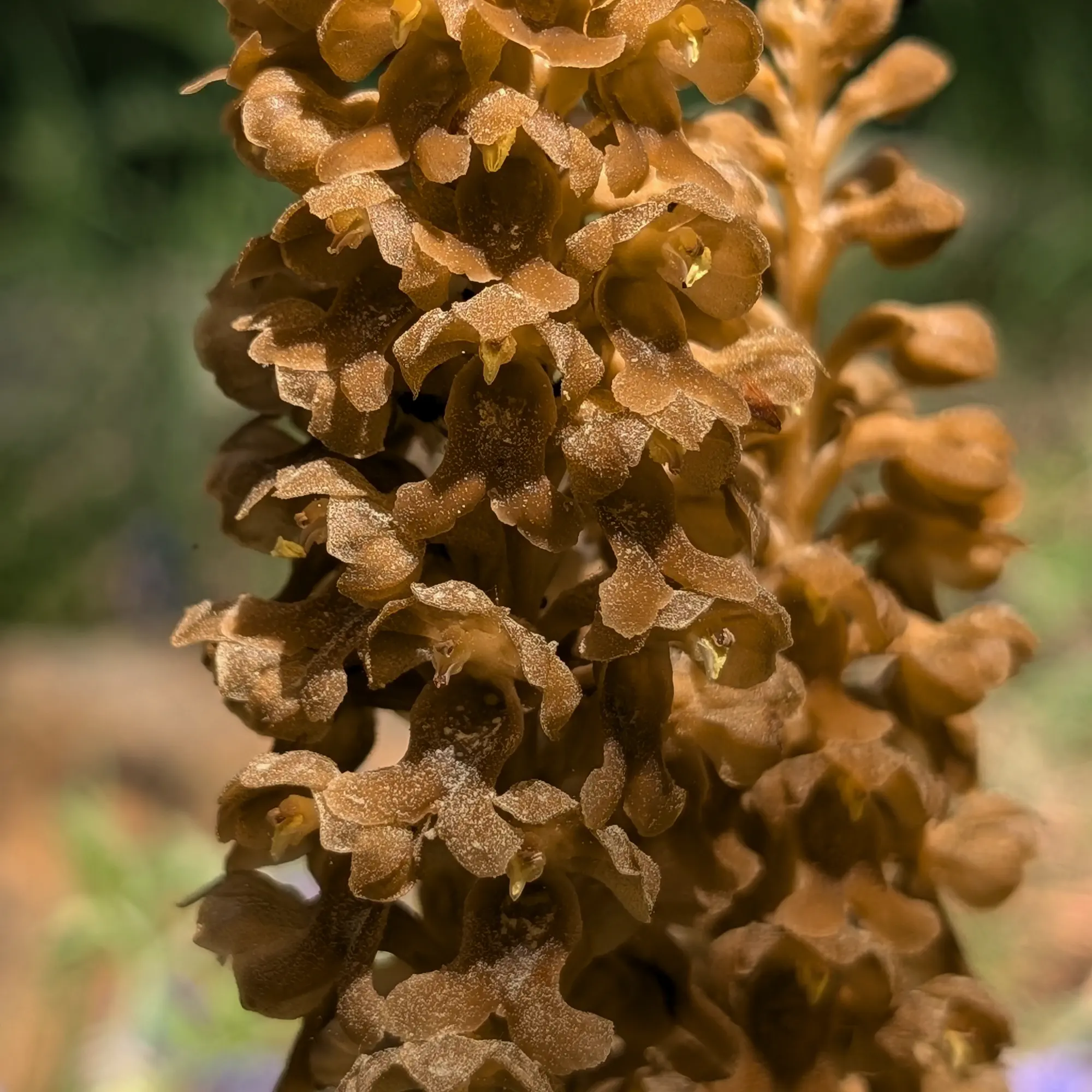
Morphological description: It is a perennial plant between 10 and 40 cm tall. The leaves are reduced to scales with no photosynthetic function. The inflorescence is a dense cluster with numerous flowers (up to 70) of the same brown color as the stem. The flowers have petals forming a helmet; the labellum (lower petal) is bilobed and spurless, and it features a nectary area at the base. The roots are a short rhizome with a dense, tangled mass resembling a nest.
Biology and ecology: The Neottia nidus-avis is a mycoheterotrophic plant, meaning it parasitizes fungi (of the Sebacinaceae family) which are themselves associated in symbiosis (mycorrhiza) with trees (beeches, holm oaks, pines), from which it draws its nutrients. Although it is pollinated by insects (flies and small beetles), autogamy (self-fertilization) predominates, allowing for subterranean flowering and fruiting.
Habitat and distribution: It lives in areas of intense shade on soils rich in humus, mainly in deciduous (beech forests, oak groves) and coniferous forests. It is distributed across almost all of Europe and Western Asia, found in the Iberian Peninsula (250 to 1,800 m) and the Balearic Islands (rare). This orchid is classified as vulnerable in the Balearics and endangered in Andalusia, being highly sensitive to logging and soil disturbance that sever its connection with host fungi.
Gallery


Related observations
Discover the observations I've made of this species.