Neottia ovata
About the Orchid
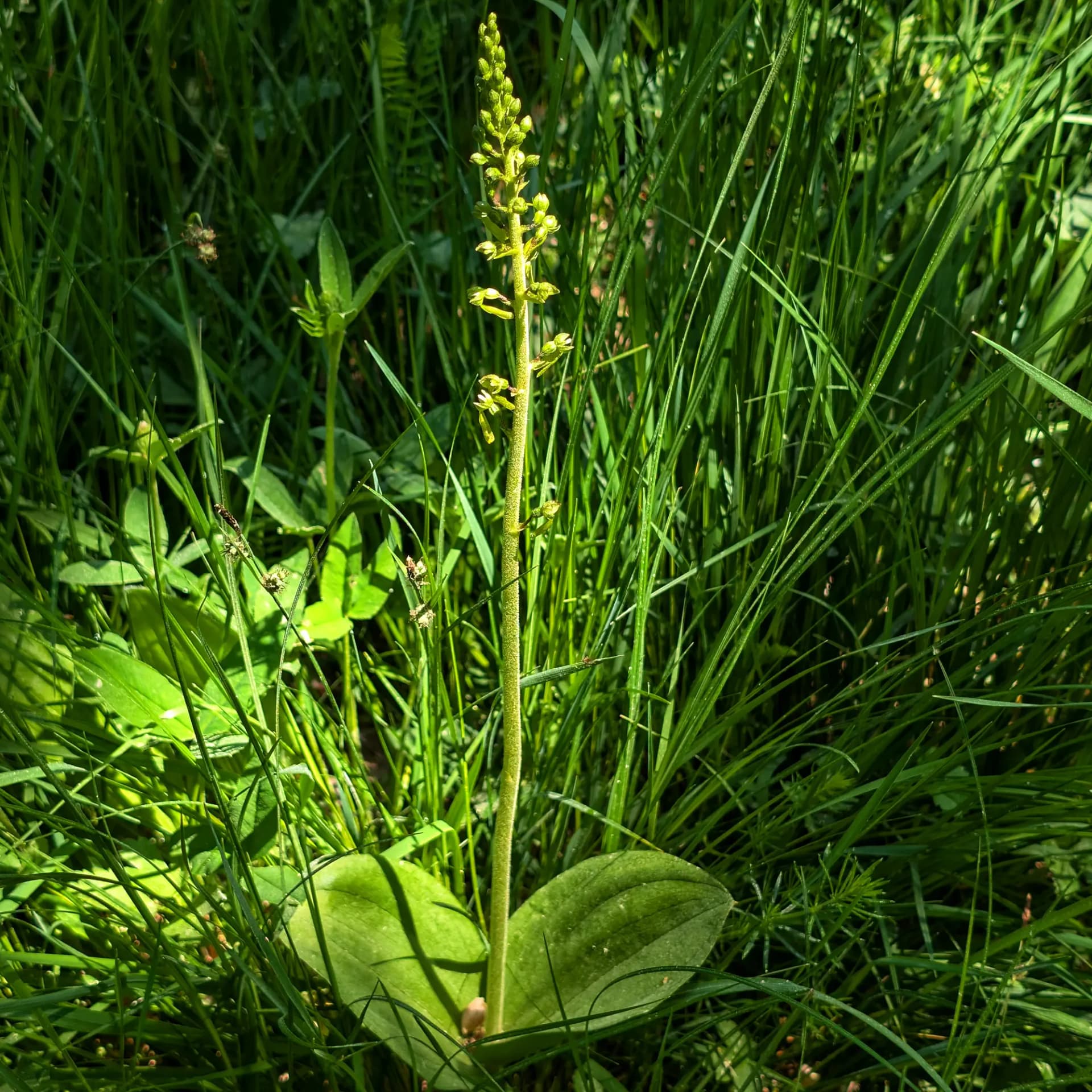
The Neottia ovata, commonly known as the Common twayblade, gets its specific name (ovata) from the egg-like shape of its leaves. Historically, it was classified as Listera ovata. It is a perennial terrestrial orchid with remarkable longevity, potentially living up to 40 years.
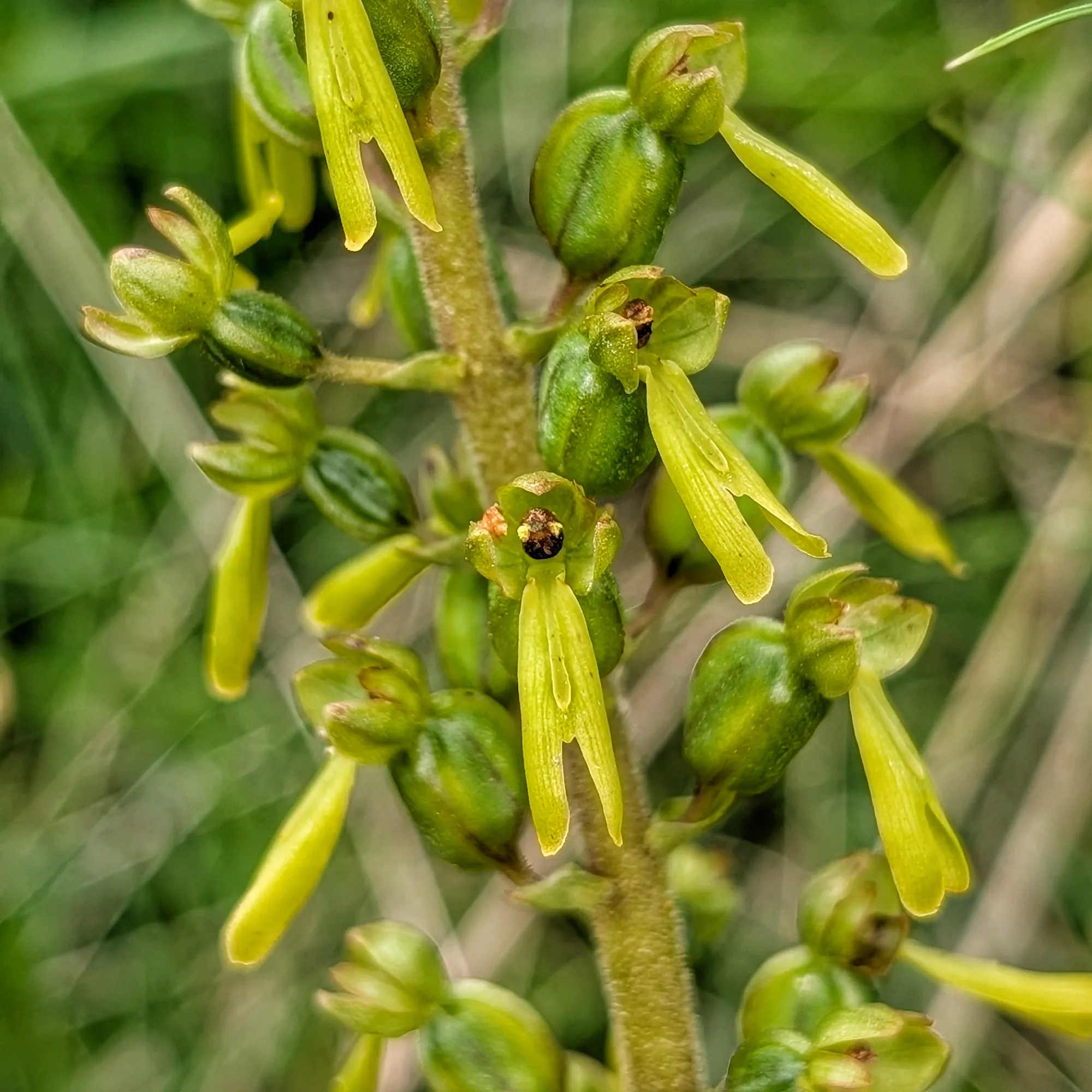
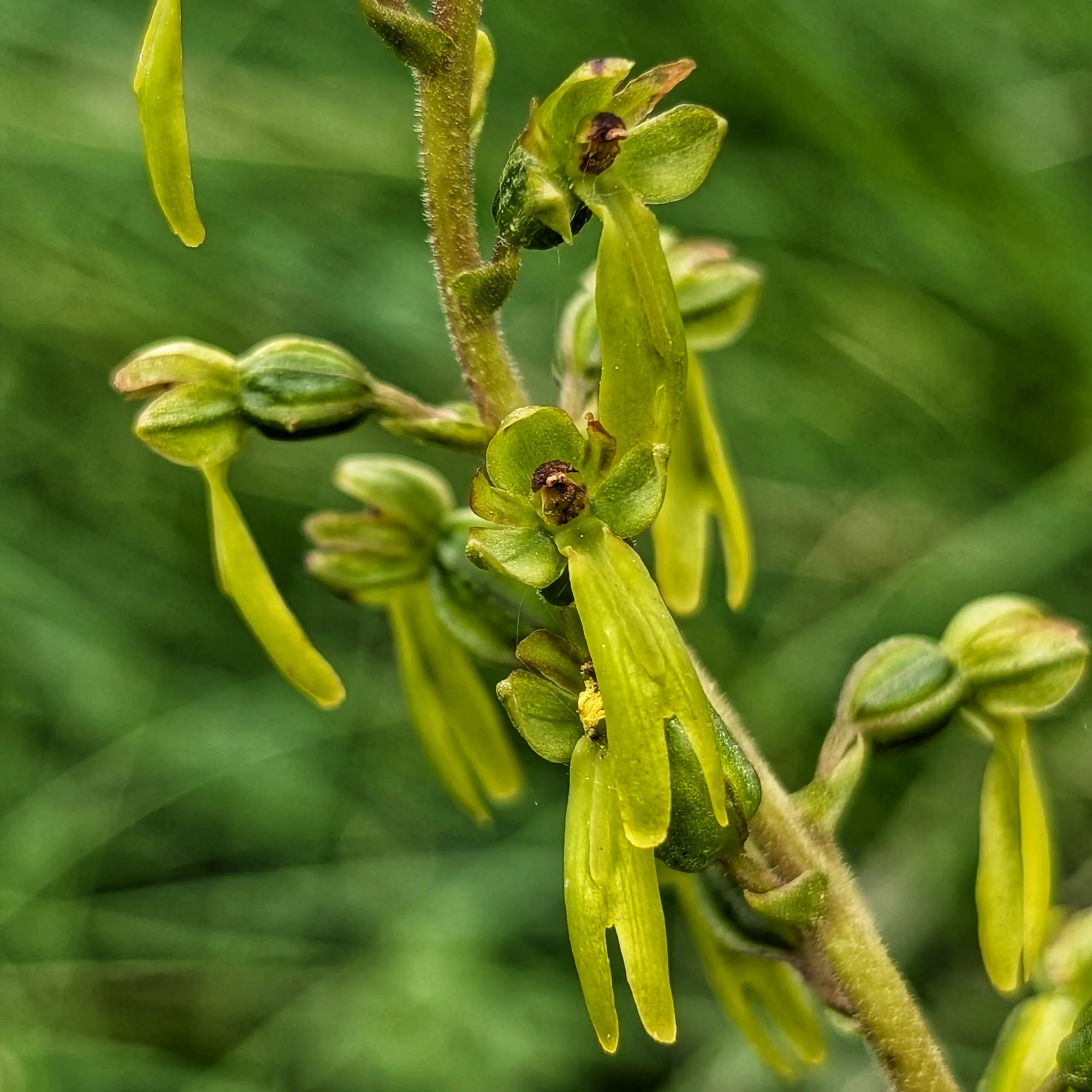
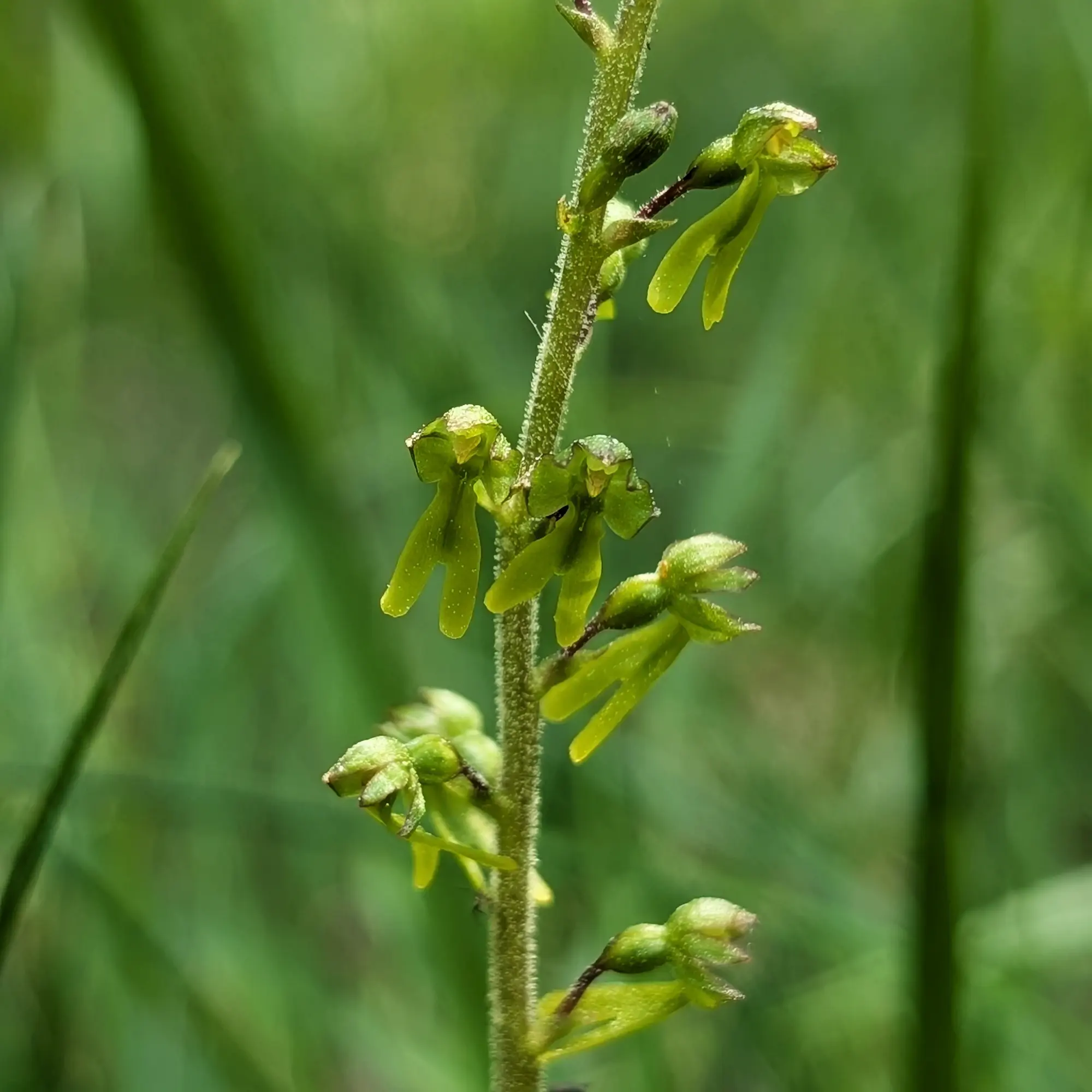
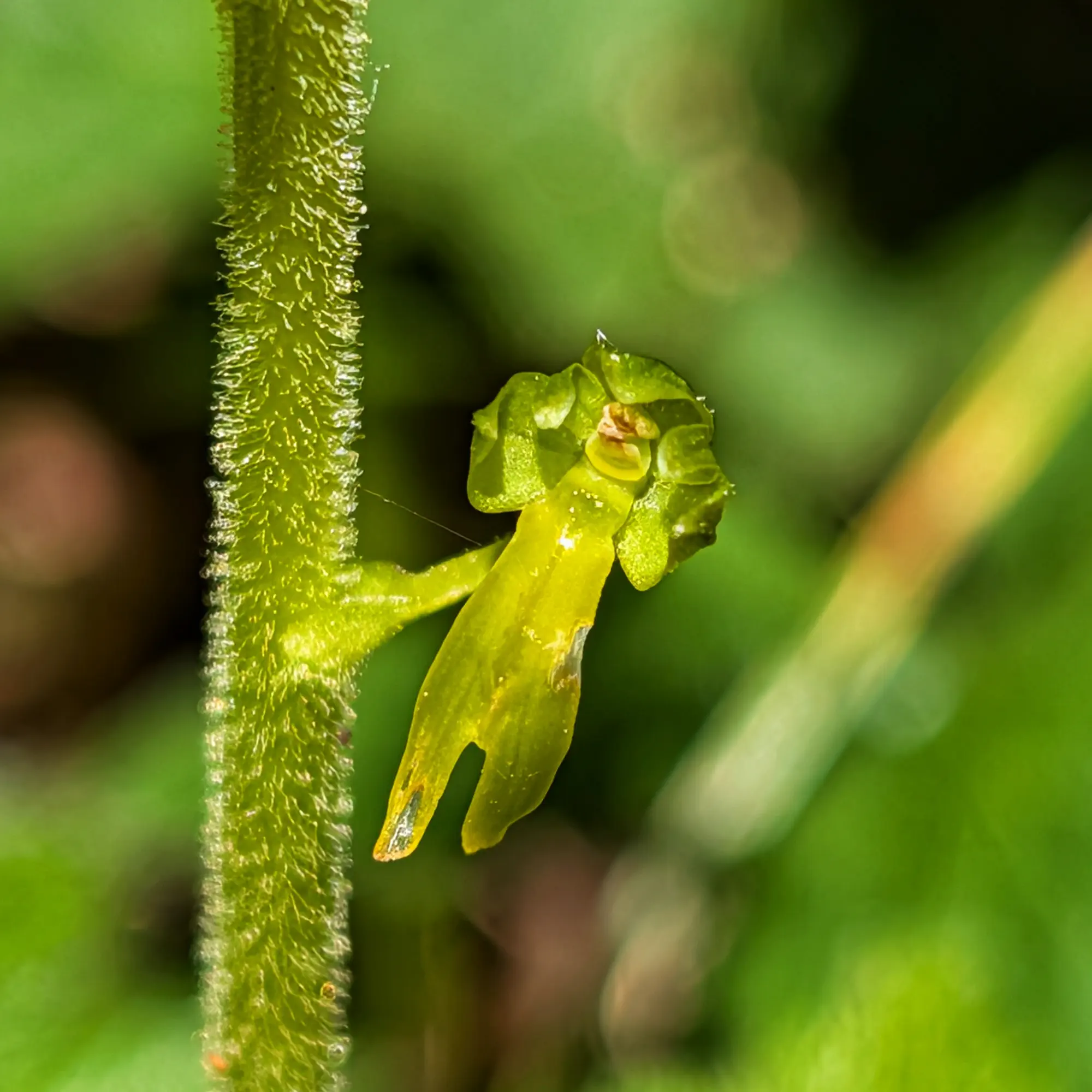
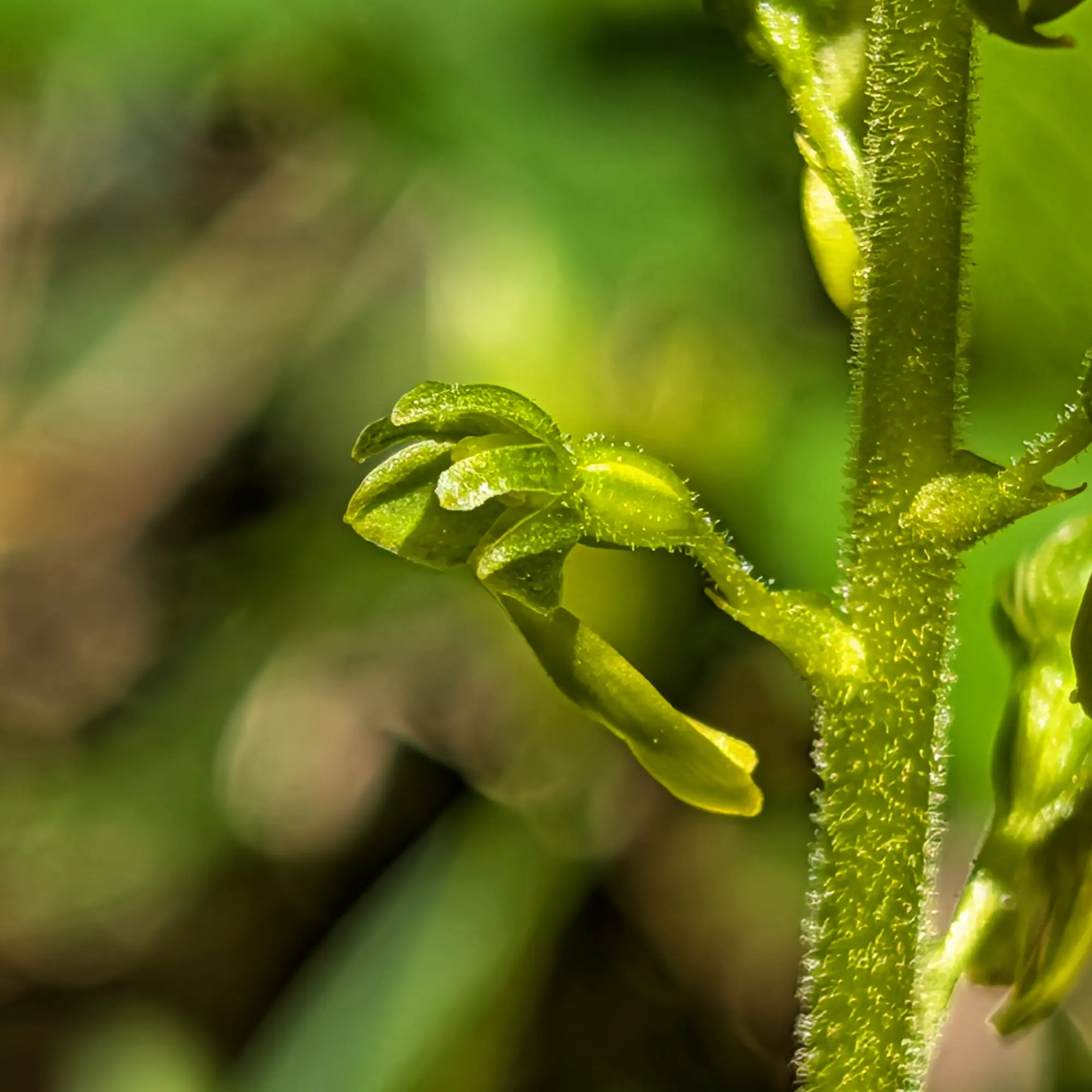
Morphological description: The plant can measure between 20 and 60 cm in height. Its most distinctive feature is the two large, opposite, oval-shaped basal leaves. The inflorescence is an open cluster with many flowers (typically 15-30), which are small and yellowish-green. The labellum (lip) is the most prominent part, measuring up to 15 mm, spurless, and divided at the end into two lobes, giving it a forked appearance. It secretes very dilute nectar in a longitudinal groove.
Ecology and biology: Despite being a photosynthetic plant, N. ovata is a mixotrophic (or partial mycoheterotrophic) species, supplementing photosynthesis with carbon obtained from mycorrhizal fungi. It is a generalist species associated with many types of fungi (Serendipitaceae, Sebacinaceae, etc.). Pollination is generalist entomophilous, visited by a wide range of insects (mainly parasitic wasps). Its mechanism is explosive: the rostellum expels a viscous fluid that glues the pollinia to the visiting insect.
Habitat and distribution: It has a wide distribution across Europe, Western Asia, and Siberia. It is highly adaptable, growing in a large variety of habitats: forests (mixed, deciduous), meadows, dunes, and even disturbed anthropogenic habitats. It prefers alkaline or slightly acidic soils with medium moisture. Although widespread, some populations are declining, and its discreet green coloring often helps protect it from human collection.
Gallery


Related observations
Discover the observations I've made of this species.