Ophrys apifera
About the Orchid
The Ophrys apifera, commonly known as the Bee Orchid, is one of the most widespread orchids of the genus Ophrys. Its scientific name (apis = bee) refers to its flower, which visually resembles this insect. Although it uses the visual and olfactory deception typical of its genus, it is the only species that preferably practices autogamy (self-fertilization).
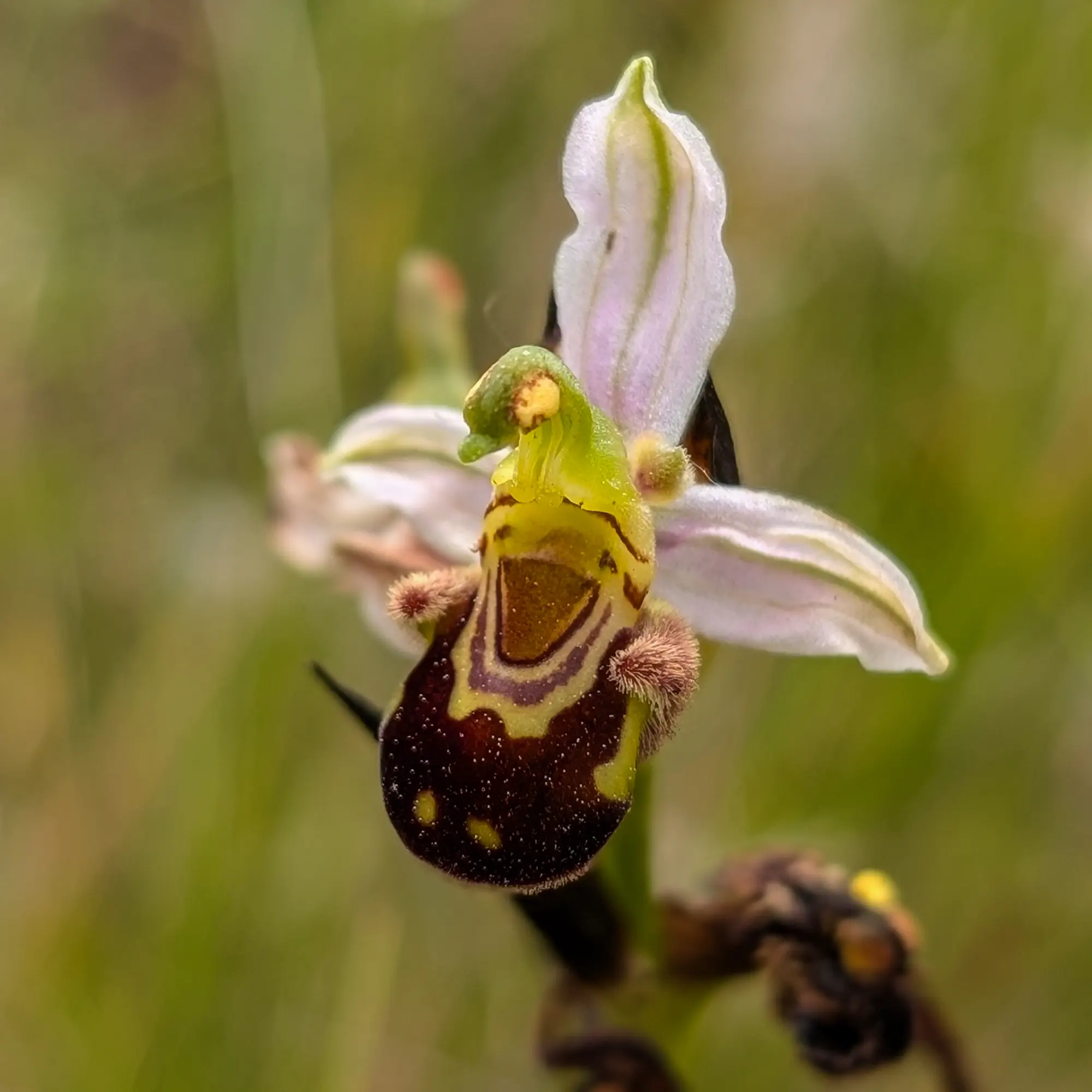
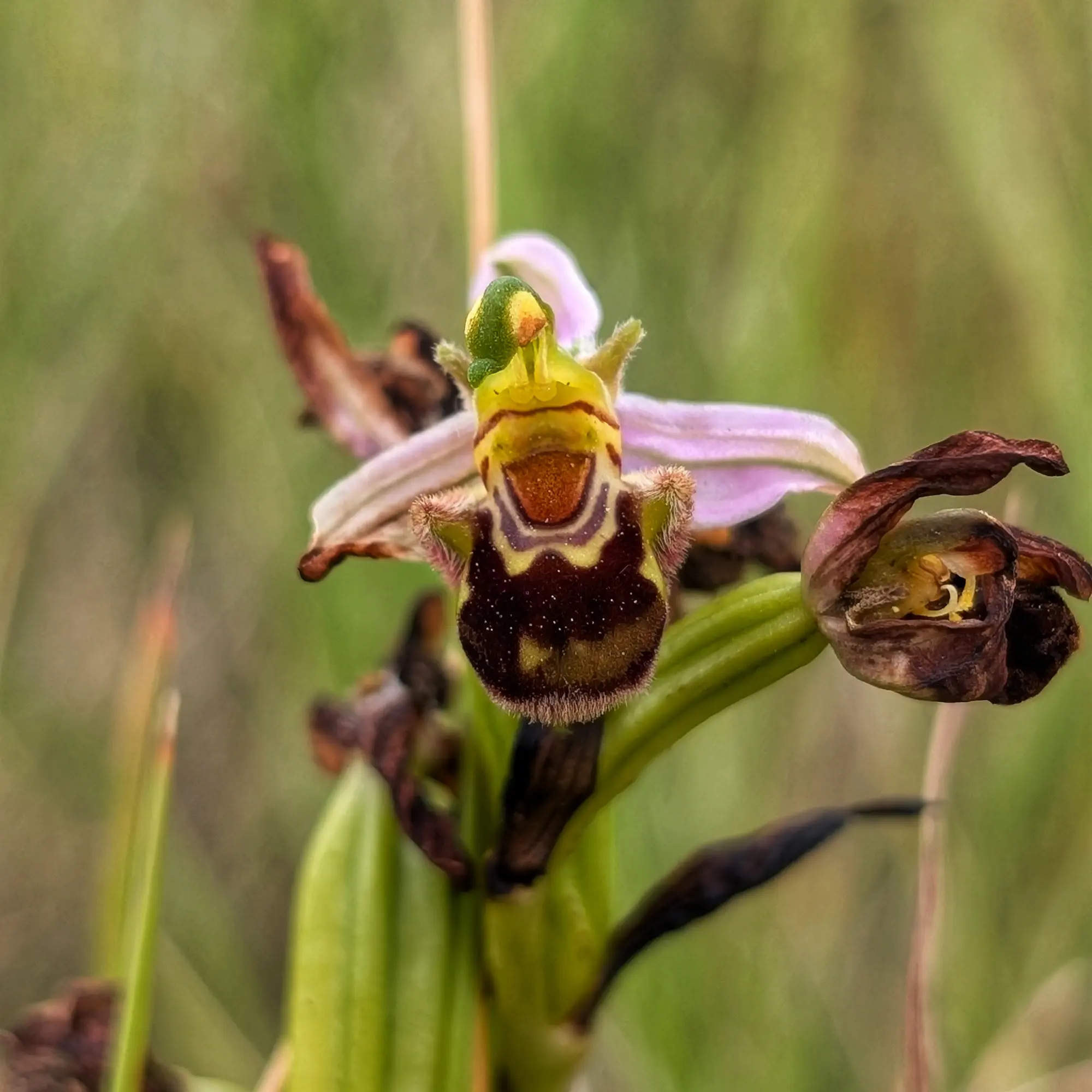
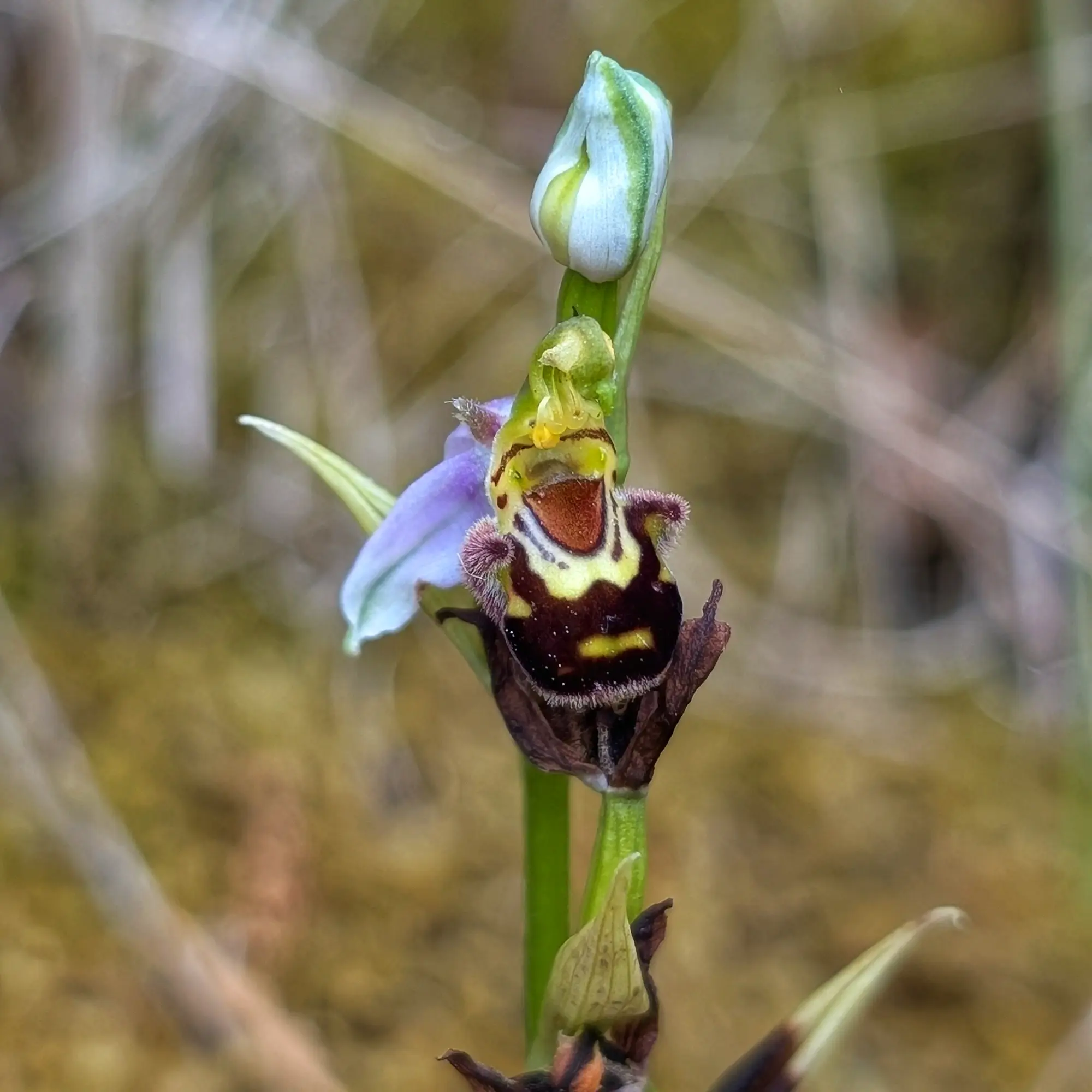
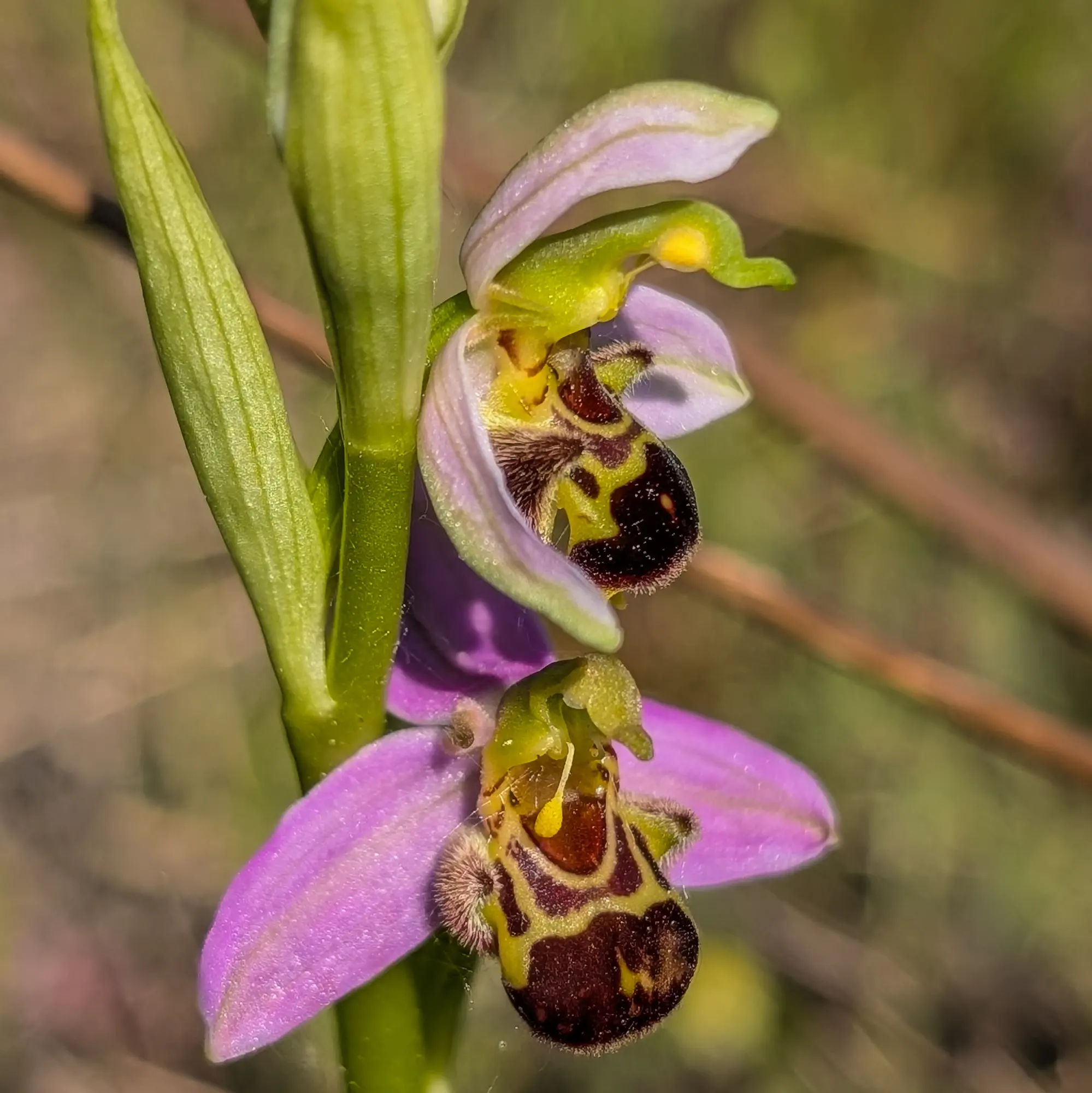
Morphological description: It is a robust plant (20-50 cm) with lanceolate basal leaves. The inflorescence is a lax spike (3-10 flowers). The sepals are large, pink or white, and the lateral petals are small and hairy, simulating antennae. The most distinctive feature is the labellum (lip), which is round and convex, dark brown and velvety-looking that mimics a bee's abdomen. It presents a characteristic macula (pattern) shaped like a "U" or shield in yellowish/orange. A yellow appendix curved backward and hidden distinguishes it from other species.
Habitat and distribution: It has a great ecological range, preferring calcareous soils. It grows in meadows, scrubland, wet rushes, and forest clearings, tolerating full sun or partial shade. Its distribution is vast (Canary Islands to the Caspian Sea, North Africa to England), and it is present in Catalonia, the Valencian Community, and the Balearic Islands. Florece de May to July.
Conservation status: It is generally classified as least concern on the IUCN Red List. However, it enjoys protection at local or regional levels in various areas (such as management plans in Catalonia), and it is recommended to manage mowing (from July onwards) to respect its life cycle.
Gallery


Related observations
Discover the observations I've made of this species.