Ophrys arachnitiformis
About the Orchid
The Ophrys arachnitiformis, commonly known as the Spider Orchid or False Spider Orchid (a translation of its Latin name meaning "spider-shaped"), is a tuberous geophyte plant belonging to the orchid family (Orchidaceae). This species exhibits significant morphological variability, which has historically led to taxonomic confusion, and it is often related to or confused with complex taxa such as Ophrys occidentalis, O. sphegodes, or O. exaltata subsp. marzuola.
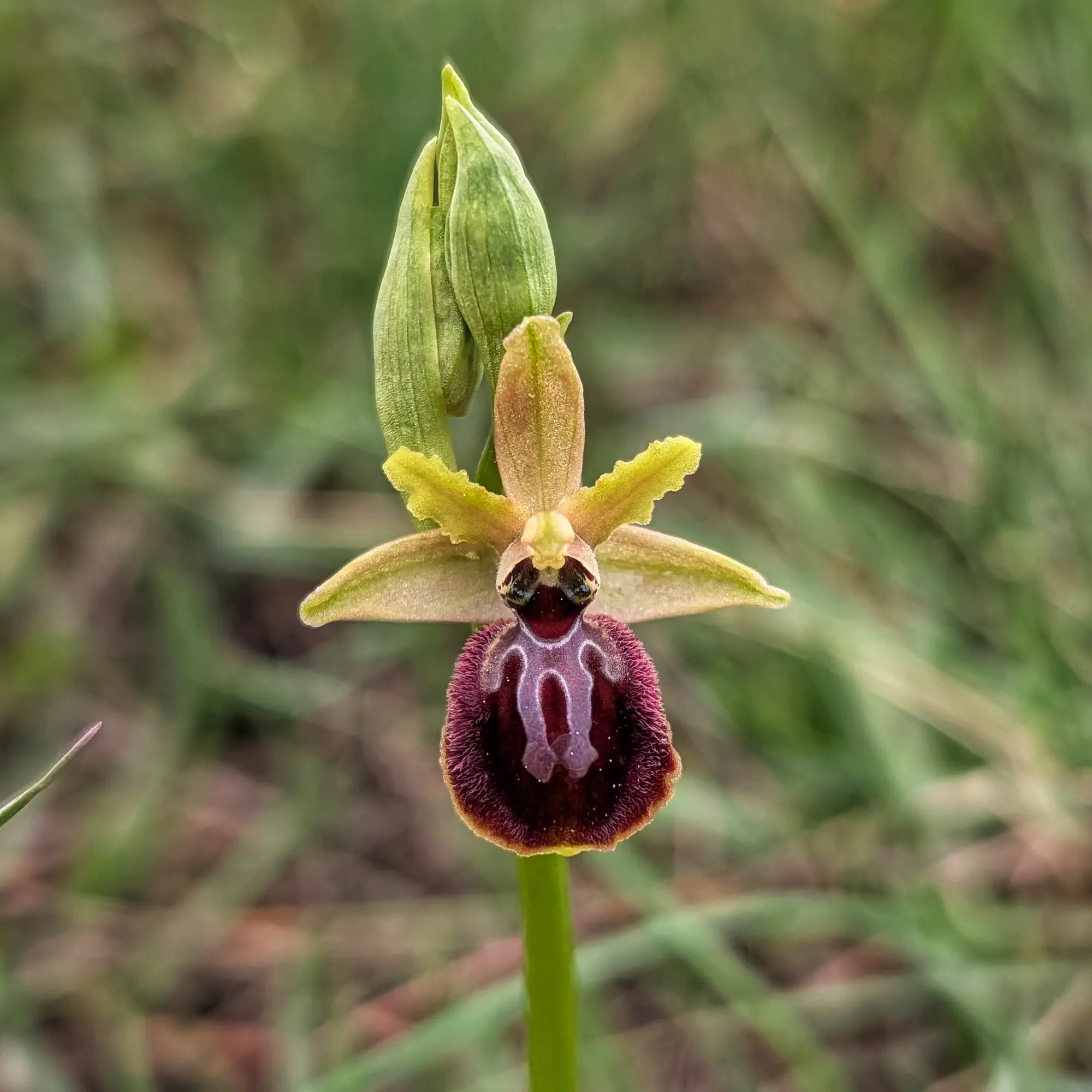
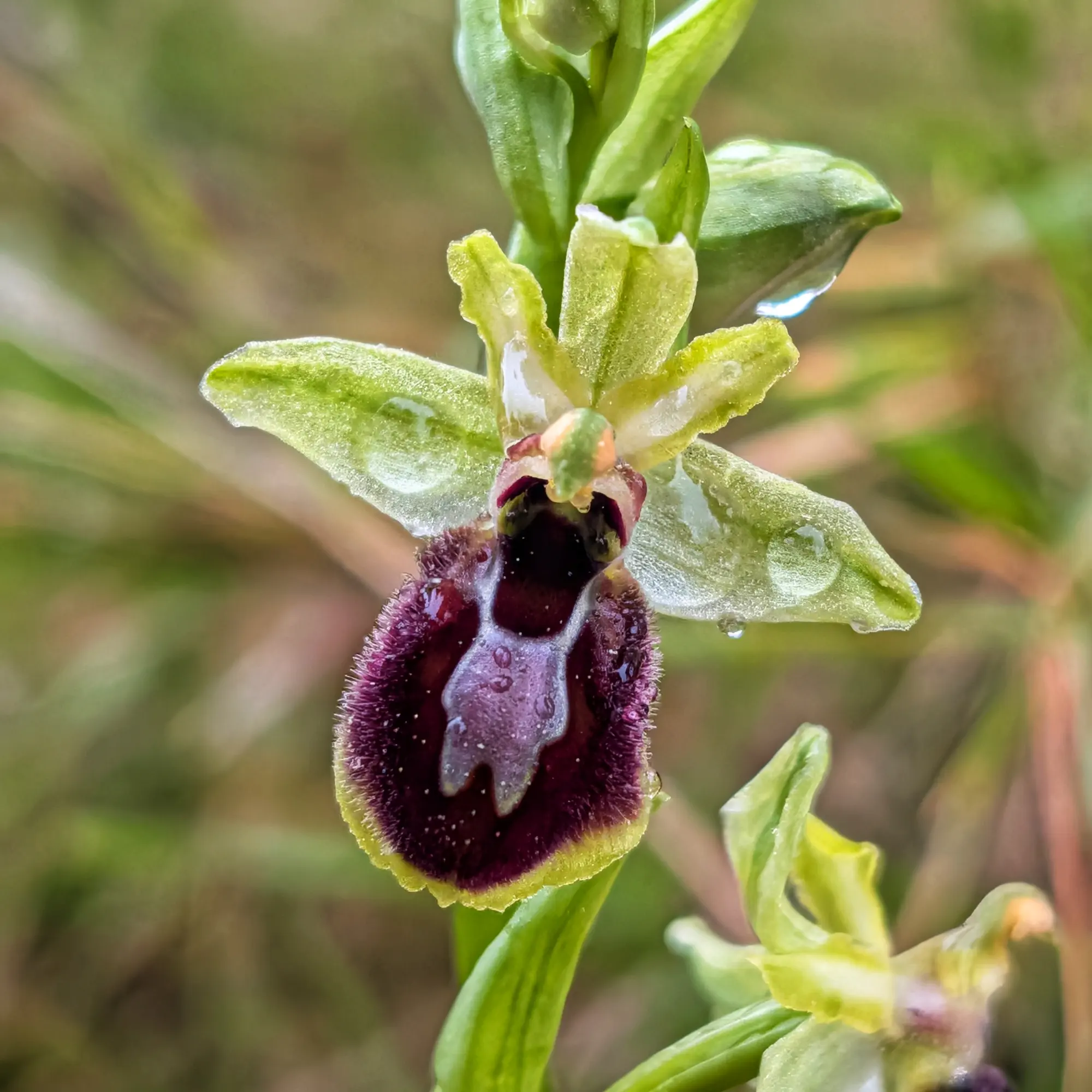
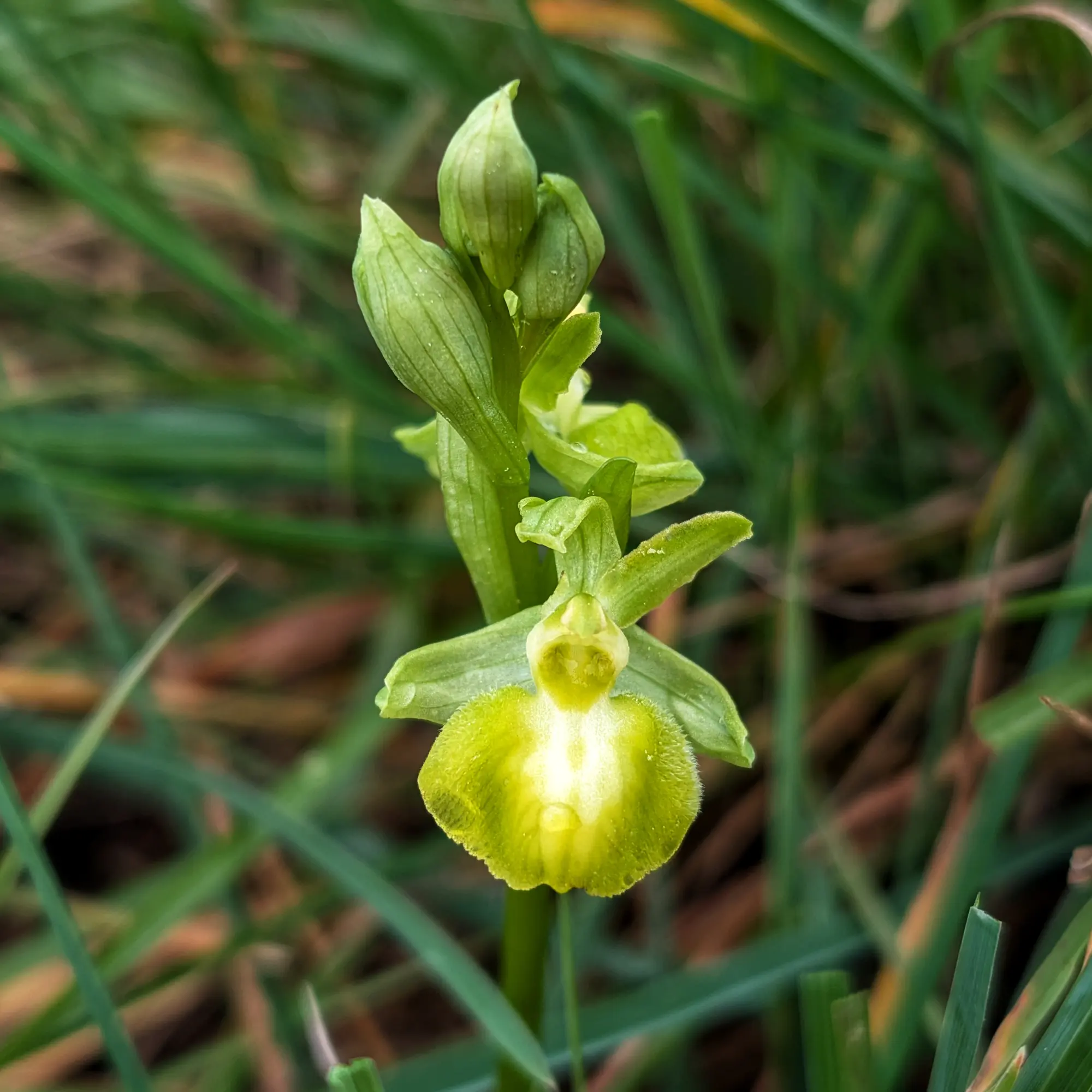
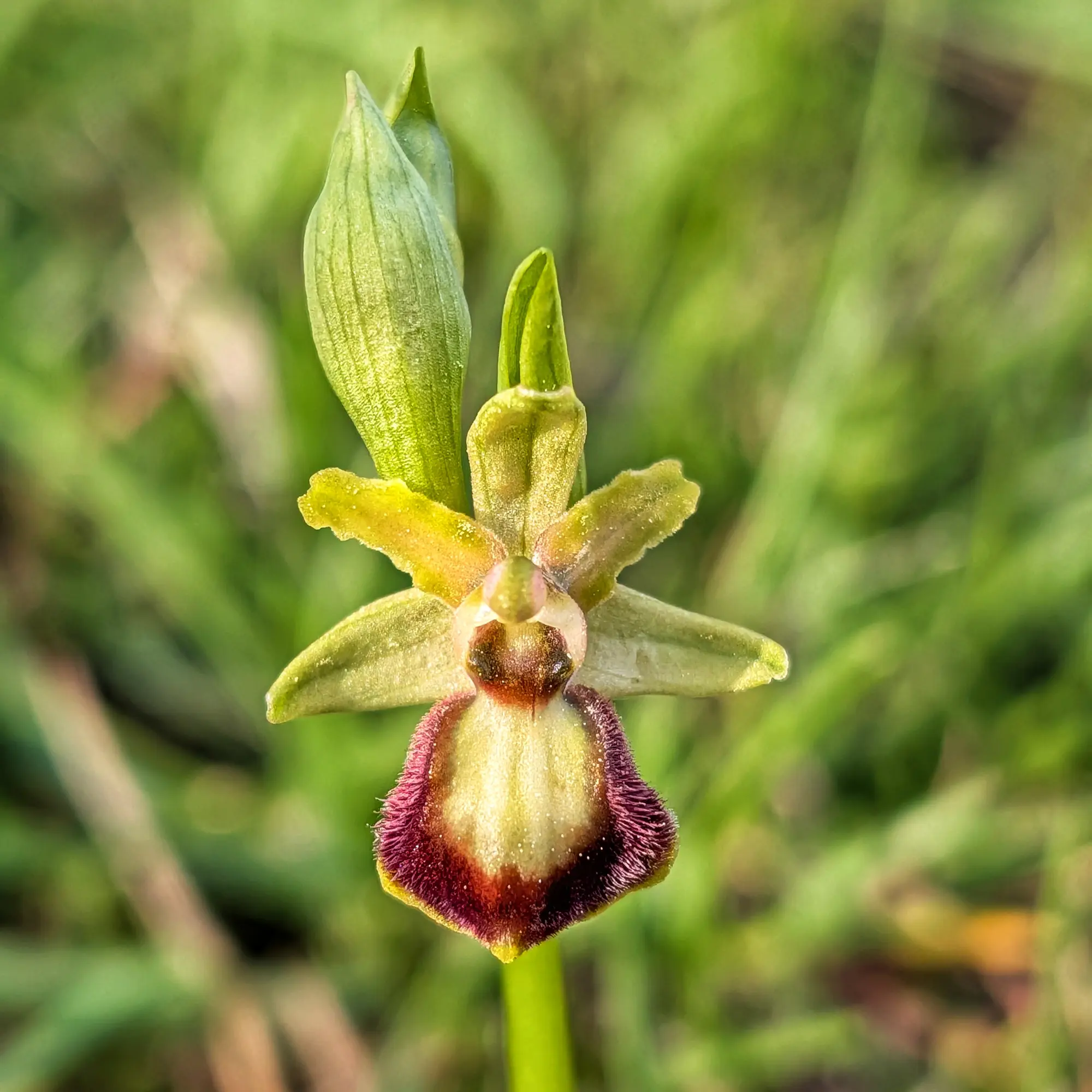
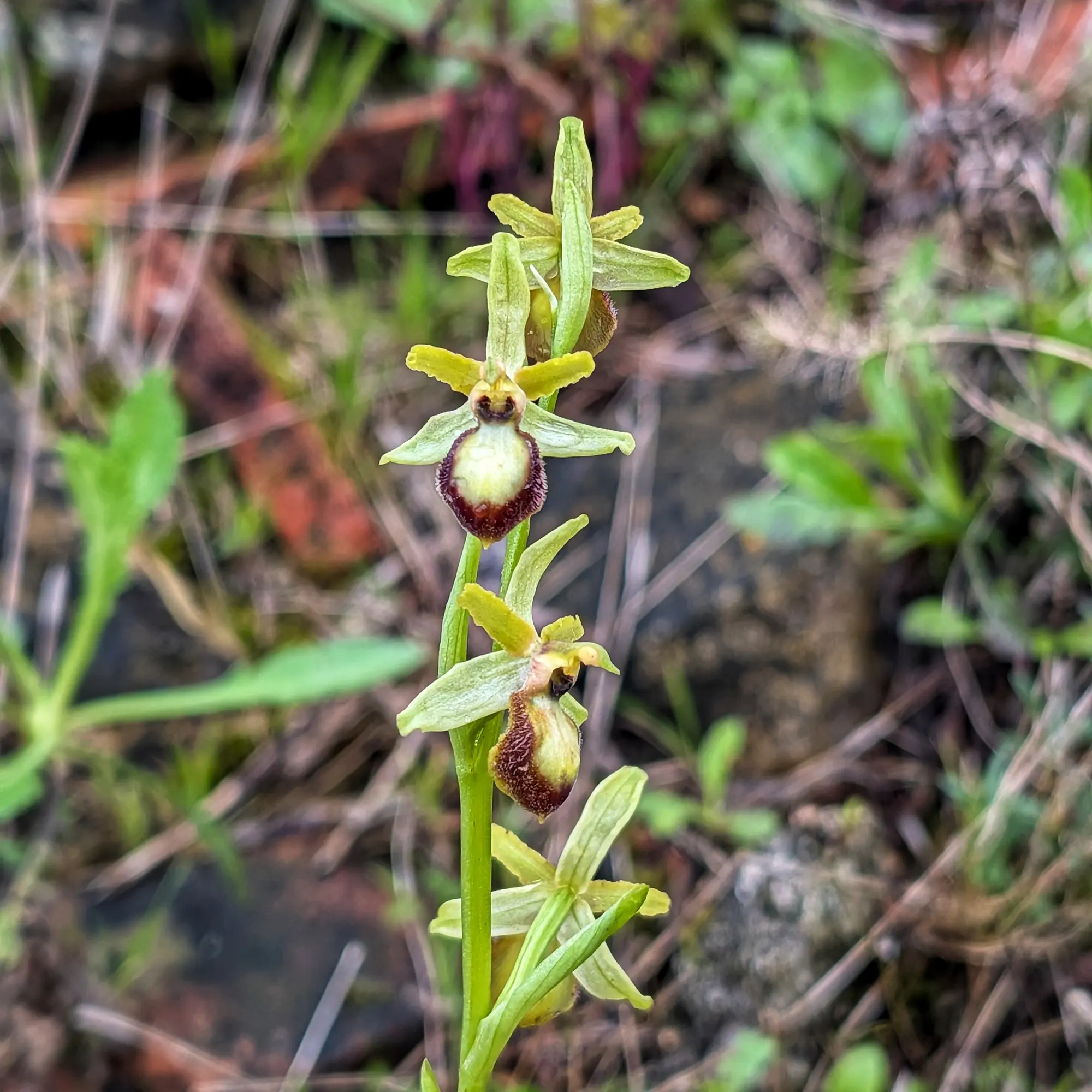
Morphological description: It is a plant that can reach a height of between 15 and 40 cm (6 to 16 inches). Its leaves are lanceolate or elliptical in shape. The flowers are notable for having a labellum between 8 and 10 mm long, which has a hairy and velvety appearance (a characteristic feature of the genus Ophrys, meaning "eyebrow"). A key distinguishing feature to differentiate it from other similar species is the color of its perianth: the sepals are white with green (or whitish-green) venation, while the petals are usually tinged with yellow or pink hues.
Habitat and distribution: This orchid primarily thrives in calcareous or marly soils with good drainage. It grows in a wide variety of environments, from dry to slightly humid places, such as meadows, garrigues (Mediterranean scrubland), thickets, forest clearings, and roadsides. It prefers moderate temperatures and can live in full sun as well as light shade conditions. It is a native species of the temperate regions of Europe. Its distribution is particularly concentrated in the north of the Iberian Peninsula (with well-documented populations in Catalonia, especially in the Empordà region), extending through southern France (Languedoc and Provence) to the Ligurian coast in Italy. Recently, it has been cited for the first time in the Balearic Islands (Mallorca) through naturalist observation.
Biology and distinctive features: As a geophyte, the orchid undergoes a latency period of about three months during the summer to survive the heat. One of its most distinctive features is its very early flowering period, which can begin in late January and last until April or early May, when other orchids are barely starting to bloom. For pollination, Ophrys arachnitiformis employs a fascinating strategy of deception, perfectly mimicking the physical appearance and aroma of female insects. Male insects, attracted, attempt to mate with the flower (a process known as pseudocopulation), thereby ensuring pollination. In Catalonia, its main pollinators have been documented as the bees Andrena nigroaenea, Andrena senecionis, Andrena trimmerana, and Colletes cunicularius.
Conservation: In the red lists of various regions where it is present (e.g., in different French departments like Gard, Hérault, Lozère, Aveyron), its current conservation status is "LC" (Least Concern). Although generally not considered threatened, sources indicate that in certain highly populated areas (such as the metropolitan area of Barcelona), some of its typical habitats, like uncultivated hills, are at risk of disappearing due to urban development.
Gallery
Related observations
Discover the observations I've made of this species.