Ophrys araneola
About the Orchid
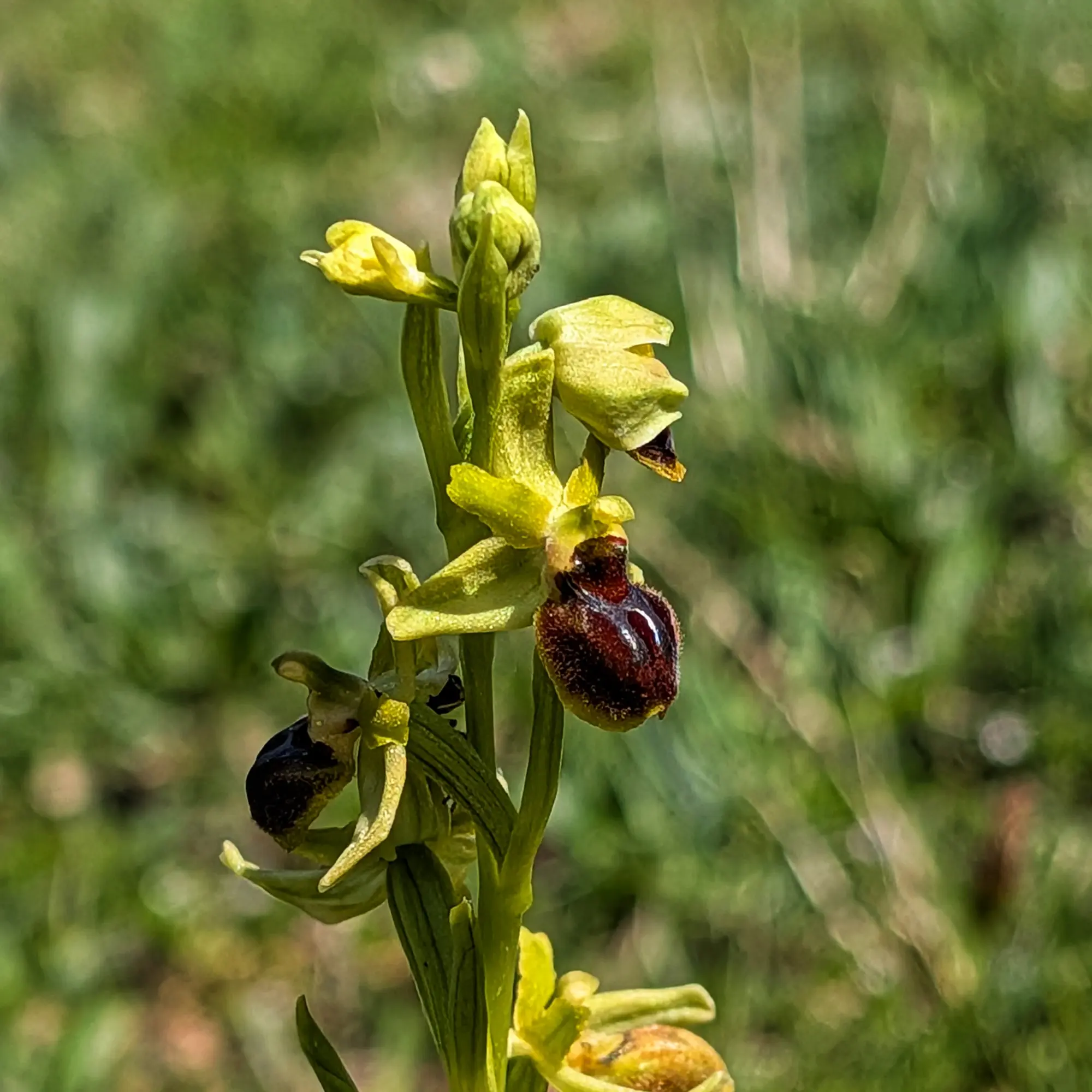
The Ophrys araneola, commonly known as the Small Spider Orchid (from Latin araneola, "little spider"), is a terrestrial orchid often classified as a subspecies of Ophrys sphegodes (the Early Spider-orchid). It is distinguished by its clearly smaller dimensions and its very early flowering period. This species belongs to the group of orchids that mimic insects to attract pollinators, specifically solitary bees like Andrena combinata.
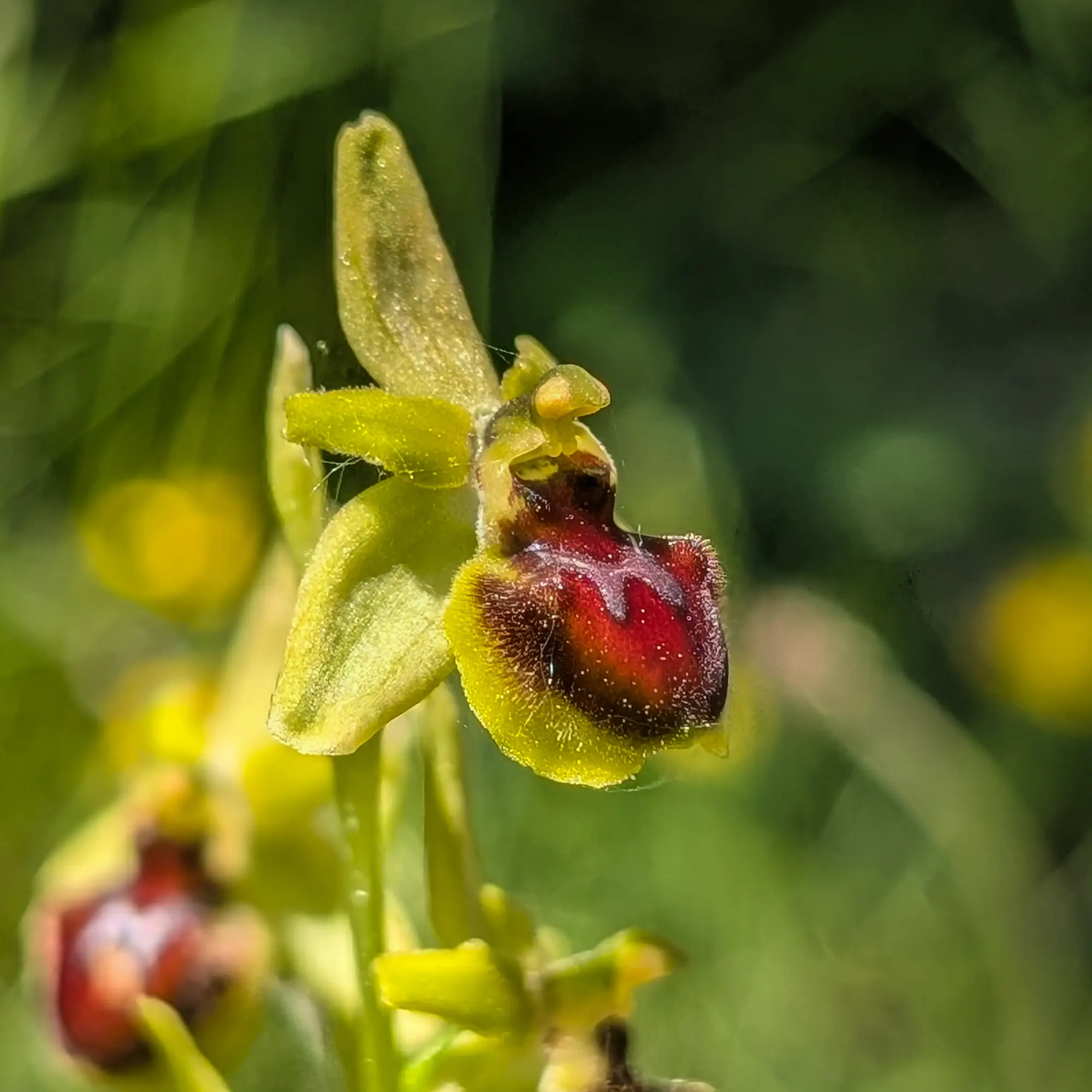
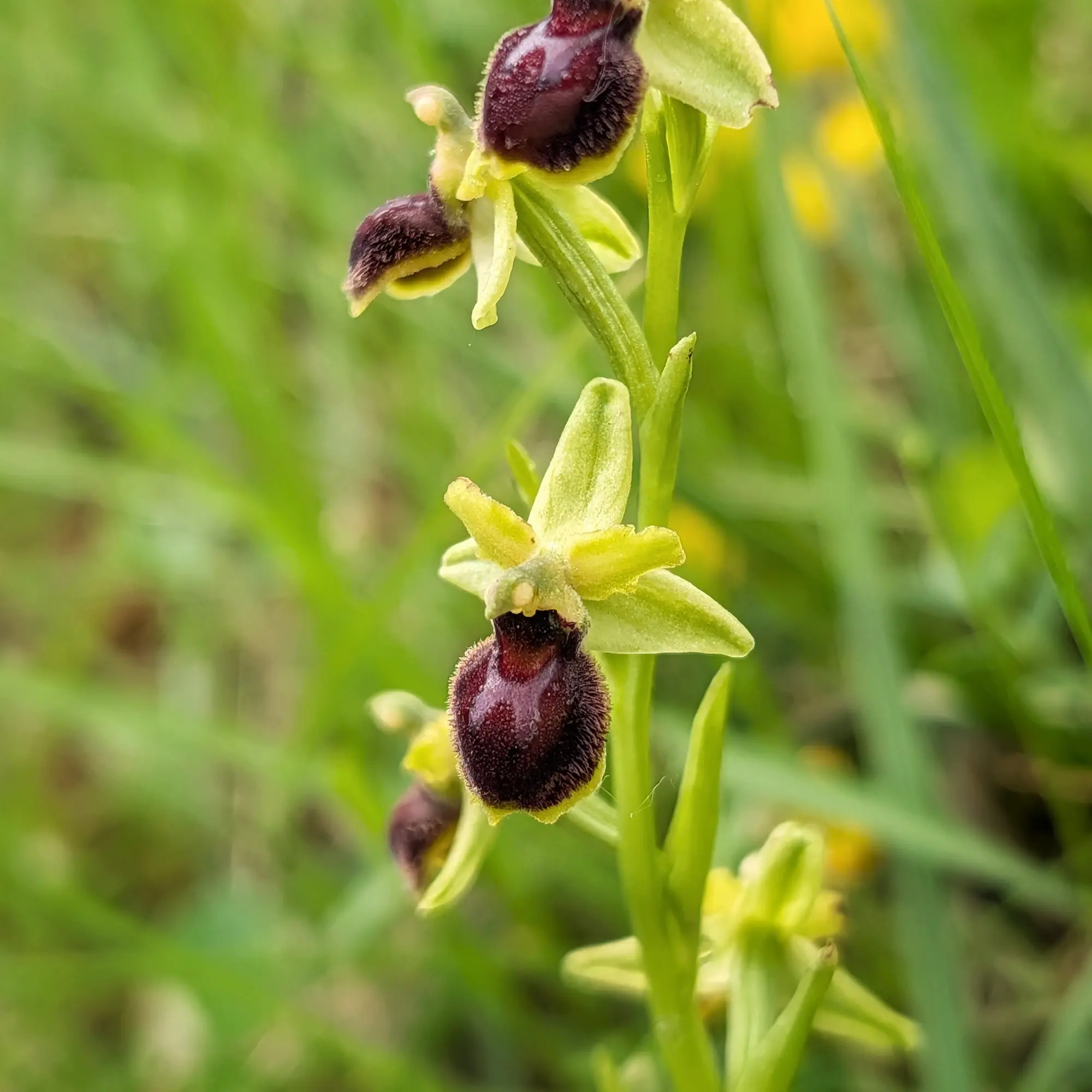
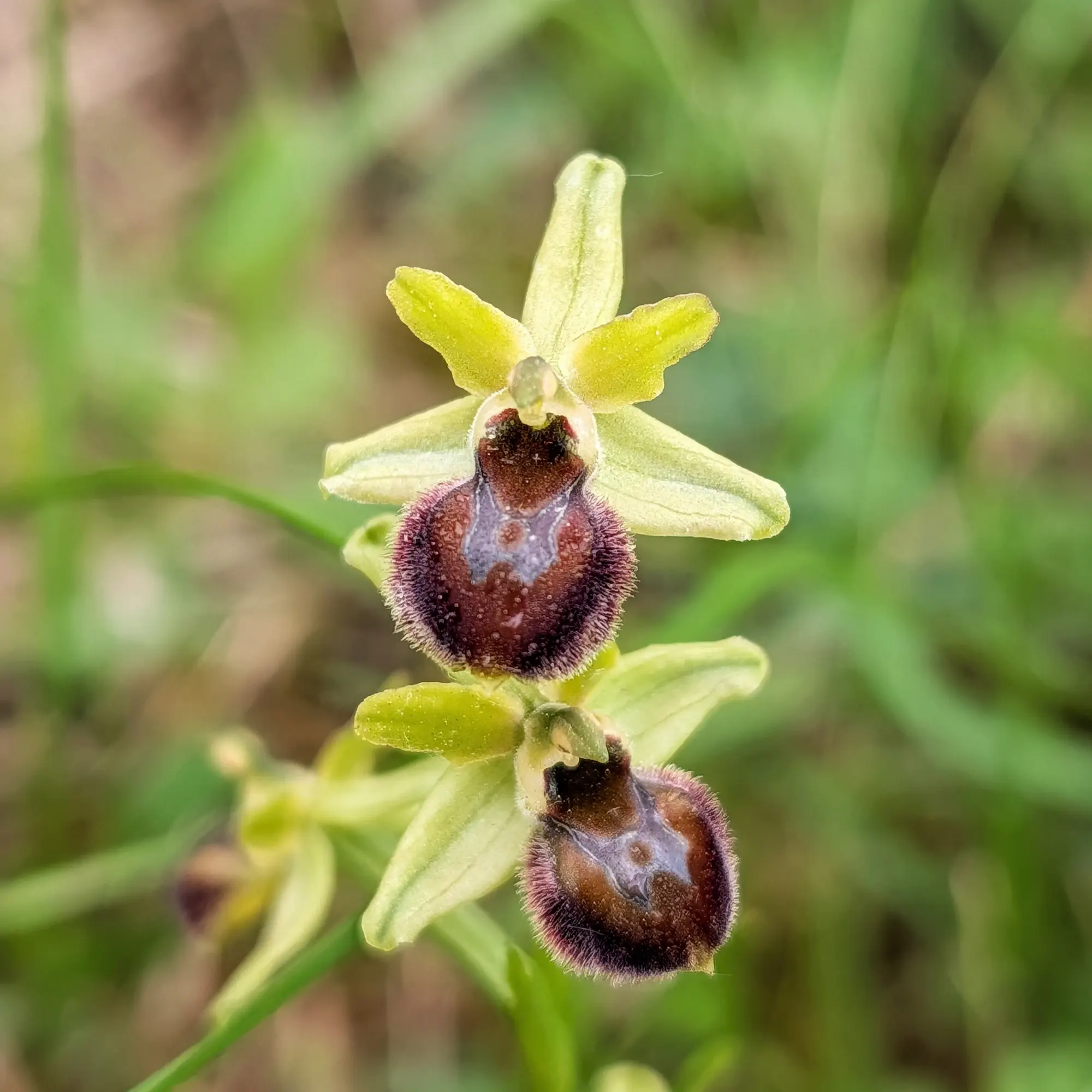
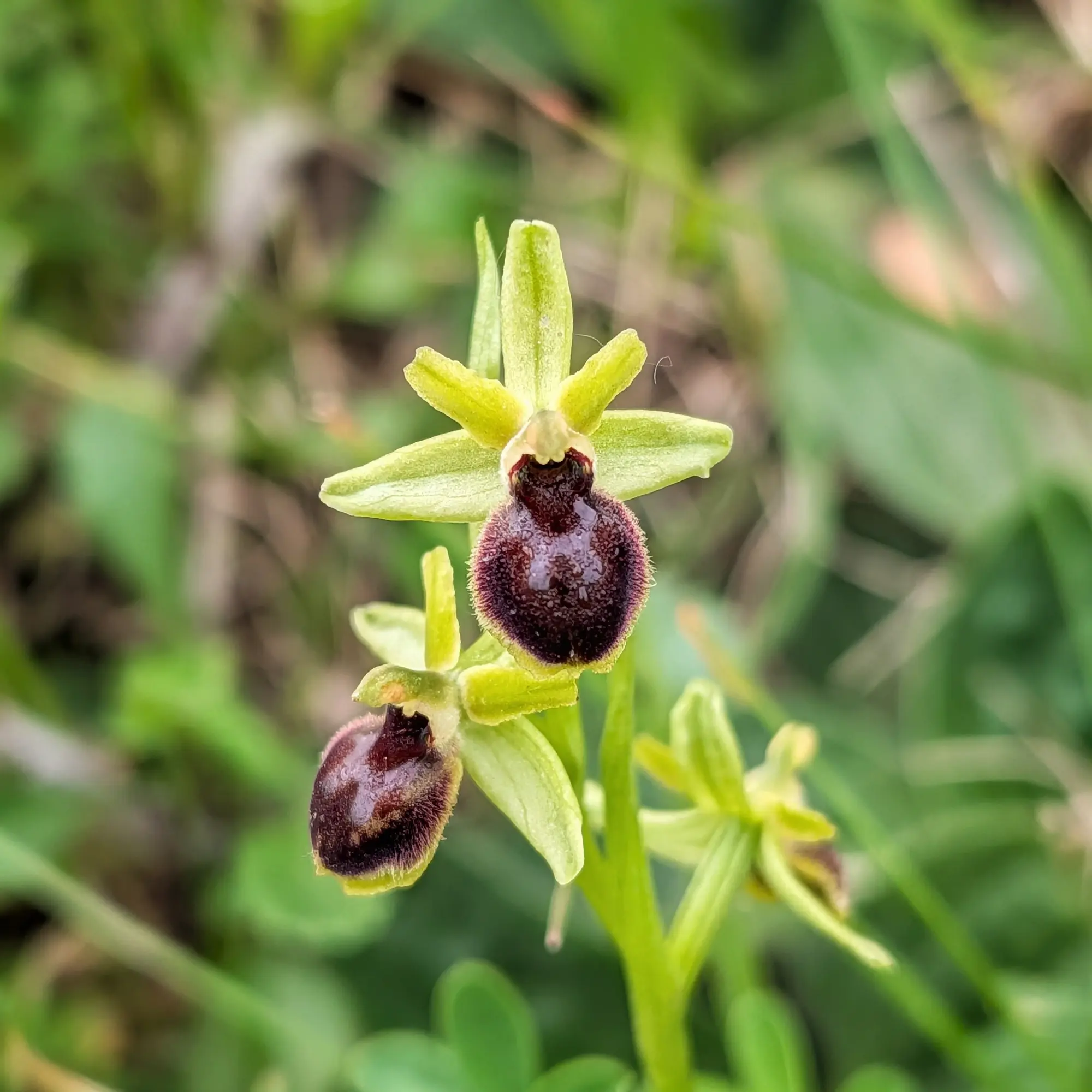
Morphological description: It is a relatively robust herbaceous plant that can reach a height of 15 to 40 cm. It features a basal rosette of bluish-green leaves. The flowers are gathered in pauciflorous spikes, typically with 4 to 10 flowers (up to 15). The three outer sepals are lanceolate or oval, light green or whitish. The lateral petals (inner tepals) are shorter, slightly darker or yellowish than the sepals, and have slight hairiness. The labellum is the most distinctive element: small (5 to 9 mm long), entire (unlobed) or slightly convex, reddish-brown or dark brown. A key characteristic is its glabrous (hairless) yellow or yellowish-green margin. At the center, there is an extensive bluish-gray macula, generally H-shaped or resembling the Greek letter "pi", with a creamy white outline. It possesses a very reduced, green appendix, sometimes almost invisible.
Habitat and distribution: This orchid prefers to grow on calcareous substrates, found in dry and lean meadows (Mesobromion), garrigues, forest clearings, and stony road edges. It requires full sun or semi-shade. Its distribution area includes Atlantic and Mediterranean Europe, encompassing Spain, France, Germany, Austria, Switzerland, and Italy. In the Iberian Peninsula, it is located in Catalonia (Ripollès and La Selva). Historical records from Galicia have been reclassified as Ophrys kallaikia.
Flowering and conservation: It is one of the earliest orchids to flower, appearing from late March to May. It is classified as Vulnerable (VU) on the IUCN Red List, with major threats stemming from inadequate agricultural and forest management.
Gallery
Related observations
Discover the observations I've made of this species.