Ophrys catalaunica
About the Orchid
The Ophrys catalaunica is a terrestrial orchid belonging to the family Orchidaceae. This subendemic taxon of Catalonia was discovered in 1968 by German botanists Othmar and Edeltraud Danesch. Taxonomically, it belongs to the Ophrys bertolonii group, and although it has been considered a subspecies of it (Ophrys bertolonii subsp. catalaunica) or a hybrid between O. bertolonii and O. arachnitiformis, it has recently been clarified that the correct species-level name is Ophrys catalaunica, distinguishing it from Ophrys montserratensis (which corresponds to the hybrid between O. catalaunica and O. scolopax).
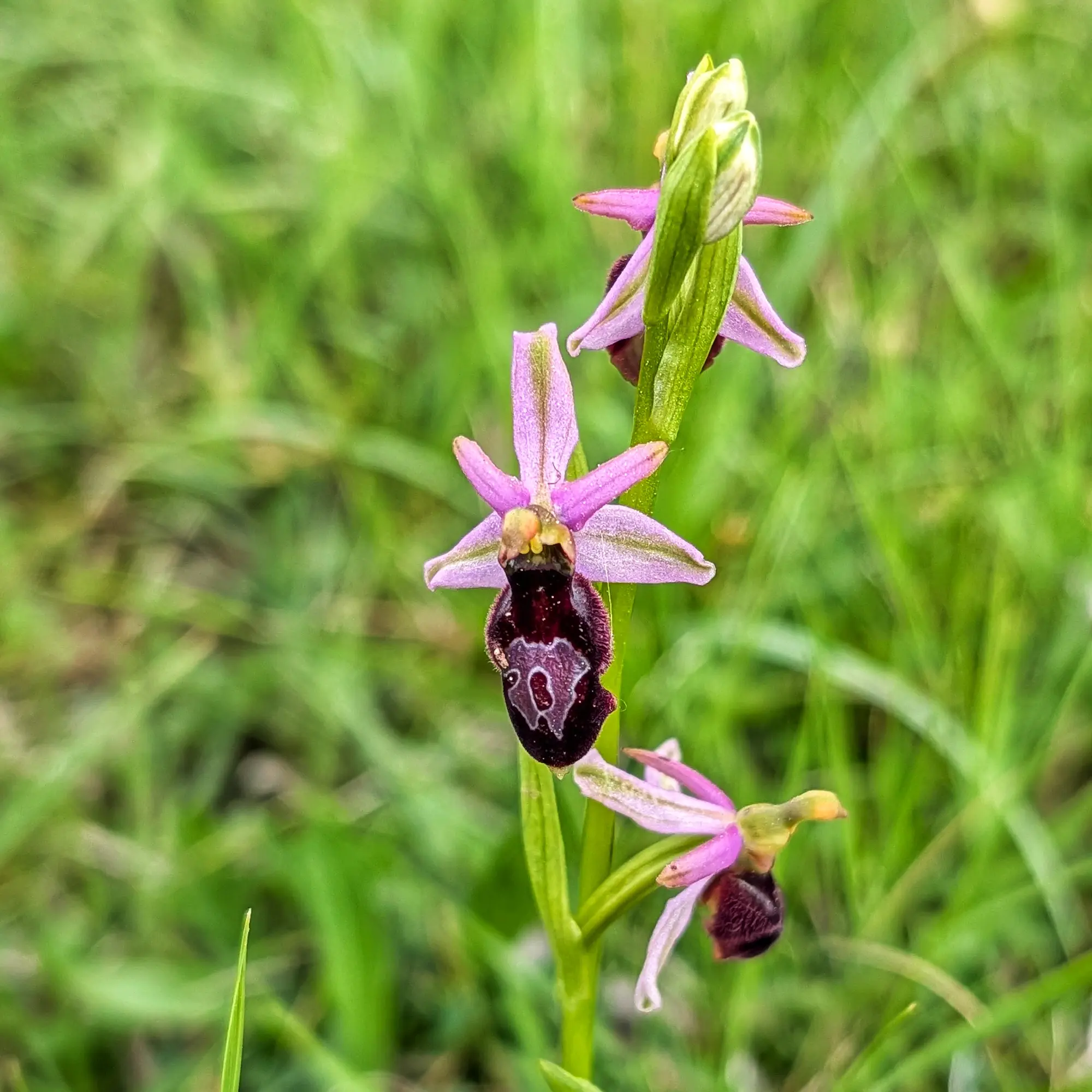
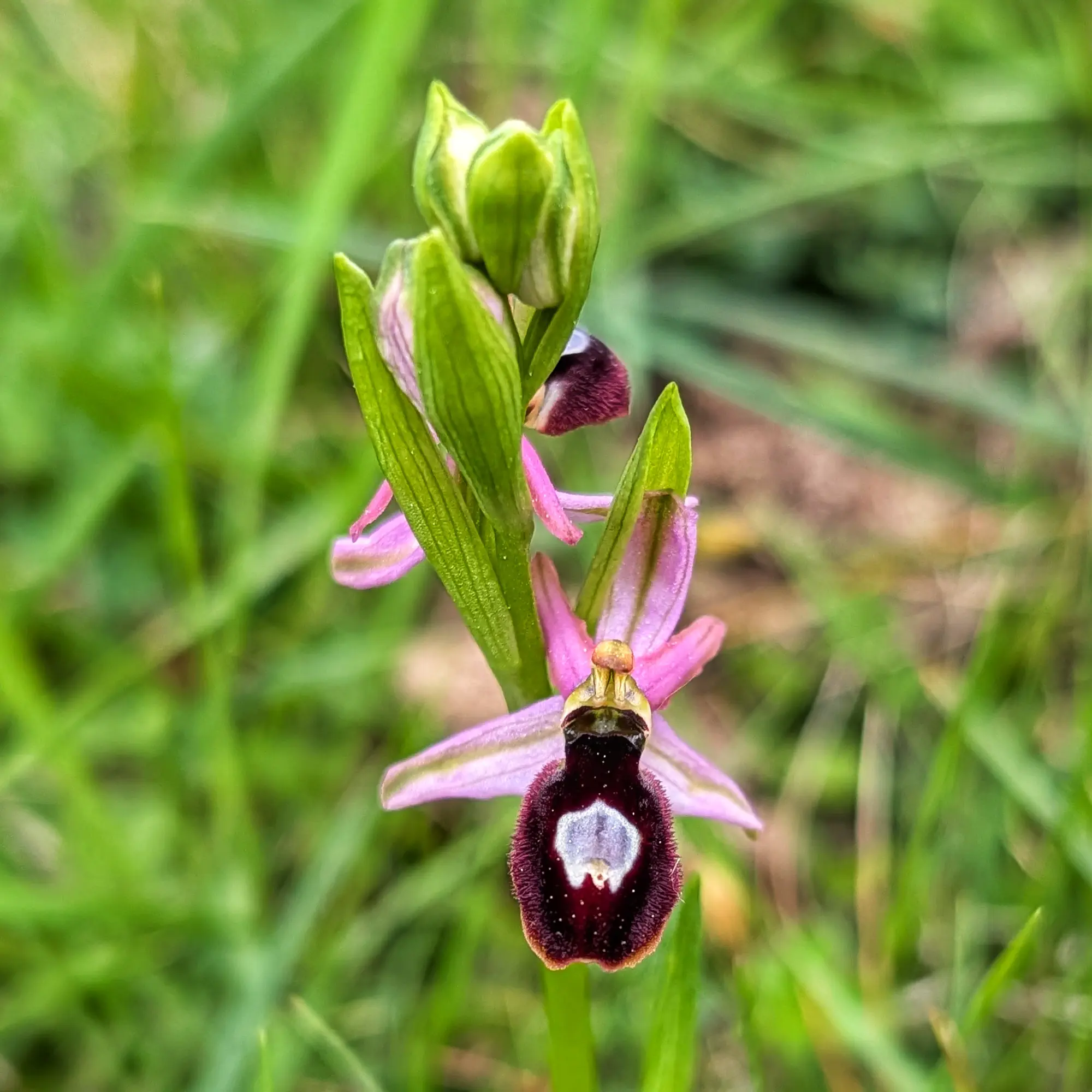
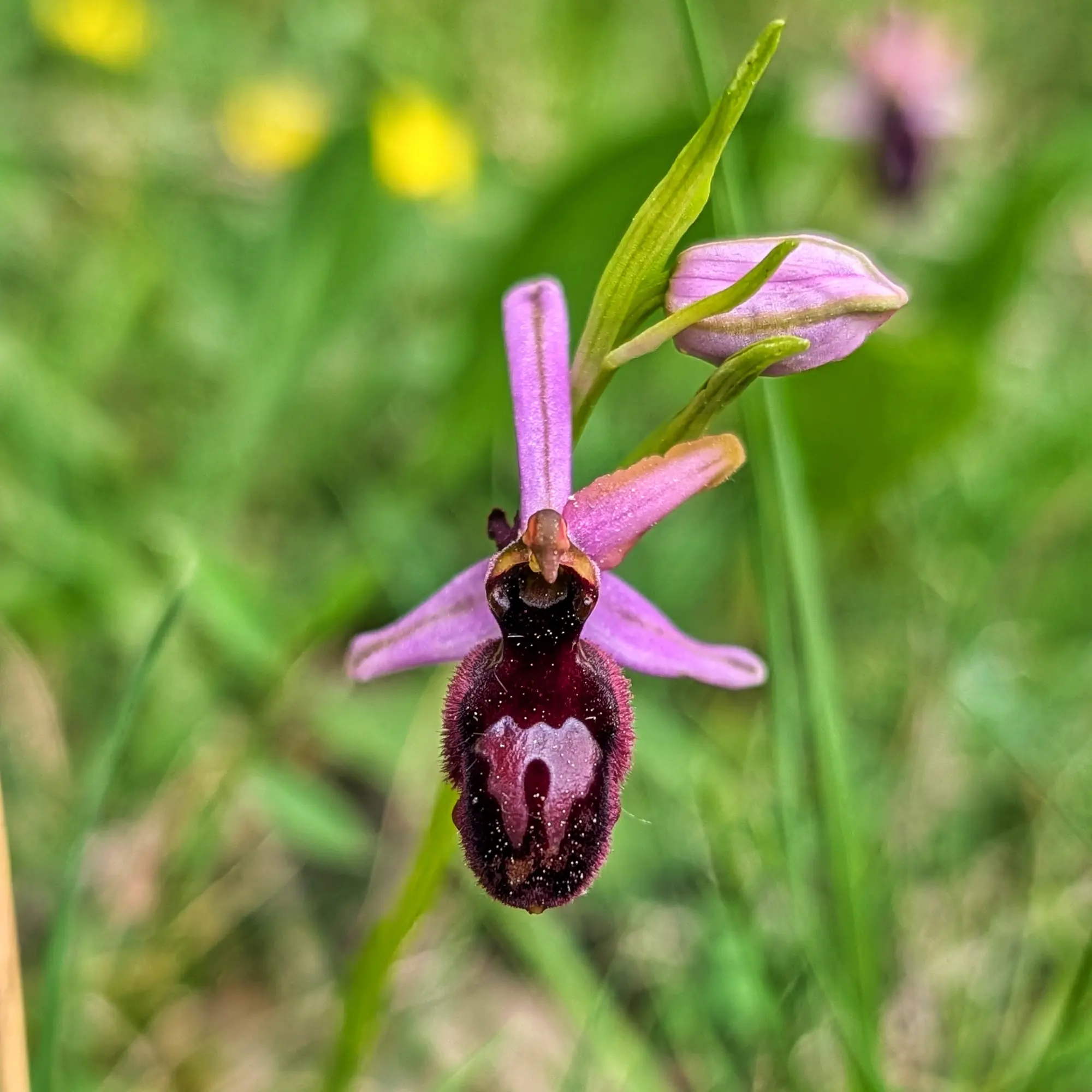
Morphological description: It is a small plant, reaching a maximum of about 20 cm in height, with a slender stem and two ovoid tubers. It has 4 to 6 narrow, lanceolate basal leaves, and a pair of leaves encircling the stem. Its inflorescence is lax and generally features between two and six flowers. The sepals are pink with a very distinct greenish central vein. The petals, also pink, are smaller and have wavy margins. The labellum (lip) is the most distinctive element: it is generally entire (not trilobed at the base, unlike O. scolopax), elongated or rounded in shape, and dark brown, purple, or blackish in color. It presents dark (velvety) hairs all around its edge and a well-defined, shiny, hairless central macula (speculum), which is purplish-violet or bluish and often H-shaped, shield-shaped, or horseshoe-shaped. At the tip of the labellum, there is a small greenish or yellowish appendix inserted into a notch.
Pollination: Like other bee orchids, it uses a system of sexual deception pollination. The labellum mimics the shape and scent of the female of specific pollinator insects, in this case, bees of the genus Megachile (M. parietina, M. pyrenaica, and M. albonotata), to attract males for pseudocopulation.
Habitat and distribution: It grows preferentially in sunny locations on calcareous soils. It is found in barren areas, dry meadows, heaths, and rush beds, and to a lesser extent in scrub and pine forests. Its altitudinal range reaches up to 1,150 meters. It is a subendemic species of Catalonia, found in the interior of the territory (including regions like Montseny and Bages), Roussillon, and the Aude department in southern France. It flowers mainly during the month of May, extending into early June.
Conservation status: Although a specific Red List category is not detailed in the sources, it is classified as a subendemic of Catalonia, implying that at least 50% of its global population is found within this territory. Recent citizen science data suggests a notable decrease in observations during severe drought years (e.g., observations fell from 133 in 2018 to only 61 in 2023), indicating that adverse climatic conditions negatively affect its flowering and detection.
Gallery
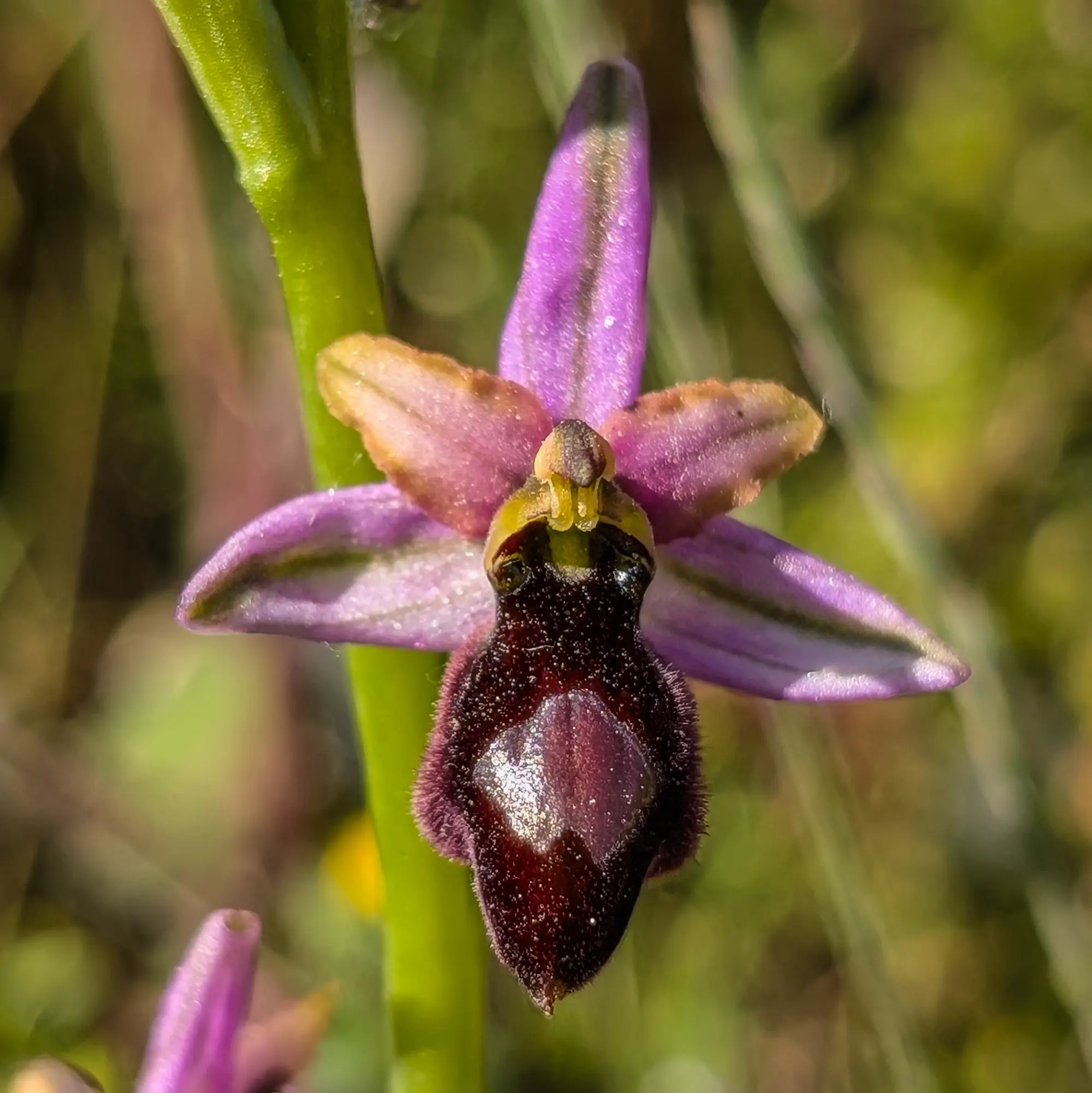
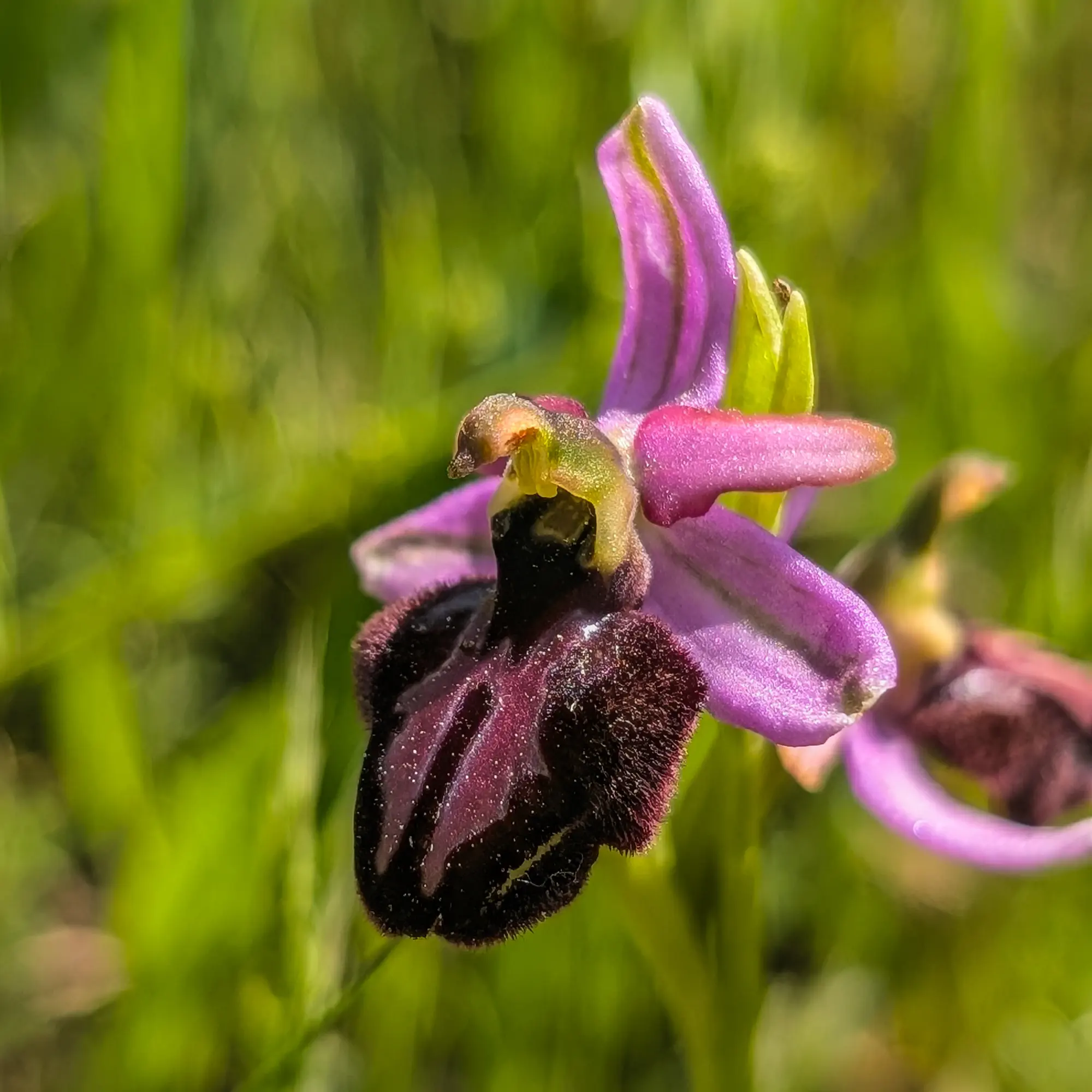
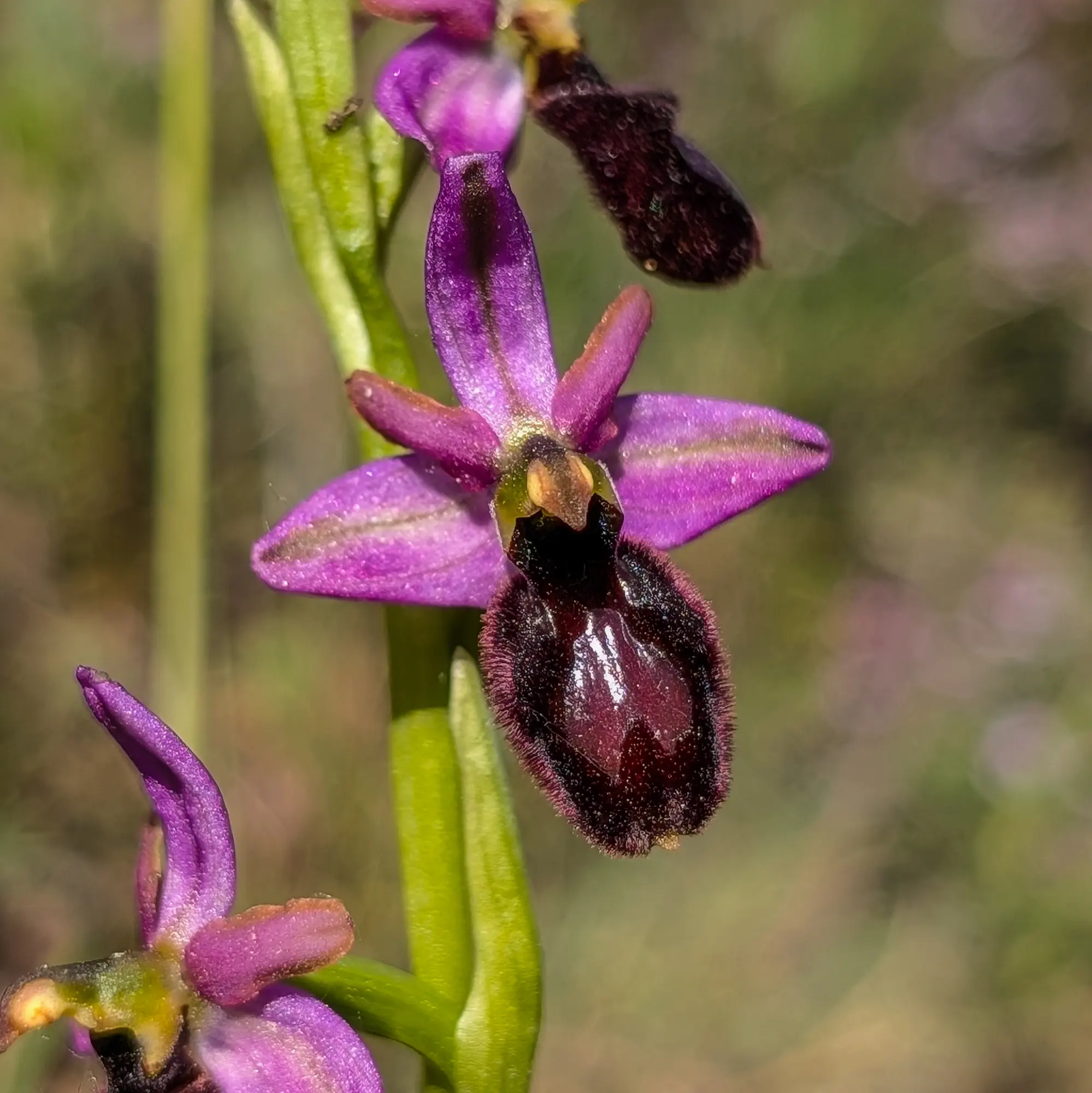
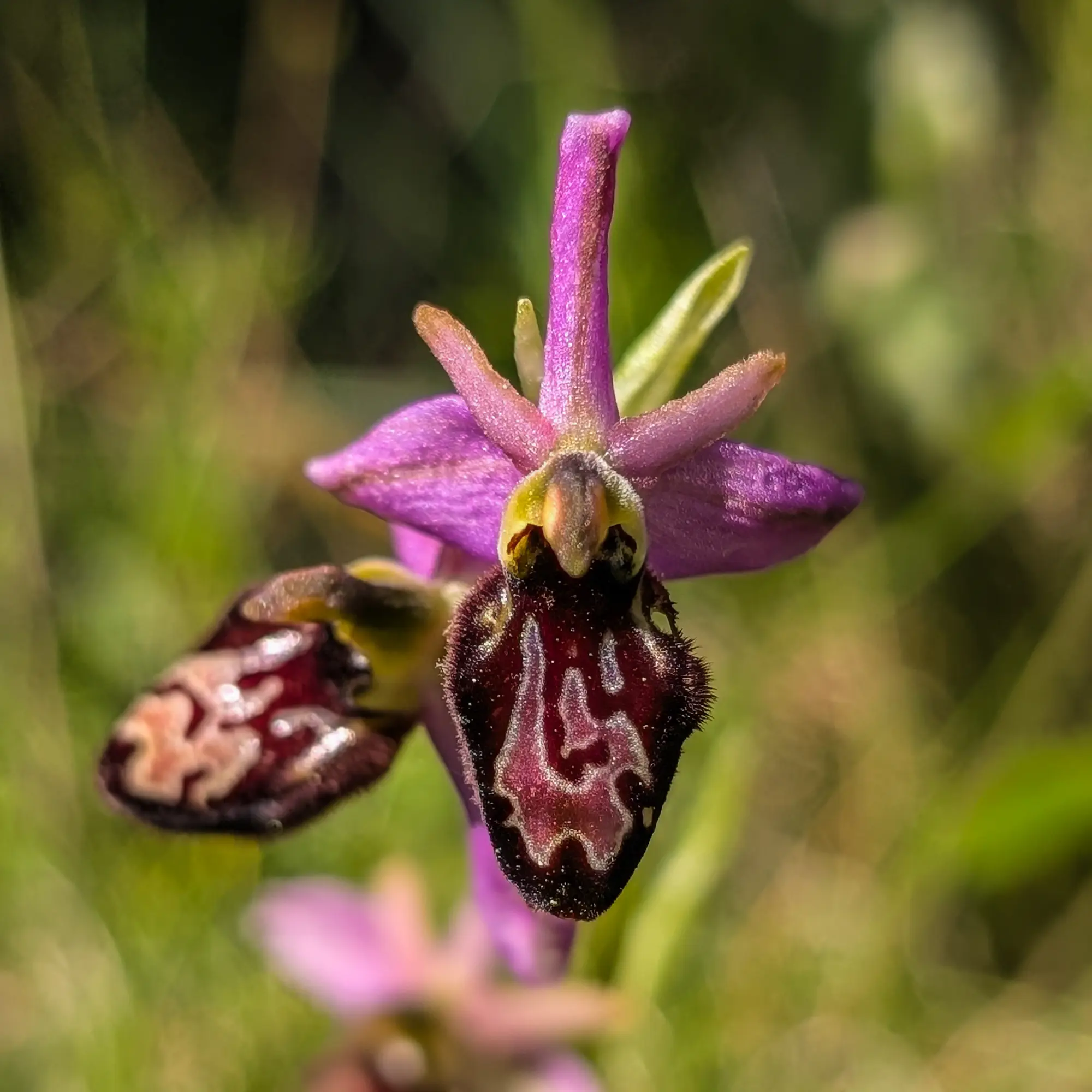

Related observations
Discover the observations I've made of this species.