Ophrys dyris
About the Orchid
The Omega bee-orchid (Ophrys dyris Maire, often classified as Ophrys omegaifera subsp. dyris) is a terrestrial orchid belonging to the section Pseudophrys of the genus Ophrys. It is a species very close to Ophrys fusca, with which it is sometimes confused due to morphological similarities, although O. dyris has a much more restricted and localized distribution.
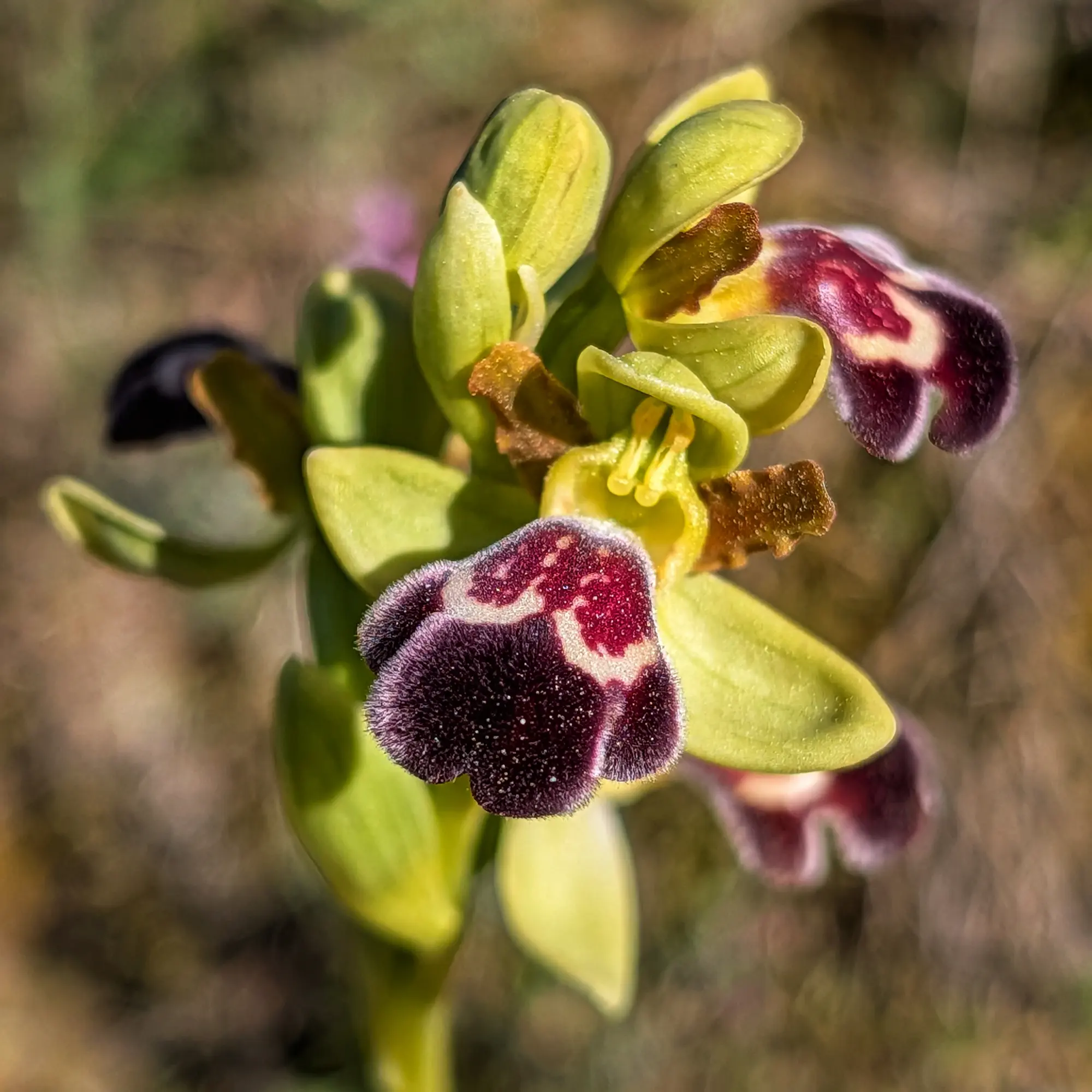
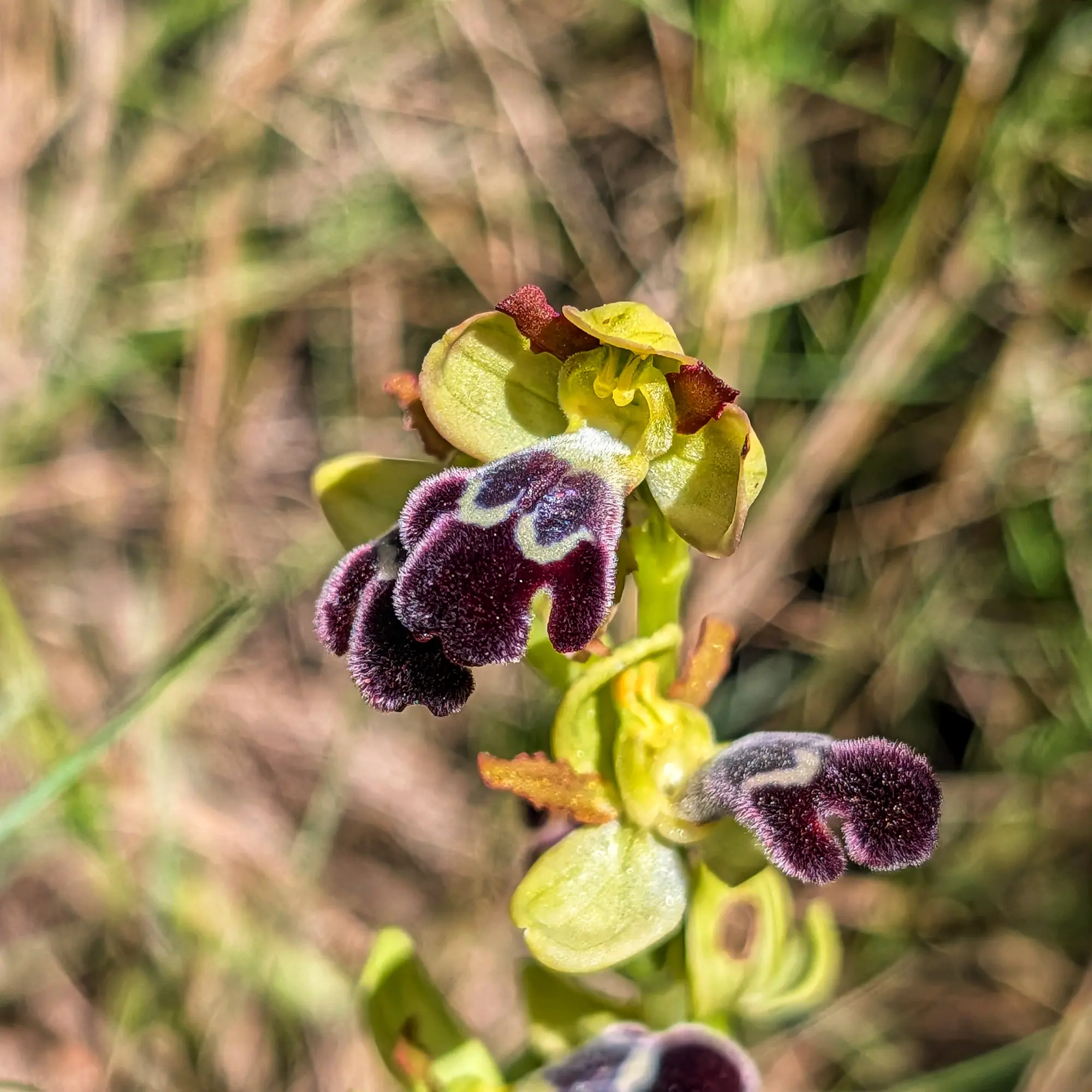
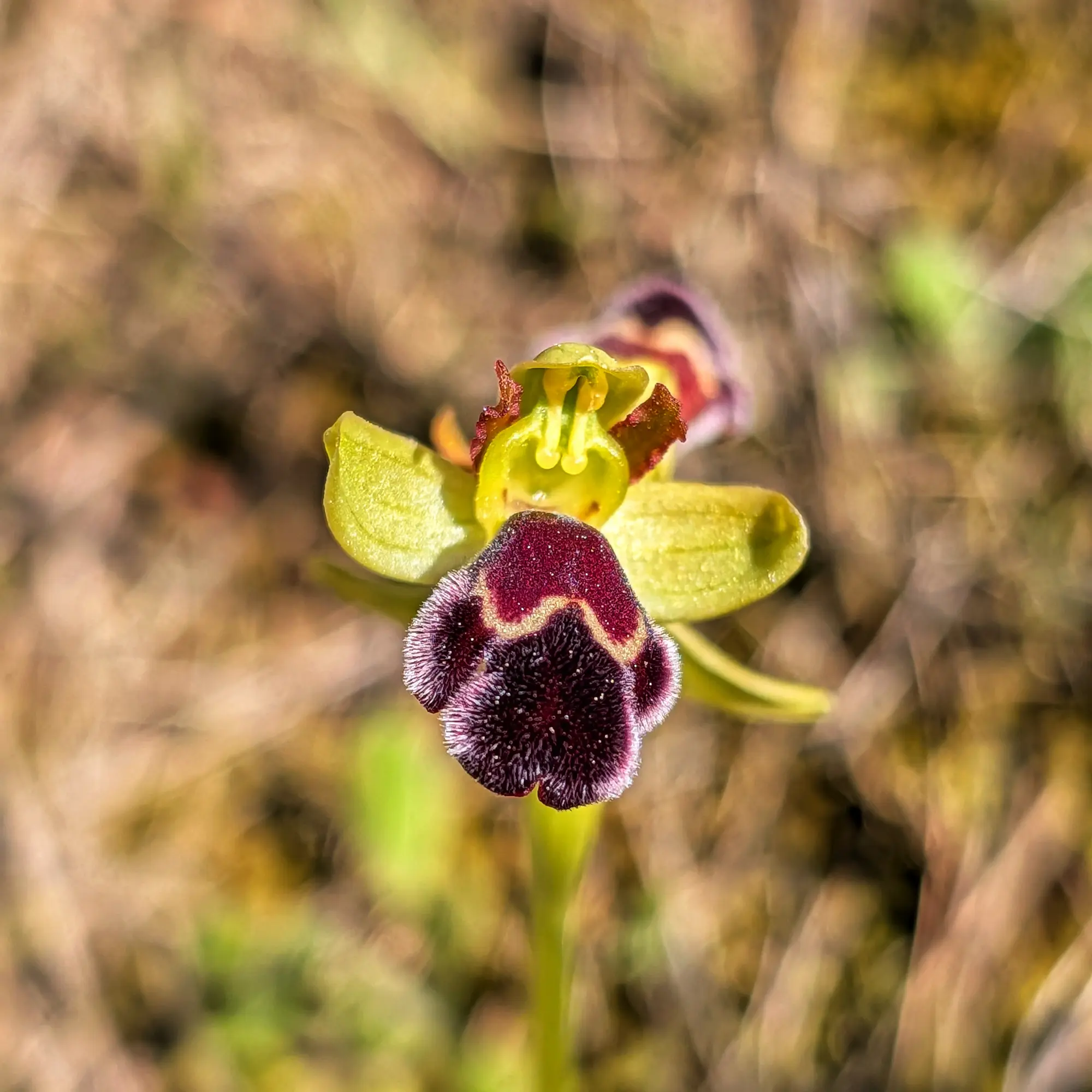
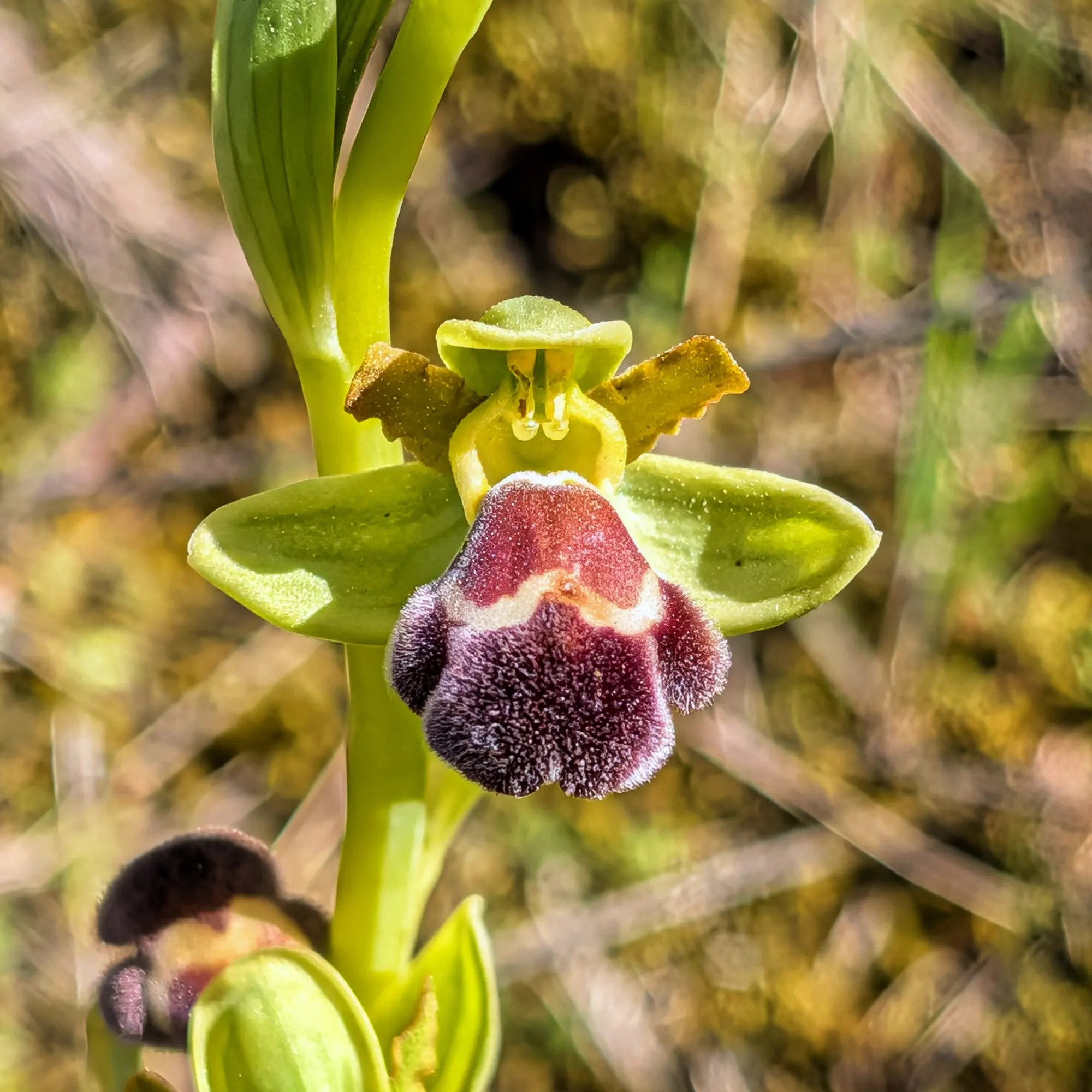
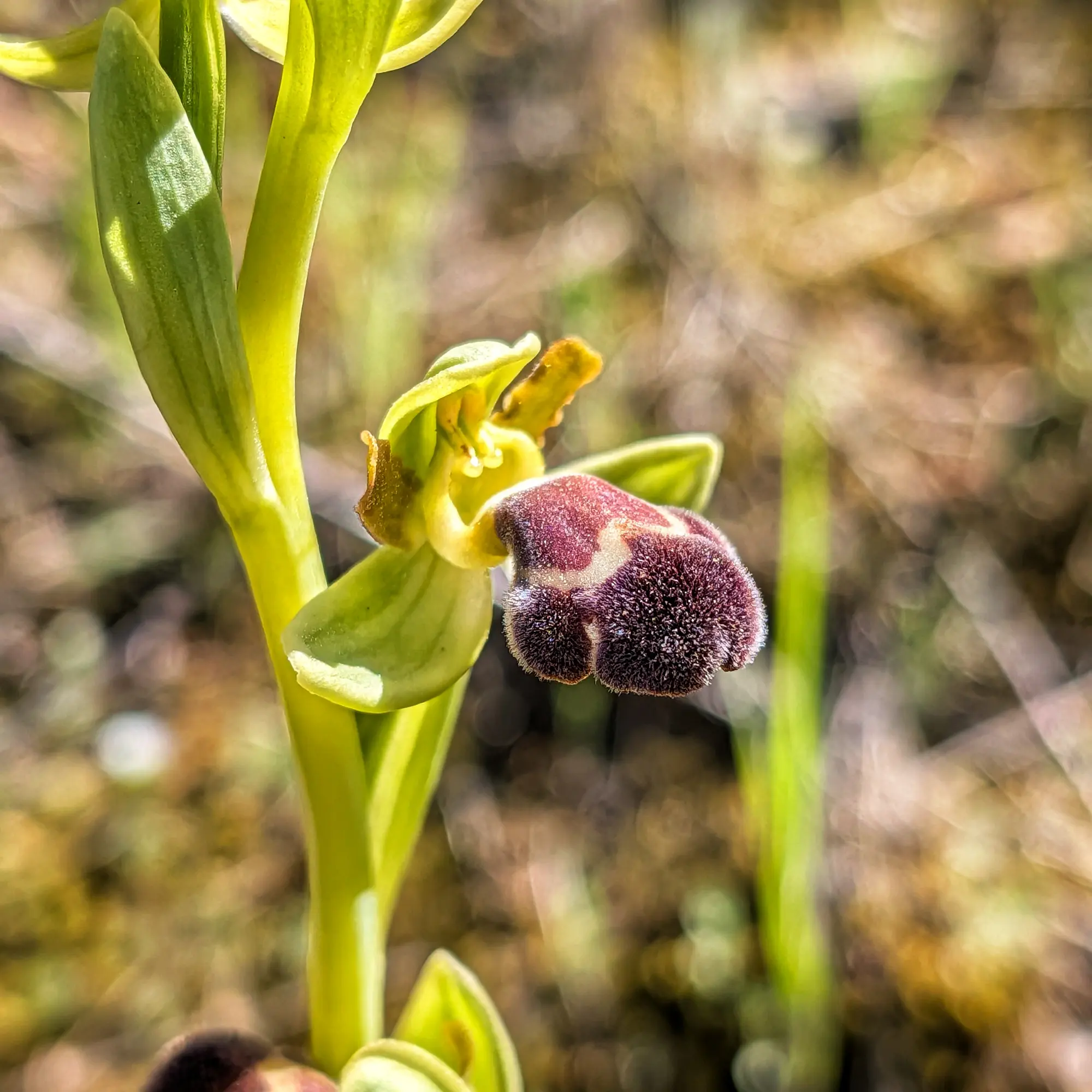
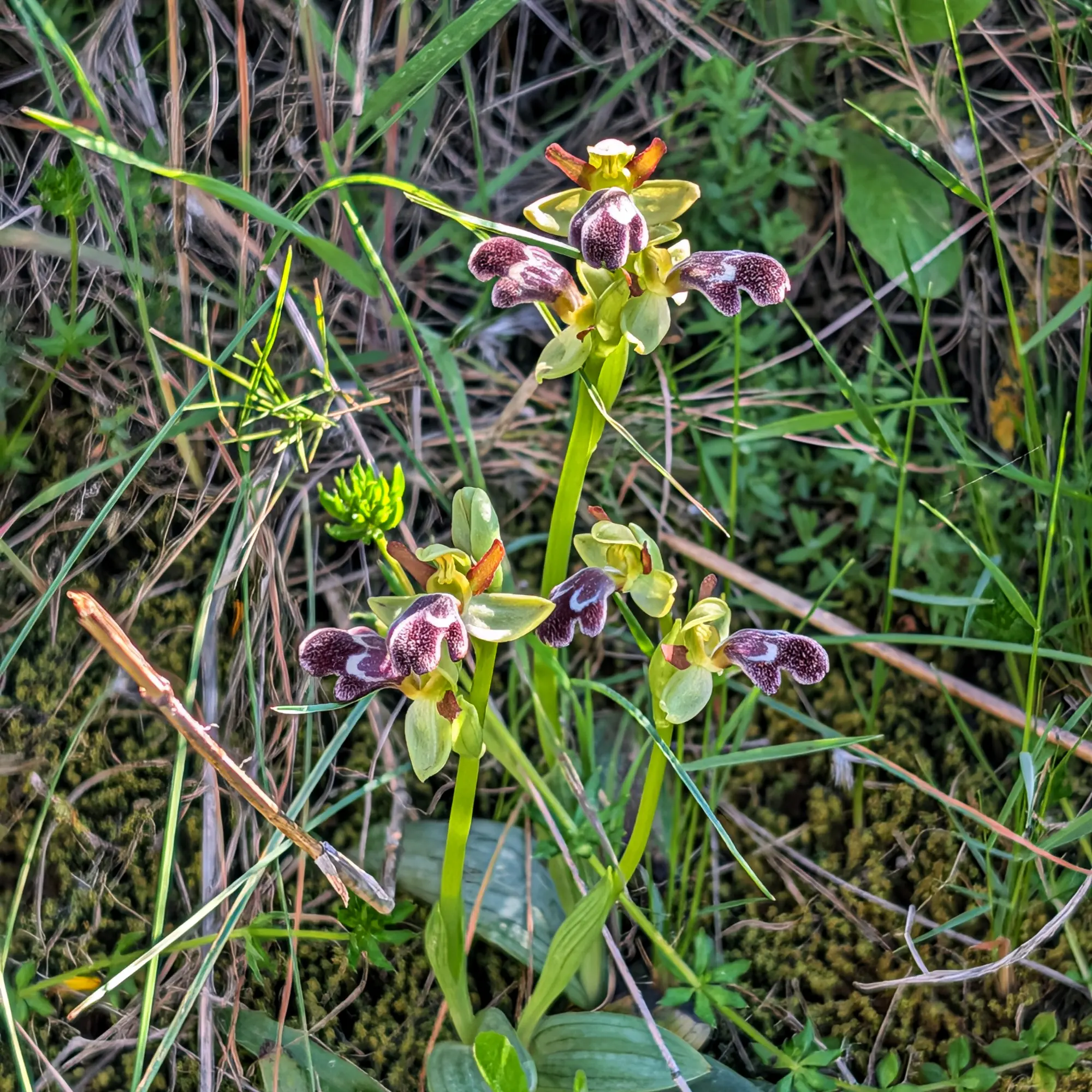
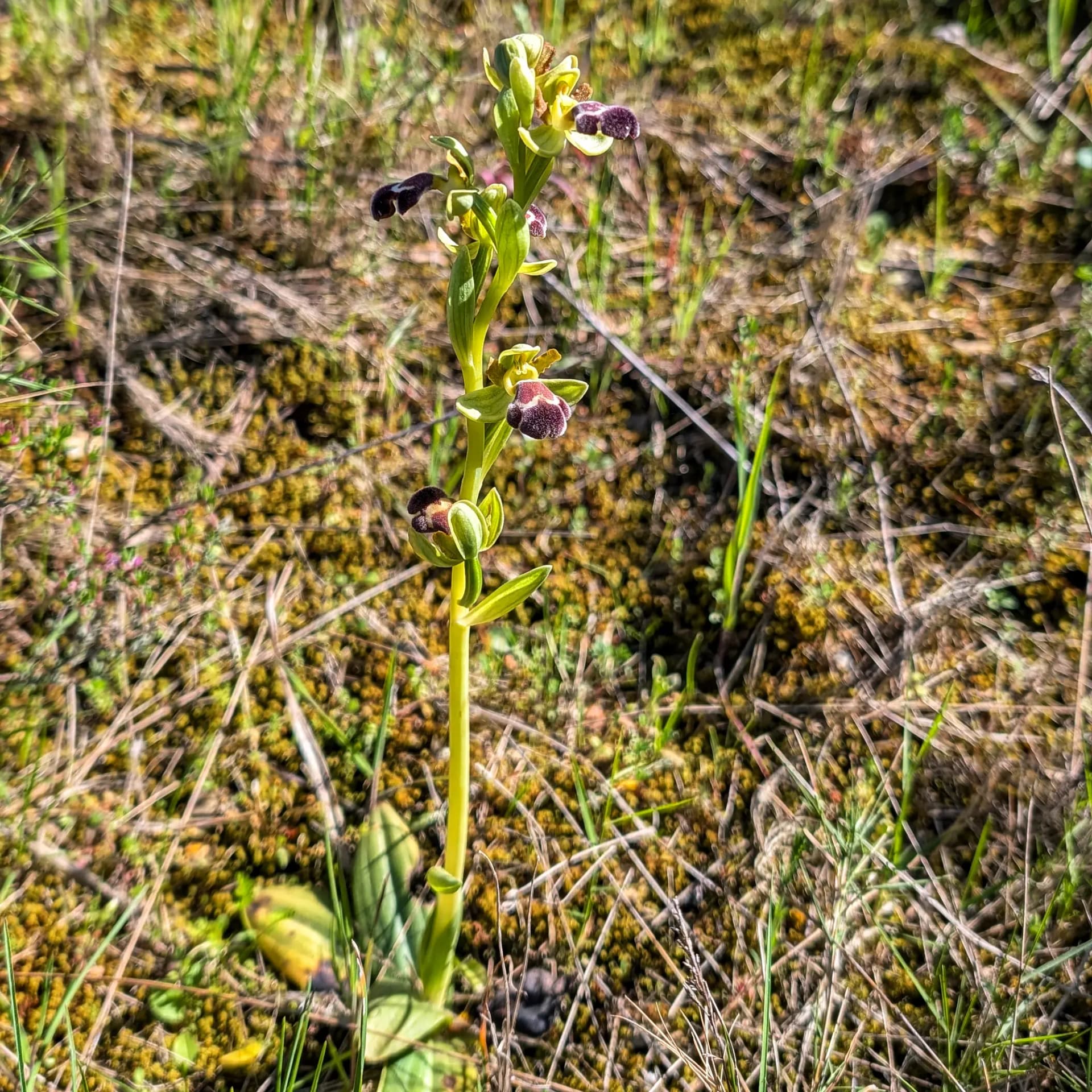
Morphological description: It is a herbaceous plant with a glabrous stem and leaves generally arranged in a basal rosette. The most distinctive feature of this orchid is its large lower petal, called the labellum. It measures 15 to 20 mm in length and has tones ranging from purple-gray to reddish. It has very rounded and globose shapes, often giving the impression of being "inflated," resembling a boxing glove, being much more convex than that of O. fusca. The labellum is divided into three very hairy lobes, with long hairs with whitish tips. In the center, it features a very notable white or creamy line in the shape of a lowercase omega (or "W"), which separates the lower hairy area from the upper. Unlike O. fusca, the stigmatic cavity has a rounded appearance, without the typical V-shaped groove, and does not have such marked specula, this area being reddish or earthy in color.
Life cycle and flowering: As a perennial herb, it has a rhizome with two (or sometimes three) tubers. Its flowering period extends from mid-March to mid-May, depending on the location.
Habitat and distribution: It is a species exclusively from the Western Mediterranean, found scattered across Northwest Africa (including Morocco) and Southwest Europe, covering much of the Iberian Peninsula and the Balearic Islands. It prefers to live in sunny places with calcareous or basic soils, although occasionally found in slightly acidic terrains. It commonly appears in pastures, scrub clearings, perennial meadows, thyme fields, and sparsely forested areas (such as pine or holm oak forests), usually at altitudes between 600 and 1000 meters.
Ecology and conservation: The genus Ophrys is known for pollination by sexual deception (pseudocopulation), attracting male bees such as Anthophora atroalba, A. atriceps, and A. balearica. Although O. dyris is listed in protected habitats as a bioindicator for Habitat 6210 of Directive 92/43/CEE, it is considered highly vulnerable due to its restricted geographical presence, lower diversity of available habitats, low pollination efficiency, and the risk of hybridization. Experts suggest prioritizing its conservation.
Gallery
Related observations
Discover the observations I've made of this species.