Ophrys forestieri
About the Orchid
The Sombre Bee Orchid (Ophrys forestieri) is a terrestrial orchid belonging to the Ophrys fusca complex (the sombre bee orchid group). It was previously known as "O. fusca of the first generation" and is synonymous with Ophrys lupercalis and O. fusca ssp. lupercalis. This species is common in some regions and is distinguished by its very early flowering period, which can begin in mid-winter.
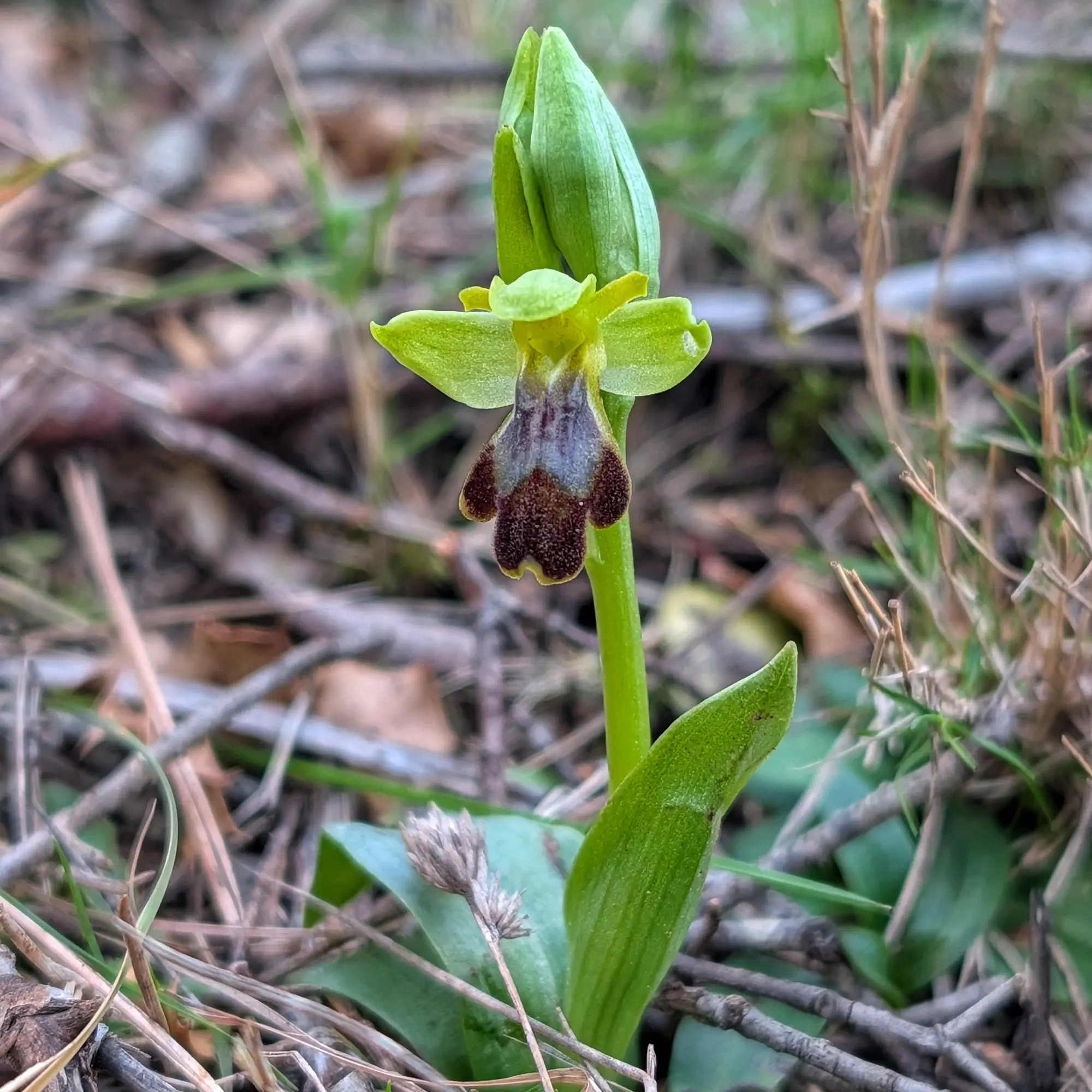
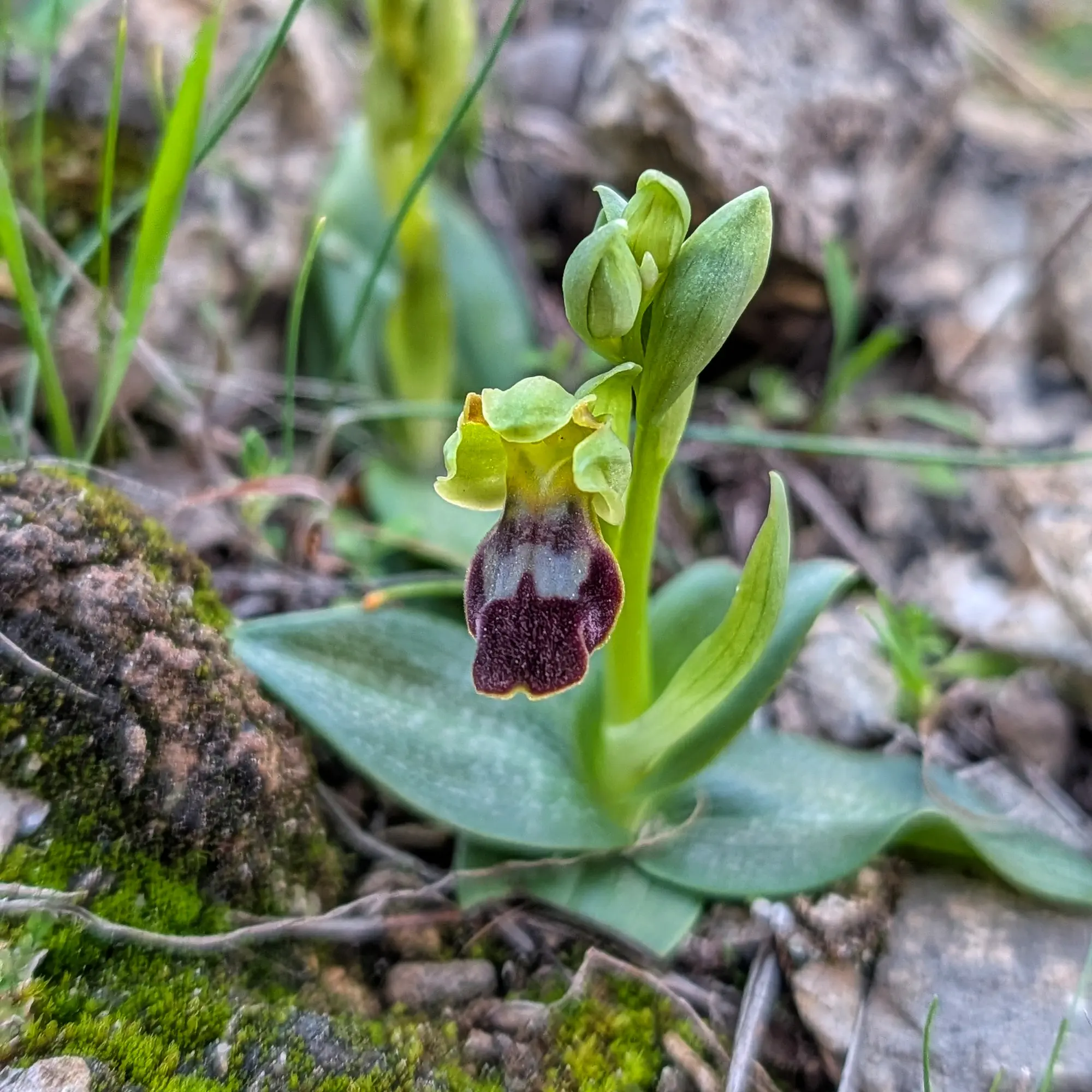
Morphological description: This orchid is a terrestrial plant with a stem that can reach up to 30-40 cm in height. It forms a basal rosette of oblong-lanceolate leaves, bluish-green in color, which develop in autumn and can withstand frosts.
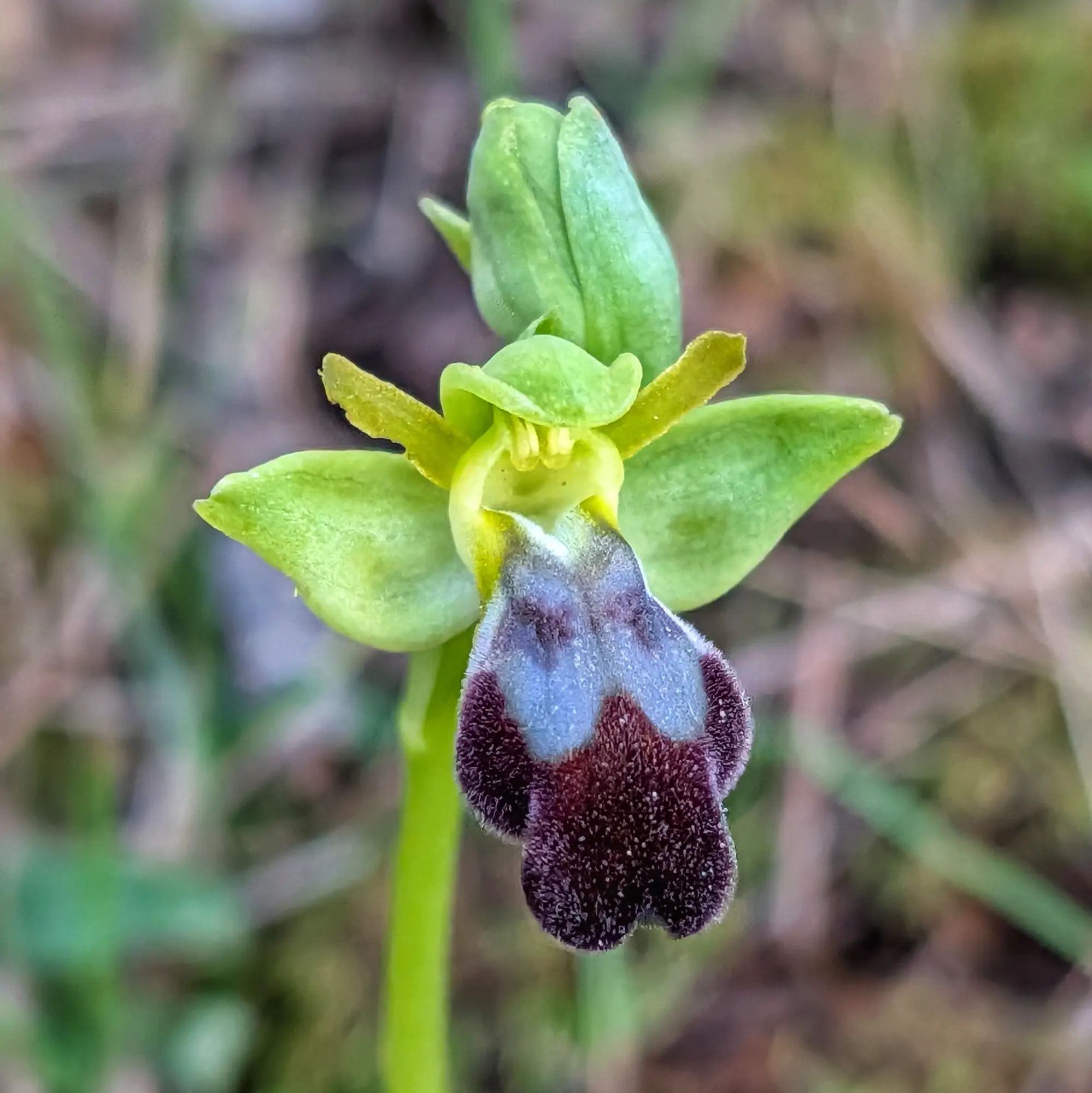
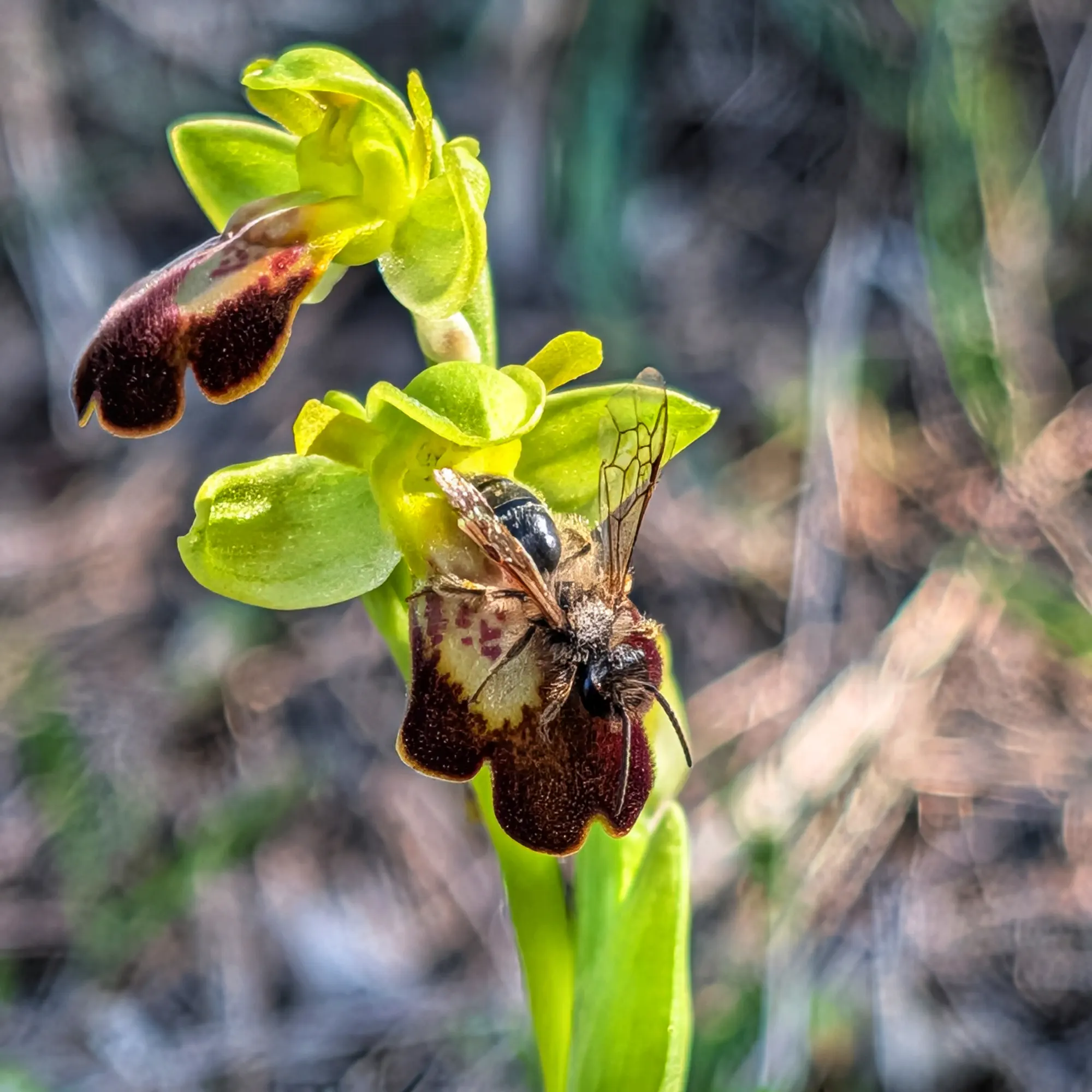
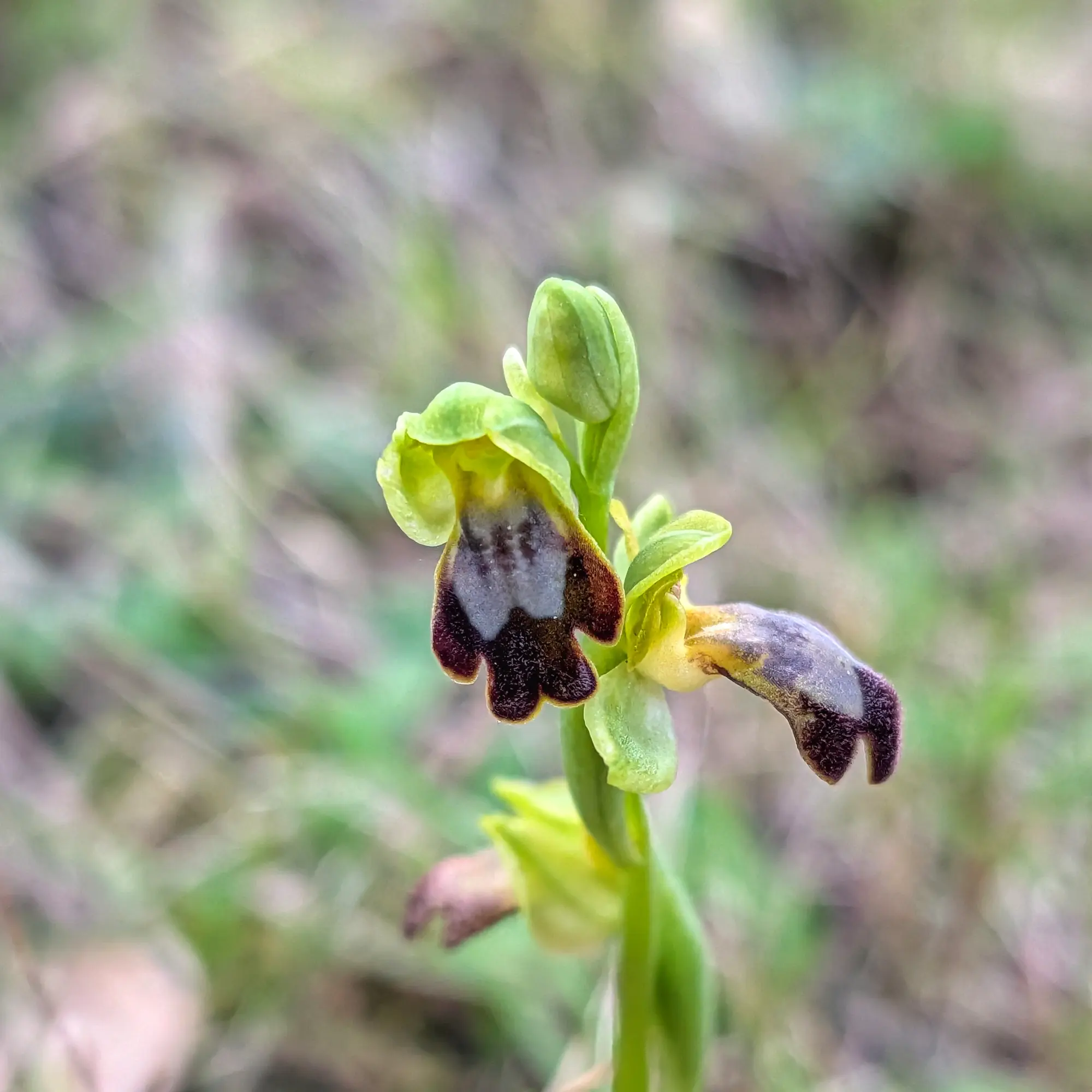
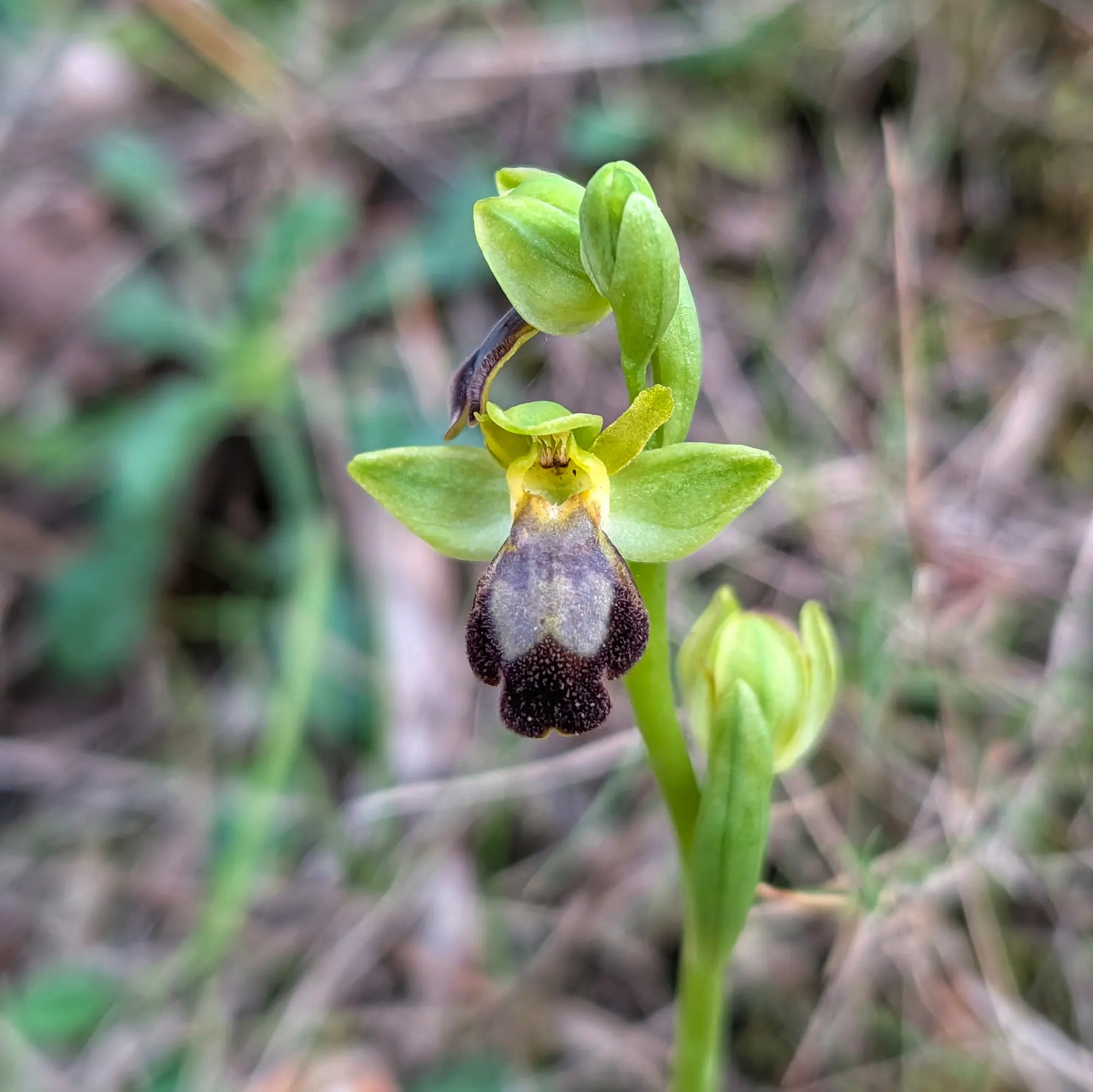
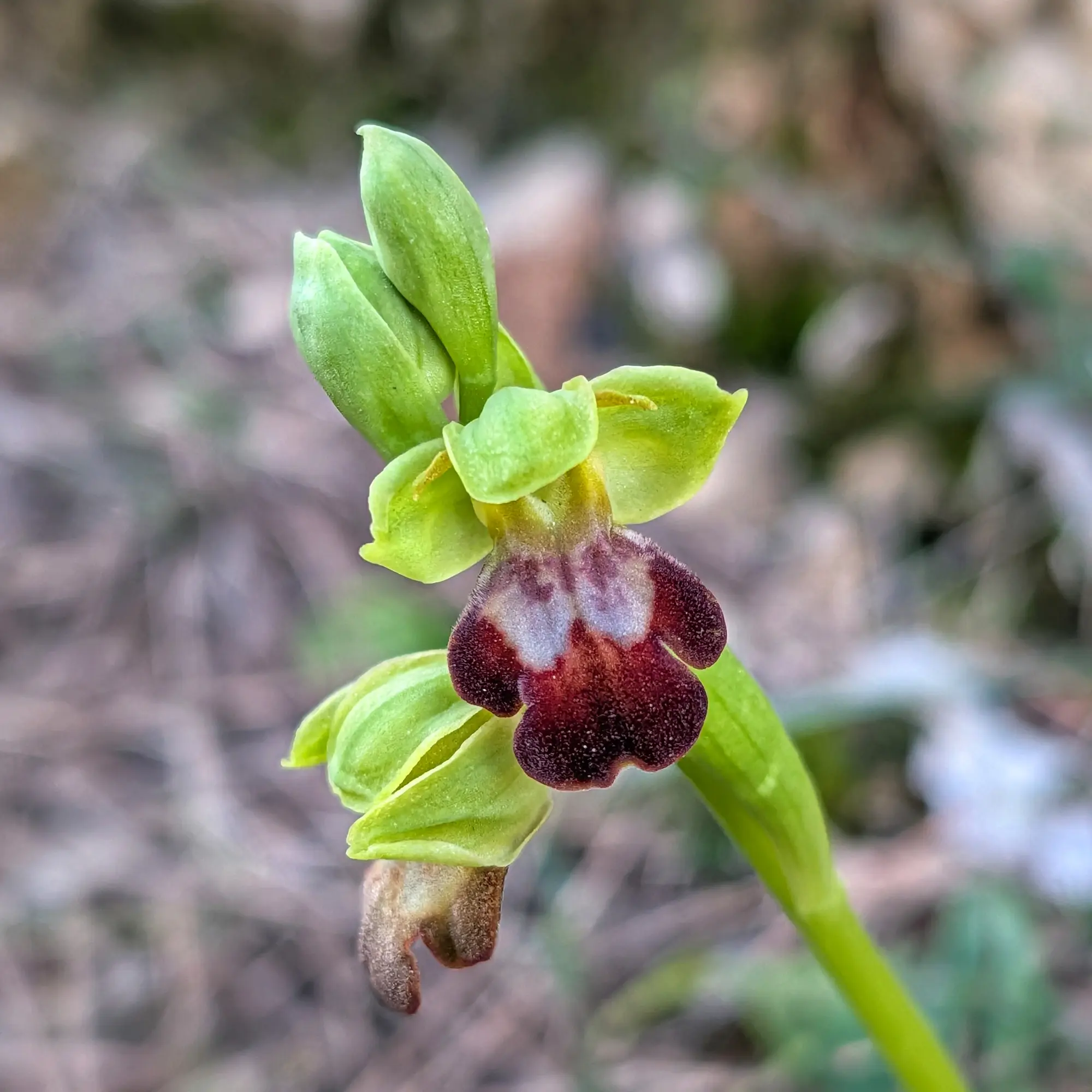
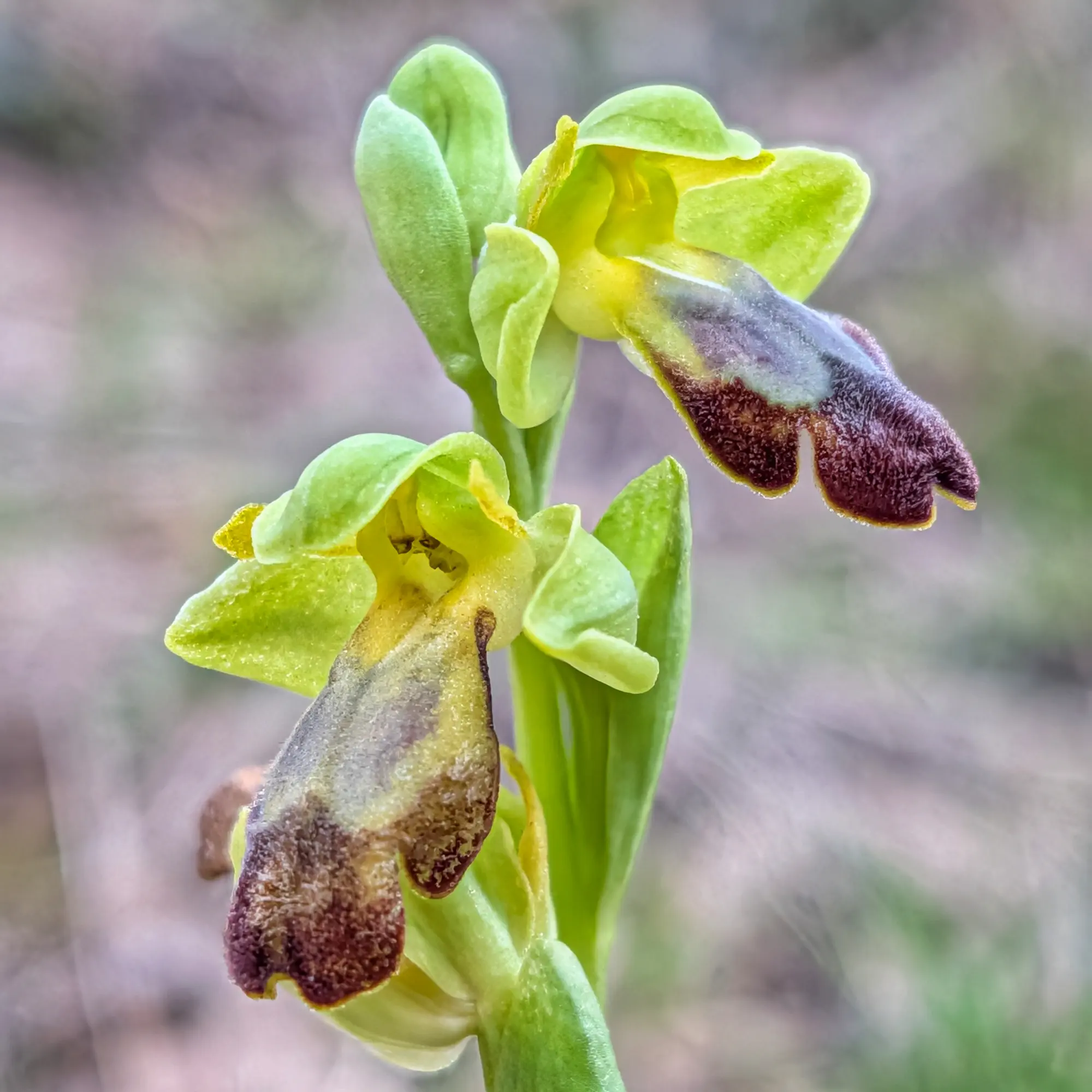
The flower features a labellum 13 to 18 mm long, dark brown in color, with three fairly flat lobes. The pubescence of the labellum is short and velvety, without whitish-tipped hairs. The upper part of the labellum displays a very marked furrow (ocellus) and a central bluish-grey or greyish macula, often "W"-shaped or resembling two lunules, with possible reddish or marbled tones. The base of the labellum is straight or only slightly angled, and it presents strong basal callosities. The sepals are green, and the smaller lateral petals are also greenish or brownish.
Habitat and distribution: O. forestieri is primarily found in calcareous and marly soils, in sunny or semi-shaded locations such as meadows, garrigues (Mediterranean scrublands), forest clearings (pine forests), olive groves, and field margins. Its distribution is Mediterranean, ranging from the Canary Islands to the Caspian Sea, including the Iberian Peninsula, southern France, and the Balearic Islands. In Spain, its presence is noted in Catalonia (Bages, Empordà, Tarragona), the Balearic Islands (Mallorca), and Murcia.
Pollination and life cycle: Like other Ophrys species, it employs a system of sexual deception, mimicking the scent, color, and shape of the female pollinator to attract males for pseudocopulation. Specific pollinators identified include the bee Colletes cunicularis (in Bages) and Andrena nigroaenea (in Mallorca), among other Andrena species. The plant remains dormant as a tuber underground during summer, sprouts in late summer or early autumn, and flowers very early, from December/January to April, with a peak in February and March. Fertilization leads to a capsule containing thousands of tiny seeds. It depends on mycorrhizal fungi for germination and development, making successful transplantation impossible.
Gallery
Related observations
Discover the observations I've made of this species.