Ophrys insectifera
About the Orchid
The Ophrys insectifera, commonly known as the Fly orchid, is a perennial terrestrial orchid native to Europe, famous for its floral mimicry. Its scientific epithet, insectifera, means "insect-bearing," an allusion to its amazing reproductive strategy.
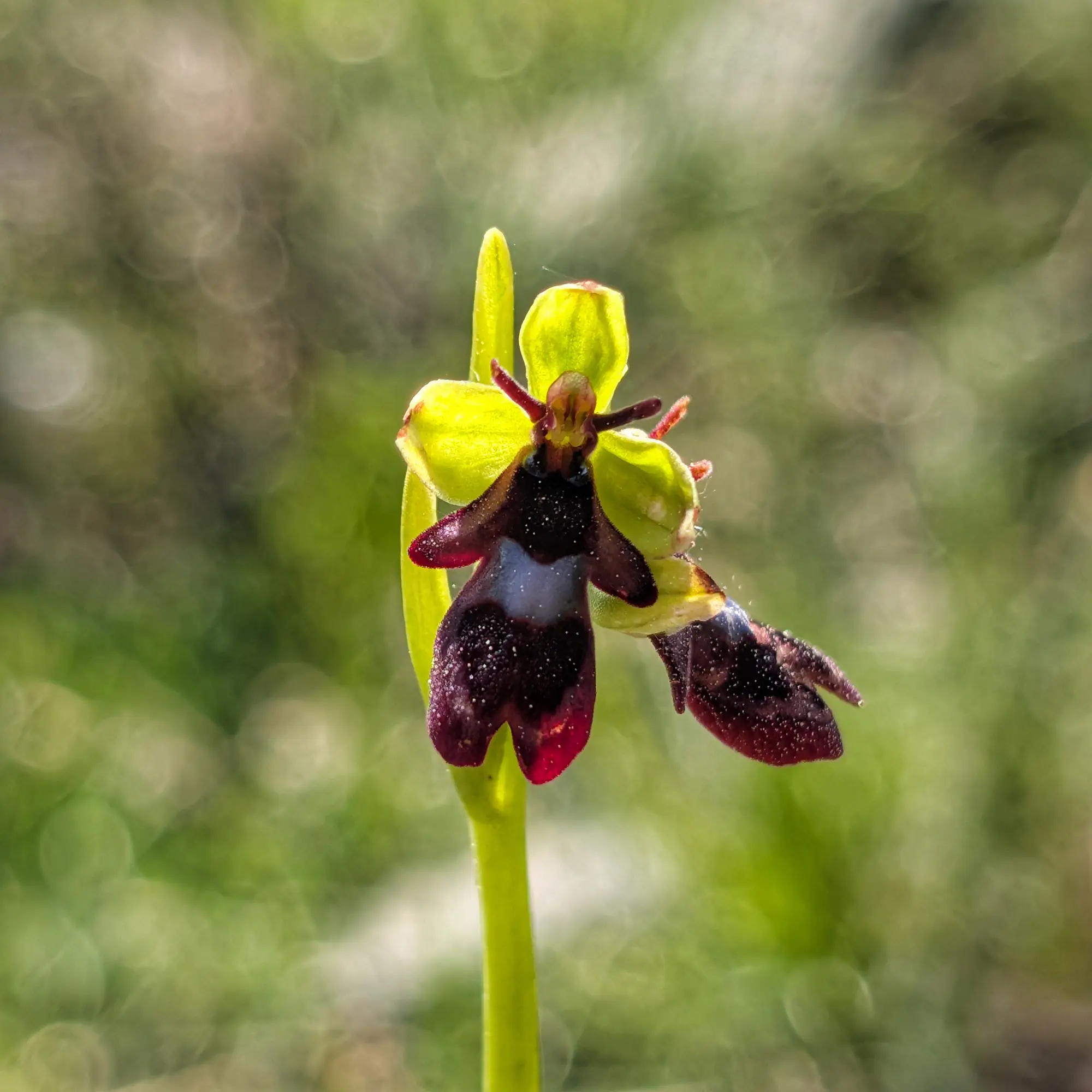
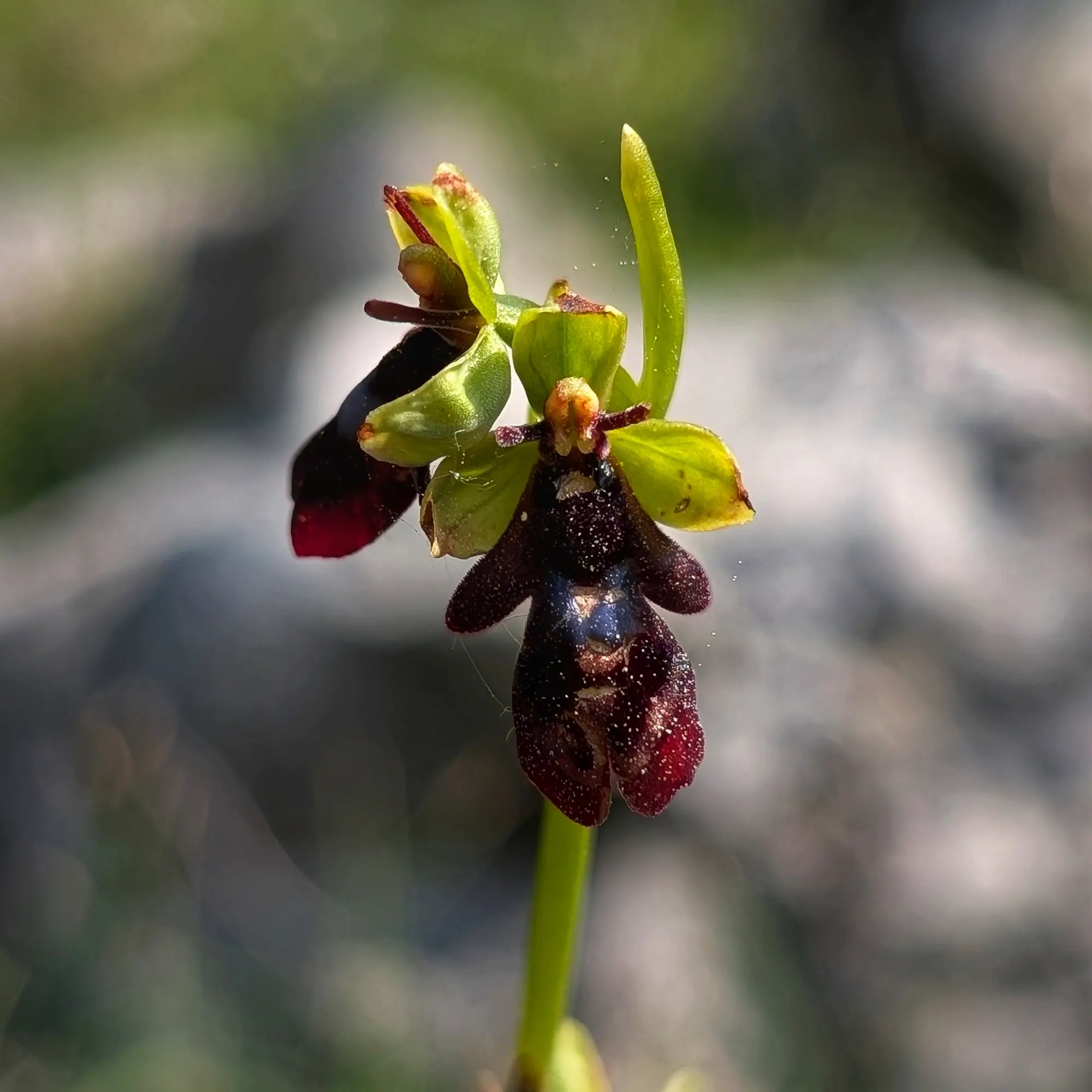
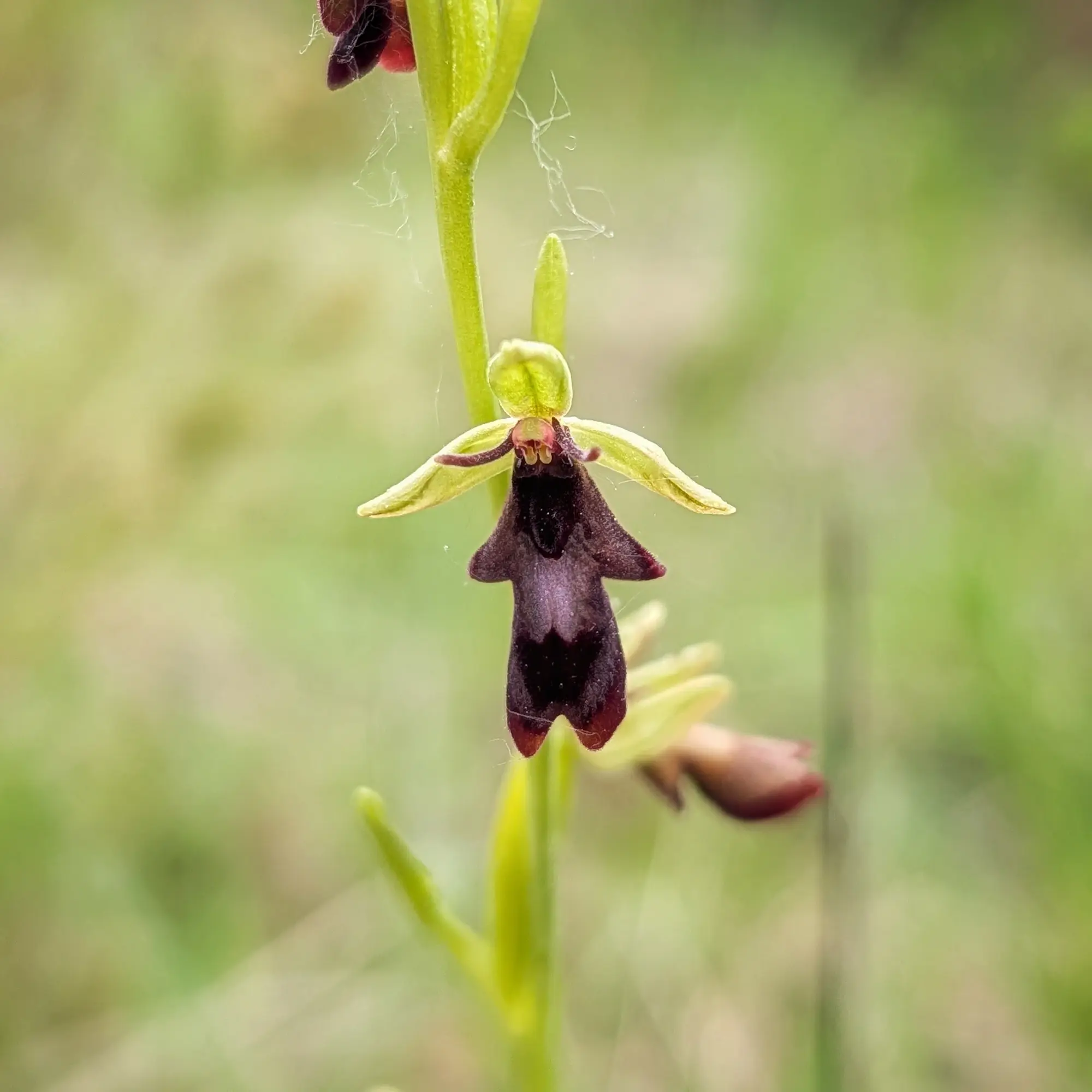
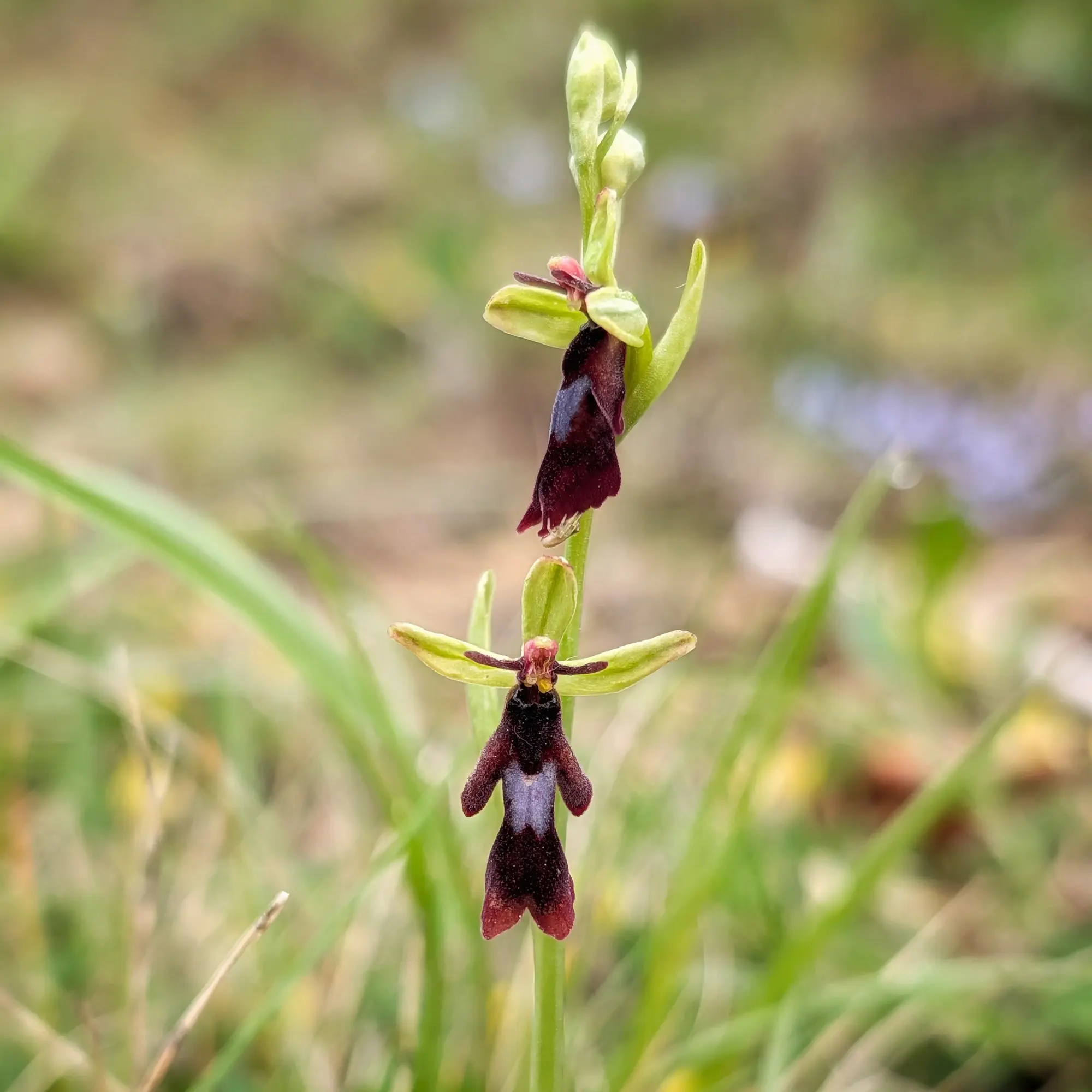
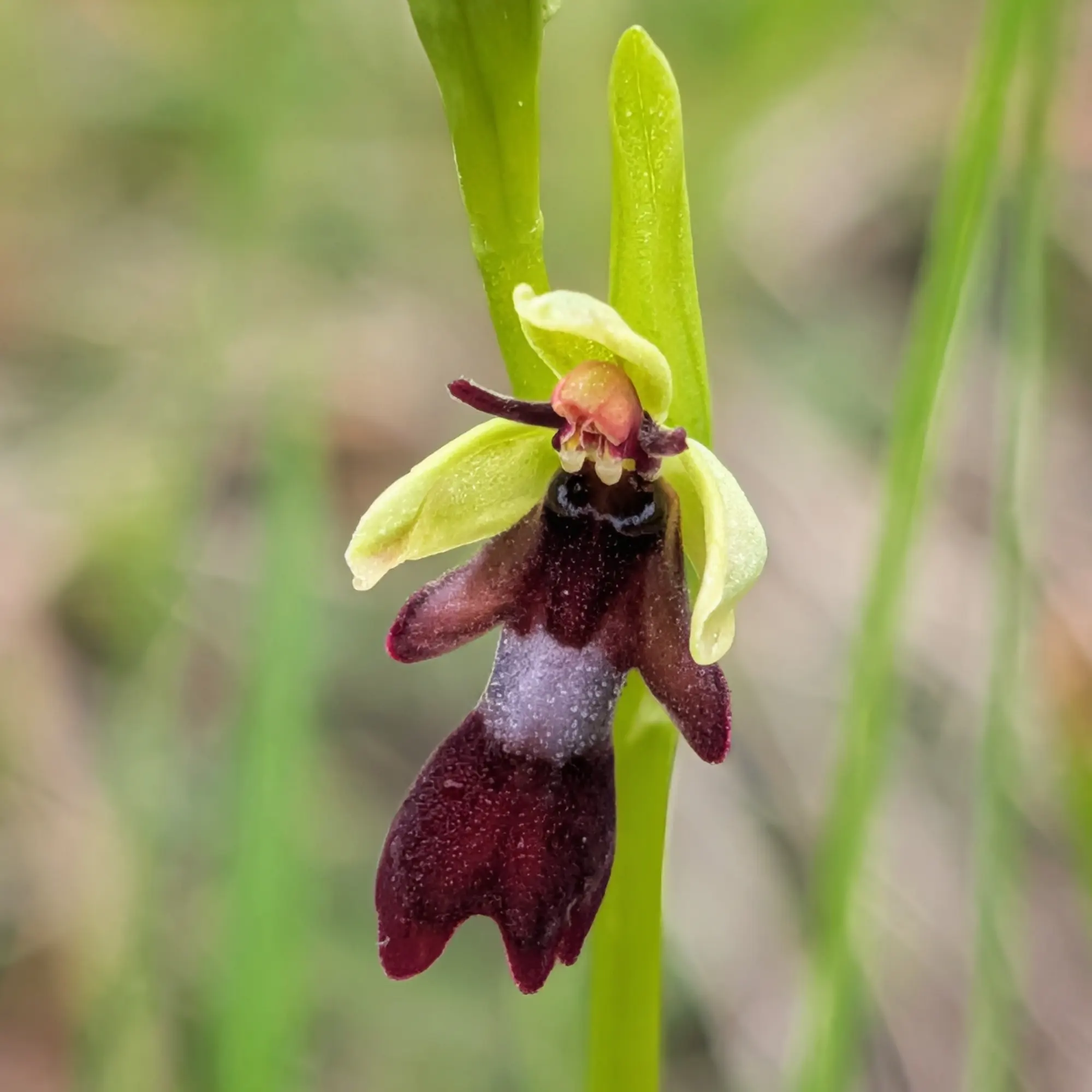
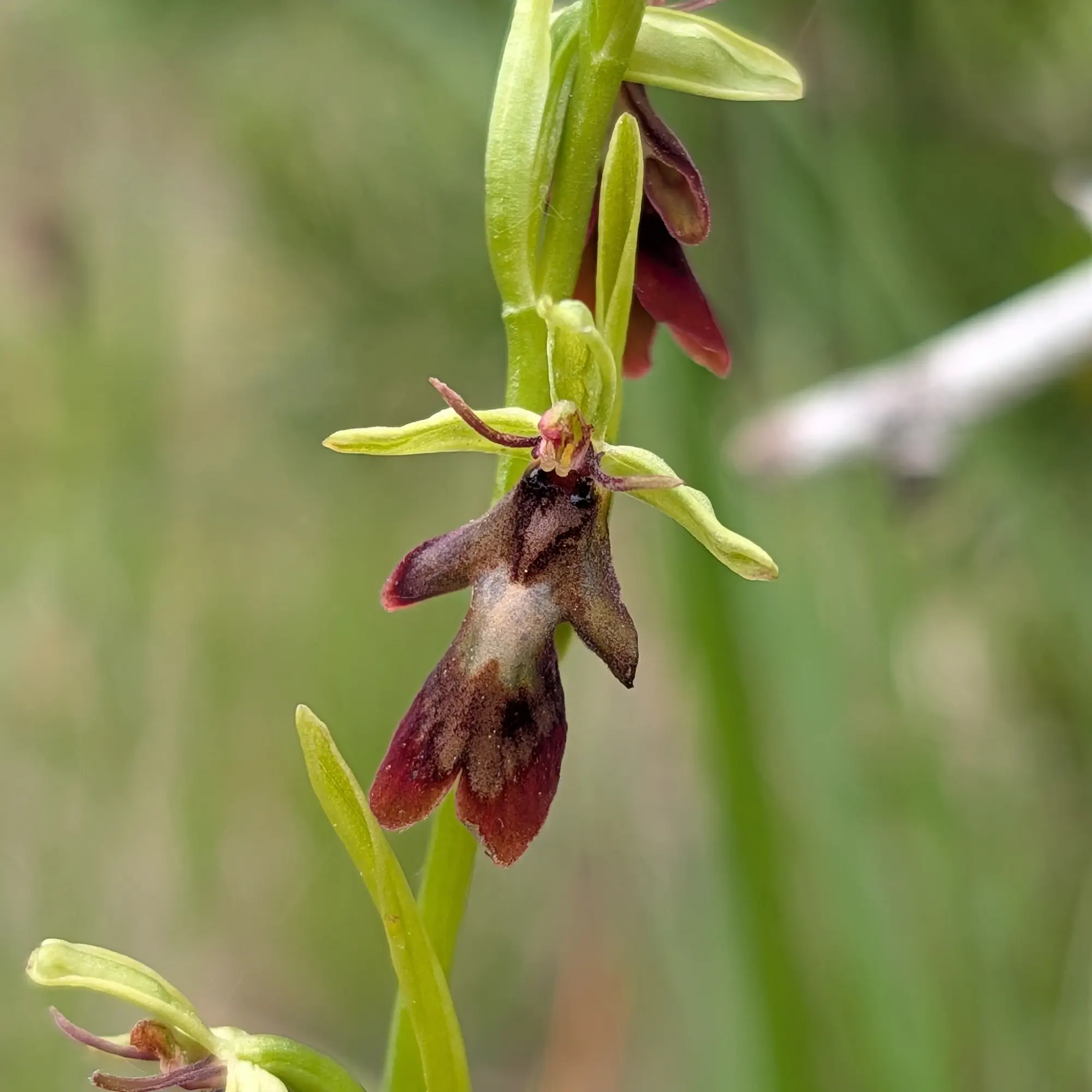
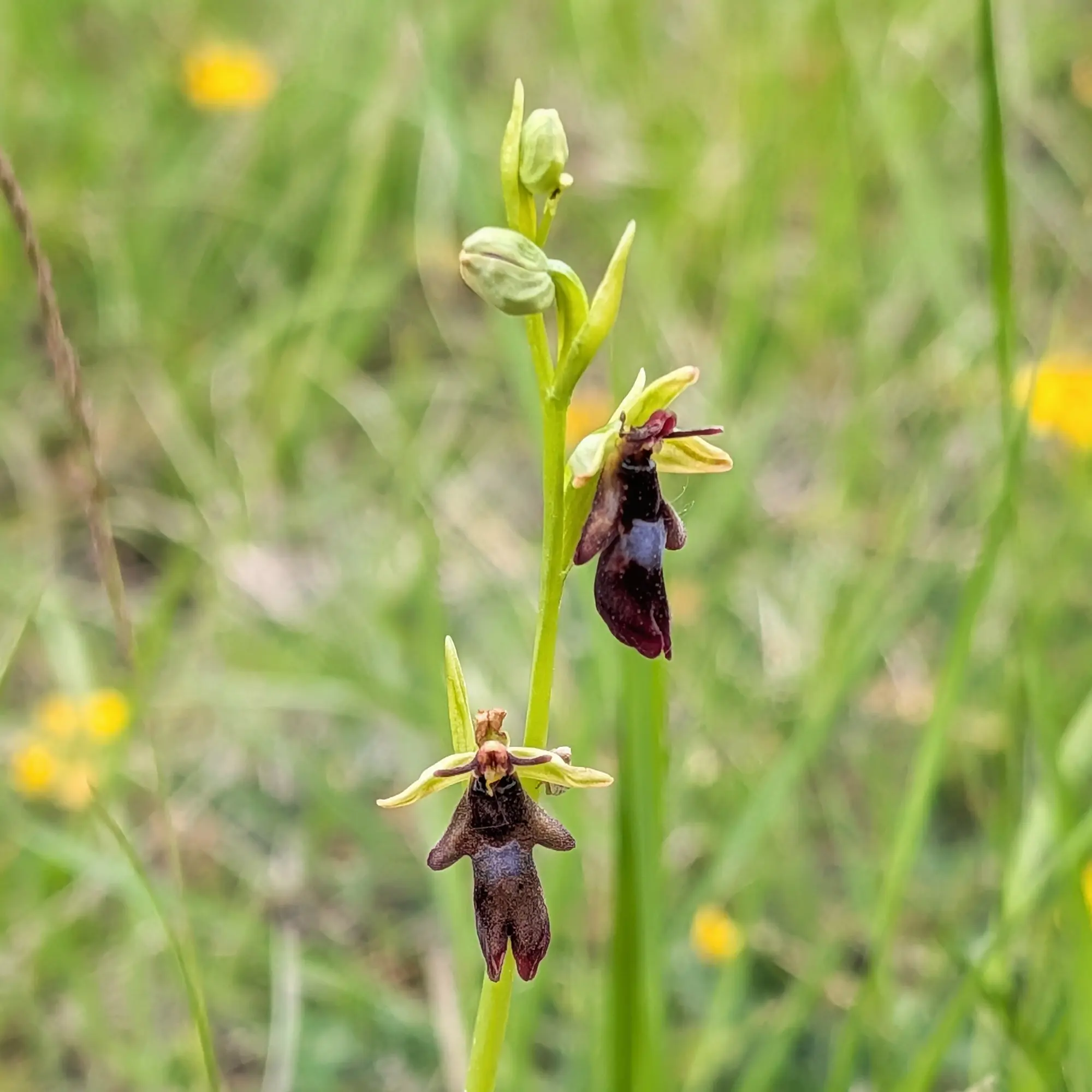
Morphological description: It is a slender, tuberous plant (15-60 cm). Its flowers, arranged in a loose spike (1-10 flowers), perfectly mimic the appearance of an insect (a fly). The outer sepals are greenish, while the inner petals are very narrow and dark, simulating antennae. The labellum (lip) is elongated, dark (reddish-brown to black), and velvety in texture, with an iridescent central macula (purplish or blue) that mimics the sheen of an insect's wings.
Habitat and ecology: This is a hygrophilous plant that prefers calcareous, humid, and alkaline soils. It inhabits fresh meadows, rush beds, scrub, and forests (beech, pine, or riparian forests), and is found in Northern and Eastern Spain, including Catalonia.
Reproducció and biology: O. insectifera is a classic example of sexual deception (pseudocopulation). The flower releases a fragrance that mimics the sexual pheromones of the female pollinator insect, a male digger wasp (Argogorytes), deceiving it into attempting copulation with the labellum and ensuring pollination. It flowers in Catalonia between April and May.
Conservation: Although classified as "least-concern" globally, it is considered a protected species in Spain and is listed as "vulnerable" in some autonomous communities, mainly due to the destruction of wetlands and the conversion of broadleaf forests to conifers.
Gallery

Related observations
Discover the observations I've made of this species.