Ophrys lutea
About the Orchid
The Ophrys lutea, commonly known as the Yellow bee-orchid, is a herbaceous geophyte (with underground storage organs) belonging to the Orchidaceae family. It resprouts annually from two or three subglobose subterranean tubers, being an orchid with great ornamental potential and visual appeal.
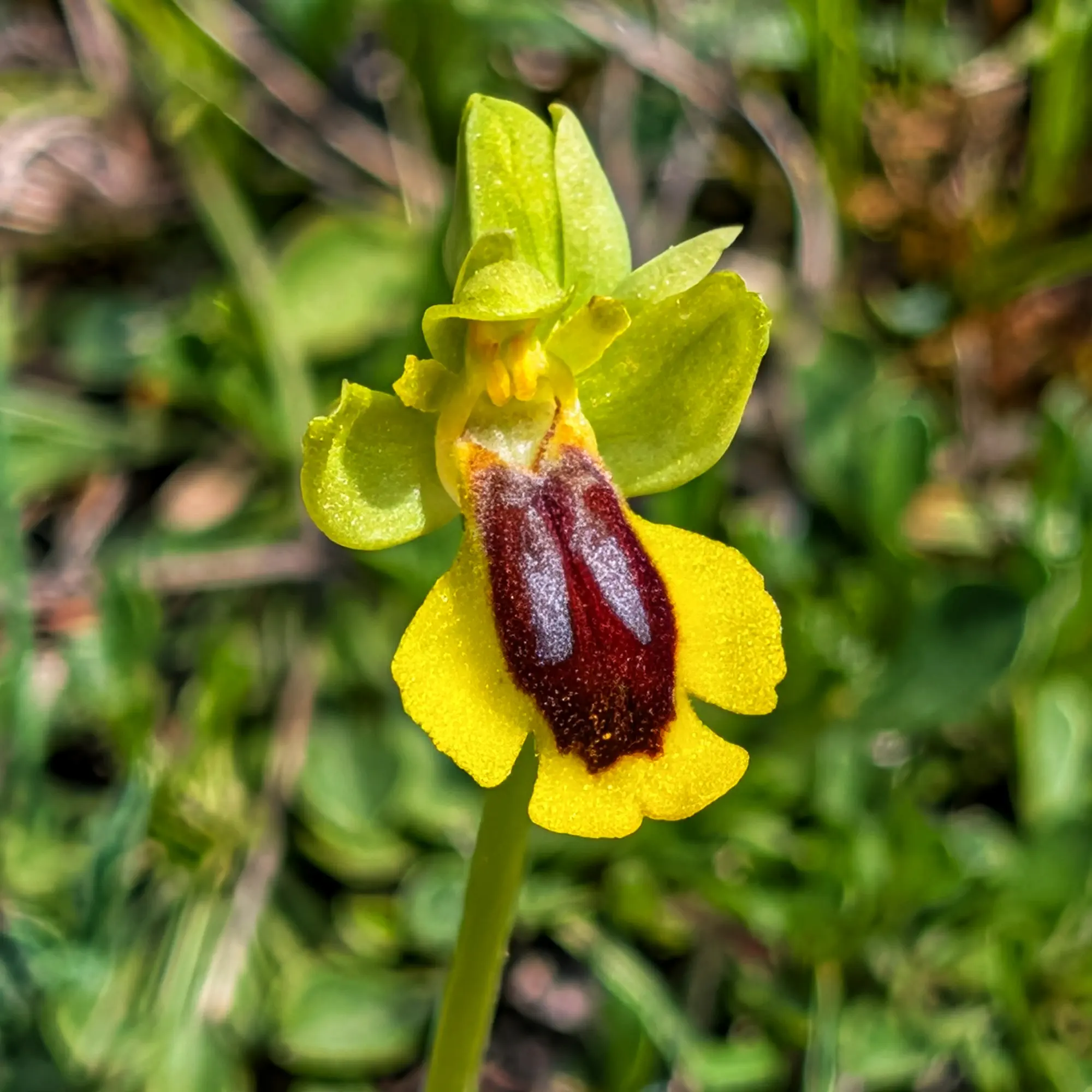
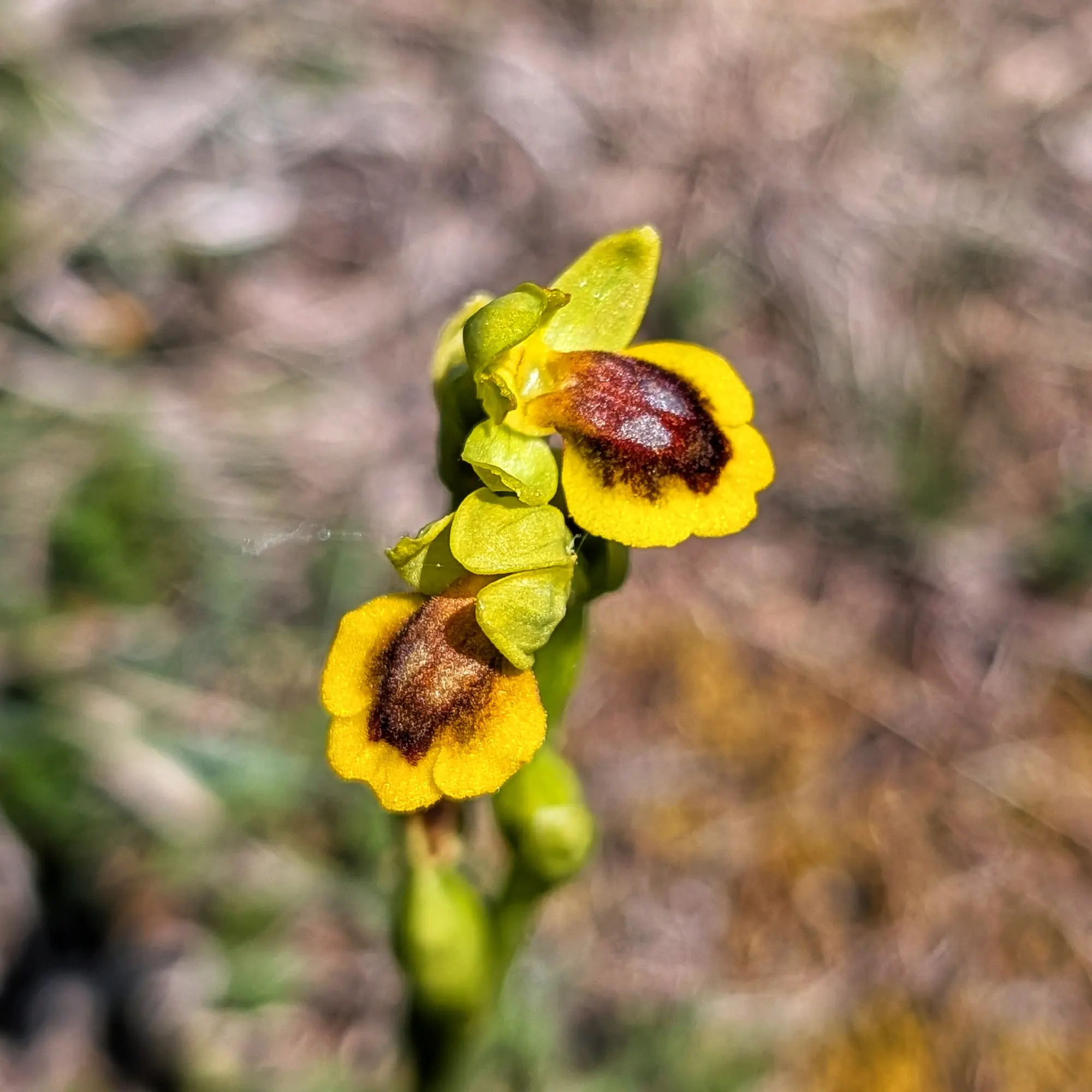
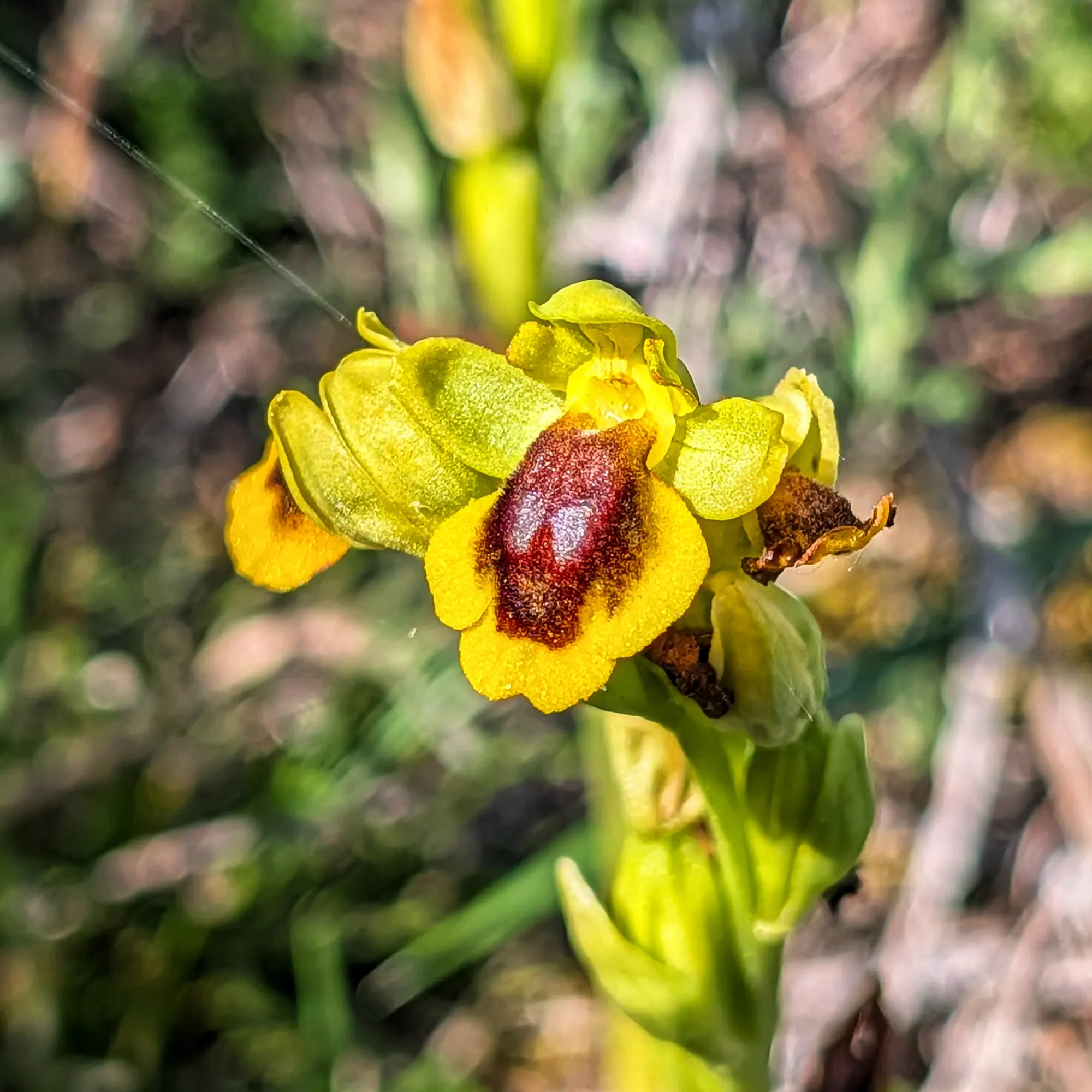
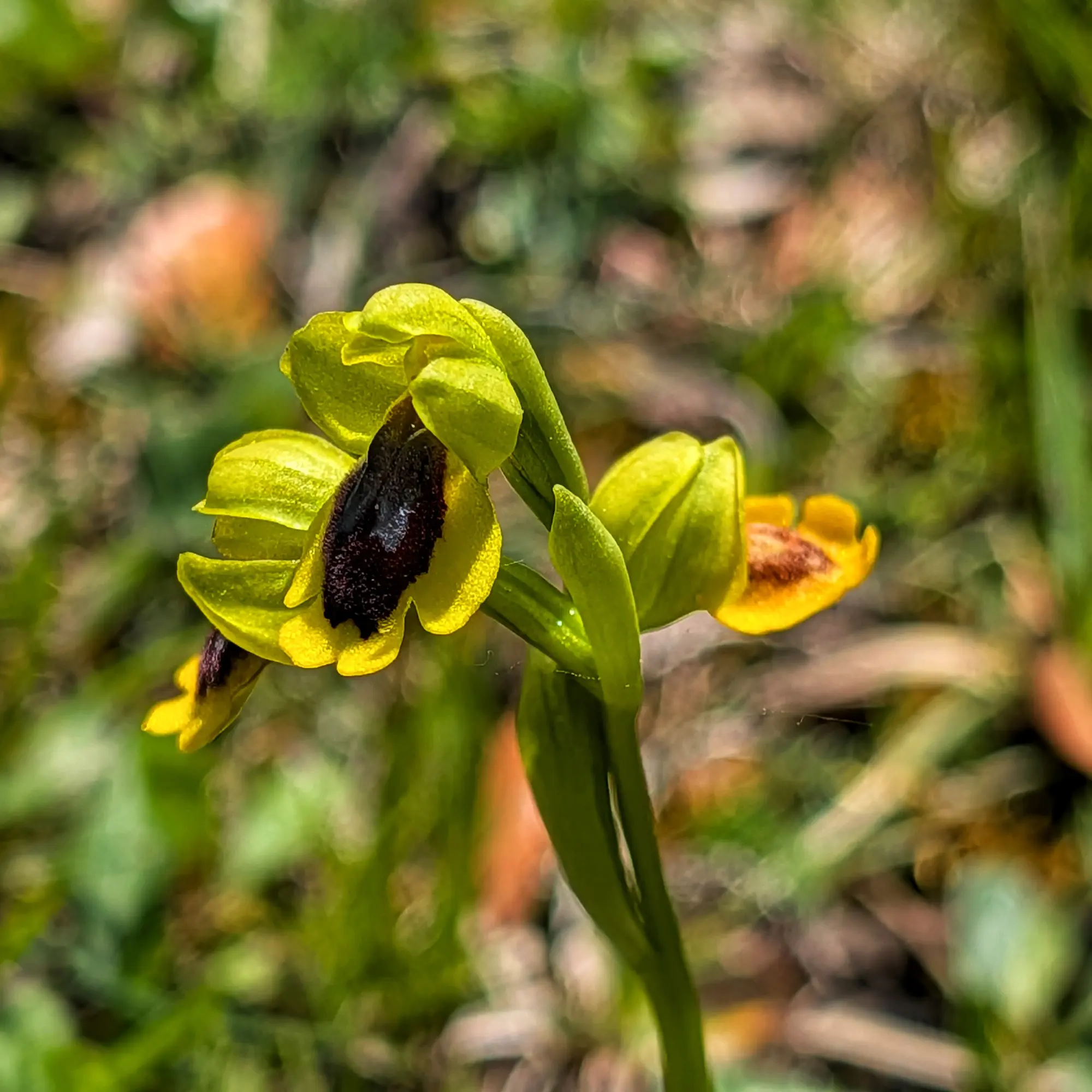
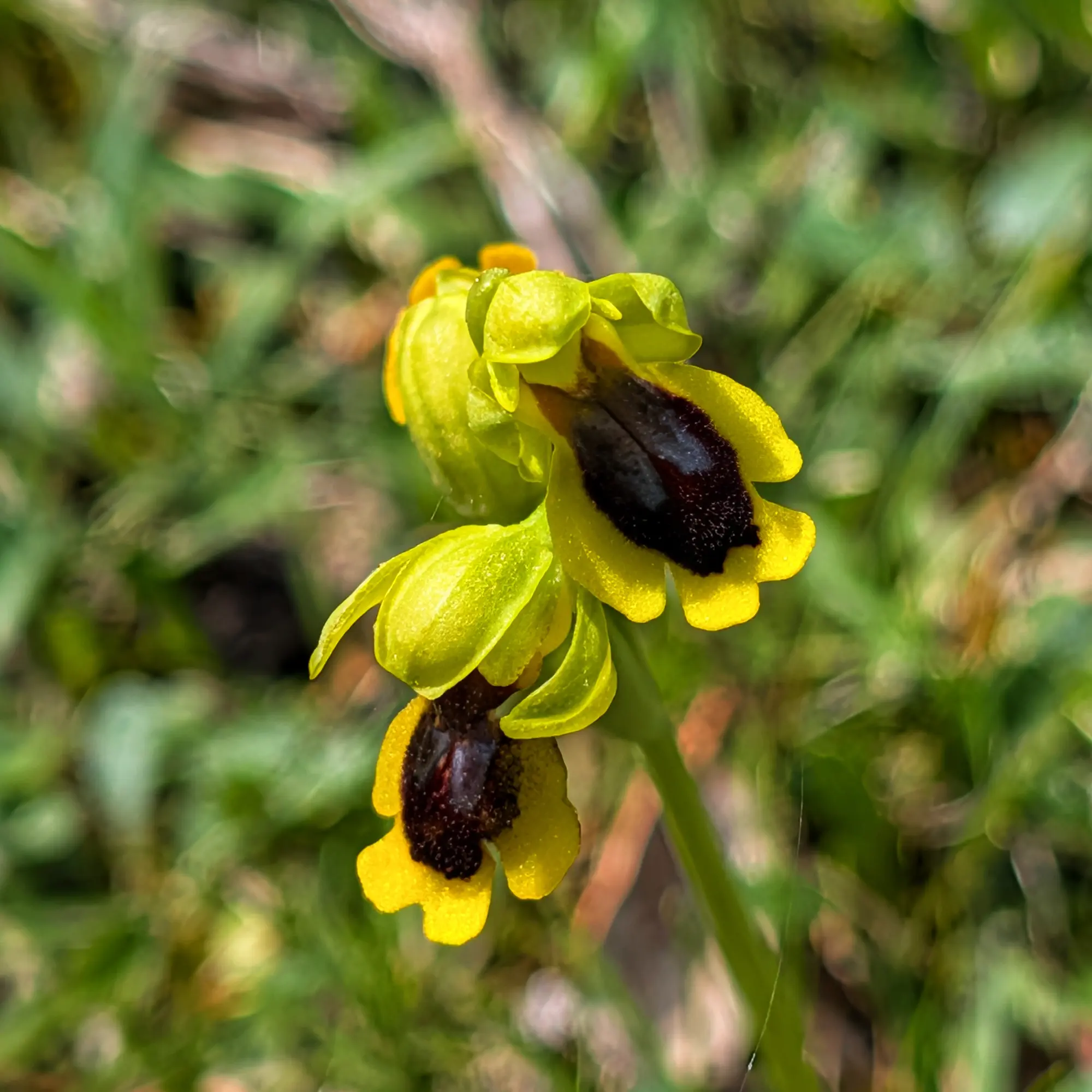
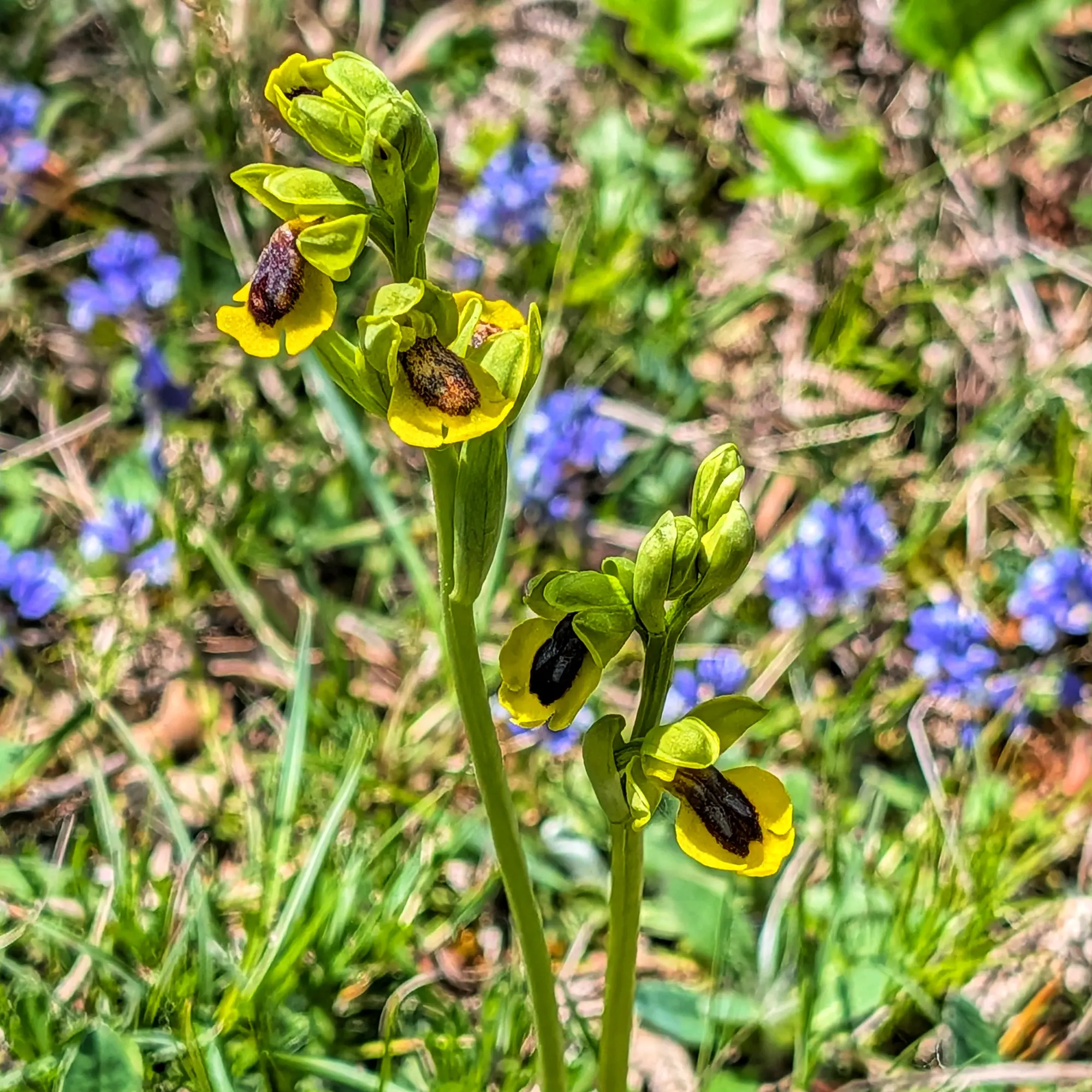
Morphological description: Its basal leaves are 5 to 9 cm long and ovate or ovate-lanceolate. The inflorescence is lax, grouping 1 to 12 hermaphroditic flowers without radial symmetry. The lateral petals and sepals are yellowish-green. The most distinctive morphological element of the flower is the labellum (the central lower petal), which is large (9-18 mm x 10-15 mm), convex in the center, and bicolor. It features a dark central macula of purplish-brown or reddish-black and grey, surrounded by a wide marginal stripe (3-6 mm) of intense yellow. Unlike the subspecies Ophrys lutea minor, Ophrys lutea has a wider yellow margin, a slightly larger and geniculate labellum, and the dark macula is exclusively located in the central part. Its fruit is a capsule containing tiny seeds only 0.2-0.3 mm.
Life cycle and pollination: It flowers during spring, mainly between February and June. Its minuscule seeds, practically without reserves, are completely dependent on a symbiotic relationship with mycorrhizal fungi for germination and initial development (protocorm phase). Pollination is primarily carried out by male Andrena bees (such as A. cinerea, A. humilis, A. tibialis) through the mechanism of pseudocopulation or sexual deception. The flower visually and chemically mimics the female bee to attract the male. Interestingly, the bees position themselves inverted on the labellum, collecting the pollen with their abdomen.
Habitat and distribution: It is a versatile plant that enjoys growing in full sun, shade, or partial shade. It inhabits dry pastures, clearings in scrub, and forests (such as holm oak forests, garrigue, or pine forests), edges of olive groves, and stony places. It tolerates acidic and basic soils but prefers basic soils of clay or marl type, and even thrives in gypsum outcrops. It grows at altitudes from sea level up to 1250-1300 meters. Its distribution is wide throughout the Mediterranean region, being frequent in almost all of the Iberian Peninsula (except the northwest) and in the Balearic Islands. Beyond that, its presence extends to France, Corsica, Italy, Sardinia, Sicily, the Balkans, Greece, North Africa (Morocco, Algeria, Tunisia, and Libya) and the Middle East (up to Cyprus, Syria, and Israel).
Conservation status: Generally, it is not a rare taxon. According to the IUCN Red List, the conservation status of this species is classified as Least Concern (LC). However, its legislation varies locally to prevent ornamental exploitation: in the Murcia Region, it is a taxon with regulated use, and in the Balearic Islands, it is cataloged as a taxon of Special Interest (IE).
Gallery
Related observations
Discover the observations I've made of this species.