Ophrys passionis
About the Orchid
The Ophrys passionis, commonly known as the Passion Bee Orchid, is a terrestrial orchid abundant and frequent in areas such as Bages and the metropolitan area of Barcelona. It is sometimes classified as Ophrys sphegodes ssp. passionis. Its name, both scientific and common, refers to its peak flowering period, which usually coincides with the dates of Holy Week (the Passion). This taxon was first described by the botanist Sennen in 1926.
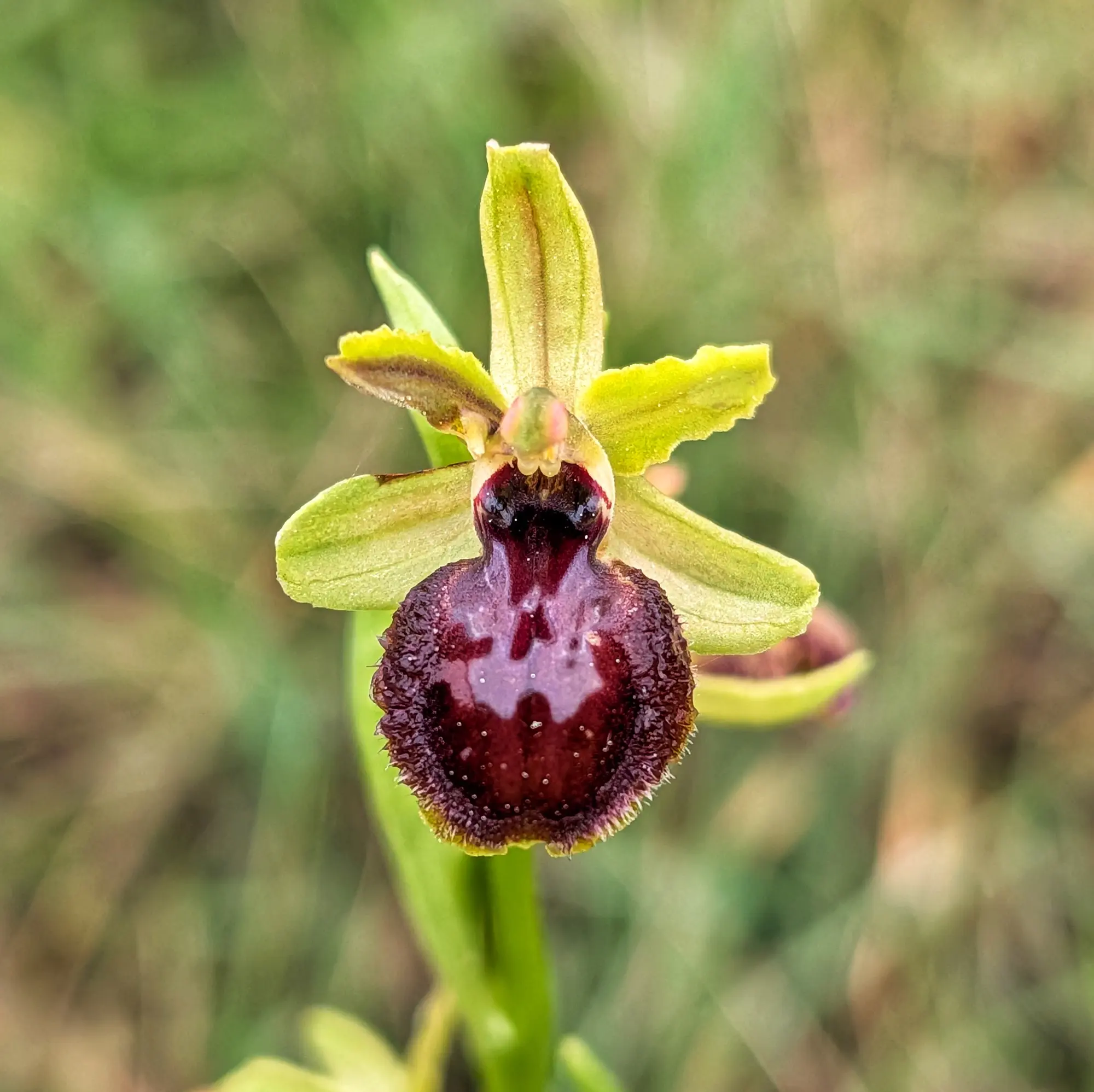
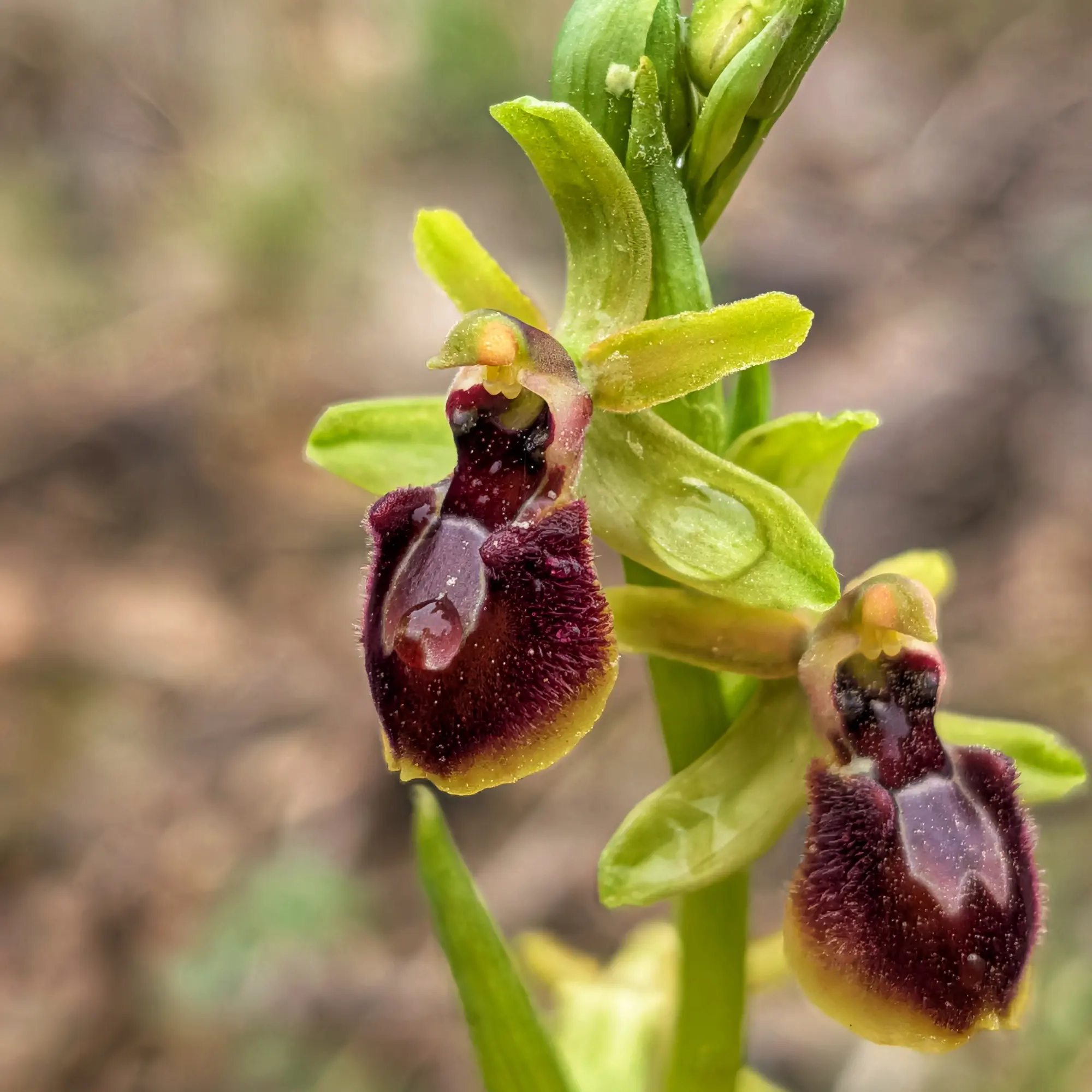
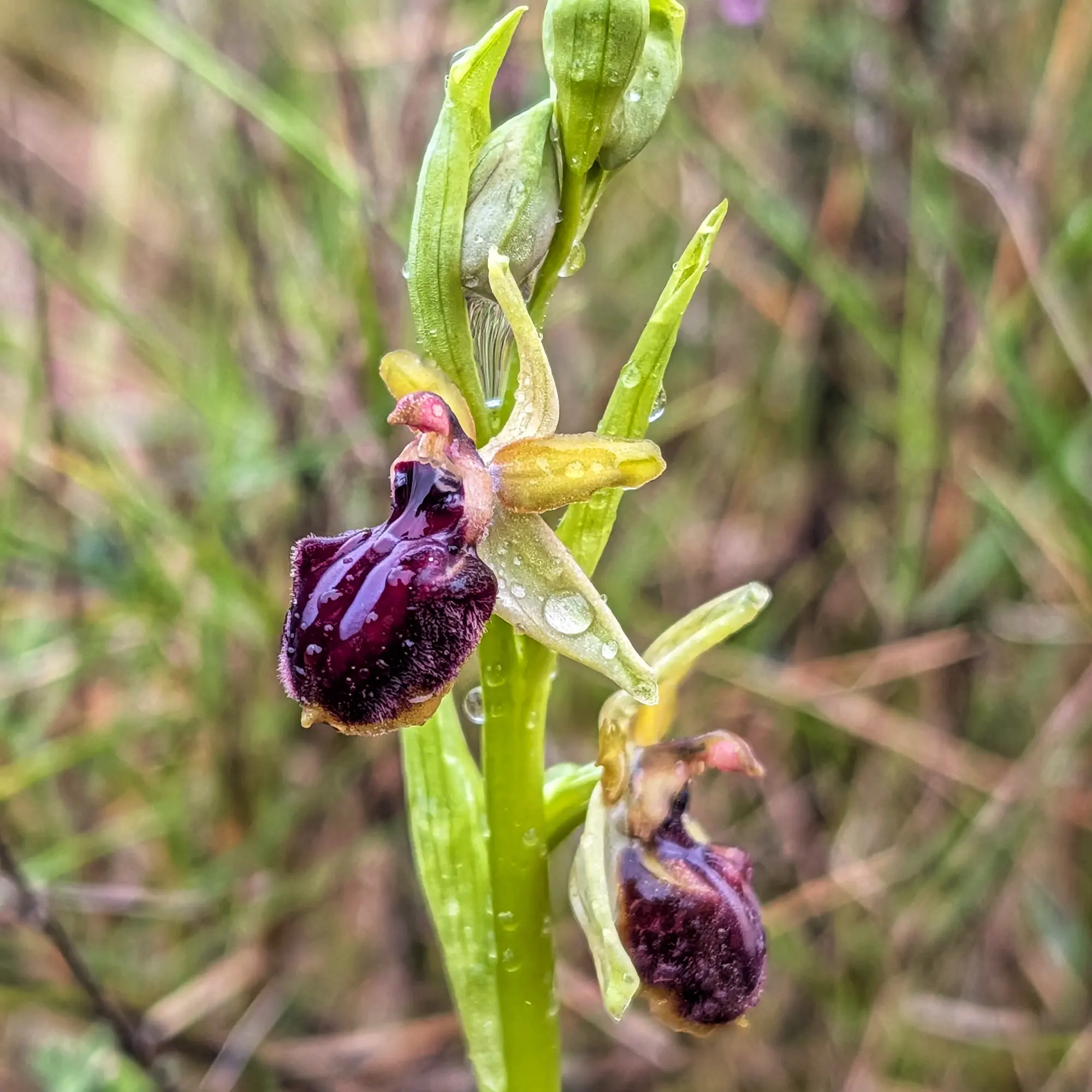
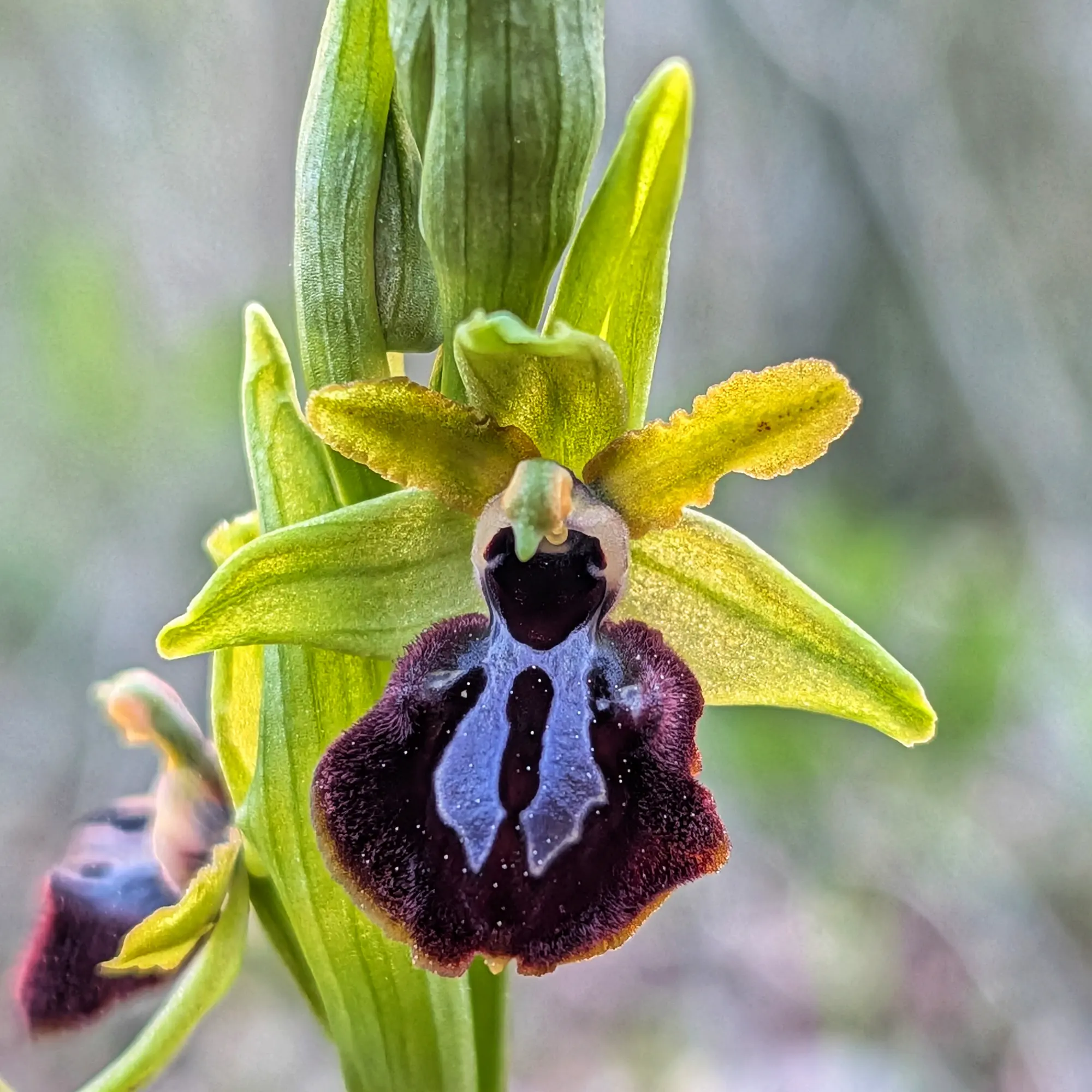
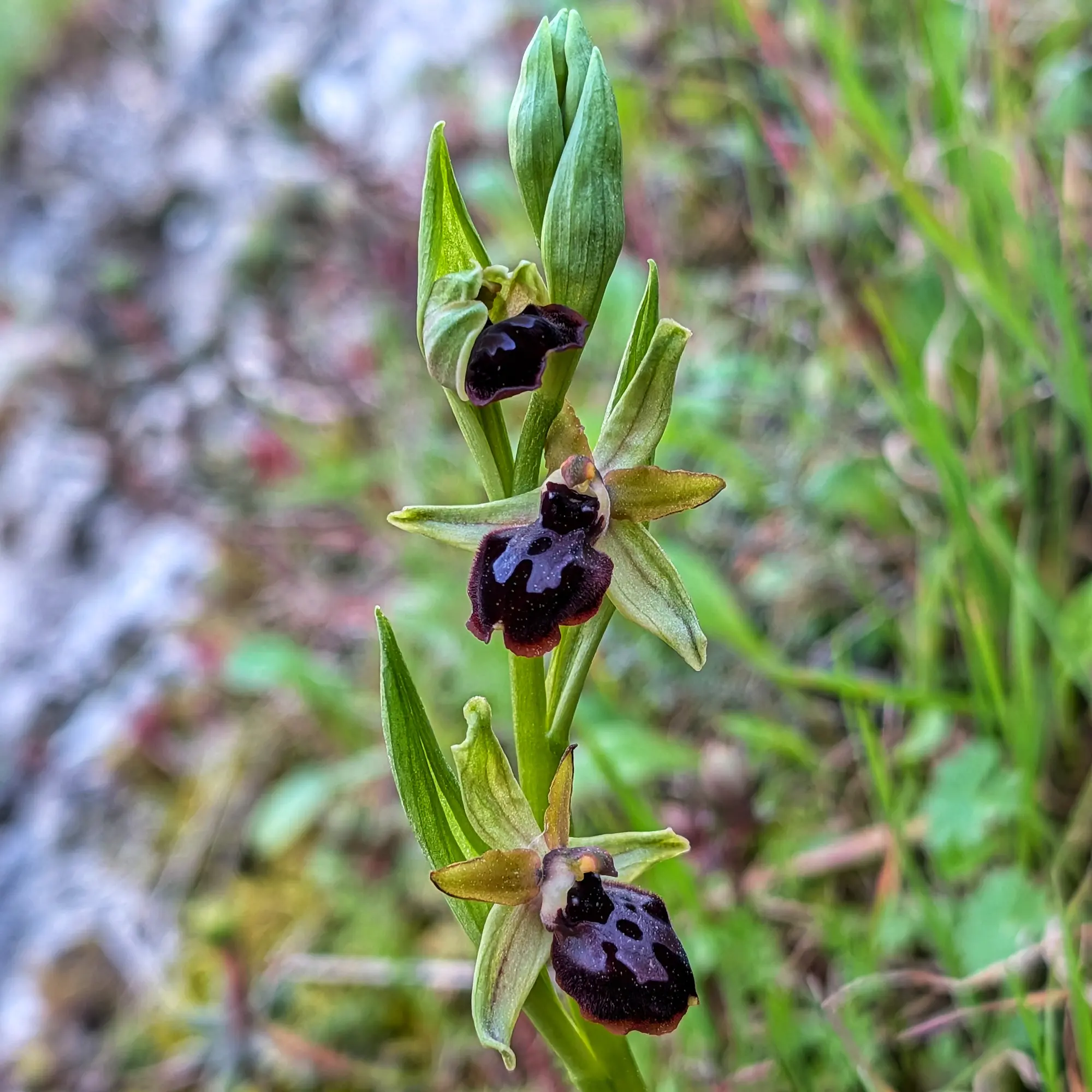
Morphological description: This plant measures between 10 and 30 cm in height, with an erect and simple stem arising from a small, globular subterranean tubercle. At its base, it has a rosette with a couple of small leaves close to the ground. Each plant produces about 5 flowers. The sepals and petals are greenish, although they can darken to brown or purplish tones. The inner petals are small, narrow, and sharp, mimicking an insect's antennae.
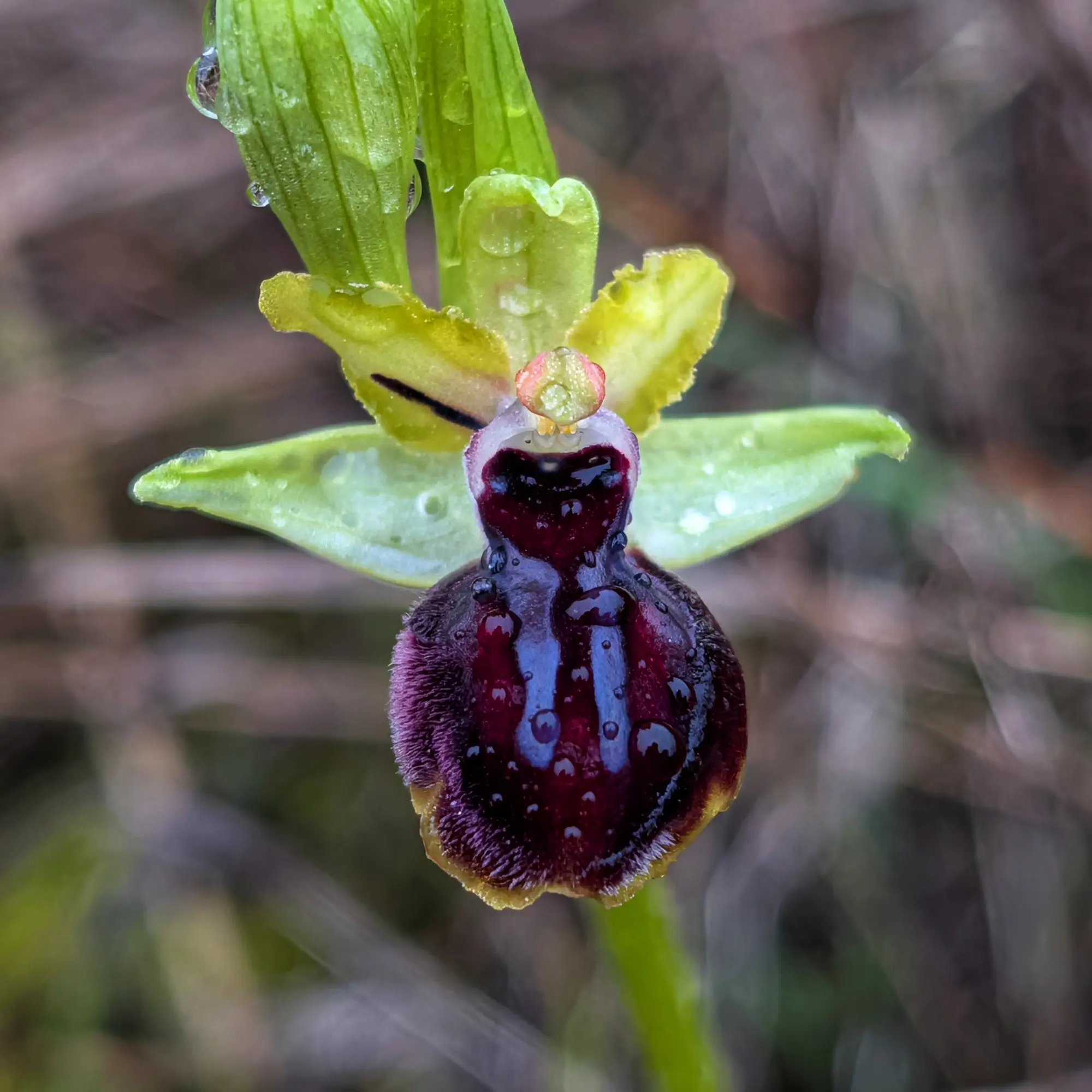
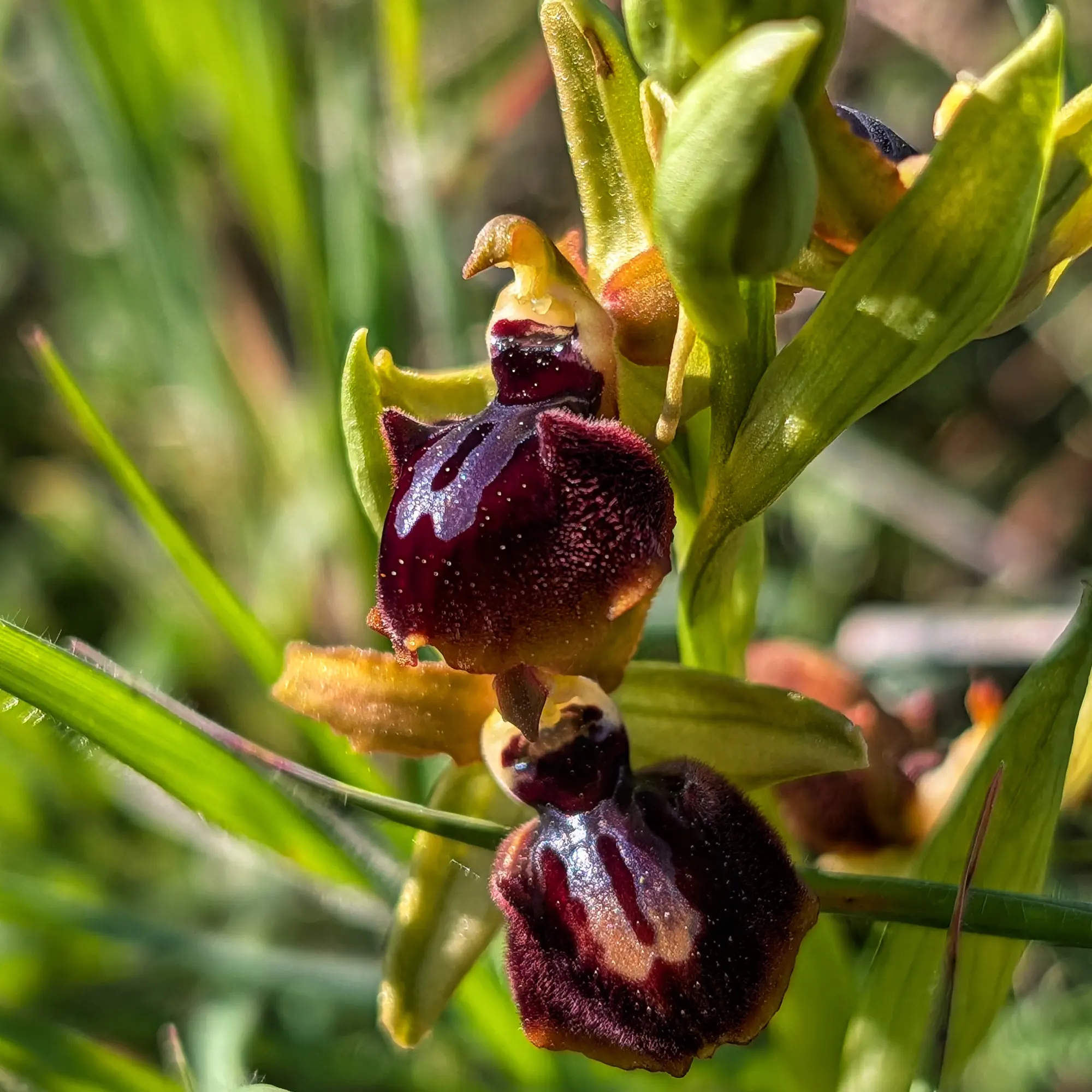
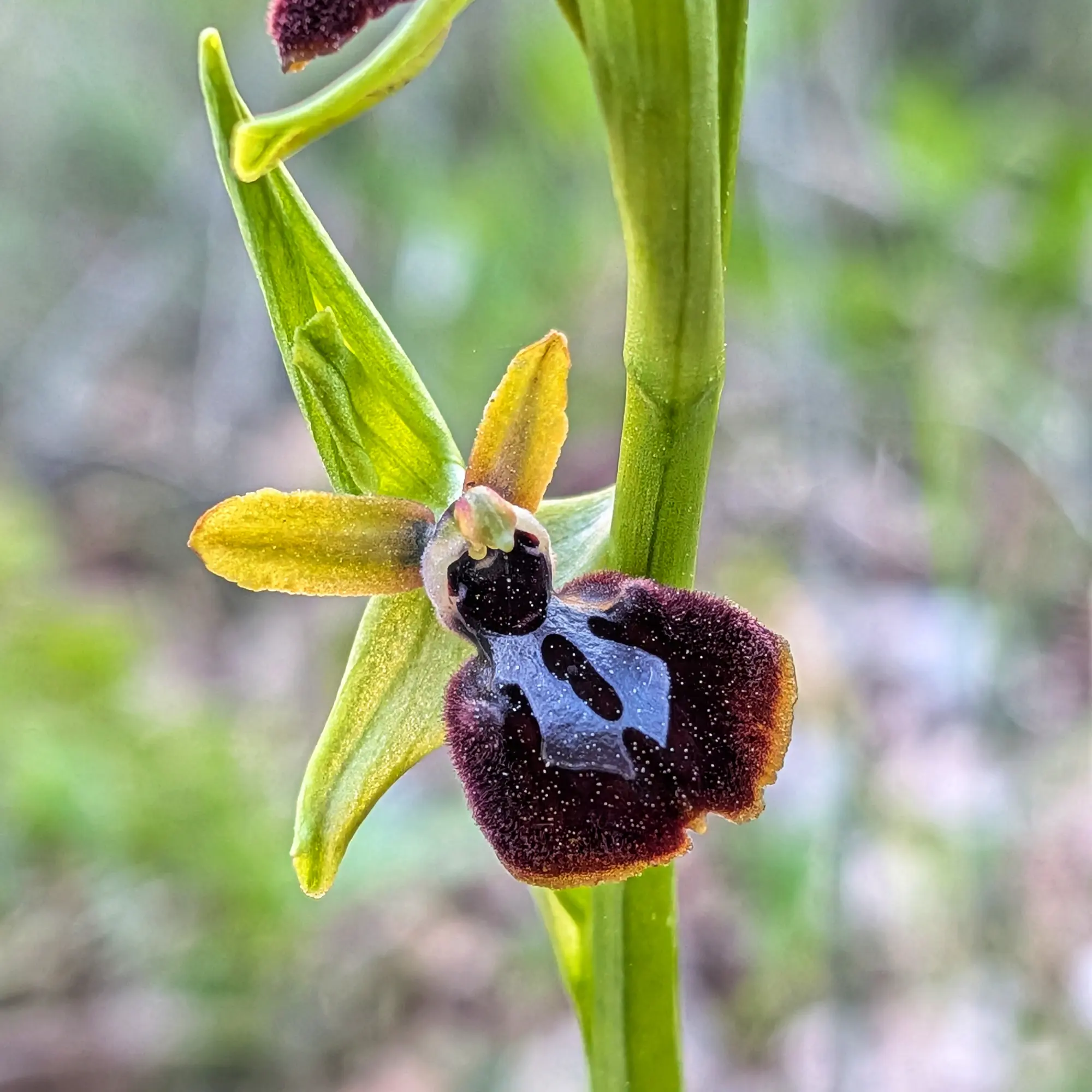
The most spectacular part is its large modified petal, the labellum. It is rounded, 9 to 14 mm long, and of a dark purplish-brown color, often ending in a small yellow appendix. Near its base, it features two horns or humps bordered by fine hairs. At the center of the labellum, there is a shiny pattern, called a macula or mirror, in the shape of an "H" or "π", framed by a paler yellow or orange margin. Unlike similar orchids, the vault of the central structure (gynostemium) and the stigmatic plate lack green pigmentation (they are white or carmine-tinted). The entire plant emits a soft aroma reminiscent of Fumaria flowers.
Life cycle and pollination: This orchid has a strict dependence on a symbiotic fungus (mycorrhiza) for its development, which is why it dies if transplantation is attempted. It is an early-flowering species, blooming from mid-March (or even February) to early May, and can extend until June in higher altitude areas. The Passion Bee Orchid employs a sophisticated system of "pseudocopulation" pollination. The flower's labellum mimics both the visual form and the fragrance (pheromones) of the female of its specific pollinator bee, the species Andrena carbonaria (also cited as Andrena pilipes). Deceived male insects attempt to copulate desperately with the flower, accidentally adhering pollen (aggregated into masses called pollinia) to themselves.
Habitat and distribution: It primarily requires sunny locations and calcareous soils. It typically grows in rosemary scrub, dry meadows, clearings, grasslands, and uncultivated stony hills. It can also adapt well to coastal environments, where it is found in gray dune systems and calcareous coastal pastures. Like the entire genus Ophrys, its origin is primarily Mediterranean. Within Catalonia, its presence is widespread, located in all five botanical provinces of the territory (Barcelona, Girona, Lleida, Tarragona, and Roussillon) and from sea level up to 1,300 meters in altitude.
Conservation status: Nearly a quarter of wild orchid species are considered threatened. This is mainly due to the constant transformation, loss, or erosion of their natural habitats (coastal dune areas and calcareous meadows) caused by urban expansion. Furthermore, its degree of specialization is a weakness: the exclusive dependence on a single insect (Andrena carbonaria) makes them highly vulnerable if climate change alterations disrupt the orchid's cycle with that of its pollinator. Various conservation programs are being applied to protect this natural beauty.
Gallery
Related observations
Discover the observations I've made of this species.