Ophrys sphegodes
About the Orchid
The Ophrys sphegodes, commonly known as the Early Spider-orchid, is a terrestrial, herbaceous, and perennial orchid belonging to the genus Ophrys, characterized by its highly specialized reproductive system based on sexual deception. It mimics the visual, tactile, and olfactory signals of female insects to attract males, making it one of the earliest European orchids to flower in its habitat.
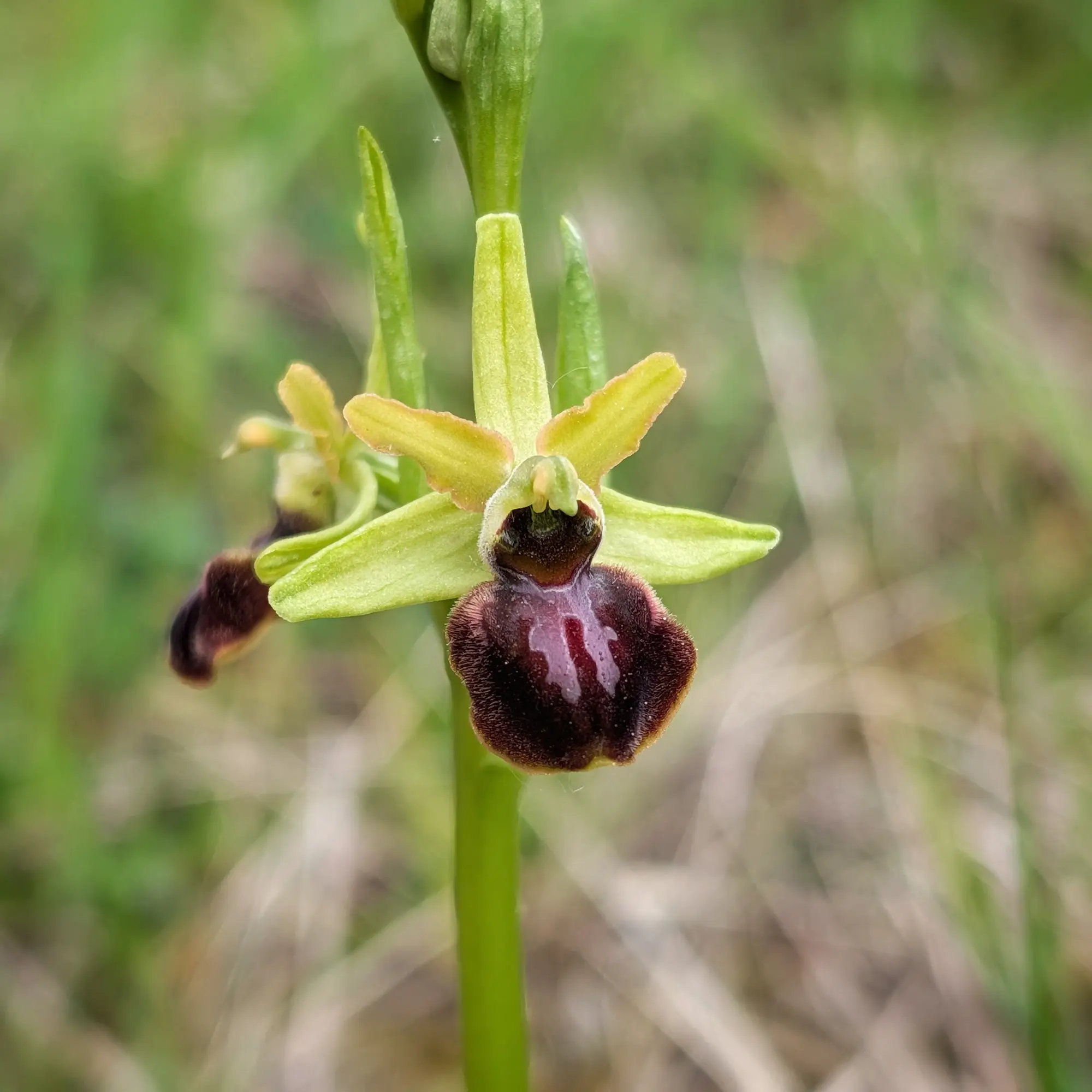
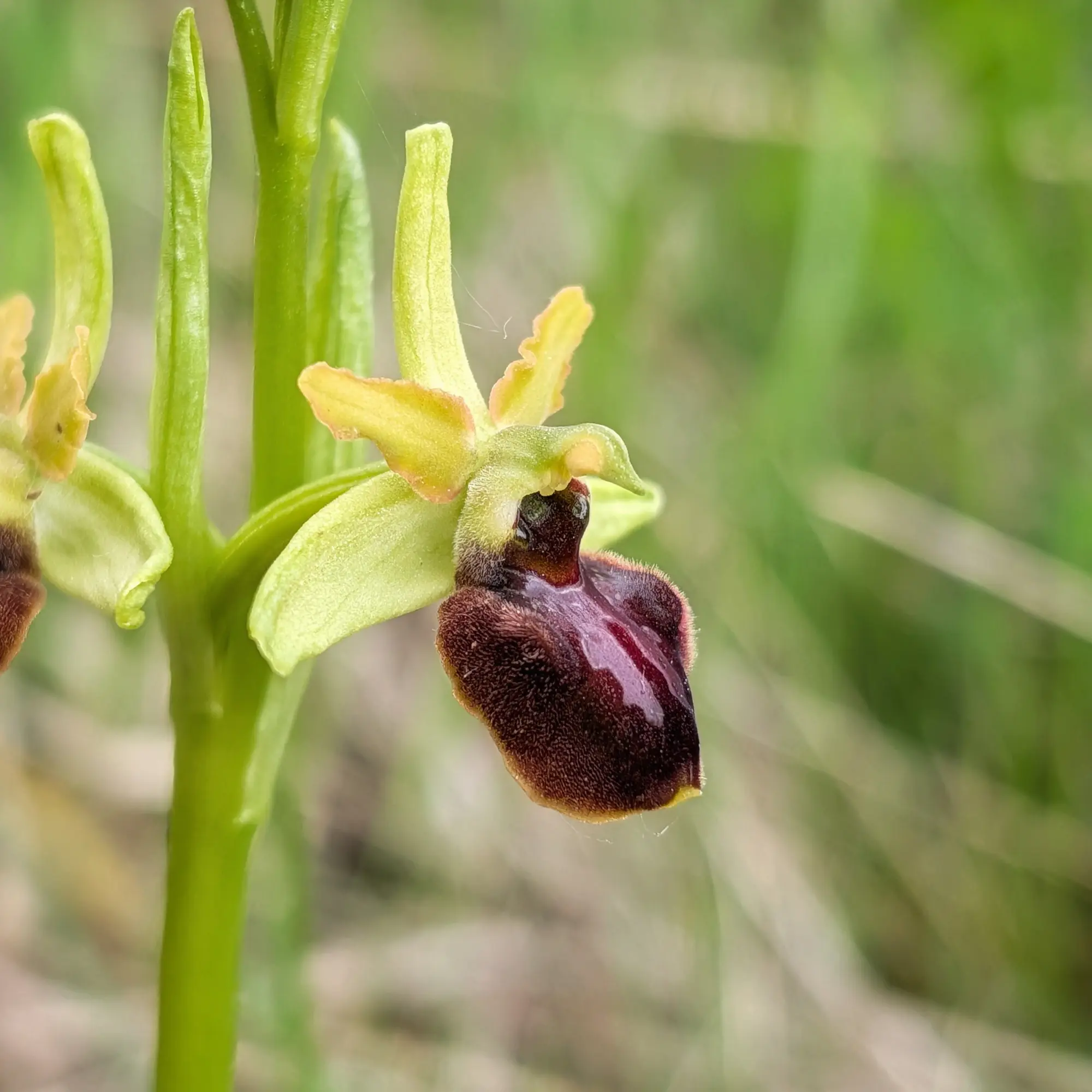
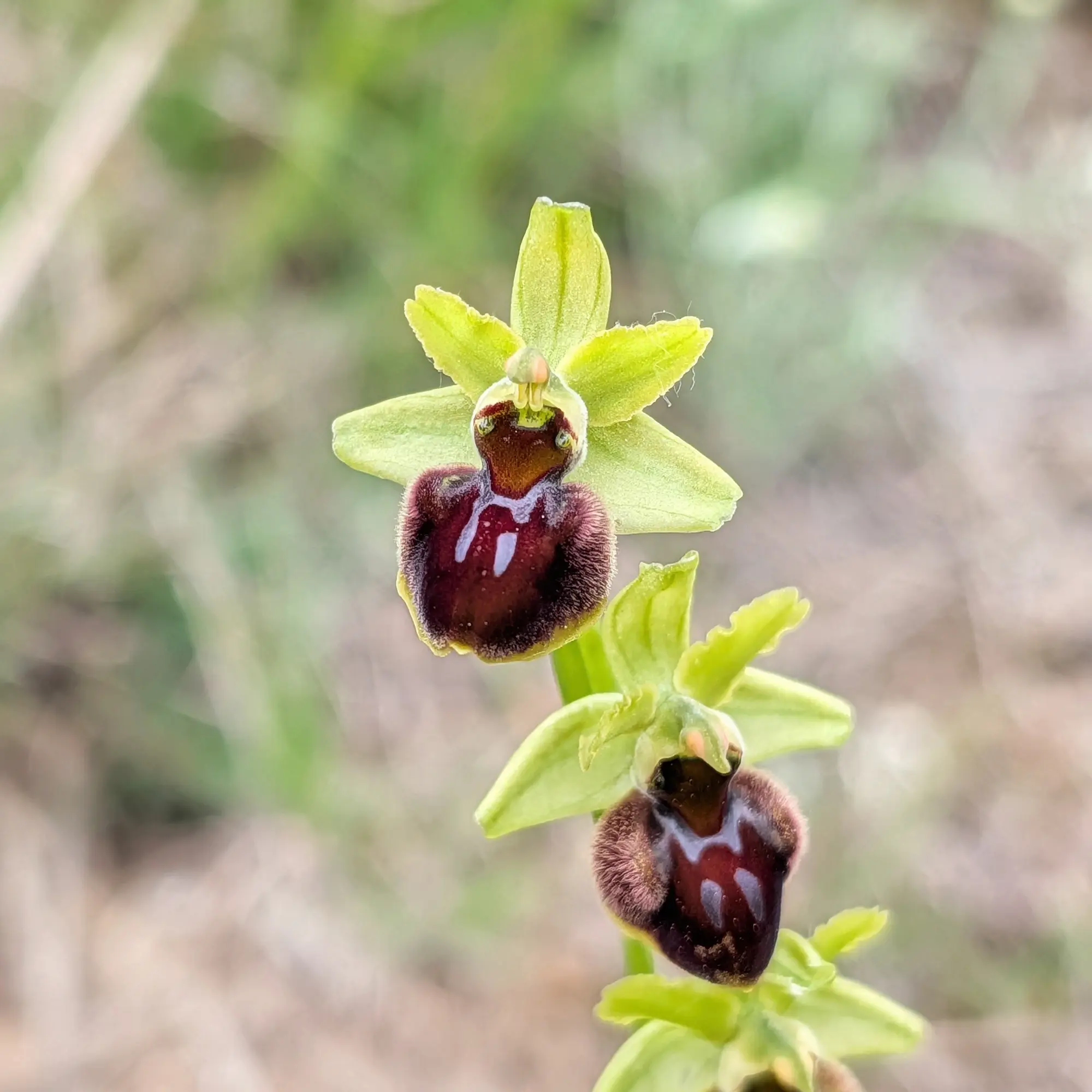
Morphological description: It is a slender plant, with a height that can vary considerably, from 5-20 cm in colder areas (such as the UK) up to 70 cm in the Mediterranean basin. It features a basal rosette of grayish-green leaves with prominent veins; the lower leaves have blunt tips, while the upper ones are narrower and pointed. The basal rosette often withers as the floral stem emerges and flowers. Each inflorescence contains between 2 and 18 flowers without an apparent peduncle, with similarly sized sepals and petals, generally yellowish-green, sometimes with brown or pink edges or markings. The labellum, the modified lower petal, is large, convex, dark brown or reddish, and velvety or hairy in appearance, mimicking the abdomen of female insects. It is distinguished by a characteristic reflective spot called a speculum or macula, often "H" or "X"-shaped, slate blue or purplish.
Ecology and life cycle: The orchid employs Pouyanne mimicry (sexual deception) for pollination. It emits a chemical scent that almost identically reproduces the sexual pheromones of female bees, primarily attracting solitary male bees such as Andrena nigroaenea. The male, deceived by the flower's scent, appearance, and texture, attempts to copulate with the labellum (pseudocopulation), at which point the pollinia adhere to its head, facilitating cross-fertilization upon visiting another flower. This highly specific pollination acts as an effective barrier against interbreeding with other closely related species. It is a perennial plant sustained by underground tubers. Its tiny seeds are dispersed by wind (anemochory) and are entirely dependent on a symbiotic relationship with a soil fungus (mycorrhiza) for germination and nutrition, as they lack an endosperm. Its average lifespan is about 2.25 years, though individuals can exceptionally live up to 20 years.
Habitat, distribution, and conservation: Ophrys sphegodes grows in open areas, including dry or nutrient-poor meadows, scrublands, dunes, forest edges, and ruderal or disturbed sites, clearly favoring calcareous soils and clayey types. Its distribution extends across the Mediterranean basin and most of Europe, from southern Great Britain eastward to Iran and North Africa. Globally, the IUCN classifies the species as "Least Concern" (evaluated in 2018). However, in more northern latitudes such as the United Kingdom, it is considered "Nationally Scarce" and holds legal protection status. Potential threats include climate change, which can lead to a mismatch between flowering and the emergence of its ideal pollinators, and the destruction or loss of its habitat.
Gallery
Related observations
Discover the observations I've made of this species.