Ophrys tenthredinifera
About the Orchid
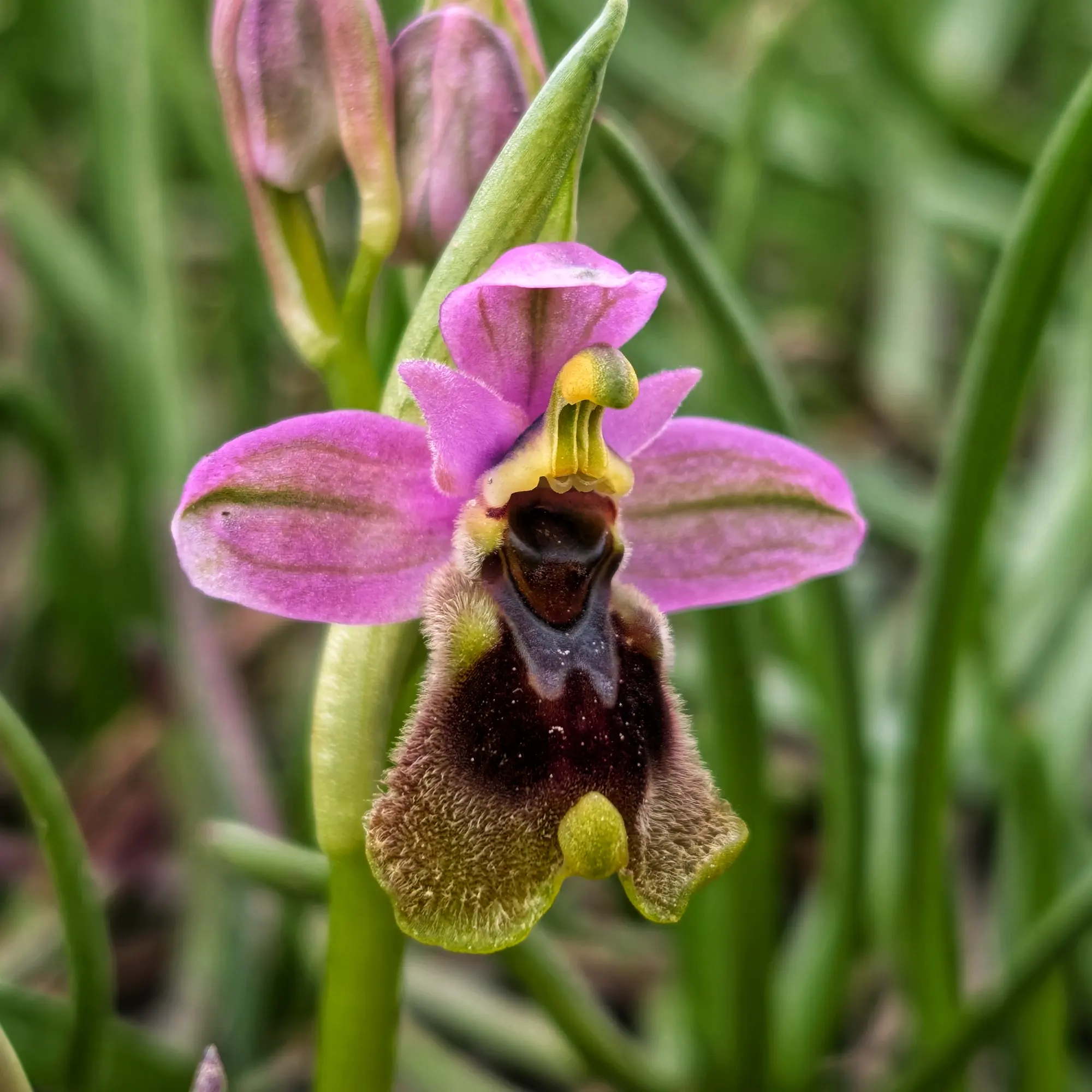
The Ophrys tenthredinifera, commonly known as the Sawfly orchid, is a terrestrial and monopodial orchid belonging to the genus Ophrys. Its generic name comes from the Greek word ophrys, meaning 'eyebrow', and the specific epithet tenthredinifera derives from tenthredón, a wasp-like insect from the order Hymenoptera, referring to the shape of its labellum. It is considered by many to be the most beautiful species of its genus and is characterized by great variability in the sizes, shapes, and color tones of its flowers.
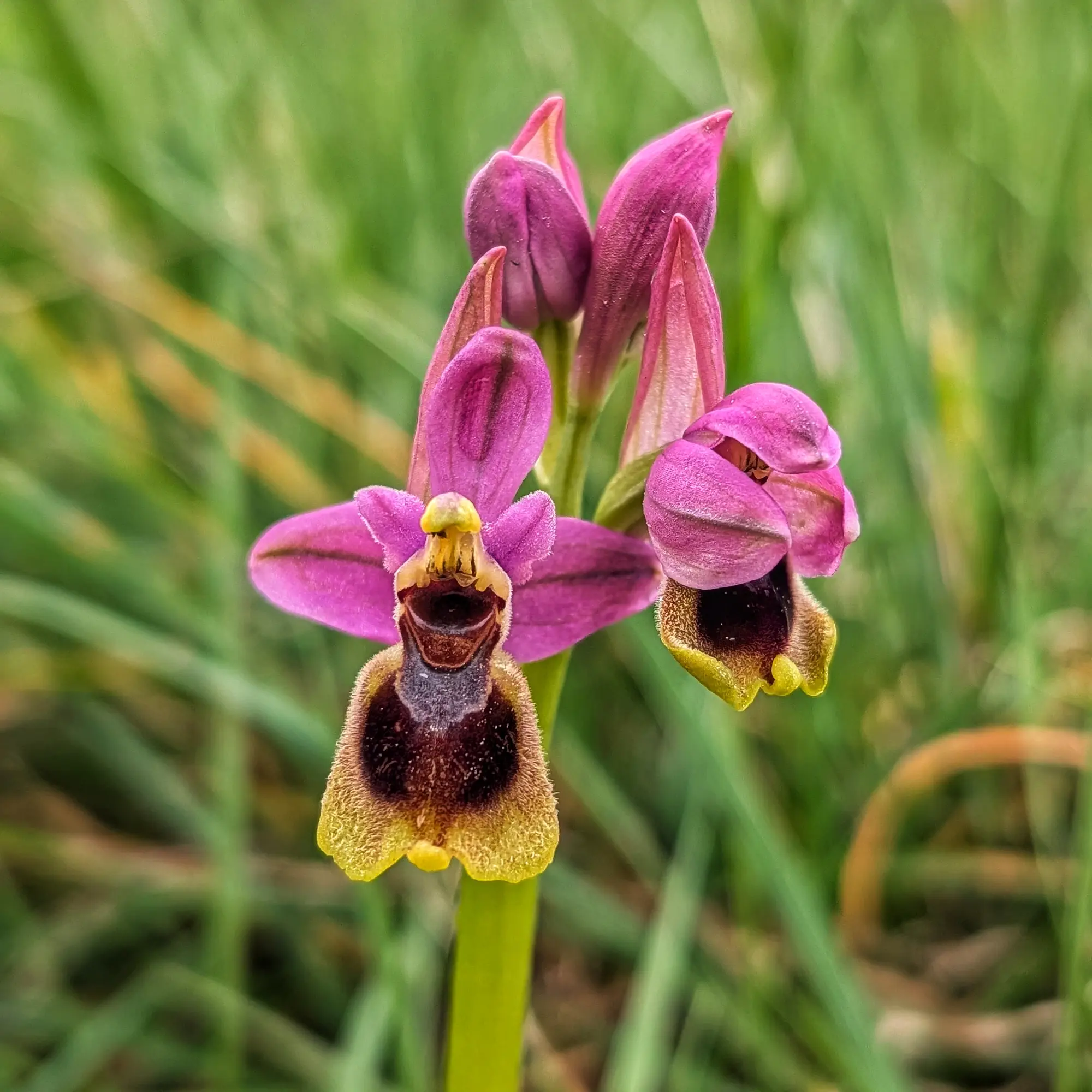
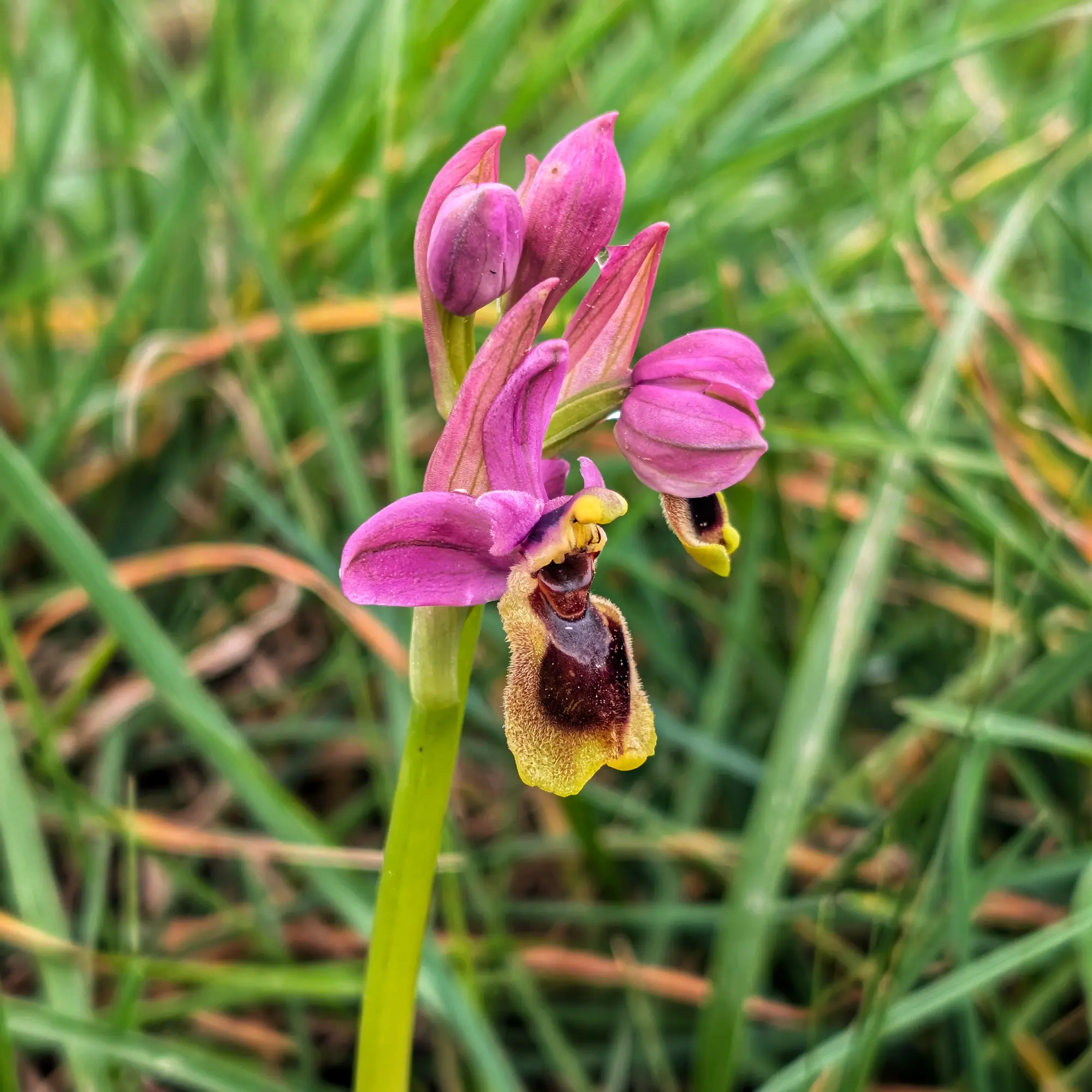
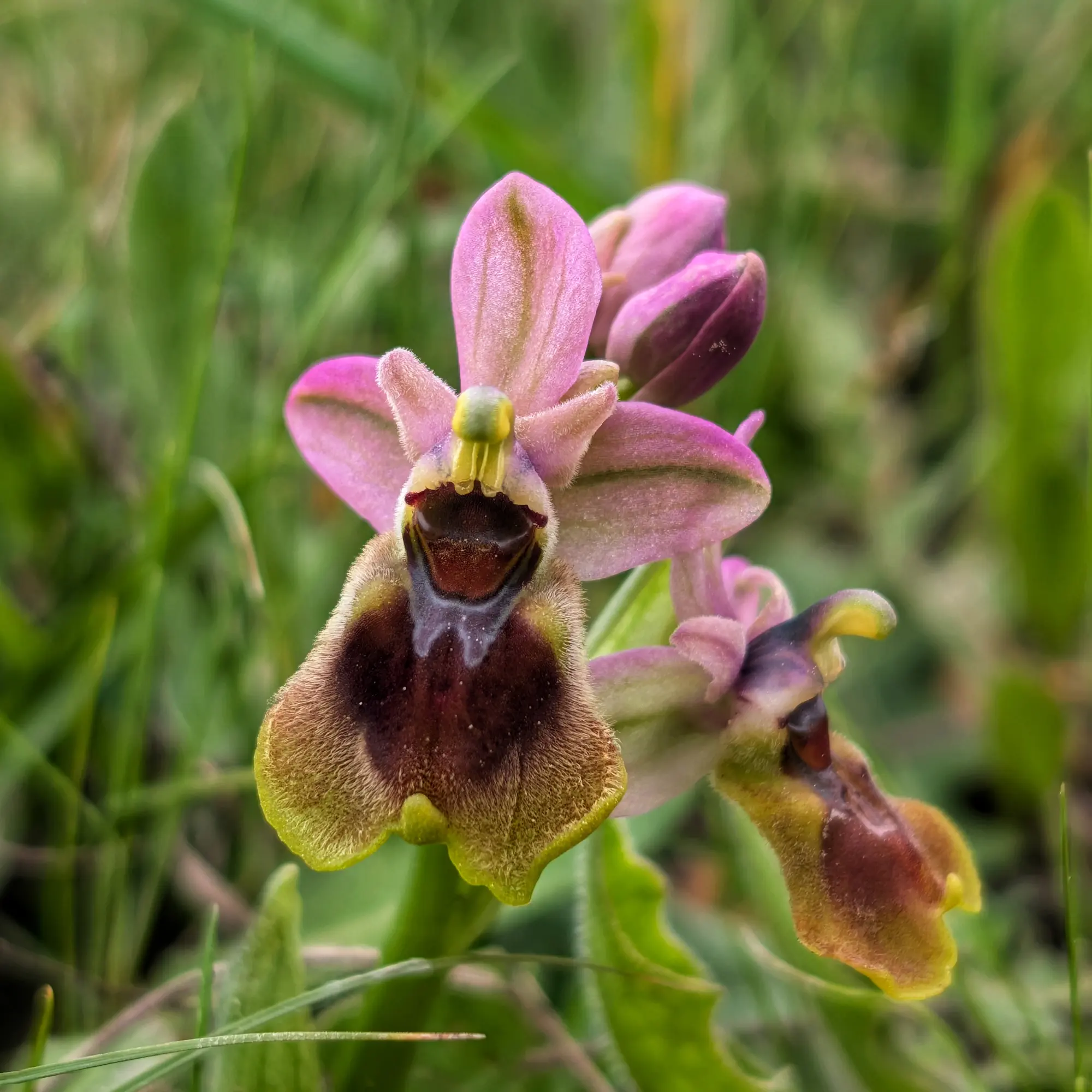
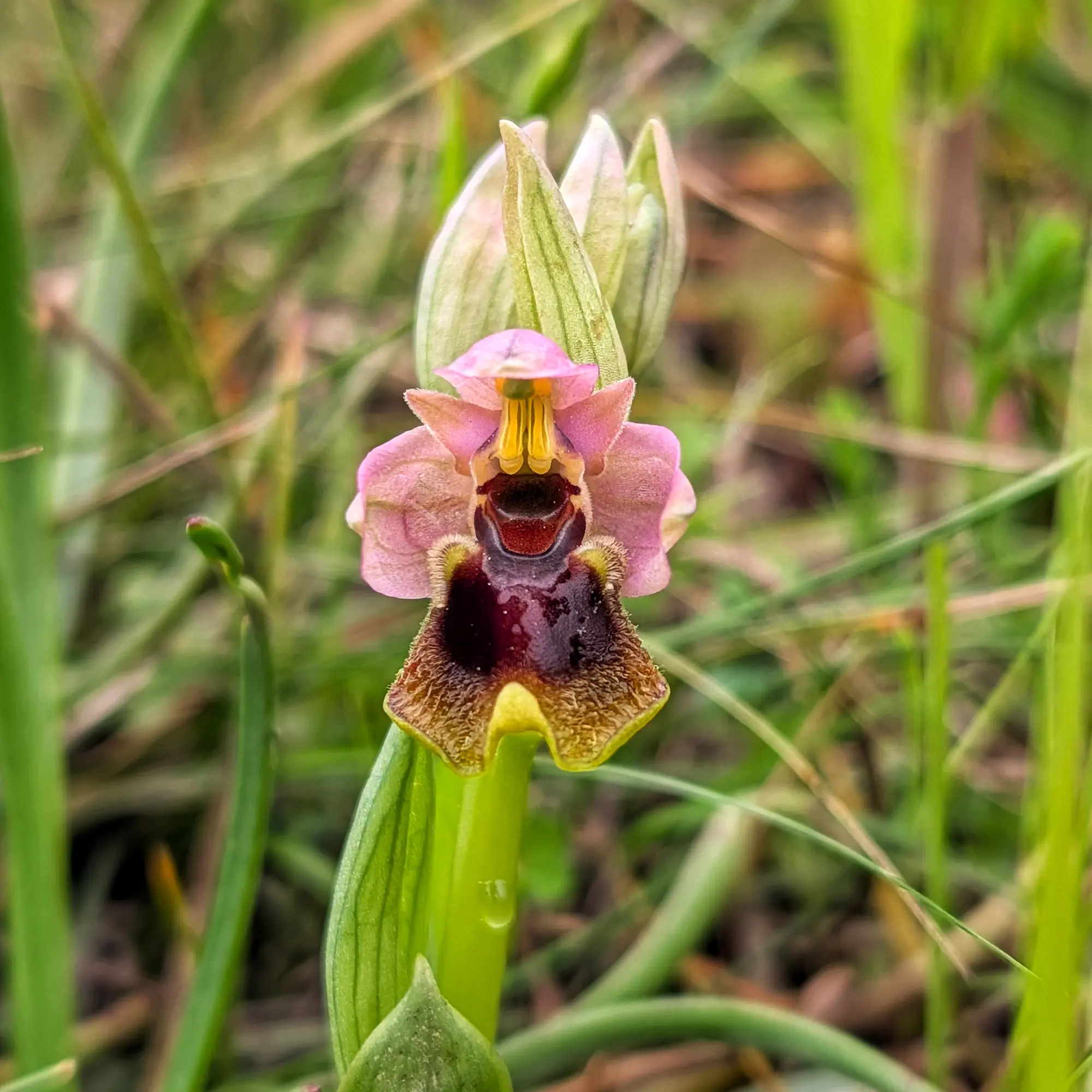
This plant can grow between 10 and 60 cm tall, is provided with two tubers, and has an erect and slightly flexuous stem. It possesses 3 to 8 ovate-lanceolate or oblong basal leaves and a spike-shaped inflorescence that can bear between three and ten flowers. These flowers have a large labellum (13 to 18 mm), trilobed, trapezoidal, and convex, dark brown or reddish in color, and with a velvety texture. The small lateral lobes of the labellum are slightly turned forward, covered with fine whitish hairs, while the central lobe is larger, glabrous, with a yellow margin and a small yellow upward-pointing protuberance at the tip. The speculum or macula can be H-shaped and is usually bluish-grey or brown in the center with white or yellowish spots. The outer tepals (sepals) measure about 7 mm, are concave with a revolute margin, purplish-pink or white with green veins. The inner tepals (petals) are smaller, wide, and triangular, of the same pink color, creating a strong contrast with the dark shades of the labellum.
The species flowers mainly between mid-March and April, although in some warm areas (such as the Algarve) flowering can be very early, starting in late January. Like other orchids of its genus, its reproduction is based on pseudocopulation; the flower visually and olfactorily mimics the appearance of a female bee or wasp to entice males, who then transport the pollen when attempting to copulate with it. Among its main known pollinators are bees such as Eucera longicornis and Eucera nigrilabris.
This orchid has a wide Mediterranean distribution, extending from Portugal and Morocco to Turkey, including Spain, southern France, Corsica, the Balearic Islands, and North Africa. It generally grows in full sun or semi-shade areas. Its habitats include meadows, garrigues, scrubland, road margins, olive groves, abandoned farms, and open forests. It prefers to grow on sandy calcareous soils and can be found from very low altitudes up to between 850 and 1100 m above sea level.
The consulted sources do not contain official information about its conservation status (e.g., threat level according to the IUCN Red List). There is only evidence of its wide adaptability to different substrates and that its survival may be conditioned by its almost exclusive link with populations of certain insect pollinators.
Gallery
Related observations
Discover the observations I've made of this species.