Orchis anthropophora
About the Orchid
The Orchis anthropophora, commonly known as the Hanging Man Orchid or Man Orchid, is a terrestrial orchid distinguished by the curious shape of its flowers. Its specific epithet, anthropophora, means "man-bearing," referring to the human-like silhouette of its labellum. Historically, it was classified under the genus Aceras (from Greek "a", without, and "keras", horn), alluding to its characteristic lack of a spur.
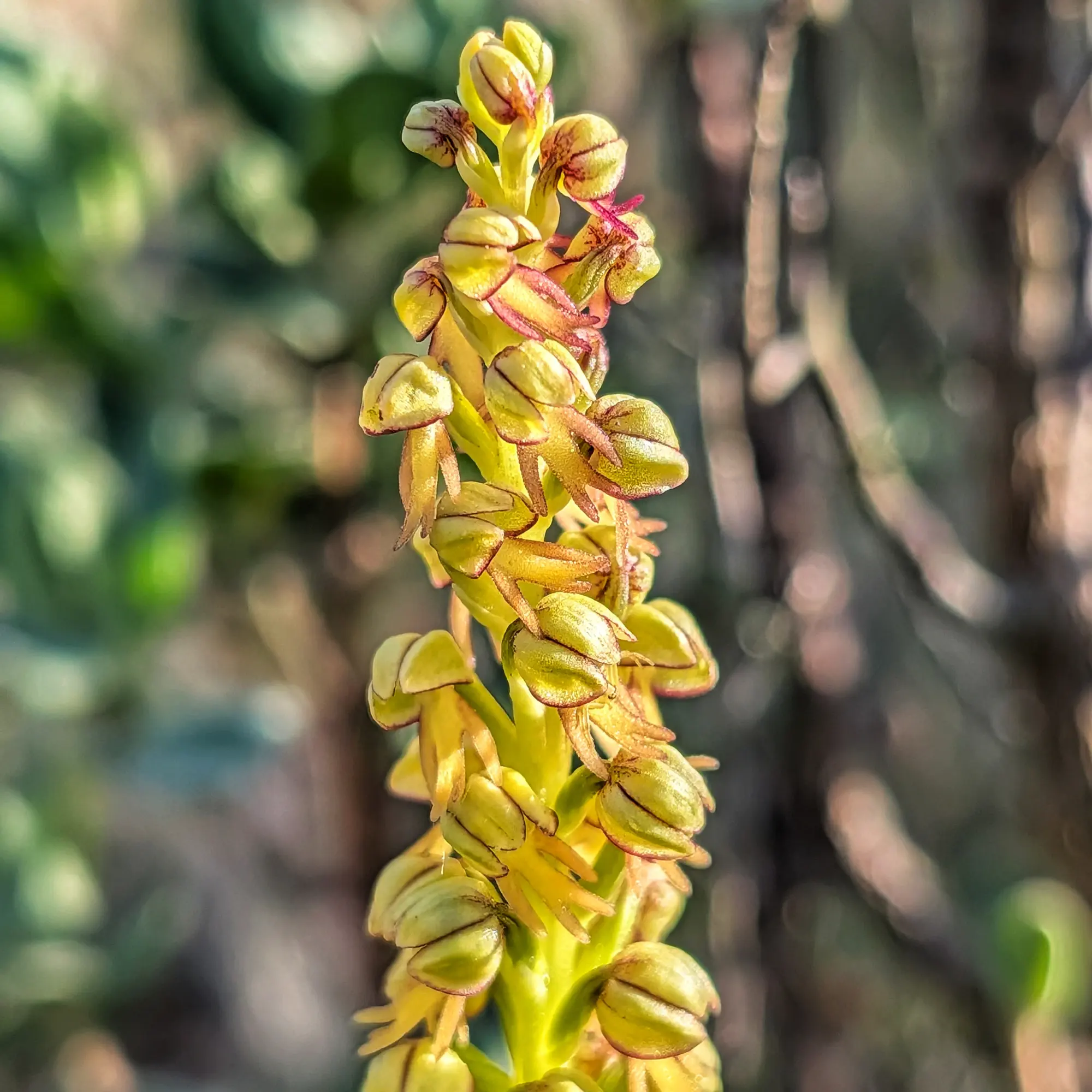
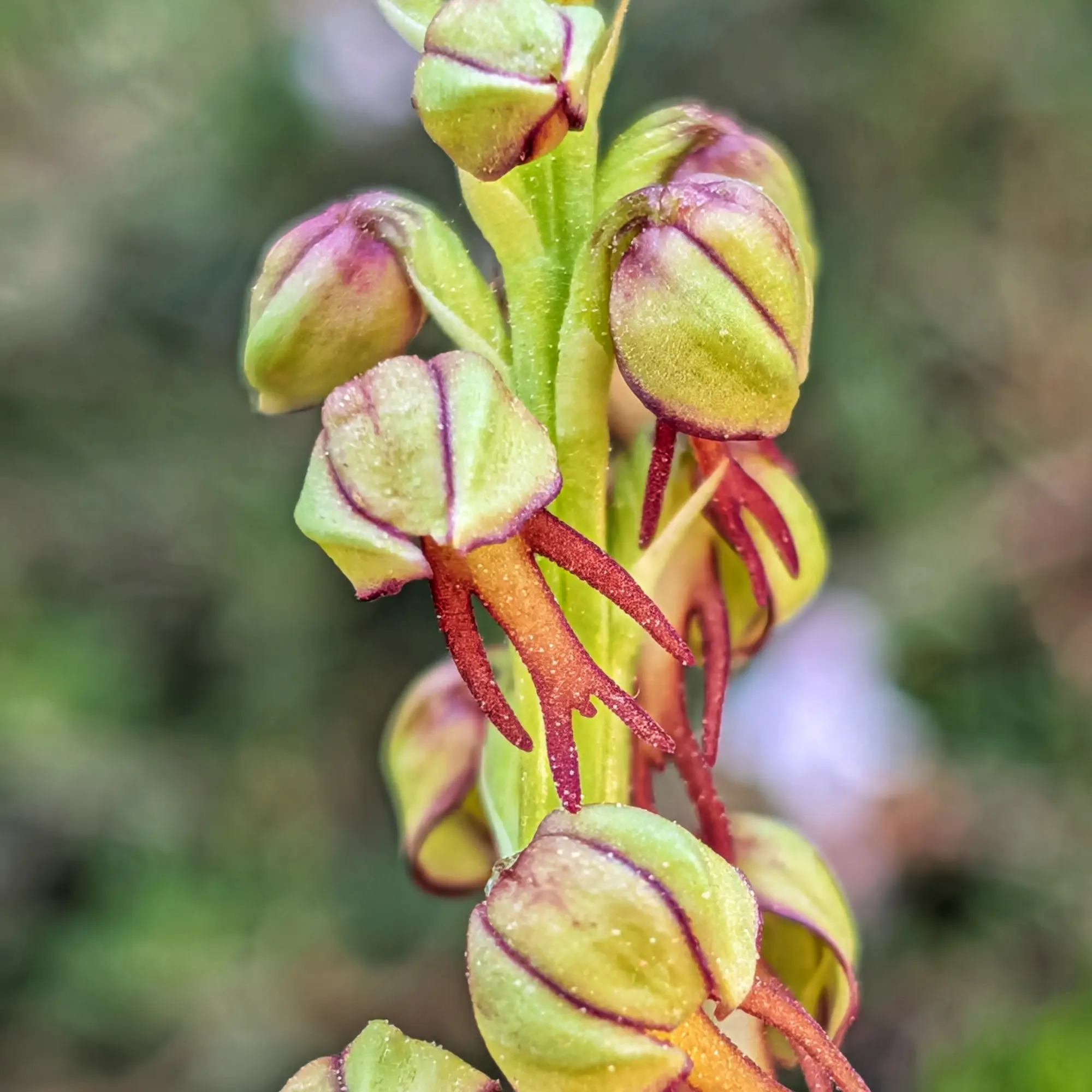
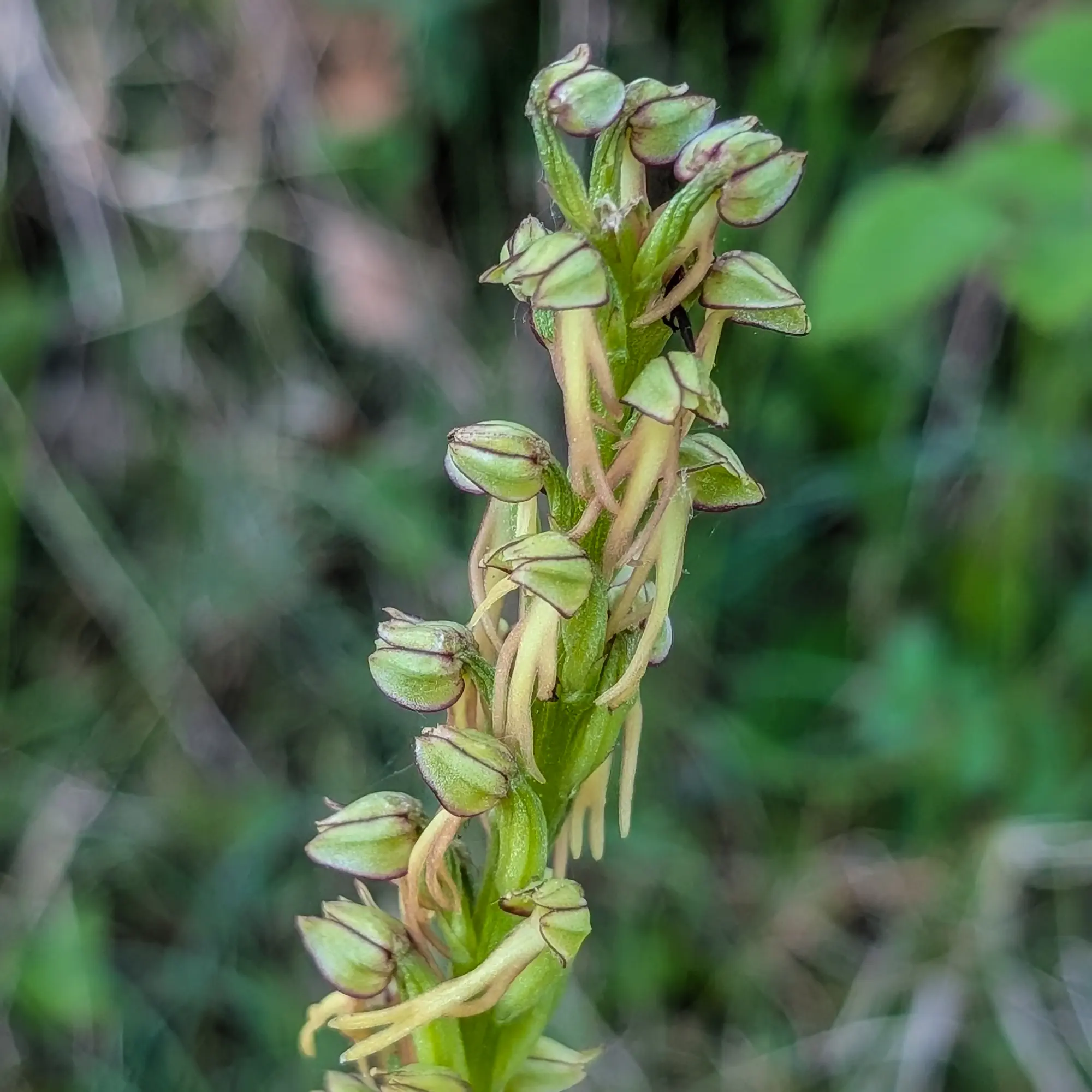
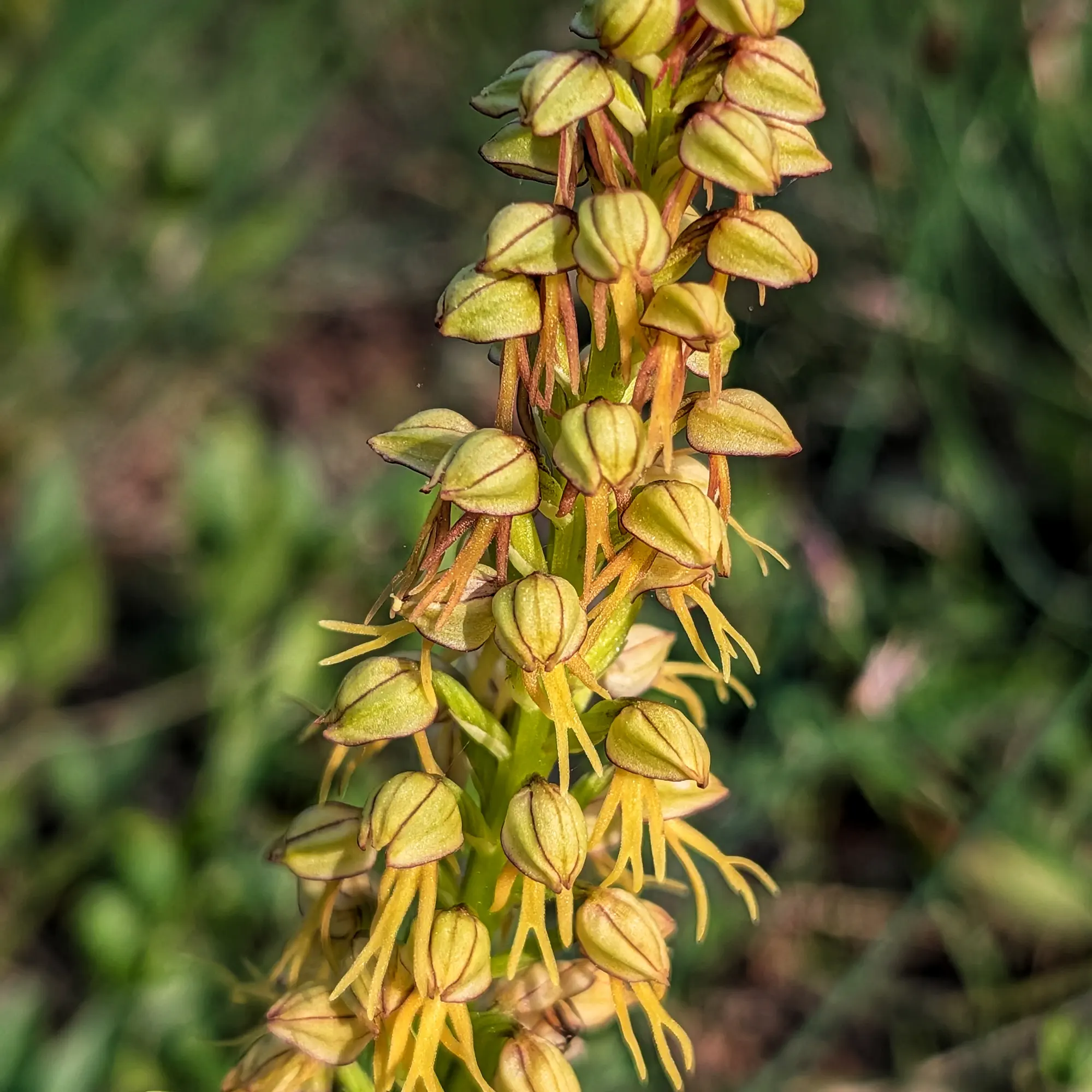
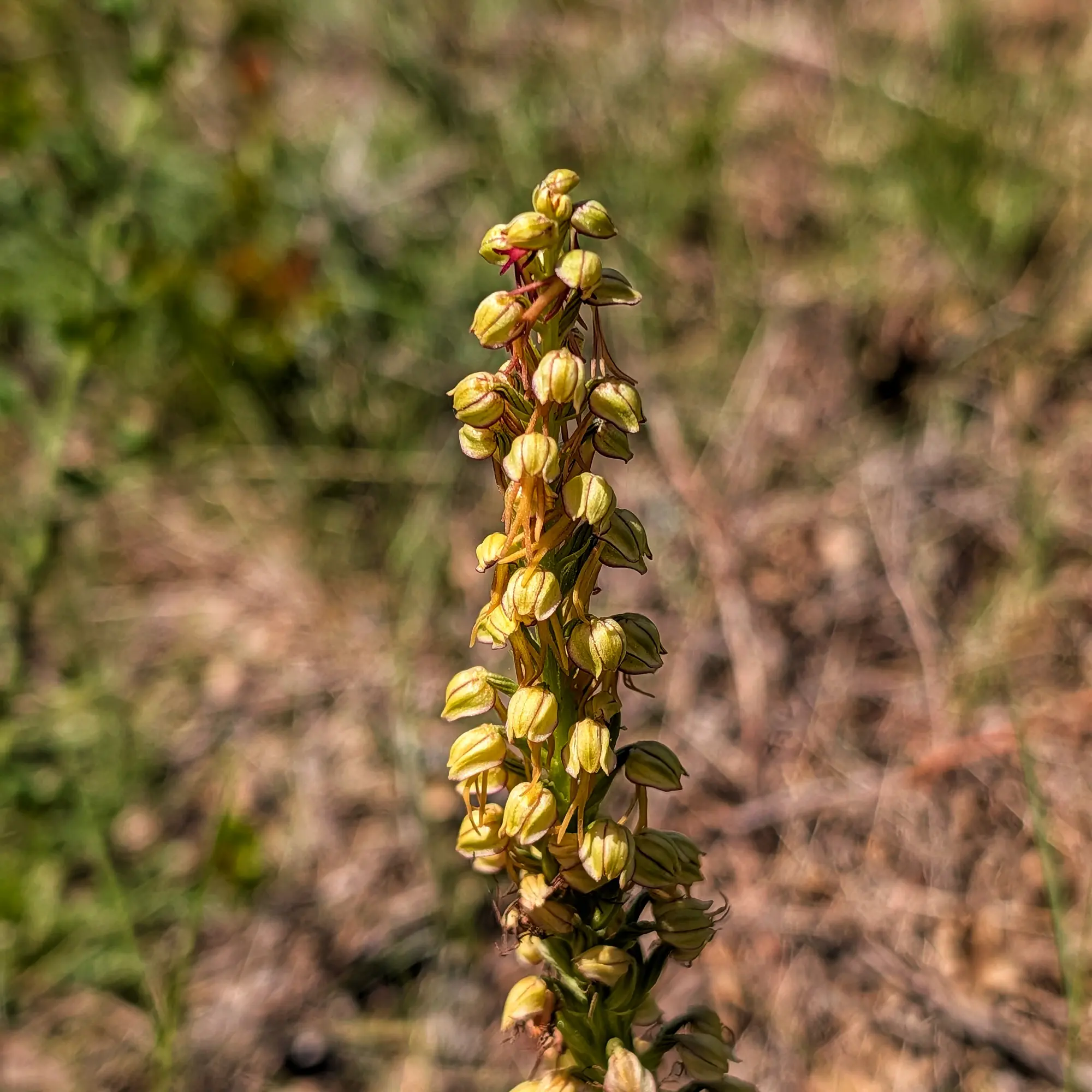
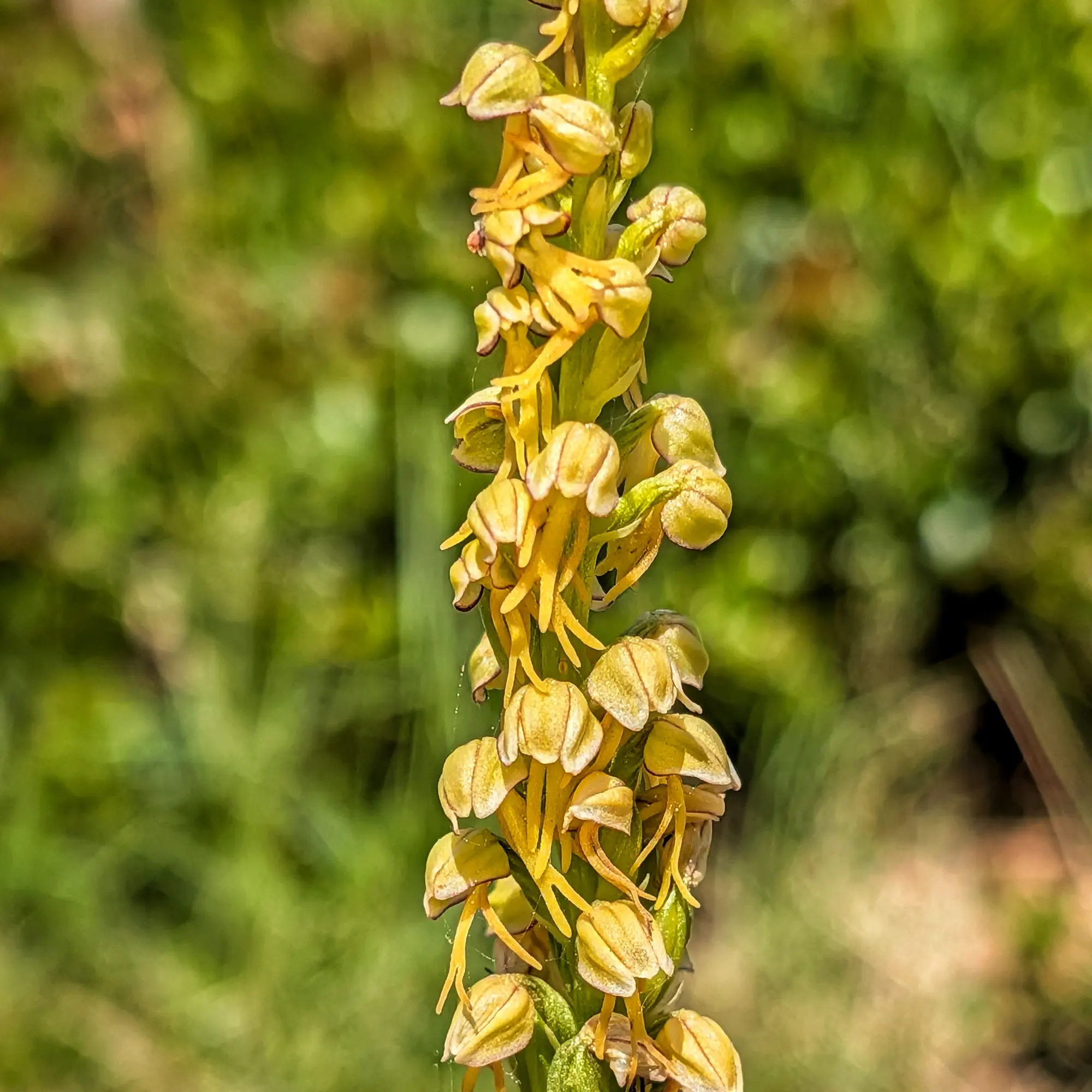
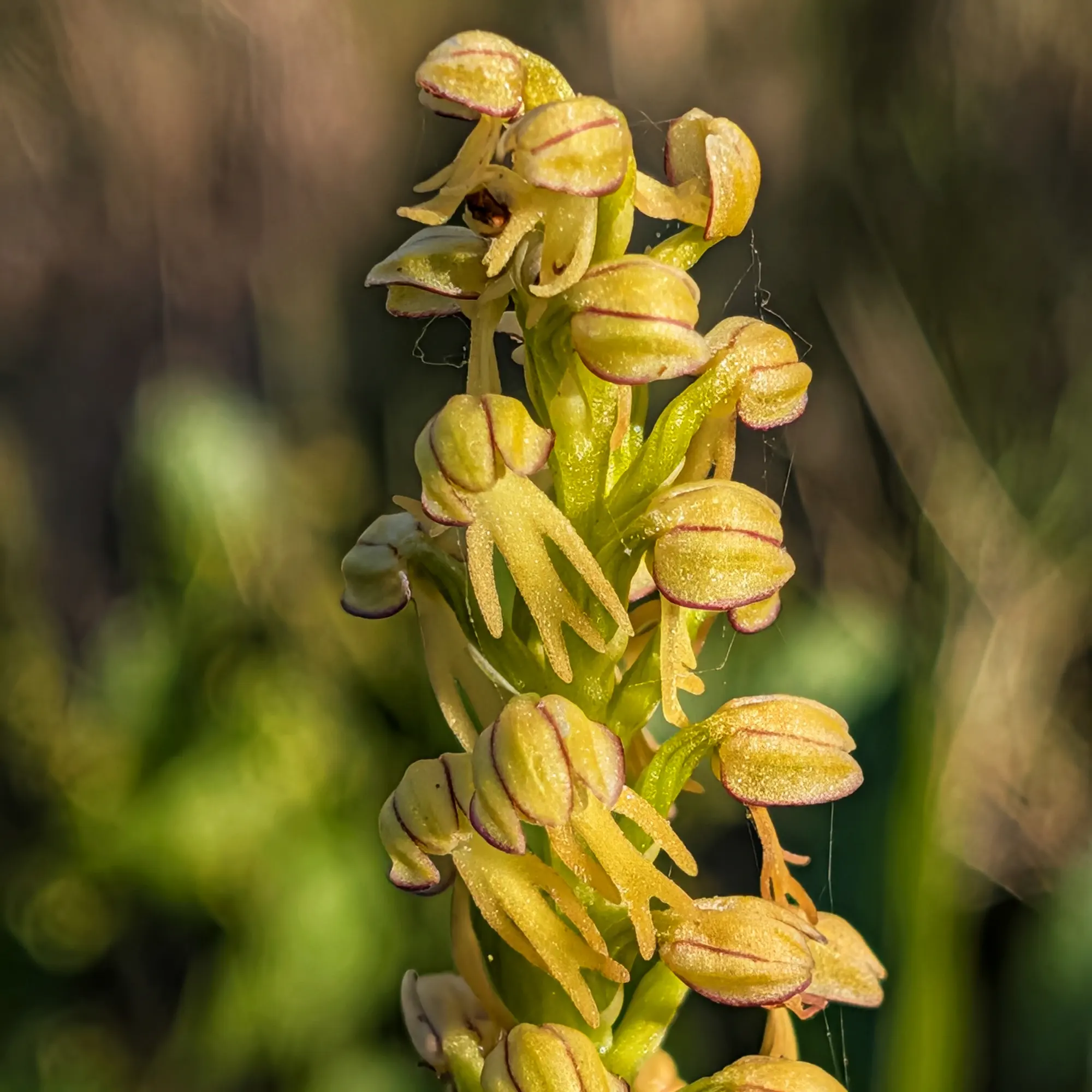
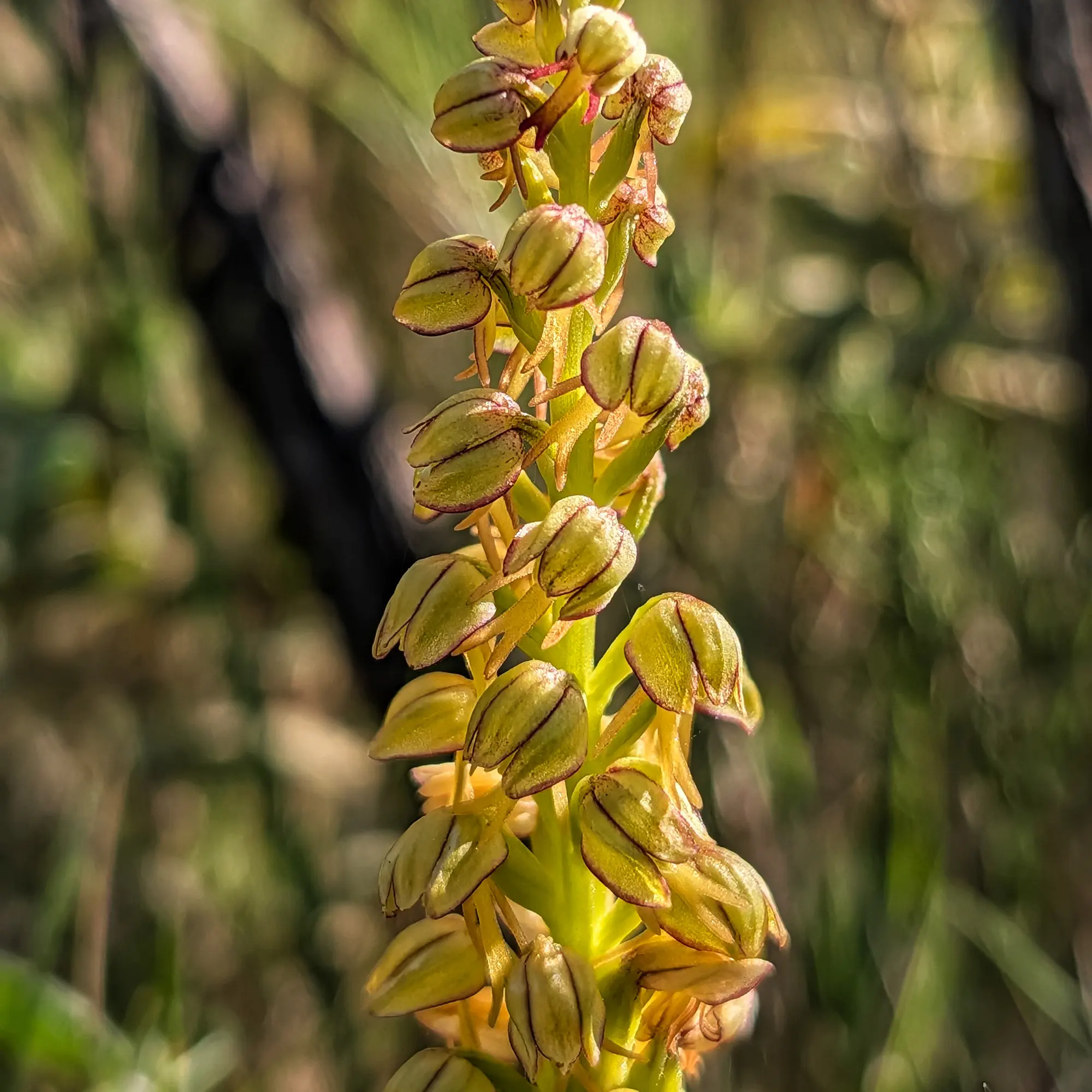
Morphological description: It is a perennial herbaceous geophyte that grows from two ovoid or subglobose pseudotubers. It typically stands between 20 and 40 cm tall (reaching up to 50 cm), with an erect, robust, cylindrical, glabrous, green stem. It features a basal rosette of oblong-lanceolate, shiny, bluish-green, unspotted leaves, with some smaller leaves clasping the upper stem. The flowers are arranged in a dense, cylindrical, elongated spike that can contain up to 90 flowers. They are small, sessile, and generally yellowish-green, often with reddish or brownish margins. The outer and inner tepals converge to form a closed, greenish helmet, often with reddish lines. The labellum is the most distinctive part: it hangs vertically and has an anthropomorphic (human-like) silhouette. It is deeply trilobed, with linear lateral lobes simulating arms, and the longer central lobe divided into two parts that resemble legs, often with a small tooth in between. A key feature is the absence of a spur.
Habitat and distribution: This species prefers calcareous soils, which are dry, stony, and well-drained. It is commonly found in scrub clearings, garrigues, heathlands, dry meadows, and open woodlands (such as sparse pine forests), growing in full sun or partial shade. It has a Mediterranean-Atlantic distribution, covering southern, central, and western Europe (reaching southern England), North Africa, and Western Asia. In Spain, it can be found in Catalonia, the Valencian Community, and the Balearic Islands (Mallorca, Menorca, Ibiza, and Formentera), from sea level up to 1,700 meters in altitude.
Ecology and conservation: It flowers mainly between April and June. Despite lacking a spur, it produces nectar that accumulates at the base of the labellum and is pollinated by Hymenoptera (bees from the genera Eucera and Andrena) and Coleoptera, although it also exhibits some degree of autogamy (self-pollination). It typically grows in scattered populations but is affected by grazing pressure and forestry work during its flowering season. In the Balearic Islands, its conservation status is considered "Least Concern" (LC), but in other territories such as the United Kingdom or Bosnia and Herzegovina, it is classified as "Endangered" or "Critically Endangered," respectively.
Gallery
Related observations
Discover the observations I've made of this species.