Orchis mascula
About the Orchid
The Orchis mascula, commonly known as the Early Purple Orchid, is a perennial herbaceous plant that gives its name to the "Máscula Group" within the genus Orchis. Its Latin specific epithet, mascula, means "male" or "virile," possibly referring to the robust appearance of the species or the testicle-like shape of its two underground tubers. Historically, it has been associated with popular legends, such as the one attributing the spots on its leaves to the blood of Christ ("Gethsemane"). Its tubers contain glucomannan, a nutritious polysaccharide, used to produce a flour called "salep".
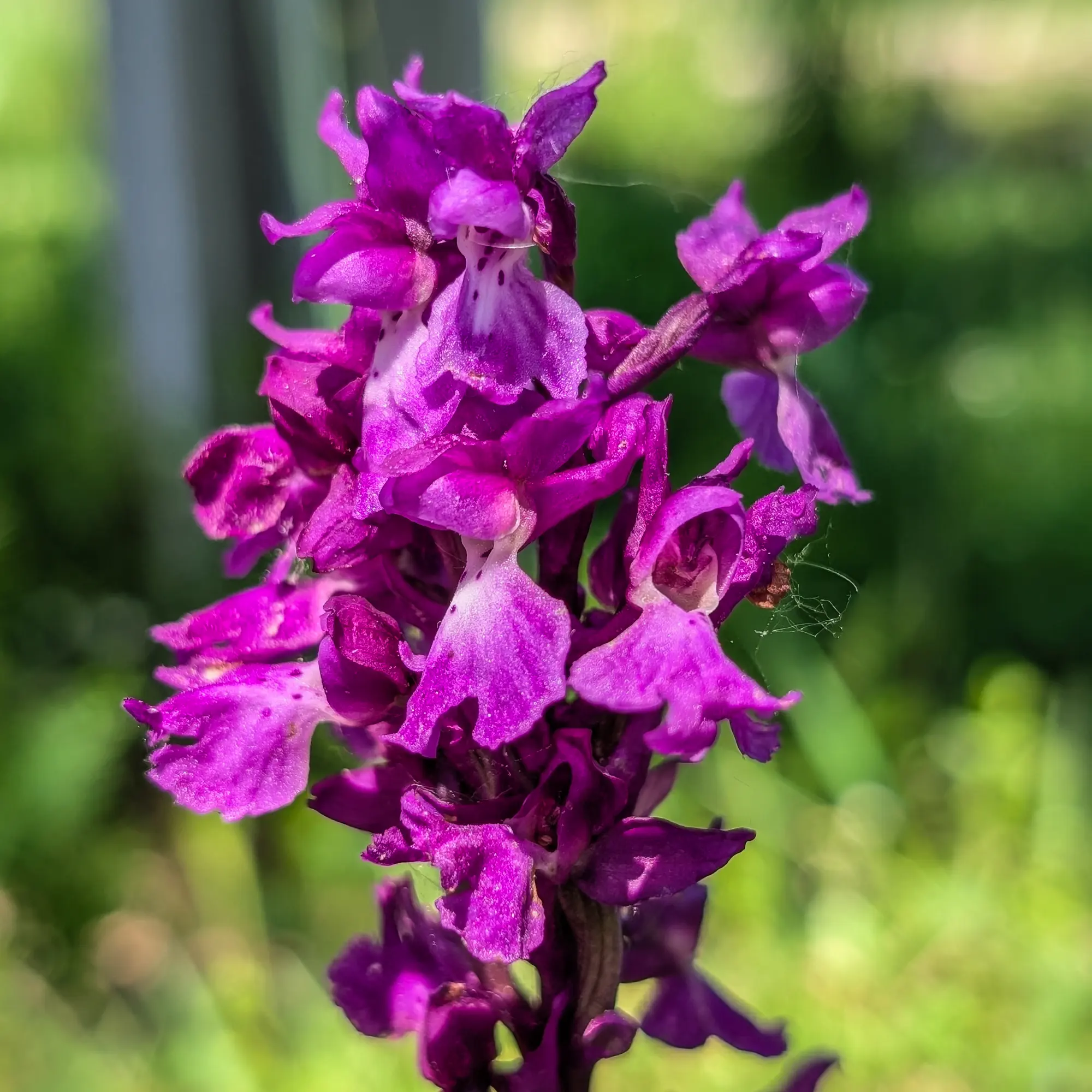
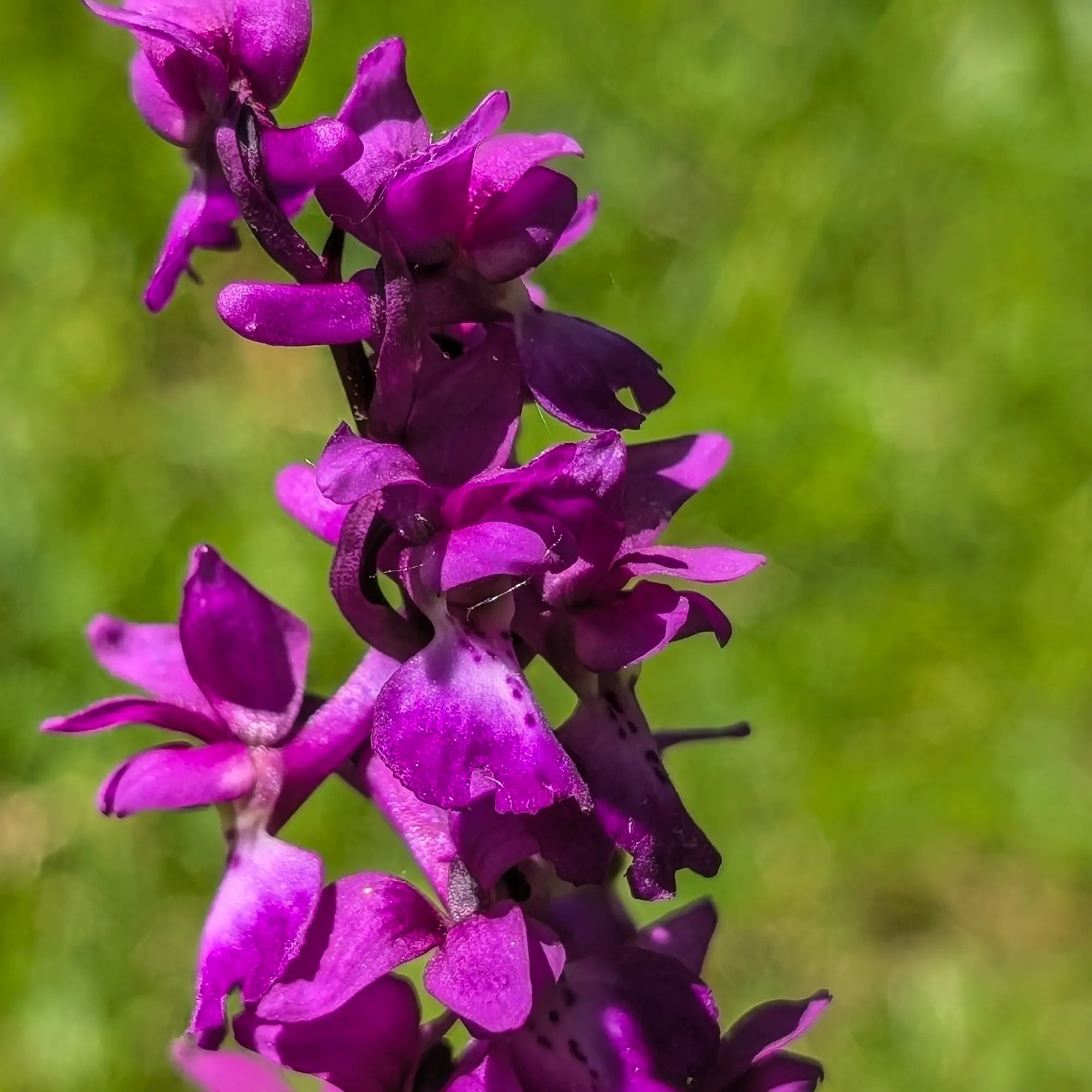
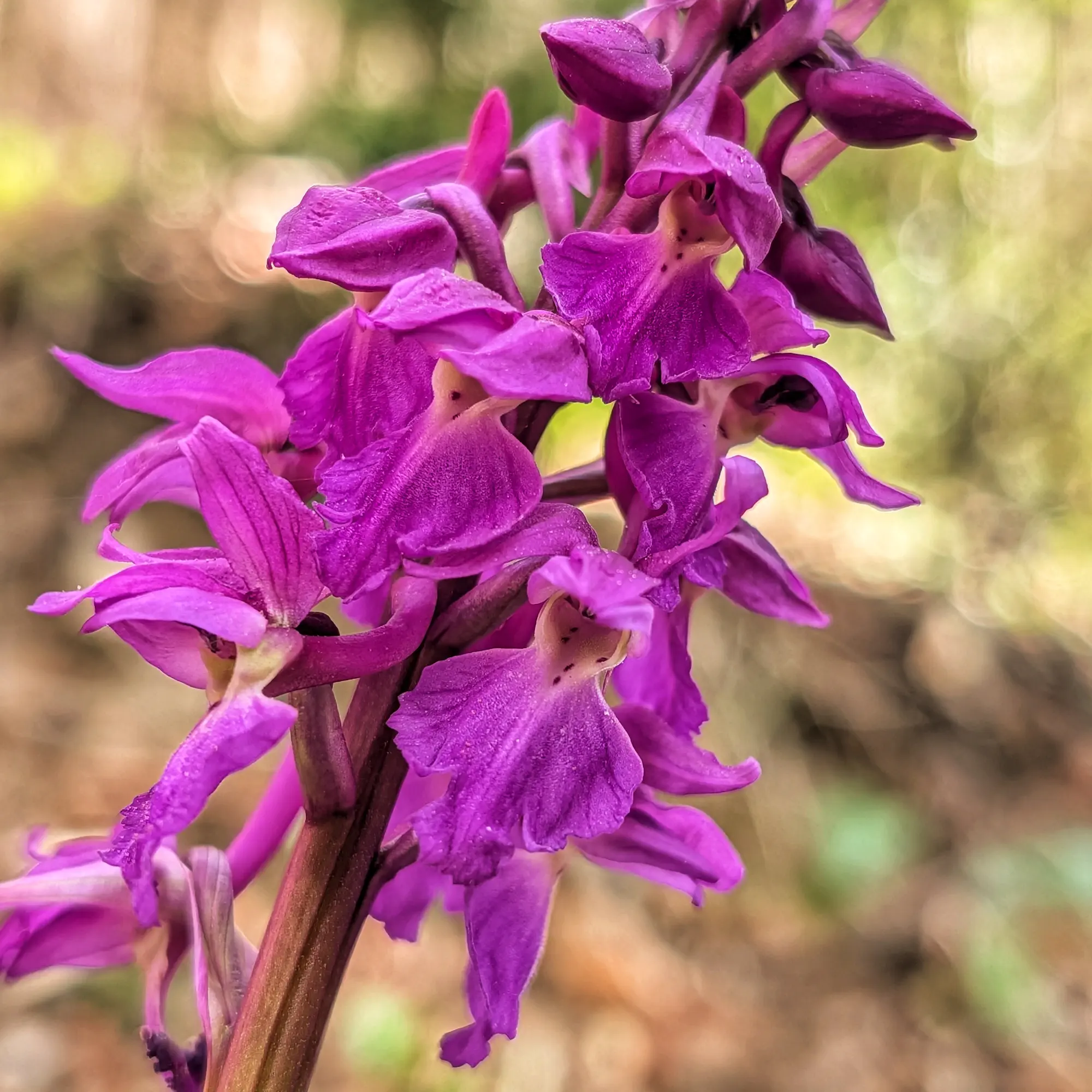
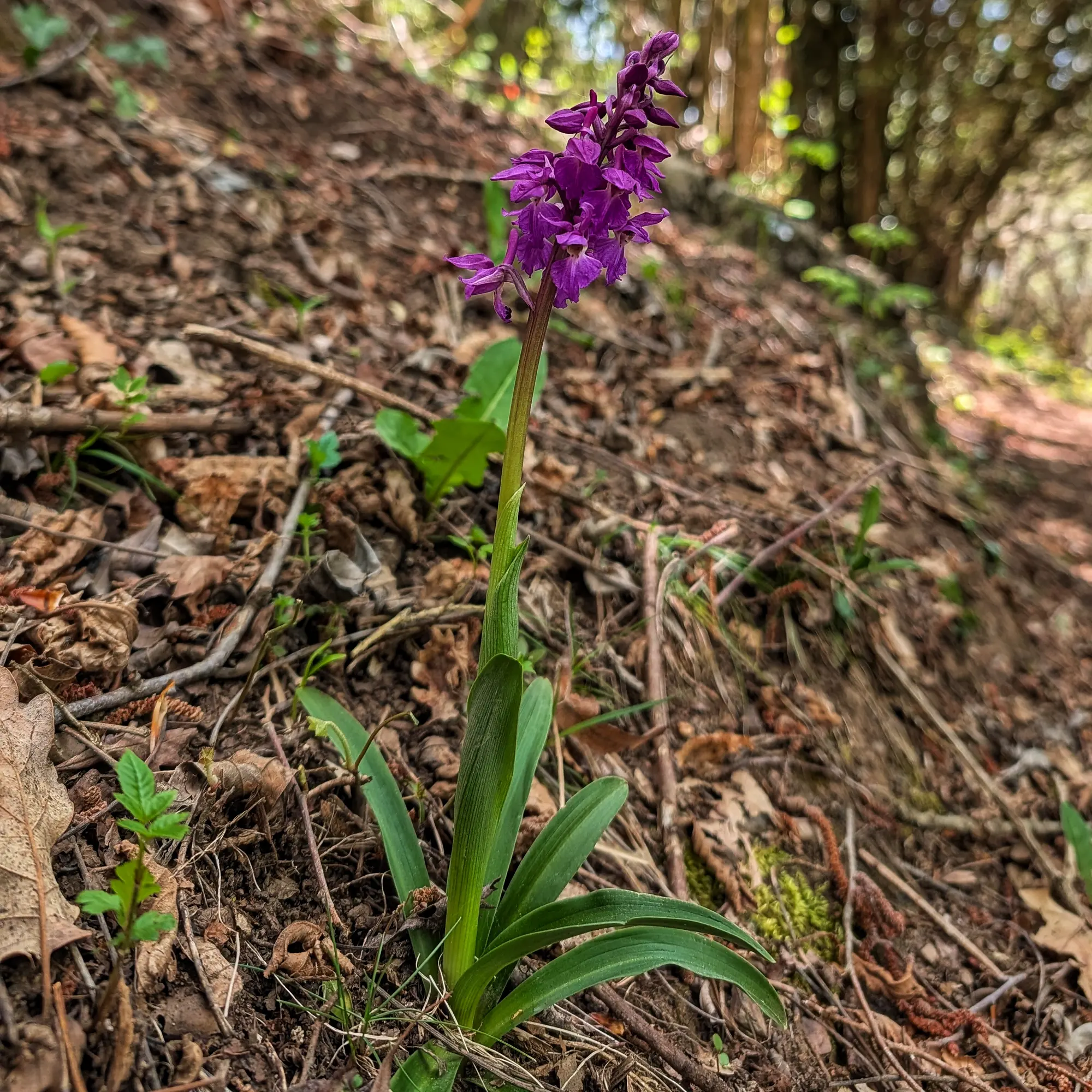
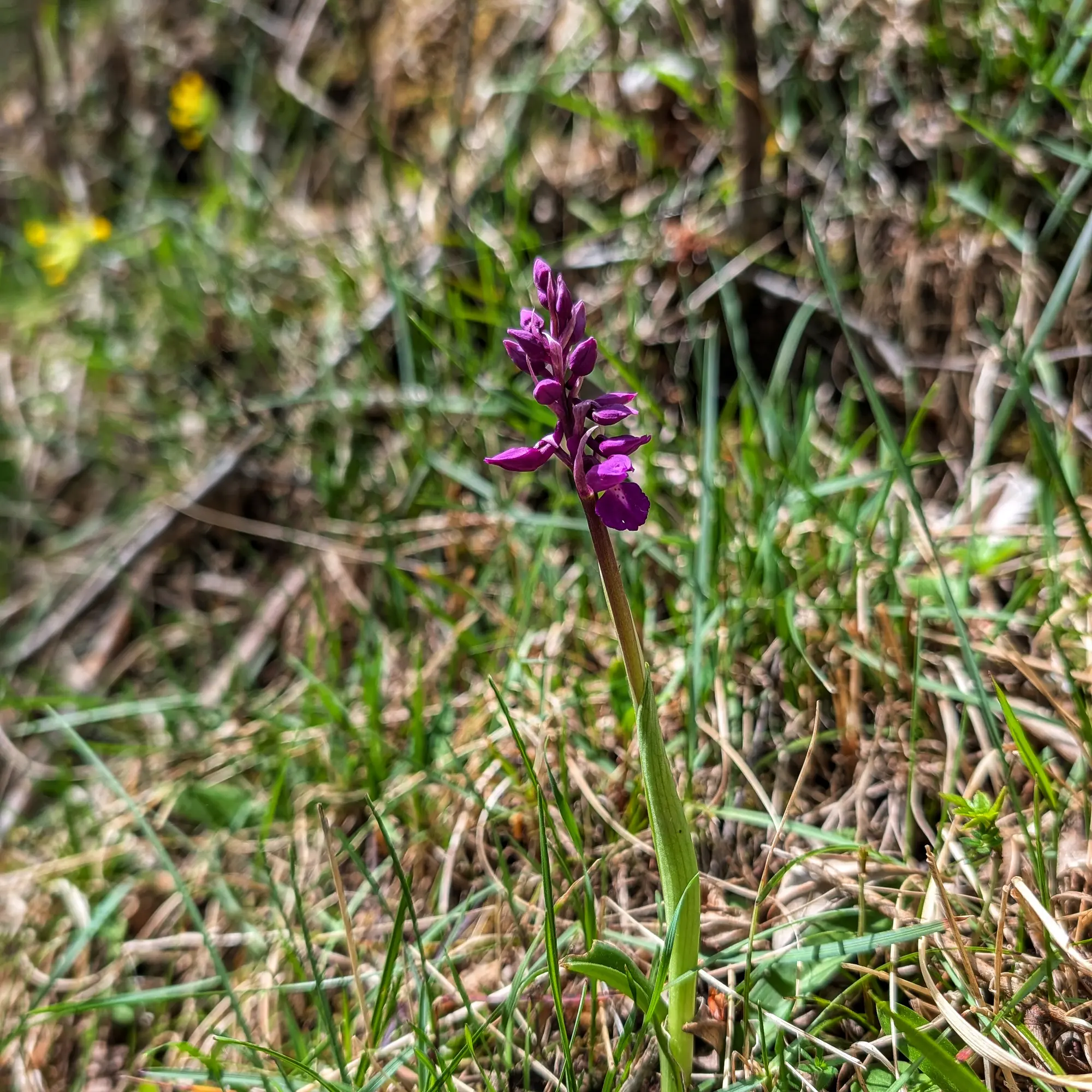
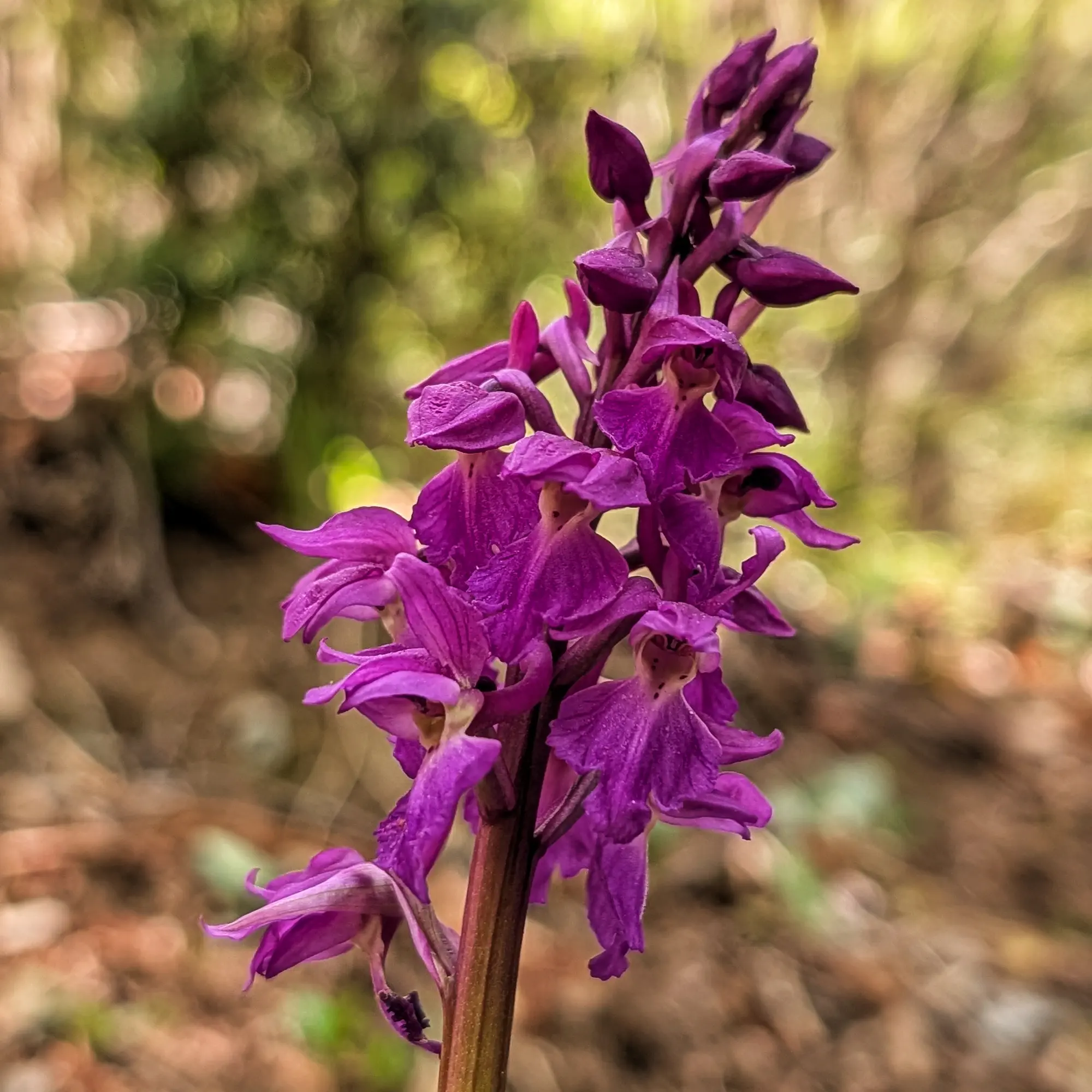
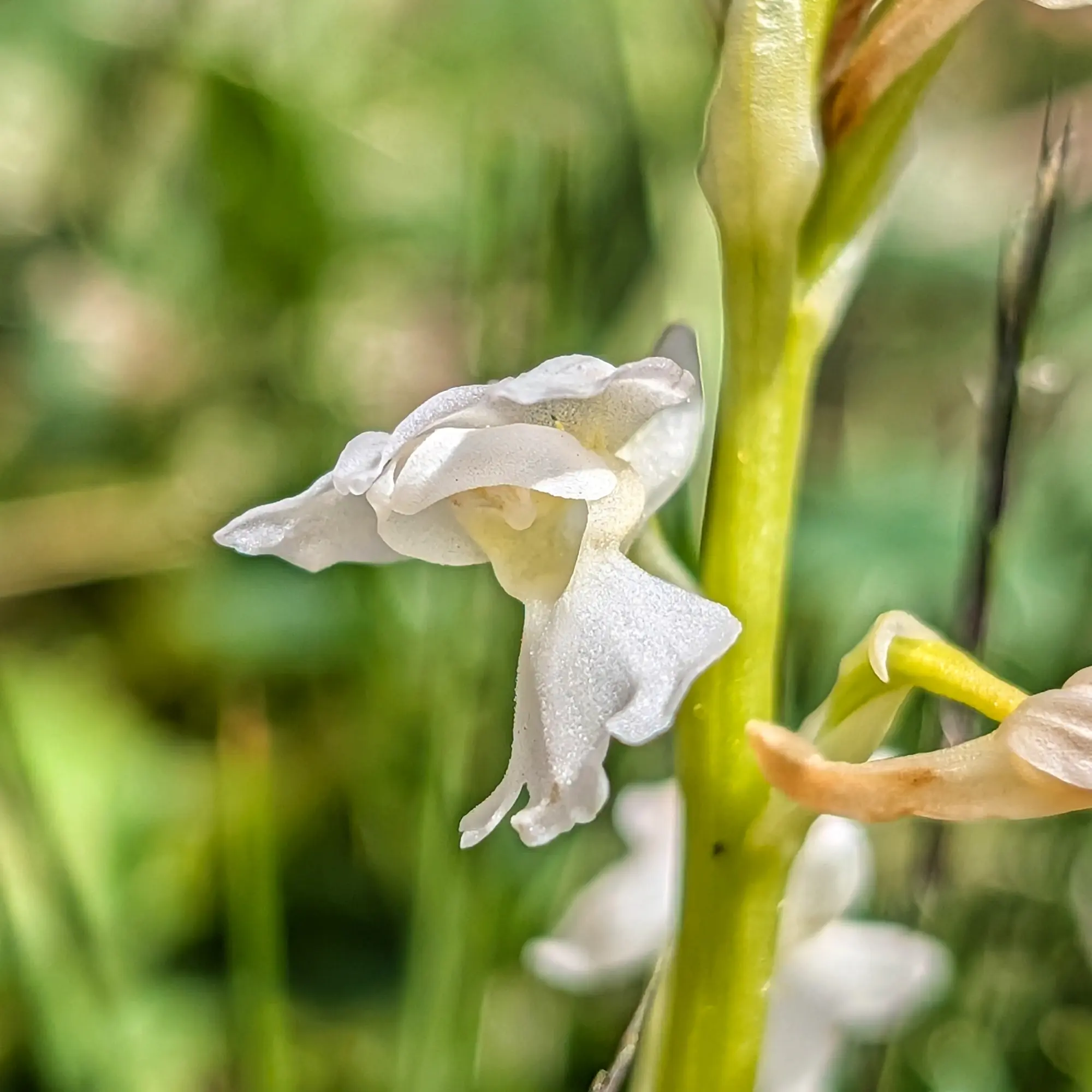
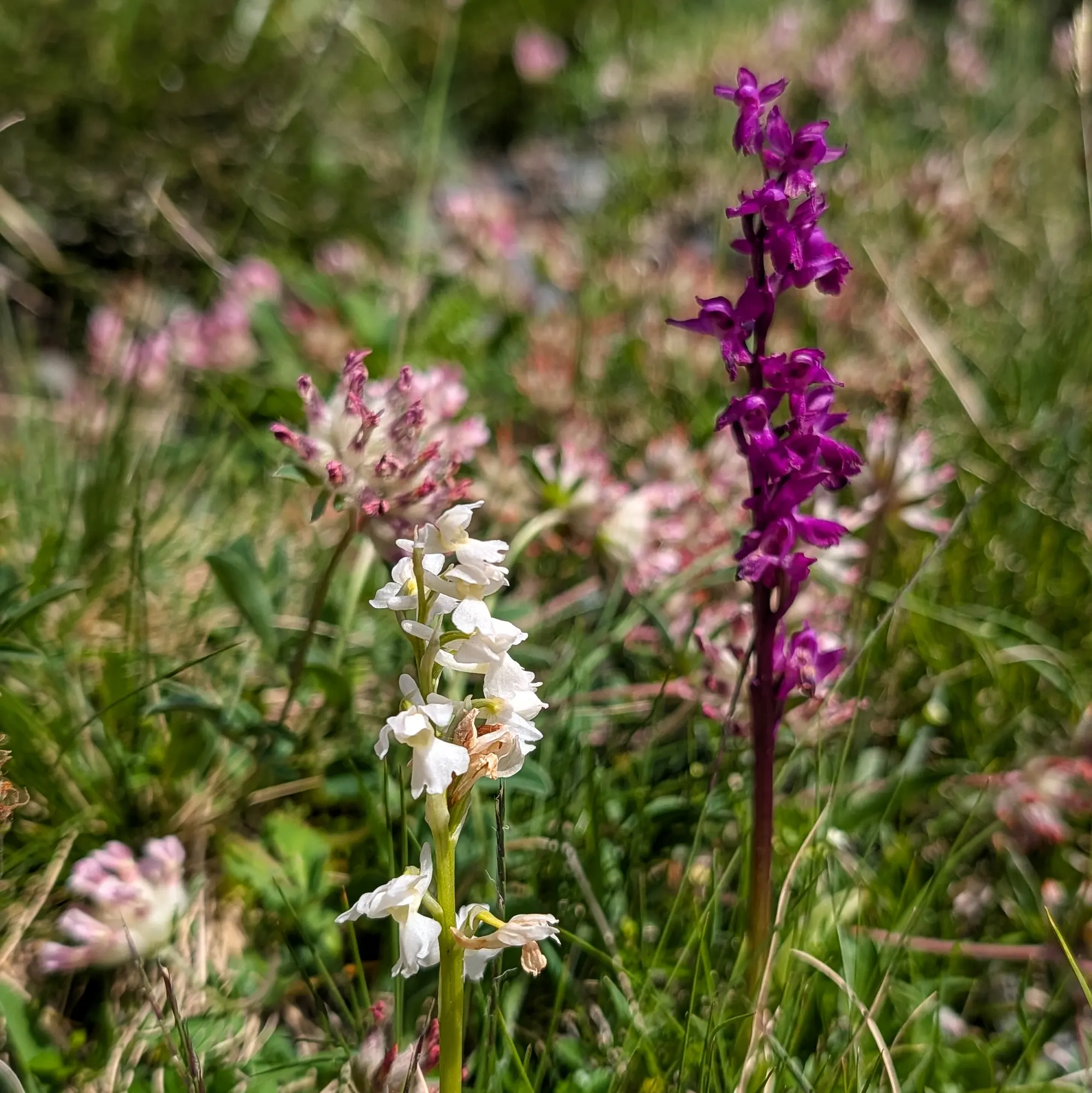
Morphological description: This plant can reach a height of up to 50-60 cm (maximum 45 cm), with a stem that is green at the base and purple at the apex. The root system consists of two rounded or ellipsoidal tubers, characteristic of the genus, classifying it as a geophyte. It features a basal rosette of oblong-lanceolate, pale green leaves, often distinguished by purple-brown spots ("macules"). The inflorescence is a dense, cylindrical spike, generally 6 to 15 cm long, composed of 6 to 20 flowers (or 5 to 20). The flowers are intense purple or pink and measure approximately 2.5 cm. The lateral sepals are ovate-lanceolate and erect. The labellum (central petal) is trilobate, convex, and has crenulate margins; its basal area is lighter or white, dotted with dark spots. The spur is cylindrical, straight, 10 to 18 mm long, and typically positioned horizontally or ascending. Seeds are light brown and fusiform-oblong, notably truncate (short and wide) compared to other orchids.
Habitat and distribution: Orchis mascula is widely distributed across Europe (from Portugal to the Caucasus, including the Faroe Islands and much of Russia), Northwest Africa (Algeria, Tunisia, Morocco), and the Middle East (Lebanon, Syria, Iraq, and Iran). It is present in Catalonia, Spain, and Portugal. It thrives in a wide variety of habitats, from mountain meadows and pastures to forests and dry or stony grounds. It tolerates both full sun and shady areas and can be found from sea level up to 2,500 meters in altitude.
Ecology and conservation: This orchid does not produce nectar (employing deception to attract pollinators) and is pollinated by a broad range of insects, primarily social and solitary bees from the genera Apis, Bombus, Eucera, and Andrena. At the European level, the species is categorized as Least Concern (LC) on the IUCN Red List. Its populations are threatened by poor forest management (such as coniferization or excessive reforestation causing shade), intensive agricultural practices (ploughing, fertilizers), overgrazing, plant collection (especially for salep or ornamental uses), urbanization, and tourism.
Gallery
Related observations
Discover the observations I've made of this species.