Orchis militaris
About the Orchid
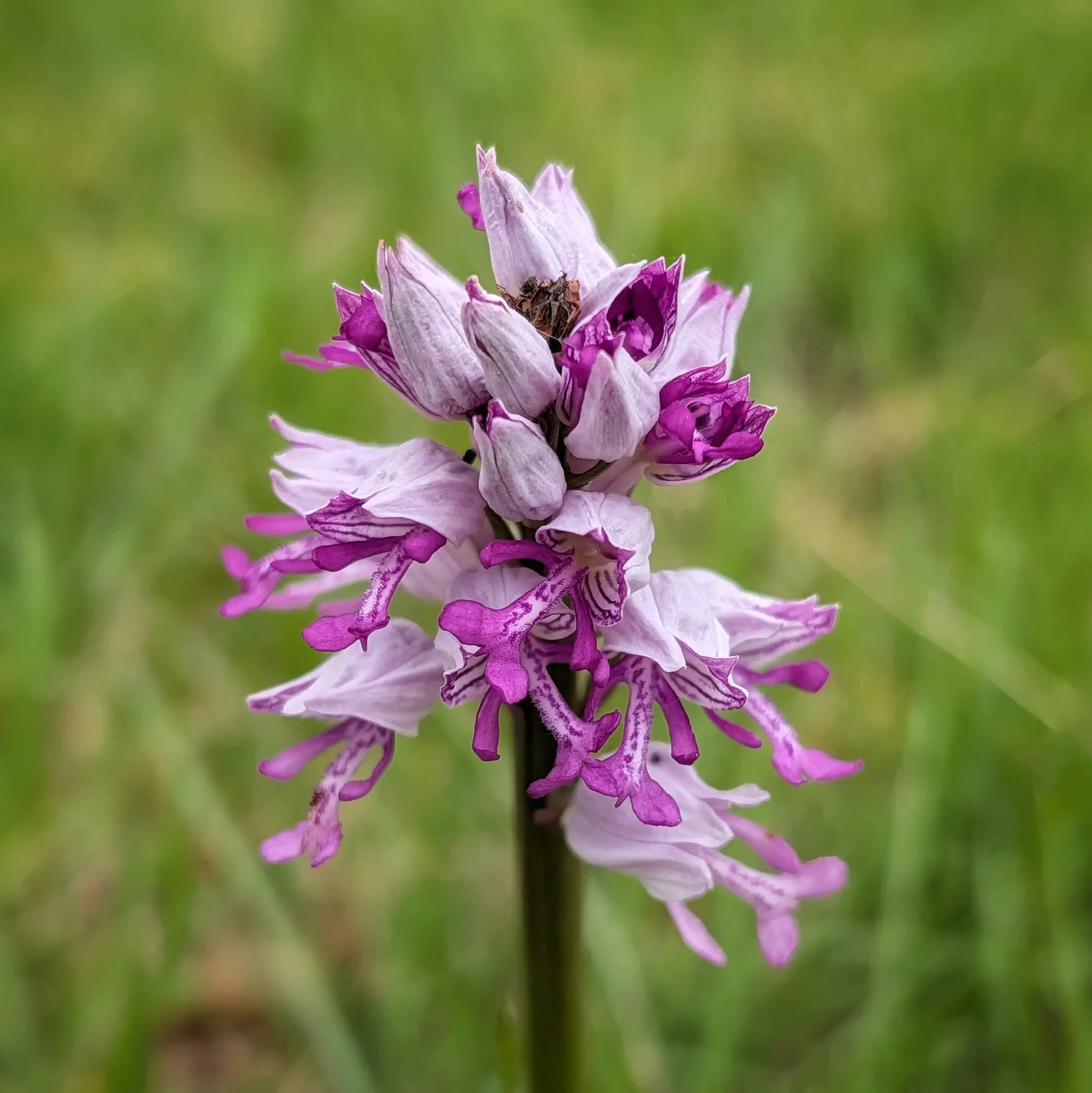
The Orchis militaris, commonly known as the Military Orchid, is a terrestrial orchid species and the type species of the genus Orchis. It owes its common name to the curious appearance of its flowers, which resemble a small man or soldier wearing a helmet.
Morphological description: This plant has a variable height, ranging from 10 to 60 cm. It consists of a robust green stem, with 2 to 5 glossy green basal leaves (without dark spots) and smaller leaves clasping the stem.
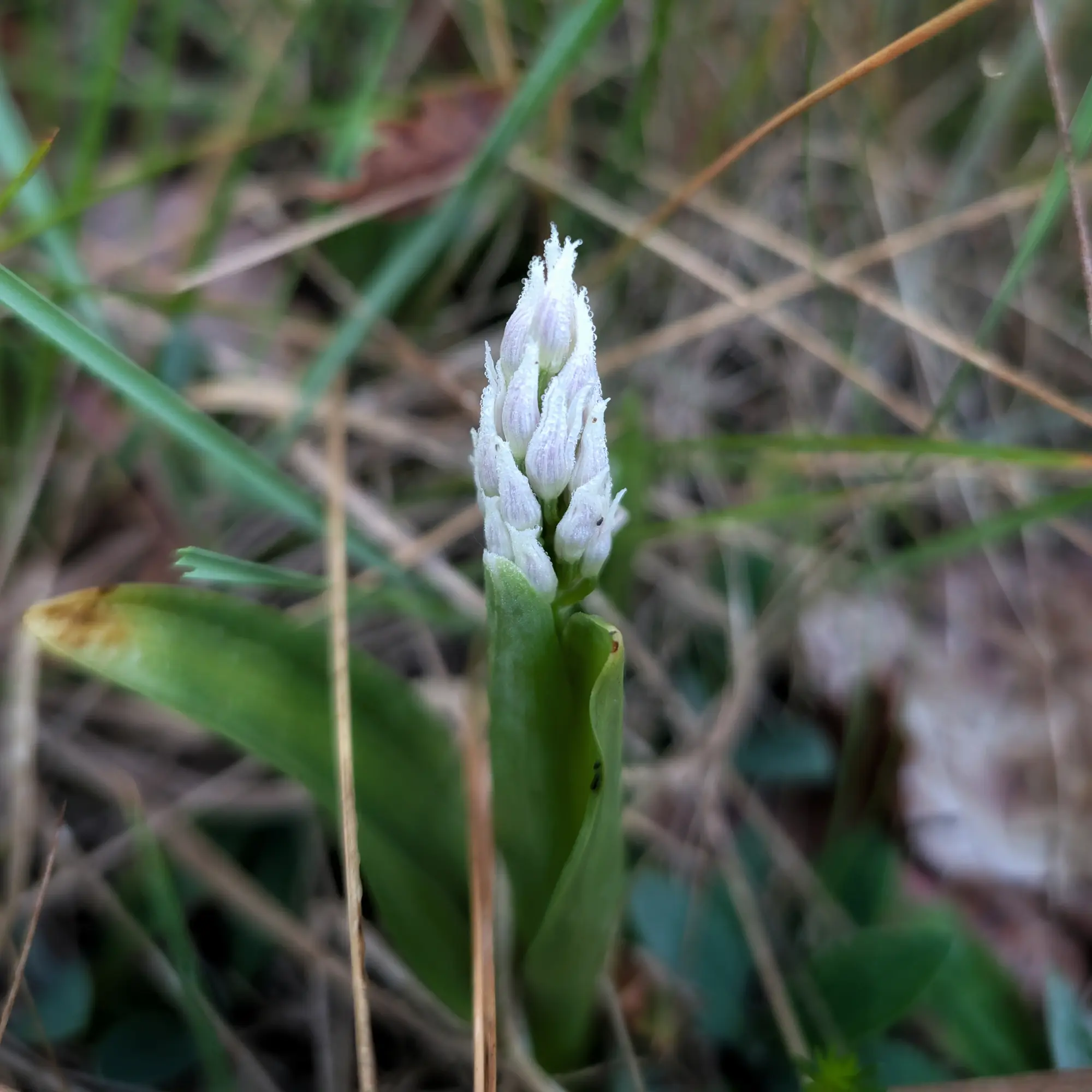
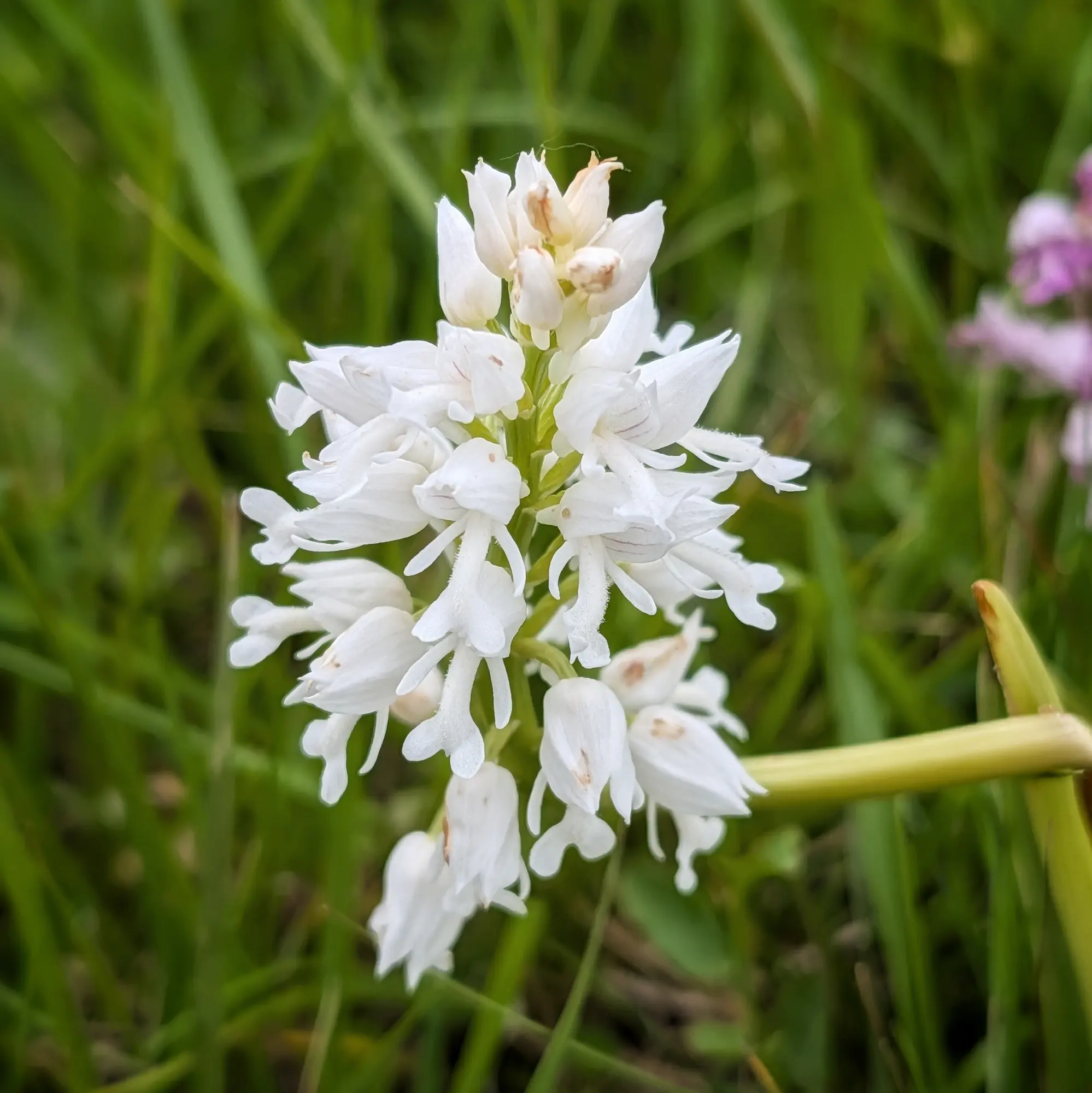
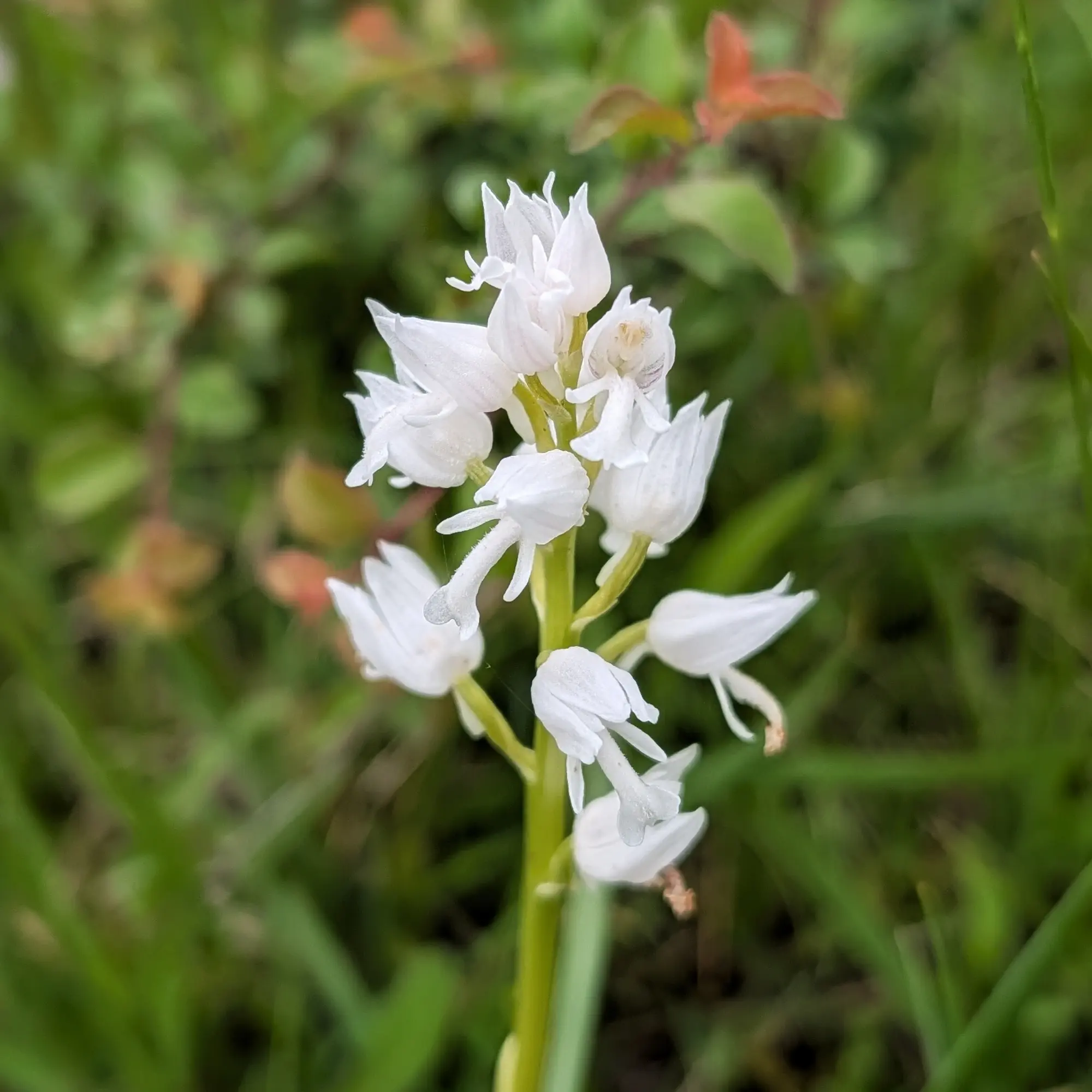
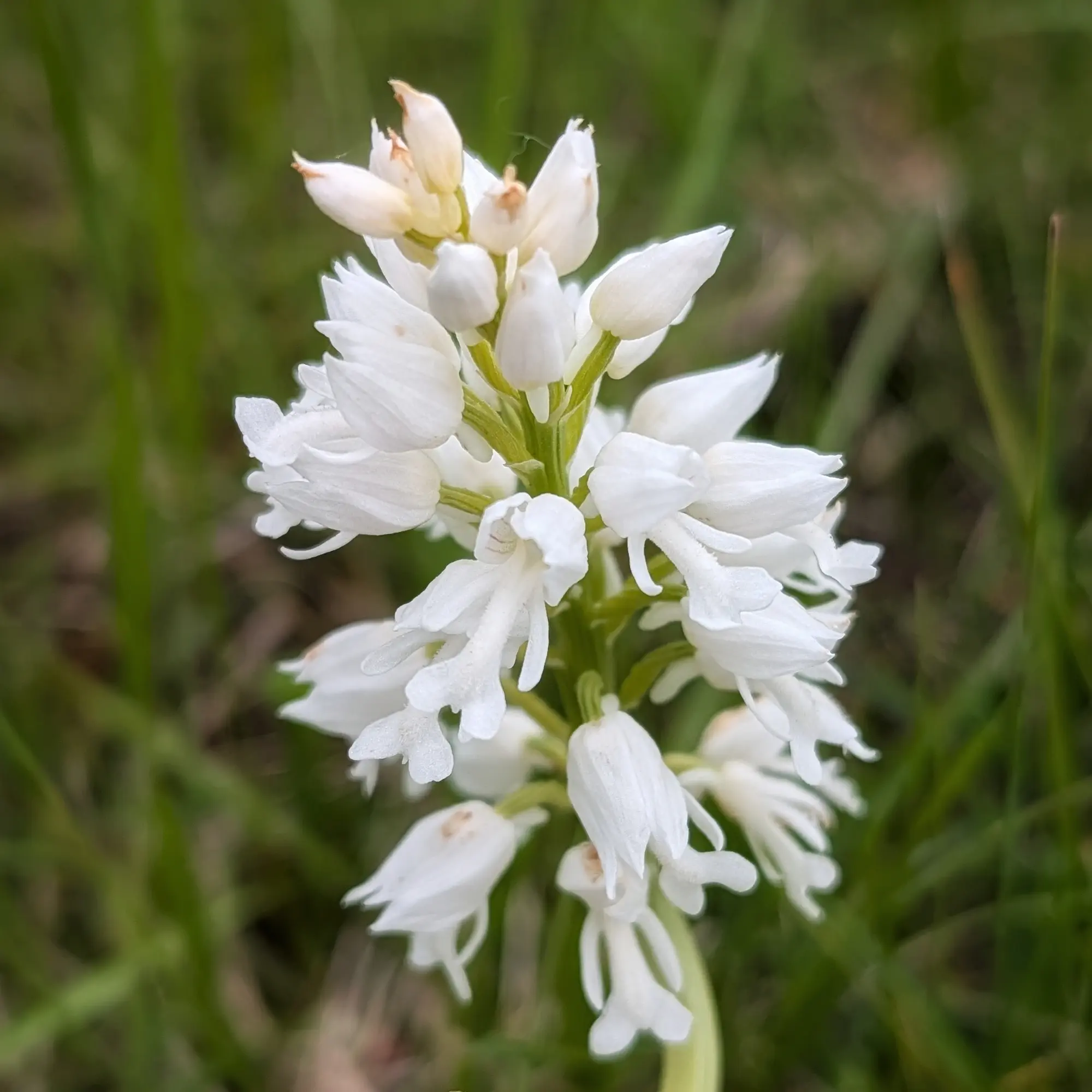
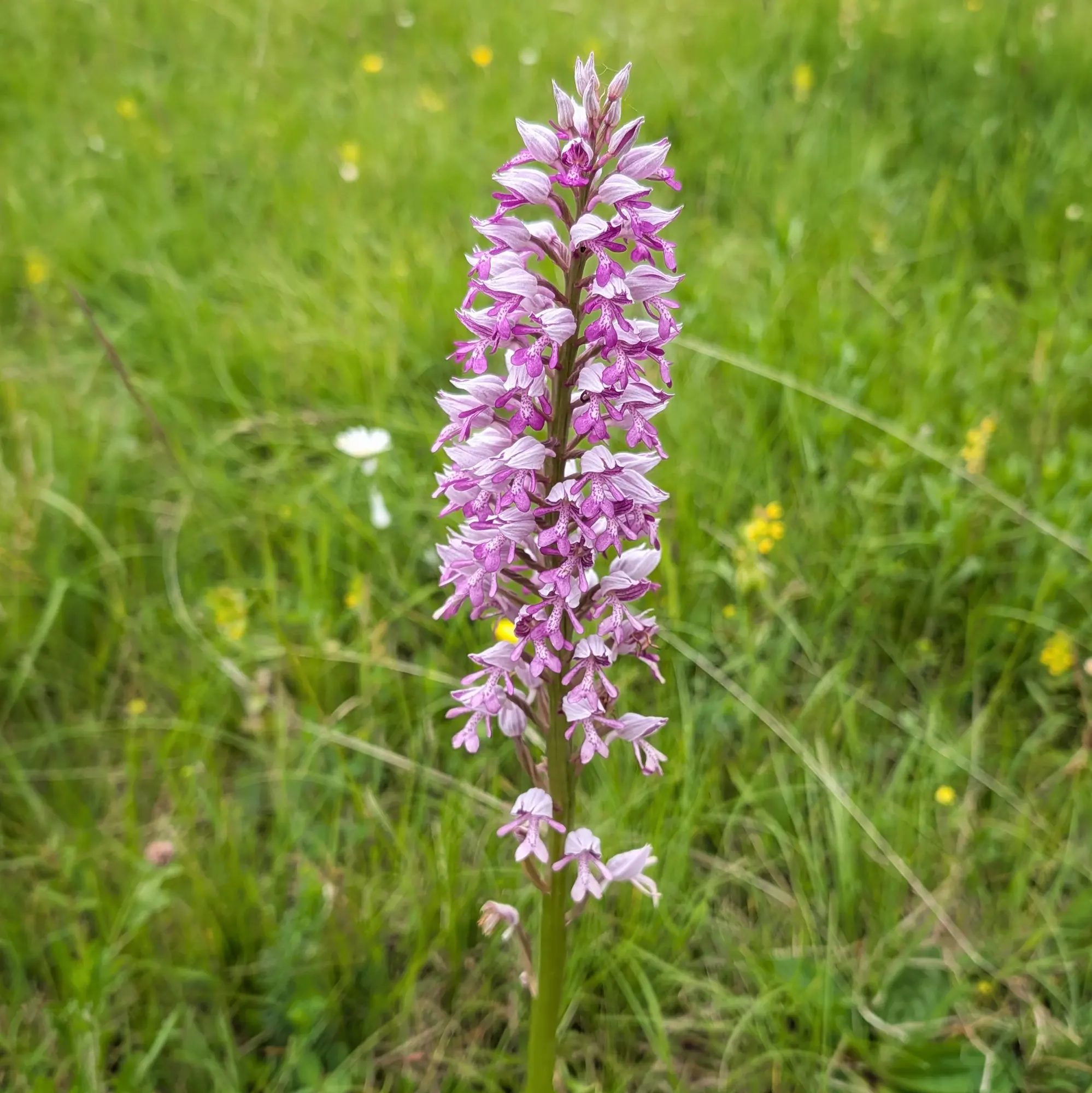
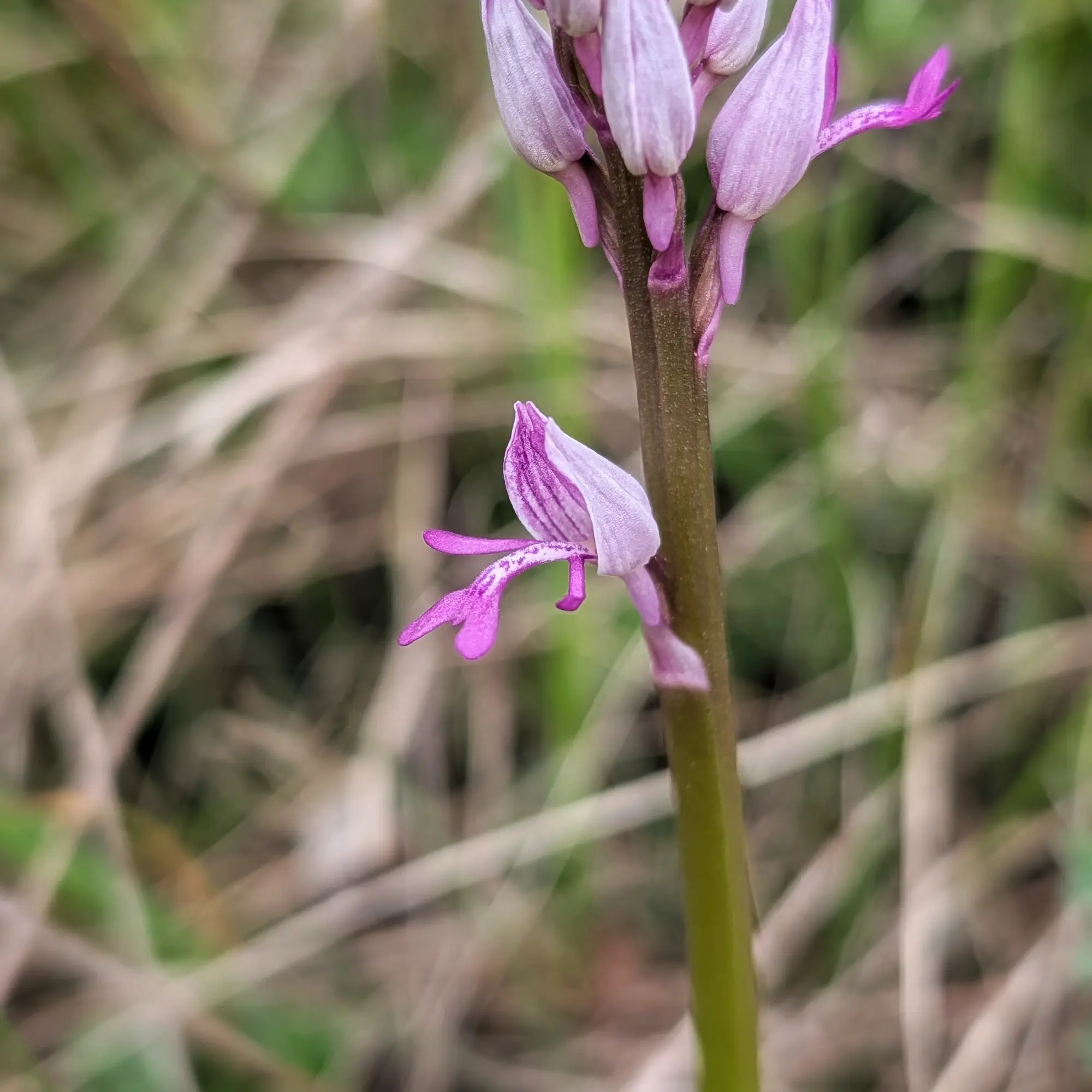
Inflorescence and flowers: The flowers are grouped very closely together at the top of the stem, forming a cylindrical cone or spike with between 10 and 50 flowers. Each flower is perfumed and small. The sepals and lateral petals join at the top to form the famous "helmet", which is lilac or dark purple on the outside and light with purple veins on the inside. The labellum (the lower part of the flower) is light pink or whitish with intense purple or fuchsia dots and spots. This labellum is divided to simulate a human body: it contains two small linear lateral lobes that resemble arms, and a central lobe that splits into two oval parts resembling legs, separated by a small triangular tooth. It has a very short spur, 1 to 2 mm, arched downwards, pinkish-whitish in color.
Life cycle: The life cycle depends on a close symbiotic relationship with mycorrhizal fungi (such as those from the groups Tulasnellaceae, Ceratobasidiaceae, or Sebacinales). Microscopic seeds can only germinate if they form an alliance with a fungus, which feeds them with sugars, minerals, and amino acids, forming a protocorm. The plant can live underground for months or years, feeding exclusively on the fungus. Once the leaves emerge and the orchid is capable of photosynthesis, the relationship balances, with the fungus providing water, nitrogen, and minerals, and the orchid returning sugars.
Pollination: It generally flowers between April and June. Pollination primarily depends on insects, notably various species of bees and bumblebees, such as Apis mellifera, Osmia bicolor, and different species of the genera Andrena, Bombus, and Halictus.
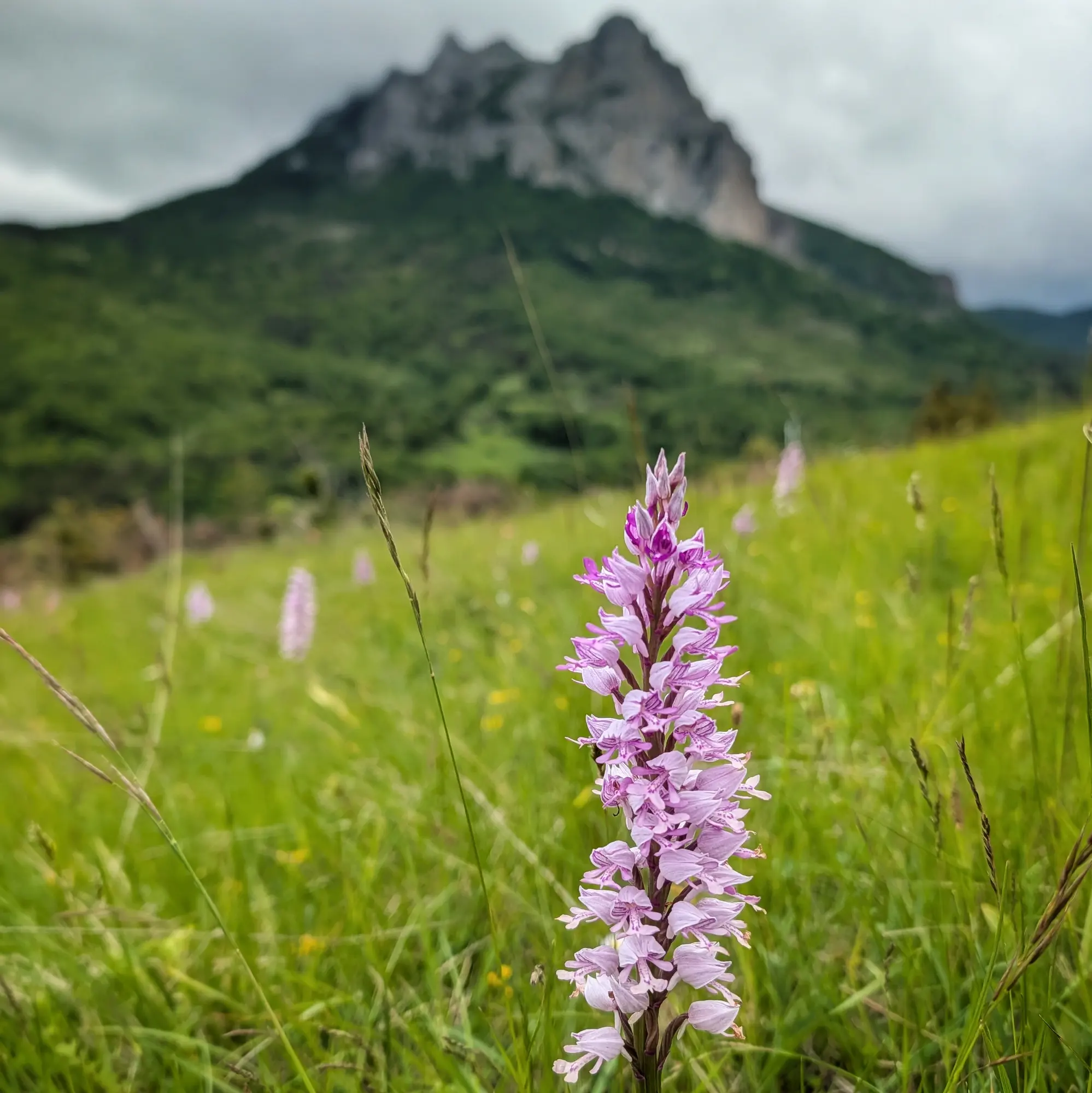
Habitat and distribution: Orchis militaris has a strong preference for alkaline and calcareous substrates. It is found in full sun to partial shade, especially in humid or dry unfertilized meadows, forest clearings, edges of light forests, and undisturbed scrubland and pastures where rosemary, thyme, and lavender grow. In the Iberian Peninsula, it typically grows between 500-600 and 1000 meters in altitude, while in Europe it can reach up to 2000 meters. Its distribution extends across almost all of Europe and temperate Asia: from the Iberian Peninsula and France, reaching eastward through the Caucasus to Siberia and northwestern China. It is also present on Swedish Baltic Sea islands like Gotland and Öland. Curiously, despite its presence in the Peninsula, it is quite rare in strictly Mediterranean areas, for example, it is scarce in Alta Garrotxa.
Conservation status: Globally, within the European continent, it is classified as a Least Concern species on the IUCN Red List of Threatened Species. It also enjoys institutional protection, being included in Annex II of the Washington Convention (CITES) and Annex B of the European Union Wildlife Trade Regulation. Nevertheless, in some places where there are few specimens, it enjoys extremely strict protection (e.g., in Great Britain it is very rare and a protected species). The main threats to its survival come from human action or environmental abandonment, particularly forest reforestation of meadows, the massive invasion of trees and shrubs, and the drainage of its meadow habitats.
Gallery
Related observations
Discover the observations I've made of this species.