Orchis olbiensis
About the Orchid
The Orchis olbiensis, is a herbaceous geophyte plant belonging to the Orchidaceae family. Its specific epithet is derived from the ancient Roman city of Olbia (modern-day Hyères, southern France). This species often causes botanical confusion as it is very similar to Orchis mascula, but can be distinguished by its smaller size, laxer inflorescence, and by flowering almost two months earlier.
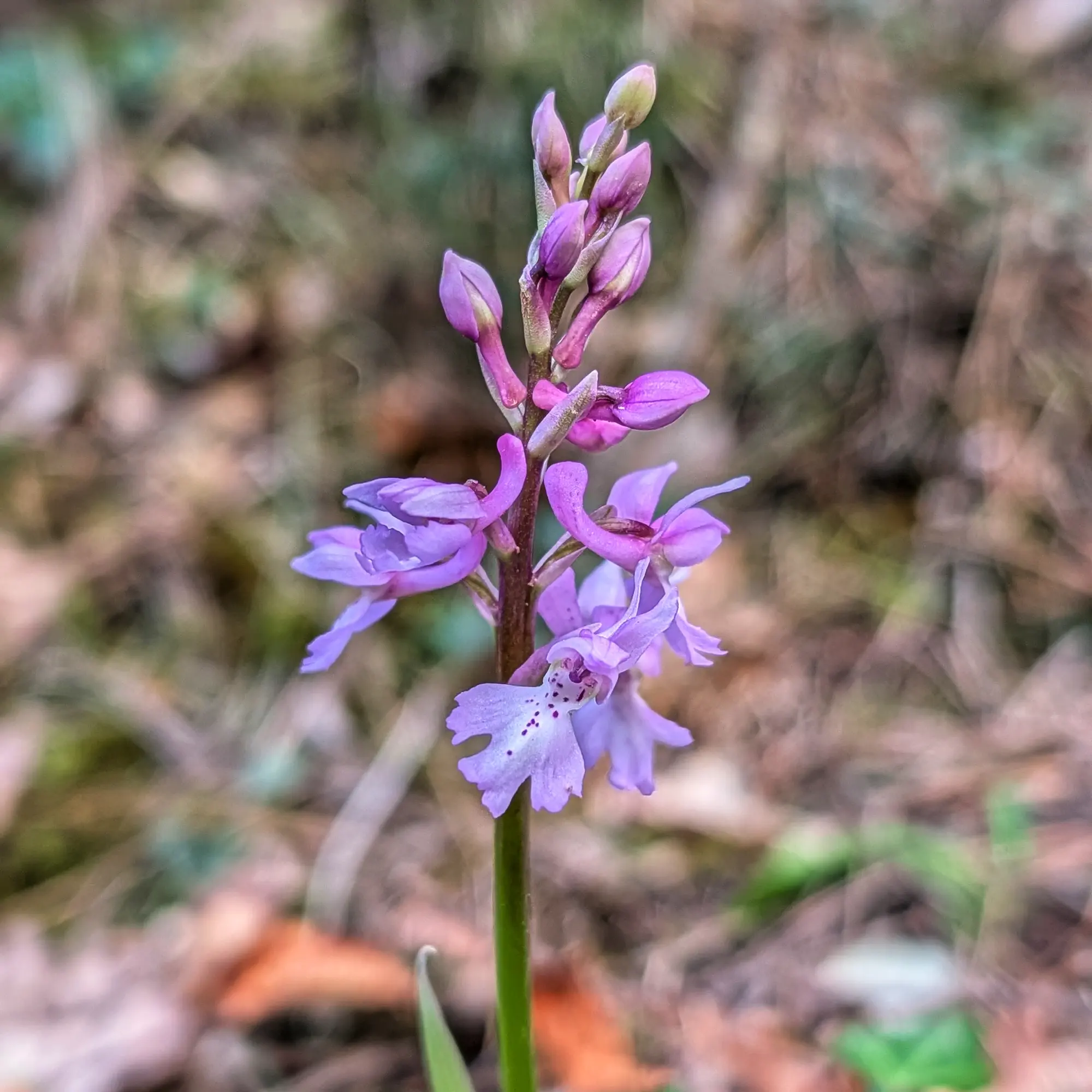
Morphological description: This is a relatively small plant, typically reaching between 10 and 30 cm in height. The root system consists of two rounded or ellipsoidal rhizotubers. The stem is green at the base, acquiring purplish tones towards the apex. The leaves, oblong-lanceolate in shape, are arranged in a basal rosette, and can be entirely green or display reddish, brownish, or purplish spots.
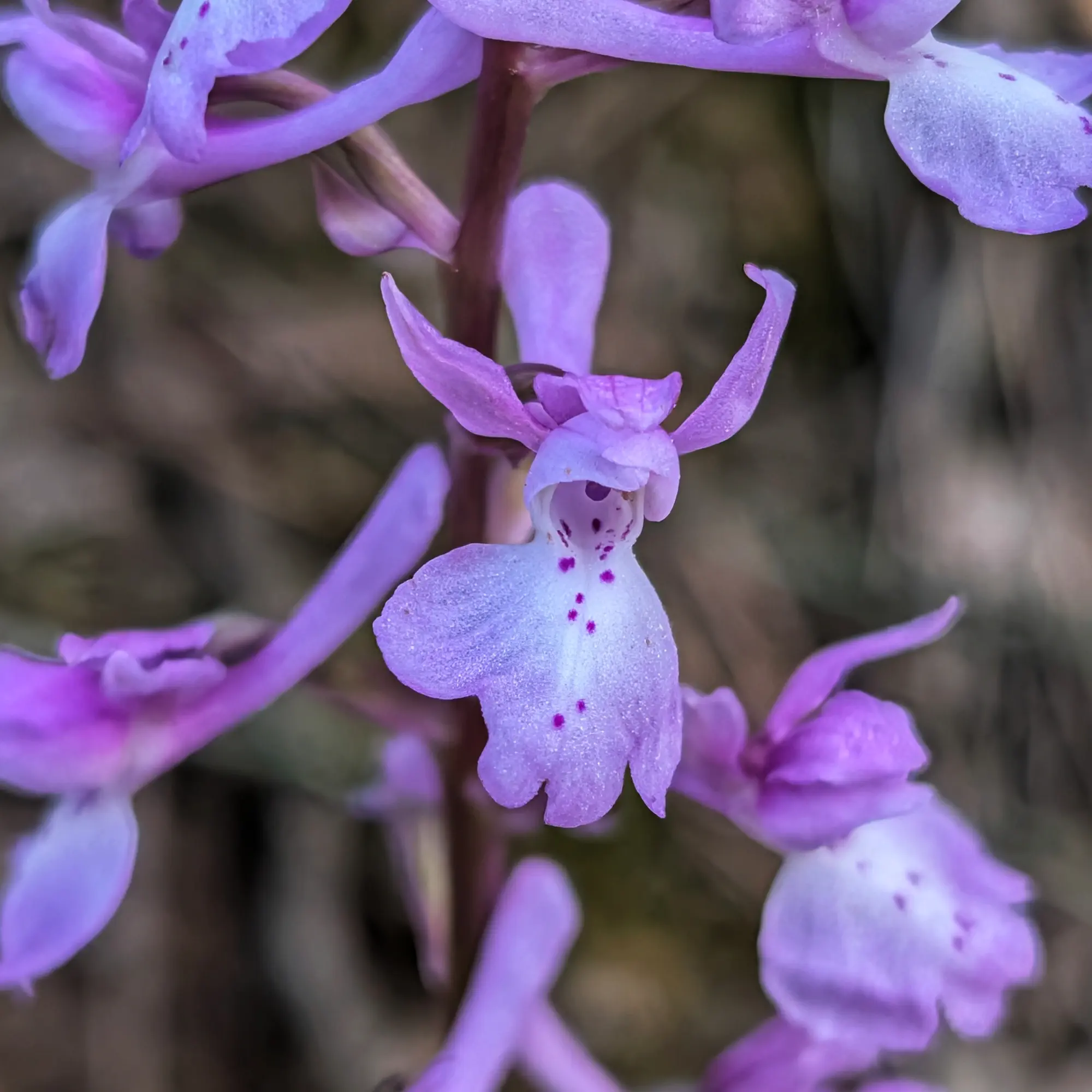
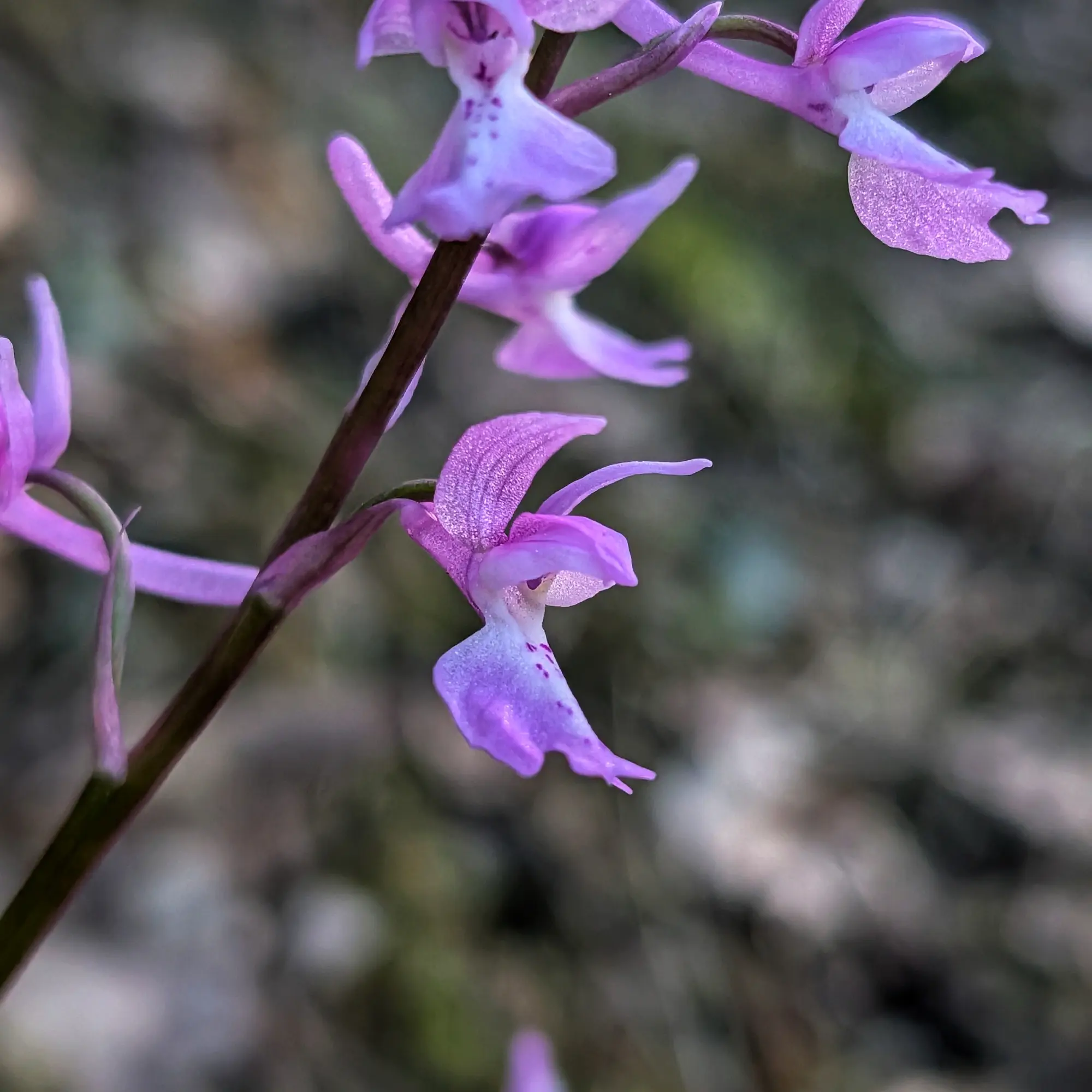
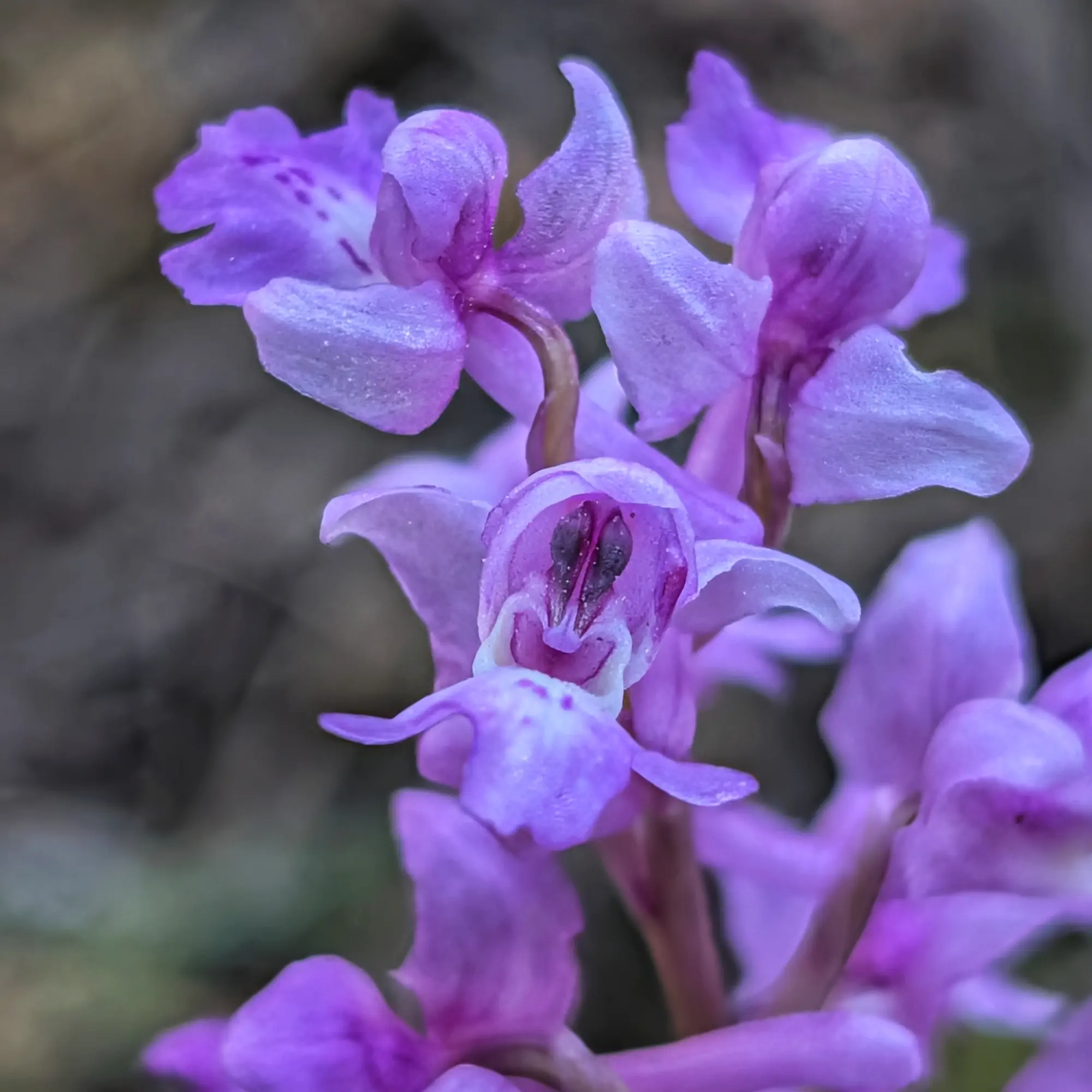
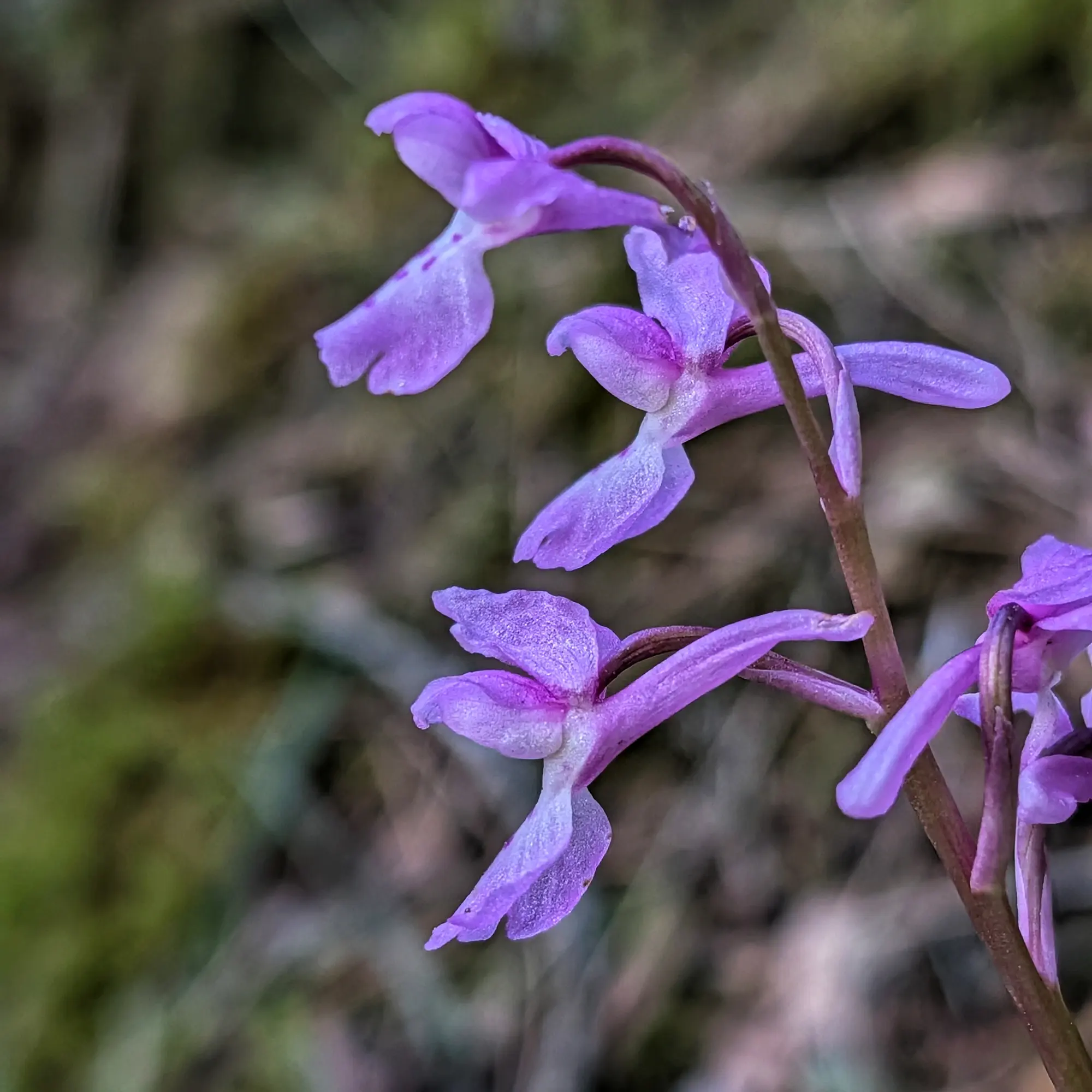
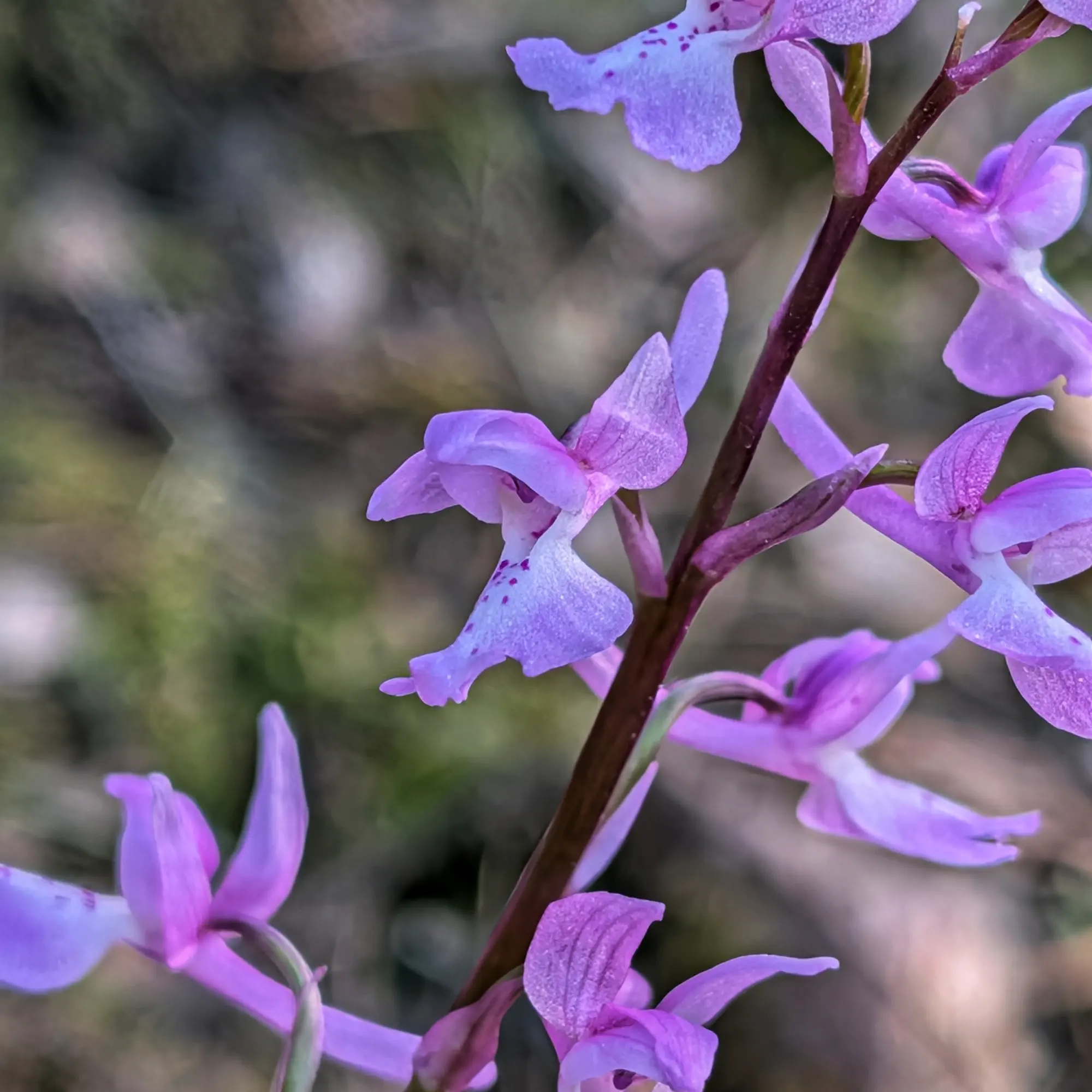
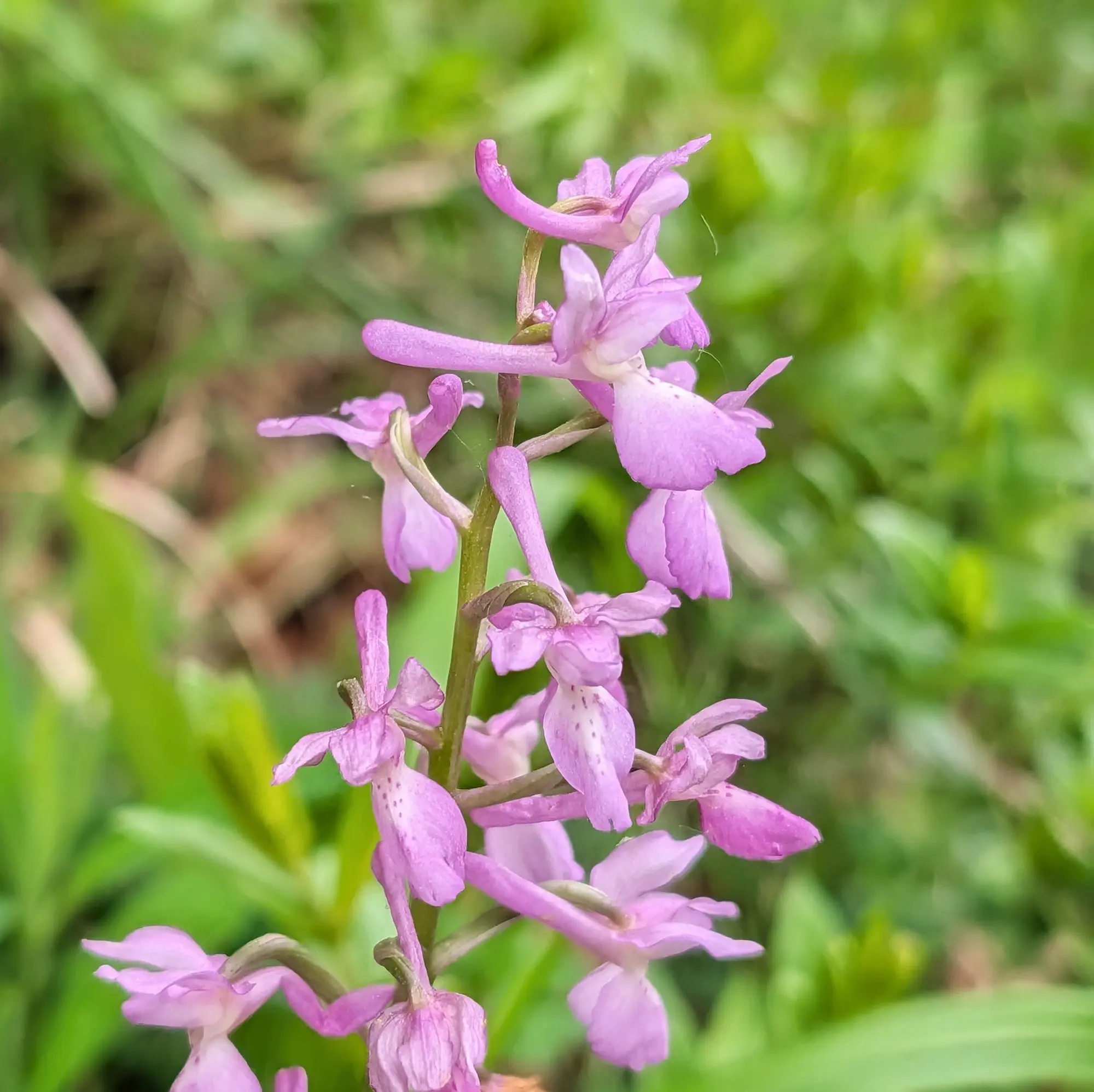
The inflorescence is lax, bearing 6-12 flowers (up to 20-30 in some geographical variants) which show a great variability in color, from pure white to pale pink, strong pink, or lilac. The lateral sepals are ovate-lanceolate and erect, while the central sepal and petals form a helmet-like structure. The labellum is more or less straight and trilobed, with a white or very pale center, broad, and covered with very evident purplish spots or maculae. It also possesses an arcuate spur, often curved upwards, which is longer than the ovary.
Habitat and distribution: It prefers to grow in calcareous and basic soils, although it can be indifferent to soil type. It is found from sea level up to 1,750 meters in altitude (meso-supramediterranean zones). Its typical habitat includes poor meadows, garrigues, pine forests, holm oak forests, and forest clearings, where it often shelters under thorny shrubs to protect itself from grazing livestock. It grows in both shaded and full sun areas. Its distribution is widespread across the Western Mediterranean, present in the Iberian Peninsula, southern France, parts of western Liguria (Italy), and North Africa.
Ecology and distinctive features: Flowering is very early in Mediterranean climates, with the first flowers appearing in late winter (February or March) and continuing until mid-May or June, strongly depending on altitude. Orchis olbiensis does not produce nectar and employs a visual deception mechanism to attract hymenopteran pollinators (such as bees and bumblebees from the genera Apis, Eucera, Andrena, or Bombus), mimicking the appearance of other flowers that do offer a reward. The global conservation status of this species is listed as "Not evaluated".
Gallery
Related observations
Discover the observations I've made of this species.