Orchis provincialis
About the Orchid
The Orchis provincialis, commonly known as the Provence orchid, is a medium-sized terrestrial orchid belonging to the Orchis mascula group of species. It was first described in 1806 by the Italian botanist and politician Giovanni-Batista Balbis in the Var department, Provence region (southern France). The genus name, Orchis, comes from Greek and means 'testicle', referring to the appearance of its subterranean tubers, while the epithet provincialis indicates its place of discovery in Provence.
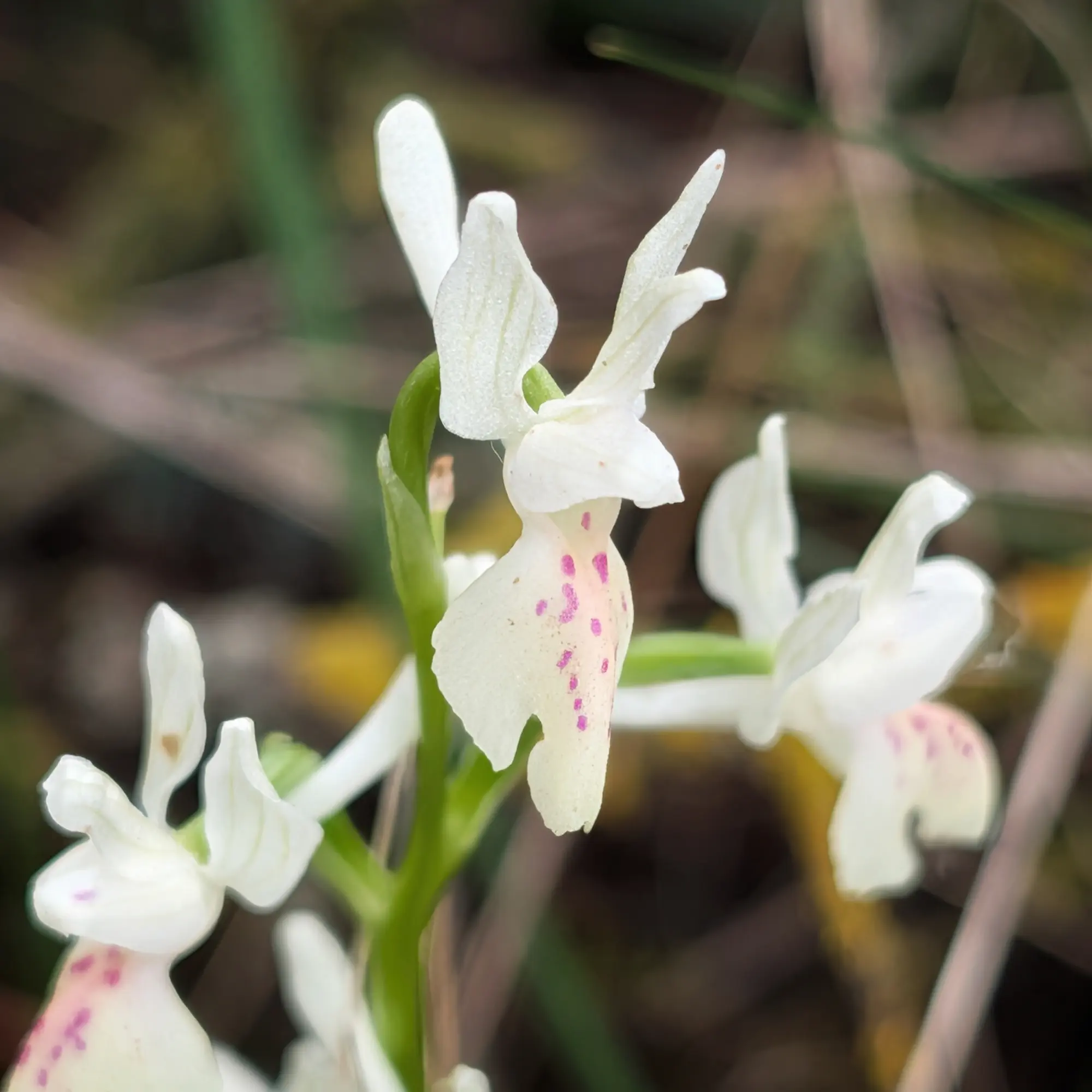
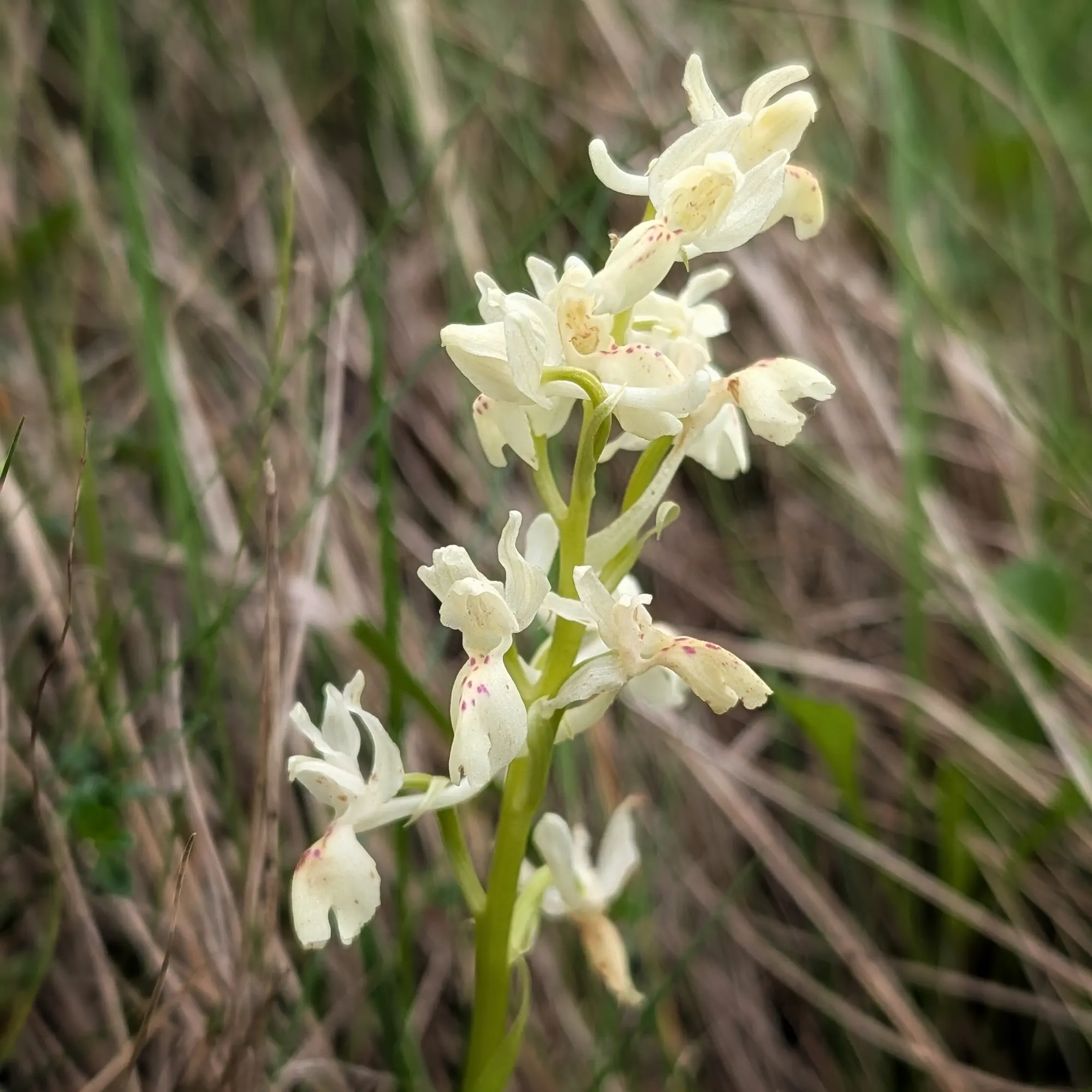
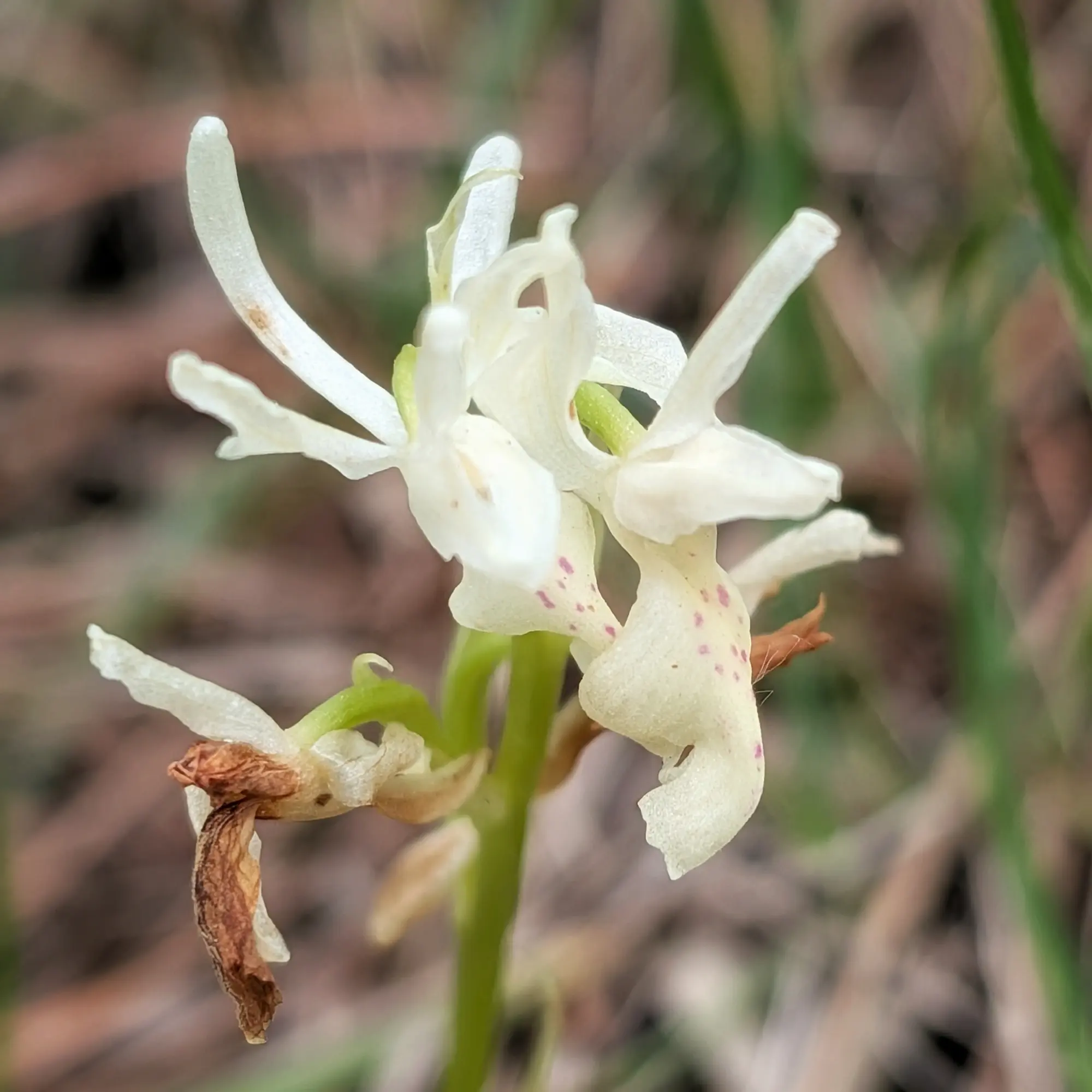
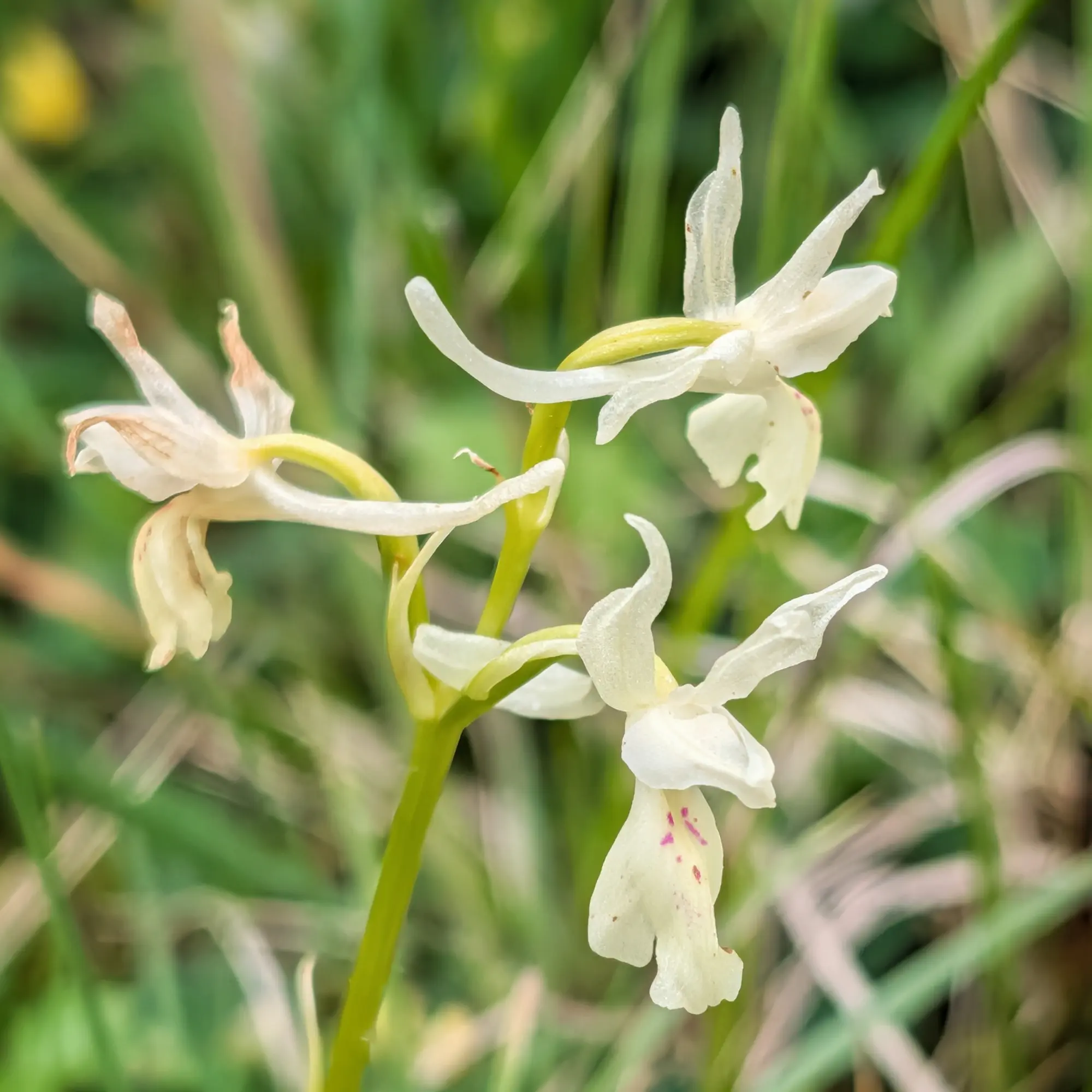
Morphological description: It is a perennial herbaceous plant that reaches a height of 12 to 35 cm. It features a poorly defined basal rosette formed by 3 to 8 broadly lanceolate or oblong leaves, highly characteristic for presenting large dark purple or brown spots. The inflorescence is a loose, oblong spike containing between 5 and 20 large, pale yellow or whitish flowers. The sepals and petals open laterally and upwards without forming a closed "hood." The labellum measures between 11 and 16 mm, is trapezoidal (slightly trilobed), and curves downwards in its distal half. The center of the labellum is a more intense yellow or orange and is adorned with small reddish or purple spots. It has a cylindrical, slender, and elongated spur (13 to 20 mm) that curves gently upwards.
Habitat and distribution: It prefers spaces in full sun or cool semi-shade and commonly grows in open forests, meadows, scrublands with bushes, forest edges, and even in terraced olive groves. Regarding the soil, it can thrive in both calcareous (basic) and acidic substrates, preferring dry soils and avoiding very humid ones. It is found from sea level up to 1,300 - 1,400 meters of altitude. This species is predominantly Mediterranean and Central European, extending from northwest Africa and the Iberian Peninsula (Spain) through France, Switzerland, Austria, and Italy, to the Balkans, Greece, Turkey, and the Crimean Peninsula. Its flowering period is variable depending on latitude, starting from mid-March or April in warmer areas and extending until early June in more northern latitudes. It attracts insects using a food deception strategy, with bumblebees being its primary pollinators.
Conservation status: Although it extends over a very wide territory where it forms dispersed colonies, it can be considered rare and very localized in some regions, such as the Algarve or Crete. Its exact threat status on the IUCN Red List at a global scale is not specified in the provided sources.
Gallery
Related observations
Discover the observations I've made of this species.