Orchis purpurea
About the Orchid
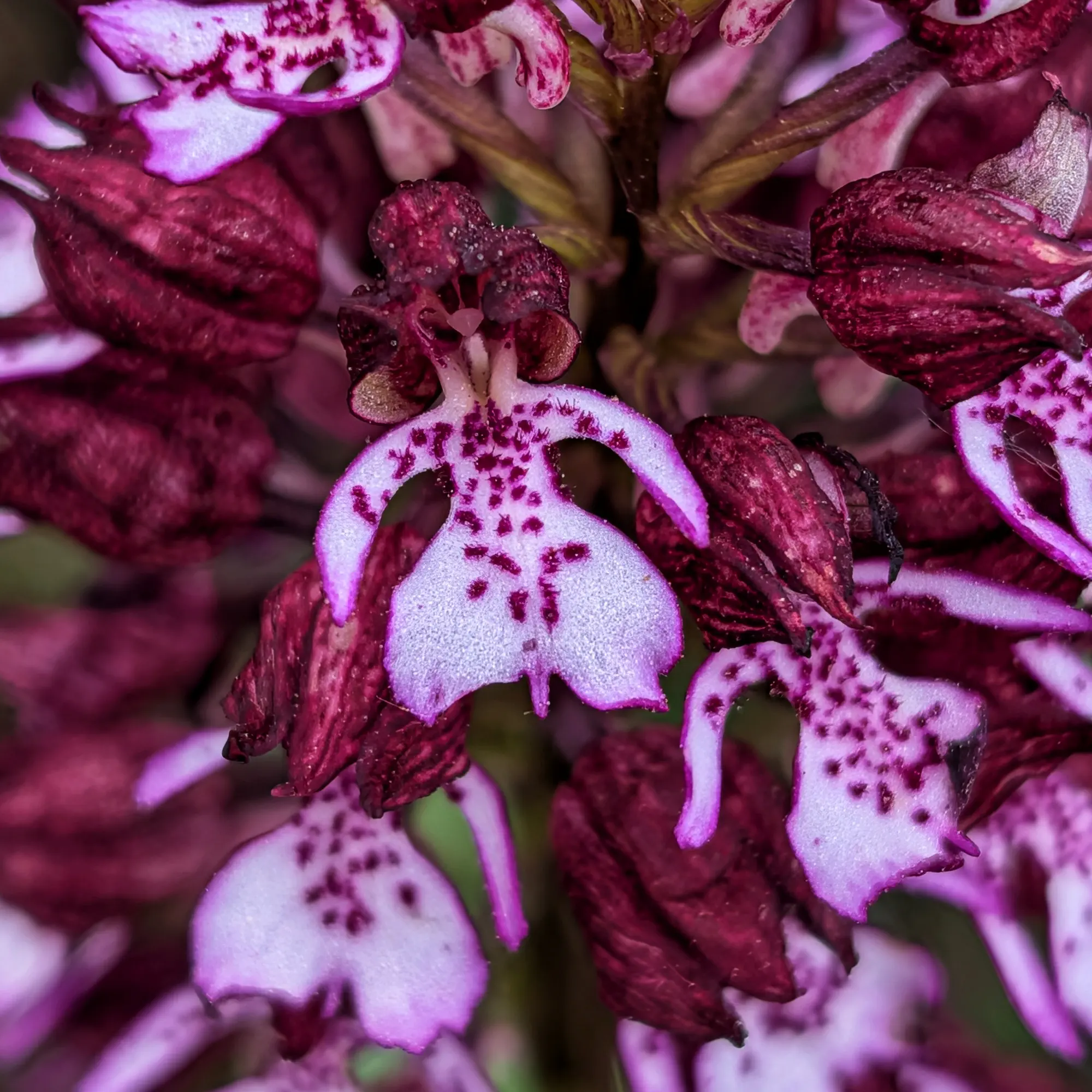
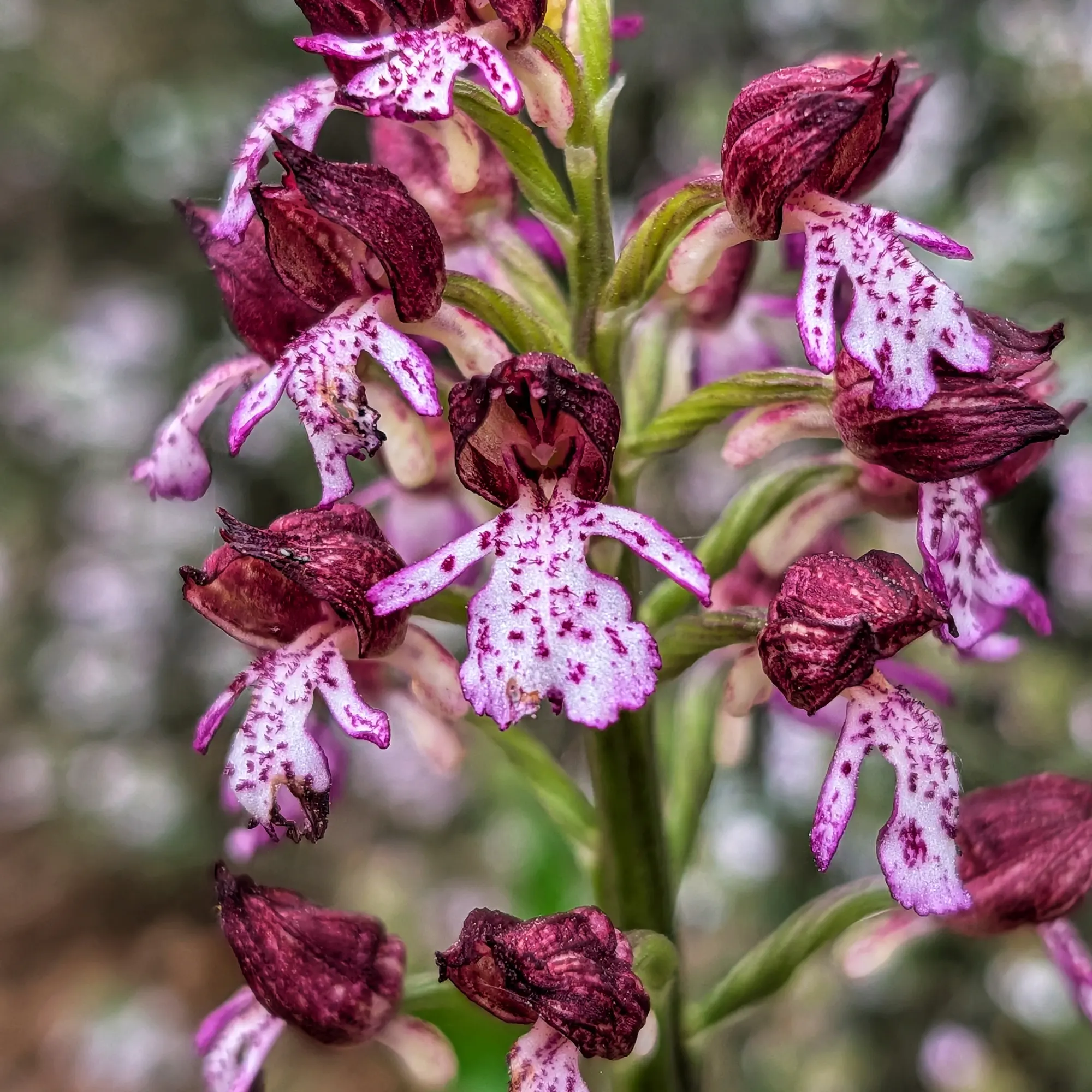
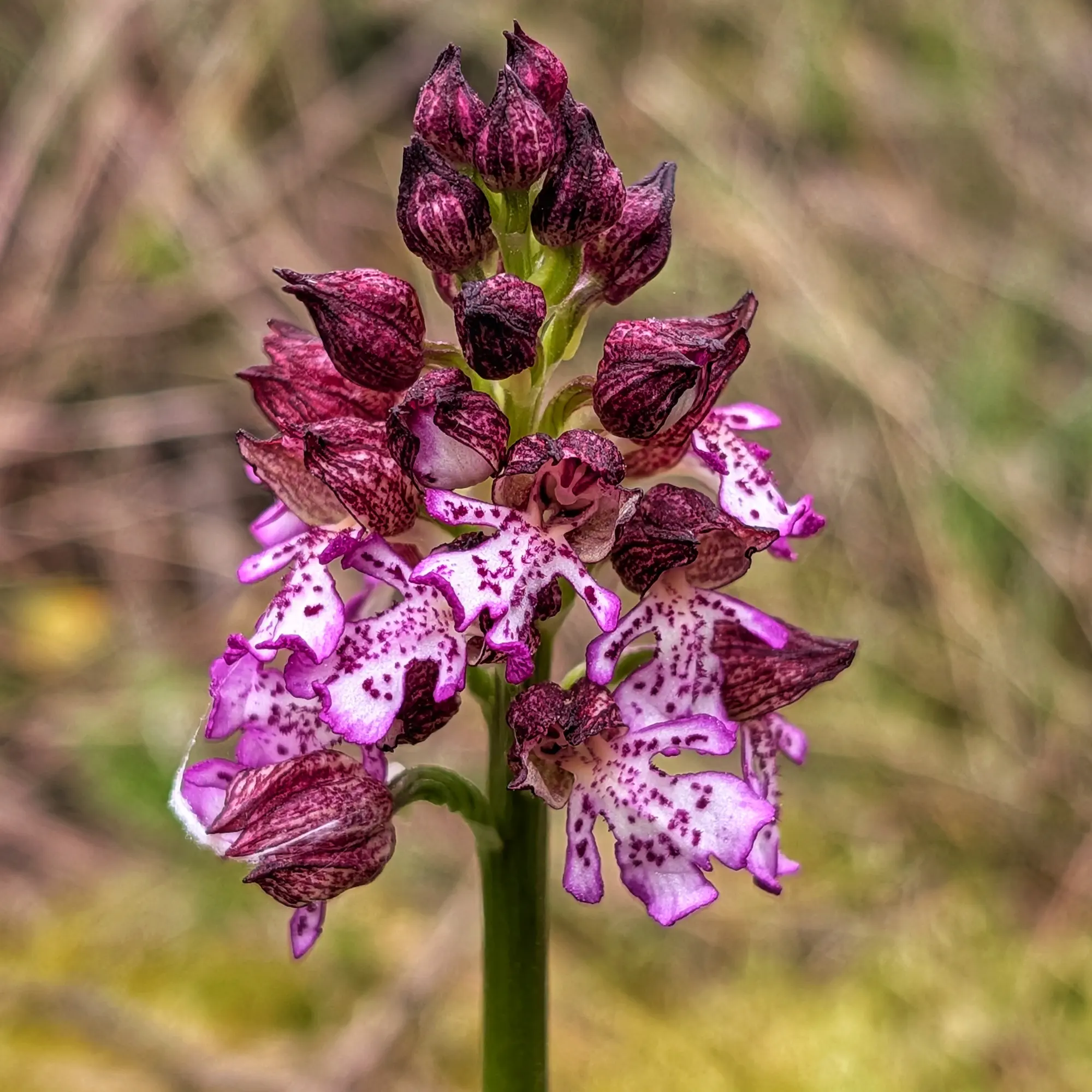
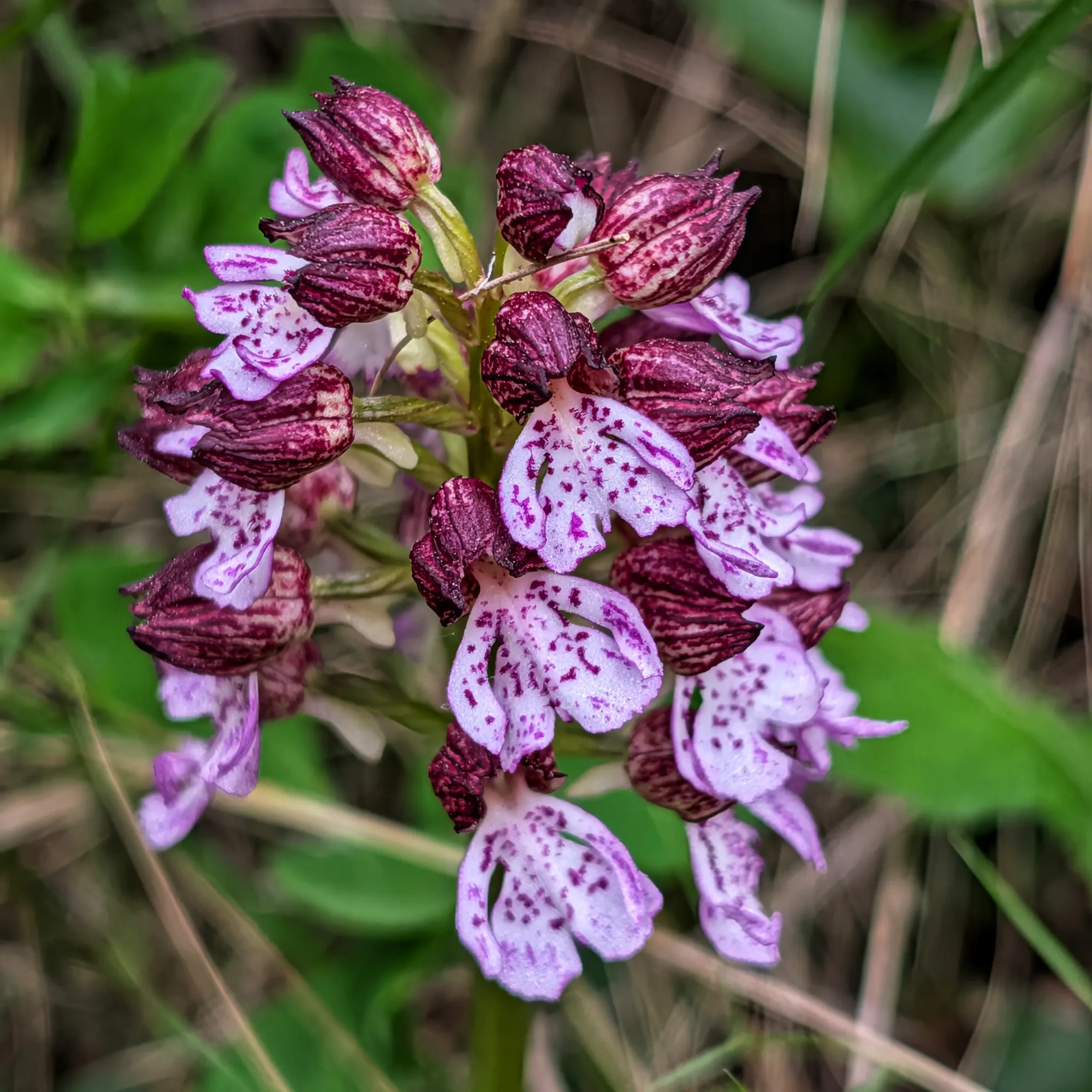
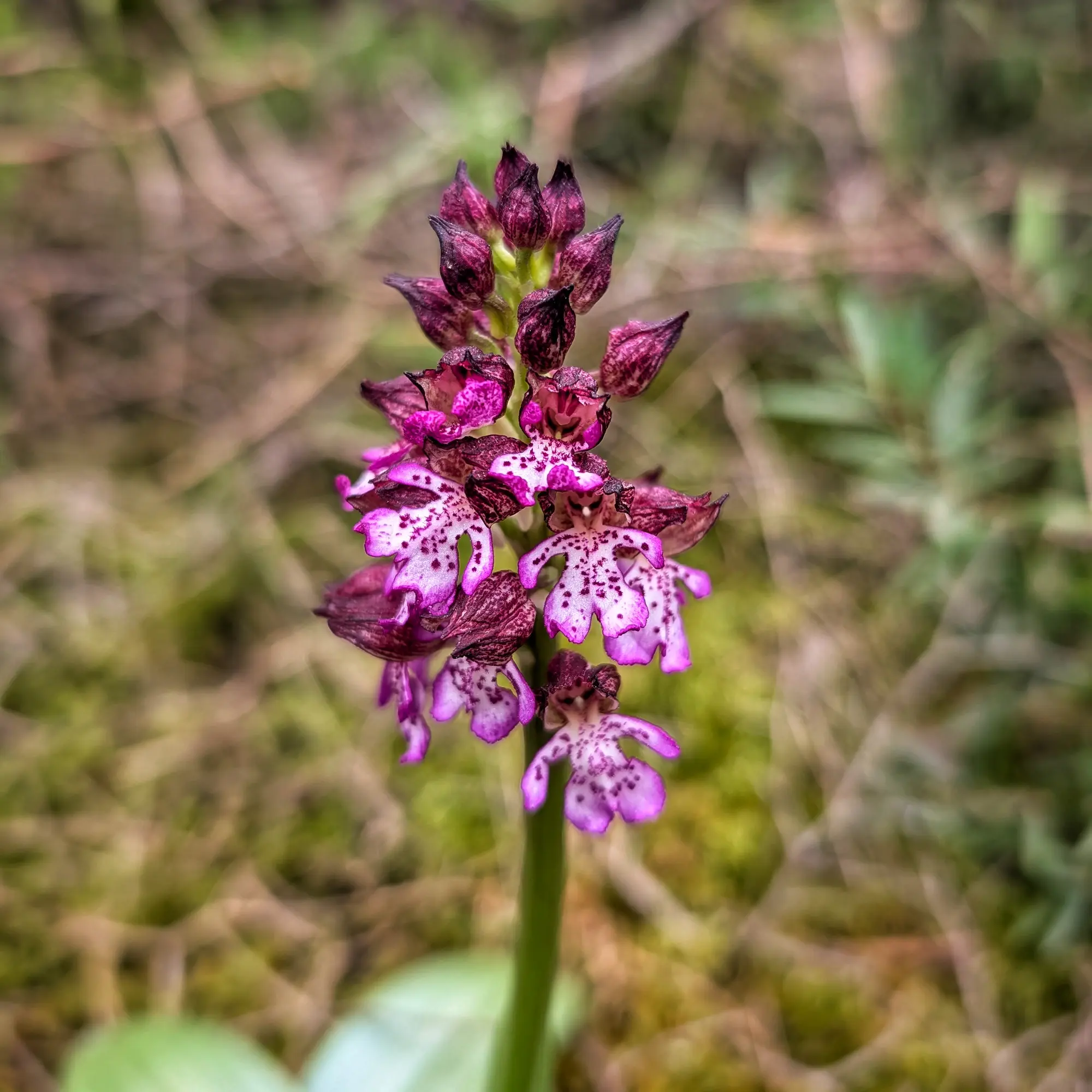
The Orchis purpurea is a robust herbaceous plant from the orchid family (Orchidaceae) belonging to the genus Orchis. This species is notably distinguished by having anthropomorphic flowers that visually resemble the figure of a delicate lady or an old woman.
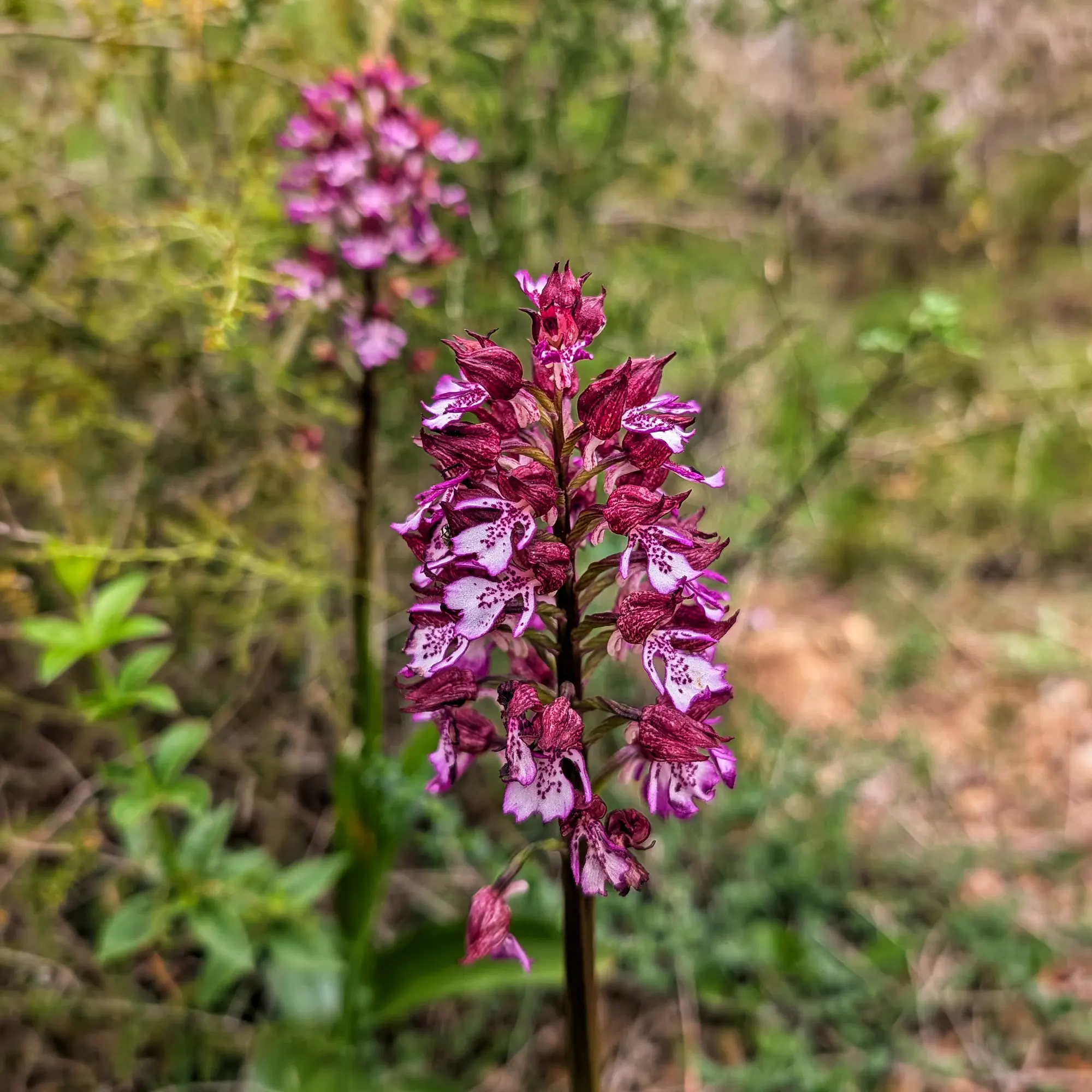
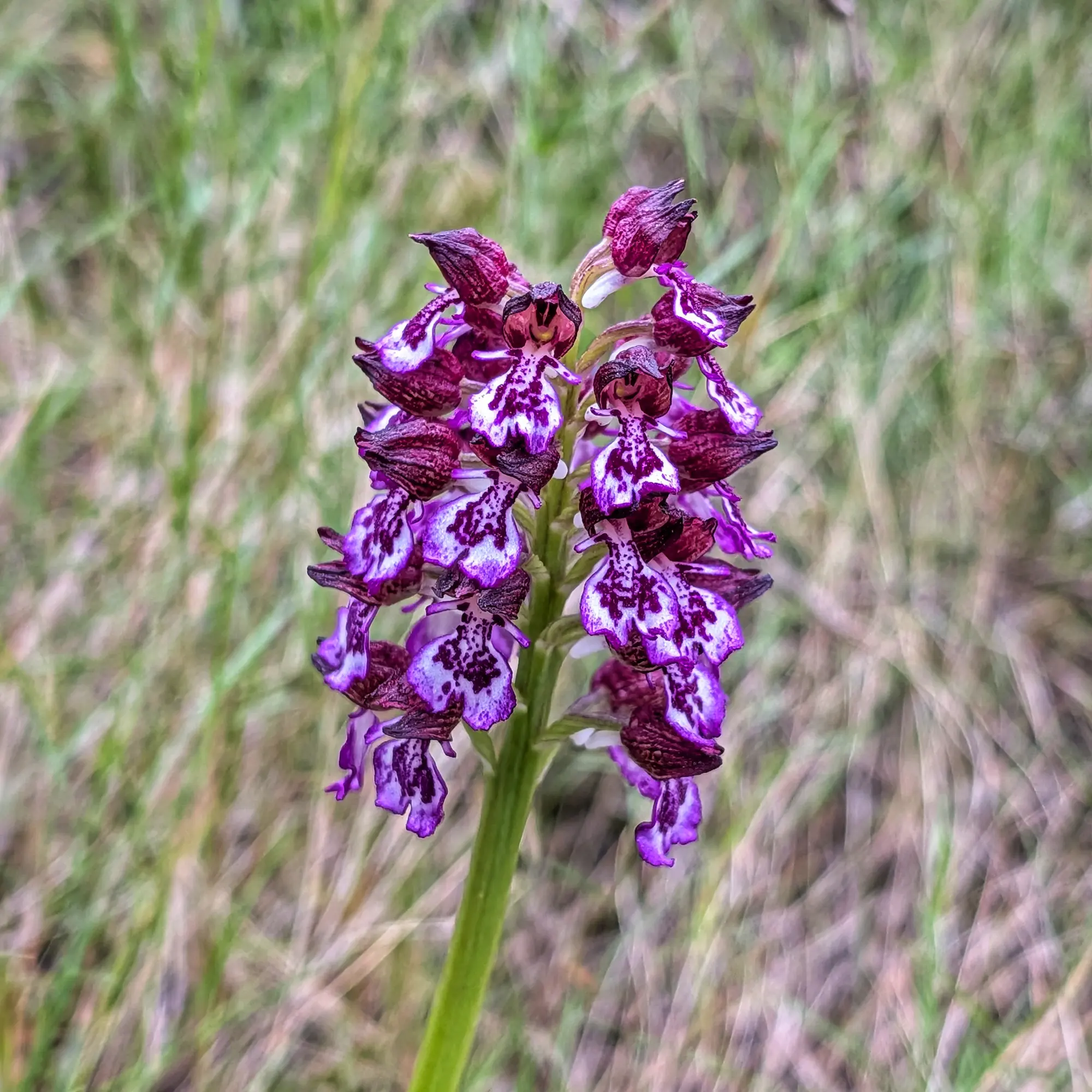
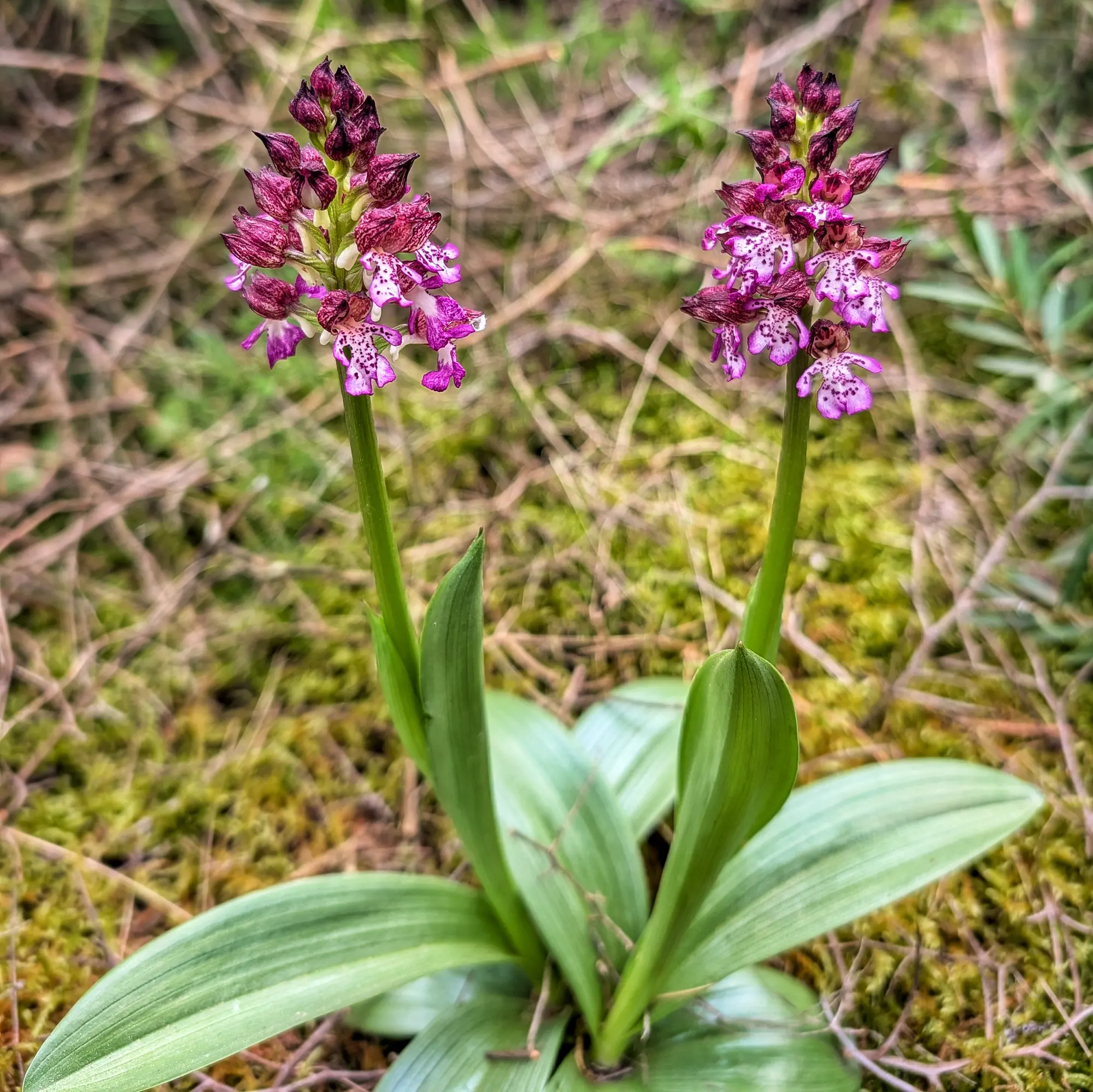
Morphological description: It is a plant that typically grows between 30 and 100 cm tall, often reaching 80 or 90 cm. At its base, it forms a rosette of 3 to 8 large leaves (up to 17-21 cm long and 7 cm wide), with a fleshy texture, shiny green color, and no spots. It also has two upper leaves that embrace the stem and may exhibit purplish tones. The inflorescence is large and dense, forming a spike with about 50 flowers, though spectacular specimens with up to 200 flowers have been recorded. The flowers are characterized by upper sepals and petals that form a "hood" of dark red, violaceous, or purple color (sometimes with a green base). The lower lip or labellum is white or pale pink, densely speckled with purplish or purple hairs, and is divided into three lobes that form the "lady" figure: two thin "arms" on the sides and a wide, rounded central "skirt" that usually has a small tooth in the middle. At the back of the flower, there is a downward-pointing spur that measures half the length of the ovary. Underground, it possesses perennial tubers, with the old tuber annually replaced by a new one.
Ecology and life cycle: Its life cycle is typical of a perennial and quite long-lived plant, capable of living between 44 and 60 years. The first leaf shoots appear in February, reach their maximum development in May, and the flowering period extends from late April to June, lasting about 3 or 4 weeks. From August onwards, the capsules open, dispersing the seeds. Like other orchids in its group, its seeds are very small, dust-like, and lack endosperm, requiring association with mycorrhizal fungi to germinate in nature. Once the seed germinates, it forms an underground protocorm that takes approximately 3 years to develop into a seedling with leaves. Adults also have the ability to enter dormancy and remain underground for some seasons.
Pollination and habitat: This species employs food deception, attracting insects with the appearance and olfactory signals characteristic of nectar-producing flowers, despite producing no nectar itself. Although it is a self-compatible plant, it requires visits from pollinators (primarily flies and small bees, such as Apis mellifera, Bombus terrestris, Andrena sp., or Halictus sp.). It typically inhabits preferentially calcareous or alkaline soils, and occasionally neutral ones. The species thrives optimally in forest environments and forest slopes (especially oak forests and mixed deciduous forests), but also proliferates in pastures, clearings, forest edges, and scrublands. It normally requires areas with some partial shade or canopy openings to flower regularly and can be found at altitudes between 0 and 1,350 meters above sea level.
Conservation: The International Union for Conservation of Nature (IUCN) classifies the status of this species for Europe and the European Union as "Least Concern," although it can be very rare and endangered in regions at the northern geographical limit of its distribution, such as the United Kingdom. It is strictly protected and regulated under Annex II of the international CITES convention.
Gallery
Related observations
Discover the observations I've made of this species.