Orchis simia
About the Orchid
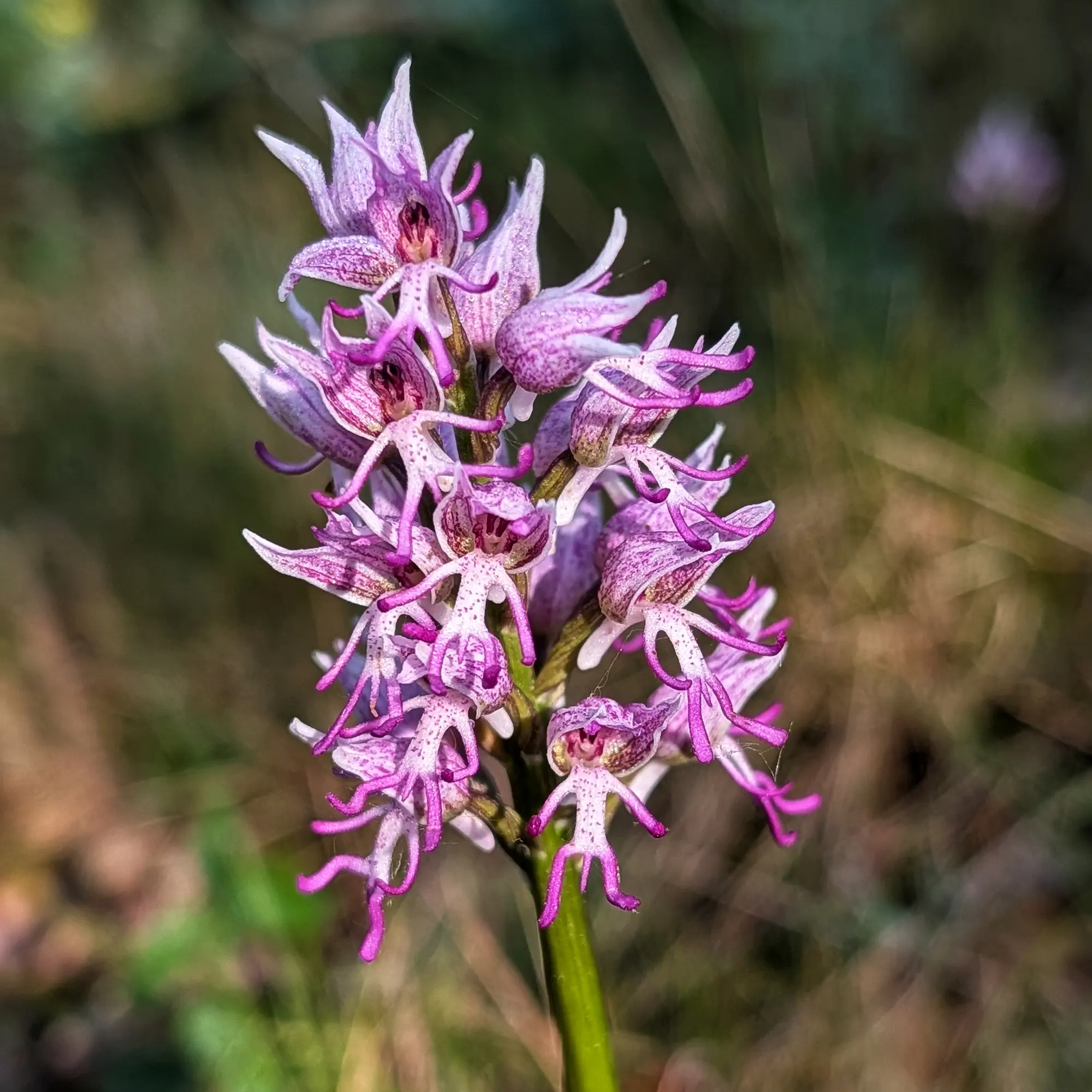
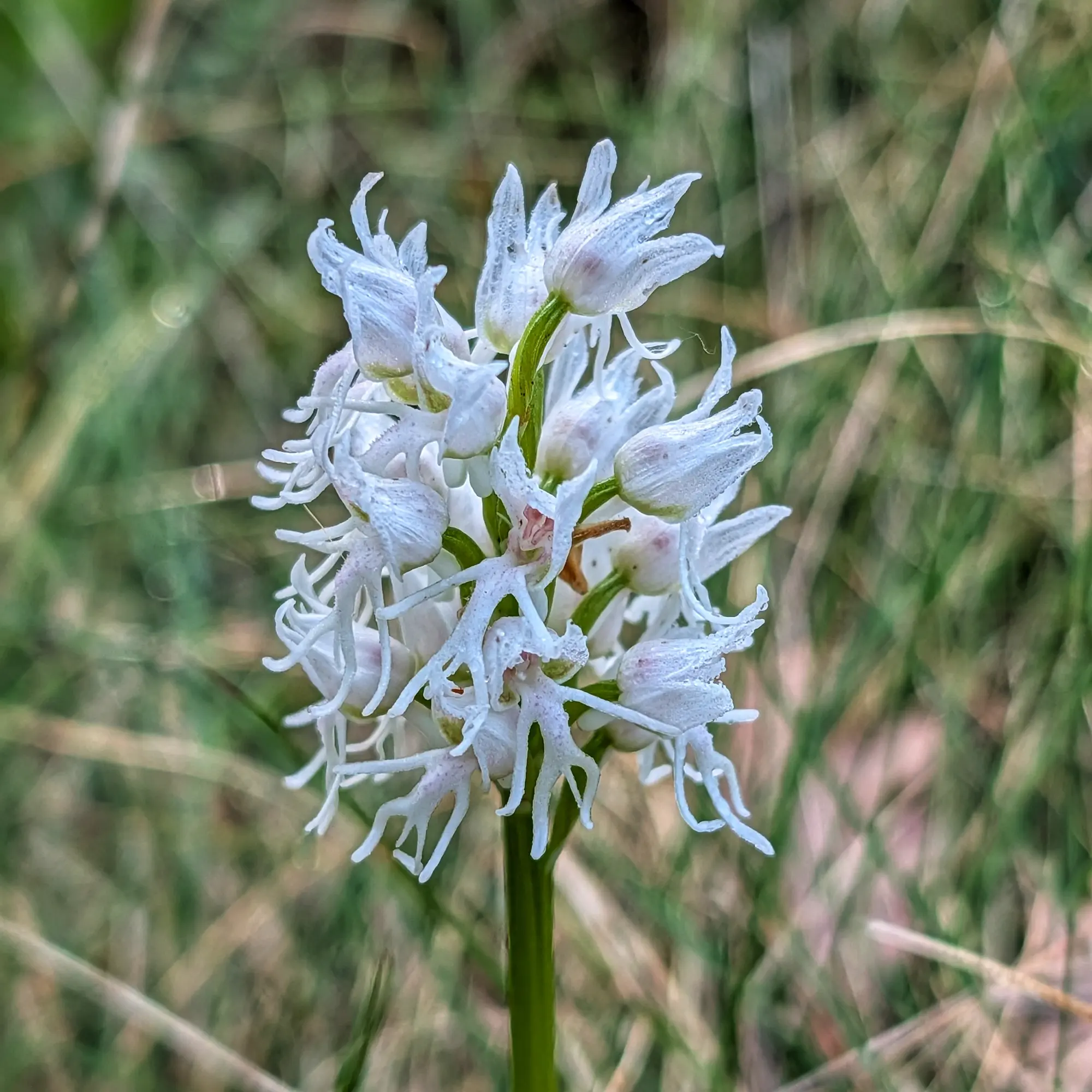
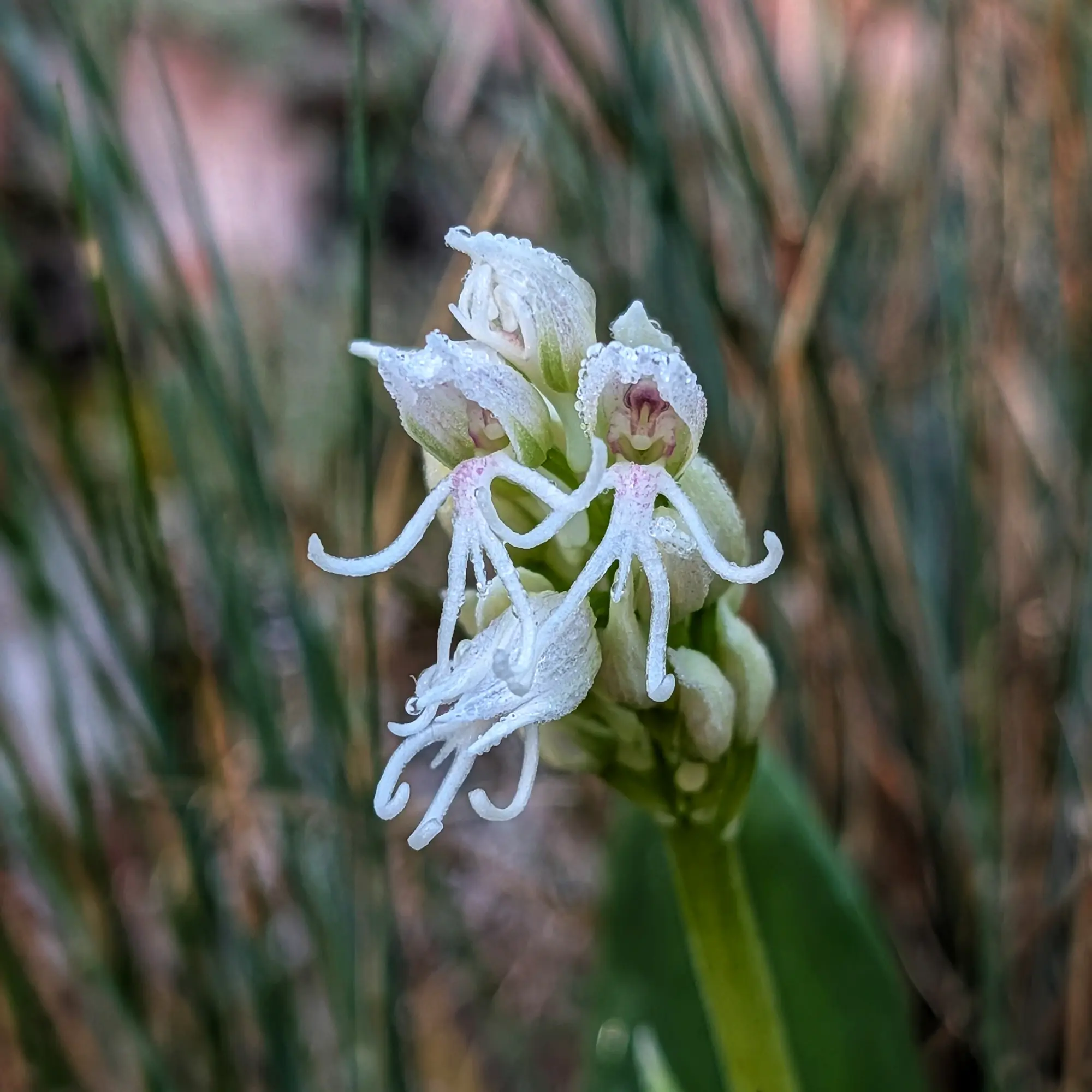
The Orchis simia, commonly known as the Monkey Orchid, is a terrestrial orchid whose name derives from the curious shape of its labellum, which resembles the figure of a monkey with arms and legs. It is a plant that stands out for being one of the "funniest" orchids, evoking a group of dancing monkeys.
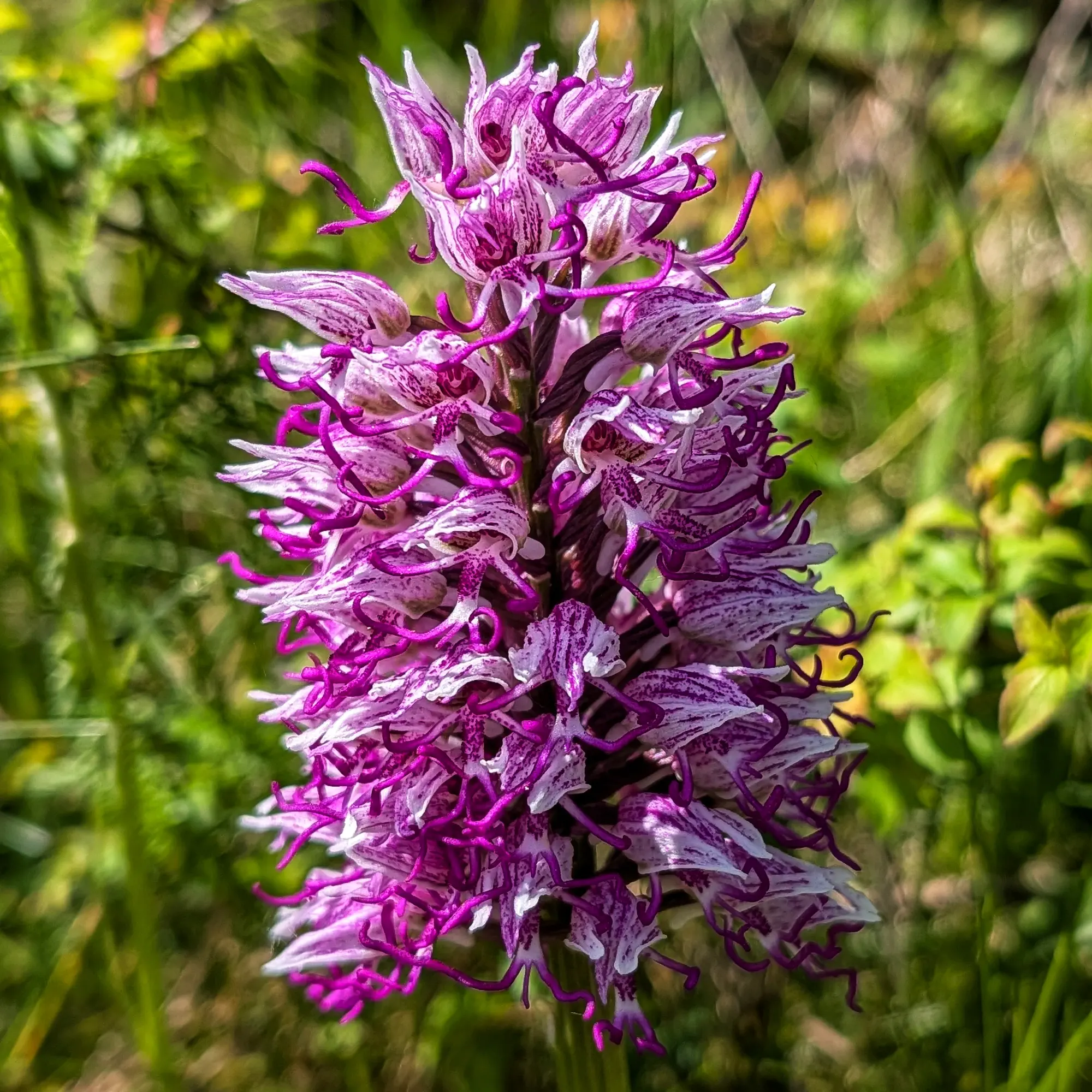
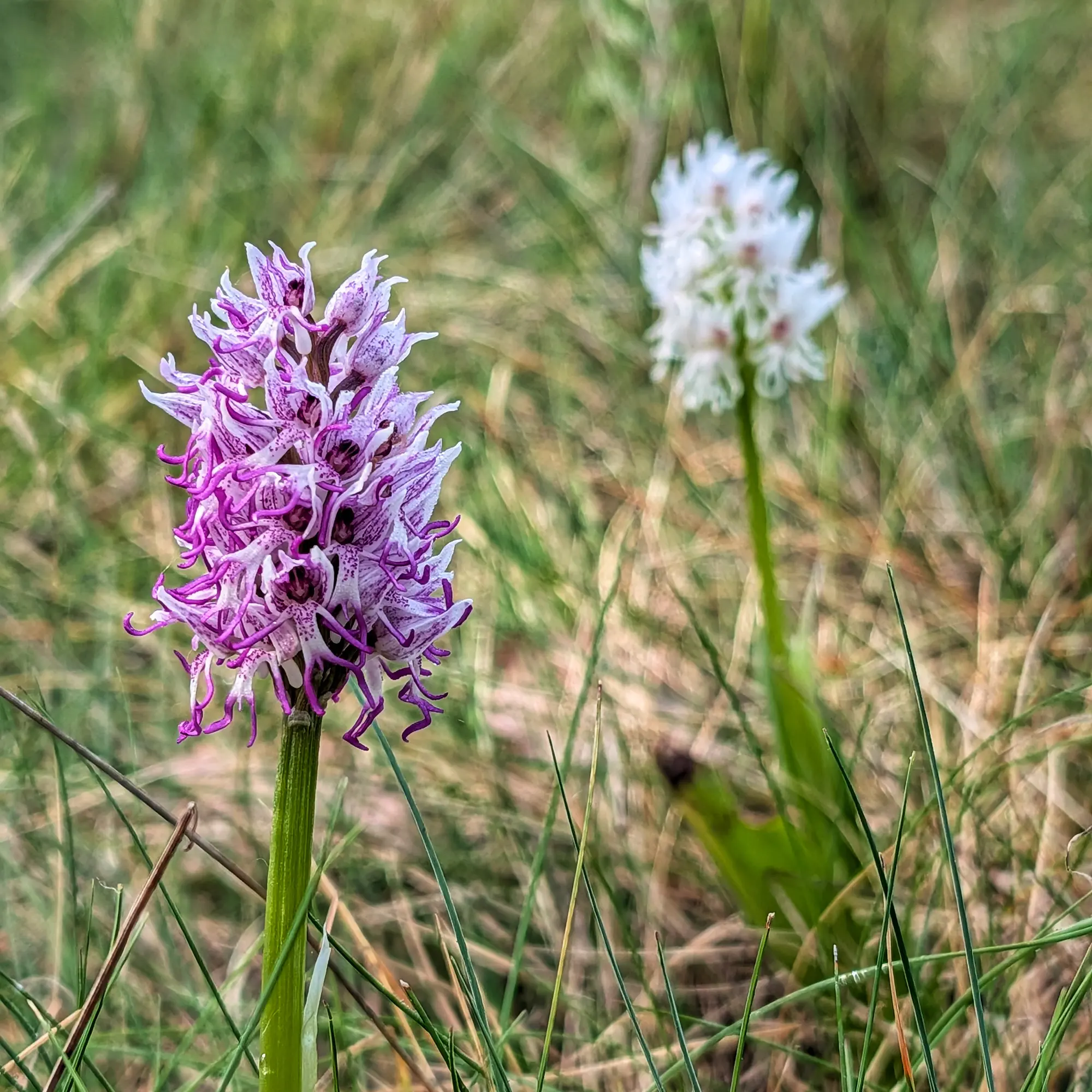
Morphological description: This is a robust plant typically measuring between 20 and 40 cm, though it can reach up to 50 cm in height, with a thick, green stem. The inflorescence is medium to large (6-10 cm), dense and compact, globose or subspherical in shape. A key and unmistakable feature is its inverse flowering: the flowers at the top of the spike open before those at the base.
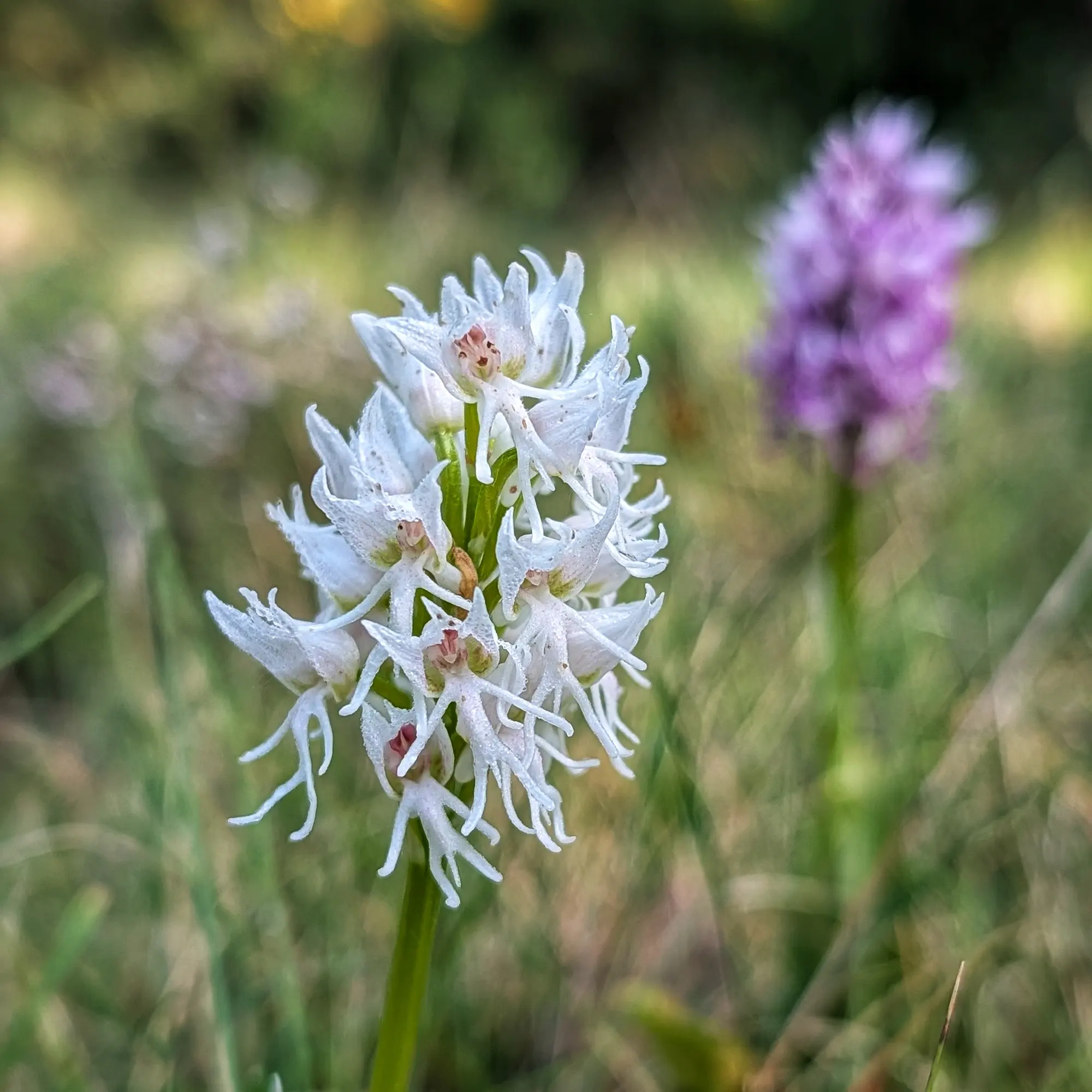
The flowers are whitish or pinkish with purple or fuchsia patches. The outer and inner tepals join to form a forward-pointing and quite sharp hood (galea). Externally, they are whitish, but internally they display intense pink lines or dots. The labellum is the most distinctive part: it is trilobate, with the central lobe further divided into two parts, creating the effect of four fine, long limbs (arms and legs), pink to purple in color, which curve upwards. The center of the labellum is white with intense fuchsia speckles. Between the lobes that form the "legs", there is a small, narrow tip simulating a tail. It features a cylindrical spur directed downwards.
It has basal leaves that are oblong or lanceolate in shape, light green, and spotless.
Habitat and distribution: It prefers calcareous soils, found in hay meadows, rush fields, forest clearings, old cultivated lands, field margins, and road verges. It typically inhabits sunny or semi-shaded locations that maintain a certain degree of humidity. Its distribution covers central and southern Europe, North Africa, and extends to the Middle East and parts of Asia. In Catalonia, it is generally considered an infrequent species, but can be quite abundant locally (e.g., Alta Garrotxa, Bages, Ripollès, Selva, Garrotxa).
Floration: It typically flowers between April (in low-lying areas) and June (at higher altitudes).
Conservation status: On the IUCN Red List, it is classified as "Least Concern" due to its wide distribution, although it may be locally threatened and scarce. In some countries, it has a higher protection status (e.g., Switzerland: Vulnerable (VU), United Kingdom: protected and very rare). Like other orchids, it can be affected by habitat destruction, urban development, or changes in land use.
Gallery


Related observations
Discover the observations I've made of this species.