Platanthera bifolia
About the Orchid
The Platanthera bifolia, commonly known as the Lesser Butterfly-orchid, is a delicate and fragrant perennial terrestrial orchid. Its scientific name derives from the Greek platys (wide) and anthera (anther), and the epithet bifolia refers to its two characteristic basal leaves. This plant has a complex life cycle, depending symbiotically on mycorrhizal fungi (such as the families Ceratobasidiaceae, Sebacinales, and Tulasnellaceae) for germination and initial development.
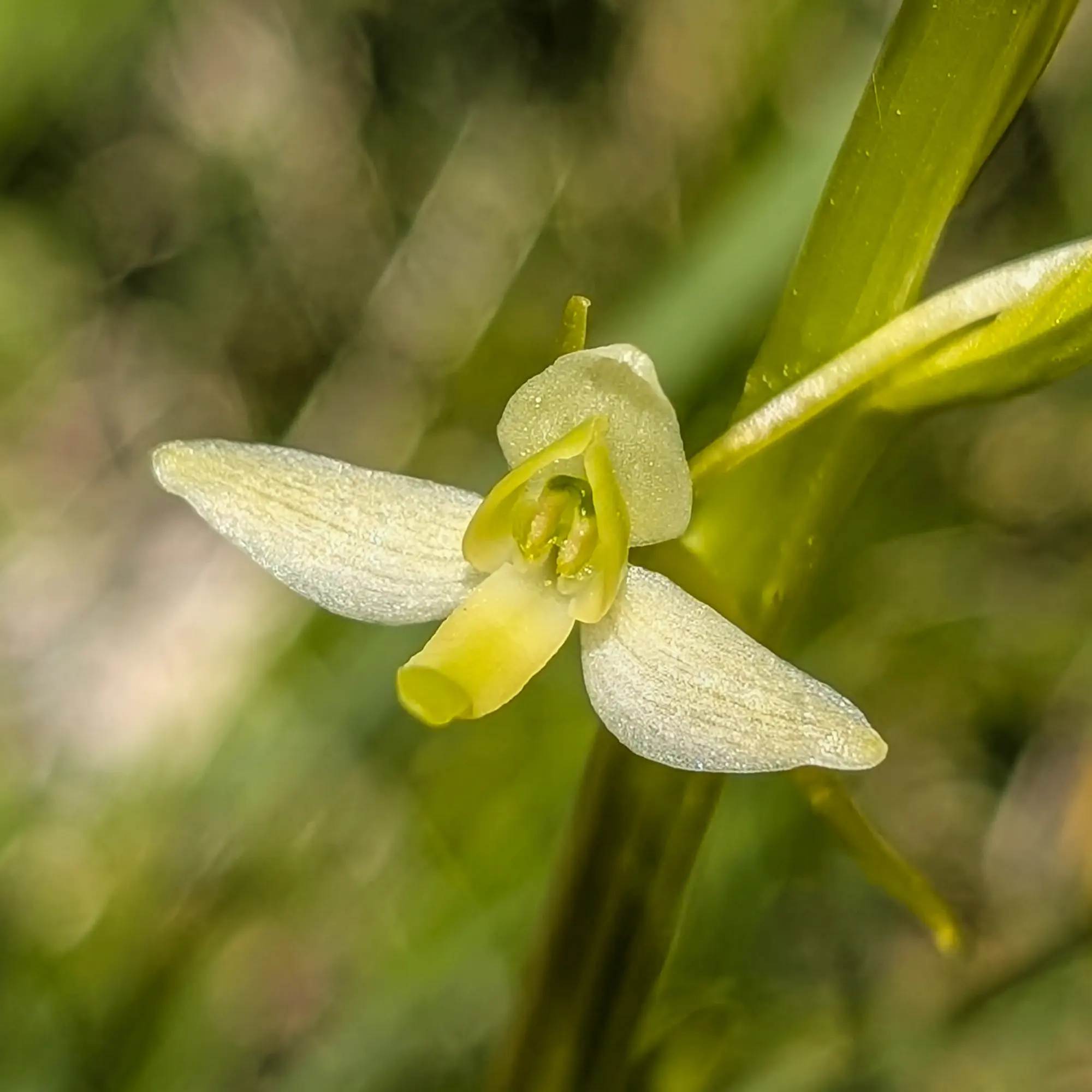
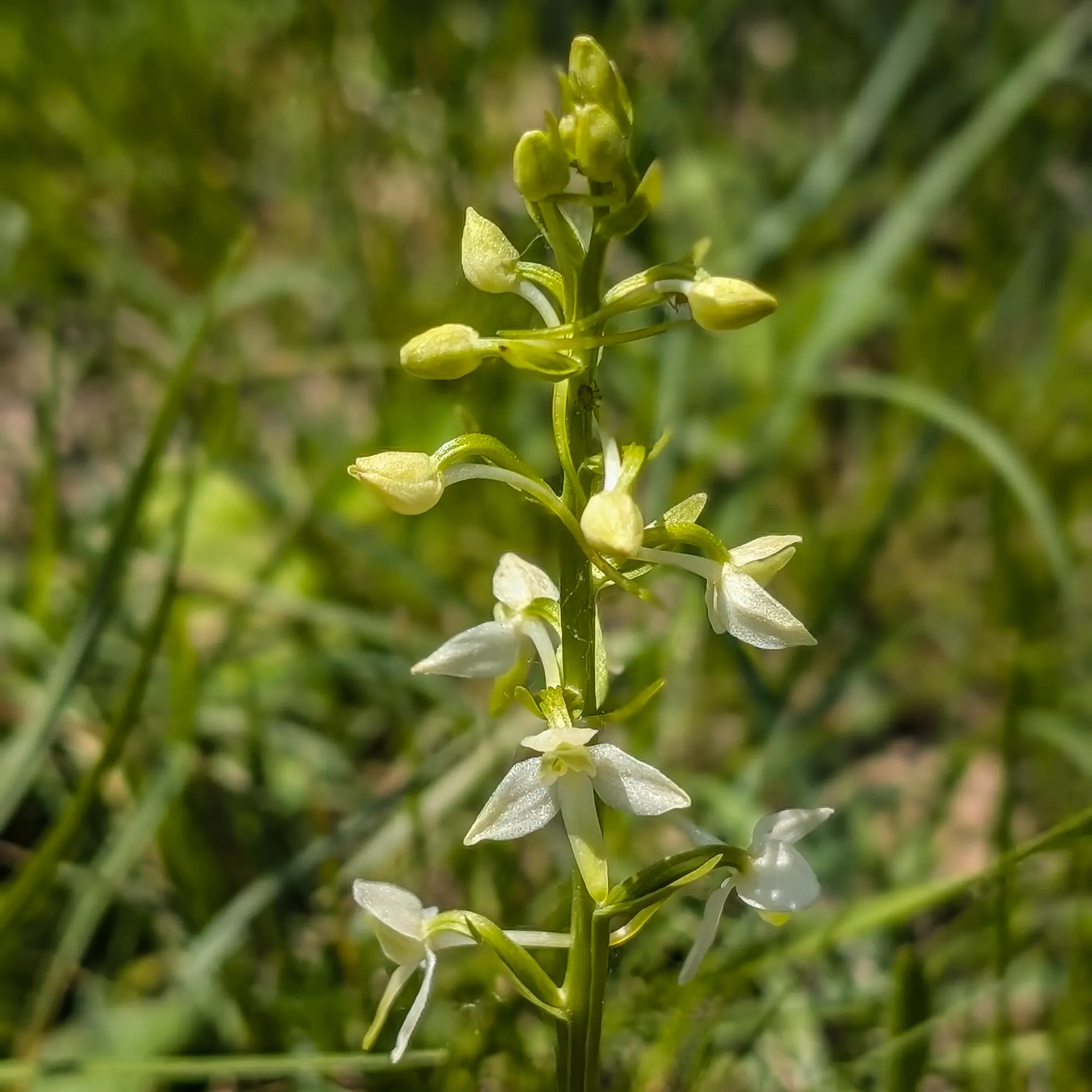
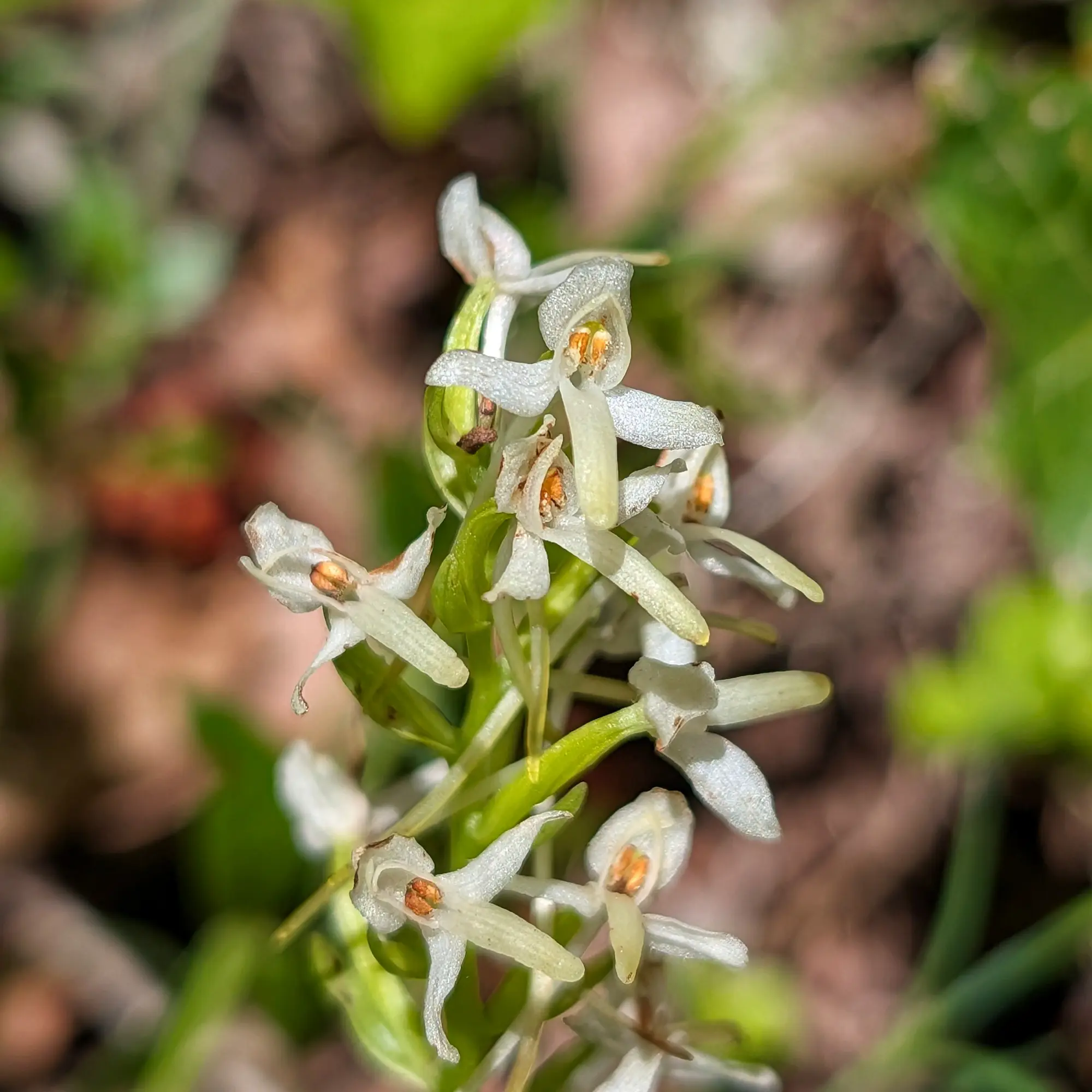
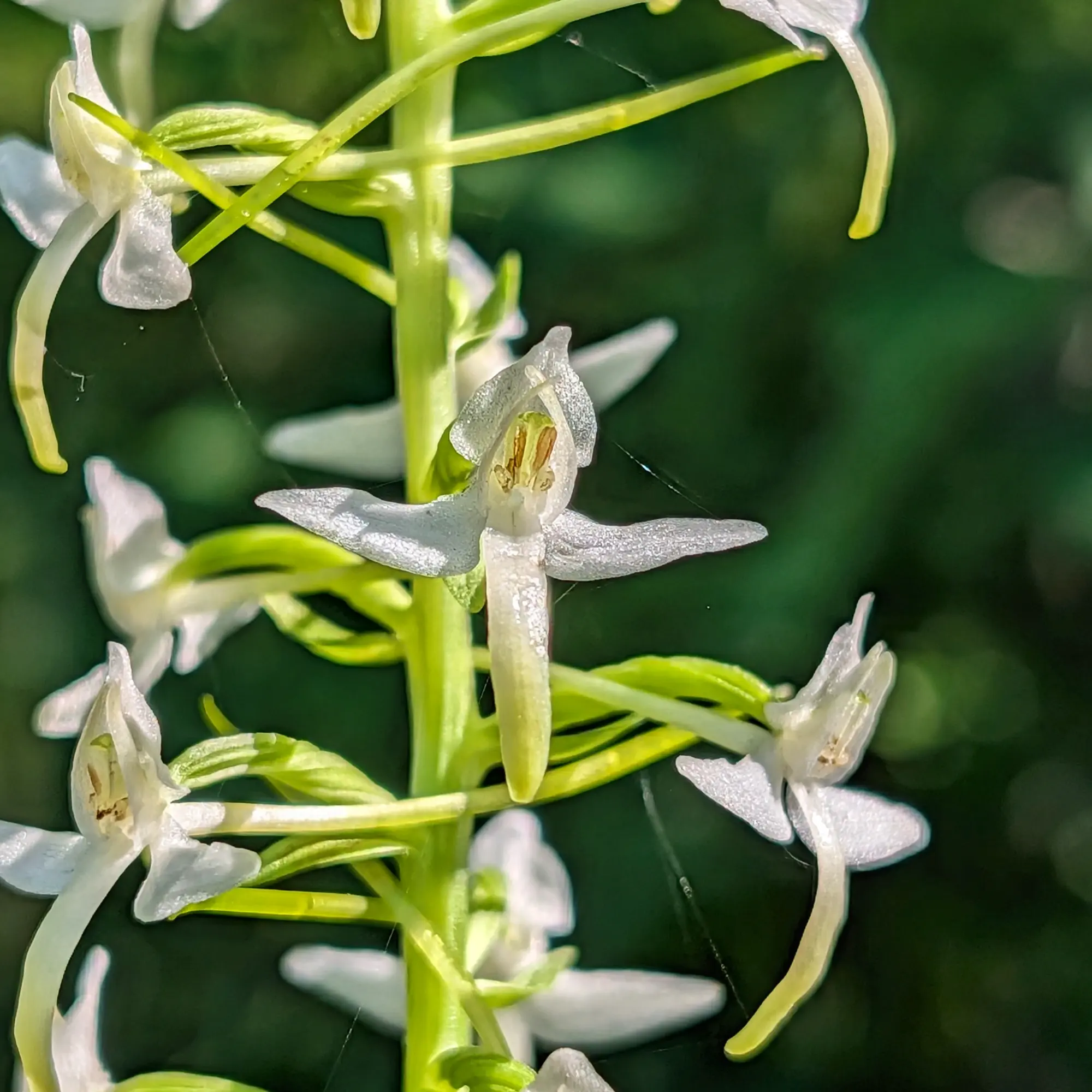
Morphological description: It typically has a stem between 15 and 30 cm tall, which can reach up to half a meter. It features two large basal leaves (5-8 cm), shiny, elliptical or oval, opposite at the base of the stem. The inflorescence is a cylindrical floral spike with 5 to 30 white or greenish-white flowers. The flowers have a long spur (14-20 mm), thin and almost straight, where nectar accumulates. The labellum is narrow and tongue-shaped, about 6-10 mm long. A key identifying feature to distinguish it from Platanthera chlorantha is its parallel pollinia, positioned very close together (approximately 1 mm apart), forming a figure resembling an "II".
Habitat and distribution: It shows remarkable tolerance to various environmental conditions, found in acid bogs, wet heaths, dry calcareous grasslands, scrublands, and woodland clearings. In the Catalan Countries, it inhabits open forests and meadows of the montane and subalpine stages. It is a Palaearctic species, present in Europe, Asia (reaching Korea and Japan), and North Africa. In Catalonia, it is scattered, especially in the Pyrenees, and is rare in the Valencian Country. It flowers during the summer, and during the nights it emits a sweet fragrance to attract nocturnal moths of the family Sphingidae (such as Deilephila elpenor), which act as pollinators.
Conservation status and ecology: It has suffered a severe decline in many parts of its range, primarily due to habitat loss, the use of fertilizers and fungicides (which kill essential symbiotic fungi), and the abandonment of traditional grazing. In the United Kingdom, it is classified as "Vulnerable" on the Red List of vascular plants (2005) and as "Endangered" in England, being considered a species of principal importance for biodiversity conservation. Its management requires light extensive grazing (avoiding spring when flowers emerge) or traditional mowing to maintain open habitats and reduce excessive competition.
Gallery


Related observations
Discover the observations I've made of this species.