Platanthera chlorantha
About the Orchid
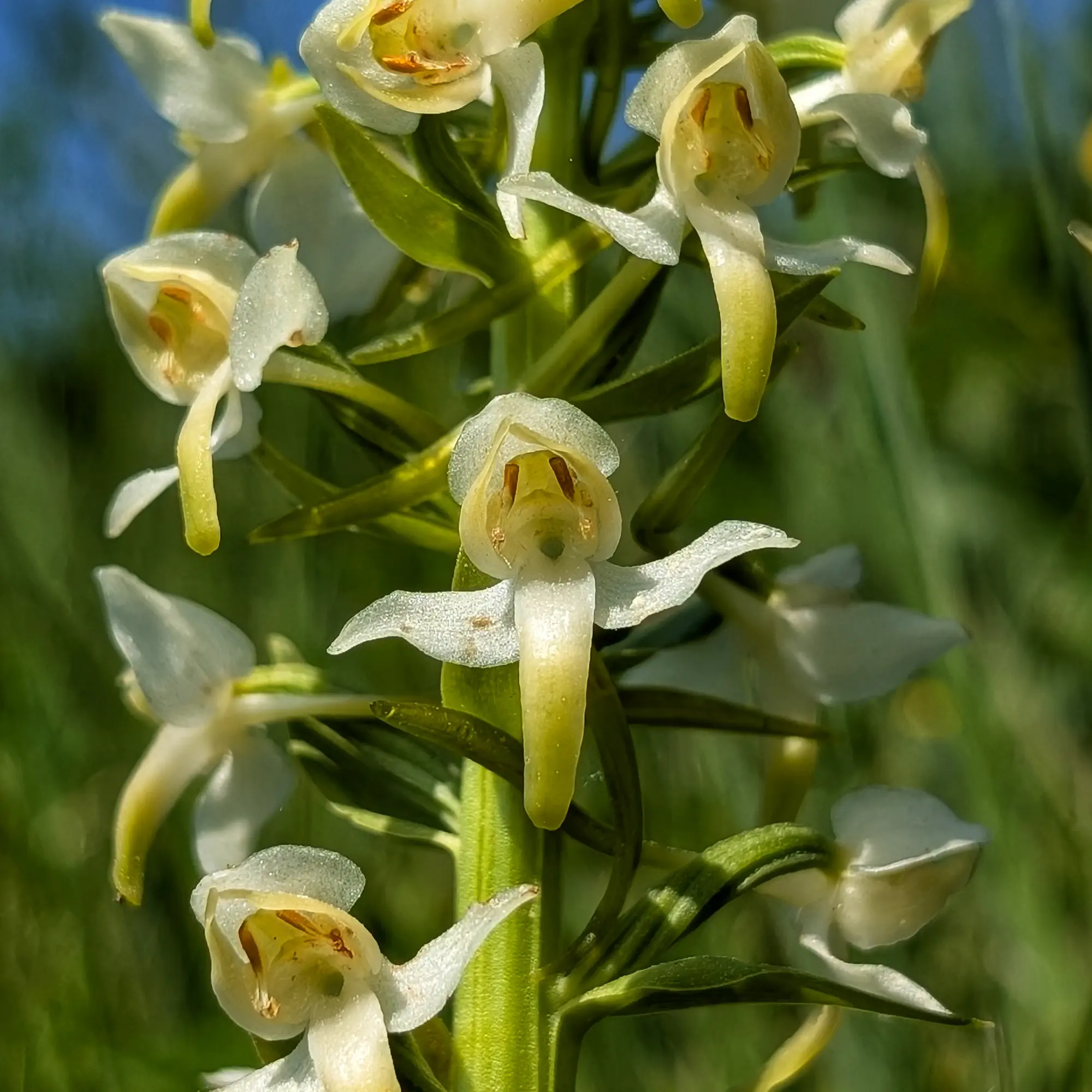
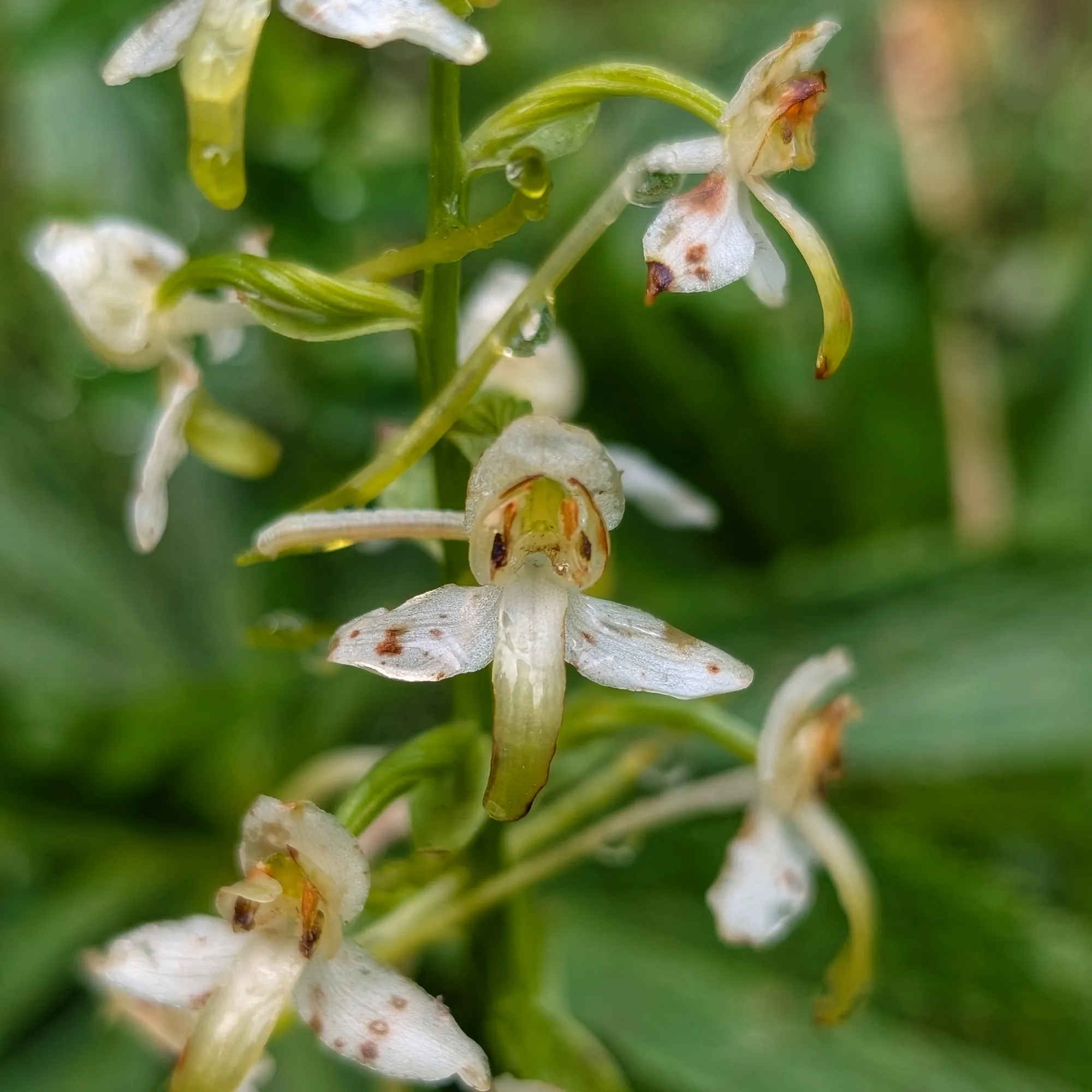
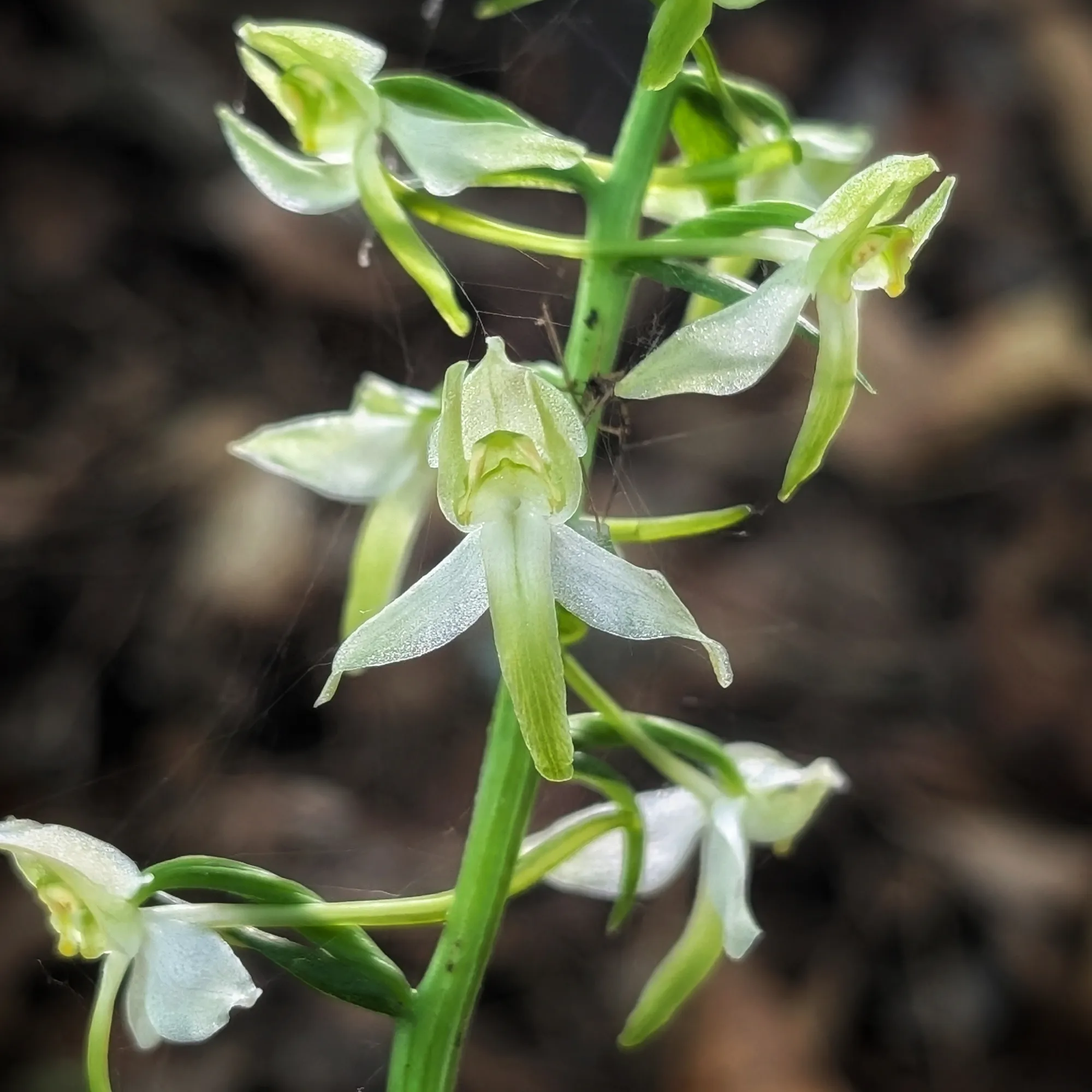
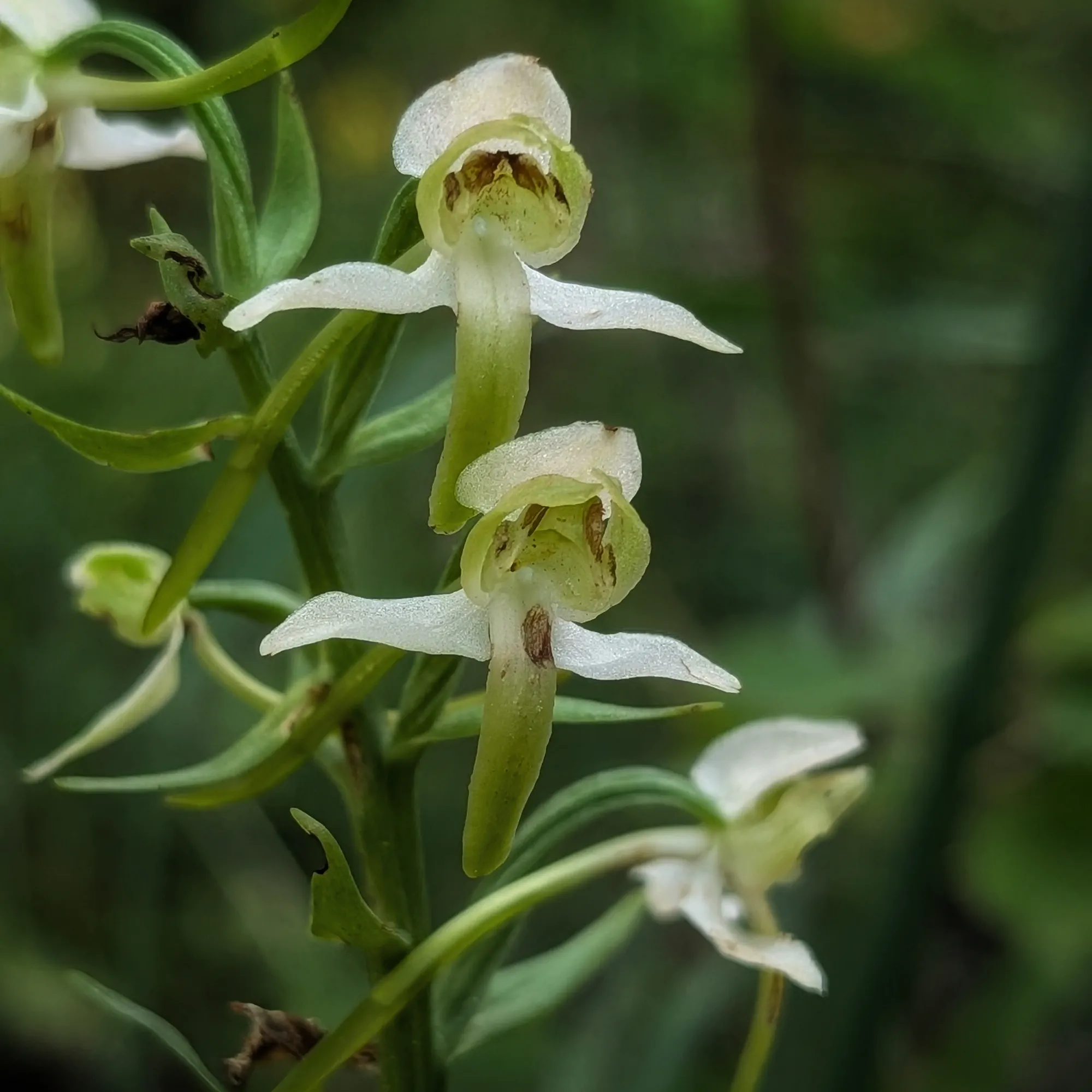
The Platanthera chlorantha, commonly known as the Greater Butterfly-orchid, is a robust, perennial terrestrial orchid (tuberous geophyte) that takes its specific name (chlorantha = "green flower") from the color of its flowers. The species is distinguished from its sister species, P. bifolia, by the position of its pollinia.
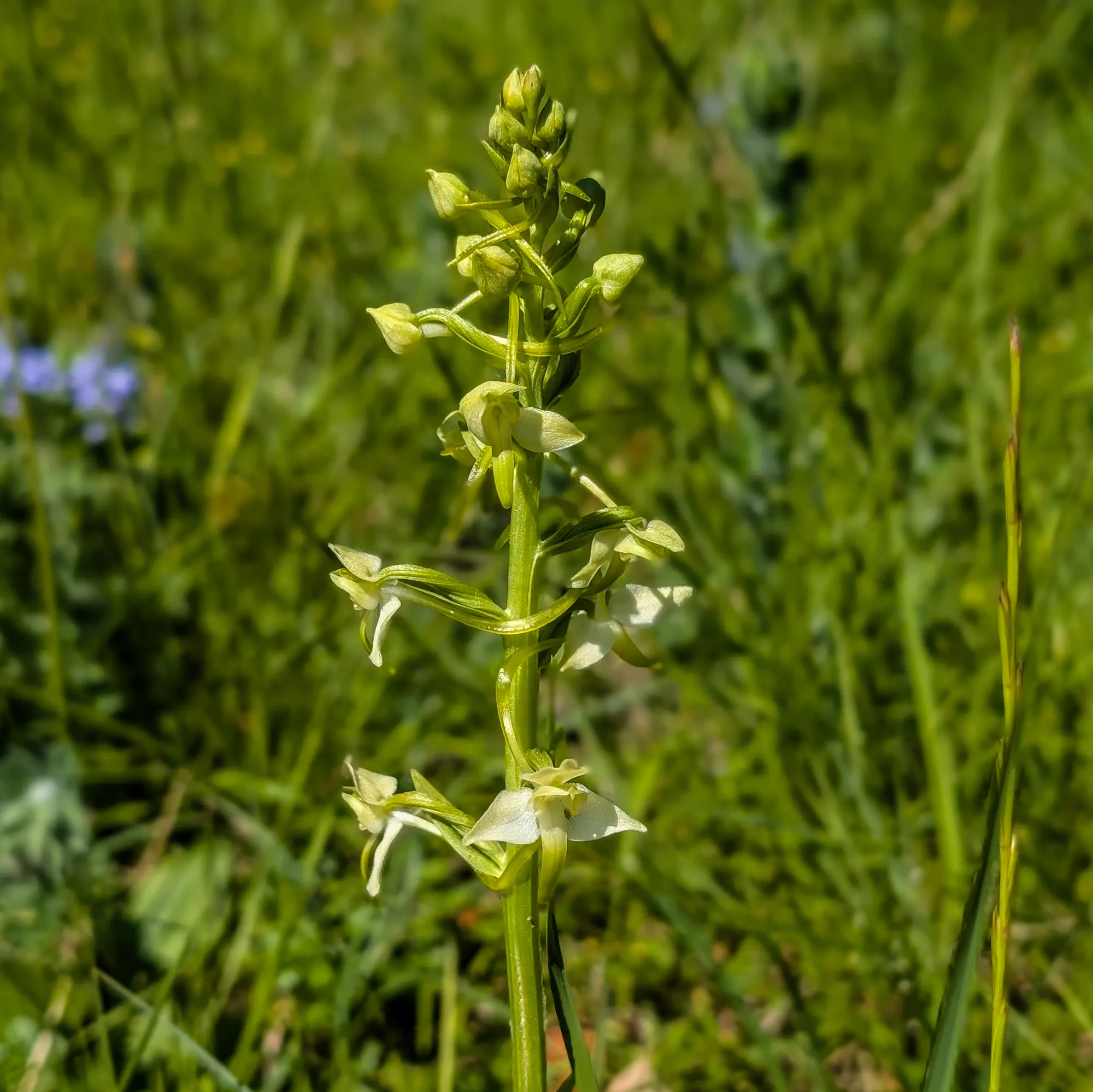
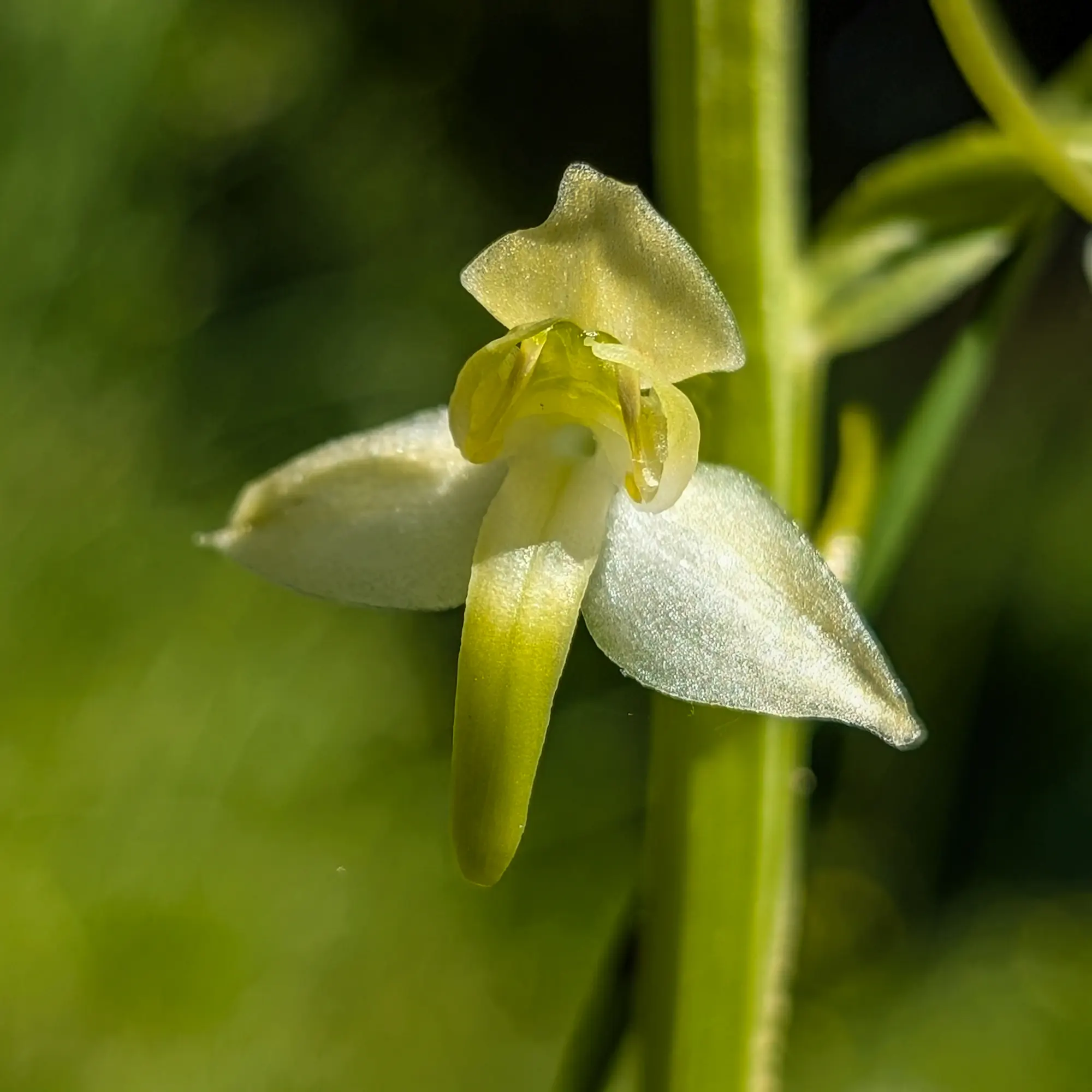
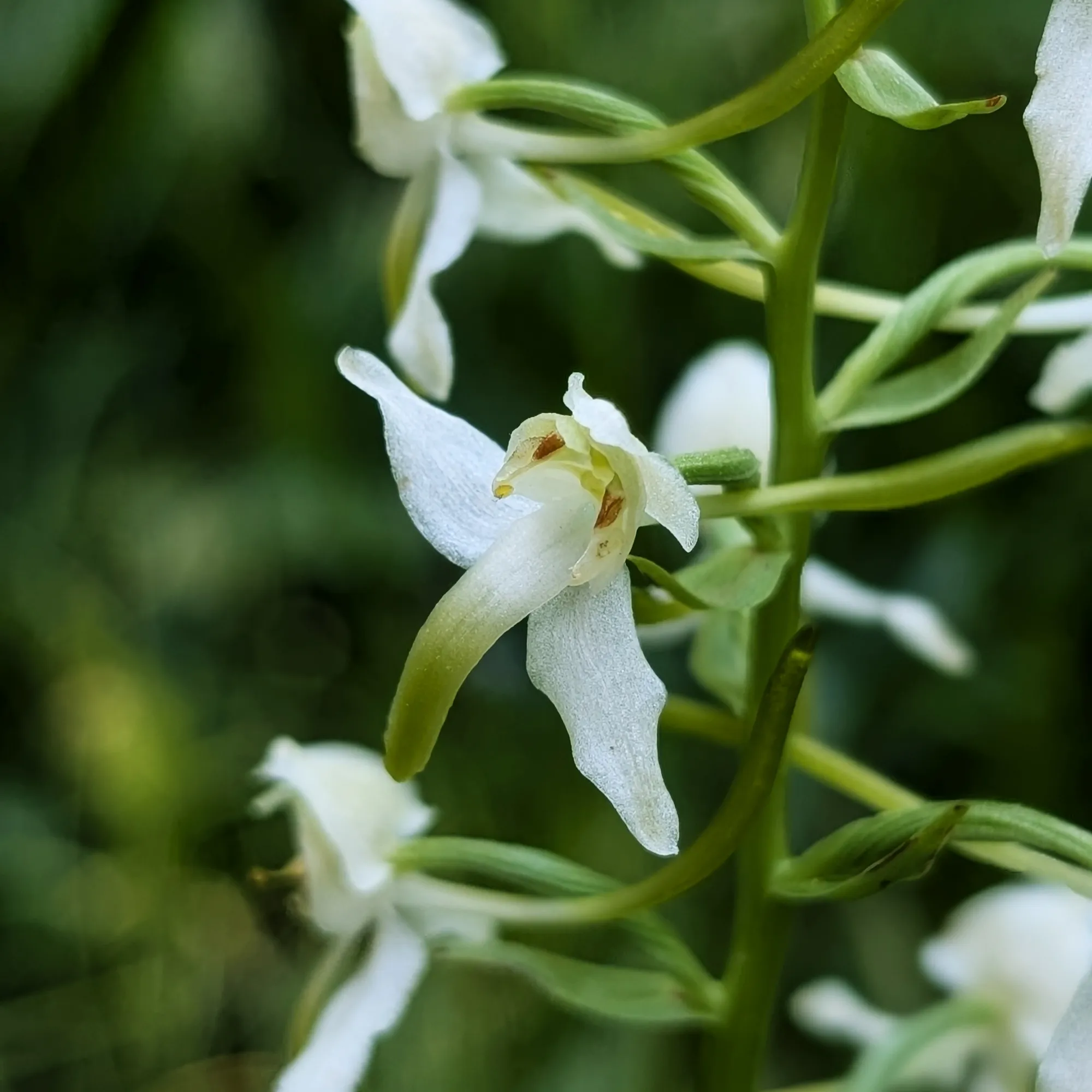
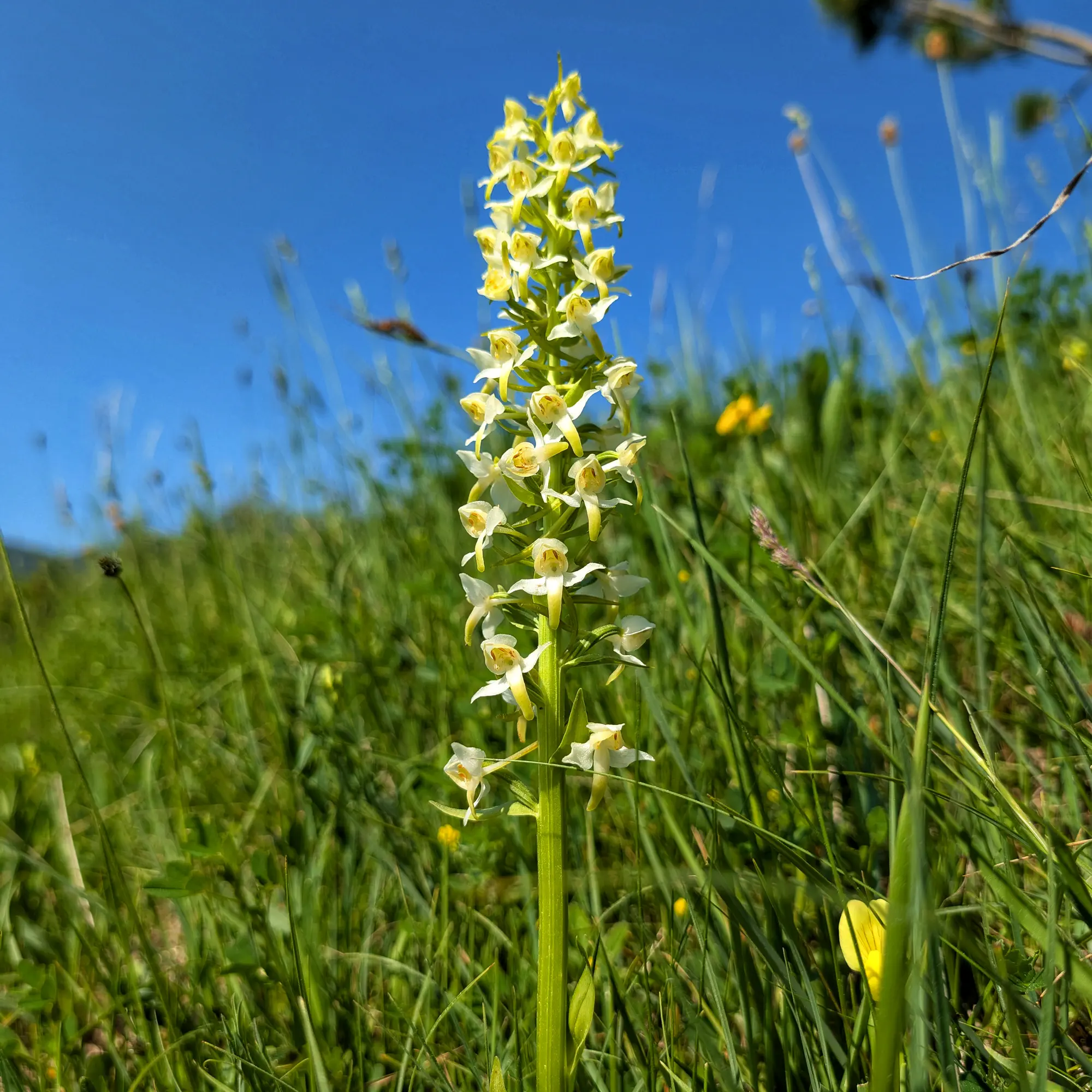
Morphological description: It is a plant between 20 and 60 cm tall with a channelled stem. Its main feature is the two large, oval, and shiny basal leaves. The inflorescence is a lax spike (10-40 flowers) with yellowish-green and waxy-textured flowers. The labellum is long, narrow, and undivided. The key distinguishing feature is the divergent pollinia, separated at the base and converging at the tips, forming an inverted «V». The spur is very long and adapted to long-tongued pollinators.
Habitat and distribution: It is found in unimproved pastures and edges of open deciduous forests, preferably on calcareous soils (chalk or limestone). Its distribution is wide, covering Europe, Western Asia, and North Africa.
Biología and distinctive features: It flowers from May to July. It emits a vanilla-like fragrance, most intense in the evening and at night to attract its main pollinators: nocturnal moths (Noctuidae and Sphingidae). The plant relies on soil fungi (mycorrhiza) for survival, making it extremely sensitive to fertilizers and fungicides. Unlike P. bifolia, its pollinia are divergent, and the plant is generally taller and more robust.
Gallery
Related observations
Discover the observations I've made of this species.