Serapias cordigera
About the Orchid
The Serapias cordigera, commonly known as the Heart-flower serapias, is a perennial herbaceous plant belonging to the orchid family (Orchidaceae). Its specific name, cordigera, comes from Latin and literally means "heart-bearing," referring to the characteristic heart-like shape of its flower's labellum.
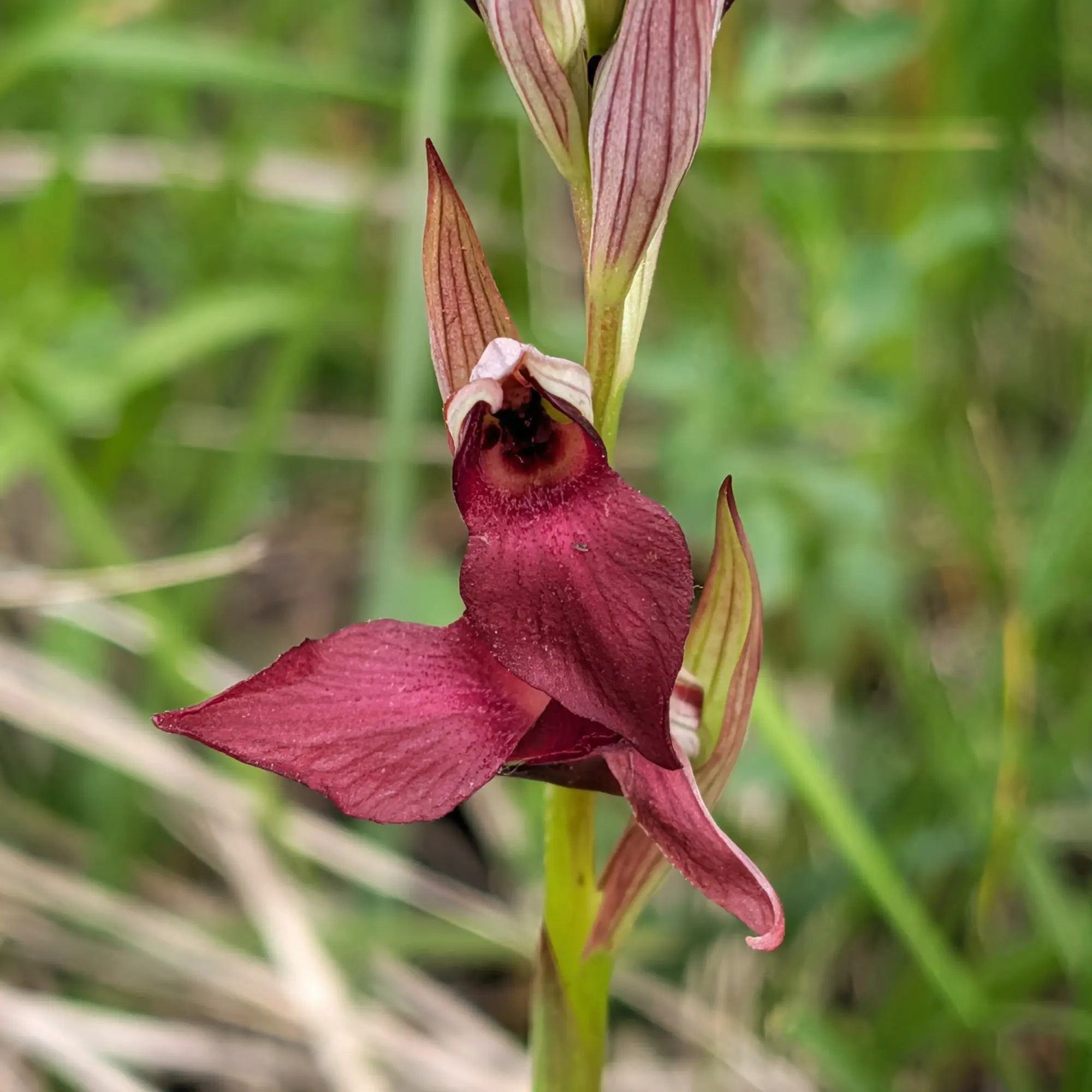
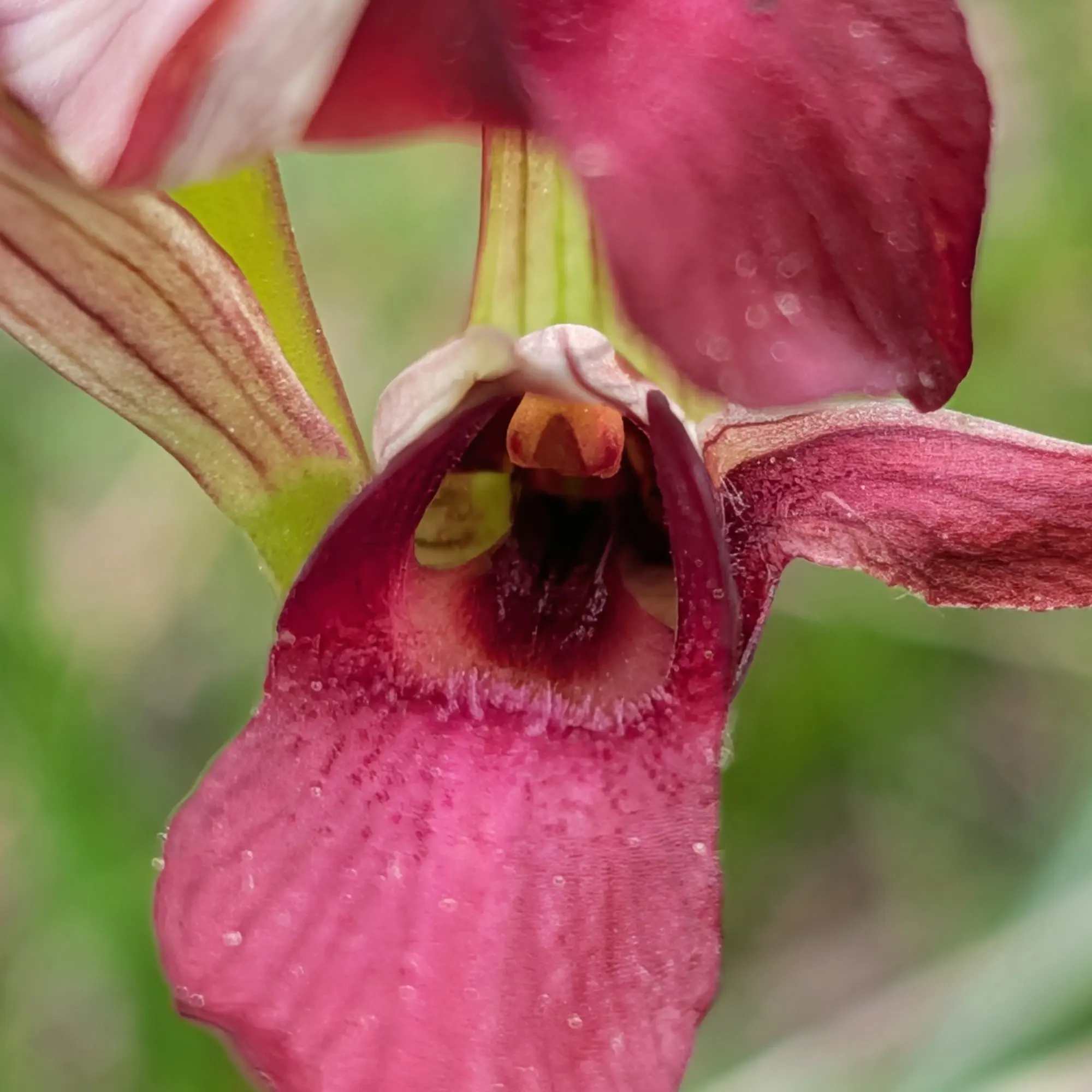
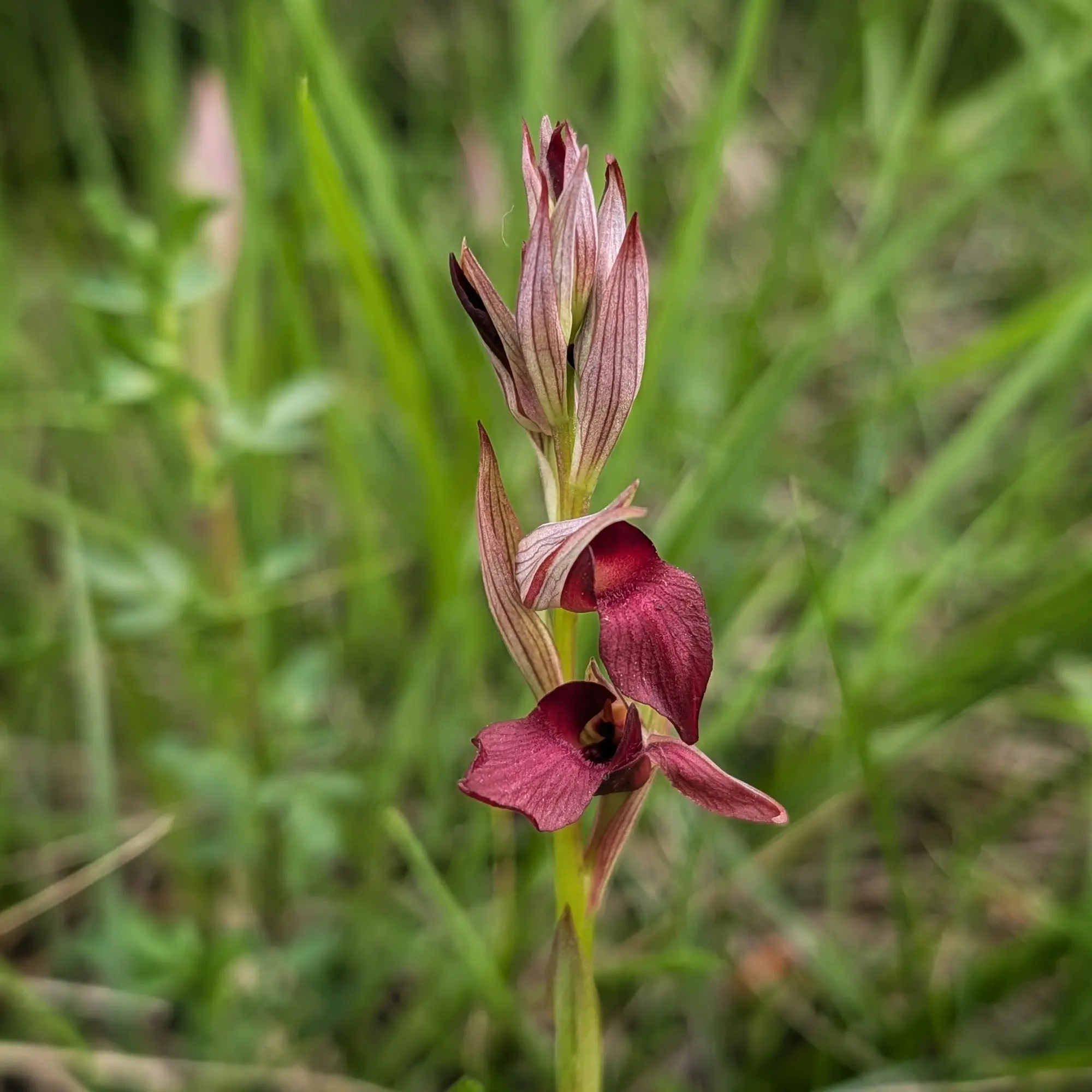
Morphological description: This plant typically grows between 12 and 40 cm tall, either solitarily or in small clusters. It possesses 1 or 2 subterranean tubers and a green stem often marked with fine red lines at its base. The lower part of the stem is encircled by a cluster of 4 to 9 narrow, pointed (linear-lanceolate) and channeled leaves, measuring between 4 and 16 cm long. The inflorescence is dense, bearing 2 to 12 large flowers. The lateral sepals and petals form a grayish-reddish or light purple helmet-like hood, marked with intense dark veins. The most striking feature is the labellum, which hangs downwards, is 3 to 4.5 cm long, and has a wide, heart-shaped frontal lobe (epichile). The color of this labellum can vary from pale orange to dark red or almost glossy black. At the base or center of the labellum, there are two divergent callosities and a dense layer of hairs.
Life cycle and pollination: As a perennial plant, its main flowering period occurs during spring, between April and June. The fruit measures 1.1 to 2.4 cm and contains small, earthy ocher-colored seeds. Regarding pollination, current sources do not describe the specific mechanisms or the associated insect pollinators for this species.
Habitat and distribution: This orchid prefers siliceous and acidic soils, though it can occasionally tolerate calcareous substrates. It thrives at altitudes from sea level up to 1,000 or 1,300 meters, found in a wide variety of well-lit habitats, including humid meadows, pastures, tall scrub, open woodlands, olive groves, and abandoned cultivated lands. Its distribution is primarily concentrated in the Atlantic region and the Mediterranean basin, being widely spread across Southern and Central Europe (Iberian Peninsula, France, Italy, Greece), Northwest Africa (Morocco, Algeria, Tunisia), the Azores islands, and extending eastward to Southern Turkey.
Conservation status: Serapias cordigera is listed on the IUCN Red List of Threatened Species (reviewed in 2019) and is specifically cataloged as a protected species in the Balearic Islands at a local level.
Gallery
Related observations
Discover the observations I've made of this species.