Serapias lingua
About the Orchid
The Serapias lingua, commonly known as the Tongue Orchid, is a perennial herbaceous and geophytic terrestrial orchid (with underground storage organs) belonging to the orchid family (Orchidaceae). Its specific epithet lingua refers to the tongue-like shape of its labellum, which is its most distinctive floral feature. This species is diploid, with a chromosome number of 2n=72.
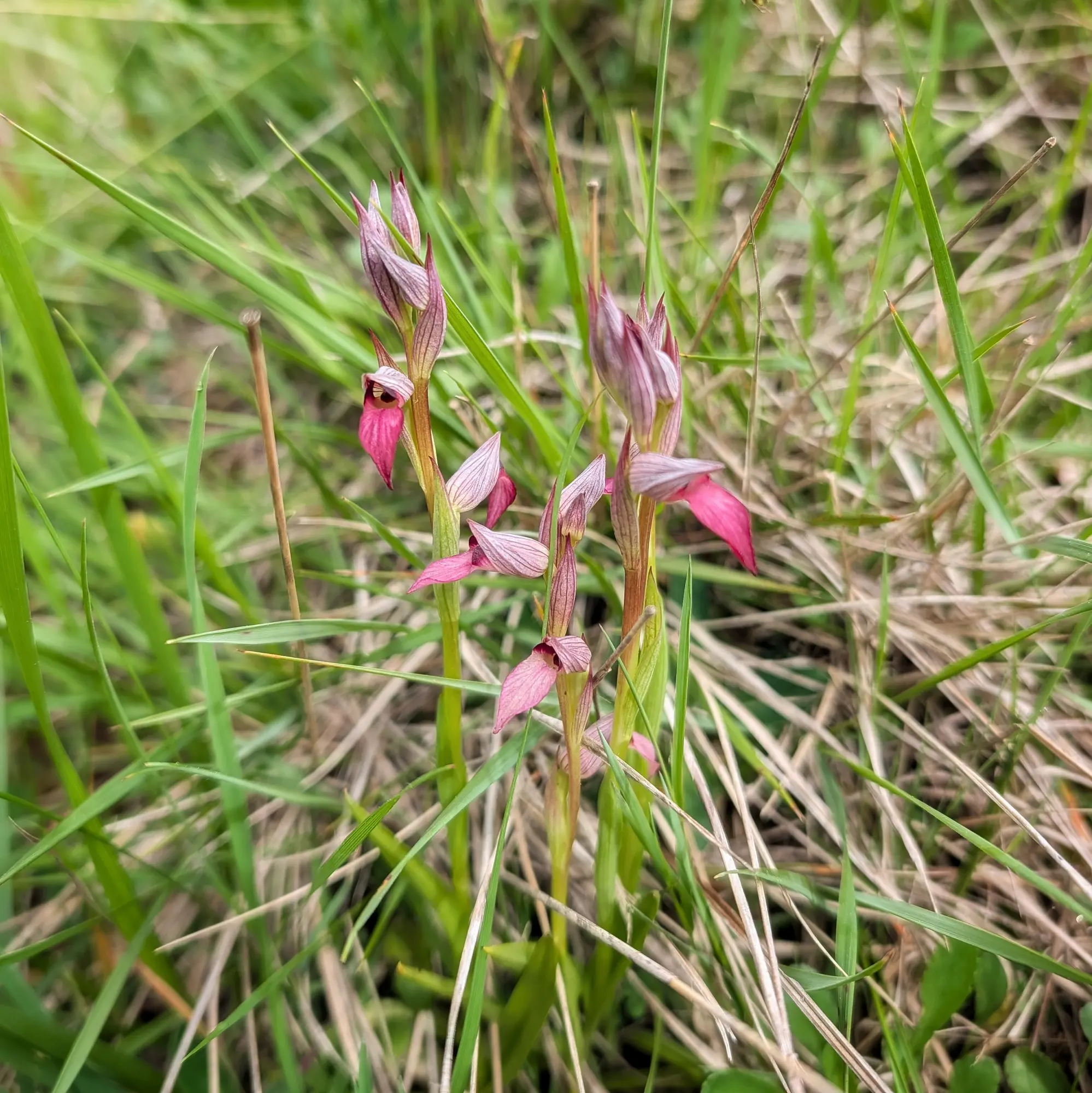
Morphological description: It is a small to medium-sized plant, typically growing between 10 and 30 cm tall, though it can reach up to 60 cm. At its base, it features 1 to 5 tubers. The stem is glabrous and green, often marked with reddish or purplish streaks. It has 4 to 8 linear-lanceolate leaves, folded in a «V» shape (canaliculate), and tapering to a point.
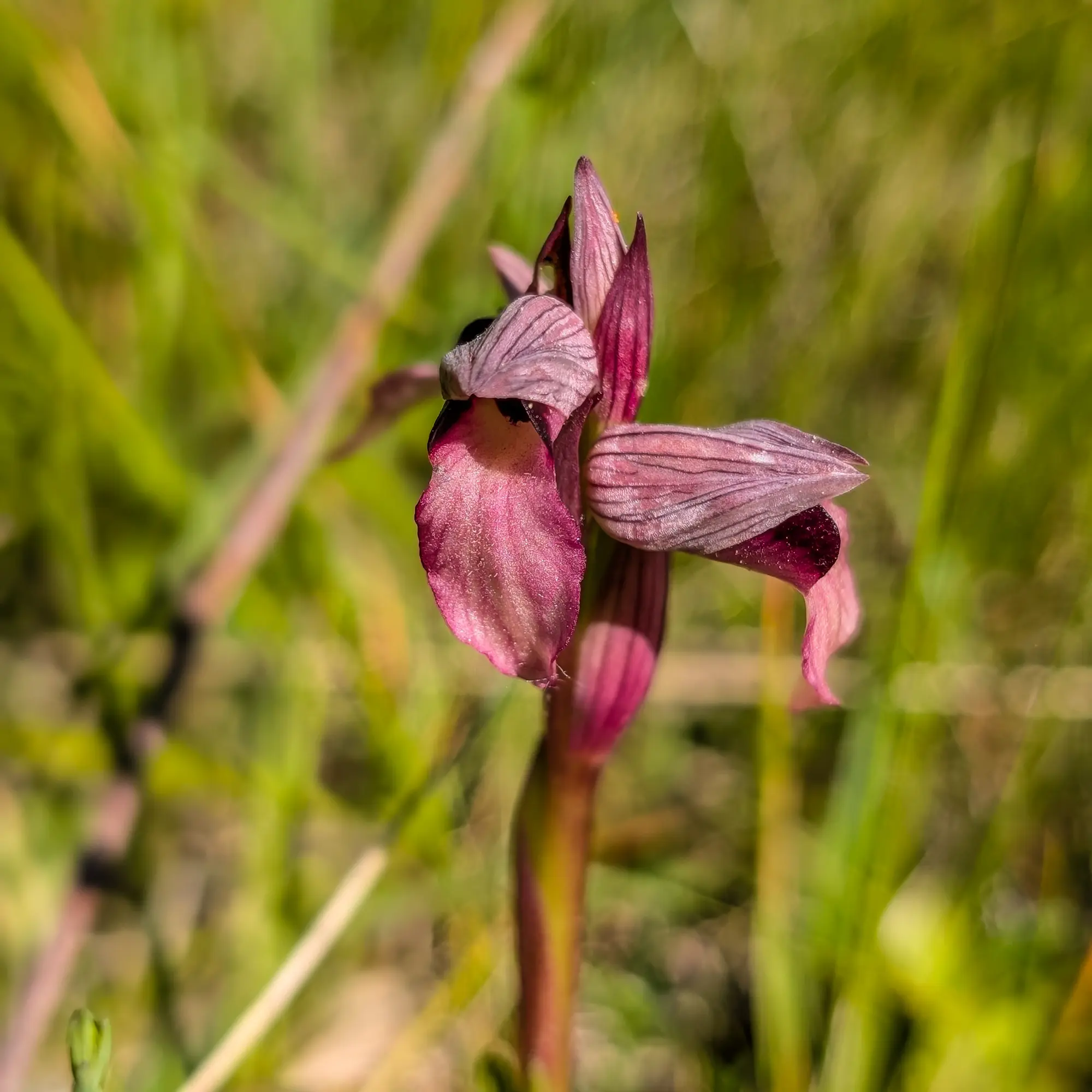
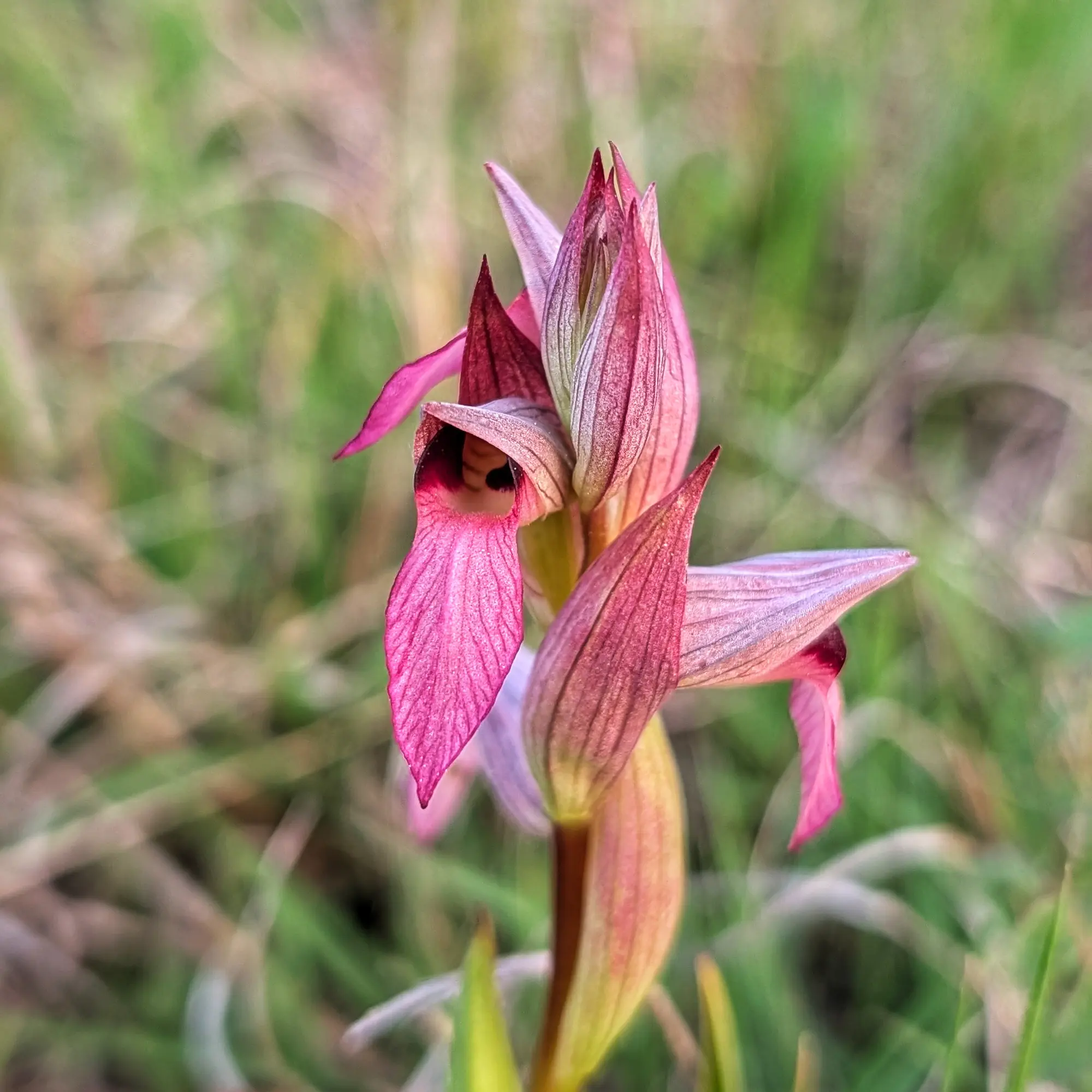
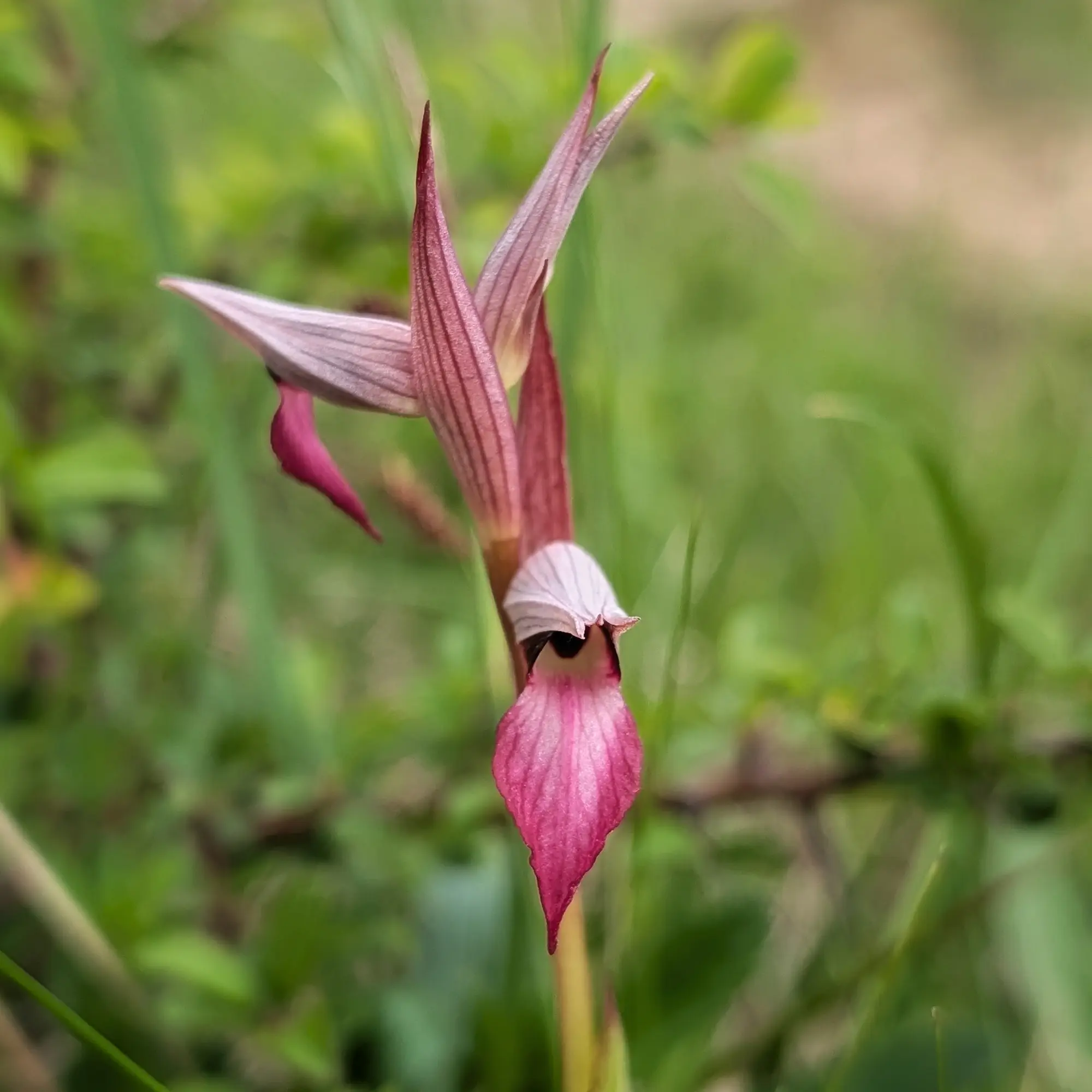
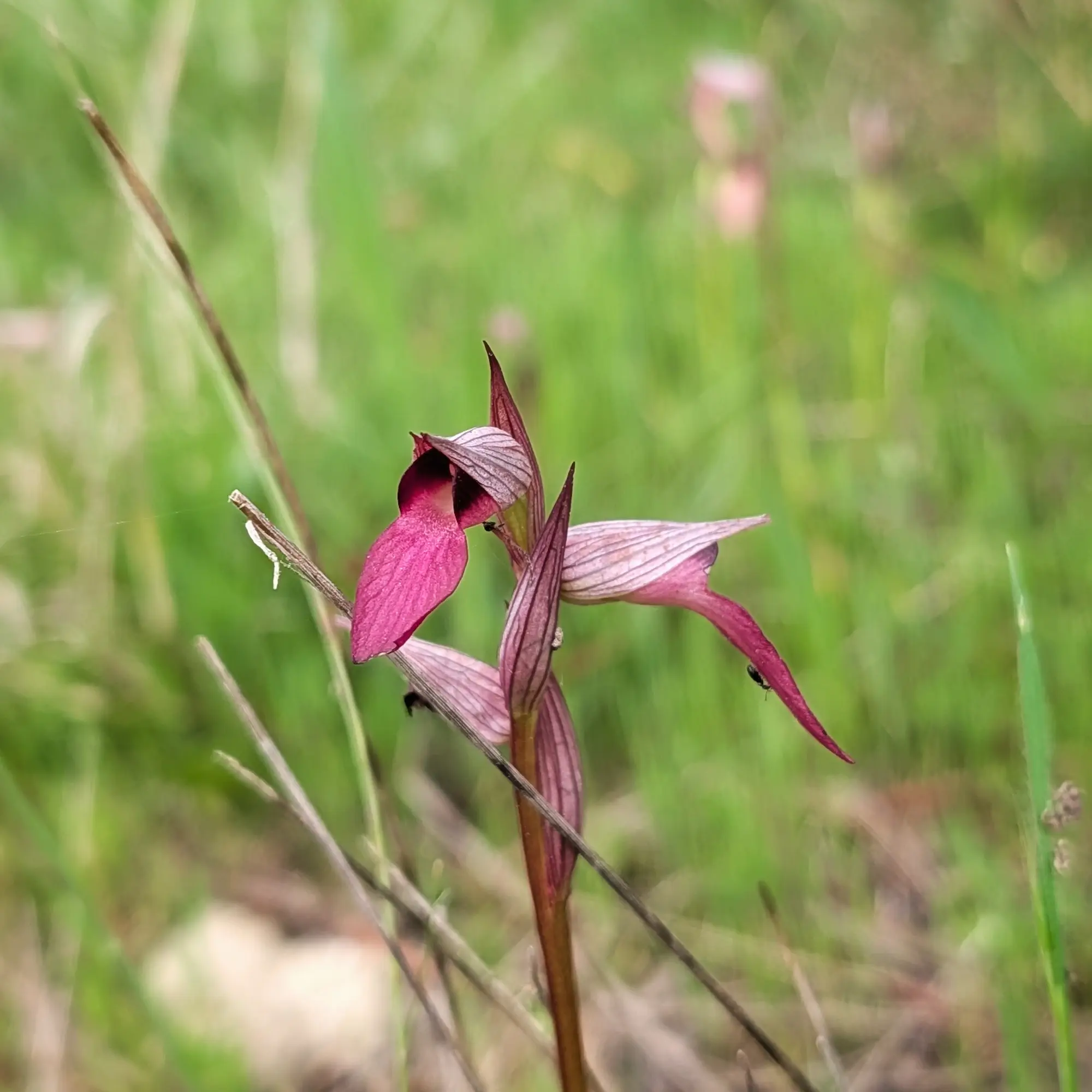
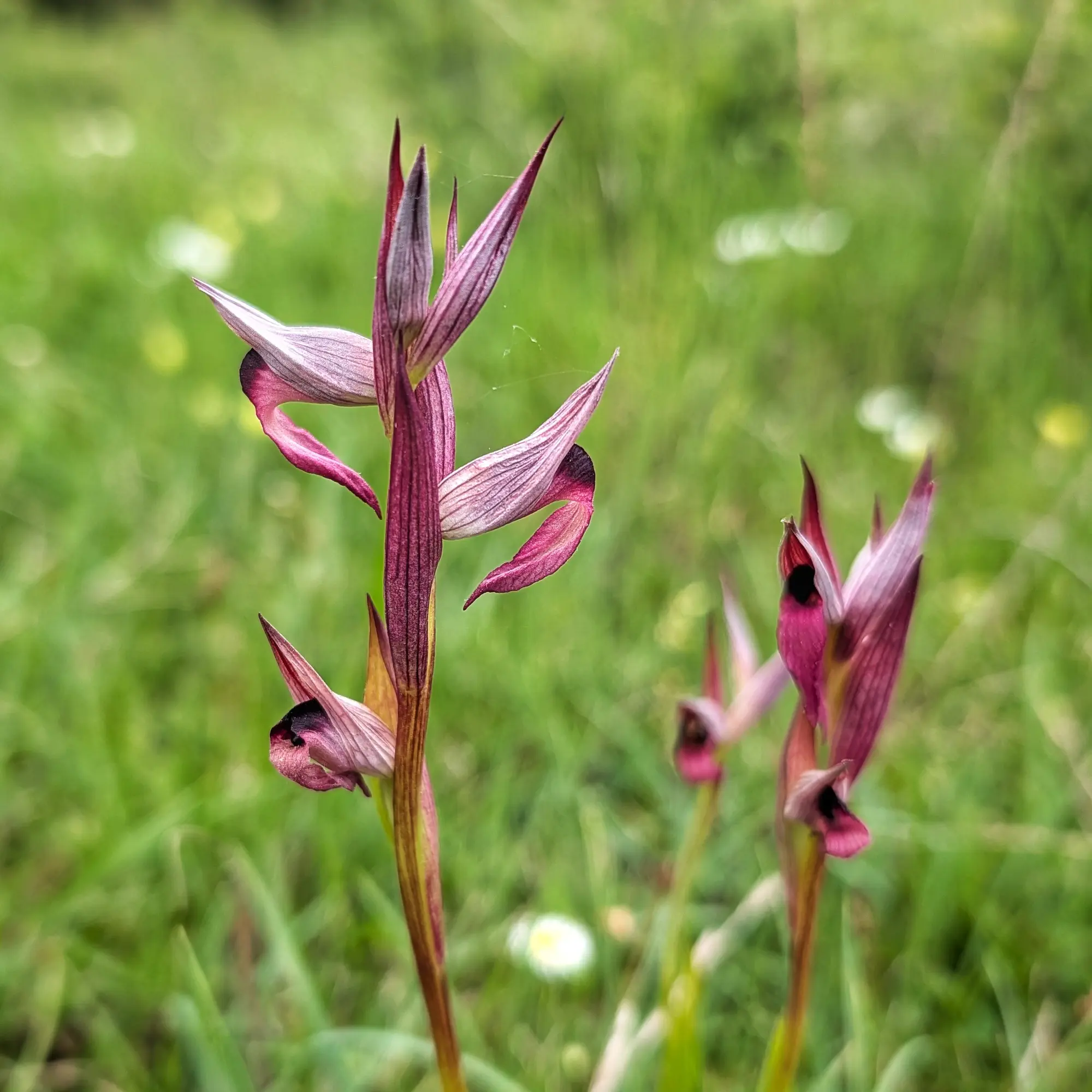
The inflorescence is a lax spike bearing 2 to 8 flowers. The tepals are connivent, forming a helmet-like structure (*galea*) that ranges in color from grey-pink to purplish-violet. The labellum, measuring between 1.5 and 3 cm, is reddish, brownish, or pinkish, and is divided into the hypochil (hairy basal part) and the epichil (distal part, elongated and pendulous, resembling a tongue). A key diagnostic feature to distinguish it from closely related species like *S. vomeracea* is the presence of a single, black or dark purple, shiny, disc-shaped callus located at the base of the labellum (in the flower's throat).
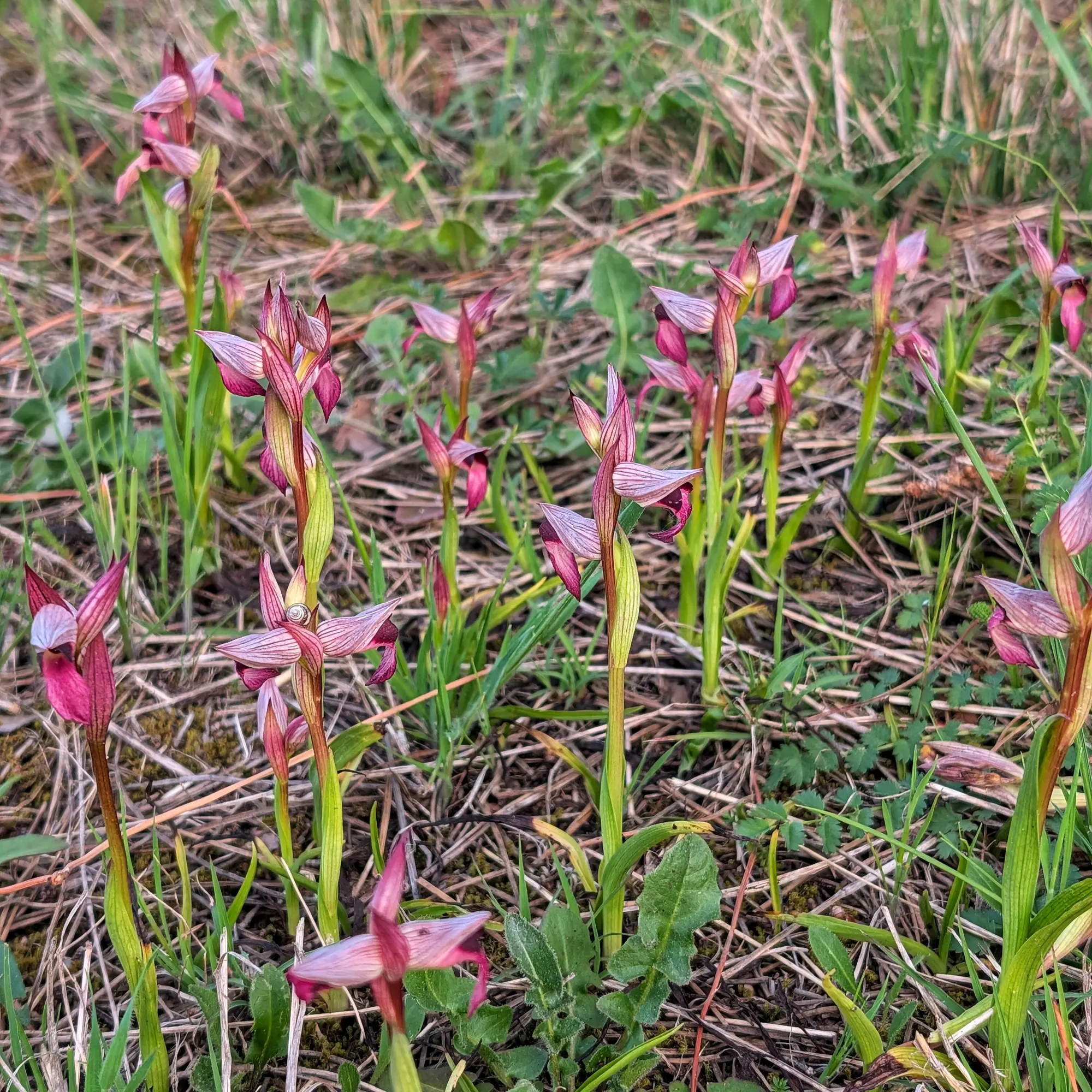
Habitat and distribution: It thrives in a wide variety of open and sunny environments, including wet meadows, scrublands, olive groves, abandoned fields, and forest clearings (e.g., Aleppo pine forests). While some sources indicate a preference for siliceous or slightly acidic soils, it is considered substrate-indifferent and can also be found in near-neutral pH soils or decalcification clays. It flowers in spring, generally between April and June. Its distribution is Mediterranean and Atlantic, extending across Southern Europe, North Africa, and the islands of the western and central Mediterranean. In Catalonia, it is considered a common species, and it is also present in the Balearic Islands.
Ecology and conservation: S. lingua is notable for its pollination strategy based on sexual deception, primarily attracting males of the small bee Ceratina cucurbitina. Globally, it is classified as «Least Concern» (LC) by the IUCN. In Catalonia, it is not considered threatened, but it is a protected species in the Balearic Islands and is listed as «Vulnerable» in the Region of Murcia due to its rarity in that specific territory.
Gallery
Related observations
Discover the observations I've made of this species.