Serapias perez-chiscanoi
About the Orchid
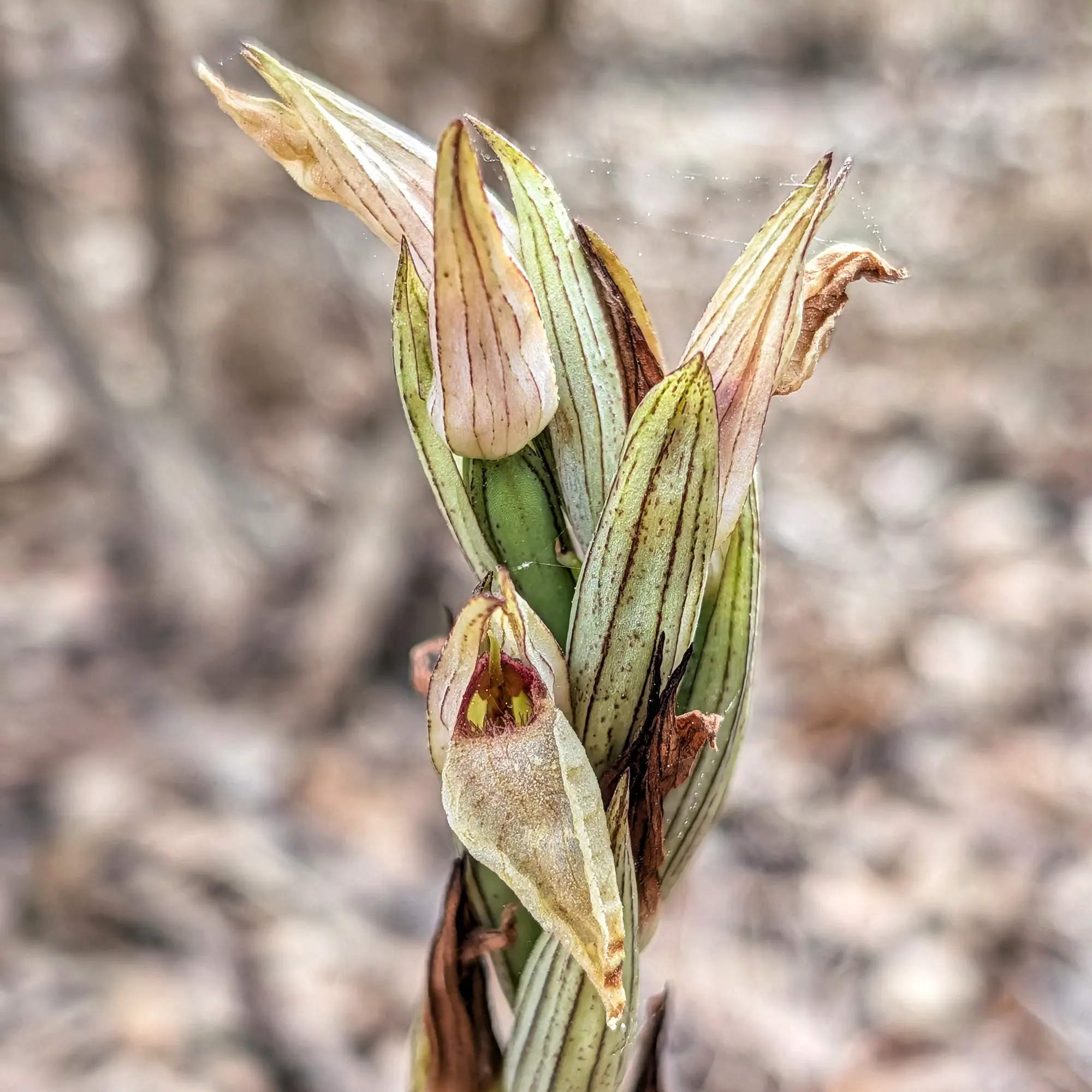
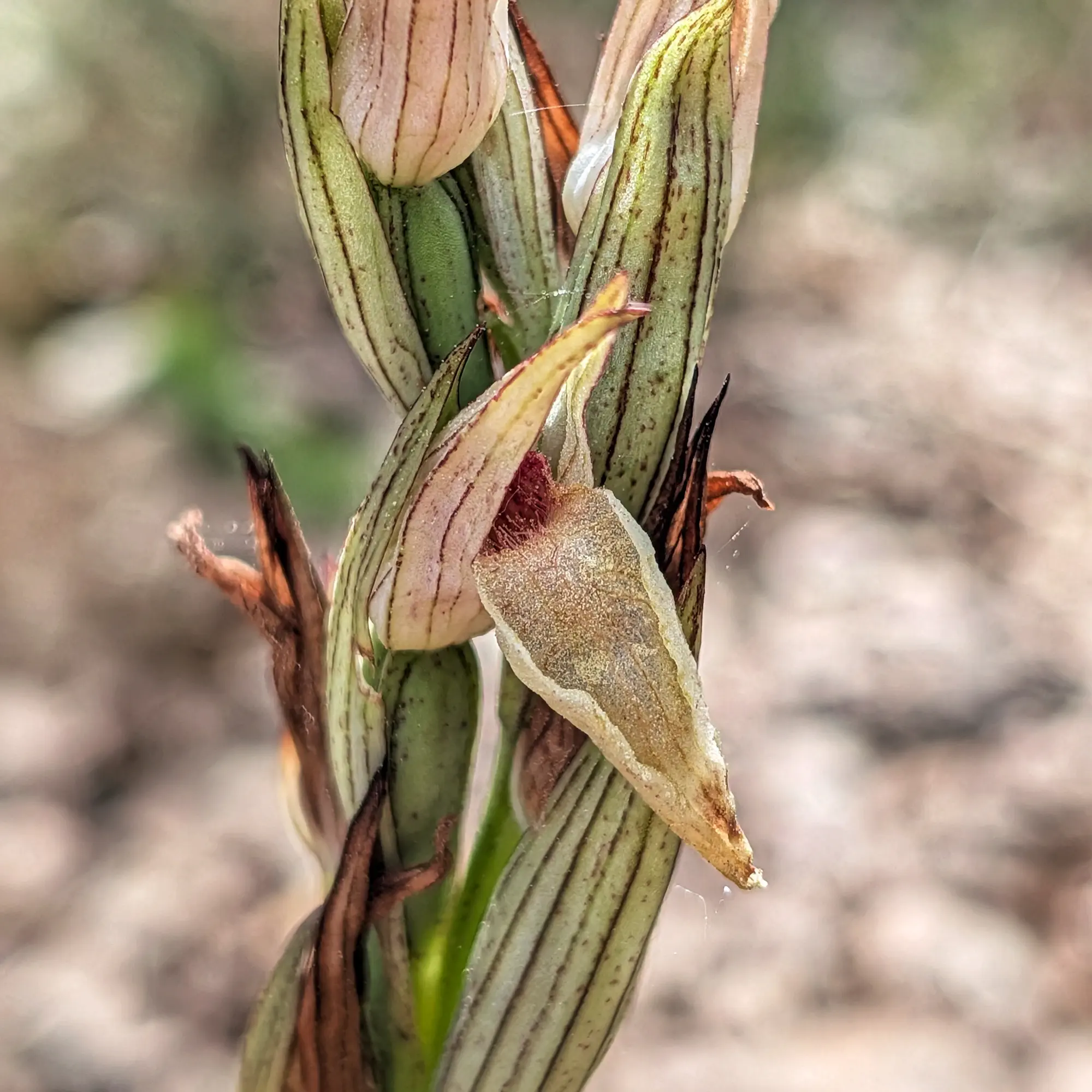
The Serapias perez-chiscanoi, is an orchid endemic to the western half of the Iberian Peninsula. It was discovered in 1976 by the botanist from Extremadura, José Luis Pérez Chiscano, in Badajoz, and formally described by him in 1988 as Serapias viridis. In 1990, Carmen Acedo Casado renamed it in honor of its discoverer, as the name S. viridis had already been assigned to another Brazilian species. It is distinguished by its stable and uniform appearance, with pale or greenish flowers, unlike most of the genus Serapias, which typically have red flowers.
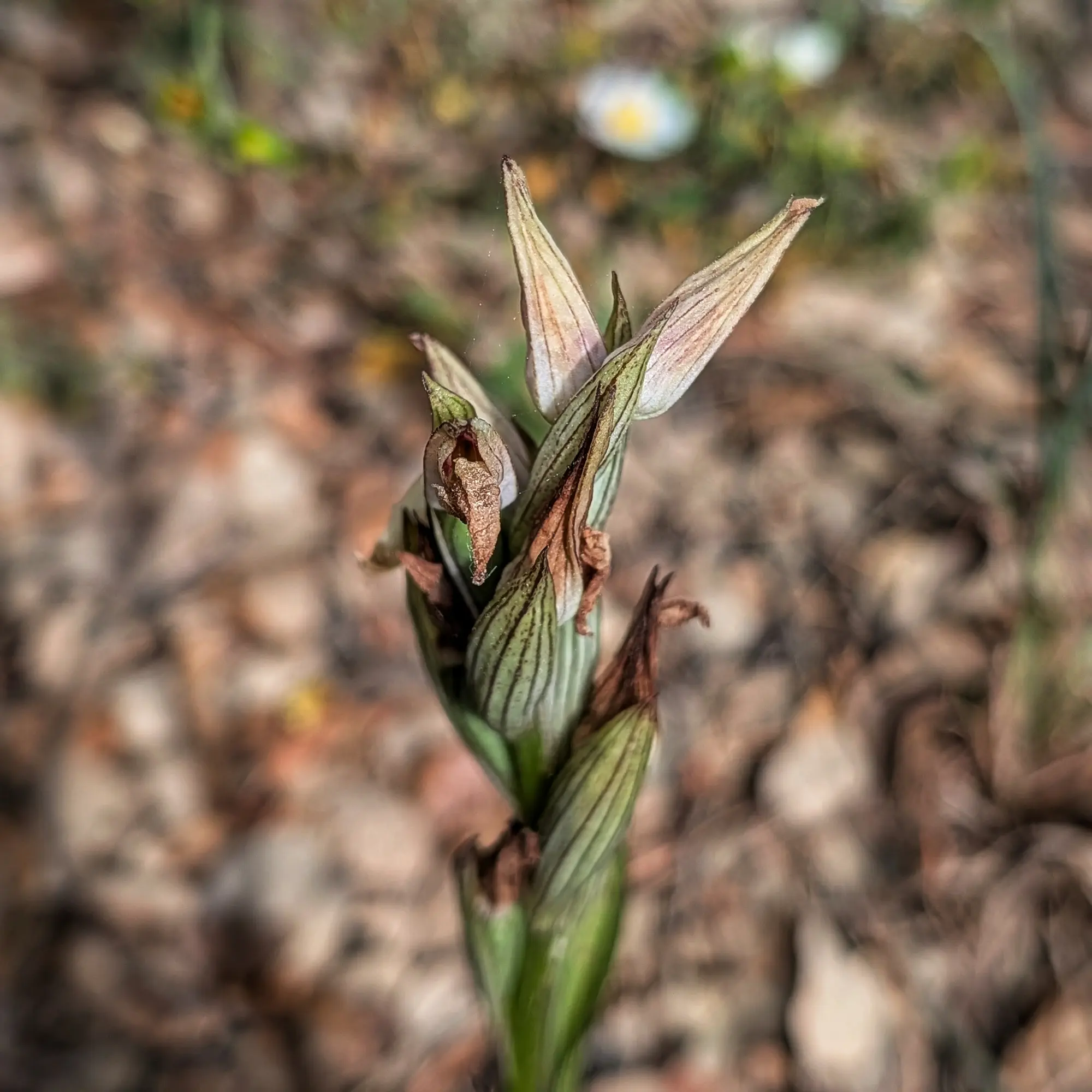
Morphological description: It is a plant generally measuring between 15 and 40 cm in height (exceptionally up to 46 cm) and typically features two ovoid stolons. It has 2 to 10 lanceolate leaves. The inflorescence is short, dense, and has a "twisted" appearance, grouping between 3 and 11 large flowers. Its labellum (the lower petal) measures between 22 and 31 mm and is divided into the hypochil (hidden inside the flower, helmet-shaped) and the epichil or tongue, which protrudes at an angle of 45 to 90 degrees. Despite its characteristic pale green appearance, the plant exhibits two main color variations: the "green" form (completely pale and greenish) and the "reddish" form (with reddish/pinkish colorations or lines on the veins of the leaves, bracts, ovary, and parts of the labellum).
Biology and ecology: It stands out for its almost exclusive reproduction by 100% self-fertilization (autogamy), a process known as cleistogamy where the pollen disintegrates on the stigma often even before the flower opens. This strategy allows it to achieve exceptional fruiting percentages, around 92%, without relying on insect pollinators or producing nectar. It flowers during spring, generally between early April and mid-May. In addition to seeds, it can also reproduce vegetatively by creating new shoots around the mother plant. The leaves of young vegetative rosettes are significantly longer than those of adult flowering plants.
Habitat and distribution: Serapias perez-chiscanoi requires a habitat of unaltered humid meadows and pastures. It prefers loose, sedimentary soils that are slightly acidic, rich in silica, and very poor in nutrients. While it thrives in temporarily flooded areas (often near roadside ditches or meadow edges in dehesas), it does not tolerate being completely or permanently waterlogged. It is a very exclusive and rare endemic species, primarily concentrated in Extremadura (Spain), where it is abundant in the Guadiana river basin and some stretches of the Tajo river. Scattered populations are also known in Castilla-La Mancha (Toledo), and a handful of small locations in Portugal (coastal areas of Algarve, Baixo Alentejo, Beira Litoral, Ribatejo, and northern Trás-os-Montes e Alto Douro).
Conservation status: Classified as "endangered" according to the Regional Catalogue of Threatened Species of Extremadura, the species has suffered rapid and alarming disappearances in several populations in recent decades. Key threats include public works, intensive agriculture, the use of fertilizers (which deteriorate the poor soils it needs), alteration of land use, and livestock grazing pressure.
Gallery
Related observations
Discover the observations I've made of this species.