Serapias vomeracea
About the Orchid
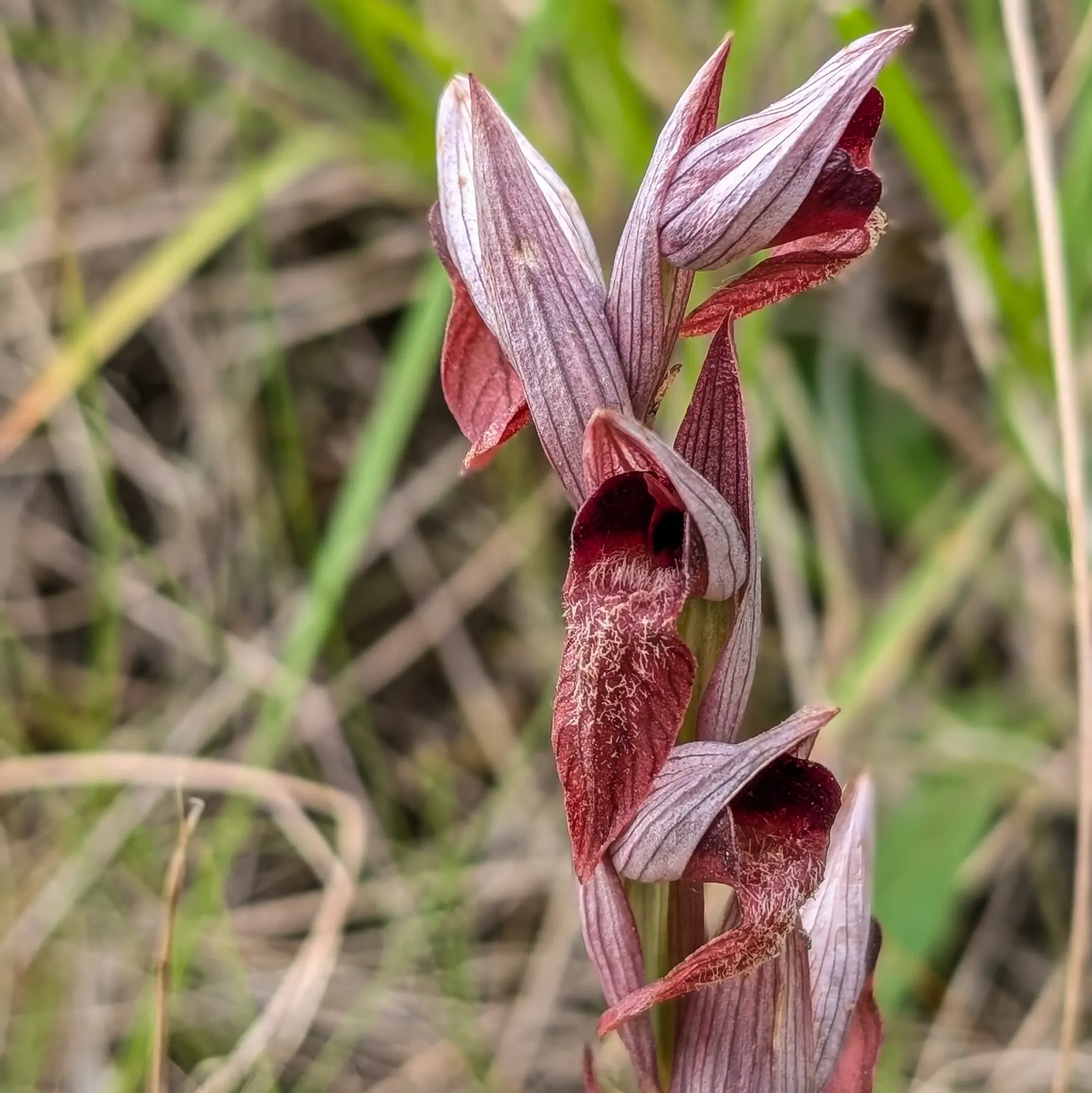
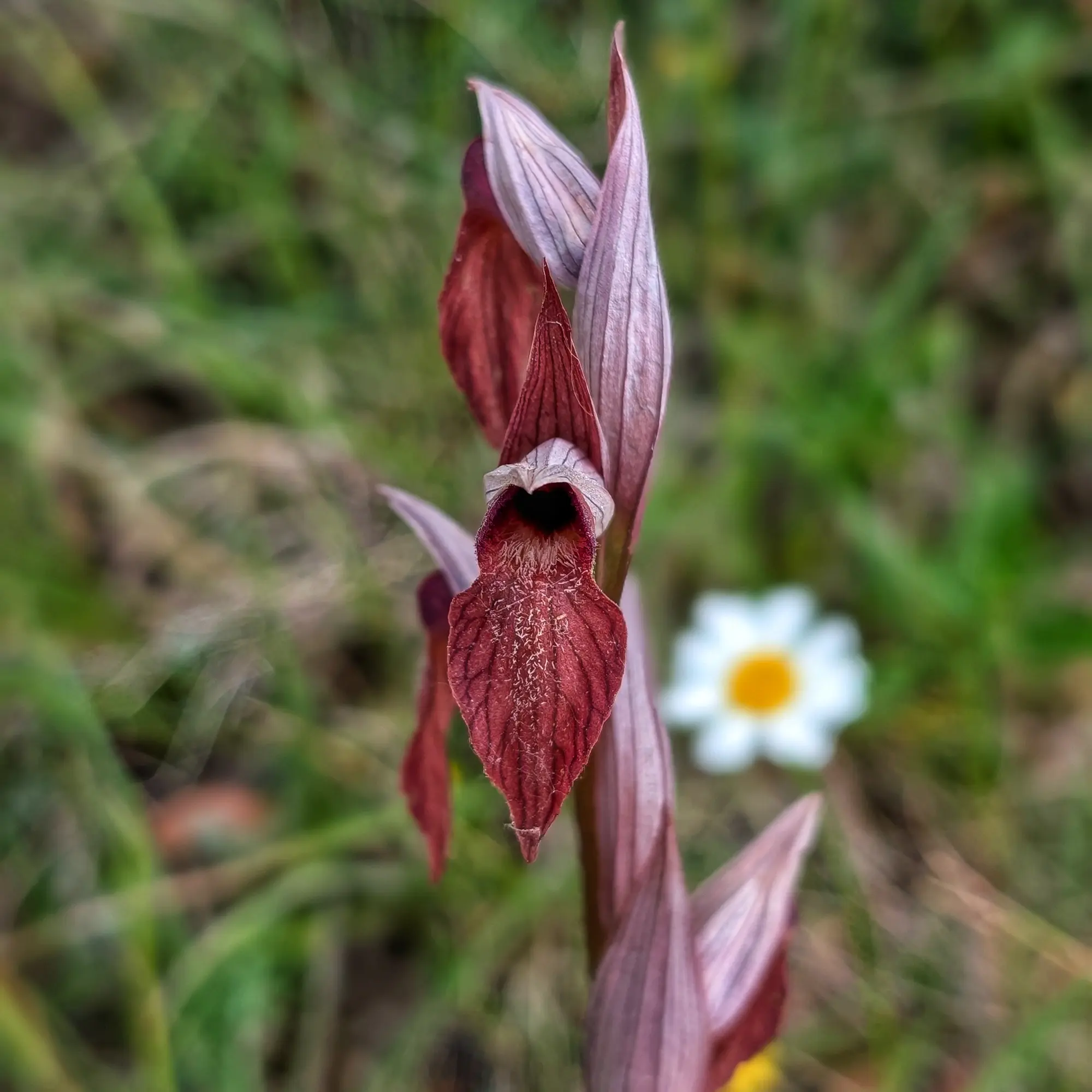
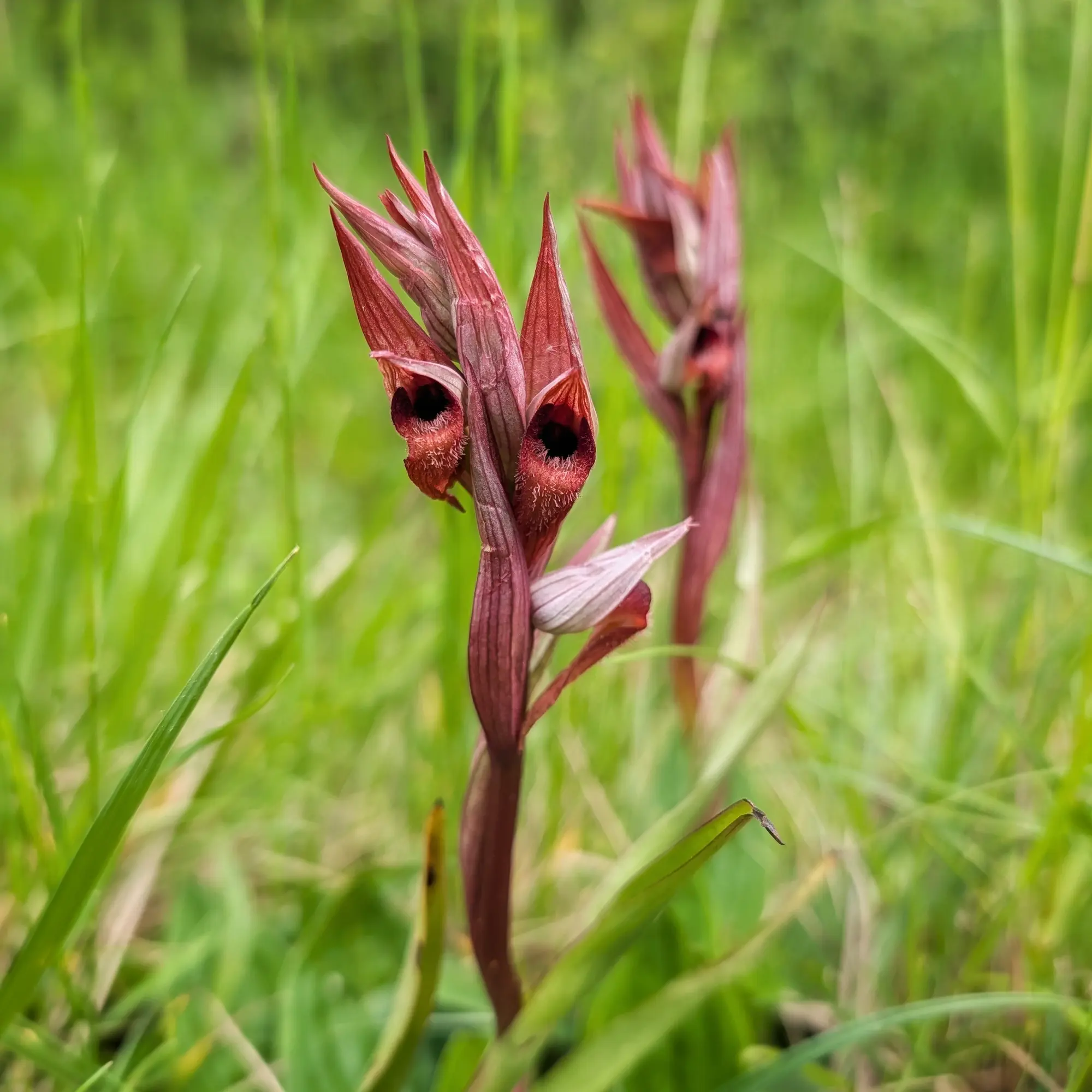
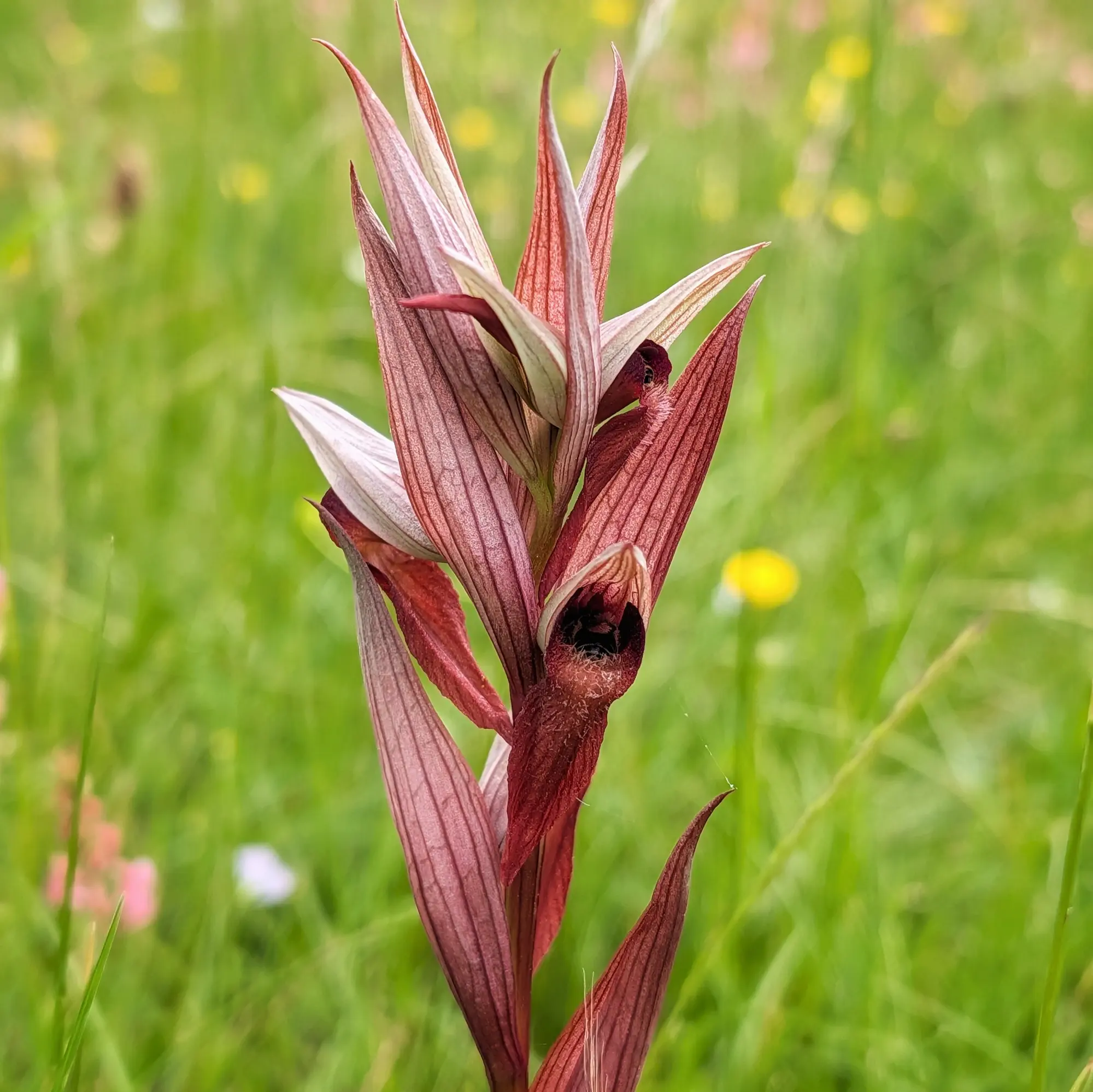
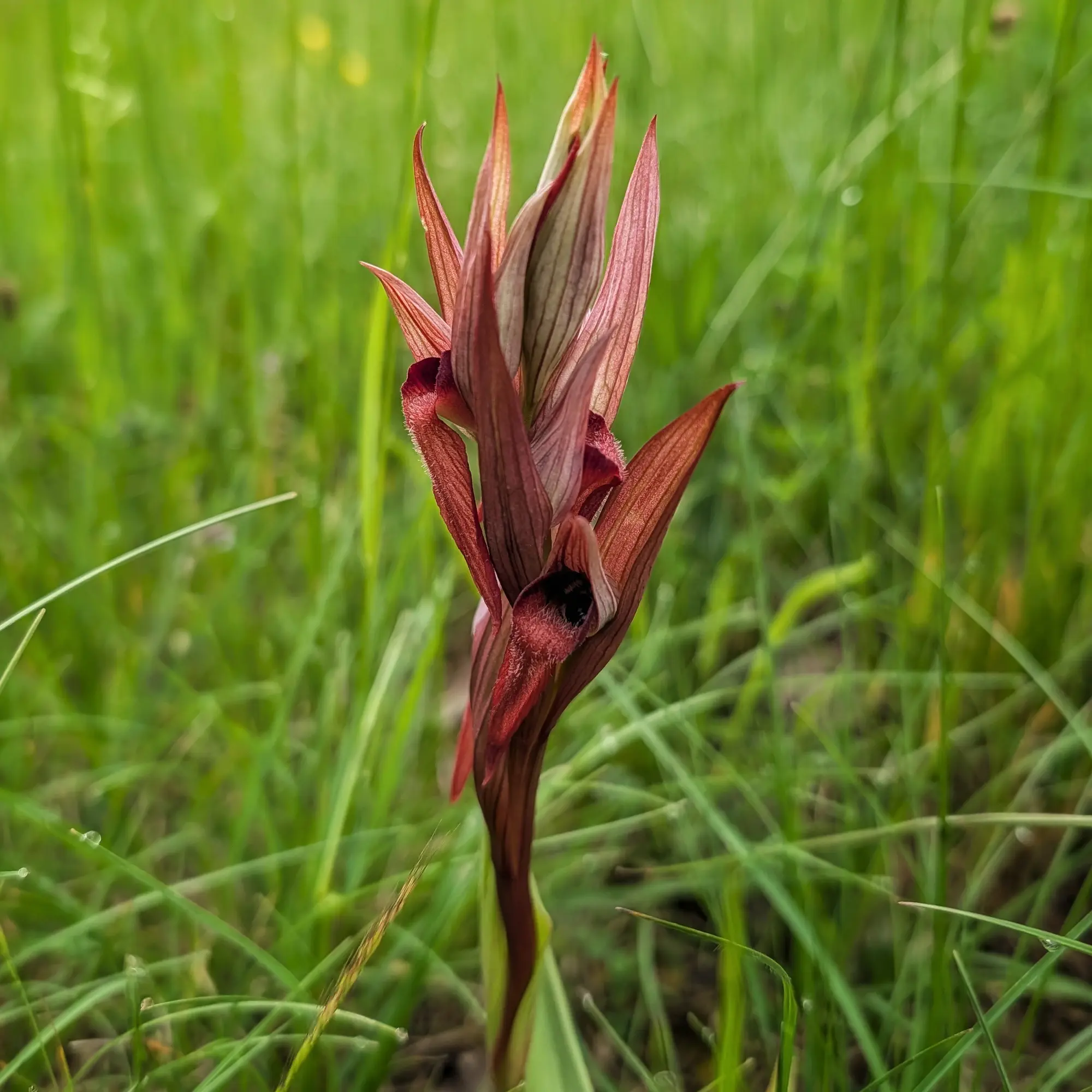
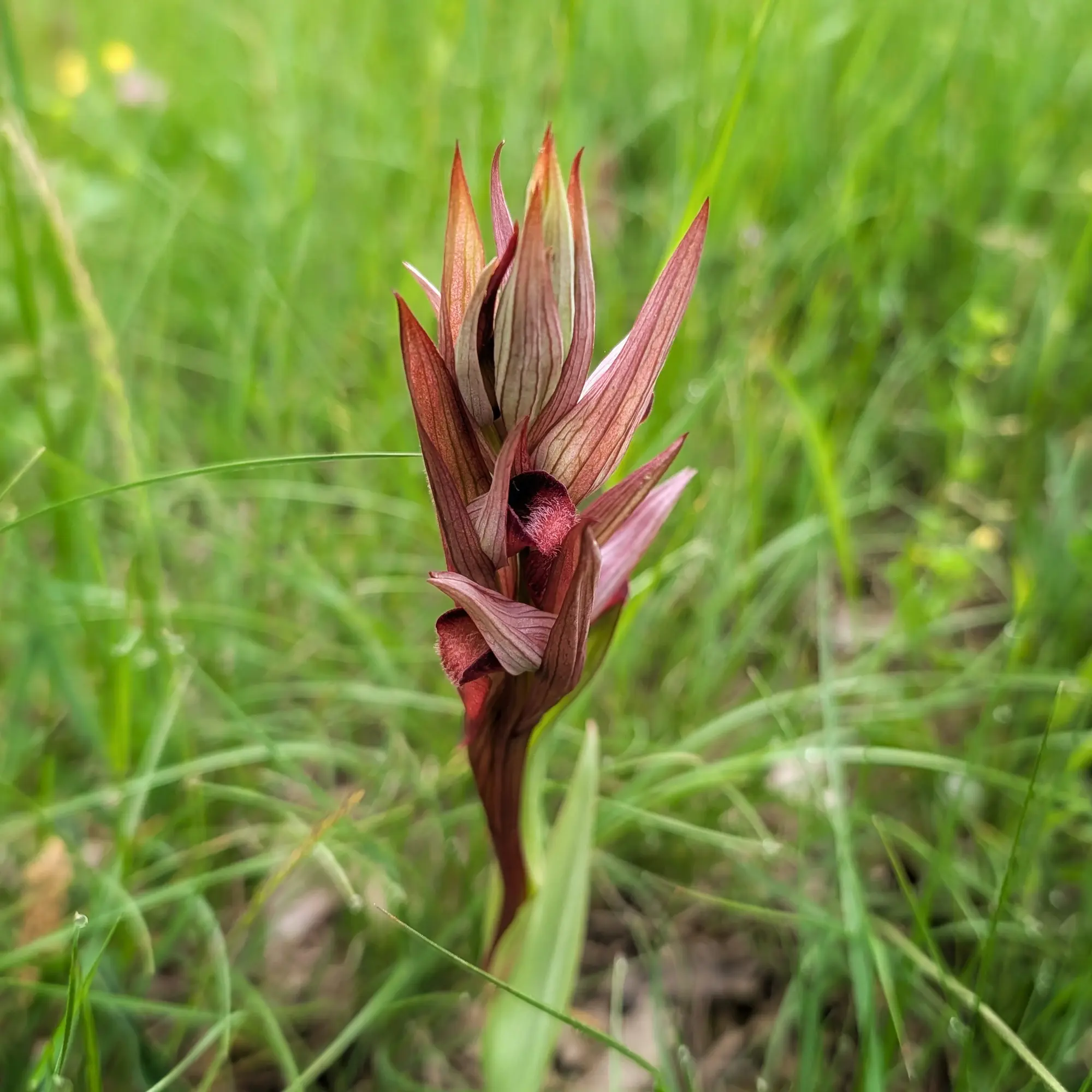
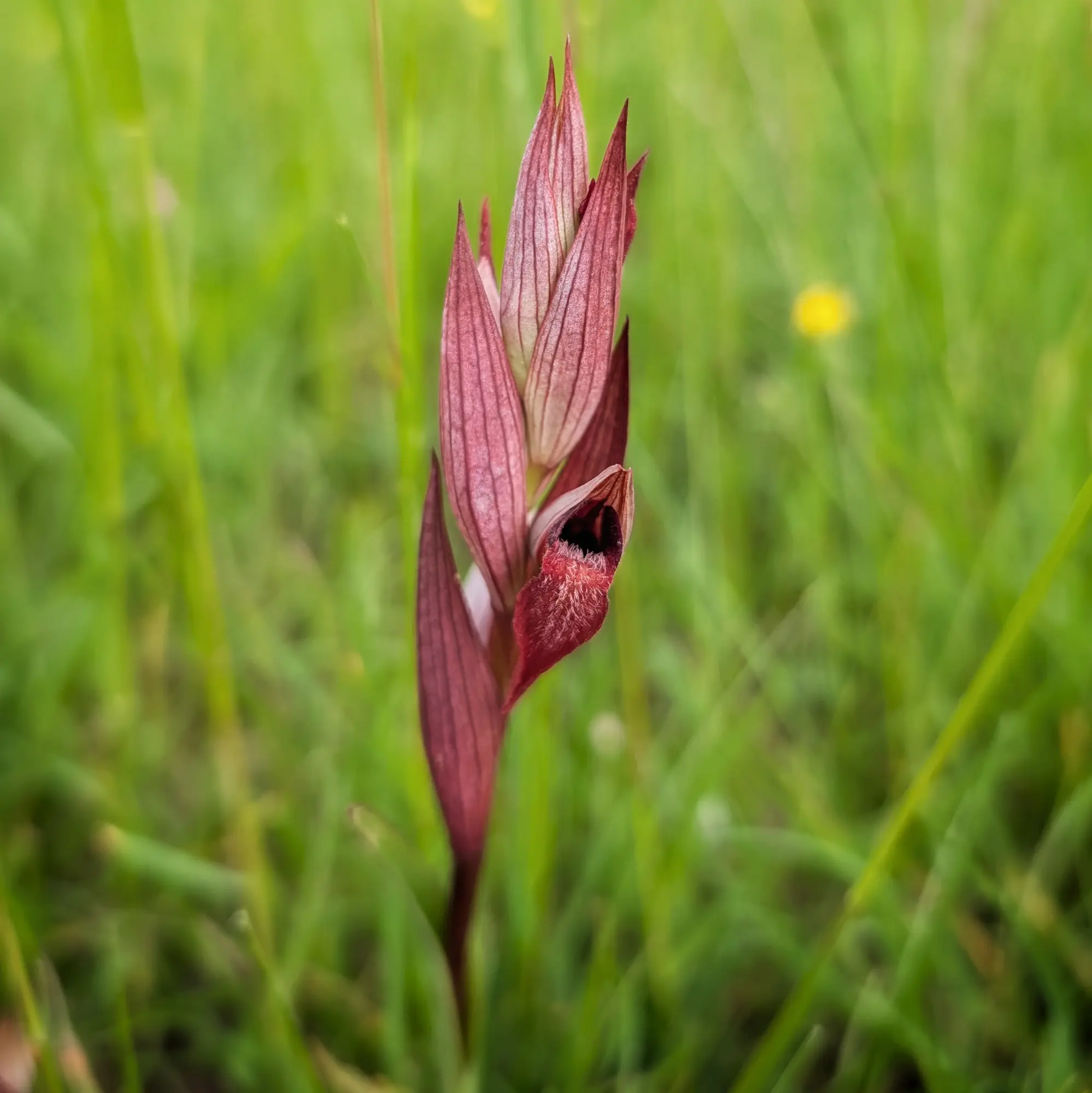
The Serapias vomeracea, commonly known as the Long-lipped serapias, is a perennial, robust orchid. Its specific name (vomeracea) refers to the shape of the apical part of the labellum (epichile), which resembles a ploughshare. It stands out for its reproductive strategy: it does not produce nectar (food deception), but attracts pollinators (bees and beetles) by offering a refuge where the internal temperature can be up to 3 degrees higher than the external one.
Morphological description: It is a plant between 20 and 40 cm tall, with a lax inflorescence (3-10 flowers). The most visible feature is the lanceolate bracts, longer than the galea (helmet). The flower lacks a spur. The labellum measures up to 4.5 cm and is divided into the hypochile (basal, dark red, and hairy) and the epichile (distal, narrow, and elongated), which is the most visible part, tongue-shaped and red or purple.
Habitat and distribution: It prefers dry or wet meadows and forest clearings, often on clayey or siliceous substrates. Its distribution is Mediterranean-Atlantic. In Catalonia, it is more abundant in the province of Barcelona (Vallès, Llobregat Delta), while it is very scarce in Girona and has no known current populations in Lleida or Tarragona. It flowers from late April to mid-June.
Conservation status: In Catalonia, S. vomeracea is classified as near threatened. Its populations face threats such as habitat destruction due to construction and animal pressure (grazing and action by wild boars, which eat the tubers).
Gallery
Related observations
Discover the observations I've made of this species.