Ophrys ×castroviejoi (O. scolopax × O. speculum)
About the Orchid
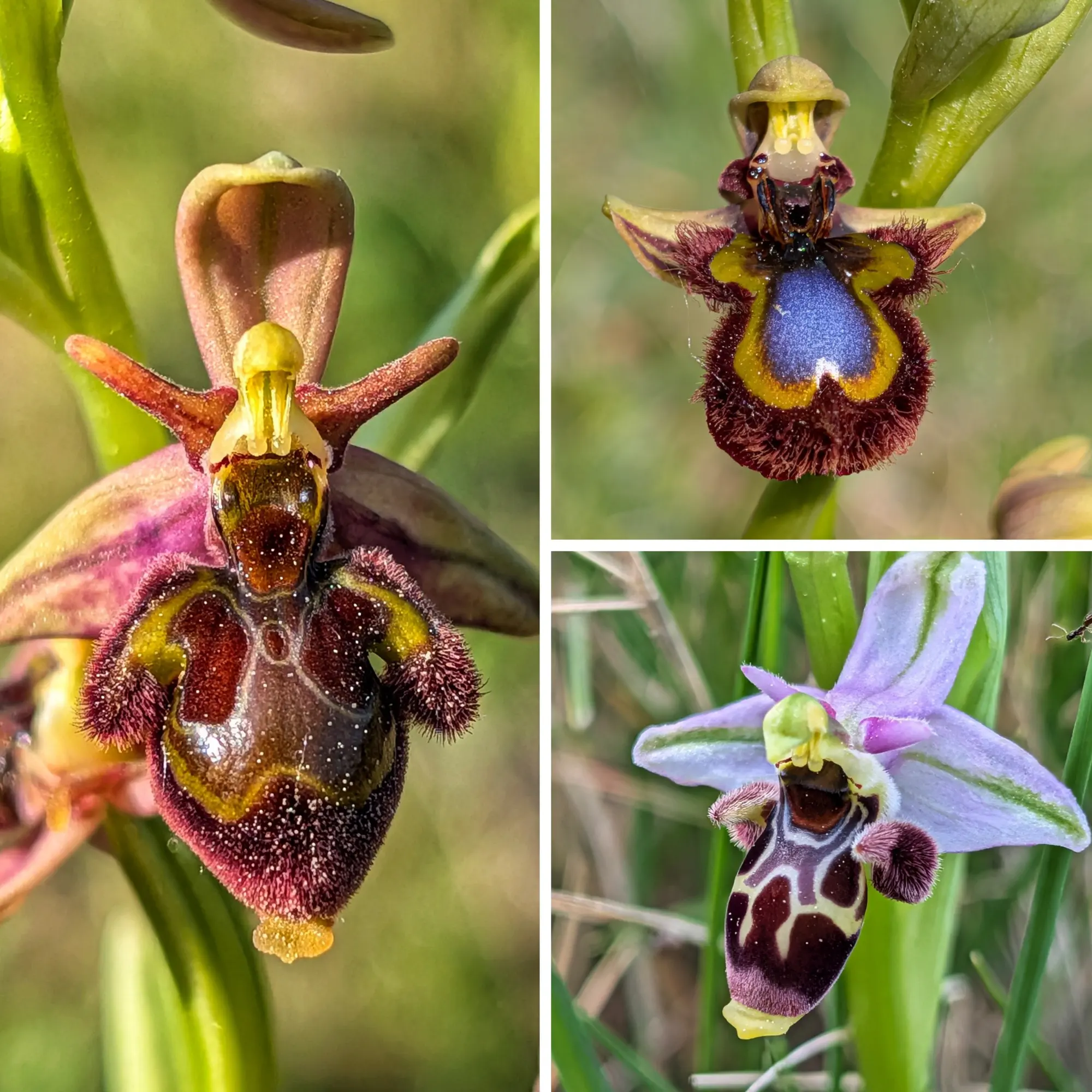
The Ophrys x castroviejoi, commonly known as Castroviejo's Hybrid Bee Orchid, is an orchid of hybrid origin, resulting from the natural cross between the species Ophrys scolopax (Sawfly Orchid) and Ophrys speculum (Mirror Orchid). Although an artificial variant of this hybrid was initially named Ophrys x kelleriella (a name considered a nomen nudum), its formal description occurred much later. This Mediterranean tuberous geophyte receives its specific epithet (castroviejoi) in honor of the distinguished Spanish botanist Santiago Castroviejo.
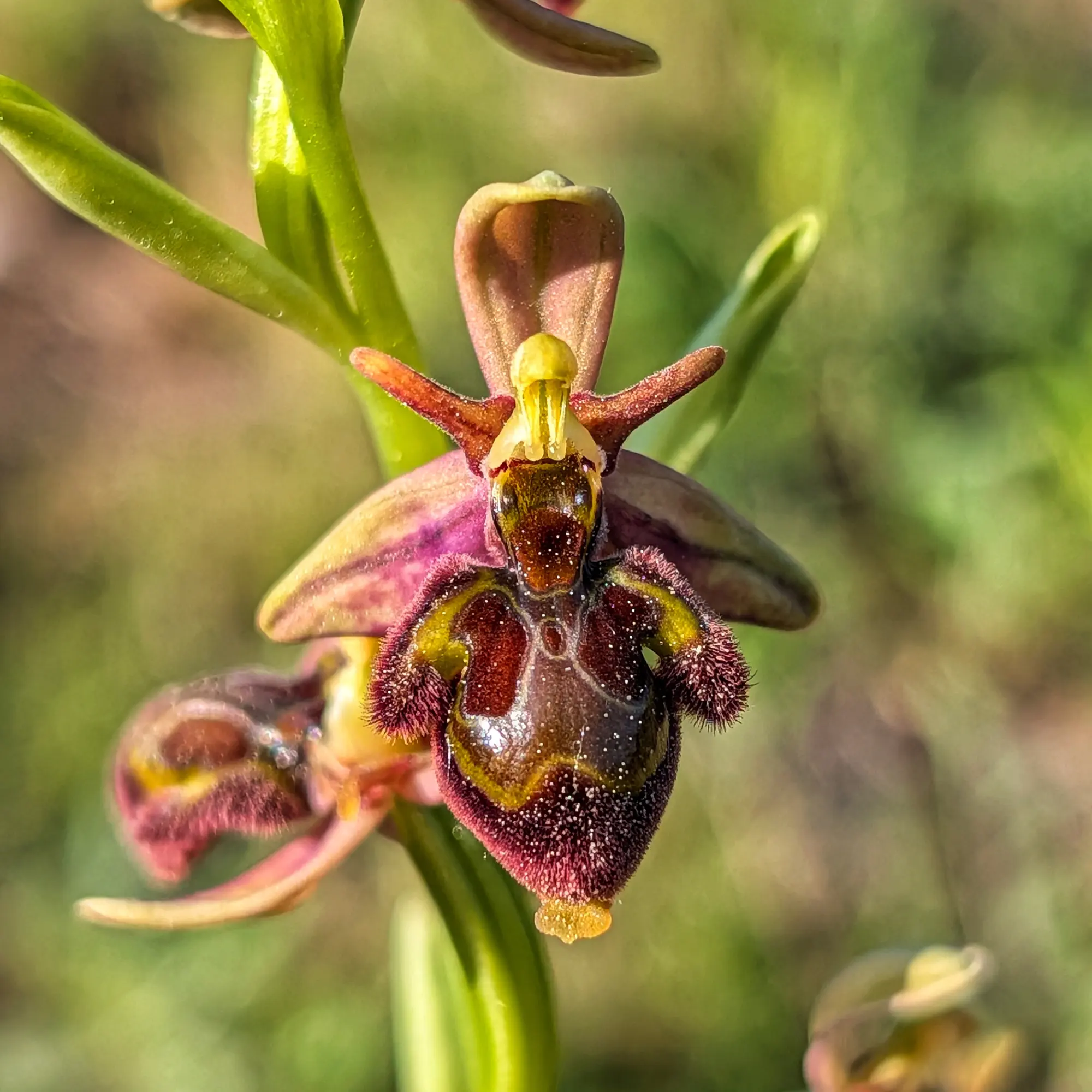
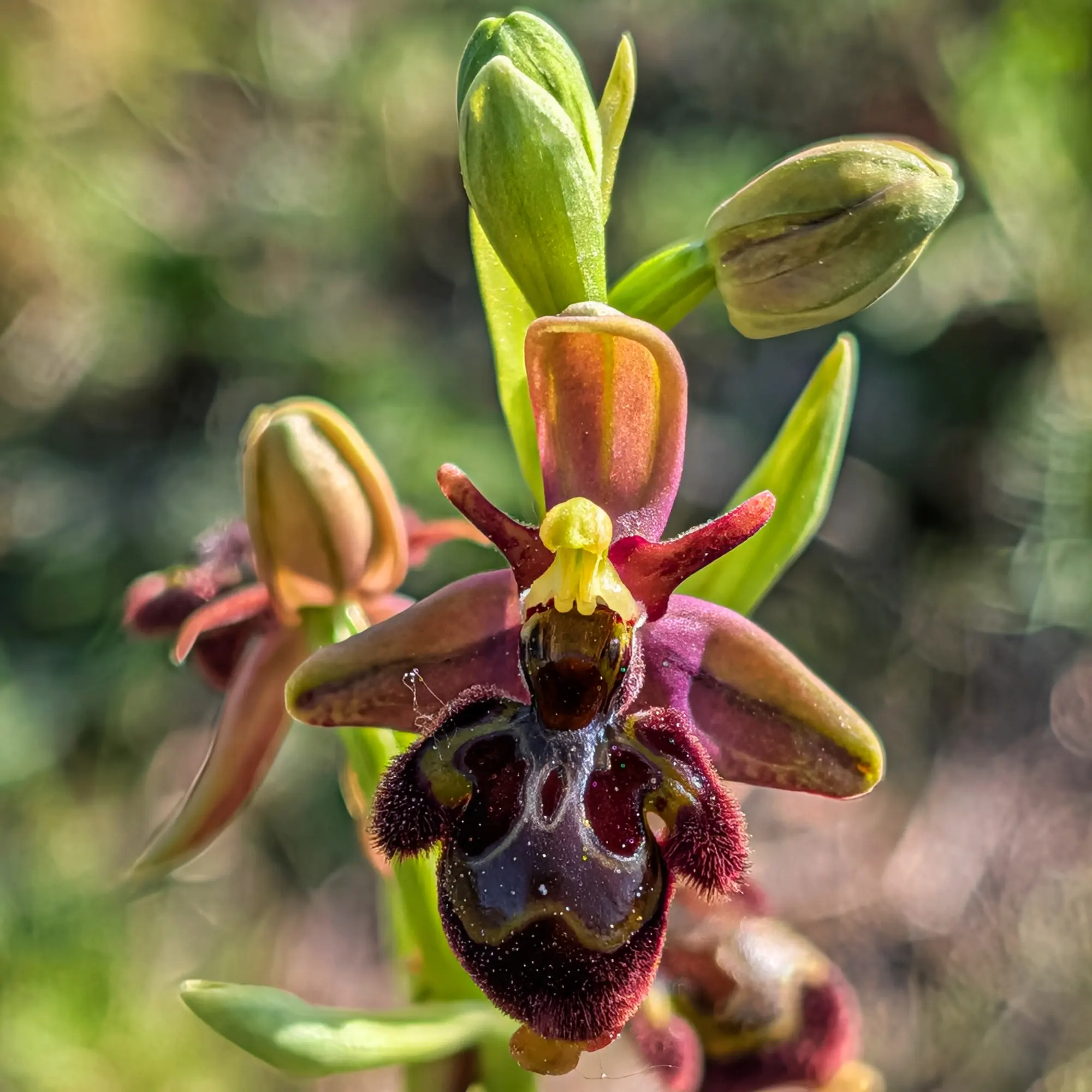
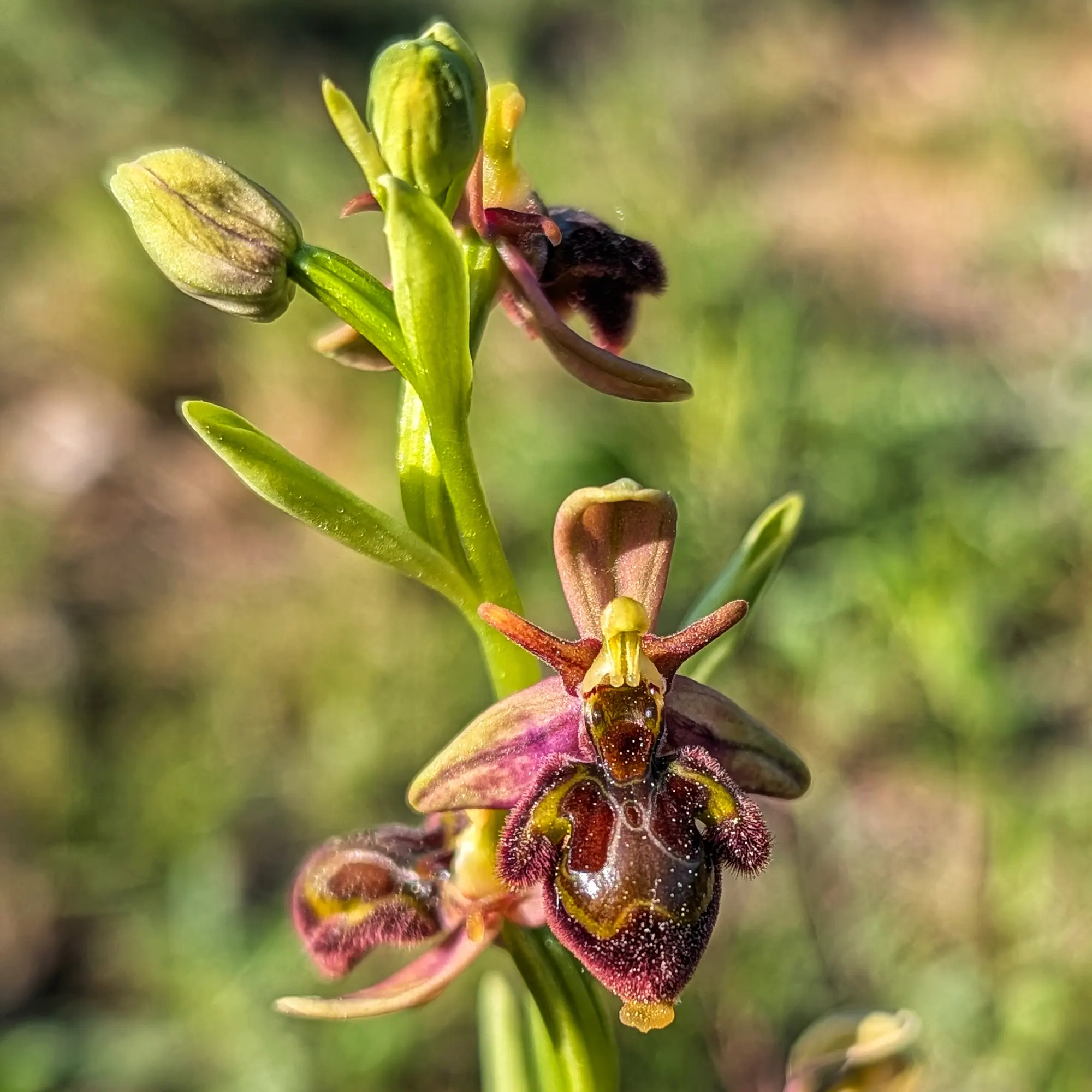
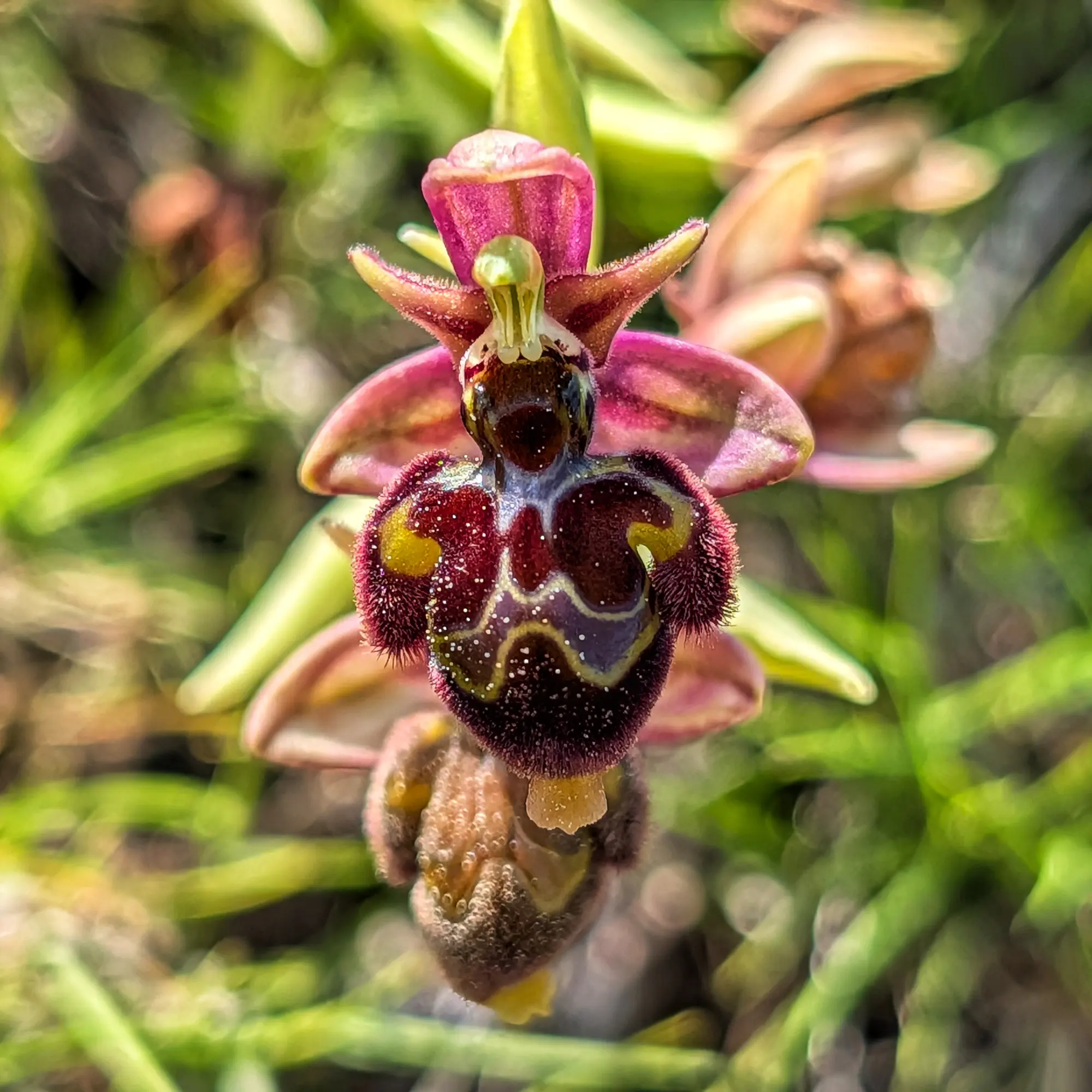
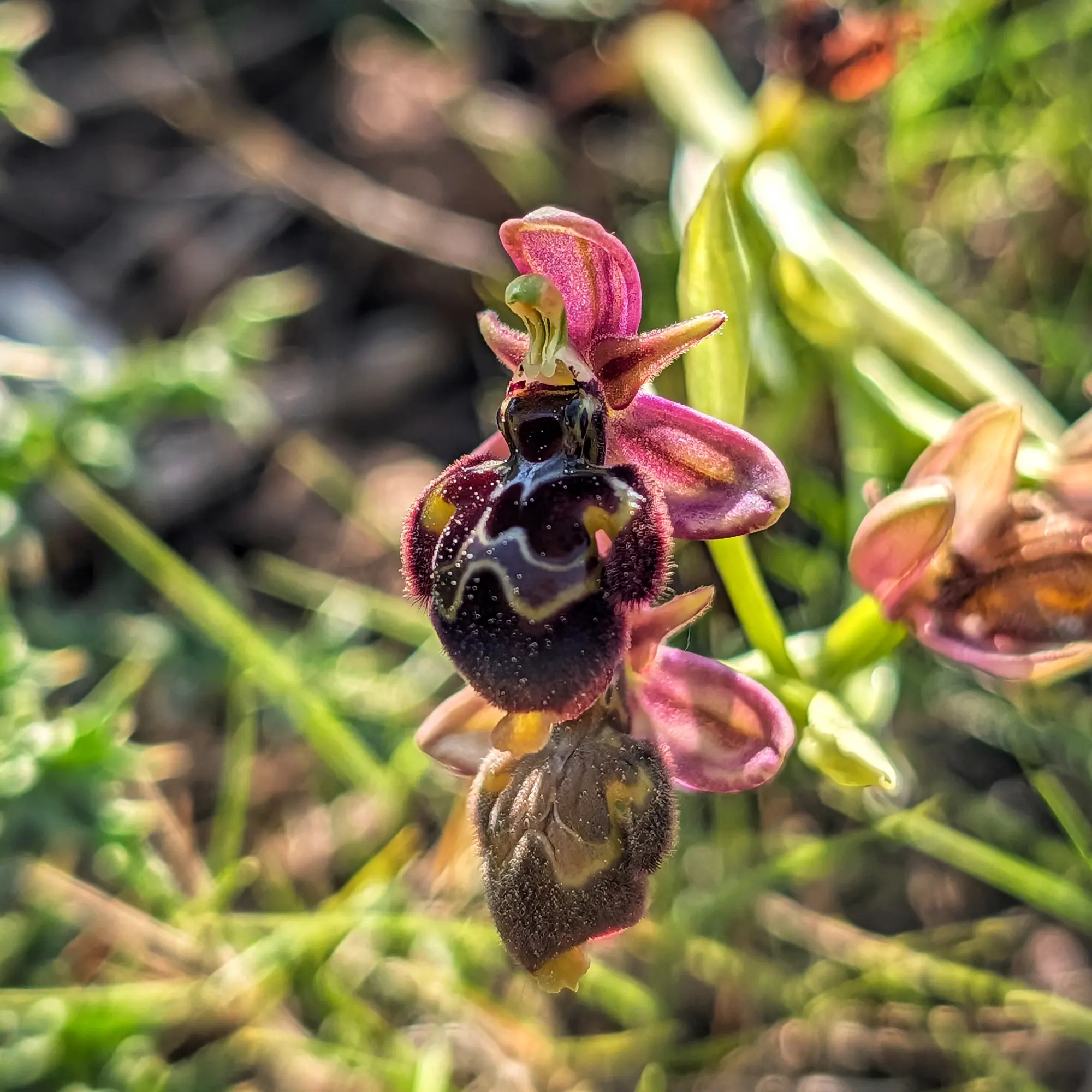
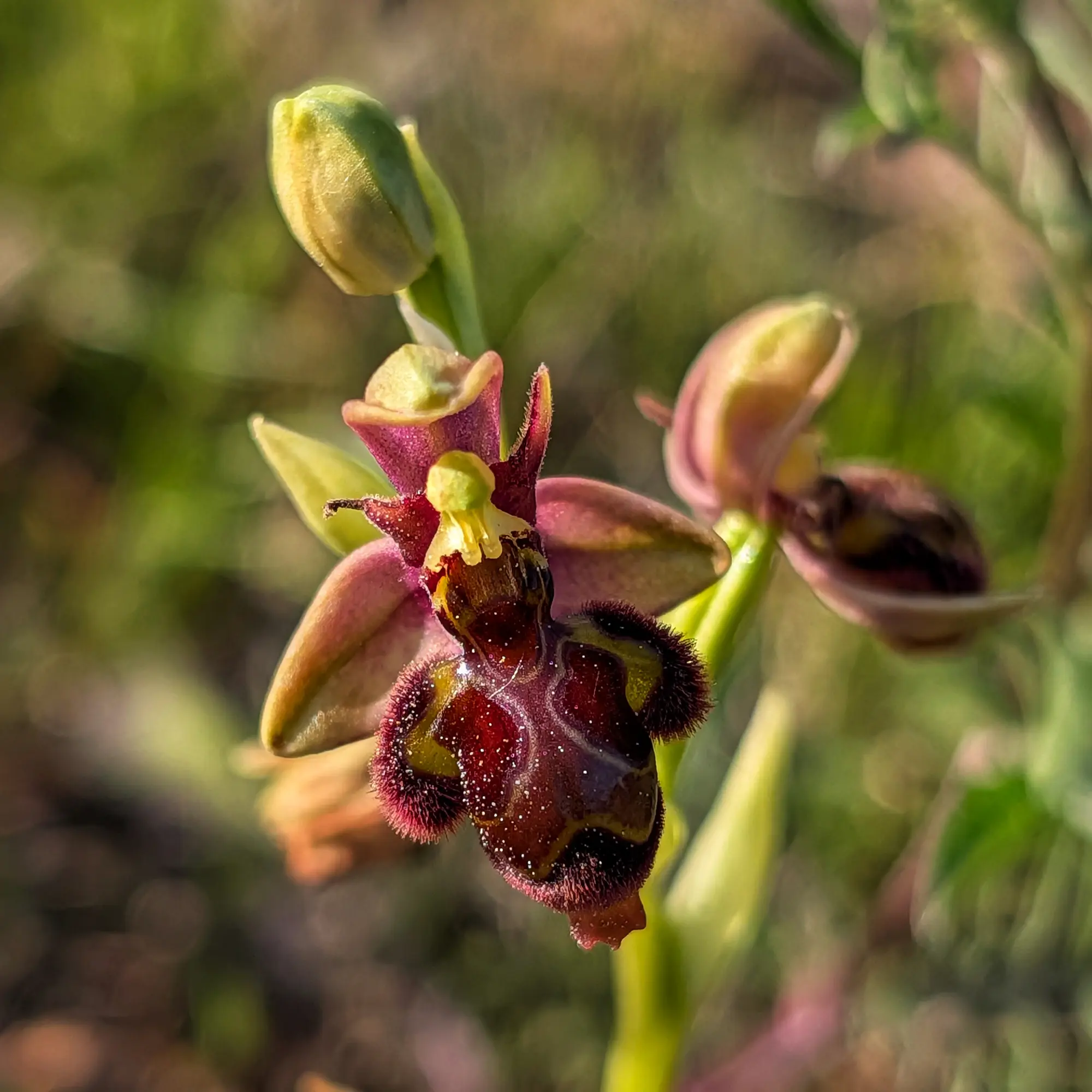
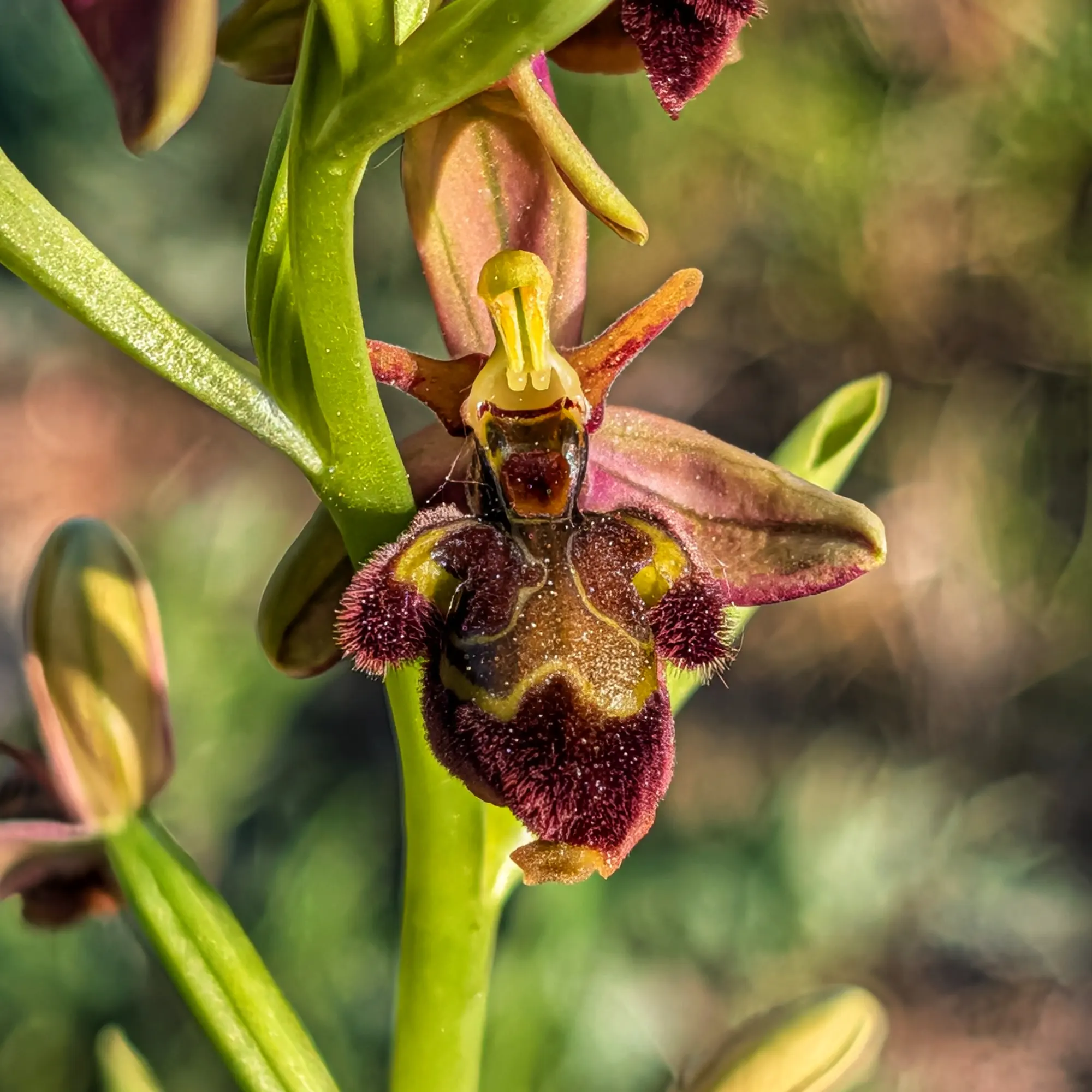
Morphological description: The plant features erect and slightly flexuous stems ranging from 10.5 to 22 cm in height. The basal leaves are oblong-lanceolate and acute, measuring between 4-7 cm long and 1.6-1.9 cm wide. The inflorescence is lax, bearing between 2 and 7 flowers. The sepals vary in color from pink and fuchsia to brownish-green, while the lateral petals are triangular-lanceolate, with an entire margin and a velvety appearance.
The labellum is the most distinctive part of the flower, measuring 8 to 14 mm. It is obovate, trilobed, and strongly convex in its distal half. Its color ranges from reddish-brown to purplish-brown, with a velvety margin covered in hairs between 1 and 1.2 mm long. The basal field is flat, featuring two bright and conspicuous false spots (ocelli). The central macula is smooth, shiny, without papillae, with an emarginate "X" shape, colored reddish-violet or violet-purple with a whitish marginal stripe that turns yellow towards the edges. The gynostemium is 4 to 5 mm long and is yellowish-green and purple.
Habitat and distribution: Ophrys x castroviejoi grows in dry scrublands and grasslands, specifically in pastures of Teucrio-Brachypodietum retusi, in climates with a subhumid to dry ombrotype and a thermomediterranean to mesomediterranean thermotype. Its distribution is very infrequent and can be found in any area of the Western Mediterranean where its two parent species coexist. In the Iberian Peninsula, it has been located mainly in coastal areas of the southern half (Xàbia and Benissa in Alicante, and Mijas in Malaga), in the Algarve (Portugal), and, more isolated inland, in the Ebro Depression (Tàrrega, Lleida).
Life cycle and conservation: Flowering dates vary geographically, from mid-March in Malaga to late April in Lleida. Its reproductive capacity appears very limited, with no fertile seed capsules observed in the studied populations. Given its rarity and scarcity, it is considered of great conservation interest. Experts recommend creating and maintaining "Flora Micro-reserves" to protect these rare specimens and the processes of hybridization that drive speciation.
Gallery
Related observations
Discover the observations I've made of this species.