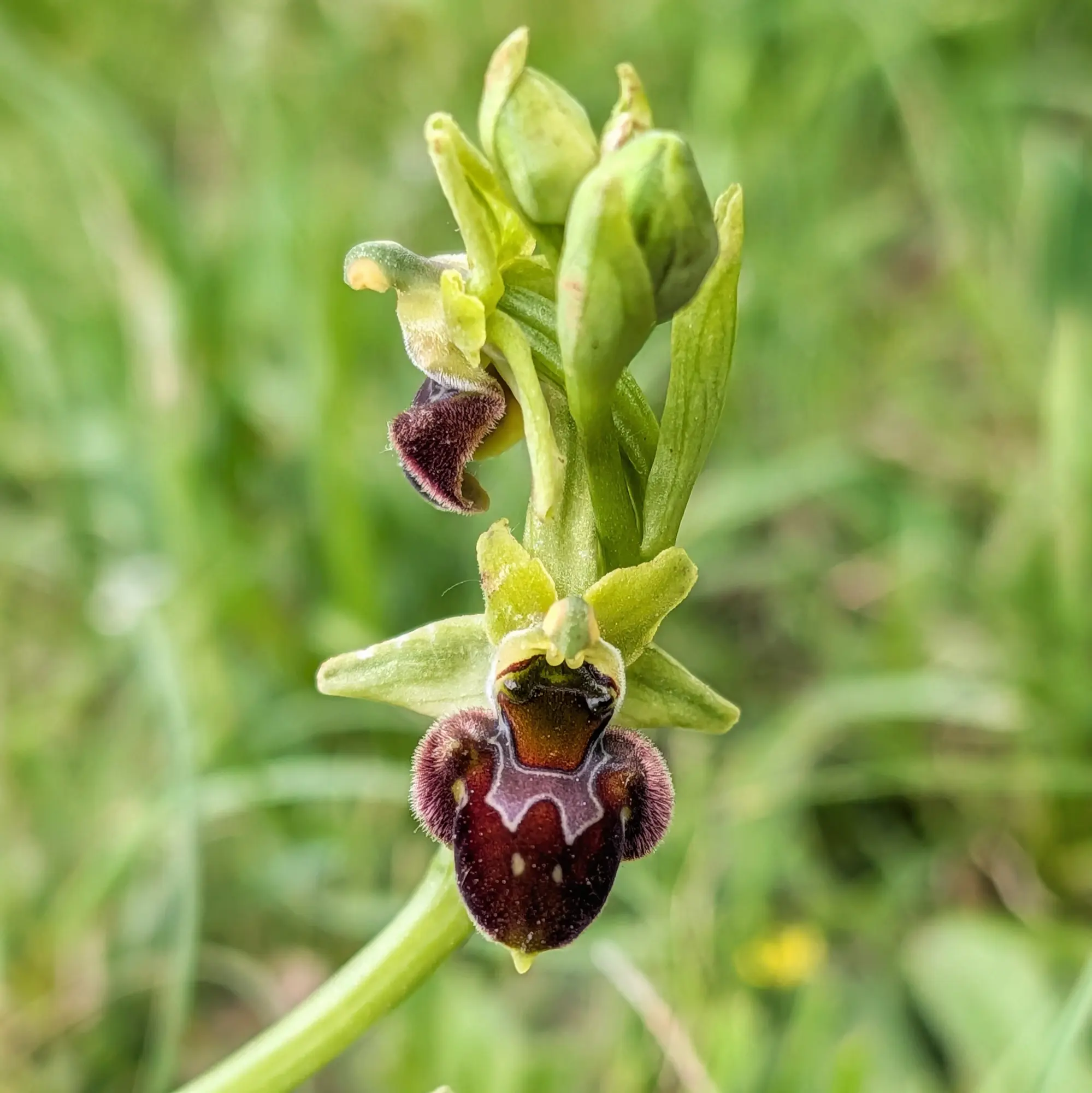
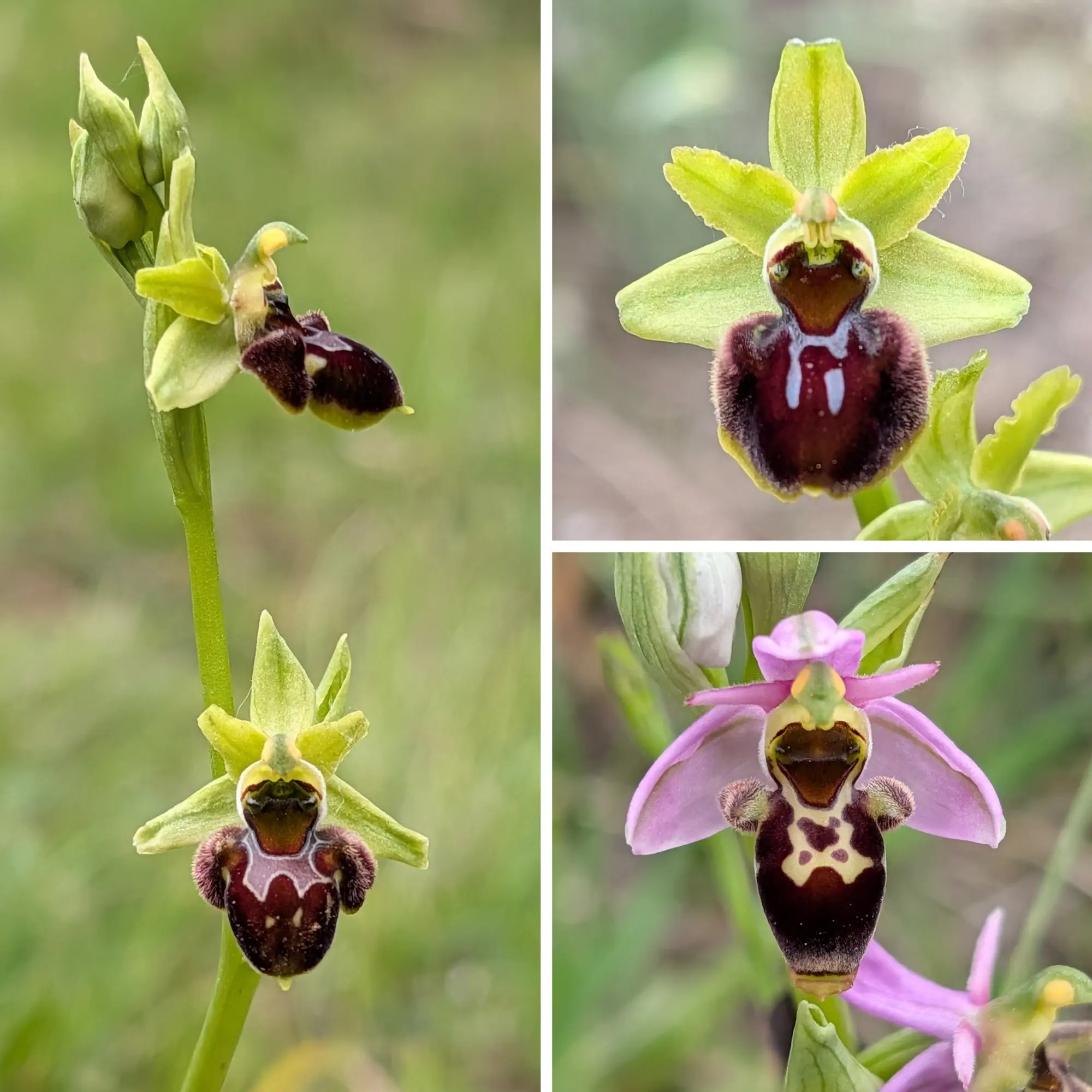
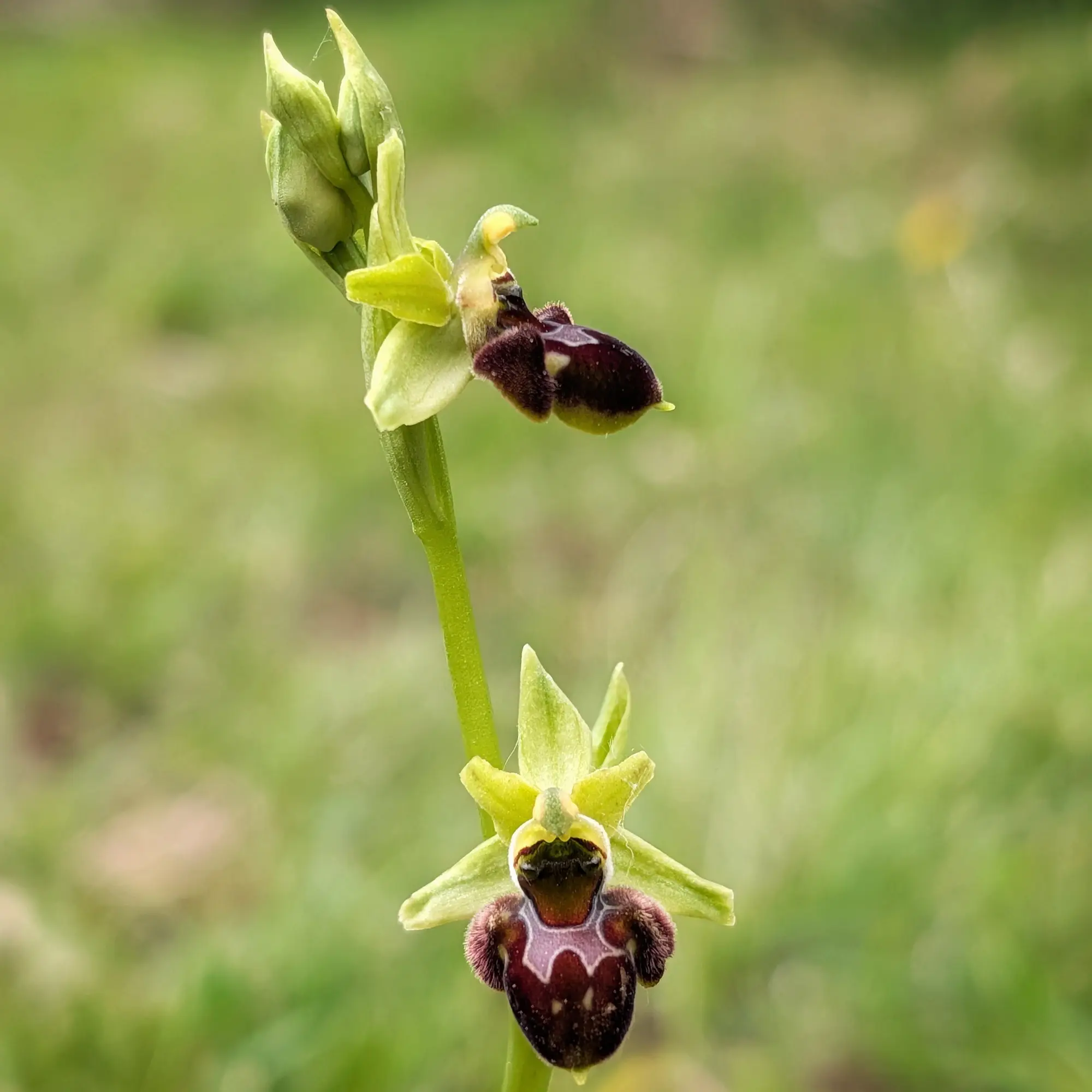
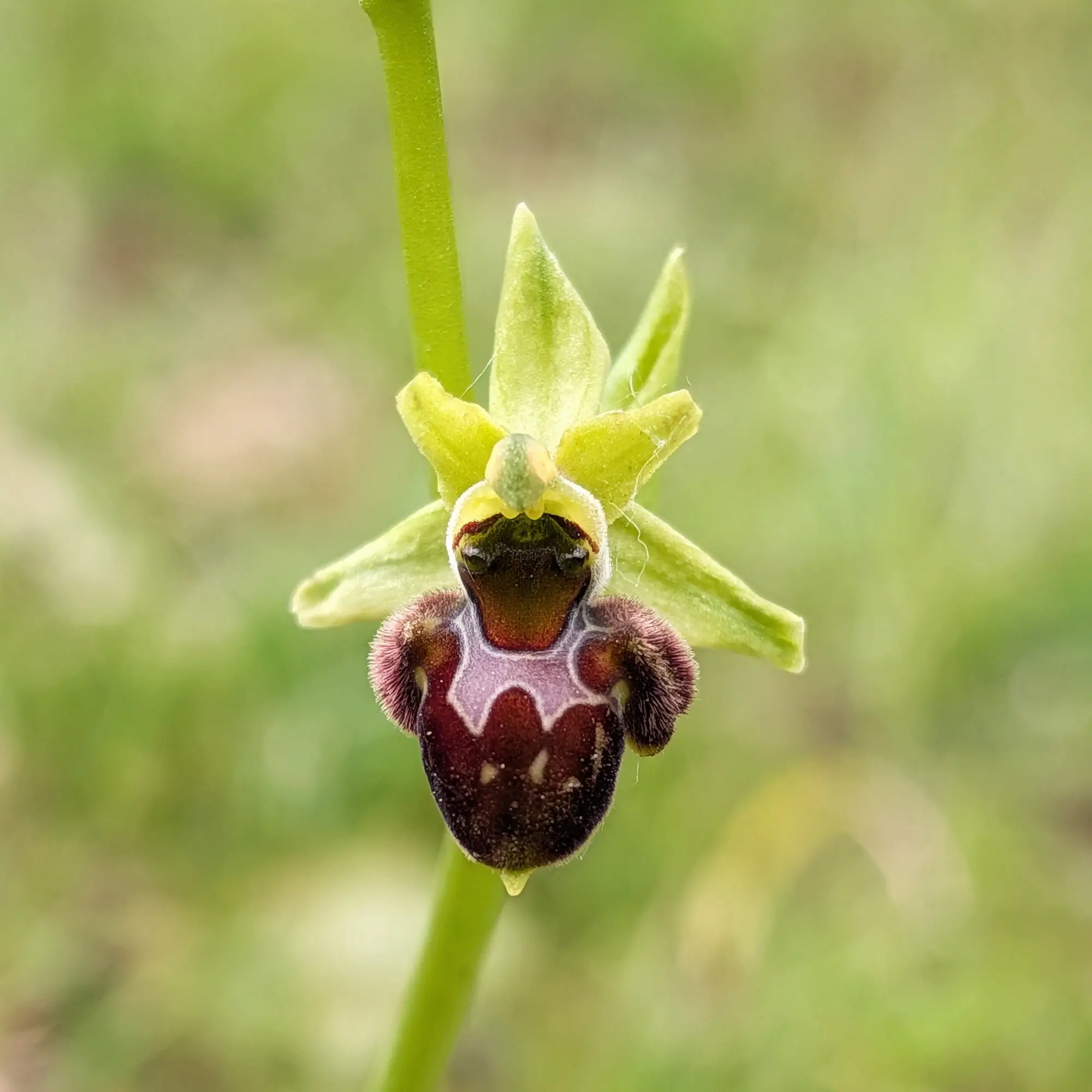
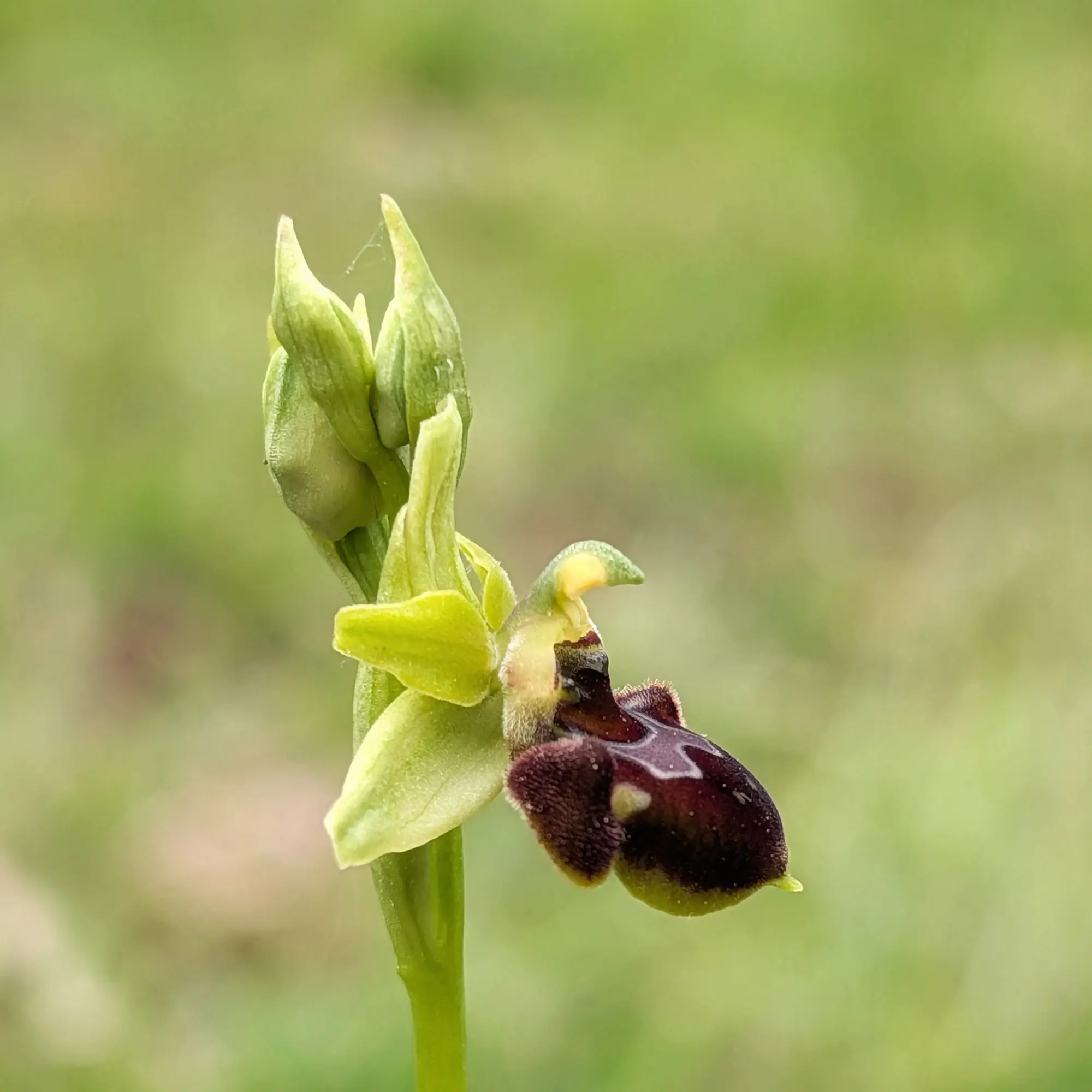
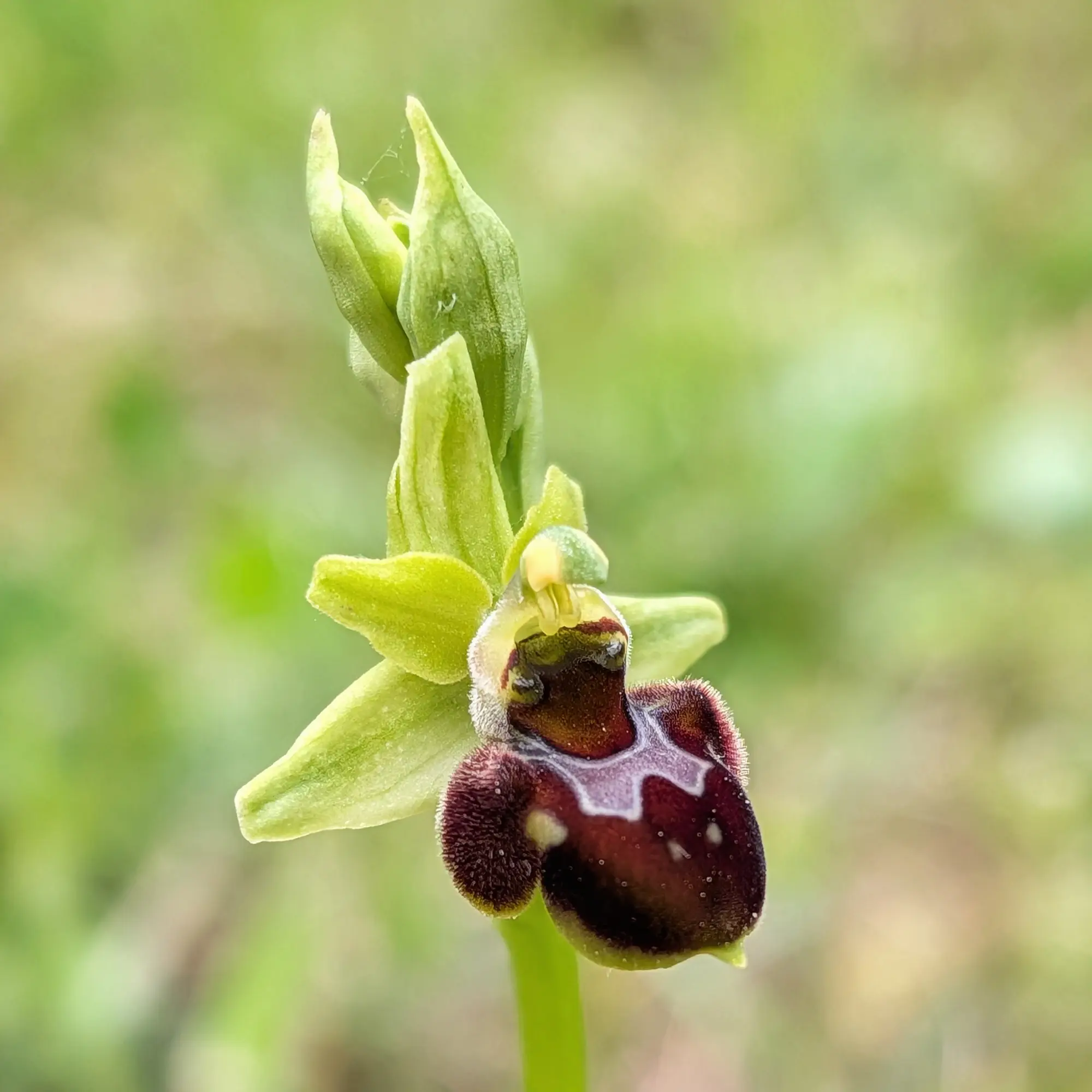
Ophrys ×nouletii (O. scolopax × O. sphegodes)
About the Orchid
The Ophrys ×nouletii is a natural hybrid orchid, resulting from the cross between the species Ophrys scolopax and Ophrys sphegodes. It was originally described by the botanist E.G. Camus in 1893. Taxonomically, it is also known by several synonyms, including Ophrys ×llenasii, Ophrys ×breviappendiculata, Ophrys ×vanlookeniana, and Ophrys ×zubiae.
Morphological Description and Biology: It is important to note that the provided sources do not contain a specific morphological description of this hybrid (size, leaf shape, color, etc.). However, regarding its biology, hybrids of the genus Ophrys are formed due to an error made by pollinating insects. Orchids of this genus reproduce through pseudocopulation, a mechanism where the male insect attempts to mate with the flower. Hybridization occurs when the insect accidentally visits a species that normally does not have sexual appeal for it. The scarce frequency of these hybrids in nature demonstrates the high effectiveness of reproductive isolation barriers between different Ophrys species. Other times, hybridization can be a mechanism of speciation if a new insect species adapts directly to the hybrids and isolates them from the parental species.
Habitat and Distribution: Ophrys ×nouletii can fortuitously appear in the wild in habitats where the two parental species (O. scolopax and O. sphegodes) coincide. In terms of distribution, observations of this hybrid have been documented in the northern half of the Iberian Peninsula, specifically in Ezcaray (La Rioja) in 2010, and in Iza and Ergoiena (Navarra) in 2015. It is also mentioned in Galicia, although there is an active debate there; given that the presence of O. sphegodes in Galician territory is questioned, it is suggested that the Galician specimens initially identified as O. ×nouletii might actually correspond to Ophrys ×hermosillae (a cross between O. passionis and O. scolopax).
Conservation Status: The provided sources do not contain information on the conservation status of this orchid. Natural hybrids (nothotaxa) are normally not independently assessed in the IUCN Red Lists; their protection depends directly on the conservation of their progenitors or the generic protection of the habitat where they are found.
Common Names: No common name. Orchid hybrids almost never have common names (neither in Catalan, Spanish, nor English) due to their rarity; experts and enthusiasts refer to them exclusively using their scientific name or by mentioning the cross of the parental species.
Gallery
Related observations
Discover the observations I've made of this species.