Orchis ×spuria (O. anthropophora × O. militaris)
About the Orchid
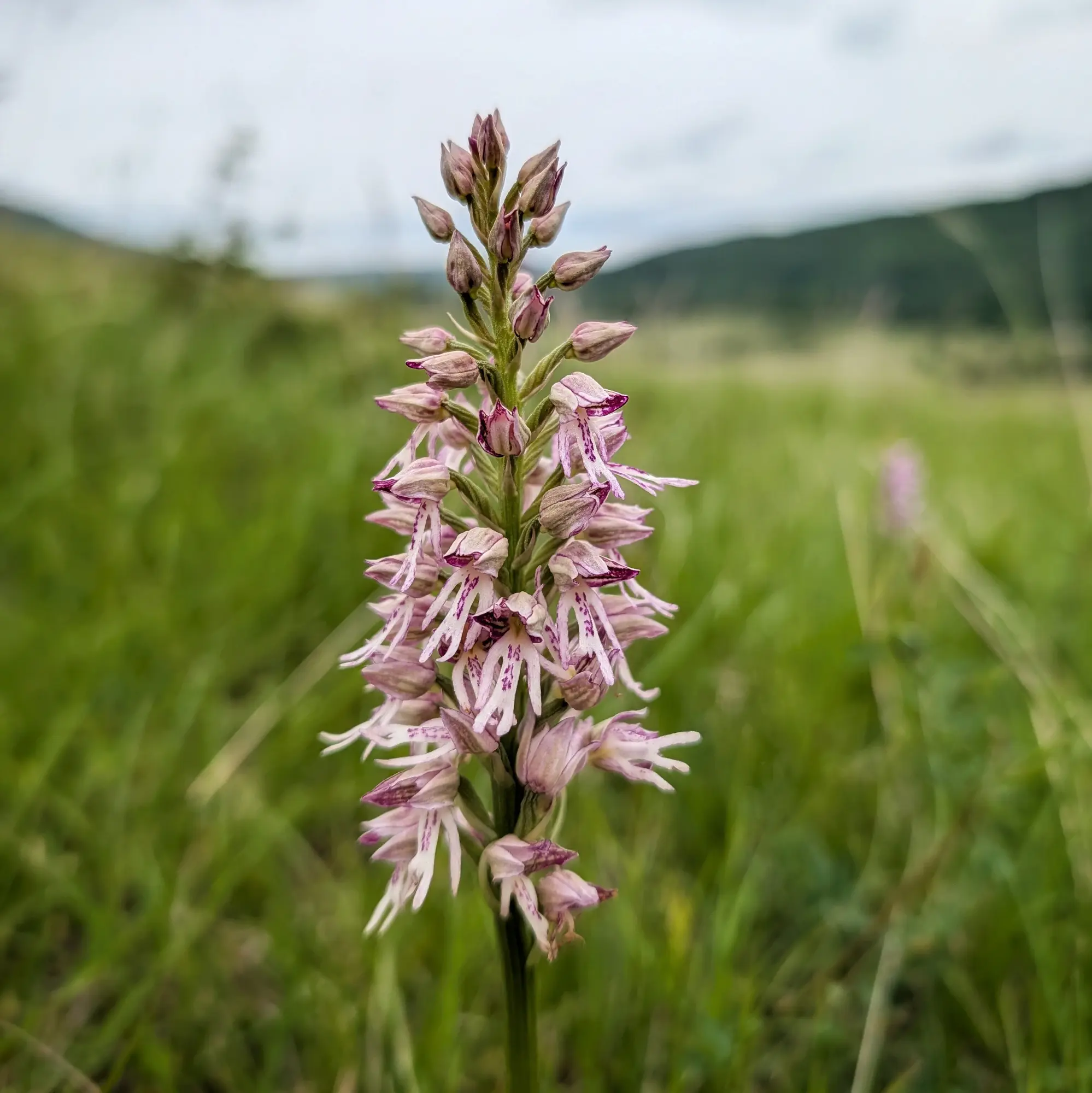
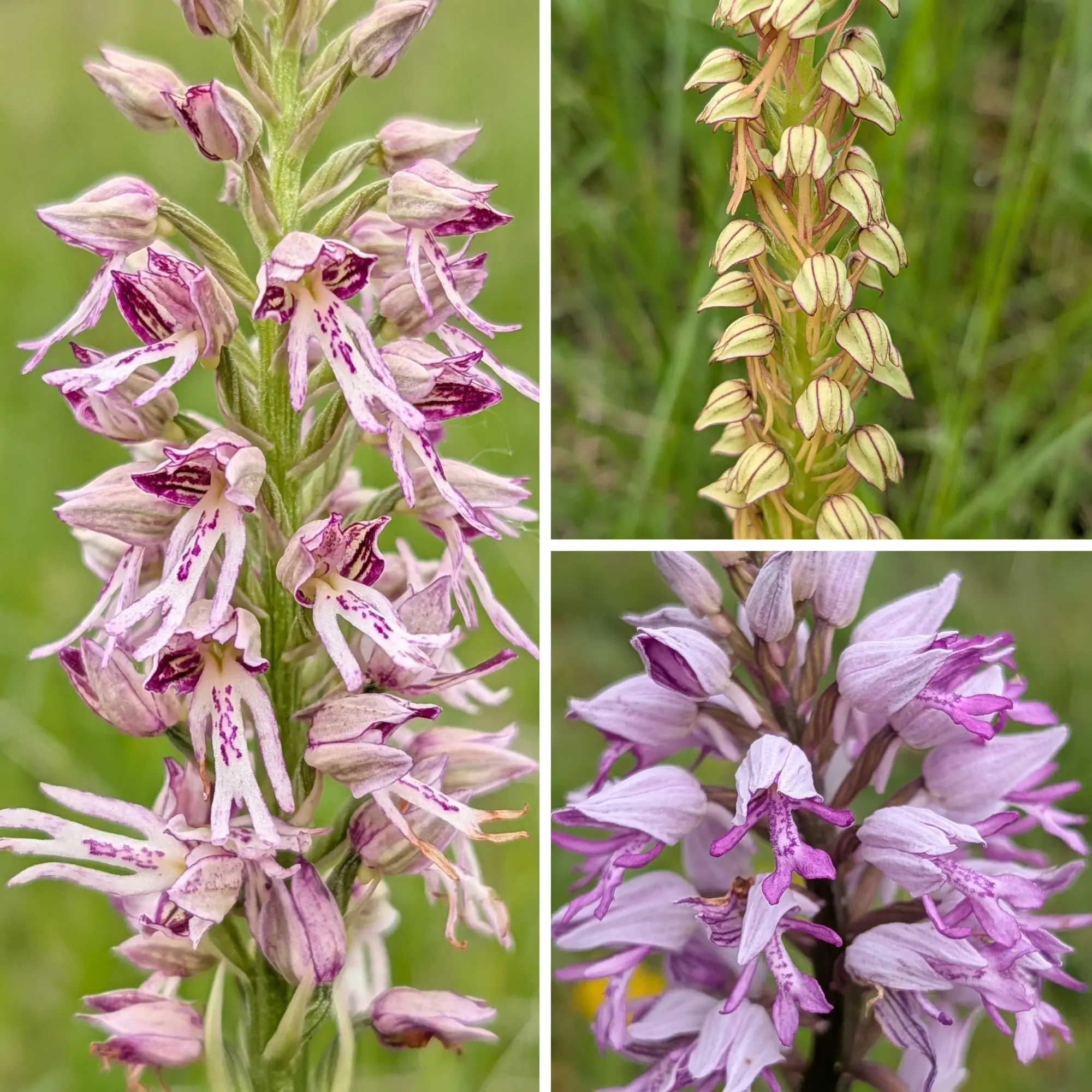
The Orchis ×spuria (also occasionally written as Orchis ×spurium) is a natural hybrid orchid, resulting from the cross between the Man Orchid (Orchis anthropophora) and the Military Orchid (Orchis militaris). Its specific name "spuria" or "spurium" comes from Latin and precisely means 'false' or 'spurious'. It is a tuberous geophyte typical of temperate biomes.
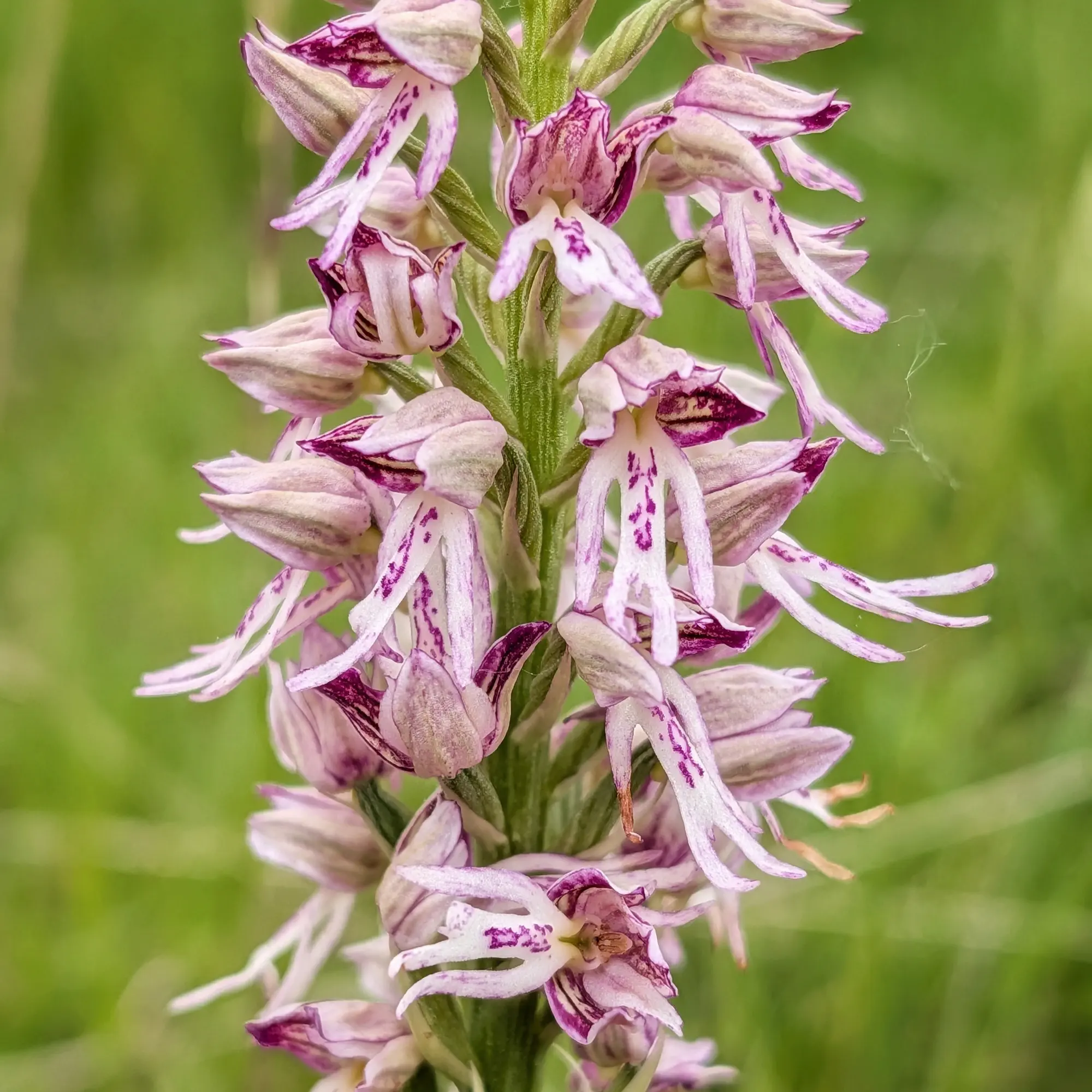
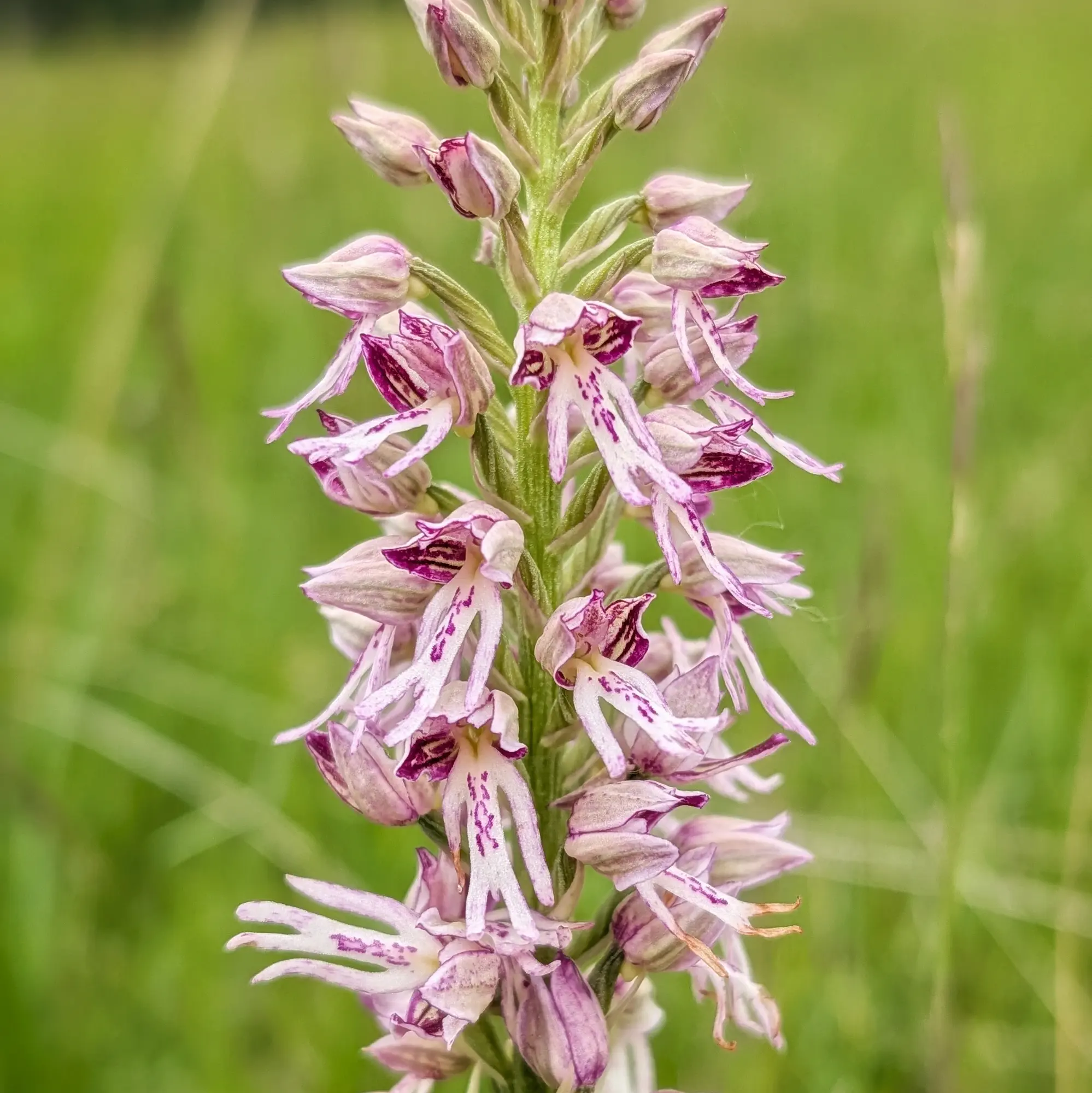
Morphological description: As is common with hybrids of the genus Orchis, Orchis ×spuria presents intermediate characteristics between those of its two progenitors, which can make its exact identification very difficult due to large variations in the size, shape, and pattern of its flowers. It is characterized by being a multifloral plant (with very abundant flowers) that frequently acquires a typical dark red color not found in either parent. The labellum (the "body" of the flower) adopts a slender shape similar to that of O. anthropophora, with long lateral lobes and a divided central lobe that is narrower than that of O. militaris. Regarding the flower's "hood" (the upper part formed by petals and sepals), the exterior is usually pinkish, like in O. militaris, while the interior is often curiously pigmented.
Pollination and life cycle: The origin of this plant is due to a purely random crossing process. Orchids of this group act by visual and food deception: they possess a spur but contain no nectar. Pollinators are often young and inexperienced bumblebees (wild bees) that, having no fidelity bond to any specific flower, fly randomly searching for food; this is how they transport pollen from O. anthropophora to O. militaris (or vice versa). The most important factor of its life cycle is that this hybrid is totally sterile; it is incapable of producing viable seeds for its own offspring. As a result, some of these plants only emerge and flower for a single year of their life, although others may re-sprout annually.
Habitat and distribution: Orchis ×spuria is an orchid native to Europe that has been found mainly in Belgium, France, Germany, Italy, the Netherlands, Spain, and Switzerland. It is particularly frequent in some areas of France where both species coexist. Its habitat is strictly determined by the shared distribution area of its progenitor species. These species grow at short distances in well-drained and moderately sunny meadows, the vast majority on calcareous soil substrates, from sea level to light forests and pastures at 2,000 meters of altitude.
Conservation status: Due to its inability to reproduce and its complete sterility, this hybrid cannot generate its own natural population. The existence and "conservation" of Orchis ×spuria in a given area cannot be guaranteed by itself, but is entirely subject to the simultaneous conservation of its two progenitors in the same habitat. Therefore, the number of individuals of this hybrid in a given area will always be limited and purely occasional.
Gallery
Related observations
Discover the observations I've made of this species.