Orchis ×bergonii (O. anthropophora × O. simia)
About the Orchid
The Orchis x bergonii, also known in older literature as Orchiaceras bergonii, is a natural hybrid orchid. It arises from the cross between the Monkey Orchid (Orchis simia) and the Man Orchid (Orchis anthropophora, formerly classified as Aceras anthropophorum). It is a fascinating hybrid that appears sporadically, expressing a perfect blend of the genetic heritage of both parent species where they coexist and cross-pollinate.
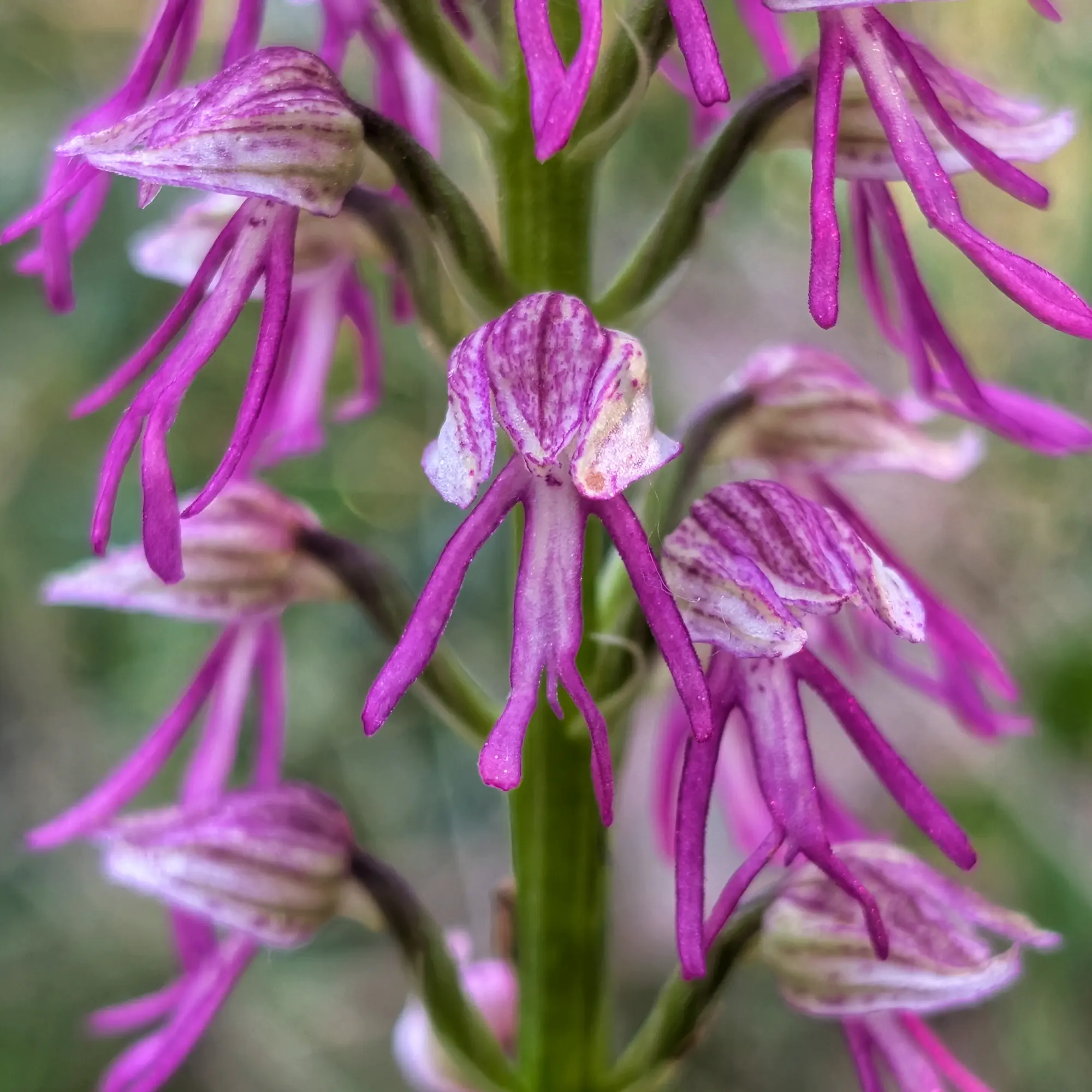
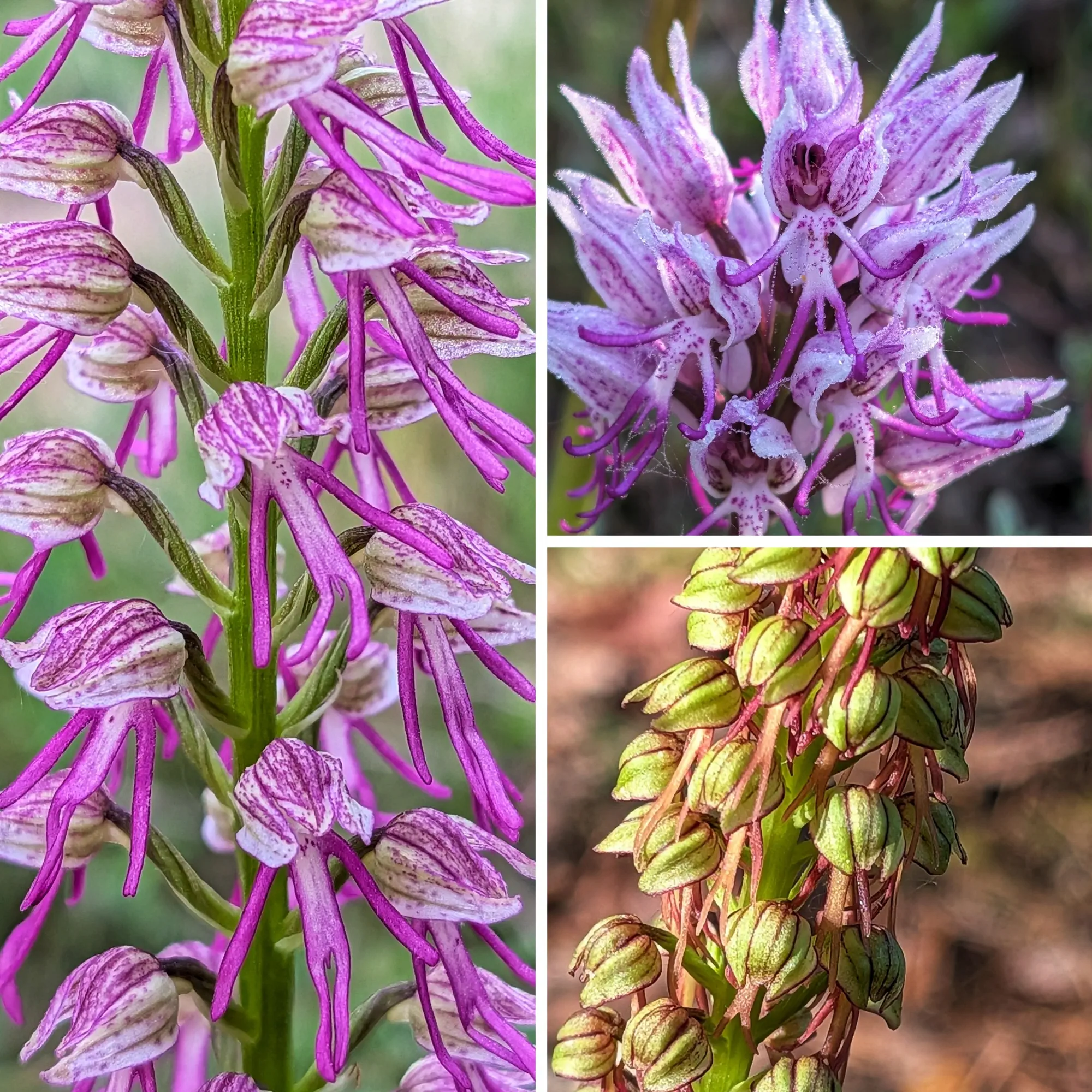
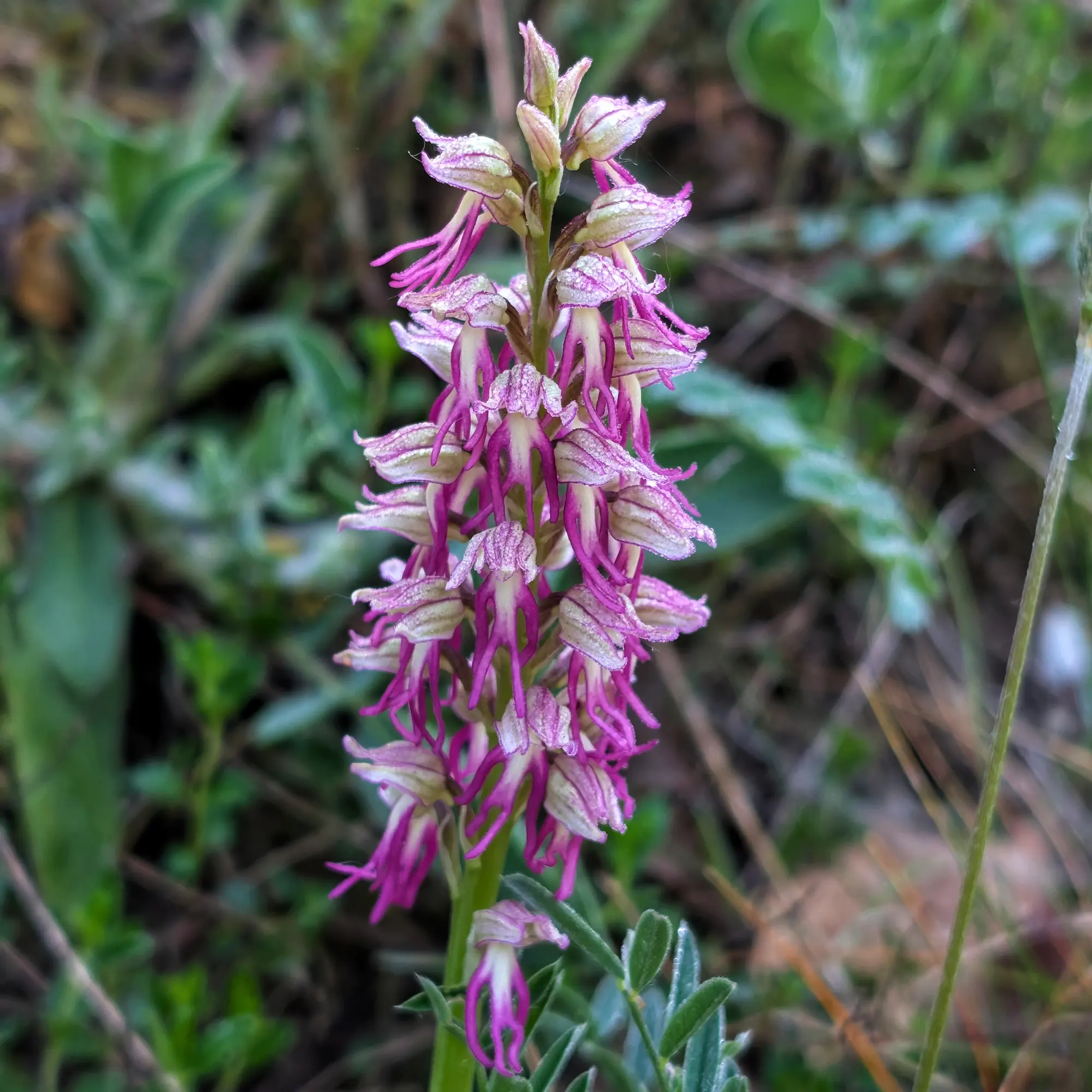
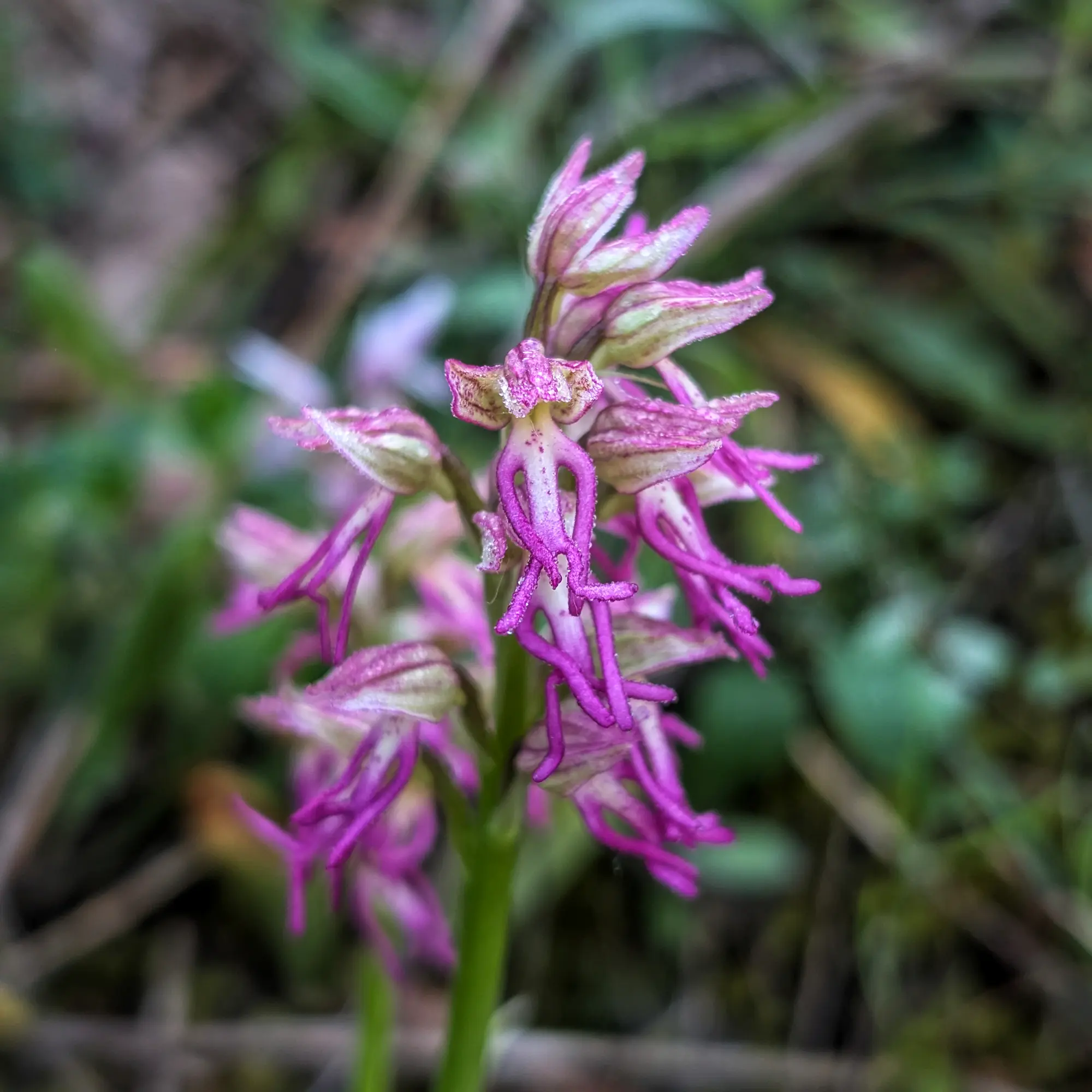
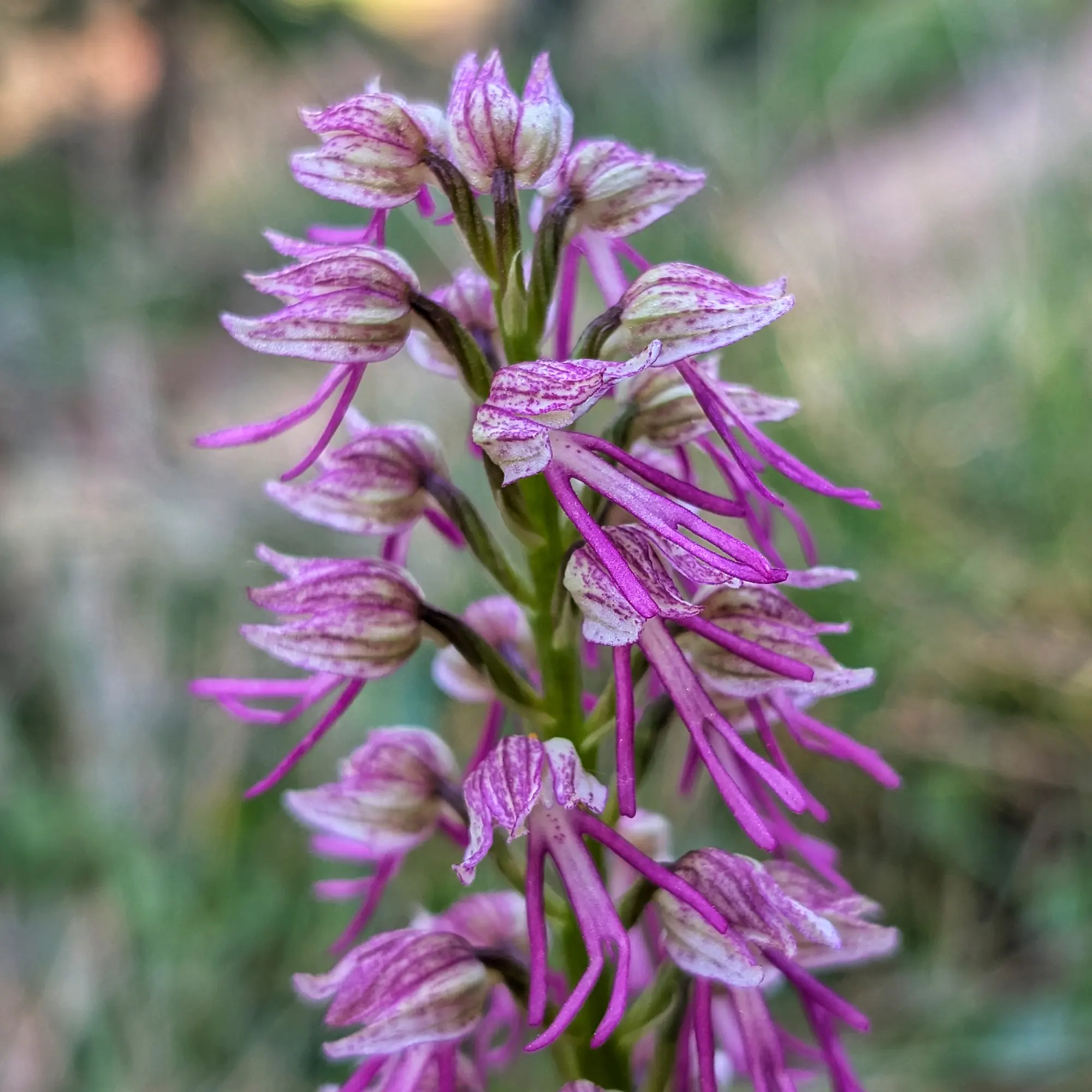
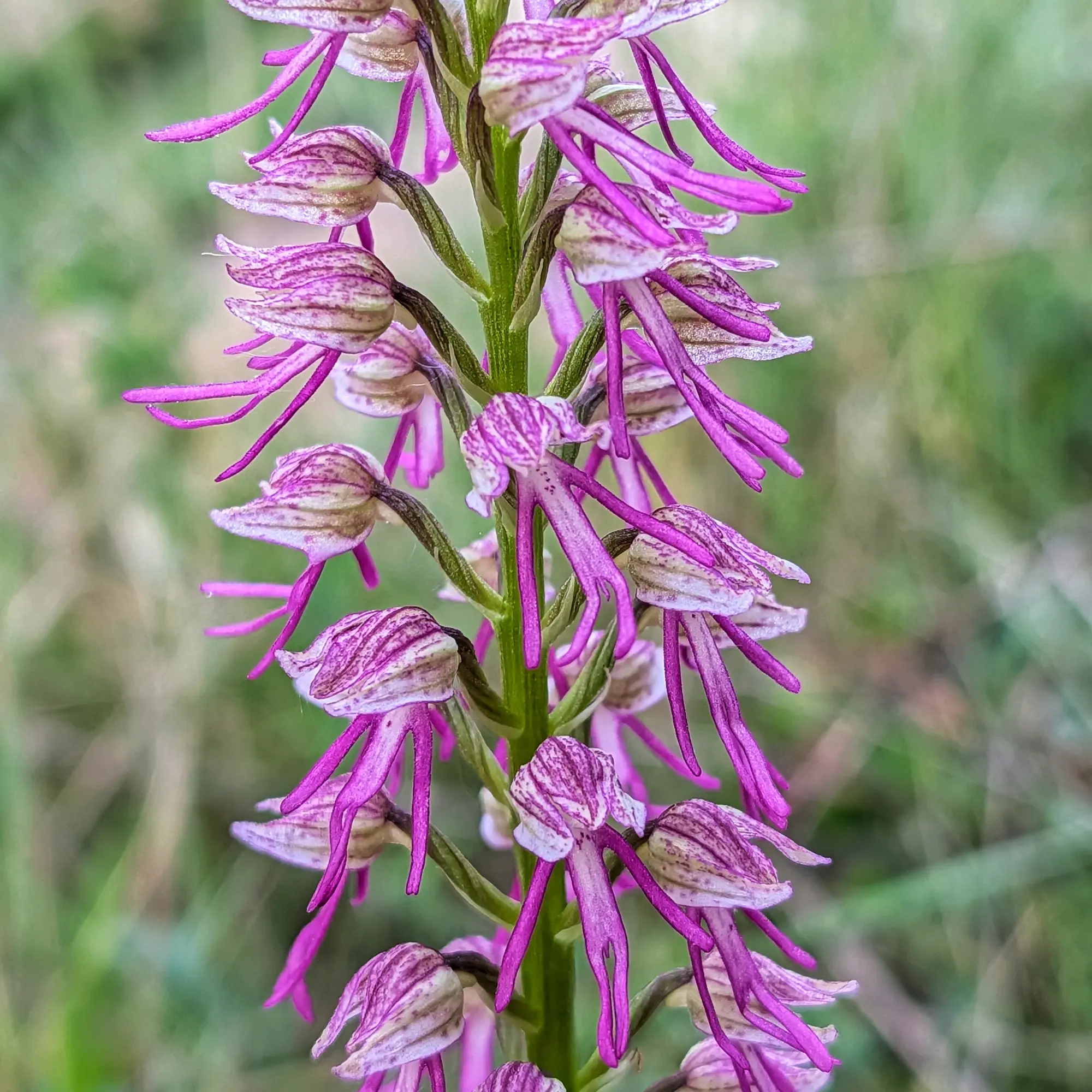
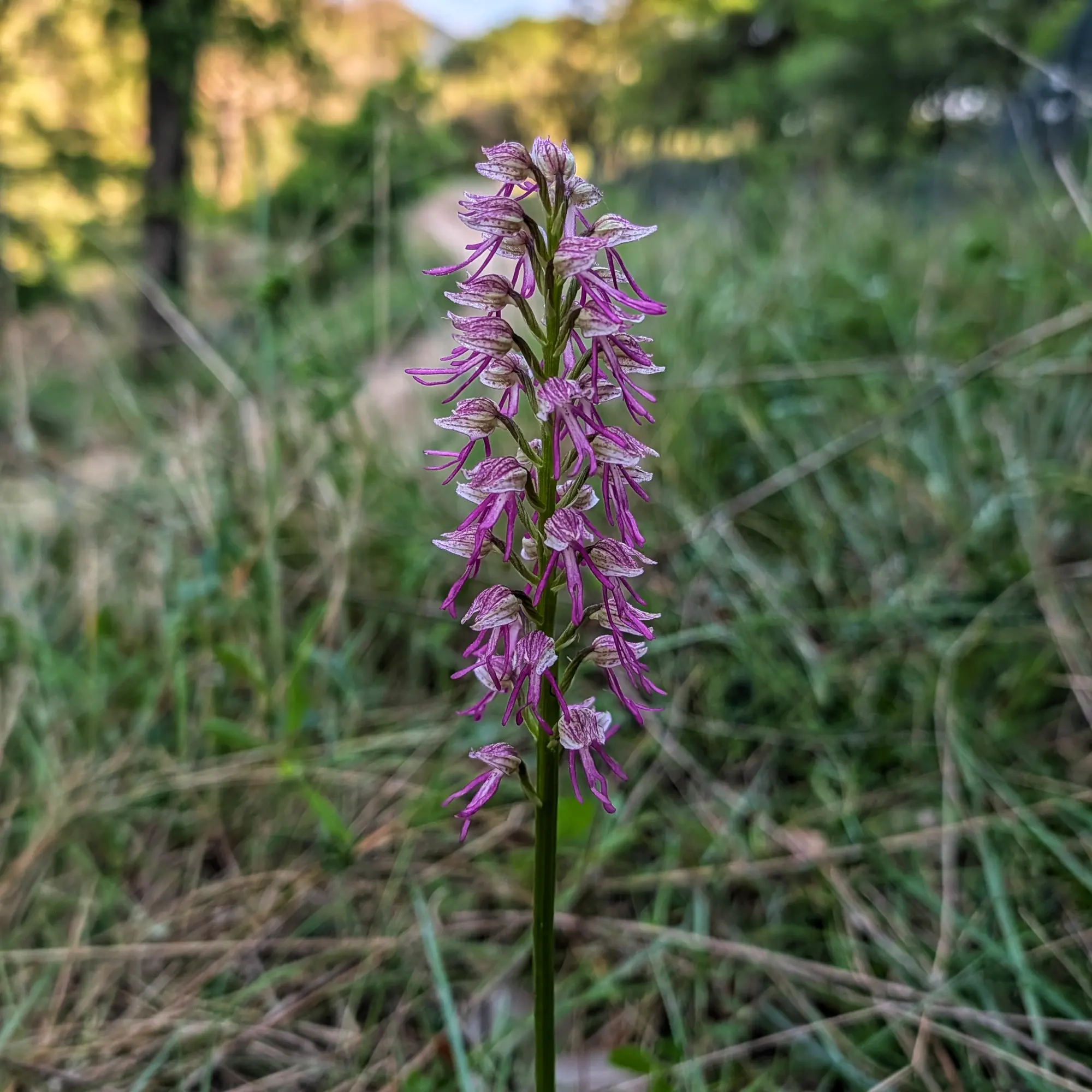
Morphological description: This hybrid exhibits a mix of intermediate characteristics and dominant traits from each of its progenitors. The general silhouette of the inflorescence clearly resembles O. anthropophora, but it acquires the typical colorations of O. simia. It features rounder leaves and downward-pointing flowers that open more or less simultaneously, a broad and less rounded labellum (the central lower petal), and spots and small patches on the outer tepals, traits similar to O. simia. Conversely, it displays a yellowish-green color on the outer part of the perianth, clear lateral and central lines, bracts of the same length as the ovary, and its stem lacks anthocyanin, traits akin to O. anthropophora. The 'tail' (referring to the labellum lobes) and the spur are of intermediate lengths. Interestingly, this hybrid has leaves up to two and a half times larger and produces 15 times more essential oil than its parent O. anthropophora.
Ecology and life cycle: The hybrid's origin indicates that the pollinators (likely bees) that visit both parent species are shared. However, despite being a morphologically successful cross, as a hybrid, it exhibits certain shortcomings: it produces 10 times fewer seeds than O. anthropophora and suffers more fungal infections. Like other orchids in its group, it is a geophyte (spending unfavorable periods underground as a tuber) with seeds lacking reserves, making a symbiotic relationship with mycorrhizal fungi obligatory for germination.
Habitat and distribution: It requires habitats where its two parent species coexist (sympatrically). Typically, it is found in dry meadows and grasslands, sunny open areas, and old fields such as olive groves, frequently within plant communities of the class Thero-Brachypodietea ramosi. Its distribution includes the Mediterranean region and certain parts of Northern Europe where the influence areas of the two parents overlap. It has been recorded in Spain, France, Great Britain (such as in the county of Kent), Italy, Croatia, the Island of Crete, and Algeria. In Catalonia, its presence is cited in the chorological regions of Alt Empordà (Ae), Osona (O), and La Selva (Cn).
Conservation status: Although a scarce plant due to its hybrid nature and low seed production, Orchis x bergonii has not been officially evaluated for extinction risk. The current Red List of Vascular Flora of Catalonia stipulates that all hybrid taxa are assigned the category NE (Not Evaluated) by default, according to international IUCN criteria.
Gallery
Related observations
Discover the observations I've made of this species.