Orchis ×hybrida (O. purpurea × O. militaris)
About the Orchid
The Orchis × hybrida is a nothospecies, a natural terrestrial hybrid resulting from the cross between the orchids Orchis purpurea and Orchis militaris. It is a geophyte equipped with tubers that primarily grows within the temperate biome. It constitutes the most frequent hybrid of the Orchis militaris group and can appear wherever the distribution areas of the two parent species coincide and reach sufficient density.
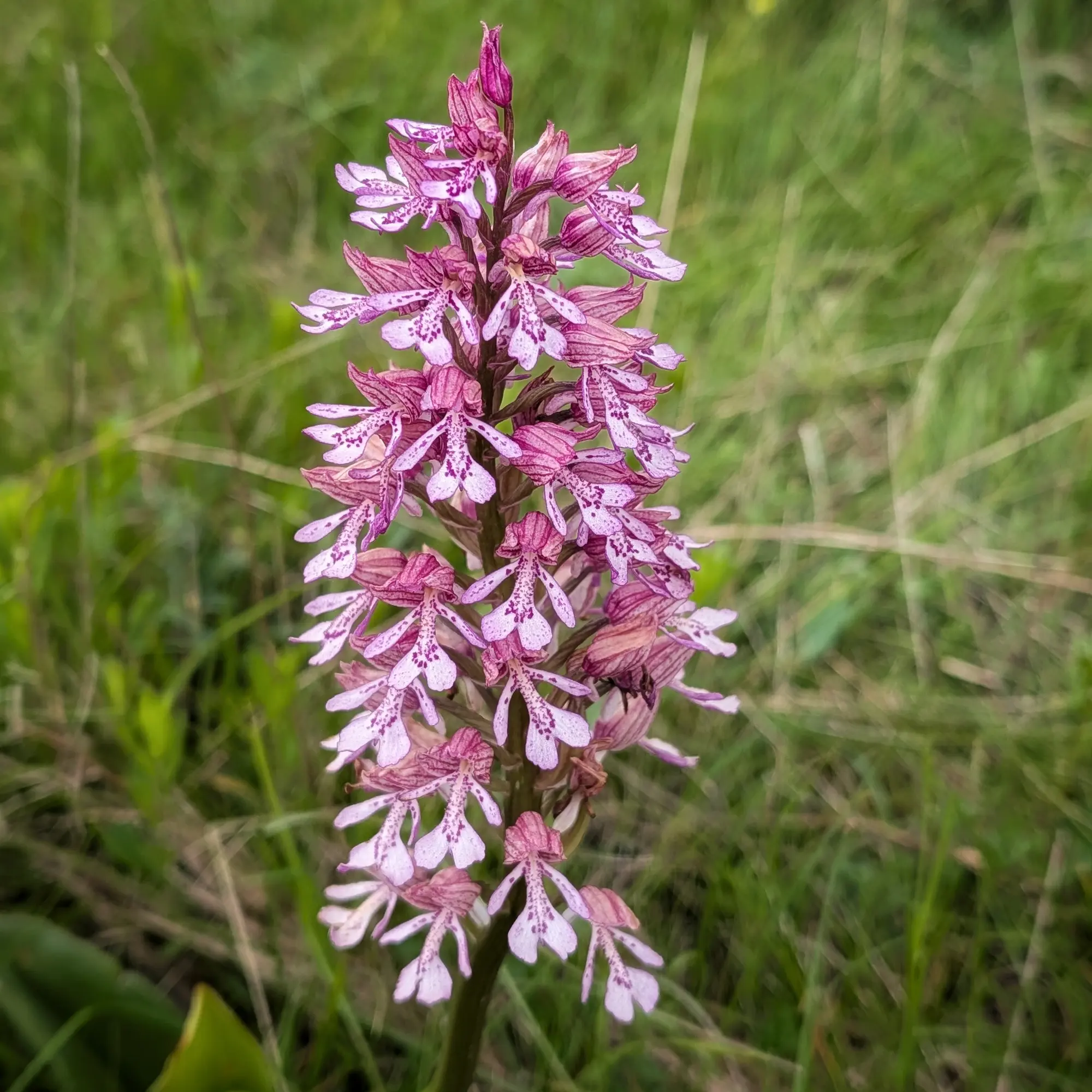
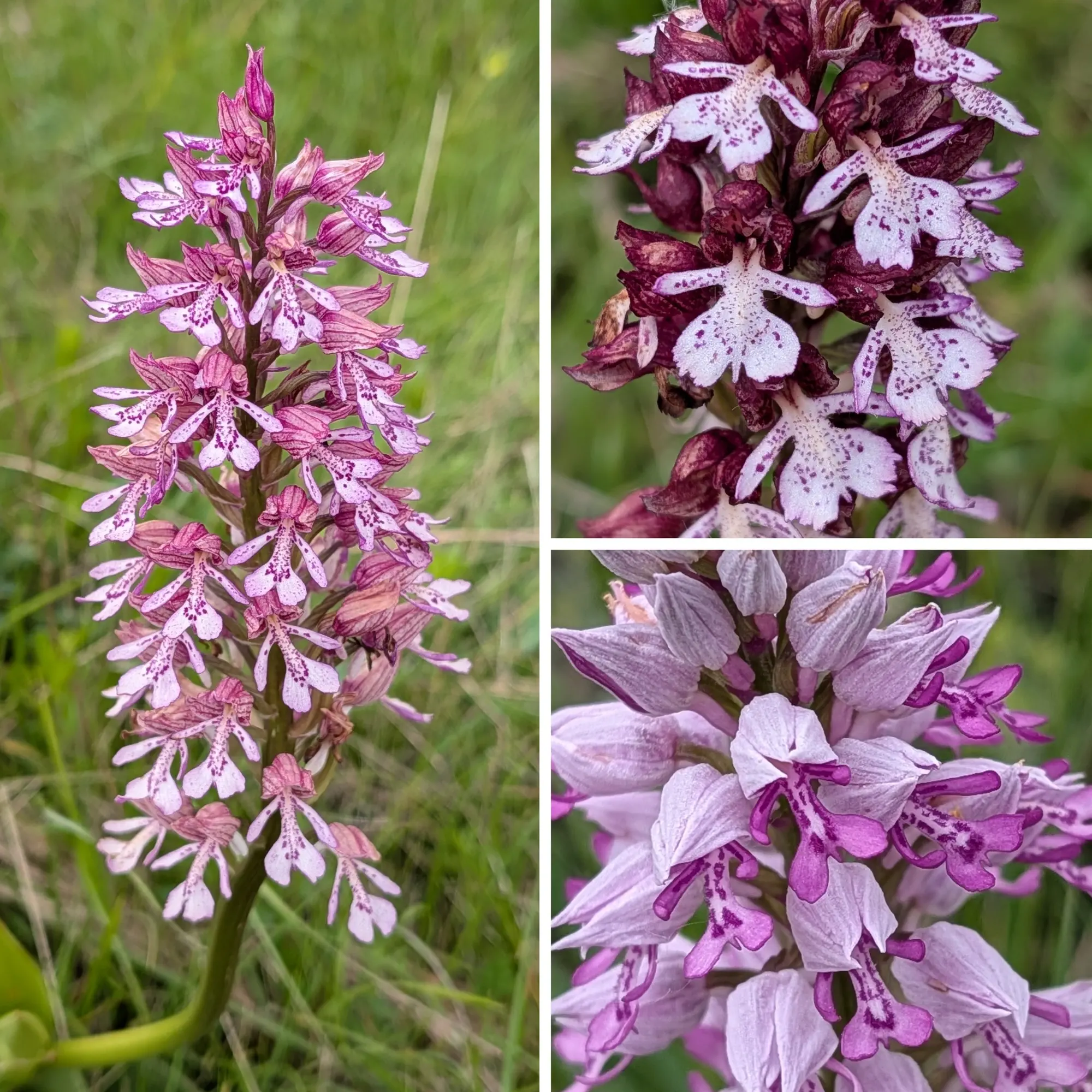
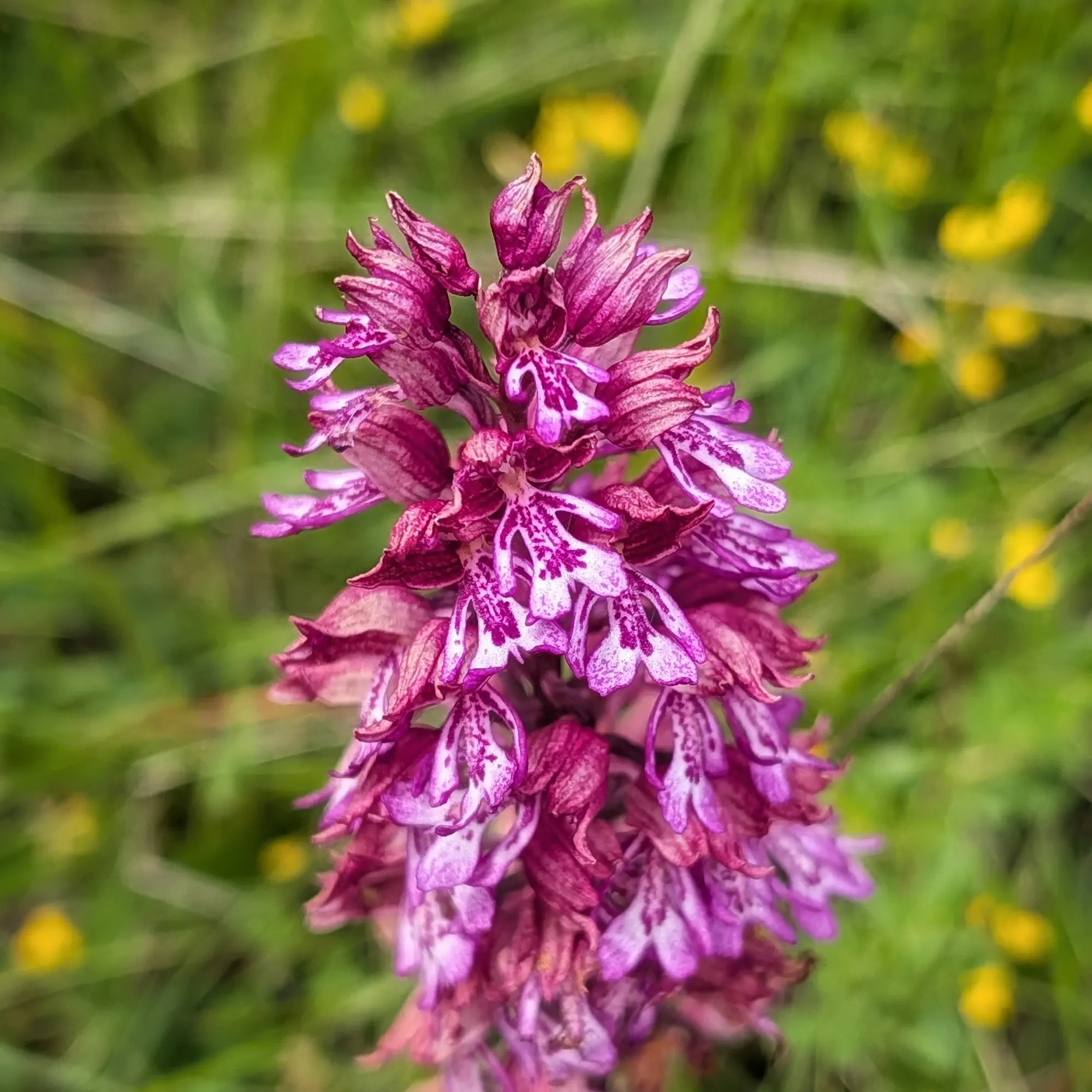
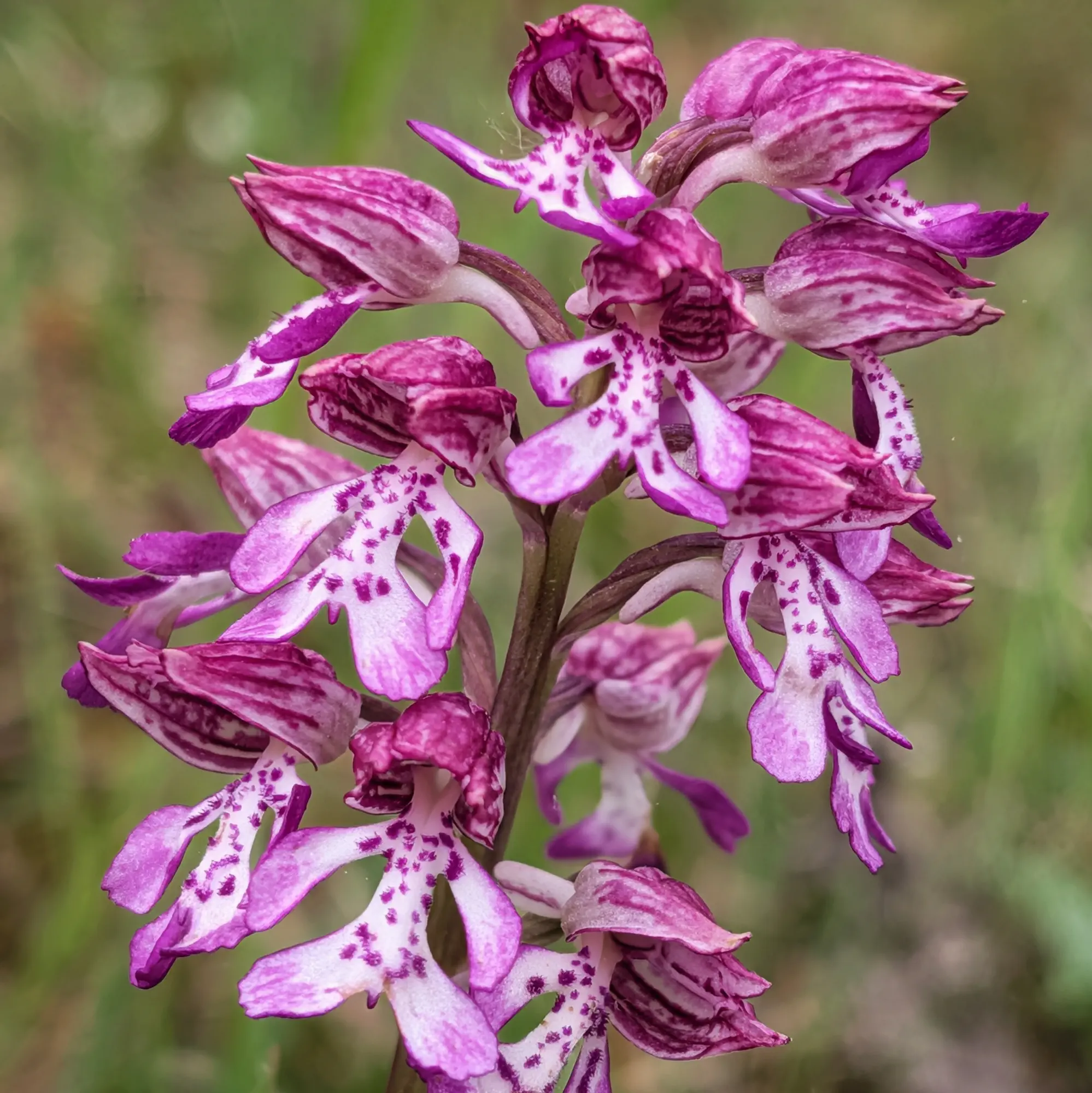
Morphological description: Identifying it accurately in nature is often difficult, as it shows considerable variation in the shape, size, and pattern of the flower's labellum. As a general characteristic, the orchid has helmet-shaped sepals like its two parents, but their color is closer to that of Orchis militaris. Conversely, the labellum retains the colors of Orchis purpurea, although its shape is closer to that of Orchis militaris. Flower coloration can vary from white to different shades of pink.
Habitat and distribution: This hybrid thrives optimally in meadows and terrains under direct sunlight or in semi-shade. In terms of altitude, it can be found from sea level up to 1,700 meters. It is a plant native to the European continent. Its distribution area is immense, spanning from the United Kingdom in the north, to the Mediterranean area (including Spain, France, Italy, and the northwestern Balkan Peninsula), and extends eastward to Ukraine (such as the Crimea region) and Russia. This orchid is particularly abundant in central and southern France and other parts of Central Europe where both parent species have massive colonies.
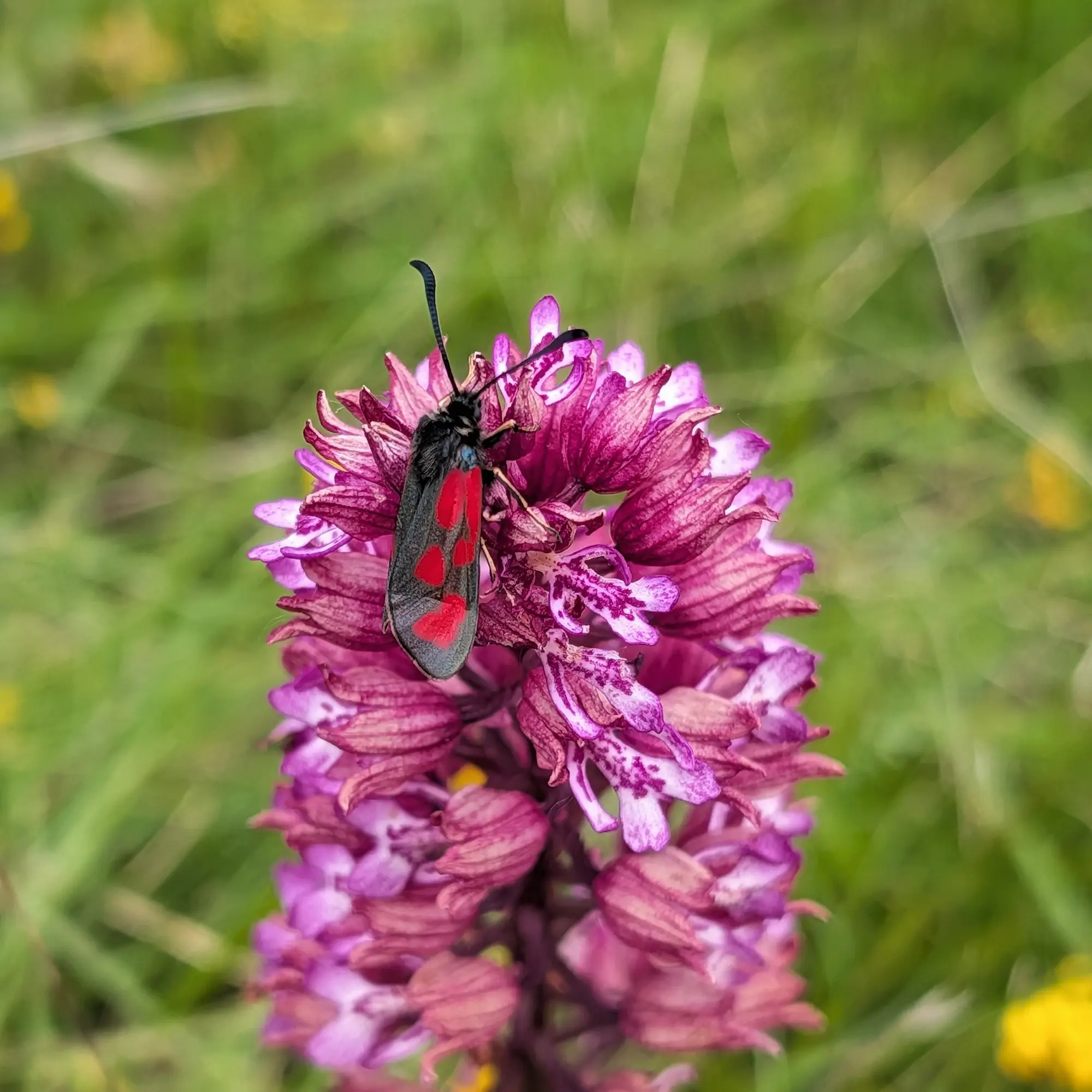
Pollination and Conservation: Hybridization occurs through cross-pollination, which becomes practically inevitable in regions with high densities of parental plants. Flowering occurs during spring, from April to June. Regarding conservation, its abundance depends on the conservation status of its parent species. Consequently, in places where O. militaris and O. purpurea are rare, finding this hybrid is almost unheard of, while in areas where they are common, its populations are healthy.
Gallery
Related observations
Discover the observations I've made of this species.