Serapias ×intermedia (S. lingua × S. vomeracea)
About the Orchid
The Serapias x intermedia Forest. ex F.W.Schultz is a hybrid, geophytic, and tuberous orchid, resulting from the natural cross between the species Serapias lingua and Serapias vomeracea. This hybrid was first described by the French botanist Aimé de Forestier in 1851 and published by the German botanist Friedrich Wilhelm Schultz in 1852 (or 1854, according to some botanical notes). The name “intermedia” precisely refers to the fact that it possesses intermediate characteristics between its two progenitors.
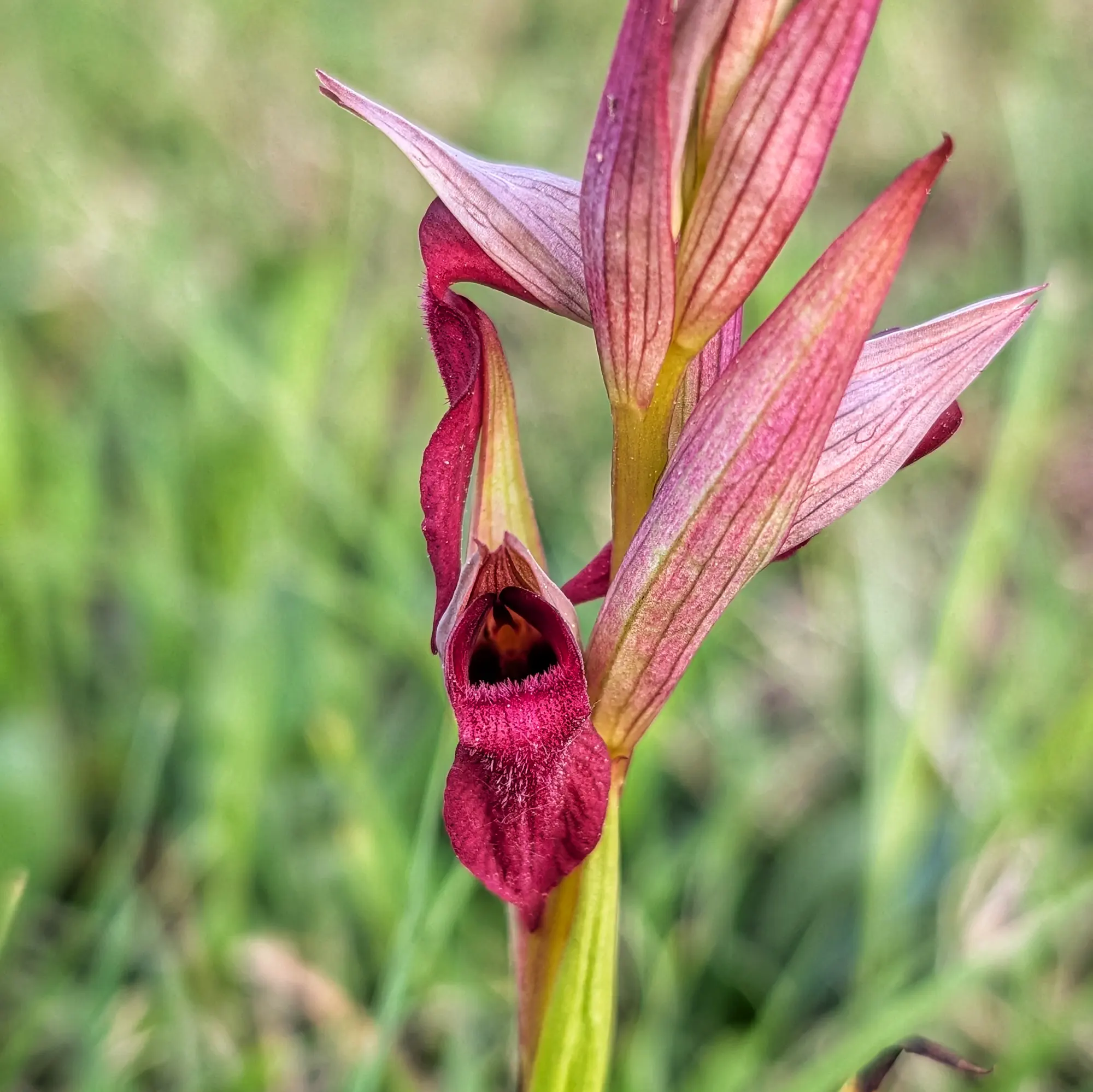
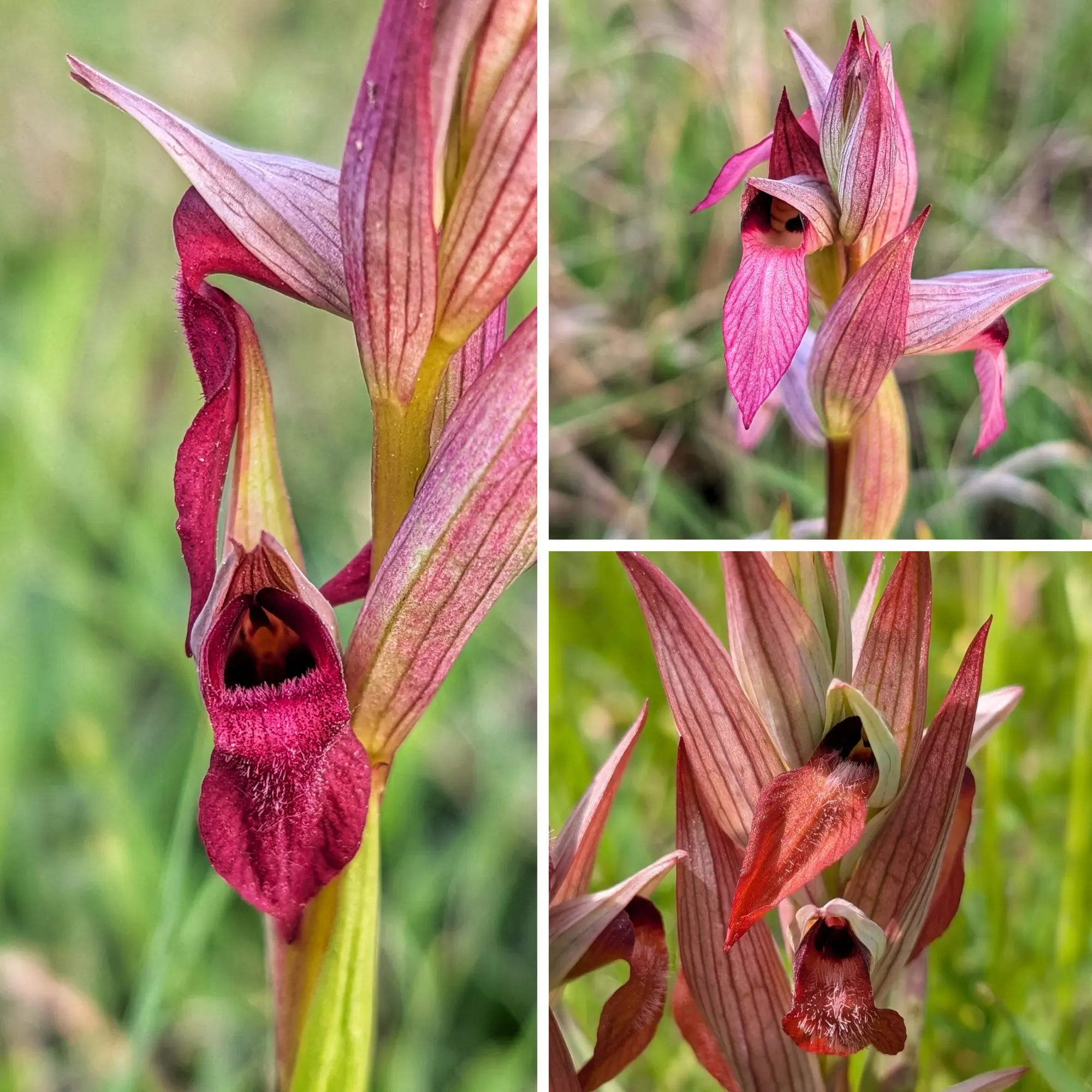
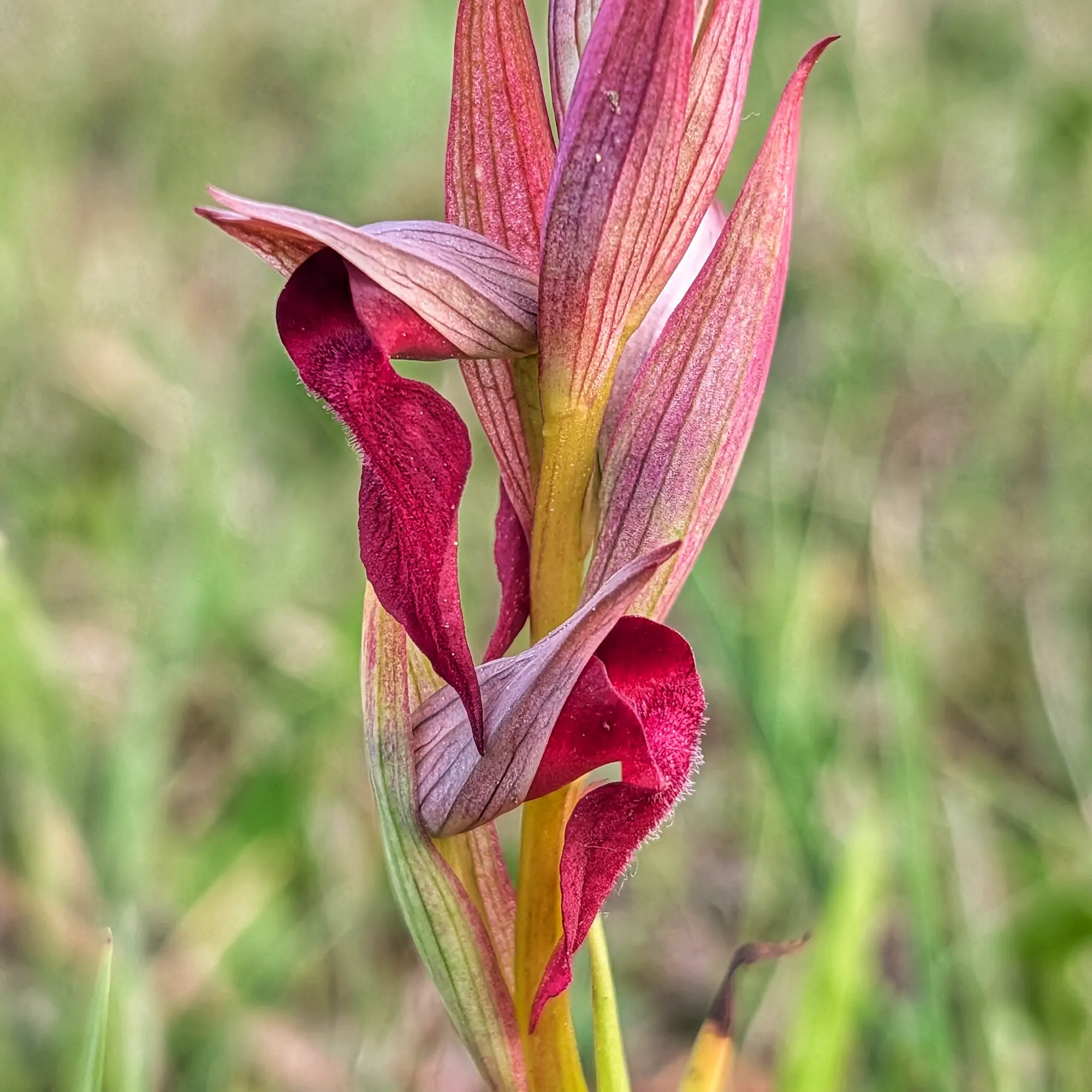
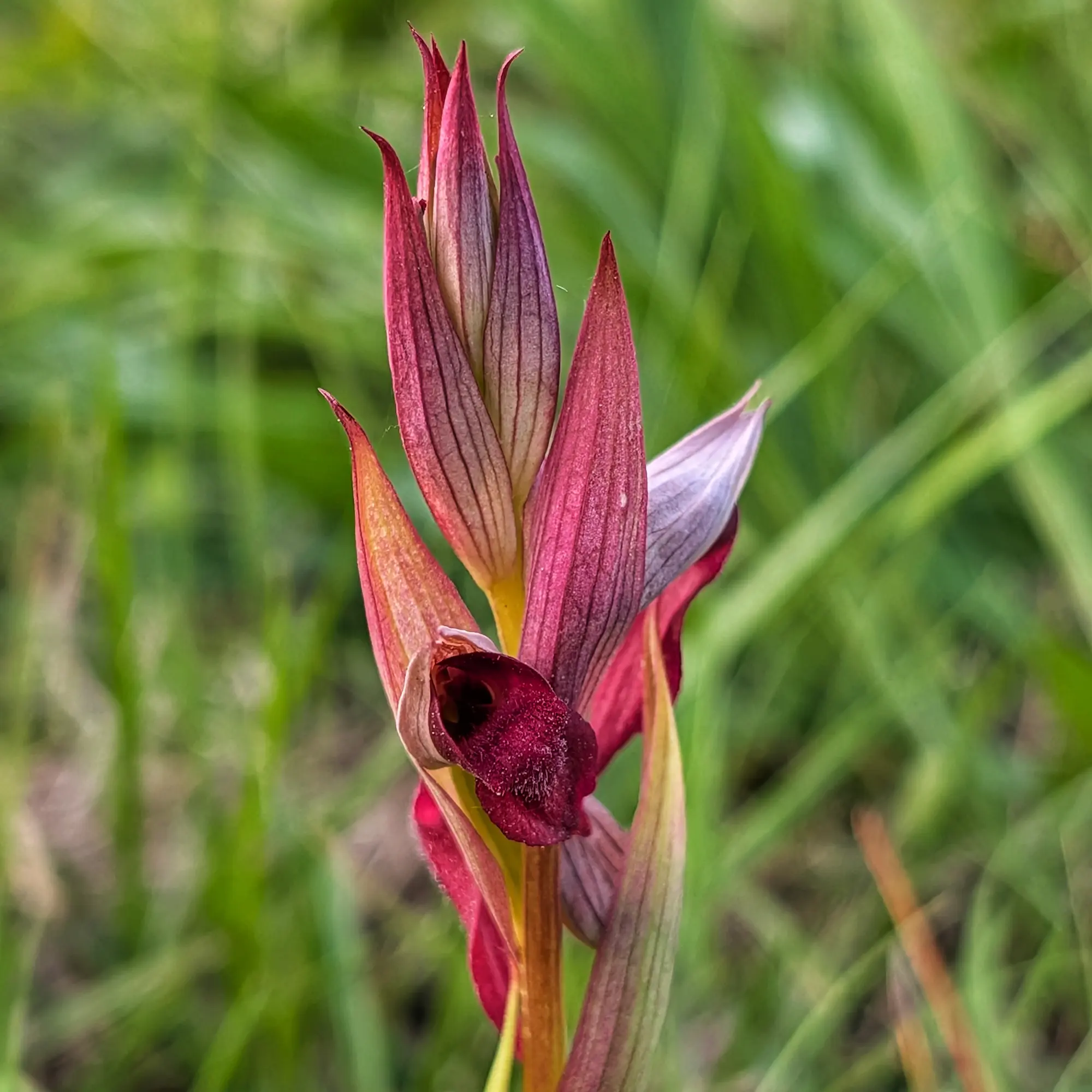
Morphological description: As its name indicates, it exhibits mixed traits from both parents. A fundamental characteristic for its correct identification is the callosities at the base of the labellum: unlike other congeners, it practically features two united lamellae forming a clearly furrowed callosity. The width of its epichile is often contributed by the genetic influence of S. lingua, which can cause confusion when identifying it and distinguishing it from other species like Serapias occidentalis. Like the rest of the genus, its floral elements (tepals) are connivent, forming a helmet-like structure.
Life cycle and pollination: As a geophyte, Serapias x intermedia survives the unfavorable winter season thanks to underground storage organs (tubers) rich in nutrients, located a few centimeters deep. When spring arrives, the plant regrows and develops from these tubers. This plant forms in locations where populations of both parent species coexist and flower simultaneously. It is a cross-fertilizing, insect-pollinated plant. The genus Serapias does not produce nectar as a reward; instead, it attracts small bees and other insects by using the flower's “helmet” as a refuge. This space provides them with a place to rest and protect themselves from bad weather, as the temperature inside the flower is about 3 °C higher than the outside temperature during the mornings. This generalist strategy allows for the formation of numerous natural hybrids, such as S. x intermedia, when various Serapias species share a habitat.
Habitat and distribution: Its native range and primary distribution are found in the subtropical Mediterranean biome. Across the Mediterranean, it has been detected in territories such as France, Corsica, Italy, Sicily, former Yugoslavia (NW Balkans), Greece, Crete, and Libya. More specifically, there are records in places like Spičansko Polje in Sutomore (Montenegro). On the Iberian Peninsula, it has been cited in Spain, for example, in waterlogged meadows in Extremadura where dense populations of both parents coexist, and there are also records in Catalonia (Girona regions) during spring.
Conservation status: The provided sources do not mention an evaluated or specific conservation status for the Serapias x intermedia hybrid, although they do detail that other relatives of the same genus, such as S. parviflora or S. cordigera, are protected under certain regulations.
Gallery
Related observations
Discover the observations I've made of this species.